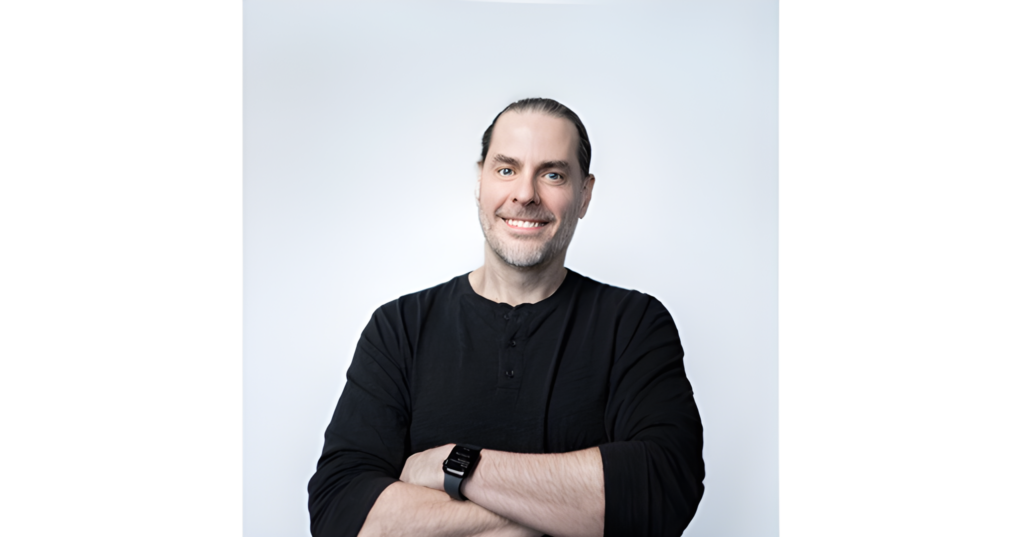
Greg Piefer, CEO and Founder, Shine Technologies
Concepts discussed
Auto-linked from the episode's notes and transcript.
Show notes
Shine Technologies is a unique nuclear fusion company.
The conventional path for nuclear fusion projects is to raise and spend billions of dollars and decades of research and development in efforts to successfully find a path over, around or through the technical barriers that have prevented nuclear fusion from becoming a large scale energy production source.
Until relatively recently, that path was almost completely dependent on government grants. In cases like the ITER – International Thermonuclear Experimental Reactor – the effort has involved tens of billions of dollars (current estimate is $25 B), thousands of scientists, engineers, constructors and technicians and a construction schedule that stretches out over 29 years. The funding partnership includes six individual countries plus the European Union, which is supplying approximately 45% of the budget. Parts and materials for the project are being supplied by 35 different countries.
Greg Piefer, Shine Technologies CEO and Founder, chose a different path. He is a technical expert and fusion researcher who was inspired by the same dreams of unlimited fusion energy that drive others to study and work in the field, but he also has a commercial side that knows that investors, even governments, do not have the patience and the depth of resources needed to undertake and successfully complete projects whose characteristics are similar to ITER and don’t produce profits along the way.
He knew several known ways to stimulate and control a nuclear fusion reaction. The equipment used to produce those reactions doesn’t work fast enough to produce the energy needed to sustain the reaction and have enough left over to capture and sell to a commercial energy market. They are useful devices for teaching researchers about fusion and they are precise and reliable neutron generators for valuable tasks like remote logging of the materials in oil and gas wells.
Piefer’s valuable insight was that neutrons from fusion had special characteristics that could produce commercial value long before the equipment could produce energy at a competitive cost. He and the team that he inspired became convinced that they could create a sustainable path to commercial fusion energy by building, using and refining equipment and techniques that use fusion to produce neutrons for successively larger markets that require ever lower unit costs.
They established a four phase development program that remains their guiding development strategy. The first phase sells precise testing and measuring services that use Shine neutron generators where the neutrons supply their material penetrating power. Unlike the gamma rays used in conventional radiography – X-rays for materials and equipment – neutrons penetrate dense materials and are scattered by light elements. The critical nature of the components that benefit from neutron imaging leads customers to pay extraordinary prices for Shine’s specialized services. The neutrons produced by Shine’s imaging fusion devices sell for $100,000 – $1,000,000 per kilowatt-hour of energy released – which is a calculated metric derived from fusion reactions per second per dollar. (Those numbers do not have any misplaced zeros.)
The second phase, with a far larger Total Addressable Market (TAM), is medical radioisotope production. Using a process of continuous refinement and practice, Shine has been able to improve its devices to the point where they can profitably enter the market with neutrons that cost the equivalent of $100 per kWh (a factor of 1000 improvement over the first phase) that can be reduced to $20/kWh as the process is scaled up using their NRC licensed Chrysalis facility. That facility, located in Janesville, WI, was carefully sited next door to a regional airport that enables Shine’s medical isotopes to be rapidly delivered throughout the United States and competitively delivered almost anywhere.
Chrysalis is expected to be completed within the next two years. As Piefer describes during our conversation, it will be the highest capacity isotope production facility in the world. Piefer also described the invested effort that gives Shine the ability to produce isotopes that meet the stringent purity requirements for medical applications. The company’s radio chemistry skills are being exercised every day as they are already shipping isotopes created in a smaller facility.
The third step, which is still in the R&D phase is to use more capable Shine fusion devices that can produce neutrons for about $1/kWh to help recycle used nuclear fuel. During the conversation, we spent quite a bit of time talking about how this application will work. There are some nuances that are worth hearing.
The fourth step in the plan is to produce clean energy with a target price for neutrons of about $0.01-$0.02/kWh. That is the dream and the application that unlocks a TAM measured in the trillions of dollars.
Here is the company’s distillation of their four phase plan:
> The framework: value per kilowatt-hour of fusion output
SHINE force-ranks fusion markets by unit economics, not market size — starting with the customers who pay the most per unit of fusion output, and using each market as commercial practice to drive costs down for the next. The metric: fusion reactions per second per dollar, a proxy for cost per kilowatt-hour.
The cost curve, by the numbers
>
>
>
>
> - >$1,000,000 per kWh — what one deployed SHINE fusion system is worth to its customer: it scans every nuclear fuel rod the customer manufactures, and hasn’t skipped a beat since deployment.
>
>
>
> - ~$100,000 per kWh — typical value in the testing market (e.g., neutron imaging of F-35 turbine blade cooling channels that only neutrons can see).
>
>
>
> - ~$100 per kWh — where SHINE had to get costs to make medical isotope production work.
>
>
>
> - ~$20 per kWh — expected for Chrysalis at full capacity, coming online in the next 18–24 months.
>
>
>
> - ~$1 per kWh — the target for spent fuel recycling, feasible because the business stacks four revenue streams: recycling service fees, recycled uranium/plutonium fuel, separated isotopes, and electricity sold at market rates.
>
>
>
> - 10–20¢ per kWh — typical value of electricity, the final market. From recycling, SHINE estimates roughly a factor of 10 remains to put pure fusion energy economically on the grid.
>
Disclosure: Nucleation Capital, the sponsor of Atomic Insights, is an investor in Shine Technologies. We believe their vision and their execution elevates their commercial prospects above a number of companies whose primary selling point is an attractive, but distant dream.
Transcript
Read transcript
There's a way, a way such a better way today, today. A major voice, tell the world there's a better way, today and there's a better way. This is Rod Adams and it's time for another Atomic Show. My guest today is Greg Fyfer, a founder and CEO of Shine Technologies. One of the very few fusion companies in the world that's doing fusion every day. Greg, welcome to the show. Thanks, Rod. I'm excited to be here and look forward to talking to you. I think we should sort of write from the beginning. Tell us how shine does fusion every day and why do you do it when other people can't seem to be done. Yeah, awesome. And maybe it's helpful to just do a little bit of the origin story of the company. So I found it shine for the same reason people found essentially any fusion company, which is that we believe long term fusion is going to massively level up human access to energy. As fusion becomes cost effective and technology continues to improve, it eliminates fuel as a fundamental constraint on energy growth. As we look at ultimately, jutarium is probably the fusion, the fuel that fusion reactors will burn in the long term, certainly what I believe. The air solutions contain enough to tear to run us at our current energy consumption rates for about 30 billion years. And so fuel becomes inexhaustible and fusion paradigm and as technology level, its higher and higher costs should go down. Unit costs for fusion continue to drop. These fundamentally humans will have access to energy at unprecedented scale versus where we were before. Clean energy, abundant fuel and unit economics that just continue to improve and allow us to grow the sorts of things, sorts of problems we can solve. So that's why I started shine just like why anyone starts a fusion company. But I had a little bit different perspective on how to build it. And the perspective was came from the fact that I got a PhD in nuclear engineering. And we were focused in my group primarily on what it would actually take to build a real commercial system, a real fusion power plant and make it work, and make it work reliably and make it work cost effectively. And after the end of several years of studying this problem, it just, it seemed like an incredibly daunting challenge to me. It seemed like it was going to take a massive amount of capital and practice. And therefore time before fusion reactors have become cost competitive. And, you know, just rough water magnitude, I was thinking about it, maybe $100 billion and maybe a few decades. And then I just didn't think the world was going to have that kind of patience. And so I sort of started a question my life choices about getting into fusion. But there were two other things that kind of changed my perspective on it. So number one, I had advisors that pointed out that there were problems you could solve with fusion today. And you could solve these problems with a less complicated fusion system than what you need to make that energy. And so that was a cool idea. And then I had started another company just with my roommates at the time that had nothing to do with any of this, but, but it was a company where we recovered data from crash tar drives. And we, you know, we started the company that company just for one reason. The current business model out there was, you know, pay us $2,000 upfront and maybe we'll get your data back and we thought that sucked. So we started a company that was a different business model. It was a will, we'll try our best. And if we get your data, then you'll pay us. And otherwise you won't pay us. And we weren't very good at recovering data from crash tar drives originally. But after just several years of practice, we actually get to the point where the FBI started sending their, their stuff to us to recover. And so we got really good at it with practice really, really quickly. So I was sort of given a front row seat participating seat as we built this company and learned just how much better you could get at something through practice. And so I wanted to combine that idea with the idea that there were markets we could access right now infusion and build a company, because I actually believe that that would be the fastest way to commercialize fusion is practicing in real commercial markets. So I found a shine. I found a shine to chase fusion energy by commercialization and practice in real markets. And it gave us a little bit of a different look at how we should commercialize in what most people are focused on, you know, the largest TAM for fusion, which is energy massive trillion dollar TAM. But it's very hard to access energy is cheap and you need massive. Great. So real quick interruption. Yep. Is TAM not everybody knows. Tam is total addressable market. So that is the size of the market for the end product you're selling. So when we say trillion dollar, Tam, it means that the energy market is over a trillion dollars per year. So great. So so most people are focused on that, but it actually is the hardest problem to solve a fusion. And I thought, what if we focus not on the largest TAM, but what if we focused on markets where we could achieve the best unit economics first. And so we could make money right away. And by making money actually practice in a real commercial environment. And so that's kind of the big core business innovation that is shine. And when we looked at our product roadmap, I wanted to have a roadmap that took us all the way through energy. And so I thought about it really simply. The only products we would look at had to cover three bases. The first is it had to practicing in that market had to move us toward fusion energy. It had to develop the skills and the practice we would need to move fusion energy forward. The second filter on whether a market was interesting is, is the TAM big enough. In other words, it's just decidedly important enough for us to spend our time on it. And the third thing that needed to be achieved was fusion had to be had to have a had to have a right to win in that market. In other words, it had to have advantages over the current way of serving the market. So when we did that and we looked at what markets might be interesting. We came up with basically four, four product lines that we knew would be interesting. One was testing using fusion for testing purposes. One was using fusion to make radio isotopes used for medicine. One was recycling spent fuel and the other the last was energy. And we knew those were all great markets for us. Then instead of force ranking by TAM, total address will market, we forced ranked by unit economics. Instead, we're going to do that first. We're going to go to the customers that pay us the most per unit first and use that to get better. And when you when you force rank things that way, you get the exact plan we've been executing. So we've been using fusion to do neutron based testing now for several years. And we've now built the largest medical light isotope production infrastructure in the world. That'll be coming online in the next two years and we'll use fusion and are starting to move into recycling and ultimately we'll scale into energy. So that's kind of a high level of how shine started and what we are doing that's different. All right, a couple of quick questions when you say use fusion to do inspections. What is it about fusion that gives you ability to use to do inspections is better than any other source? Yeah, and great question. And all these markets all four of them actually have something in common, which is you're basically in a fusion reaction, especially a deuterium tritium fusion reaction. And there are particles made called neutrons as a byproduct, the reaction. And whether you're trying to make electricity or recycle waste or make an isotope or do inspection, you're after the neutron. The neutron carries most of the energy if you're making heat. The neutron has the characteristic of being able to alter matter if you're making isotopes or recycling waste. And it also has this wonderful property that you can use it kind of like an x-ray. It's like a super sensitive x-ray. So where x-ray, you know, we're all used to seeing x-ray images of the inside of our bodies, x-ray passes through light materials super easily and gets absorbed by heavy things like bone or like lead. Neutrons are in the simplest sense, they're the opposite. They can pass easily through heavy materials and they scatter heavily off of light materials. So if you want to image the inside of something that's made of light material, you know, and just carbon fibers or plastics or explosives or parts of jet engines that are high performance, neutrons provide a much higher degree of sensitivity than any other test. So one example of a product that you use neutrons to test are like the blade tips from F-35 engines. F-35 engines are super high performance. They operate 20% above their melting point inside the engine and the way they keep the engine from blowing itself up as they suck cold air and from the front of the engine and pump it through the blade itself. So when neutrons can image the cooling channels and a bunch of the time, you know, freaks fairly frequently when the blade has manufactured the cooling channels blocked. And if you don't catch it at manufactured time, that will eventually cause the blade to melt during operation and cause the engine to explode, which is bad. Cause in that case, you would probably lose the whole plane. So I'm trying to be exploding in and we'll be very bad if I was playing it. Not a good thing. So we have to image all of those parts with neutrons and you know, the interesting thing is not just that fusion can do this. But the conventional way of doing it is fission reactors and you know, we have only three in North America that are suitable for this particular testing application run by universities at capacity at a time when demand for. These images is massively rising, not just because we're making more F 35s, but also for civilian aircraft that want higher efficiency engines as well now. So fusion can scale much faster than then fission can new reactors take, you know, decades to build and billions of dollars. And a fusion imaging system is on the order of 1% of that. You say 1% both time and money. And not 1% on time. It takes a little bit of time to build a building. But yeah, you should think of like the timing is probably like a couple years instead of a couple decades. And the budget is something probably closer to 1% of what it was built. So a fusion systems modular. In other words, if you have a building, can you size it so you can add more devices later? Yeah, and in fact, we have a whole product range of different technology fusion systems that we're using in the field today. So depending on what the end market needs just how much intensity, how much brightness it needs. So it's not just that, you know, we can scale within a technology. We have a range of technologies depending on the solution that the customer needs. So going all the way back to what we call solid target sources moving up through our state of the art today plasma target sources. There's actually seven different product generations we've created already at this point. And you said you're using trudium deuterium. Earlier in the discussion you mentioned that how big the fuel source is if we could use just deuterium. Trudium seems to be a more challenging fuel source in terms of availability than deuterium. Yeah, absolutely is. Trudium is fundamentally radioactive with a half life that's pretty short just over 12 years. So it doesn't exist in nature, essentially at all. If it did, it is long since decayed. But trudium is easier to do. Trudium is easier to do fusion reactions do by far. Like it's massively more likely to happen. It happens at lower temperature than anything else. And so I very, very strongly believe the first fusion power plants will be deuterium trudium power plants in all of our systems today are brightest systems. I'll use deuterium trudium as a platform. Trudium, because it doesn't exist, you've got to breed it and we can breed it and we can breed it from lithium which is, you know, it's it exists. There's a lot of it. It's not like it's going to run out anytime soon in the economics of breeding it from lithium make all the sense in the world. But it's a pretty significant technological complexity that fusion reactor has to successfully implement to be to be sustainable. But I think we'll overcome that problem and I think we'll make several generations of these DT fusion power plants. Because the next step, which I believe is going to pure deuterium, we'll it'll take about a factor for increase in temperature from where we need to be with deuterium and trudium. And so the last people talk about a hundred million degrees is a sort of starting point for deuterium and trudium fusion. And you look at DD fusion you're you're talking about probably four or five hundred million degrees. And so the technology level needed to burn it is going to need to progress. Yeah, but I think we'll get there with practice and. And once we do, then yeah, like I said, if the fuel source is essentially completely inexhaustible and you've dropped the technical complexity of the reactor massively because you eliminate that need to breed tritium real time. One of the challenges I have was the fusion advocate fusion aficionados. You say often compare their systems against fission and basically dis or disrespect fission by making all kinds of claims. But even the truth is the primary way to breed tritium out of lithium requires neutrons. Yeah, definitely. And breeding tritium from lithium is in fission reactors. This is one of the primary ways the world produces, the world produces tritium today. The other major ways, but again, fission reactors, but using heavy water reactors where you have DTO as the moderator. So deuterium instead of hydrogen in the water molecules. And deuterium then in that case, actually captures neutrons from the reactor and produces tritium as a waste product. But you would never be able to run a fusion economy on heavy water reactor produced tritium, for example. They're just, there wouldn't be enough. And so, and you wouldn't want to, if you had a cost-effective fusion power plant, you wouldn't want to use a fission plant as the breeder because then you might as well just build a fission plant and capture the energy from it. So fission power plants will ultimately need to breed their own tritium if indeed, they're gonna be cost competitive with fission. I'm not one of those guys who dis is fission, by the way. I think fission is the answer the world has today and should be investing massively in the expansion of fission energy. And I think fission is the answer of tomorrow. And it's come, it may be coming faster than anyone realizes but it's not here yet. It's true that you can't run it on strictly reactor produced tritium. But we couldn't run fission reactions for very long if all we used was U235 either. So the idea is, you also, you need fission produced tritium to get started because you won't have a lot of power from fusion unless you have a source of tritium. It doesn't have to be a source big enough to produce, everybody's fusion but certainly you gotta have some some reactors to get going. Yeah, anyway. I'm just gonna agree with that. And in fact, we source our tritium for our fusion systems today from Can Do Reactor Waste. We know our fusion systems run on fission waste. That's a solid thing. And I'm sure they're happy to sell you the waste products. Tell us a little bit about, you mentioned the word recycling as part of your pathway to energy. I think it's what the third tier of your path. What do you mean by recycling? What are you recycling? Yeah, so and I'll pass just through the second tier to get there because it's too very similar. So I mentioned producing radio isotopes with fusion. And so one of the things you can do with these neutrons is we talked about how you use them for test. But another thing you can do with them is to turn elements into other elements and in particular for isotope production, you wanna turn low value things into super high value things. And so we've built a plant we call chrysalis. And in chrysalis, we use fusion to irradiate ironically enough uranium. So we're using fusion to cause fission in that plant. And we're causing fission because we want the fission products. Those are actually the radio isotopes that are most important in the world today, especially something called molybdenum 99 that comes from uranium fission. And so the way that that plant works is we dissolve uranium, we hit it with fusion neutrons. It makes it fission. We separate valuable isotopes out of the fission stream. And then we recycle uranium back into the process. And it's a closed loop. And it's the first closed loop that's ever been implemented for medical isotope production like this. But it's, and it's important because it's demonstrating fusion at a scale that's not been demonstrated before. It's producing isotopes at a scale that's not been done before. Chrysalis will be the largest isotope production facility in the world as it comes online. And therefore we'll be generating a significant amount of revenue. And it'll also be the first net energy positive fusion system, I believe, in the world when it comes online. And it's gonna run 24 seven. So chrysalis does a bunch of things. But it also really importantly is almost a demo for what we're gonna do next, which is recycling spent fuel. And recycling spent fuel, those four steps I mentioned for making isotopes are the same four steps you really need for recycling spent fuel. So I mentioned dissolve uranium, hit it with fusion neutrons, separate valuable stuff and then recycle uranium. We look at the spent fuel recycling. We wanna do similar steps. So upfront we dissolve uranium. That's the waste, right? Like that's what we call waste today. It's uranium oxide primarily. You dissolve that. The next step is you separate valuable stuff out of it. So different from the isotope case, it's already loaded with value because it's been in the reactor and there's tons of radioisotopes and stable isotopes in the waste stream that are really valuable. So you separate valuable stuff out of that. And then you recycle uranium in plutonium, just like we were recycling uranium in the chrysalis, we recycle uranium back into new fuel rods and put it back in the reactor, so closing the loop. And fusion comes in at the very end. So at the very end of the process, you're still left with a bunch of long-lived waste isotopes. And we don't really know how to dispose of those safely. Like some of them last millions of years. And fusion, just like we could turn low value stuff into high value stuff like medicine, it can also turn these long-lived waste isotopes into short-lived isotopes. And thereby eliminating most of the hazard of these long-lived waste radioisotopes. And you get the added benefit that that process actually generates a tremendous amount of heat by itself. And so they actually have a fourth revenue stream in the recycling business as you burn this stuff off, which is ironically to make electricity. So the first time fusion will be responsible for electricity production on the grid, mark my words, will be these recycling plants, where we're essentially using fusion to drive transmutation in these long-lived isotopes, which puts off just a tremendous amount of heat. So yeah, it's, it's, it's, builds on isotope research, builds on the isotope, commercialization experience we have. And it's a really great business because you, you should get paid a service for doing the recycling, you should get paid for the fresh fuel you're making, you should get paid for the other isotopes you're separating and selling, and you should get paid for the electricity from burning the waste. You talked a lot about the importance of practice in improving your processes. So it seems to me that one of the things that you're practicing by going to the isotope production is you're practicing the chemical separations. Many people or many entities involved in medical isotope production or even the dreams of medical isotope production don't seem to understand how pure the isotopes need to be for that application. Can you tell us a little bit about what you've learned about separations and purifying? Yeah, and being experts in radio chemistry is essential for essentially three out of the four of the product lines we're talking about. So as you look at radio isotope production, you look at separation and recycling of spent fuel and you look at fusion power. All of those, you must be an absolute master of chemical and even isotopic separation to have a commercially viable business. And you're absolutely right to make medicine that's going to go in human beings. You can imagine like we start with the raw form of this, looks like it's reactor fuel. We've used fusion to irradiate uranium, it's cause fission in the uranium, you've got every fission product under the sun. And at the end of the day, you want to get an ingredient that is so pure, you can put it in a human being and have it image a disease or attack a disease incredibly selectively without causing unexpected harm or any unexpected uptake. And so the chemical purification skills required to actually commercialize in isotopes is extensive. And one of the areas we're super proud of is that we've demonstrated this. We've got products in the market already and one of the world leading companies in the production of radio isotopes. So we've shown we can do it, which I think shows that we're not just talk, this company's commercialization story is underpinned by real facts. Yeah, and again, it's real facts and real expertise that gets better with practice. Exactly. Tell me a little bit about the licensing process that you needed to go through to develop your facilities, especially the process for chrysalis, which is your largest facility. Yeah, absolutely. And I'm happy to talk about the just the execution side of it in general, because I think it's something that people, most technology developers overlook in the early stages of building a company. When you're actually building a company that puts real real commercial products in the market, you pretty quickly realize that making a company is about so incredibly much more than technology. And one of the major pieces, and one of the major challenges is execution on these mega projects, which is essentially what chrysalis is. This is a 10 CFR part 50 facility. So that's part of the nuclear, the NRC's regulatory framework that governs nuclear reactors. And we have the distinction of having brought the first new technology all the way through operating license review, the energy's completed their operating license review of chrysalis. And I believe we're the first company to take new technology through that phase of 10 CFR part 50 ever, since the NRC has created. And so the regulatory process required incredible mastery of the design and the safety case, such that we could convince regulators that this would be a safe facility to operate. And so that's one thing. But the other side of it that's just incredibly challenging is how do you deliver nuclear infrastructure cost effectively? And was a long road for us, we originally thought that we could rely on a lot of other people to help us with the delivery. And as we work, we realized actually pretty few people you could depend on to deliver nuclear projects on time and on budget. And there was a lot of things we needed to develop in-house to actually be able to do it. And so just as an example, we manage our own EPC now. Like that's basically saying we manage our own construction projects. We have our own internal systems of manufacturing group that builds our nuclear technologies, both fusion and otherwise. And we've developed something really cool called commercial grade dedication, which is a laboratory that is able to take commercial off the shelf items and qualify them for nuclear service versus trying to go to someone who has a nuclear program and saying we need to bespoke nuclear component from you. And that's a lot of us to move much more quickly and much more cost-effectively than if we needed to start with all sort of nuclear service-rated components from the beginning. So these were all things that I can say in a breath or two, but took years to build and really years to understand. So yeah, building nuclear facilities is incredibly challenging. Building companies is even harder. And it's easy to lose focus on that when everyone's very technology focused. That reminds me that I really should have started with some more basics when we began talking. When did shine get founded and where are you located? Yeah, so founded shine in 2010. So we're, we sort of were ahead of this wave of enthusiasm for free fusion. But you know, now we're in really good position because we've been doing tons of work for the last 15 years. We're located in Wisconsin, but we have operations near Madison. Our HQ is in Jamesville. And then we have a distribution, I soap distribution operation on your Boston. Many of the isotopes that you that are useful and medical applications are quite short-lived. We need to be moved to the customer quickly. What kind of logistics support do you have in the areas where you operate? Yeah, and that's a super super interesting challenge. Another business challenge. One of those things you got to deal with. So in medicine, obviously we want the isotopes to be short-lived because for just taking a picture, we don't want the isotope to linger in the body for a long time. We want it in there long enough to get the image and then get it out. So fundamentally, shorter lift isotopes are ideal. And that makes distribution a real challenge. The most important and widely used radio isotope in the world is this isotope I mentioned, the libdom 99. And it's a case that are rate of roughly 1% per hour. And so you are in a hurry to get it wherever it needs to go. The most important cancer fighting isotope is something called the TCM-177. It is a half-life of about twice that. So I think a half a percent per hour is lost in transit. So you can't really put this stuff on ships and send it around the world and you can't warehouse it for a bad day. It's got to be, it's got to get everywhere it needs to go really fast. So one of the things we did was we put chrysalis right next to an airport, a small regional airport where we can get on a bespoke flight to a distributor or a major customer within a couple hours. Versus the current supply chain where the United States imports, essentially all this stuff from reactors in Europe or South Africa and Australia, you can think we lose 30 to 50% of the isotope, typically just in transit before it gets towards going. So there's a massive improvement in efficiency, being able to produce these isotopes domestically and make sure patients over here can get it without having this tremendous amount of decay. And by the way, there's a lot of things that can derail a commercial flight which is how these things tend to fly overseas. And so some days we just don't get the isotope when you need in the US at all. And when you're a patient who needs an isotope, that's a scare of the sun. Yeah, I mean, what will happen is in the biggest test in the US, the most common test that uses this isotope is some of the color stress test. So they're looking for blood flow in your heart. And probably more importantly, maybe we're blood's not flowing in your heart. And so if you're having chest pain, this is what a doctor is going to do to see if you've got a blockage. And what they'll do is they don't have the isotope is they'll do an inferior test. You know, something like ultrasound, which maybe doesn't actually isn't capable of actually imaging the blood flow itself, but you might infer it from other data. And I've got a personal story. This isn't like clinical and mass data. I want to make sure that people understand this as an anecdote. But my dad is a great example of this kind of not working out. He went into the hospital having chest pain and, you know, he had a history of heart disease in his family. So we expect suspected probably that he had a blockage. He got an ultrasound and was given a clean bill of health and sent home. And just as she said, you know, go on about your business to worry about it. Well, they didn't. Luckily they were supposed to go on vacation. My mom was just worried about him and they stayed home. And you know, several days later with rushed back to the hospital, having a major heart attack. And when they got him in, they, you know, they went in and they actually ran a probe down to see what was bad and the L.A.D. artery, which is one of them. It's got the nickname, the Widowmaker, because it kills so many people. 99% blocked. And so 99% blockage didn't show up at all on this other test. Well, so yes, it's not the best thing when they do other tests. It's not a very sensitive test if you can miss something that did. Exactly. Can you give us a rough order of magnitude for the difference and the value of a fusion of that? If you're using it because you want the neutrons for inspection, or if you're using it, if you want the neutrons for recycling, use nuclear fuel. And how does that compare to say the price of electricity or the price of other types of energy, like heat? Yeah, this is my way of thinking. So, you know, we like to talk about cost per kilowatt hour, our value per kilowatt hour of fusion as we look at these different markets. And so when I say we forced rank by unit economics, this is the number we're trying to maximize. We said we're going to start where the unit economics looked the best. So, energy is the typical value of a kilowatt hour of electricity somewhere around 10 cents, maybe 20 cents to most customers. Now, data centers may be willing to pay more if you're right on site with them. But fundamentally, you should think of electricity as being worth that 10 to 20 cent range, probably today. But if you apply fusion to testing market, their customers will pay more than $100,000 for that same kilowatt hour of output. We have a system that scans nuclear fuel rods that's deployed in the field. And the customer uses this fusion system to scan every fuel rod they make. And its output is worth more than a million dollars a kilowatt hour to them. In general, in testing, it's on the order of $100,000 a kilowatt hour of output. For isotopes, we actually needed to get the cost down quite a bit. We had to get it to the point of about $100 per kilowatt hour. And chrysalis, we expect a terminal to be somewhere around $20 per kilowatt hour, as it scales to full capacity. So, just massive progress made. And as you talk about the value of learning and practicing in commercial markets and being able to iterate product generation after product generation, we've seen the costs come down by thousands of times since our first units were built already, just in what we needed to do to make isotope production work. And there's all kinds of innovation and all kinds of technology that it's allowed that to happen. But all driven by real commercial purposes and real commercial drives. And so that's where we are today. For recycling, we believe we need to get down to about a dollar per kilowatt hour. And we're just getting pretty close to energy. And as I mentioned, in the recycling space, you're getting paid these different revenue streams. So getting to a dollar per kilowatt hour is quite feasible when you count. Service fees, recycled isotopes. And then energy that will sell the waste heat will sell. You know, for going market rates, it's a 10 to 20 cents. But the practice there, even though you're using fusion fundamentally to make energy at the end of the day is subsidized by these other streams. So it's more forgiving than trying to go straight to energy with fusion. You could pay it for these other things too. And we believe that the practice there will get us that sort of factor of, you know, let's call it 10. We need to get pure fusion energy systems economically on the grid. And we've got this neat plot. I can't share it on this podcast because we're audio only. But it shows our rate of progress on the cost of fusion so far. And essentially what it costs is per kilowatt hour. What it costs us per, you know, we look at the reaction rates, the number of reactions per second per dollar. And if we just extrapolate that forward, straight line, we actually expect to be producing fusion energy commercially from pure fusion systems in the mid mid, let's call it early to mid 2040s. And so the innovation has been really fast. The learning curves have been really fast. And if that continues, you know, fusion energy will be here before we think. And if it doesn't, you know, we're built to last as we as we continue to learn, but it's very encouraging so far just the data we've seen. Okay. So we're going to put that plot into the show notes that will accompany this podcast so that overcomes that barrier. I also want to you mentioned something that peaked my interest. You mentioned a deployed system. Do you have some of your technologies that can be moved to somewhere else besides your large facilities and if so, describe them a little bit. Yeah. So we have a number of systems in the field already that are, you know, that are run either by partners of ours or just by customers of ours. So the one I mentioned is a fusion system that produces neutrons to scan nuclear fuel rods. So as fission fuel is manufactured, one of the important tests you do at the final stages of qualifying it is you hit it with neutrons and the neutrons cause, you know, lie at a verified enrichment level and impurity composition and things like that. And historically, people used a nice, don't notice, California in 252 as the neutron source. And California in 252 is insanely expensive to manufacture. And it has about a two year half life. So you have to replace it fairly often. Versus a fusion system that is, you know, you turn on this, you turn the, turn it on and off and the neutron start and stop and it's very, very reliable. And, you know, literally hasn't skipped a beat for scanning fuel rods since we deployed it. So that's one example. Another recently announced example is that we're providing a very high output fusion system. Very analogous to the ones we're using for chrysalis. We're delivering it to the UK Atomic Energy Agency as part of their Liberty program. They have a program to do materials development work for fusion power plants. And in particular, the challenge we were just talking about addressing the issue of breeding tritium for fuel. So Liberty focuses on that and they're putting one of our fusion systems in the center of that, right, is the neutron source to drive their experiments. And, you know, we, because we have the brightest fusion systems on Earth, right, we do more fusion than any other company on Earth that I'm aware of. And have the highest output sources that, you know, high steady state output sources in the world. So, so yeah, so we have some sources like that. We also keep some for ourselves. And, you know, there are many of our customers who prefer a service model. I prefer a service model where people send us components that they want tested or they want isotopes that come out of the fusion system. So we do a little bit of both. We like the service model. We think, you know, it takes a certain amount of institutional experience to be able to actually run fusion systems. But for those specific applications where a device and in the customer location is called for, we have been willing to do that. I have a memory from many years ago of holding in my hands a well-logging neutron source. And I think I remember it being told to me that the source used fusion to produce the neutrons, but it was pretty, pretty small amount of neutrons. Yeah. How big are your deployed units? I mean, what's the kind of box they would fit in? Yeah, mostly bigger than that. And those was well-logging sources. You're exactly right. Do you use fusion? Typically, DD or DT fusion. And their output ranges are like typically in the a million, 200 million, fusions per second. You know, for maximum output in a well-logging source. And you could hold it in your hands. Our systems are more like, think about them fitting on the back of a flaphead truck or or something like that. And, you know, the biggest are, maybe two of those, right? Maybe two of those combined. But their output levels massively higher. They'll do about 50 trillion fusion reactions per second at peak. So when you think about it that way, you know, you're over a million times higher output without being a million times bigger, so I guess that way to think about it. Because even though those little ones you hold in your hand, if you tried to put a million of those in one place, you'd really struggle to do that on a flaphead truck or two. Yeah. So that would be, would tend to the 13th? Yeah, about mid-10 to the 13th, so about 5-10 to the 13th. And then our next gen technology is already in the works, which should be able to exceed that pretty materially. Okay. Interesting. All right. So I think that's about what I had planned to talk to you about. Are you interested in sharing anything else about shine or your pathway? I know that you've had a few burps on the way, caused by things out of your control, like trying to build something during COVID, that kind of stuff. Well, yeah. And a lot, just a lot of the learning curves of building a real company and not just the technology, right? There's just so many things you need to learn how to overcome. And project execution, as I mentioned, is one big area where we've come a long way. We know how to build this stuff. We know how to manage it better than we used to. But you learn sometimes you get to learn things the hard way. And I think we've had our stories. But I think, you know, It's really cool is throughout all of that, throughout all the blips and ups and downs, that Fusion Cusk Curve has remained constant. And even with trouble in the company, it's actually continued to advance in a fairly linear fashion, which is really, really cool. So I think the only thing I would say to just kind of round it out and reiterate is like, Fusion is already here, it's already helping people. It's about to give rise to the largest source of medical radioisotopes on Earth. It's scaling really fast. And I think we're gonna see Fusion Energy before too long on the grid. I think we'll see it in the next decade. And even if it's these hybrid systems we talked about, where we're using it to burn waste. So it's not as far away, I think, as most people think from actually contributing meaningfully to electricity generation. That's a nice hopeful way to end the discussion. Thank you very much for your time. Look forward to continuing to read more about what China's doing. Can't wait to see the completion of your crystals facility and becoming one of the world's largest producers of radioisotopes. I know you're producing them now and we'll continue to do so. I guess you're doing that from a smaller facility though. Yeah, I mean today we're actually using reactors. So we do all the radio chemistry that we talked about before to get really pure isotopes. And we distribute them. But much like we actually did this in the test business too, we initially started with reactors and then we switched everyone to the Fusion platforms as they became available. And I'm the kind of guy you can tell I think very commercially about things. I'm not just a scientist, although I do speak the language of science quite well. I like to have the customers before I spend lots of money and projects. And so with isotopes, we wanted to establish ourselves in a foothold using conventional neutron sources, which are reactors. And then as crystals comes online in the next 18 to 24 months, we'll start to see that shift diffusion as a base as well. I know I told everybody I was winding it up but you just reminded me of some that needed to ask. You talked about needing customers for your radioisotope business. I think that you guys went out and made sure that you had a good distribution system going before you get your isotope production up and running. How'd you do that? Yeah, and even before we started construction, we had off-take agreements with some of the most, the most bleached-up type buyers in the world. So we had an off-take agreement with GE. We had an off-take agreement with a company called or have an off-take agreement with a company called Lantias. And then we've had other channels that we don't generally publicly speak about. And these off-take agreements were sufficient in scale that the crystal facility would make money, right out the gate. And then more recently, we went out and actually acquired the Lantias distribution business that we had the off-take with. And so the off-take we had committed from them was a percentage of their volume. So now obviously we have access to the full volume of that channel. And so that was one of the things. As crystals gets closer to production, we wanted to make sure that the isotopes had a clear path to market. So and I do this always. Like before we do major CAPX investments, we need to make sure that we have formed the right relationships with the customers to convince them to actually buy from us and buy from us under contracts with actual teeth. There's a lot of MOUs out there. There's a lot of, I'm talking about off-take that's not really binding in any way. But for me, that's generally not enough to put billions of dollars into a facility. We like to see real contracts. And so far we've been successful in doing that because we're very credible. People can see the execution track record. They like the way we think about their needs and put the customer first. And so it hasn't been that hard when you can put that framework forward. Terrific. All right, now I'll let you go. Thanks for having me. I appreciate it. Yeah, same rod. Take care. Nucleation capital. The company that sponsors a Tom McShoe and that I'm a partner in has invested in shine a couple of times. We're very pleased to be an investor. We're very happy with what they're doing. We want to make sure, though, that interest is disclosed here so that you understand that we do have a vested interest in the success of the company. This is right, Adam's host of the Atomic Show and Atomic Insights. I've been providing insights in Atomic Energy and advocating for better nuclear industry performance and accelerated growth since 1995. I hope you've had the chance to enjoy and learn from many of these posts and podcasts. But that's not all I'm doing. Six years ago, I entered into a partnership that lets me invest into some of the most exciting young companies in the energy industry. With my partner, Valerie Gardner, we launched Nucleation Capital Fund One, a non-traditional venture fund to focus on investing into ventures that we believe are well-positioned to flourish. Those companies will help us all reduce dangers to penison fossil fuels by using ever-increasing amounts of abundant, affordable, dependable, and clean nuclear energy. If you are an accredited investor, you can join us. What makes us non-traditional is that we allow regular people to invest in innovative private ventures and amounts from tens of thousands to hundreds of thousands of dollars. We reduce costs and risk by building diversified portfolios using an online venture fund custodian. That custodian can help you determine if you qualify under SEC rules as an accredited investor and helps make our fund accessible and affordable. Investors subscribe as a level they can afford for the number of quarters they prefer. We've made 25 investments and we continue to see many exciting investment opportunities. If you believe in long-term prospects of nuclear energy and want to put a portion of your patient investment dollars to work, please reach out as every quarter we make one to three investments. But you have to be subscribed to get an allocation. Please visit our website, nucleationcapital.com, where you'll find a wealth of information. That's nucleationcapital, all one word.com. If the content you find stimulates you to take the next step towards investing, please fill out an investor interest form. There's a way, a way such a better way today. Today, a major voice, tell the world there's a better way. Today, there's a better way.