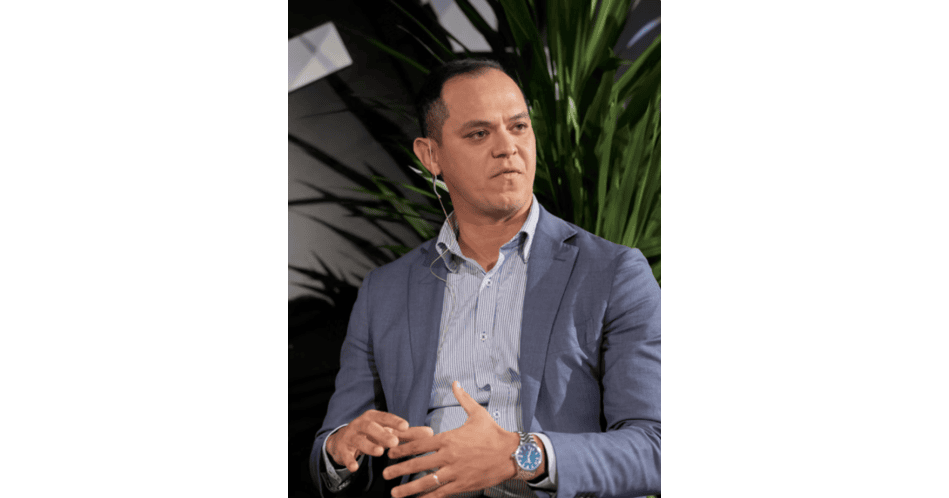
Bobby Gallagher, CEO Deployable Energy
Concepts discussed
Auto-linked from the episode's notes and transcript.
Show notes
Deployable Energy is a young company with a guiding principle. They believe that nuclear energy should be a product, not a project. Founded in 2025 after a period of intensive study and design work, the company has developed a product branded as the Unity Nuclear Battery (UNB!™).
It’s a 1 MWe (3 MWth) micro reactor whose general features arise from a unique combination of nuclear fuel, reactor coolant and neutron moderator. The choices the company made arise from a desire to move fast using materials that are affordable and available for use today. That criteria requires the materials to be in commercial service from suppliers that can provide a price list or firm quote given delivery terms and conditions. Where appropriate, it also means that the materials are qualified for use in nuclear reactors and for exposure to neutron and gamma flux.

_Unity Nuclear Battery (UNB!™) Steps of Utah Capitol Salt Lake City_
UNB!™ designers determined that they would use regular fuel – uranium enriched to < 5% U-235 and in the form of uranium dioxide (UO2) in sintered pellets mass manufactured by an established vendor. Zirconium alloy tubes separate the fuel from the coolant and moderator and retain fission products that might be released by the ceramic UO2 pellets during and after operation. The heat transfer fluid, more frequently referred to as reactor coolant, is inert helium gas that is blown through the core at high velocity and a pressure of approximately 50 bar (~725 psi). The neutron moderator is water at atmospheric pressure and a temperature that is roughly equal to residential hot water.
The reactor vessel that is needed to contain the chosen combination of functional core materials is small enough and light enough to be transported in the back of a short-bed American pick-up truck with a crew cab.
A full nuclear heat source system with transportation level shielding will fit into a 20 foot shipping container with a mass of about 20 tons. The additional shielding and physical protection layers added on site will add another 40 tons to the nuclear heat source portion of the system.
The system will be shielded with sufficient materials to reduce neutron and gamma radiation to below regulatory standards both during and after operation.
The pressurized helium will transfer the heat generated in the reactor to heat exchanger(s) where either water or supercritical CO2 will pick up the helium’s heat for either steam or hot sCO2 production. Steam or sCO2 will go to the balance of plant, which will be housed in a 40 foot transportation container. Depending on application, hot fluids can be used in industrial applications or used to turn turbine generators. The ultimate heat sink is the atmosphere with air coolers mounted on top of the balance of plant container. Many of Deployable Energy’s target customers and applications value low water use.

_Unity Battery conceptual layout_
Knowing that permissions required for construction, manufacturing, transportation and operating are key milestones, Deployable Energy began its pre-application engagement with the NRC in October 2025, within months of its corporate founding.
The company also began engaging with the Department of Energy regarding its initial demonstration unit. It wasn’t ready to compete for the Reactor Pilot Program, but it was one of four companies selected for the Nuclear Energy Launch Pad, which is the DOE’s follow-on to the foundational Reactor Pilot Program and Fuel Line Pilot Program. Deployable Energy plans to catch up to the Reactor Pilot Program participants and achieve initial criticality by July 4, 2026.
To learn more about Deployable Energy and their Unity Nuclear Battery, I talked with Bobby Gallagher, Deployable Energy’s CEO and Chief Technical Officer. Bobby’s background in the Australian military, oil and gas, shipbuilding, offshore development and successful technology start-up founder might seem to be a rather odd path towards designing a product using a nuclear fission heat source, but he explains how he arrived at his current position rather well.
During our discussion, Bobby described the decision criteria and process used to determine the UNB’s final combination of fuel, heat transfer fluid and moderator. He provided some of the historical background from other nuclear reactor designs that inspired the decisions.
But more of our conversation’s content was on the company’s choices related to manufacturing and deployment. We talked about Deployable Energy’s choice to put the center of its operations in Houston, Texas where the local manufacturing base for vessels, tanks, valves, tubes, skids, and other key components is well established and has been honed and expanded during the past several decades of world-leading “unconventional” oil and gas development.
Houston is an energy town with a deep understanding of the value and risks associated with providing power to the population. The city’s residents know how to manufacture, build and heavy equipment and they know how to create and finance innovative companies.
We had a fascinating conversation. I’m confident that you will learn something by listening to the show at least once. We no longer accept comments here for a number of reasons, but you can ask questions and make comments to @atomicrod on X.
Transcript
Read transcript
There's a way, a way such a better way today. Today, a major voice till the world, there's a better way. Today, there's a better way. This is right, Adamson. It's time for another Atomic Show. My guest today is Bobby Gallagher, the CEO and Chief Technical Officer of Deployable Energy, named many of you, Meena and I've heard. It did been pretty quiet until very recently. Bobby, welcome to the show. Yeah, absolutely. Pleasure to be here, Rod. And we're starting to make a name for ourselves. We like to show people what we're done as opposed to what we're going to say we're going to do. So we've started to complete some milestones. So we're telling people who we are. I'm always appreciative of those who do, rather than those who talk about maybe doing something sometime down the road. But anyway, I'll tell us a little bit about deployable energy and what made you decide to become a nuclear entrepreneur. Yeah, it's a fascinating journey, really. But, yeah, so deployable energy. We're a Houston based micro reactor company where we're developing the unity nuclear battery. It's a one megawatt micro reactor. It's LEU, 5% LEU fueled standard UO to be put this fuel in a PWR. It's a lot more moderated and it's healing cooled. And it looks a little bit like a baby candor reactor. It's a pressure tube reactor as opposed to a pressure vessel reactor. And in terms of how I went into this space, it was really, yeah, my background's heavy industry offshore oil and gas, shipbuilding, military, and venture back to startups. And I saw a lot of problems with energy being a key constraint in the offshore oil and gas space. And the original thesis was that it might be easy to deploy micro reactors in that environment then on shore. Now that was three or four years ago now, the whole world's changed since then. But, yeah, that's how I got into it. Initially it was to power offshore installations. And I can tell you more on where we are now, what we're doing now, but that's how I got into this space. So on the VC backed, yeah, entrepreneur, I've had successful exit, but deeply in the weeds in terms of first principle, thinking, how do I solve problems? How do I move regulators? How do I move stakeholders in adopting new solutions? This idea of gas cooled reactors with water moderation is not completely unprecedented, but it's pretty unusual. Most of the time, gas cooled reactors are moderated by something of a higher temperature capacity like graphite. Now, how hot is the water that you use as your moderator? Not very. It's basically to be probably colder than your hot water tap depending on which part of the world you're in. And it's completely unpressuralist. So, yeah, the hope is true is neutron diffusion and limiting that neutron diffusion length. And there's really no better material in slowing neutrons, thermalizing neutrons than cobora. How does it affect your reactor size compared to a graphite moderator reactor? Water certainly being H2O is one of the almost ideal moderators because it has an awful lot of very light weight hydrogen atoms in it. Graphite, of course, being C12 doesn't have quite as good a elasticity for slowing down this neutrons bouncing around. How big would a graphite moderator version of your reactor have to be? I think what you're leading to between light water and carbon is the moderating power effect between the two materials. And moderating power is one of the most important metrics for micro-active design. And so what does this mean? To give a short answer on how the size would change, our core being light water moderated would be is approximately a couple of feet across and a couple of feet long. It would be graphite moderated to maintain the same spectrum or similar spectrum. You would need to be eight feet across and eight feet long. That has huge implications and I can break this down a little bit more and I might use some historical analogies just to give you a feel. The AGR, the advanced gas cooled reactors, developed by the UK. The graphite to UO2 volume ratio within that core was about 50 to 1. So for every unit, 50 units of graphite you had one unit of UO2 fuel. So what do you use? That ratio is about two to one. So for every two units of light water you have one unit of UO2. And so that's a huge difference in power density. It's a huge difference in the size of the core. And so what does that mean if we were to translate that to the unit in nuclear battery? It would mean our core weight would have to go up 10X to account for the moderator weight and the increase in vessel weight. The shielding weight would need to go up approximately five X. At the end of the system, we would reduce like 25 X. The transportability of the system would become very challenging because now the core is taking out essentially the whole 20 foot container. And from a site works perspective, site works goes up significantly. So the pressure is weights on the cycle up significantly and they're going to have implications on size making other site considerations. So this is a really dramatic change. Something that would, you know, probably make the system untenable. And so typically the trade off for graphite moderator, micro actors is to reduce the moderator to fuel volume ratio. Hard in the spectrum, which leads to typically more neutrons leaking into the shielding structure and more site activation. And furthermore, you typically want to increase nominal power output, making the overall system bigger. Again, making it less sideable as transportable. But ultimately, you can get to a place where you have better power density and economics for a graphite moderated micro actor. So it would be fundamentally game changing if we had to use a graphite moderator instead of a light water moderator or put another way around. The reason why our system is so compact and deployable is 100% due to that moderating power and our light water moderation. So if you're not fully or maybe put out of your company, I'm not sure if you were actually behind the wheel of the truck or not. And then we have a very accurate from Houston to Idaho and a rather interesting demonstration vehicle. Can you tell us about that journey? Yeah, sure, sure. So yeah, at deployable energy. We want to build our unity nuclear batteries in a factory setting, deliver it to a site, install commission and and give power to the end user. We want to do that from day one and so we set a challenge to killing build our reactive vessel now obviously it's not fueled. It doesn't have all the shield being on it. Yeah, it's a it's a demonstration, but we're able to load our reactive vessel it's as is. Yeah, it's only a couple hundred pounds. It's only a couple of feet around and a couple of feet high. And so we put it in the back of an F-150 truck and drive it from from our factory here in Houston to Idaho National Labs where we're going to fuel it connected to the instrumentations and control system being a shielded structure and go critical. Yeah, fingers crossed before the fourth to I. And so we want to demonstrate that and get people comfortable in a round and we had some great. We had a bit of fun with it. We stopped in at Texas A&M. We've got a big partnership there with the largest engineering school in the nuclear engineering school and country. We stopped in at Salt Lake City. We presented to the energy committee to the state congressional committee and the Senate committee. We had we had the reactor and the F-150 truck staged on the steps of the capital there at Salt Lake City and I'd recommend anyone go visit. We had this unbelievably beautiful where it sits in the valley there and overlooking the valley there in Salt Lake City. And yeah, we're able to just get people close to the system demystify and try and break some of the misconceptions with nuclear. And so we had senators in high heels trying to clean up on a better truck to get a better walk and be close to our system. And so that was a great stop over there at Salt Lake. We had kids and public interacting with the system. And then we did the final leg to to iron L where we dropped it off at the materials fuel complex. We have a we have a site within iron L there that we're that we install the reactor in and you asked if I drove. like a like a typical CEO I did the glory runs and right I did I did the run from Houston to Texas A&M and then I did the run from Salt Lake City to to I know national labs. So I did I did all the I did all the fun glory runs and and the team. And so I think that the local co founders here we shared the year we shared the low and yeah they did a lot of the fun stuff through through West Texas and Colorado and. So I saw some of you tiring and out to Salt Lake City so yes I didn't do some time and I did all the other yeah I did all the further shoots I'm so speak. It's also a little bit more about what a complete unity battery might look like and how would it be transferred as you and I know obviously reactors have to be shielded. It would be a pretty good barrier of thick materials it keeps the gammas inside keep protects the public from the neutrons so what is a shielded version look like. Sure sure that that's a great question so yeah the unity. You could have a very small one megawatt system it's designed for distributed and indeed energy dense power applications it's containerized and modular so there's. But there's a nuclear island that's a reactive module. That fits within a 24 container. It has some of the primary shielding associated with it. And just due to our size of our core, we can fit quite a lot of shielding on that 24 container, not necessarily all of it, but quite a lot. Then there's a 40 foot container that's the balance of plant that holds a lot of the power conversion systems, that the power conditioning systems. And what we're calling the monitoring, the on-site monitoring station, not necessarily the control room. And we can talk about your control methodologies and how we want to operate the system there. And then there's a, depending on the site, you can add a 40 foot air cooler that provides the ultimate heat sink to air for the balance of plant for the reactor. And so, yes, it's those three modules. And then depending on the site, we could have the nuclear island subterranean or above grade inside a protected structure, a modular concrete structure that the rest of the shielding primarily protect the nuclear island from external, particular stone threats from natural to other threats. All right, yeah, introduce the topic. What is the control system look like? Is this something to be remotely controlled? Is it gonna be site operators? What's the strategy there? So the beauty with our reactor system is that we have some great reactor physics that limit some of the traditional limitations with respect to zen on feedback, our idea inputs, et cetera. And so we can essentially, once it's up at temperature, once started up, the main control mechanism for reactor power is actually the cooling flow through the reactor. So if you want more power, you just basically turn up the helium blower through the system if you want less power, you basically turn it down. So it has this very elegant, very elegant, to load-falling characteristic. And so for that normal operation, we see it being just the, yeah, there's just monitoring on the system. There's not such thing as a diesel generator operator. Yeah, but there is an emergency stop that you can probably press pretty close by to a diesel generator. We have the same philosophy, Yang. You can monitor the system, you can see it. If you don't like something, you can just press the E stop, that the reactor itself, with its control system, can basically vary power to meet the load as needed. And part 57, the latest regulatory rules that have been proposed allows those sorts of control figure configurations. Obviously it'll be validated. We'll build it out, we'll show them proof that the control systems are at last. But with that, then you can have, depending on the cyber posture remote control, you could have centralized control on the side of, of, yeah, a fleet of these reactors, depending on whether you need one megawatt a power, 10 megawatts of power, 100 megawatts of power, 1000 megawatts of power. So we have optionality. Could it be remotely controlled, definitely? Could it be controlled by a control room if the customer really wanted to do that, definitely? Yeah, go re-aggregate it and have one control room for a fleet of, a fleet of systems. Yes, so there's a bit of flexibility there. Do you see the one megawatt electric, or they guess it's probably about three megawatts or so thermal reactors being the optimal size and you'll just scale by adding more units or you can use for C sometime where you might wanna scale that to a different size for different uses. So, yeah, we believe we'll have very good economics at the one megawatt electric size. Could we go larger? Yes, but you saw it very rapidly complicating the, the site construction. We wanna make this as universally siteable as possible. Small reactors are less efficient than big reactors. Neutron diffusion is the bane there and leakage out of the core into the shooting structure is always a bane of small reactors. But if you can be small enough to be able to co-locate and easily be siteable, you can use not only the electrical power that's generated by the system, but you can also use the, the, traditionally the waste heat that comes off the power conversion cycle to power district heating or low grade heating processes or run absorption cool systems to run fuel water systems. And we see a tremendous amount of synergies there where we can get actually better efficiency out of the fuel by co-locating because we're not putting two thirds of the heat into the atmosphere. We can actually capture closer to 70, 80% of the heat being generated into productive uses. And that's how we see the benefits of being small. Could we go larger? I think yes, but you do start to run into siding considerations, site construction issues. And to a lesser extent, inherent safety, issues. So there is a balance there for sure, but we can definitely fit our one megawatt micro reactor on a 20 foot container, make it nearly universally soluble for, for most sites in the low 48 and, and Alaska and Hawaii and then potentially other applications. But that's the trade off. There's never a perfect solution. So we're trading off ease of mass manufacture versus ease of siding and, and, and, and construction work. What is your, what is the first of all, the good question? What's the mass of that 20 foot container? Sure, so we, we have a pretty simple but novel fuel structure where in a transportation case, it's sub 20 metric tons. And then when we get on to site, we can easily load shield, shielding into the system and make it closer to 60 metric tons and have the, the shield required to limit, the yet doses to, to, to what's, what's needed for, for regulatory compliance. So yeah, it's about, you know, the, the new virile limits about 20 metric tons in the, in the transportation, in the driveway, to transportation line. That's, that's pretty good. That fits within standard road wet limits without having to get special permissions or use, especially heavy, heavy wheel vehicles and whatnot. Yeah, I'm an awful guy. I'm wrong in moving things around on the roads is one of the key constraints, one of the key challenges, something that we know deeply here in Houston. That's what, that's what we do. We put things on skids. We put things in containers and we ship them to site and able to have a, you know, this is oil fuel parlions, a rough neck, be able to hit it with a hammer and it still work. And they literally hit it with a hammer to make it work in some cases. Give me a bigger hammer. Yeah. Well, yeah, they're called hammer unions for a reason. We used to talk about things being sailor proof. I guess it's a similar, similar design criteria. Tell us a little bit about your fuel itself. You said it's regular fuel, L-E-U, is it regular pellets or something different? It's, it's definitely something very standard. It can be used in a, it's developed for a PWR, but it's probably not, something will go into too much detail. But it enables, it enables a lot of the reactive physics and safety case that we're building is the fuel form that we're working with, obviously, in a established player in this space. You know, we're able to sign a contract with the DOE and have fuel manufactured in about 69 days. You know, so it's, it's something that's, yeah, you could say, is relatively relative, you know, readily available. If you can, if you have an engage a existing supplier and get it manufactured in 69 days. So if you know the right door to knock on and the right questions to ask, I guess, is that, that the, that the right questions are. The right questions are, and you're going to have, you're going to have the right design. You're going to have, and that's key in the right reactive physics. But yes, if you can line, if you can line that up, you can move very quickly. What kind of pressure does your helium need to stay? It's, it's a relatively low pressure to be a good traditional, the traditional P-W-R territory. But yeah, so it's pretty standard to, yeah, approximately 50 bar, 50 bar pressures for high temperature gas reactors. In case you don't naturally think in international units, a bar is approximately 14.5 pounds per square inch. 50 bar is 725 psi. Does the helium go through a, a, a heating chamber and produce steam or some other fluid on the secondary side to turn the turbine and make electrons, or make electrons move, I should say, nobody makes electrons. Yes, sorry, but yeah, so we have, we have discussions in place with steam, steam turbine, power conversion providers, vendors for that option. That's typically, you know, north of 30, 40 megawatt deployments for the, for those steam turbines. So in that application, yes, the, the primary exchanger is a helium to, to steam generator, function, but we also are exploring with, with, the number of vendors, super critical CO2, power conversion. And so we have a one megawatt system and, and, and it's a megawatt system that we're, that we're working towards as well. So we, we've got optionality on, on the, on the power conversion side from your tradition. or steam sites for some of the bigger applications that have access to water traditionally, to some of these middle applications in the tens of megawatts, to these compact one-to-one-to-ten megawatt deployments with the one megawatt power conversion cycle. They all have their pros and cons. If some of the, obviously steam turbines are TRL9, you can, again, if you know the right people in the right supply chain, you can get them relatively quickly. And then, yeah, some of these other ST02 turbines are less for a long, and they're on their TRL readiness, and it was in an not readily available at the moment, but they're becoming readily available in the next year or two. I'm sort of having a little challenge in visiting, using a 30 megawatt steam turbine with a one megawatt heat source. As you need 30 reactors to produce heat for one steam, one turbine. Yeah, yeah, I think of it like how we, again, I'll give an oil field analogy. We, we'd gang up one megawatt to an half megawatt prime, you know, diesel generators to run frack fleets. And then, you know, some of these frack missiles could be, which is a colloquial term for gaining up all these, all these frack pumps could be in the 40, 50 megawatt sizes or war, now, or, you know, another analogy could be utility grade battery farms. Where you have just lots of units that are modular, that's placed and, and, and gained up to provide the power and energy requirements for, for a site. So we don't see it really any, any different from what we've seen from these generators from gas turbines to batteries to solar to wind. Yeah, we, we see it quite often, lots of systems gained up to produce, to produce energy for, for a particular end applications. So yeah, so yes, it's, it's uncommon in the nuclear industry, probably the end of price is probably the closest analogy to it, but I believe and right now you're a Navy, yeah, an in our guy, you can probably, yeah, but I say, enterprise, I think some people swear off what it was a little painful at times to have that many reactors going, but there is historical, there's even historical precedence for this in the nuclear game. Sure, enterprise had eight reactors initially. And now I think at the end of life, it's the only had six that were still being used because they'd been uprooted and people decided she didn't need all the power for the eight reactors. But I think each one of those reactors, I'm trying to remember how they had it arranged with steam turbines and maybe four reactors per turbine. So I guess it doesn't really matter. You just want you to figure out how to do more than one, you can just keep adding. So that the, the Chinese are looking at HTR, the 600s, which will have six reactor cores feeding a single steam turbine. Ronald. I got a, yeah, built drill ships in the shipyard to see our career and around the world, like some of those ships had eight or nine prime moos, the generators to power, to power that vessel. So it's all uncommon. It's not uncommon to be modular. In the end, it's what is the unit economics? And what is the, what's the installation commissioning and operation profile looks like? They're the trade-offs that we're trying to work towards. Yeah, availability, especially in the, you know, when I was building rigs, availability was of utmost importance and having more small generators provided a better availability than having one big generator. And in a lot of these applications that we see, in the market right now, especially behind the meter, availability is something the customers will undertake for and of, and of paramount importance. Tell us a little bit about your manufacturing plans. I know that you've chosen materials and pieces that are kind of easy to put together. How, how much, how many factories you're gonna need? What's the capacity gonna be for your first factory? That kind of stuff. Sure, sure, sorry, my kids, my kids call the reactor. It looks like a trash can because it's so small. And it just looks like a stainless steel bucket. Our methodology, everything that we do within deployable energy is about mass manufacture. We completely allergic to anything that says batch process. We want to be able to get reactors and micro-actors in particular to be a mass manufactured continuous process similar to how you build an F-150 truck on a production line. And so in order to do that, you need to be really mindful of your material selection of your processes. And what we've done is we're basically eliminated all the major forgings out of the system. There can't be an open die forge product in there because that's just not mass manufactured. That's an engineered product. Could be closed die forge, yes. Like that's a mass manufactured. It has a high potential mass manufacturer. And so that's just one example. Our reactor core is boilerplate, roll boilerplate and pipe. These are things that obviously, the most commoditized materials in the world. And whilst the initial world up on a hand by hand process is probably more expensive. It's a process that scales rapidly with robotics with a production line. And that goes from the world preps to the welding, to the QA, to the inspections, to the integrity testing that happens afterwards. And so we're extremely mindful on that. And we've got a 58 acre facility in Houston, Texas. We have over 340,000 square feet of manufacturing space. We have a fab shop, machine shop, paint shop, a two assembly balls, 100 ton of head cranes. We've got warehousing. We've got 80 wheeler access through and through to the site. We've got a rail spur that comes onto the site. We're positioned to truly mass manufacturer reactors. Yeah, this varies different grades of factory made. I'd say we're in the mass manufactured grade. And that's what we're shooting towards as opposed to modular built, as opposed to batch process, semi robotic batch process. We want to be fully robotic, continuous manufacturer of our lines. Why did you decide to locate your nuclear company in the heart of America's oil and gas industry? If you see our reactor and there should be some good pictures on the internet, it looks like a shell and true big changer. It looks like something that we put in terms of we Houston. We put on the darker trucks, deploy to sites, whether it's an oil and gas site, whether it's an industrial site and make it work. Houston has that workforce. If we were to say, and that skill set for us to say, Detroit, that means automotive. If I was to say Silicon Valley, that means software. If I was to say Taiwan, that means chips. Houston is all about energy infrastructure. That's deployable to sites. That's what Houston does better than anywhere else in the world. That's why we're located right in the heart of the energy corridor where a good portion of the world's energy infrastructure is design built, deployed, and ensures the lifestyle that we live right now. We're leveraging that to the highest degree. You're going to be deployable, obviously, that's your name. How do you get your product to market? Is it depend on how close the customer is? Is there a way to move this across the world? What's going on there? Sir, yeah. We'd be like to factory build, factory fuel. Our system, again, due to its compactness. Its package will meet the parts, 71 rigs, in terms of shipability, of special nuclear materials. We'd like to factory build, factory fuel, deploy to a site, whether it be a road, or a rail, by ships. Have this size definitely by air. That would be obviously a very special client that would want to air deliver. But 100% focused on level-wise costs, and being able to get to sites where traditional infrastructure has not met the challenge that's required for the site. So that's how we see how deployment strategy. And then we'd bring the system to back, depending on the sites, if they're relatively small scale, we would send back to a centralized facility, refuel and basically swap and go, the nuclear island. Yeah, the propane bottles running out of gas. Yeah, find another valve connection, hook that up, keep the operations going, and then on that other site, you'd take away the used system and put in a new one. On bigger sites, and we have sites that were working with project developers that have up to gigawatts of capacity. That's 2000 units. It's about 60 acres per gigawatt, so 120 acres. So it's actually quite small in terms of its footprint. We would, that scale would enable on site refueling, and we would establish a refueling on site. So there's a tip over point, like everything, there's a trade off when it makes sense to set up factory refueling or on site refueling. If you decide to do it either way, what are you gonna do with the materials you take out of the reactor? You're just gonna use a standard, Drycast or maybe a smaller drycast. And how many are you going to be able to store before you run in a space? It's a great question. We've got 36 anchors on developed land. So we've got a bit of land. We've got a bit of land. But we are really encouraged by some of the developments in closing the cycle. I had the pleasure being at the NRIK program review. And I would say probably 20% of the developers there working on closing the cycle. And so we see how spent fuel is being fueled for the next generation of reactors. And so I don't think, obviously, right now with the Red success is, yes, drycast storage is the way forward. But I'm seeing an open within the next 10 years or so, next five, 10 years. We will start seeing economic options to close the cycle to support a plutonium economy for fast reactors and breeder reactors and other waste-burning reactors that should help alleviate some of those concerns that are on. There's been a lot of fits and starts in this space. But I think the right time is the idea to start working on that solution. And I would encourage those in that space to keep moving forward. You've talked quite a bit about envisioning mass deployment of your systems, but any kind of new product, at least in my opinion, is got to have early adopter customers who really need the capabilities that their new product can provide and maybe willing and able, because of the kind of value that they would get from it to pay a bit higher price. Where do you see as your early adopter customers in general? It's a great question. We are working through a number of different first-to-market options. The one I would say that I really like is the fire to fission, the natural gas to nuclear options, this hybrid option where the customer doesn't take on a lot of risk. They still have the natural gas option. Whilst you build out and get the availability up on your system to supplement a bottoming cycle on a site. And so that one there I like is really attractive. There's a number of maritime applications that have a very similar profile to that. Because of our size, because of our footprint, you can initially go to market in a hybrid arrangement where you still have the capabilities of your traditional hybrid carbon systems and you're basically displacing hybrid carbon use. So they're the first ones that I see. Yeah, it's a last risk for for adopters. And you don't need to necessarily swallow the whole site profile to start off with. You just incrementally bring on and displace hydrocarbon consumption on that site. But that bit ship or a site. And I'm not sure if you need to use to speak with everyone. I'm not sure if that's a different go-to-market plan to others, but we're excited about that application. One of the applications that always excited me regarding small reactors, even dating back to when I tried to be a SMR developer myself, was islands. Because many islands simply can't accommodate large power systems. So they're limited to burning something like diesel fuel, premium fuel just to provide electricity. I think you have a little bit of personal experience with islands. What do you think of that market? That's that's exactly the market that I'm thinking of. Where again, you still have the diesel infrastructure there. You can still choose to burn the diesel. But you start incrementally deploying your reactors and displacing those generators. And islands have maybe just a double click on just how powerful this is. We did a study with the Fiji and government. Approximately 10 to 12% of their GDP is spent on diesel. Some of their places on the diesel grid, electric grid, are paying close to $1,000 a megawatt hour for power. Now, these are remote islands. But upwards of over $400 a megawatt hour in some of the bigger urban centers, we see us been able to incrementally displace that diesel consumption be able to maybe more than 60% close to 70% reduction in electric costs over time. And we've more than that. And essentially give back single digit points of GDP back to these countries in terms of their economies to spend on other things. But more importantly, make these economies more productive. And furthermore, water is typically a key constraint on a lot of these islands, these communities, especially during tourism season, et cetera, where tourists typically like to use a lot of whole water. There's hot tubs and pools and showers, et cetera. And so fresh water is typically a key constraint and hot water is typically a key constraint. And then able to use the, again, traditionally the waste heat of the reactor for desalination purposes and hot water delivery is something that you can do with one megawatt microactor to power a resort or to power a community, et cetera. So the size is important. These are not traditional nuclear. We're not focused on displacing grid. Look at the grid scale. We are, I'm sorry, believe that similar to, you need a 500 megawatt gas turbine, as well as needing a 2.5 megawatt gas turbine, as well as needing a 50 kilowatt diesel generator to your lawnmower running on gas. We believe there'll be a spectrum of nuclear solutions. And but we want to be the lowest cost solution in that forward deployable space. And we think, yeah, we can do with at 50, 60%, the production compared to the cost of diesel. And so yeah, islands are perfect, are a perfect example of how we could change the gang, then. Yeah, I like the way you said they're limited in freshwater because islands obviously have plenty of water around. Yes. The water water everywhere and sometimes not drop to drink as the old man in the seas is a. I understand. So Bobby, we've been talking a while. I'd like to give you the opportunity. What is there something about deployable energy that you want the world to know? You guys have been pretty quiet recently. I think I did recently see an announcement that you had been selected as one of the first cohort for the nuclear energy launch pad program. That sounds pretty exciting to me. Tell us more. Yes, so we're really proud to be selected by the DOE to be one of four companies to be selected under the nuclear energy launch pad program. It does give us this ability to use the DOE process to deploy our first of a kind reactors. And the same team, the same group of individuals that have supported us in getting to criticality and touch wood. You know, we'll be there in the next six, eight weeks or so. That same team can then help support a first-of-the-time deployment under two different programs. So one is a nuclear energy launch pad I and L. And that's where we're gonna do all our hard testing. This is where we're gonna do all our off-normal, our design basis, accident events, the beauty of our system. Yeah, the fuel is about one and a half million dollars. The reactor, first of a kind, you know, sub-seventeen million dollars to build. We're gonna be able to put it throughout its paces, being inspired by what EBR2 did by doing a loss of pool on accident. We're gonna do that and more to prove our safety case, our inherent safety case at I&L. And then with the nuclear energy launch pad USA, we wanna be the first to deploy in the maritime space with that, with this special, you know, license that we've been given or ability to apply for this license under launch pad USA. We wanna be not only do we wanna, like I said at the start, we wanna just show people what we've done as opposed to tell people what we're going to do. We're gonna build our first system co-located on our manufacturing site. It will power our machine shops and our fab shops and our paint shops, et cetera. And it will also provide the heat for our air conditioning system. And so we can show our customers. This is how you go behind the meter. This is how you can be nearly universally sideable. This is how you can operate and be more efficient and have nuclear energy basically decarbonize and provide energy abundance. And so with this program, we hope to hit all three of those objectives. All the hard stuff in IML, how it's actually gonna work on land at our facility and make some waves with the first privately backed civilian nuclear maritime demonstrator. Sorry, we've got a big ambitious couple of years ahead of us, Ron. Now, that's darn exciting, but keeps you motivated as it feel to be on that cutting edge in a industry that seems to be ready to take off. This is what I love to do. Right, like after I exited my previous business, I didn't need to work. But, yeah, I think I sent the wife crazy enough to know that I'm like a pack meal before I don't. if I'm not loaded up and working, I start to kick in spit. And so I don't see this as work. This is an absolute, this is passion, this is what I love to do. I love to figure out the first principles of a problem. I love to then work the stakeholder regulatory angle to it and then generate value for the customers and all the stakeholders. So this isn't work for me. This is, yeah, I'd be doing this anyway. If the line line or not, it's become a passion of one. Terrific. Now I will go back and let you, do you have any concluding remarks? I'm sorry, I sometimes get to the conclusion and realize, wait, I didn't ask everything I want to ask. No, well, yeah, I think the conclusion I think is like, please follow and track our progress. We're looking for, yeah, if you're interested and passionate about changing the world and nuclear energy, if you're willing to be in or around either Houston or the Washington area, we're looking for great people. With scale and up quick, we have a design that's 100% focused on scaling rapidly now with the existing fuel supply chain, with the existing materials and mass manufacturers' ability. Yeah, America makes products not projects. Any more we make planes really well, we don't necessarily make airports that well anymore. If you believe in that mission, I'd ask you to reach out. We're looking for great people all the time and appreciate your platforming, at a global energy here. For all, you've been a great source of knowledge and inspiration, whether it's been reading and time again sites or at discussions along the way. So again, appreciate the time today. You're doing great. You're doing, go on to work and getting the nuclear energy story out. So I'd say that to finish off from. Well, thank you. And if anybody was watching this video, but we don't do video, I'd be blushing. But, hey, Bobby, what is the URL for deployable energy? It's up your head. The URL, it's deployable.energy. So, it's deployable.energy. Okay. All right. So deployable energy, you can find that Bobby Gallagher was my guest today. As you might have heard, Bobby is not from the United States originally. He is Australian, right? Yes. Yeah. 100% yeah. Australian of Anglo-Arsh and, you know, a holy bar there. But yes, made my name away to the US like so many others. On a military service, what did you do again? I'm sorry. I'm asking questions raised in the very end here. No, no worries. Your fourth generation to serve in the Australian military did my time during the war on terror. I spent most of my time dealing with countermeasures to IEDs. Yeah. Yeah, it was a rough time in some respects. But yeah, so all about engineering solutions to save lives in the military and then oil fields build rigs all over the world with diamond offshore drilling. Well, the, yeah, learn a lot of problems about big projects and mass manufacturer and from Korea to Japan to China to European factories to the US. And, you know, I did a start-up, had a successful exit, making sure that we would never have another disaster like to border horizon occur with my first VC back venture. So, yeah, I've had a blessed career. Yeah, it's been at the globe. Dealing with problems, but I'm only making things either safer or it will all more environmentally friendly. Terrific. All right, Bobby, take care. Enjoy your weekend. I think you've got another busy weekend of a bit busy week ahead of you talking more about deployable energy, traveling around the world, leaving your family behind, but having fun while you're doing it. Take care. Thank you, Ron. This is right. Adams, host of the Atomic Show and Atomic Insights. I've been providing insights into atomic energy and advocating for better nuclear industry performance and accelerated growth since 1995. I hope you've had the chance to enjoy and learn from many of these posts and podcasts, but that's not all I'm doing. Six years ago, I entered into a partnership that lets me invest into some of the most exciting young companies in the energy industry. With my partner, Valerie Gardner, we launched Newklation Capital Fund One, a non-traditional venture fund to focus on investing into ventures that we believe are well-positioned to flourish. Those companies will help us all reduce dangers to penison fossil fuels by using ever-increasing amounts of abundant, affordable, dependable, and clean nuclear energy. If you are an accredited investor, you can join us. What makes us non-traditional is that we allow regular people to invest in innovative private ventures in amounts from tens of thousands to hundreds of thousands of dollars. We reduce costs and risk by building diversified portfolios using an online venture fund custodian. That custodian can help you determine if you qualify under SEC rules as an accredited investor and helps make our fund accessible and affordable. Investors subscribe as a level they can afford for the number of quarters they prefer. We've made 25 investments and we continue to see many exciting investment opportunities. If you believe in long-term prospects of nuclear energy and want to put a portion of your patient investment dollars to work, please reach out as every quarterly make one to three investments. But you have to be subscribed to get an allocation. Please visit our website nucleaseandcapital.com where you'll find a wealth of information. That's nucleaseandcapital all one word.com. If the content you find stimulates you to take the next step towards investing, please fill out an investor interest form. Today, today, we'll raise your voice till the world has a better way. Today there's a better way.