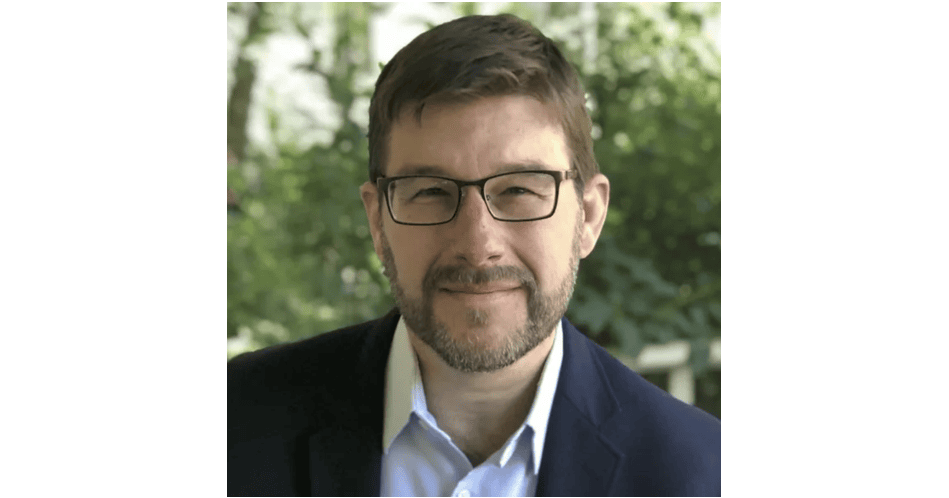
Jarret Adams, Founder Full On Communications
Concepts discussed
Auto-linked from the episode's notes and transcript.
Show notes
There are few industries in the world that have a greater need for skilled communications than the nuclear industry. It’s a challenging technology to understand and to explain to those who are not really interested in the nitty gritty details. There is a significant portion of the industry that believes in silently going about its tasks, partly because there are so many parts of the field that are classified. The influence of the Silent Service is deep and wide within the nuclear sector.
There is a growing group that has a different point of view. They bring originality and experiences from outside of nuclear and are not constrained by the traditional tactics. Those newcomers aren’t starting from scratch, however. There are some experienced communicators who also have valuable thoughts and ideas that they are willing to share.
Jarret Adams, the founder of Full On Communications, has been professionally explaining the nuclear industry for more than two decades. He has experienced and supported the ups while also figuring out how to respond and adapt to the downs.
He started his career as a business journalist. He learned about the nuclear industry during a stint with the Nuclear Energy Institute. While there, he learned the value and the promise of nuclear energy and chose to realign his career to support and defend what was, at the time, a bruised sector with exciting potential for growth and for making positive contributions to humanity.
He took advantage of his facility with the French language as he moved over to Areva, which had ambitious plans for international growth during the first phase of the nuclear renaissance that continues today.
As prospects for immediate growth diminished as an extended period of low cost natural gas was combined with strongly negative public perceptions caused by the widely publicized damage at TEPCO’s Fukushima Daiichi nuclear plant, Jarret departed from Areva to become the Communications Director in the UAE for an international public relations firm. He was part of the program that enabled the UAE to expeditiously create a capable nuclear industry where there wasn’t one before.
Following his time in the UAE, Jarret founded Full On Communications to provide services to a broader and more diverse set of customers in the nuclear industry.
We discussed the importance of story telling, the value of purchased media time to enable companies to tell their own stories and the importance of techniques like press releases to keep the public, the press and investors informed about both progress and hurdles.
Full On Communications recently celebrated its 10th Anniversary. Jarret and his team have contributed to many of the initiatives and actions that have combined to dramatically change the future prospects for nuclear energy development. They look forward to many more years of growth as the next stage of the nuclear renaissance continues to emerge.
Transcript
Read transcript
There's a way, a way such a better way today Today, a major voice, tell the world there's a better way Today, there's a better way This is why Adam's in its time for another Atomic Show. Today my guest was an old friend, with a great last name, with Jared Adams, the founder and CEO of full-on communications. Jared and I met each other, Jeez, more than 15 years ago, when he was a tour guide of a terrific trip in France, hosted by Ariba. Jared, welcome. Thanks so much, Rod. It's great to be with you. It's so good to tell. I've always enjoyed our conversations over the years. I still have very fond memories of having you shuffle a group of about six writers and bloggers around France showing us all of the great installations that Ariba had was operating at the time. And also finding us some really good places to eat drinking be married. I think that's one of the great advantages of going to France. Yeah, and that tour was part of when I worked in communications at Ariba back then. And we found that one of our most effective strategies for getting to people to understand what we do was to take them to actually go see them. And so we saw a saw a enrichment facility, a component manufacturing facility, a Flaminville EPR that was under construction at the time, and as well as the Wajag used fuel recycling facility. So I thought it was a great experience, and I think we had a great time. We did. And so what I'll do now is I'll let you tell a little bit more about your background. You are a communicator. One of the skilled professional communicators that the nuclear industry has developed over the years. What is it that brought you into this business and why have you spent so much time trying to help people understand what it is we do? Yeah, thanks so much for that ride. So I started off in the nuclear industry at NEI at the nuclear energy institute, and I had started my career as a journalist. I was a business journalist, wrote for a couple of different trade publications at the start of my career. And then in the early 2000s, I joined NEI and went into communications. And at that time, we were just starting our family and I thought, well, hey, I'll do this for a couple of years, and then maybe I'll move on to something else. But at some point, something about the nuclear industry kind of grabbed me. I felt like there was really something here, you know? When I realized that one ounce of uranium is equivalent to one ton of coal, and that if we're going to provide energy for a growing planet, I think nuclear can really be a part of the answer. So as things progressed, I went moved on from NEI to Ariba and worked in communications there. And then when I left Ariba, I decided to start full-on communications. I saw this as an opportunity for us, you know, if we could learn to tell our story better that nuclear had a huge potential. And so that's how I ended up where I'm at right now. Yeah. As a reminder to people, or as a trip down memory lane, the trip that I had where I was going to France and learning about the growth of Ariba projected contributions that we're going to have to the U.S. nuclear business occurred in the summer of 2010. At the summer of 2010, there were great prospects all over the nuclear world. That was probably near the height of what some people refer to as the nuclear renaissance in the past tense. But I think of as the first stage of a nuclear renaissance that's continuing today. It wasn't but a few months later that the nuclear prospects changed rather dramatically. So true. You know, I think in 2011, as we all remember very well, was when the Fukushima incident happened. And from there, a lot of these great new prospects that we were sealing, seeing around, you know, 2008, 2010 had dried up. And that's what triggered my departure from Ariba. And so when I started to fall on, you know, plants were shutting down prematurely. They were closing across the country. They were struggling just to keep operating plants online. And things for the nuclear sector were looking pretty grim. You know, we thought, well, geez, you know, what is the future for nuclear energy? Is it we were just hopeful that it was going to hang on? But I still thought that there was a huge potential. And that's, you know, and now as we're seeing things have really turned around. Well, one thing that we did learn was that the nuclear industry had some real growing to do in terms of its capability to deliver. Because as you mentioned, we visited the in progress, Flaminville EPR in 2010. And it was pretty well along. It had been under construction by that time for about six years, I think. And it looked like it was, you know, within a few years of completing. As I recall, Flaminville didn't go online and become commercial until within the last few months. That's a long time. That's right. And I think it just goes to point out that some of the things that the nuclear industry needs to address. And I think it's been doing a great job of addressing that. You know, I think some of the things that have changed nuclear's fortune over the past decade has been for a lot of these companies. And organizations to go back and look at different ways of doing things. You know, it's not like there's new technology. Yeah, I mean, there's different designs or different, you know, they're not just using light water anymore. But it's also the different business models. It's not just large monolithic conglomerates that can build nuclear. I mean, you're seeing small companies, medium sized companies. And so they're having different approaches, different ways of talking about it. Different people who are running these companies. And I think that's part of what's reenvigorated this sector. When you were starting off, you started off in nuclear at the nuclear energy institute and then went to Ariva, which is at that time was the French nuclear industry was all under one corporate roof. So you worked with very large entities. With full on, you've worked with entities of different sizes. Can you tell us a little bit about the difference between the strategies and the effectiveness of communications for the very large and the not so large? Yeah, I think one of the great things about having worked for Ariva is that we got to work in every aspect of the nuclear fuel cycle. You know, from uranium mining to enrichment to fuel fabrication to plant construction, plant operation to decommissioning and even recycling of used nuclear fuel. So we got to learn about everything soup to nuts. And you know, now since then, I work with some of the smaller companies that are just focused on one aspect of it, whether it's developing an advanced nuclear fuel or a new SMR design or, you know, a different approach to doing business or maybe a services transportation of fuel and used fuel, that kind of a thing. So we're taking a different slice of it, but it's all kind of, there are all different pieces of the same pie, if you will. What about some of the personalities that you've had to work with? It seems like people that are at the top echelons of very large, well-established, long time corporations might have a different way of talking to the public than those who are more entrepreneurial. Have you found anything that stands out in your experience? Yeah, I think one of the main things is that for a long time the nuclear industry was happy to just be quiet about what it did and just focused on operating their plants and being quiet, but that was never going to work. I mean, at some point something's going to happen that's going to capture public attention, whether it's something major like the Fukushima incident or something minor that happens for day, but the problem is that you only get into the public's attention when something bad happens. And for a nuclear to be successful, it needs to communicate when things are good to have a constant so people that understand your technology, they actually want your technology. And then I think that led to another important transformation is that they realize that nuclear is a commercial offering, not just a necessary service. It's not something that people have to have, it's something that people want to have. And so by doing that you actually have to sell your product to explain why it's better than the alternative to say why you would want it not just accept it. So I think that that's really led to a major transformation. And that's why we're seeing all of these different technology, different approaches and different companies that are competing for a place at the table. Many years ago I was attempting to get, I guess, some earned press when I was trying to start a very small company. And I learned something or kind of figured something out through that experience when the person I was working with who was operating a trade publication said to me, Rod, this is a fascinating story. But I can't tell it unless you are a commercial customer. In other words, he said, in order for him to tell my story, the story of our company, our company kind of had to buy some ads in his publication because that's where their money was made. They didn't have a subscriber price, they marketed themselves to people in the trade as good information source, but the way they made money was to sell ads. It kind of stuck with me because I realized that one of the challenges that nuclear industries had forever is that we don't get much play in the media. And I finally figured out that it's because we don't buy many ads. Yeah, I mean, I think that we should avoid there that there shouldn't be a quid pro quo. I mean, obviously that does, there shouldn't be sort of such an explicit exchange, but it's true. I mean, for a long time too, the nuclear industry underspent on its marketing and communications. It's, it's an expenditure compared to similar industries was a small fraction of what other industries spend on, on outreach because they didn't believe it was necessary. And I think that's really changed. I think the companies today, and one of the reasons why we're seeing this transformation is because they understand that that communicating with their potential customers and partners, and investors is how they succeed. That companies that communicate well are actually financially more successful than ones that don't. There's no doubt that the offerings that the nuclear industry has today are much more commercial, but they're also being offered in a market where there are many alternatives. And people can get involved in all kinds of discussion groups or whatever. You know throw phrases around and talk about the technical superiority of their product over somebody else's but the Bottom line it comes down to the fact that whoever buys the product has alternatives and they have to balance the Advantage is a buying our product over buying somebody else's product and so it's it's incumbent in my belief up To the industry to tell its own story And the most important way to tell your own story in the media is to Do what the media is designed to do which is to put your commercials in front of the public Yeah, that's absolutely right, right? I I think that that And I think the companies have been doing a much better job of it that and I think with the tools that we have today too That companies can tell their own stories. They can create their own videos They can do they can do things on social media and They can do a great job of going directly to their stakeholders without having to go through the intermediary of media I mean, I think Working with the media is still very very important But there is also a lot of different ways to tell your story through your website through your social media through through you know in-person Communications there's all there's a lot of different ways that you can do it and I think it's important to do that especially you know depending on where you are in In the business, you know some some for some it's more important to talk directly to the general public Others you talk directly to your cost your you know your suppliers your customers You know your more of a B to B player so your communications profile is going to be different But but in all of those cases it's important for you to tell your own story and and to use a variety of different tools to do that When companies start to develop projects What can you look kind of assistance? Can you provide to? Engage with the community and get to the point where the community is Becoming a team member and asking them to build their products and be ready to expand in their own community What what's the engagement strategy? It's best? Appropriate there when you get to the point where you're building a facility then you want to engage directly with the community and And they call that you know, that's called a community relations essentially And you can do that through the media, but you also go out into the community and at a lot of times that's the type of thing that in-house Communicators will handle that's less the type of thing that a good firm like mine would do Although we could be happy to but once you're at the point where you're building a facility is important to have People who are with the company who can represent the company directly and say okay you're with You know companies Z and company Z is building this facility And you could identify that person directly with them because that's how you build that credibility is you want to be able to put a face to a company and say I trust this person I've spoken to him or her and and and I Have this this trust factor. That's so important when you do any doing a project of this nature these days entities like states are becoming very important in Expressing their support their interest and even their enthusiasm for new nuclear and the economic Development can bring to their state have you been involved in any of the the efforts that have Encourage states to do things like overcome their more authority or set up facilities or or set up programs Or maybe getting gauge with the DOE's Life cycle campus initiatives I've been working with companies that are trying to take advantage of some of these things and and I do know some of those folks as some of Great organizations that I that we worked with like the mothers for nuclear who've been active in California did extraordinary work Trying to preserve Diablo Canyon and and we're recently successful along with a lot of their allies. That's no wasn't just them But and then there's generation atomic that's that's been very active And then any eye has been great to at the state level to and helping reverse those more atoria And I think there's some amazing things going on you see what's going on in Texas where there's multiple new reactor projects. So Virginia Ohio Lots there's eastern Tennessee is another great example. There's so many things going on and and you could see those those different The moratorium that that are being reversed. You see you know Illinois and some of the other states. It's extraordinary Why do you say if you've been involved in a few of those efforts yourself haven't you oh? Yeah, over the years. I have a little less specifically advocacy these days Decided a number of years ago that my contribution to the industry will Go on to try to attract more capital To the industry so it's a little bit less of the advocacy and more of helping people understand that there's a lot happening here. There's a lot of really cool things happening and That also offers the opportunity for some good returns and the opportunity to put your money to work if you really believe that the nuclear Technologies and their success are going to improve the world and make it a better place for your children Sometimes those who invest that's kind of the reason we're investing But anyway, that's I'll go away from that commercial for nucleation capital, but thanks to the opportunity Absolutely, yeah, I Have been involved in some of the state efforts Every once in a while I'll try to remind my former neighbors in Virginia that they have a great Resource in their nuclear industry, but they shouldn't forget their resource in the uranium Deposited sits in Cole's Hill 113 million pounds of uranium just sitting there waiting to be extracted In a rural area this already got lots of power and roads and everything else which makes it a great place to mine uranium The state has I visited there once back when it might or even days. It's quite a sight Yeah, it's it's a beautiful place that the Family homestead is within a few hundred yards of the Top of the uranium deposit where you can take a scinillator and make it sing because it's so close to the surface. It's pretty amazing but Yeah, yeah, the point about investment I I figured too that's one of the the changes that that I determined over the years is Recent more recently we've added more investor relations capabilities because a lot of these small firms It's not just about you know getting media attention or finding partners and customers It's also about attracting investment too. So we we focus more on that Lately as well because that's definitely something that the companies we work with are looking for We've helped startup companies Understand that if they're going to be venture finance They need to have a drum beat where they're always fundraising Always trying to achieve the milestones that they told their investors they were going to make and always Looking for the next Opportunity for around a fundraising And of course, it's always best to raise funds when you don't need them Because if you really need them, it's hard. They're hard to find That's right. Yeah, and that's what's important too is if you're when you're a startup Nuclear company to to have have these milestones laid out You know so that you can keep communicating with all your stakeholders So that they can see the progress that you're making especially in such a long cycle industry like we're in You can't just say okay, well, we're gonna Build a reactor a few years from now and then until then, you know We'll talk to you in a couple years They want to see your progress, you know on a monthly basis not not in a yearly basis So Jared, I'm going to give you an opportunity since you're on the this is your profession An awful lot. We're not awful. I should I should put my my bias out there I listened to a lot of very opinionated podcasters many of them Really degrade or denigrate the Idea of press releases. Can you help us understand why press releases are not only Important but valuable to both the company that issues them and to those who are outside the company Trying to keep track of what they're doing Yeah, absolutely. I think they're a very important tool I mean some some would argue, you know, that maybe they're kind of an old-school way of communicating But there's still a very good way to communicate broadly to your various stakeholders It's it's a good way to communicate to your investors to your partners to your customers What what you're up to and there's I mean, you know, there's lots of different types of ones that you can do but but but but they're still an effective tool, you know and and a way for Accompany to reach out directly to the people that it wants wants to tell its story to some of the Criticism is that companies are issuing press releases for occasions events milestones That really aren't very important compared to actually completing A reactor, but as you said you can't really operate by saying well We're gonna build a reactor and it's gonna take us four or five years So you won't hear from us for four or five years, but then you know we'll come back out and talk to you Once we get this all done Right, why is it so important to kind of keep people informed about what's going on and maybe what your successes are Sometimes people aren't as willing to issue press releases about their hurdles, but those can be important too Yeah, absolutely, and it's about building trust and credibility you want you need an update I mean you hire somebody to do renovations on your house You're not gonna say okay, well, I'll tell you about it when it's done. You want to be able to hear how the progress is going and here Here with your plan is here how you Progress, you know you can you start to work concrete or you begin to Fabricate the components you do you have the delivery of the components you you get approved for your construction license from the NRC There's all sorts of milestones along the way That that help to build confidence in what you're doing and those milestones that help you know You're all of those people your investors your customers your partners to know that you're you're meeting these obligations And it's same thing, you know if you hire somebody to do you renovations and they say okay, you know I've looked I've Begin to do the framing and I've you know now I've done the drywall and now we're done the wiring and I guess you probably the wiring before the drywall, but you take my point It is important to do things in the right order Wouldn't want to put the wires in after you do the drywall though that's something that the industry has been guilty of over the years We sometimes forget the sequence of events and has to tear things apart Yeah, I think that's that's where we're really learning too is that these innovative approaches that we're using They're using AI to help manage large construction projects or to be able to more effectively submit license applications They've got new business models where you've got you know companies that are specifically focused on project development Or different approaches to fuel cycle, you know new enrichment approaches new reactor technology since it's it's it's it's really an awesome time to be part of nuclear It is Sometimes I wish that we could be a little bit more straightforward to explain why we haven't done something in the past Especially when it comes to things like recycling I can't tell you how many times have been in a conversation when somebody and say, well, man, this way stuff's a real promise. And well, it's not really an explain what we could recycle it. We can store it on it. Well, why haven't we done that in the past? It's well, okay. Let I can tell the story, but I sound like a nut. Let me say. Yeah, I know. It's a long and complicated story why we don't recycle the United States. But there's a lot of new movement towards that possibility. You know, there's some companies that are talking about refuse fuel recycling like OCLO. Then you see, you've just seen, I think, the RFA, I believe it is from DOE about the possibility of doing recycling as well just recently. Yeah, I'm not sure what the A stance will request for something. Uh, yeah, it was, well, let's just leave, call it an announcement from DOE about recycling. Yeah, that's a current topic. Now you, you had some time communicating about the recycling program that Francis been running for so many years. Yeah, I think about tell us a little bit about LeHogg and, and maybe even as I recall, there was some sort of improved system, improved cycle that was being developed when we were back when we were visiting and that was part of our visit was learning about this co co ex co coach. Yeah, structural extraction. Yeah, so the traditional type of one, what we need to use when you recycle used fuel standard use fuel, you separate it and you know, you take the plutonium out and the uranium and then the other stuff. And then, you know, and then you actually have for a period of time separated plutonium, which is a concern. And so this co extraction, they extract the plutonium and the uranium together so they're never separated. And so it helps reduce the proliferation risks. And at the time when it went out, Reba was considering building a recycling plant in the US, that was the technology they were proposing. So it does have some advantages. And you know, I think if they're ever to build it, where they would probably do a a process, you know, more like that where you don't have the separated plutonium traveling out, you know, right? Right. But Lahag was already built. So trying to re jitter it to use this new process just didn't make any sense. Is that correct? That's right. And, but you know, it's recycling is it's a very promising technology. When you look at the price of uranium now is, you know, hovering around $100 a pound, right? And what at a certain price point, recycling of used fuel starts to make good economic sense, even though there's a lot of uranium out there. And if our growth projections prove true or our growth aspirations or whatever you want to call it, then the idea that we would have to recycle fused fuel in order to have access to fuel for reactors is a serious concern. So, you know, it's possible that there will be more initiatives on subject of recycling. That's true. It's also a fact that if you think you might need recycling in the future, it's better to start now than to wait until you need it. Because developing it from a standing start is going to take some time. And yeah, absolutely. Because most of the over 90% of the energy is still in the used fuel. I mean, it's it's it's a waste not to use it. And the other part about recycling that the recycling economics that is often not discussed is those studies that have shown that recycle, recycled fuel is always more expensive than fresh fuel. Ignore some things. They make some assumptions. They start with the assumption that uranium is cheap, which as you at point out, it's not always cheap. Markets have driven the price up considerably in the last five years. They also assume that the cycle you're talking about is a low-enriched uranium lightwater fuel cycle where the initial input is 5% or less uranium, 235. But if you're talking about advanced reactors that use halo, they don't burn it down to the 5%. They are going to need to swap out the fuel when it's much higher than that because they need it at that higher enrichment to be critical. So obviously you can't burn it down to 5%. So what's left over after taking it out of an advanced reactor cycle is going to be a higher fizzile content, which makes it more valuable. Right? Yeah. I think one of the other advantages too is that once you've recycled the fuel, you have a lot less waste to send to a repository. And the waste that you do have has taken a lot of the fission products out of it. So it's much easier to dispose of. So there's a lot of advantages to recycling if you can once the economic aspect are dealt with. Yeah, two of the more troublesome isotopes in terms of just if you want to store the material in a geologic repository are strontium 90 and season 137 because they're moderately long-lived materials, 30-year half-lives are roughly. And they decay with a pretty large amount of heat so they are thermal generators, which makes them really troublesome in a repository. It also makes them really valuable for uses like powering spacecraft or moon bases because thermal energy is what you really want. And you want it to last a while. You want it to be a moderately long-lived material. So that 30 years after you put it on the moon, it's still generating half its power. That's good stuff. Right. So yeah, this whole idea of throwing it waste is it was of their people that refused or thought they could use the waste issues a way to to constipate the nuclear industry and quite frankly, they've been very successful so far. It's time to beat them at their own game because this stuff is useful and valuable and exciting. There's a story to tell, right? Tell us about the importance of telling stories as part of your communication strategy. Yeah, I think that that's something that is an important part of it because people remember stories. They don't remember numbers. And that's working with a lot of engineers who think, oh, well, I have to get, you know, I have to tell them all of these numbers like, you know, 1,000 megawatt reactor produces enough electricity for 786,000 households per year or something like that. And it's like, nobody remembers that sort of thing, you know? War 8C do over your 1,000 megawatt reactor of weights 800 million tons of carbon per year. Or I mean, forgive, forgive with them. But again, that's it. I don't remember the numbers. Are you know, I've spent a lot of time. And that was your job. And that was my job, absolutely. But I'll tell you, I do remember the stories. Just thinking of the story about Heather and Kristin, the founders of Mothers for Nuclear, you know, when they first started working at Diablo Canyon, there was initially very suspicious about nuclear, you know? So they asked a lot of questions and they were convinced by working there, they would learn, you know, all of the dirty secrets of nuclear. And then they ended up discovering that, you know, nuclear energy is important for helping to solve climate change, you know? So their story was one of the important things. And I think what they were successful is because they found a lot of the other mothers who were in nuclear told their stories about how they came to be involved in a nuclear industry and why it is important to them and how their views on nuclear change, what has they were involved in it. Yeah, there was a time when I was convinced that I should start an organization called Grants for Nuclear, Grants for Nuclear, because, you know, grants parents have kind of the same relationship with children or maybe a different relationship. It has similar history of caring for children in the same way that moms do. Although we're giving a little more freedom. We don't have to be disciplined areas necessarily. But yeah, I mean, I care very deeply about the future of the society in which my grandchildren will be growing up. It's important for them to have access to energy for abundant living and not being constrained and having a clean environment. That's also very important and nuclear can do that. It's a story that we need to get better at telling. I need to keep, I'm trying to keep practicing my storytelling. Some of the things that I find are more memorable for people I talk to are things like telling them that the fuel on board my submarine was in a small enough package could almost fit underneath a decent sized office desk. They say, wow, that's pretty amazing. I said, yeah, and the submarine was 425 feet long and say, wow, that's a big submarine. And then I say, and by the way, that fuel lasted for 14 years. That's a story that gives people's attention and people who come back to me years after I told them this is right. I remember when you told me that the amazing fuel economy that you had on board your boat, not very much material, big ship, and lasted a long, long time. The little cards that I can remember, I guess it may have had partners, maybe A&S and any I with the little pellets were always important, but there's still too much numbers on there. It's nice to be able to say, this little thing can do X. So you see some of the new companies holding up spheres and say, this is what you need to supply your whole energy for your lifetime. That's right. You know, like that palette one pellet can power your house for two months or a coat can can power your house for a year as I think is one they use in the UK. I think it's good to have those type of comparisons that bring it home. You know, this is the difference in between the energy density of nuclear compared to other energy sources. And it's good to make those comparisons or ones that are you can wrap your head around rather than throwing out big numbers that are difficult to conceptualize. Are you having any conversations with people about how to come up with new stories that may take advantage of world current world events, world affairs? Absolutely. You know, the current events has really highlighted the importance of nuclear. I mean, you think about Germany who recently shut down its last nuclear plant. Now their energy minister was saying that leaving nuclear was just strategic mistake, right? If I'm not mistaken. And so now they're there, they're keeping considering the possibility of restarting nuclear. And whereas France is investment, you know, that's 70% nuclear is now looks like a strategic advantage. And from the US perspective, investing in more nuclear gives us more energy security, makes us less reliant on imported fuels, less reliant on potential other countries that could not have our best interest at heart. These world events are really highlighting the importance of nuclear energy in a big way. I haven't read anything recently. I'm not even sure if I have read anything at all about how much better off the UAE is compared to some of its neighbors because so much of its electricity is being produced by using nuclear. I'm not sure if that's an advantage for them. or not, since a lot of gas is being stuck in the Gulf, and can't get at any way. So maybe they're plants are as useful as I think they are. But no, the UAE is a very, it's a success or a success story from terms of nuclear. It went from having no nuclear to supplying 25% of its electricity, reducing emissions and making it less reliant on the fossil fuels. I mean, at some point, the UAE will no longer be shipping well. At some point, its oil reserves will run out. And the fact that it's diversifying its energy portfolio with nuclear and renewables is going to prove to be a strategic advantage for the country. I think that's why a lot of other countries are considering nuclear as well, because they don't want to be reliant on other countries for its energy resources. The European countries are looking at that. The countries in East Asia are also Southeast Asia. There are more and more countries that are interested in either expanding their nuclear sectors or developing nuclear energy because of energy security. They're not just interested in protecting against climate change as important as that is to folks like you may. For them, it's a pragmatic concern as they don't want to be reliant on neighbors that could turn off the taps. UAE also invested in nuclear, partly because they knew their natural gas resources weren't going to last forever. But they still like to get the income from selling natural gas into Europe, who's willing to pay a much higher price than the domestic market. That's why building nuclear gives them more gas to sell it. For sure. Yeah. So it's a win-win scenario for them. Yeah. I think that's it. And that's one of the reasons why it's so important for the US nuclear sector to strengthen its export proposals so that we can take advantage of this international growth. There's lots of opportunities out there. And it's important for our suppliers to be able to take advantage of that. A major event happened yesterday, I believe, is what happened when the Nuclear Regulatory Commission issued a modification of its rules about foreign ownership and domination. Ownership controlled domination, FOCD, which means essentially now any OECD country can invest and even owned US nuclear power plants and production facilities. So that's a communication opportunity, because as you know, investment and capital is absolutely vital in order to build the kind of industry we really believe is needed. And there was a time when we were pushing investors away, because we said, we can't take your money. It didn't make sense. Yeah. Absolutely. I think part of it, too, is that it's a two-way street. In order for the US to find willing export markets, we are our own market needs to be open as well. And to the extent that we can attract more investment into our domestic US market, then we it also, I think, will help open other opportunities for us. And I think there are a growing number of international opportunities, too. I mean, there are at least 10 countries that are considering developing new nuclear now. And then even more that are probably on the bubble. So I think that having these more investment begets more investment. And I think that this is a great sign for nuclear. That's one of the big factors that's fueling nuclear's growth right now is the fact that investors both large and small are interested in nuclear. Whereas traditionally, the big banks would shy away from nuclear. And now they're not doing that anymore. Development banks are an important source of funds for those countries that really want to become prosperous and need energy. And don't necessarily have all the capital they need to build a nuclear plant, which is a long-term investment. Hey, Jared, I would like to offer you the opportunity to tell us anything that we haven't covered yet about you full on your thoughts and dreams for the future of nuclear, your enjoyment of living in a beautiful home and a manor, is that right? Vermont. Vermont. OK. Next door, I guess. All right. Yeah, absolutely. Still way up north. A lot colder than where you have down in beautiful Florida, right? That is correct. So I am a lifelong, well, I'm a native Florida. You're not a lifelong Florida yet. I did have to give up my Florida driver's license for about eight years. But then I get it back. Well, thanks so much, Rod. It's been a pleasure talking with you. And yeah, I just wanted to mention that Bullon has just celebrated its 10th anniversary. So so grateful for having this opportunity to be in this industry and to see this incredible growth and to be a part of it. It's been so exciting and to be able to work with good folks like yourself and the other people in the industry. It's been a great ride. And I look forward to a lot of more exciting things to come. Very good. Chair, take care of yourself. Thank you, Rod. You too. Best to you and your family. All right. Bye. The Atomic Show podcast is brought to you by Nucleation Capital. At Nucleation Capital, we are proud, happy and excited about the nuclear energy industry's accelerating growth. About eight years ago, Valerie Gardner and Rod Adams started talking about ways to attract capital and focus investments into companies that were positioned to prosper as they built enterprises aiming to take full advantage of the Adams superior capability to supply abundant, affordable, dependable and clean energy. We learned at the time that large institutions that traditionally invested in early stage ventures had little interest in nuclear companies. We learned that technically inclined, accredited investors and family officers were far more interested and informed about the changes that were underway. About five years ago, we set up our first fund to pool resources from people who were capable of investing tens to hundreds of thousands of dollars instead of the tens to hundreds of millions of dollars often targeted by institutional investors. We began a diligent search for emerging companies that met our founding thesis, successfully making one to three investments every quarter. Fund one has accumulated an impressive portfolio as we carefully find and investigate promising teams with superior product plans. If you believe in long-term prospects of nuclear energy and want to put a portion of your patient investment capital to work, please contact us. You can reach Valerie or Rod directly via email using our first names plus at nucleationcapital.com. You can also find a wealth of information about us by visiting nucleationcapital.com. That's nucleationcapital, all one word.com.