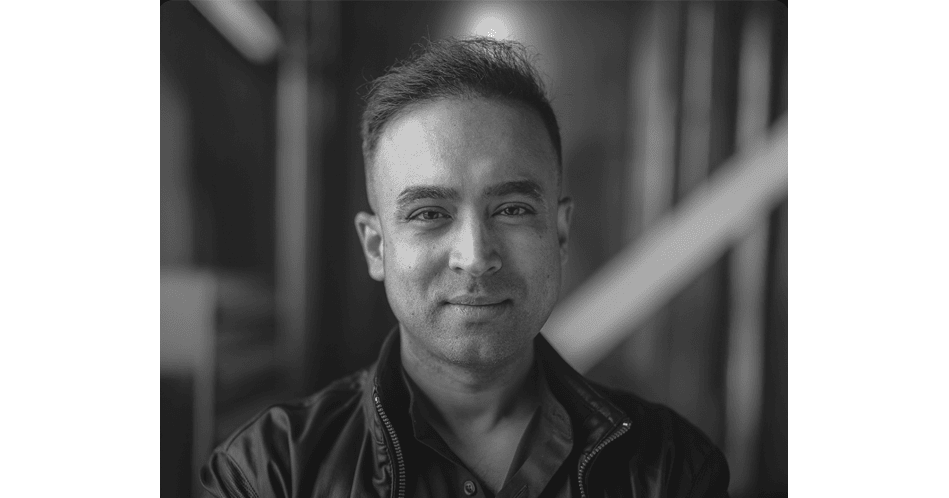
Yasir Arafat, CTO Aalo Atomics
Concepts discussed
Auto-linked from the episode's notes and transcript.
Show notes
Aalo Atomics is a three year old company that is focused on designing, manufacturing and deploying nuclear reactors. Their stated goal is to achieve an electricity production cost of less than $0.03 (3 cents) per kilowatt hour.
It’s moving fast. It built a 40,000 ft² pilot scale manufacturing plant in Austin, TX in just one year.
It plans to achieve initial criticality for Aalo-X, its first commercial scale reactor, in July 2026. That’s less than four months from now. The facility at the Idaho National Laboratory is completed, the reactor and primary systems have been installed. The reactor fuel is being manufactured by Global Nuclear Fuels in Wilmington, NC.
The few remaining steps include the Department of Energy’s issuance of the final Documented Safety Analysis, fuel receipt and fuel loading.
For many inside and outside the nuclear industry, Aalo’s pace seems to be almost impossible. Even for those who believe it is *possible* for nuclear systems to be designed, reviewed, licensed and constructed far faster than ever before, the accomplishments approach the incredible stage.
For Atomic Show #343, Yasir Arafat, Aalo’s co-founder and Chief Technical Officer enthusiastically shares his company’s story. He tells us how the company and its products were designed and manufactured with efficiency, ease and availability at the center of decision making.
The company also decided at a very early stage that it would do everything in its power to manufacture and assemble its machines, taking control of its own destiny wherever possible. He bragged – rightfully so – about the company’s ability to attract exceptional employees, stating their belief that a superstar can be as much as 10 times more productive than an average employee.
He described how the company has avoided adding management layers, saying that the team they have assembled does not need anyone to manage their performance.
He emphasized that Aalo had assembled a strong network of suppliers with shared motives that help to make the vision achievable. Raw materials, sensors, wiring harnesses and many other parts that aren’t at the top of mind are best purchased rather than built in house.
During the discussion, Yasir told stories from his 15-year career as a reactor design engineer at Westinghouse and Idaho National Laboratory that helped to shape his technical and managerial decision making. It’s evident that he has done a lot of personal “lesson learning” and is now applying those learnings with a high performing team.
Aalo’s inspiring vision and milestone execution track record have attracted a strong and growing number of risk-accepting investors. Nucleation Capital, the parent company of Atomic Insights and the Atomic Show podcast, has been one of those investors from a very early stage in the company.
Transcript
Read transcript
There's a way, a way such a better way today. Today, it makes your voice tell the world there's a better way. Today, there's a better way. This is right, Adams, and it's time for another Atomic Show. My guest today is Yasser Arafat, the CTO chief technical officer and founder, co-founder of Apollo Automax, a rapidly moving startup in the advanced atomic energy industry. Welcome, Yasser. Thank you, Rod. Thanks for having me. You're welcome. And it's wonderful to have you here. I just wanted to let you know that I have all kinds of admiration for what you're doing. I'm going to let the audience know that we have put our money behind our admiration for you and we are investors in Apollo Atomic. While doing the show post-processing, I realized that I said we are invested in Apollo Thomas. But I neglected today who we are. We are a new creation capital, a very special venture capital fund now back to the show. So everybody knows it. I am going to be acting like a little bit of a fanboy, but there's a reason. I mean, what you guys are doing is pretty incredible. And I have been thinking about this for a while, and I've decided that what Apollo Atomic was doing is essentially equivalent to what Roger Vanister started doing in 1953. And for those of you who are maybe a little bit younger than me, maybe don't know the story of Roger Vanister, Roger Vanister was a kind of casual run. He was a medical student. But he did a determined, based on his studies and based on his knowledge of himself and based on some other things, that everybody else was wrong by saying that it was impossible for a human being to run a mile in less than four minutes. He figured out that if you did things right, if you trained properly, if you use some innovation, it was possible for a human being to develop the kind of stamina and speed characteristics that made a four minute mile possible. And within about a year, from deciding that and finding the right coach in May of 1954, Roger Vanister broke a four minute pace for a mile. Since then, what everybody, everybody, and I'm not even putting quotes around that, everybody thought was impossible, became almost routine. Now, high school runners can break a four minute mile because Roger Vanister refused to believe what everybody else said was impossible. So I believe what all of what Thomas is doing is roughly the equivalent of what Roger Vanister did that many years ago. All right, Roger, what do you think about that? What do you guys doing? Tell me about all the what Thomas rather impossible ability to make things happen. Yeah, Rod, no, for sure. That's a very important question and one that we have made sure that we it's part of our DNA, not something we're doing. It's who we are. So when we started all over, we we started with the notion that yeah, we want to solve the the two biggest problem in nuclear right. One is economics right the cost predictability was the important part. But the second thing was speed right if you think about you know how long it takes to build a gigawatts scale plant. You know, it's it's nearly a decade or more in the West today and and hopefully one day it gets better. And that really those two things being extremely cost conscious in every single decision that we make. And how to make speed as part of our culture were two of the most important attributes that we started with. Speaking about speed right it wasn't the necessarily the executive order that brought all this speed we wanted to you know create a culture in all of where you know the team can can move at the speed of physics as we call it right. So what does that mean. The physics is like whenever we have an activity or task or a mission. We ask ourselves is you know what's causing what's driving the the tempo the velocity of a team. Is it the process. Is it the people. If it's the process we go fix the process to make sure that you know we can we can do it faster. Is the people and we have to coach them but if it's not the people in the process and something that is not necessarily driven by the human beings. You know that's that's what we call the speed of physics right it's the fastest thing we can possibly achieve now it's it sounds a little mystical and not applicable in reality but the truth is like you know when you make it part of the culture. It really works out and it's not an overnight thing obviously it's it takes a while we are bringing in new people and everyone seeing how everyone's felt is working. I think the core part of all of this is when we started hiring and started forming the team on day one. We made sure that we hired the very best people for a particular role and that's an essential part of it right. Sometimes having one awesome person who is an A player is better than 10 B players right and so we really made sure that we have a small team that we break it down into smaller groups that can take that extreme sense of ownership right. So there's no people manager in all there's nobody saying oh have you done this have you done that none of that it's because every single individual. That we have on our team they themselves embody that extreme sense of ownership and when the same majority of the colleagues are doing the exact same thing they don't want to do anything different. And that is I think one of the top key secret sauces and there's obviously other things right there are things like okay try to do things as parallel as you can don't do in series like don't go ahead and you know design something first. you know conceptual preliminary final design and then go figure out how to build it try to understand how you want to build along as you mature the design right that way you can learn like if there's some flaw in design for manufacture ability and assembly you get to know that on day one and so that iteration is extremely important. So yeah there's a few other other things in the list and I can go on and on and talk about you know our secret sauce which is not very secret in my opinion right I mean in the other part is like you know. For example we're currently in the reactor pilot program and the challenge here was you know president Trump when he signed executive orders. And he's going to have at least three reactors achieve criticality by July 4th of this year and by the time we got selected and announced as a team. Who's going to be part of all these programs and all of us selected to be one of those 11 programs and 10 companies. And we've really had 10 months right so how if you think about like in any other part of history in nuclear history when you can say okay can you design and build and go critical in 10 months. I think almost everybody would say it's impossible and most of the industry said that's not possible only a few said yeah we want to try it and we're one of them. So there's a lot that goes into into our overall speed and part of that being is like you know when we when this was announced we were already on track to. You know deploy what is called our factory first model right we want to make sure that you know 95% of the stuff is built in a factory. So that a small amount of scope is still left on the side and you know it's not just theories we put that into practice for example from the beginning raw materials arriving in a factory and by the time it left. It literally took us four weeks from start to finish to build our entire first reactor first reactor and it's not something that we just you know throw something together and welded up. This was done we implementing all 800 requirements of NQM on program in fact we got audited by DOE three days in our factory and one day here in the Idaho Falls office and after four days of scrutiny we passed that audit and that's a testament of that right when we built the building. In Idaho right outside MFC complex at INL you know folks told us like hey you know things are not as fast as you think here you know we're at the national lab we're in the desert you know it's hard to build here there's winter time like if you want to if you want to build a tool shed it will take you at least two years forget about a reactor building. And we said okay well let's see what physics tells us and then we you know we finished the entire building from groundbreaking to completion in 36 days. So that's that's something that we're always you know pushing and testing our team to see you know can we really achieve. I mean you know the speed of physics at every turn and the other part that a lot of people like have this misconception that hey if you're moving fast you probably are not looking at safety. You know well enough you're probably just ignoring safety that is not true. So on day one in all of we said yeah we wanted to things fast but we don't want to have speed ever compete with quality and safety. That's why we didn't go and try to take any shortcuts we're following all of the quality standards that commercial industry follows we follow all of NQM1 and we're making sure that we plug in every best practices of safety. Otherwise the regulator will not even accept our overall safety case and one let us turn on the reactor right so we didn't want to sacrifice any of those things. So that's you know that's a common misconception as you are saying right what Mr. Banister date in the 50s right everyone thought he was impossible but he made sure it was possible. And so you know right you know there's always a common notion in nuclear that hey if you want to do safe then you sacrifice speed but that's not necessarily true we want to challenge that status quo. And yeah so and again same thing with supply chain for example right you know we have a philosophy in all of that we want to vertically integrate everything and that's a lot of companies say that right to tell you the truth. But in the reality is it's very difficult to vertically integrate everything and we're not building everything from ground up even though majority of the stuff we build we still rely on partners and suppliers right. So we buy raw materials from partners from vendors we buy detectors sensors you know elements of the instrumentation and control cabinets. And you know there are things that we rely on our partners for and so. The one thing that happened that really. Accelerated in that front was the mission itself right before we would have to convince our suppliers hey do it fast and we would have to bake it into the contract. So if you do it in one week earlier you get paid more and if you you know take one week longer we're going to penalize you right that their mechanisms contractually you can hold them accountable for speed. But we didn't have to do that in the reactor pilot program when they knew about the mission that hey this is an important thing an important mission not just for all though not just for nuclear but for the whole country. And they get energized about it they're like oh we want to be part of that story. And so we want to you know deprioritize all of our other work and we want to make sure you get what you need first. And and there's something called a deep pass rating right. I always forget that acronym basically like you know if you have a defense prioritization and it's important for national security you can actually have the certificate filling in front of your supply chain and say hey I've got I've got a deep pass rating. Really bound to do my work first. We just got approval of a deep pass rating two weeks ago but we never had to exercise it because every one of our suppliers are. Almost acting like our partners in making sure that this mission can come to life. And that's been a privilege for sure. Your money is a really useful tool that I had when I was onboard a fleet ballistic missile submarine. And they called it, Pry1. Nobody else in the Navy had access to order stuff Pry1. But if we did, and the part that we needed was installed somewhere in a machine in Seattle, it could be to my submarine in Georgia with an overnight. Because it was Pry1. It was a national, you know, priority, which is good for us. All right. So one of the things that you guys chose to do, which I think is part of this knowledge of moving the speed of physics, is you chose not to develop a pressurized water reactor. Because there are certain things in the pressurized water system that physically take time and cannot be sped up. Yeah. What are some of the reasons that you guys decided to move away from pressurized water and move towards something like liquid sodium, which is not pressurized. Yeah. So Rod, you know, like as a company, we're only two and a half years old, but you know, I tell people like I'll have been in the making for about 15 years. And so in my past life, I started my career working in the pressurized water reactor industry, you know, working in Westing us for about 10 years. And learn all the pros and cons about those reactors and they're plenty, plenty, safety, plenty reliable. But as you said, there are certain things in PWAurs that are, you know, L.W.S. in general that comes inherent where things do take a lot of time. For example, a simple example is the pressure vessel itself. Because you are a pressurized system, the pressure vessel is several interesting. And for you to make it properly, the only way to do it right is forging. And to do that size of a forged vessel, there's only few places in the world that can make them number one. It takes super long time and it's very expensive, right? To give you an idea, we are a non-pressurized system, right? We selected sodium and I'll tell you a little bit about that as well. Just selecting that one coolant, that one single choice in technology from pressurized system to a non-pressurized coolant where we can operate high temperature without the vessels or the piping, you know, have to like operate at higher pressure. That one decision allows us to use vessels and pipes that are thin-walled. To give you an idea that same vessel that normally would take two to four years, we can build in our factory in less than two weeks. By bringing in plates, rolling them up, welding them down, put the flange and the dish bottom, dish head, and then you basically weld everything up, automate the whole thing. And you could get it done in like less than two weeks. And our goal is ultimately to reduce that to less than one week. So that's an example of, and it's not just water, like any pressurized system will have to deal with like, you know, thick walls and forging. So that was a very deliberate choice that we made. In a non-pressurized system, there's multiple avenues we can take, right? You can go molten salt, you can go sodium, you can go lead, there's multiple different fluids that operate at high temperature without turning into a vapor. So we pick sodium because it is, while sodium is very reactive with common materials like water and plastic and concrete and anything that you know, but it's very good from a chemical compatibility perspective from structural steel. So that's what it sees in a power plant, right? So as long as it's within structural steel, it is the most compatible coolant, you know, compared to anything out there. It's 100 times more thermally conductive than water. I think several factors even more compared to gas, obviously. And if you can reduce the oxygen concentration to less than 5 ppm, then this thing is just like miraculous. There's like no corrosion whatsoever and can run for decades without any issues. So that sodium reactors, there were so many countries that tried sodium reactors because that was a very good alternative to water based systems. And we have about 800 reactor years worth of operational experience. So all in all, we actually found sodium cool systems to be one of those technologies that would be ideal for factory mass manufacturing. So all of these are kind of all interlinked and related. You told us a little bit about your background by saying that you were less than half a while. What was it? Tell me what gave you the ability to learn from the established part of the nuclear industry, but choose to do things differently. You and I know there's an awful lot of very smart, very talented people in the nuclear industry that get stuck in doing things the way they've always been done, because that's the way they've been trained and that's the way they think is the safe and reliable way to go. But you chose to go with different paths. How does she, what make you do that? It's definitely a journey. And I think this is a common principle that's baked into info, but a lot of people don't practice it. It's a questioning attitude. If you embody that questioning attitude into everyday part of life, then you very quickly start to think like, hey, this is not the only way they're alternatives. Like when I say this is not an overnight idea that comes into your brain, even though everyone loves to, loves a story that you have an overnight on a hot moment. And then you come up with the best, coolest idea. I think it's a journey because nuclear is complex and there's no silver bullet. There's no perfect technology out there. It no matter what you pick, you have to deal with certain amount of struggle. So I call it the conservation of pain in many ways. You can decide to take the pain in the early in the process or middle in the process or later in operations. There's going to be pain everywhere. So to give you the little history, I worked on the PWA industry for the first 10 years of my career. And I was super amazed by how awesome those plans are. I mean, how far they have come along in the last 60, 70 years of operational experience. And it really like we're at the tip of making that technology perfect. And yet we're struggling with speed and economics. And so at one point in the early 2013 timeframe, I started like asking like, hey, you know, why are we, why is nuclear just stuck in this one fundamental place, which is like building, making power as a base floor generation? For large utilities? Why can't it be done for any other applications? And that took me on a journey to start exploring on my own time. Me and another colleague got curious about it. And we started this self exploration for a year and a half unofficially. And we ended up in a journey to in the Arctic. It was 20 miles out of the Arctic circle. And then we visited a remote community to see how energy is delivered in the most extreme environments that people live in. And then we learned so much from spending a couple of weeks there. You know, they're entirely, you know, reliant on diesel generators. They, you know, the operator of the diesel plan was our tour guide, meaning like you can automate and just press a button and walk away from it. So it's kind of a walk away safe system. And nothing is done as regular construction, how we do here. Everything is containerized. So a lot of that initial, like, you know, thinking and returning to requirements for us. And that was essentially the genesis of the micro reactor industry in the US. And then those requirements converted into one of the earliest micro reactor program we started in Westinghouse called Ivenchi. And me and another colleague started that program and I led the program until I left. And there are others that started following what we were doing. And then a few years later, Department of Energy decided, hey, that's its own category of reactors. Yes, we've built small reactors before in the past. But they were not never meant to stay small. They were stepping stones toward larger reactors. But we're like, no, you have to keep the reactor small. There is a market for it. And so now there's a half a dozen or maybe a dozen companies pursuing micro reactors with those requirements that we originally found in the early days. So that really like, and I knew that for something that small, even though Westinghouse was a water based company, that was not the right technology to miniaturize nuclear. Right. So we will move towards the heat pipe reactor. And I learned about the limitations of a heat pipe concept. Right. There's a constant battle between how much heat you can remove from a heat pipe. And also like how much heat you can generate and the power density can get. So you hit a limit there. And that learning went to the Marvel program. Right. Before COVID, I moved to, well, Department of Energy yanked me into the national lab saying, hey, look what you guys have done. Now there's a dozen companies doing micro reactors. Can you help prioritize in our deep program that so we can help this company's get tomorrow? So I made the shift and I very quickly realized, hey, we can't be messing around with another R&D program. We have to build a real reactor. That was a time when every design was on paper. Nobody was building anything real. I was like, we need to break that last ceiling. And so Marvel was born. And that was not a heat pipe reactor. I could have easily worked on a heat pipe system, but I decided to make it a liquid metal cooled reactor with user control. And so the reactor with user-acryd fuel because of the learnings from the previous life. And then so now the learning from Marvel, which by the way, we got it done. All the things that I wanted to do things faster and quicker and more nimbly were all put to use in the Marvel program where from an ideation to getting the full approval from the regulator. And so we were able to do the whole thing under 30 months. And at that time, it was unheard of in modern nuclear. And a lot of industry started coming and talking to us, hey, how are you guys doing this so quick, even in like a bureaucratic environment, like the national labs or the DOE, I was like, no, that's not the point. You know, it's just the nuclear industry forgot how to do things fast. It's not, don't blame the labs or the DOE. and the developers. We can do things faster. It's within our control. So we did this very quickly. And we did a lot of first of a kind things, right? Like before Marvel, nobody even knew that you can pursue an environmental assessment for a NEPA. And the go to was three to four years EIS. So we broke that glass ceiling in Marvel to approve an EAA less than one year for a Permin NEPA. So all of that work essentially are the stepping stones to what we're seeing right now under the DOE reactor pilot program. DOE has experience with approving Marvel and Pele and some of the other work at treat. And so from the regulatory perspective, they're well versed and very like, you know, they have recent experience from that. And so all this knowledge accumulated, you very quickly figure out what is the solution that can enable you to do things fast, what can enable you to build a product that is technologically optimal. And what is the model that will help the West scale nuclear faster than with ever scaled, right? And so we're not thinking about how to build a first reactor. We're thinking about how do you build a next hundred and that's how we're making decisions in all of one of the things that an outsider might look at and say, hey, you did a great job getting Marvel approved. But Marvel's still not built. What are some of the obstacles that prevented Marvel being built and what are some of the learnings that all is taken from that specific Marvel building challenge? I think this is where, Rod, I'll tell you, culture and a singular leadership driver is so important, right? I remember like, I think... When I looked around, there were just a few people within the marble ecosystem that were pushing for speed. You know, we have a few champions at the Idaho National Lab. It was me driving the program and it was Bob Boston who was trying to see how fast regulatory approvals can be done, right? There were just a few people and really at the end of the day, how fast the program is pushed is how fast you can see things come to life. And so I'm not going to say like, hey, because I left, you know, things slowed down. I mean, that is certainly part of the case. And I'm going to selfishly say that. I think it is important for somebody to really drive the envelope. You need a singular person to push a program forward to keep the right tempo. That's extremely important. But there are obviously other learnings, other challenges. I think on the manufacturing side, the National Lab is not set up to build large things. So they have to outsource a lot of their manufacturing to other vendors. And these vendors, you know, if you look at United States as a whole, we haven't built nuclear reactors for quite some time. So just establishing the nuclear quality assurance or how to build a form factor like that. There's a lot of challenges that the marble program faced on the manufacturing side. And then they got, you know, they were doing some testing in parallel as well. And there were some learning from those and so a big learning from that was like, hey, do testing as early as you can because you have to flush those out. It's it's very difficult to design and build a reactor to work. But it is 10 times more difficult to make it not not fail. And so a lot of those things you can solve by testing early. And that's one of the biggest lessons learned, right? Yeah, I also think that Marvel part of Marvel's problem was it was not designed and not even conceived to be the first of hundreds of that same design. So the suppliers, unlike for you guys, the suppliers from Marvel probably could not see, okay, I bust my butt to get them these three valves that they just ordered. But where's the order for the next 30 valves then come from? If I bust my butt, if I get my manufacturing and place to provide them their pressure vessel, is anybody that ever buy another one? So with you guys, I think your suppliers see that they have a mark and I'm speaking as someone who at for a very short period of time in my career, I was a supplier. I did try to prioritize which customers I serve first and which customers, we're going to order more next time. Yeah. And you're 100% right. I mean, a lot of Marvel's delays were on the hardware side. And the fuel side, I mean, literally I remember talking to Jess, he went on a trip a few weeks ago to France, celebrating that Marvel made the first fuel and because that fuel supply chain was very premature. I mean, they don't, you know, that facility in France have had like a decade, nearly a decade long of not making that fuel and they were trying to get that up and running. Finally, they were able to pull it off and then make this, so that's a major roadblock to speed, right? And the other challenge that Marvel had and we dealt with the two when I was there is Marvel is a purely, you know, DOE funded program and it's not like you get all the money upfront. It's appropriated every single year. So there's a whole range of like three to five months where literally is like at a low speed mode because you're waiting for their appropriations to kick in. Especially our government can't bother to pass a budget so you get continuing resolutions and that's right. You have no money flowing because they can only spend what they spent last year. Right. And so all of those challenges that we're talking about right now is completely flipped upside down when it comes to a commercial space because, you know, we're, we're trying to do on your exactly right, Rod, you know, when we go talk to our vendors, we tell them three things and we're like, hey, we are willing to work with you. If three of things are our, our check-off one, you will give us things at the right price. You will build things at the right quality level and you can scale as we can scale and then the ice perk up. I'm like, what do you mean? It's like, yeah, these are our plan. These are ambition over the next few years. Here's our milestone and here's our ramp up rate for the next year and there's crazy amount of demand to even we're going to be supply-limited, not demand-limited. And they're like, okay, what are we talking about? And then we go to the details and they're like, okay, wow, I mean, that's amazing. And when they see us hitting these milestones internally, what we talked about, they get even more energized step by step. Like, for example, our pump company flow serve, right? There are, you know, we can talk about it as official. It's publicly known. They have been looking at the SMR market for the last five years, trying to find that ideal partner and investigating like 70 plus companies, they boil down to three companies they want to spend their time and energy with. And all of us, one of them, right? And because, you know, they have created a bunch of criteria that they thought, you know, has a real nuclear SMR company will have this is in this criteria and let's see which companies check them off. And so we're working very closely with them. They're putting all their energy and time to help us develop the ideal pump to move sodium around. And that's one of the many examples that we have on supplier stories. So we've talked a lot about your focus on speed and your focus on overall cost. What are the relationship between speed and cost? Because they aren't necessarily separate when you think about cost, half of the story is what technology, what design you select. I should say it's actually three things. Okay, let me take statement back. One third of that is what design you pick and how, you know, there are certain things that by physics, you're limited to how low cost you can get. So that's major driver, you know, not every technology you can pick and say, oh, I'm going to drive the cost down. Yeah, to some extent, but, you know, fundamentally won't go beyond physics. So there's an awesome too. Exactly. It's an awesome note. And so one is technology choice. And I think we've done a pretty darn good job at that tech choice. The second one is the cost of a hardware is is directly proportional to the process that you build it with. Right? So it's it's really like about, you know, if we build our first reactor like a 1Z2Z, it's going to cost a certain amount versus if I design and build a production line that wants to build this reactors many, many times over and over again, it's going to be significantly different in terms of cost. So when you bake in repeatability into your process, costs can come down very quickly. And so, yeah, they have one. Yeah, that is of course the other thing that has afflicted very large projects is that stretching the schedule costs a lot of money because you have people on site not doing as much as they should be doing. And the bankers are getting their share. That's what I was going to talk about on the third one. I told you the first the third one is like it's directly proportional to the schedule because hotel loads. You're keeping all those people that you hired to finish the job. And if it takes double the amount of time, all of the equipment that you're bringing on site is you're paying for those all the people all the hotel loads. And so naturally is directly proportional to your schedule. So if you do a things faster, you know, in half the time, that certainly will shrink your overall cost. Yeah, it's very important. So tell us where you guys are, well, we're only a few months away from the July 4th gold day. I cringe when some people say it's a deadline because it doesn't stop. I mean, if you don't make it, you know, fall off the edge of the earth. But the goal is to be up in critical by July 4th. How close are you and what do you think are some of your major obstacles coming between down then? Yeah. So great question and something that I'm dealing with our team on an hourly basis. And that's why I'm physically here in Idaho Falls working with the team on the ground 24 seven. And we're running 24 seven shifts to get this thing done. So where we are right now is we finished the building. We have built our reactor. We've installed it. And right now what we're doing is our, our, there's two major things we're on the hardware side. Two major things we're working on. One is this week before Sunday finishes, right? We are completing all the instrumentation and control and electrical wiring. So connecting all the wires and cables and doing the, you know, the commissioning of that entire system that's happening this week. And we're waiting for a graphite block, which is the moderator in our system to essentially come in the following week. So installing all the graphite blocks and basically like, you know, putting up the top lid and firing up the CRD. And that's going to be the main hardware task, which we should wrap up in a week or two. And after that, it's the final test. It's, you know, right now we're literally this close to getting our final safety package, which in the DOE's world called a DSA documented safety analysis. We're waiting for the DSA approval by the Department of Energy. And the, the reason is our DSA is more complex than some of our peers because we're not just giving a DSA package for the reactor. We have an entire facility that we've built from ground up, not an existing building. We have an entire 20 different safety management program to work as a contractor to the Department of Energy, just like how I and L are the national labs do in a matter of months with the skeleton team. Like all we've got a massive work package that DOE have to approve along with the DSA. So that's on the very, very edge of getting approved. And the last thing between now and criticality is a step we call it the final boss round. It's called the, the readiness review. That is the final test that DOE have an entire team that comes and checks every single documentation, every single program, every single hardware, every single control system to make sure that we are ready to start loading fuel and take the approach to criticality. And that's a three week process, very well defined, three weeks only, and that is the final test either you pass or you fail. And that is what's something that that we're kind of converging with DOE on figuring out the date. Once we figure that out, fuel is already shipped yesterday from from GNF from GE for Nova. And it's on the way right now and we'll store it at Idaho National Lab. As soon as we get the approval that we passed readiness, this final test will bring the fuel pin on site, build assemblies and put them one by one until we achieve criticality. So that's more details that I wanted. That's good. That's good. That fuels an important part of your story because when you started, although the goal was that zirconium hydride or zirconium uranium hydride material. And it was going to be HU, as I recall, or at night, you say hello. Yeah, high assay low and risk uranium. You've pivoted away from that. Some people might say you've pivoted so quickly you might get dizzy, but you actually looked at the physics, looked at the market and said we got to go differently if we want to move fast. Tell us a little bit about that evolution from the zirconium uranium hydride metal to a uranium dioxide low and risk uranium. Yeah, one of the earliest principles that I put into all of and year one was, as I'll shall have no unobtainium in our design. Right? Meaning everything that we have put in our design should be either be built by all of or be able to procure from one of our suppliers. It should not be something we cannot get our hands on here yet. So when we started with the user-guided fuel, there was nobody that can make it at scale. So we wanted to build that muscle internally and we can certainly do that. And it's a great fuel from many perspective and it's probably one of the safest fuel you can find. From our prompt reactivity feedback perspective. But at the end of the day, that supply chain is not there. It's something that somebody will have to build. Either ourselves or somebody else. And that would take at least many years to get up to speed. And so that was against the principle of no one obtaining. So we said, you know what? What is one if we build a factory that can build hundreds of these reactors? What is this one fuel that we want to have to worry about where it's going to come from? When we build our large factory. And the answer was UO2. And the next question was, well, can we make UO2 which is existing fuel form that we can get from the current light water reactor industry and still make an advanced reactor out of it where we're operating at higher temperature? And that's not easy. And so we have worked really hard. Our team is freaking amazing. They have worked out the ideal sweet spot. How to make UO2 existing fuel work for an advanced reactor. And that fuel supply chain exists. But also the other piece of the puzzle is not the chemical form. It's the enrichment. So we deliberately from even user-card drive, we never wanted to go to a high enrichment. We wanted to go to higher than what industry currently have. But we knew that halo is a big bottleneck for scale up for nuclear in this country. And we're putting it in a government and private industry, putting a lot of money into it. But it's going to take some time to get up to speed. We don't want to sit around for that time. So we deliberately went towards a thermal reactor regime where we wanted to moderate the core. Previously it was the hydrogen and user-card drive. When we got rid of that fuel, we had to find an alternative moderator. So we ended up with graphite. And so we said, you know what? Fuel enrichment is a challenge as much of an unobtainium as anything else. So we should design our reactor and make the economics work with 8% or less. And so the industry have been working towards 8% enriched production. And GE already has a license from the NRC to produce at 8% in their facility. So that was a big unlock for us from a supply chain perspective. So that was the main decision we made. We're like, hey, we actually have a mature supply chain. We have a vendor or multiple vendors working towards 8%. And that's where the industry's current state is at. And it's the perfect fuel for us to scale up when nobody else can. So that was a very obvious pivot for us. And then we did that with full gusto. Good. Hey, I promised you and you're a PR person that I'd be finished with you by a certain time. And we're within two minutes of that. So before saying goodbye, give you one more shot. What else do you want to leave the audience with? What do you want to tell them about? Oh, it's so much. When people think about nuclear or SMRs or micro reactors, they always think like 2030 plus. And there's one thing that I would want to tell the audience like it is not that far away. Like we're literally a year away from commercial deployment. And so, and it's not just us talking about it, you have to track our progress to see how we're making through those milestones and getting to the point where we can scale up to hundreds of reactors. And so, you know, there's a lot of people within the nuclear industry who've been waiting for our renaissance to happen. And I think we just can't wait for others to invoke that renaissance to make it happen. We have to take the driver's seat and driving that completion. So I think people have talked about the renaissance. I think it's about it's happening right now. I agree. Obviously, we agree. Nuclearation Capital is a big supporter of the renaissance of advanced nuclear. And in particular, we're happy to have a fast-moving company like Alo Atomics as part of our portfolio. The answer, thank you very much for your time. Get onto your next meeting. That's good. Thank you, Rock. Thanks for having me. Bye. Nuclearation Capital is a very special venture capital fund. We focus on emerging companies and advanced nuclear energy sector. Our fund won a structure to be accessible to accredited investors who recognize the importance and the potential of advanced nuclear energy and want to participate in the investments that we choose. If you'd like to learn more about becoming a limited partner in nuclearation Capital Fund 1, please visit nucleaseandcapital.com. That's nucleaseandcapital. All one word.com. Potential investors should look for the invest menu at the top of each page. Now raise your voice to the world. There's a better way. The way is the atoms way.