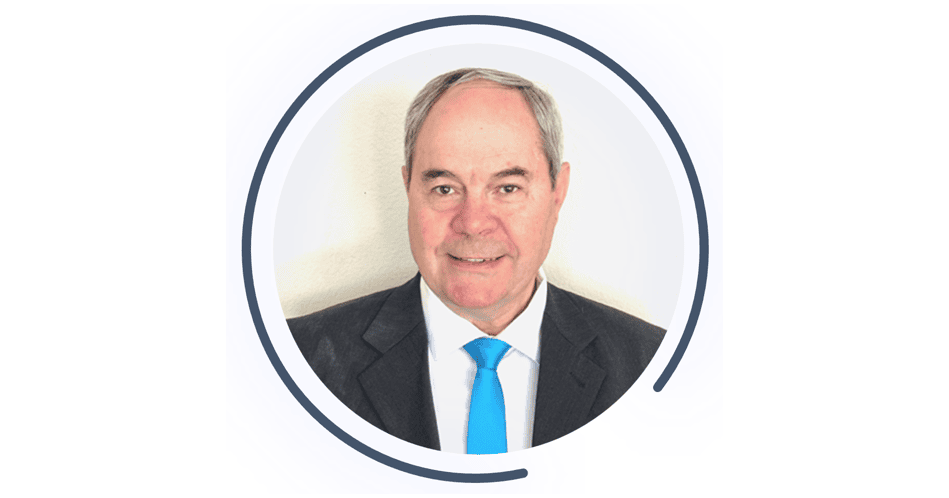
Christo Liebenberg, President, LIS Technologies
Concepts discussed
Auto-linked from the episode's notes and transcript.
Show notes
LIS Technologies (LIST) is a young company with deep historical roots. CRISLA (Condensation Repression Isotope Selective Laser Activation), its laser isotope separation concept was developed and tested during the late 1980s and early 1990s under the leadership of Dr. Jeff Eerkens. Unfortunately, the path towards commercializing the technology hit a multi-decade detour as the result of terrible timing and a slow analytical process.
At the same time that the CRISLA development effort began producing intriguing results, there was a major effort to consume excess enriched uranium from the former Soviet Union’s nuclear weapons complex. The solution was to convert that material into fuel so that it could be consumed in U.S. nuclear power plants.
The enriched uranium consumption program, known as “Megatons to Megawatts“, arguably made the world safer and provided significant benefits to American electricity consumers. Megatons to Megawatts also flooded the world’s enriched uranium market and eliminated investor interest in improving existing processes.
The CRISLA project was halted.
Just before the project was abruptly cancelled, the development team conducted several test runs and sent the produced samples out to be tested. The team was disbanded before the results came back. When they were finally available, they were filed in a place that wasn’t accessible to the development team. More than 20 years after the 1993 tests were conducted Jeff Eerkens, the team leader, learned that the technology that he and his team had built worked far better than they realized.
Christo Liebenberg, the current LIST President, visited the Atomic Show to share a more complete version of the above story. He tells us just how much better the enrichment results were compared to all other alternatives. He helps explain the importance and implications if successful commercial development can be achieved.
He explains how the equipment from the 1990s test was stored and recovered and he describes the success efforts to restore and improve the low pressure CO lasers at the heart of the system. He explains how LIST was formed and how it attracted the attention of Jay Yu, its Chairman, CEO, co-founder and initial investor.
Christo’s resume seems to have been designed to prepare him for the role of leading a laser isotope separation company. This is quoted from the LIST web site team page.
> Mr Liebenberg started his career in the 1980’s at the Atomic Energy Corporation of South Africa where he later spearheaded the optimization of enrichment parameters of the Molecular Laser Isotope Separation (MLIS) process. By the end of the 1990’s his journey led him to Australia where he later joined Silex Systems Ltd as their Laser Manager, and continued this role at Global Laser Enrichment (GLE) in Wilmington, NC where he played a key role in the architecture of the Test Loop Facility. In 2012 he joined the research team at ASML where he was intricately involved with the R&D of state-of-the-art CO2 laser systems to generate EUV (Extreme Ultraviolet), used today to manufacture modern semiconductor chips.
We talked about the changes in the enrichment market and its growing need for both technological improvement and additional production capacity. The situation is far different today compared to what existed at the time CRISLA was initially shelved.
We ended our conversation with a personal inspiration story about Jeff Eerkens, the father of laser isotope enrichment. The great news is that he has lived long enough to participate in the process of developing his inventions.
I have no doubt that you will find this show to be informative and entertaining.
Transcript
Read transcript
There's a way, a way such a better way today, today. The major boys tell the world there's a better way, today there's a better way. This is right Adams and it's time for another atomic show with me to my guest today. Is Crystal Leibnberg, the president of LIS Technologies, List Technologies, a company that is not very well known, but has some really exciting ways to separate U235 from U238 and increase the concentration of the U235, what we all call enrichment. Crystal, welcome to the show. Thank you, Rod. Happy to be here. It's good to have you here. And I know a little about the list story because I think I talked to you guys back when you were a group of about three people with a really interesting set of lasers and other equipment, locked up in a storage unit and you were trying to figure out how to recover what was an amazingly productive technology that became available just as the U.S. kind of moved away from advanced nuclear development in the early 1990s. To tell us a little bit about how did you move from that group of people to where you are now, the team of maybe 30 people, two locations, you own your own island? What a story. It's been an absolute wild ride for us, man. It's also have to binge myself to see how quickly we have moved. But yeah, we've got a very, very hot technology here enriching uranium with lasers. It's called laser enrichment or laser isotope separation. I personally have been doing this my entire career since I was like the 1920s. And there's different types of laser enrichment out there, airblasts and this endless and this crystal out there. Crystal is the technology that we are developing. And it's been around, laser enrichment has been around for 55 years. Started in 1971. It lost all of us national labs. And since then, 26 countries have tried to do laser enrichment of uranium. And it works in the lab. All works fine. All good. But the scaling has been a showstopper. The scaling challenges have proven to be enormous with these laser systems. So we are taking a different approach with with Priscilla. The technology works. It's been demonstrated in the early 90s. I can talk about that situation around that. But we are using the latest laser technology industrial lasers. In fact, the same type of lasers that used in the automotive industry for sheet metal cutting welding and drilling. That's the sort of lasers that we are marrying with this crystal technology. And we think we've got a real shot at becoming the world's first laser enrichment commercial operation. So yeah, we had our humble beginnings with Dr. Jeff Earkens, who's the inventor of this technology. He's based in Northern California near Davis, California. So we set up shot there two and a half years ago. And we hired a small printed small building. And that's where we then took out all these equipment that's been in storage. It's been in storage for 30 years. Since 1993, too, 23. We took it out of storage and realized that there's very little of that that we can use. However, all his documentation and all his papers and all his data was still intact. He saves all of that. And the lasers themselves wasn't bad shape, but we were able, you know, we took it out and we started refurbishing them. New optics, new power supply, new seals. And today those lasers are running beautifully. They are literally producing twice as much power as it's produced back in the 90s. So this technology was indeed demonstrated in the early 90s. It showed that it has a high enough selectivity and produced a high enough enrichment factor where natural uranium would be enriched from natural uranium at 0.7%. All the way to L.E.U. levels, about 5%. In one step, in one stage. So that's what that was demonstrated in the early 90s. And but then he got shelved and I think he's a little bit of background. Why was it shelved? You know, Russia or the Soviet Union in the Cold War was a big producer, especially Russia, who used producer off in rich uranium, right? Well, they nucleo warheads. But then the iron curtain came down and the world markets opened up to Russia. And they decided to downblame to decommission the nuclear war rate with an agreement with the US. decommissioned those nuclear warheads under the megatons to megawatts program. And they decommissioned the equivalent of 20,000 nuclear warheads. The iron bladed at highly enriched uranium to about 5% from 90% down to about 5%. And shipped it to the US. And here in the US, we've been using Russian nuclear fuel for the last 30 years. It's ongoing still today as we speak. We are importing Russian nuclear fuel. Of course, it's a situation that began a longer dollar rate, especially after they invaded Ukraine. I'm going to take it over a second. Yeah. Now, the Russian, in recent year, and we're still using today is not from the megatons to megawatts for a current program lasted 20 years. And for that 20 year period, 10% won out of every 10 light bulbs operating in the US was from Russian decommissioned nuclear warheads. It's a better amazing. It made it so that nobody really wanted to spend any time or money enriching uranium in the US because it was no, I mean, it was the market was pretty flooded. Right. Yep. It when they started flooding the market, it crashed the price of an richer uranium by affected 2.5 and a lot of the companies decide why, why develop this technology. So not only did it cause the crystal process from that time to be shelved, a lot of other technologies got shelved. In fact, the entire US nuclear industry got shelved. It's the whole fuel supply chain got decimated by that decision as becoming dependent on that Russian fuel. And you're right, in 2013 it stopped that megatons to megawatt stop, but we still continue to import Russian fuel. And then in 2024, there's an environment signed into law, the prohibiting Russian enrich uranium act was signed into law, which gives us a few more years up to the end of 2027. But by the beginning of 2028, we need to be independent and move away from Russian nuclear fuel. And that's why the DOE, the US government and the DOE has decided to stimulate and to invest billions of dollars into the nuclear fuel supply chain in the US so we can break the dependence of Russian fuel. And that's where we find ourselves. I'm going to go back and ask another question that because this is way out of sequence, but that's okay. I'm curious. You mentioned that your technology, Chris Love, has demonstrated that it can go from point to 7% to roughly 4% to 5% in a single stage. What's the comparison? How many stages of centrifuges does it take to get from that natural level up to L.E.U? Right. If you look at this single stage in Richmond factor for centrifuges, it's at best about 1.25. Probably more realistically 1.2 or even less. So that's 0.7% can only be increased in a Richmond factor by factors. Let's have 1.2 or 20%. First stage, you need dozens of those stages to get it all the way up to about 5%. If you do the math. So it takes many stages to get it up there. And then you also want to strip, you want to make sure that you don't leave behind a lot of, you're ready to do 35 in your tailings. So there are also stripping stages to extract that U235. So it's just much more centrifuges that require dozens required compared to a single laser system that we use. Okay. All right, now I'm going with where you will go. Right. So yeah, so we got shelved. And the government, the U.S. government and the DOE decided to stimulate and to invest into the U.S. nuclear fuel industry. They selected six companies to produce our nation's future in which uranium, less technologies with select as one of those six. Of those six, four out of six are all centrifuge companies. And two of them are laser enrichment companies. One of them being global laser enrichment. I was at GLE, they spent six, six years in total at GLE. As their laser manager. And the other one, the 61 that was selected, they was obviously less technologies. So, but we are, we have the unique position that less technologies is the only U.S. origin laser enrichment technology in the U.S. Yeah, GLE traces back to silox and Australia, right? Correct. Solage is the technology behind GLE and crystallize the technology behind less technologies. Now what does crystals stand for? So crystal stands for condensation, repression, isotope selective laser activation. So there's a lot of words in there. Yeah, it's a mouthful and that's really what we do. So basically how laser enrichment worked in general. You've got to do the two isotope of uranium, the two main isotope uranium 235 and uranium 238. The 235 constitutes only 0.7% of all that of the natural abundance. 99.3% of that is uranium 238. It's only the uranium 235 that's fissile that would, that you can use in a nuclear power plant. If you take that 0.7% and you increase it to 5%, that 5% is called low-end rich uranium or L.E.U. That's the that's the rate needed for your standard like water reactors. We have 94 of those reactors currently operating in the U.S. If you enrich it beyond 5% from 5% to 10% and that can easily be done with the our crystal process. You just need a second stage. You have to re-enrich your 5% to higher level. You can go from 5% to 10% in two stages. That region of the 10% is called L.E.U. The region between 5 and 10% is called L.E.U. Plus. L.E.U. Plus. And then the area between the region between 10 and 20% is called halo. I have say low-end rich uranium. That is the great, the enrichment great needed for all these advanced reactors such as small-modern reactors and micro-reactors. They need especially halo. And again, we can do that in two stages. Getting to halo would be three stages from natural to L.E.U. from L.E.U. to LAU plus and then from LAU plus to LAU. In fact, we can do up to 20% even in two stages. OK. Yep. The recent factor is called the beta factor, the beta or beta. So for centrifuge, it's typically around 1.2. That's basically essentially a multiplication factor is by how much it reaches from your relative to the feed. So centrifuge is typically about 1.25 per stage. With crystallite, it's been demonstrated that it can do a thousand Richmond factor of 6.7. So you multiply 6.7 by the feed of 0.7. And you get very close to 5% in one stage. If you take that 5% and you enrich it by further factor of 6.7, you are well over 20%. So the challenge is actually how to, you know, it's almost like you have to rate it back in a little bit to stay below 20%. We have ways to do that. It's easy to bring it back, right, to just be tuned some parameter, to get it back to the least in 20%. Of course, one of the challenges you guys are going to have that feature process seems almost too efficient. That's the beauty of LAU's enrichment in general. It is, that's exactly the beauty, but that's also exactly the proliferation concern that it's so efficient that you can make halo in two stages and highly enrich uranium in three stages, right? So how do you ensure that you do not exceed 20%? How do you ensure that you use this beautiful technology only for peaceful applications? So that's why we are in constant communication with the NNSA, the nuclear security National Nuclear Security Administration. And to ensure, and one of the things that we have offered is that we can actually, with our analytical techniques, our mass spectrometers, we can look that online and have a secure link directly to the IAEA headquarters in Vienna, Austria. So they can monitor that we do not exceed 20% and they love this idea that they can actually monitor the out-process and make sure that we use this only for LAU plus or halo. As I understand it from the non-proliferation community, the big thing they need to do is be able to absolutely reliably count the material and make sure that they can account for every bit that goes in and out and know exactly where the fissile material ends up. What sounds like you've got some already, you're already from the very beginning, starting to include safeguards as part of your design, is that fissile, by design is a phrase that I hear many times from that community. Do you guys are involved in them? Yes, from the very beginning, right? From the very beginning, the nuclear and regular counsel, the NRC, that's the federal regulator for when you enrich your radio on a large scale. If you enrich your radio on a very small scale, you can get a state license. Now, Tennessee is an agreement state, and they've run an agreement with the NRC that we can enrich your radio as long as it is just for experimentation. There's a certain limit of so many grams of your radio that you can use in your process. So right now we do have a radio logical material license from the state of Tennessee that allows us to do research on small quantities of uranium. As for the larger quantities, of course, we are already preparing for a commercial facility. The license application and the licensing process for that can take years. So we have an entire licensing team, people that spend their entire careers at the NRC that spot at the list team, busy writing those licenses and preparing those licenses. Part of that license preparation is indeed the whole safety basis. It consists of an integrated safety analysis, and also an environmental report. So under the ISA, interbased safety analysis, there are a lot of components in what, so how do you safely enrich uranium? So it's a whole array of a series of process, has it the analysis that's been conducted? And what if scenarios, what if this happens, what if that happens? So a lot of those are being used, right? To identify the risks, to find mitigations and make sure that you can do this in Richmond safely and responsibly. And one of the things it is, Ed's kind of slowed down the development of halo is the need to have facilities that can ensure of prevention of criticality. And of course, it's a little bit more challenging with higher enrichment than it is with lower enrichment. Another piece of it is transporting the material from one place to another. What kinds of provisions are you looking at with your facilities? How are you gonna handle those kinds of challenges? Right. Indeed, transport is a big thing. So we are taking a kind of a holistic approach. We have a sister company or a partner company called Nano Nuclear Energy. And we have decided early on to basically build a vertically integrated company with these two companies together. So if you look at a nuclear fuel cycle, it all starts with mining and mulling, right? And then after that comes conversion, followed by enrichment and then deconversion. So we are teaming up with Nano Nuclear Energy. They're gonna take, besides, their main business is developing modular micro reactors or MMRs, but they're also getting into this fuel supply chain where they have deep contact in the mining industry. And they are literally setting up contract with miners, mining companies, and also with conversion developing at the conversion capability, either US but even offshore. So they're gonna look at that whole front end of the fuel supply chain. And then at the end of the day, the goal of the mission, the vision is to get our feet stuck from Nano Nuclear Energy at some discount. And then we will do the enrichment as well as the deconversion. And we can do that at a very, very cost competitive price compared to any other in richer. But Nano also has a company called Advanced Fuel Transportation. So they have the right thing to transport halo and even LEO, LEO plus across the country. So they are working on that package and we will be working with Nano then, but they will be doing the transportation for-list. Now your technology, the chrysalis laser enrichment, still needs the uranium and the form of US sticks to do its job, is that correct? Correct. Okay, so you still need something gaseous and it closes a gas inside your, is this, okay. Yeah, and there's two laser enrichment processes. The two main categories is, is Avelus and then which uses uranium metal as your feet. Or you need the Avelus processes like chrysler, needs UF6 as in a gaseous form. So with Avelus, the uranium is in a metal form. You have to use very high heat and electron guns to evaporate that uranium of the metal form. The problem with that is that the vapor pressure is extremely low and therefore that alone doesn't really make the Avelus process scalable. So that's why that's one of the problems. And then the second problem with Avelus is that the heat involved, that gas is so hot, that your uranium ions are extremely hot and they're collected by just cannot handle that heat. It corrodes the dishes. So in the US, they spend several billion dollars, I believe $2.2 billion on Avelus and although the technology rating was level was quite high, six and seven, they were never able to commercialize that. And then all emphasis switched back to Avelus. With Avelus, you can use either a 60 micron laser beam or a five micron laser. The goal is to use your laser beam such that you can tune the wavelength so it will selectively excite only uranium-235. That's the beauty of laser enrichment is you can, you only target the one isotope can you want. So it's very much more cost-effective than with centrifuge, you have to spend all the gas, right? With laser enrichment, you target only uranium-235, which is 0.7% of your total mix. Now the 60 micron architecture, again, this is one of the things they've been trying to develop, trying to scale for the last 55 years. And no one has really been able to fully scale that and take that all the way to commercialization. We moved away from 16 micron because I personally have been involved in that industry for 20 years seeing what works, I've seen what doesn't work. We're using a five micron architecture that uses carbon monoxide lasers. And these lasers are indeed much more scalable. It's a totally different type of laser. In fact, it's a type of laser that, as I mentioned earlier, that's been used in the automotive industry for sheet metal cutting, welding, and drilling. Those lasers, those type of laser has been around for four decades. So we are tapping into that. The only reason the quality is your supply chain is much more capable. Five microns, around the 16 microns, is that correct? Correct, those type of lasers are much more robust, much more reliable. They are scalable. We do not plan to buy these lasers. We can't count. We'll be buying a CO laser off the shelf. There are laser companies that sell CO lasers, but it's not really suitable for us. So what we are doing is we are working with contractors to develop our own list-owned next-generation CO laser. So we've got that going with laser contractors. In the meantime, we're using the legacy lasers. The old 40-year old lasers that we brought back to life, they're actually working now better than they've ever worked before. That's what we're going to use in our phase one of our program. But in phase two, is about scaling. And so we are working on a scaled laser that we later than will industrialize and use that for our commercial facility. Well, you talked about your phase one is essentially pulling your old lasers. And I guess you had mostly other new equipment in the lasers. And you mentioned to me in a different conversation that back when Jeff Perkins was doing his work, it took days to get in your results back if you did a run. And you're being able to measure almost on it in a minute by a second by second basis. Tell me a little bit about that. I've changed in technology. How does it enable you to do things faster? Right. Yeah, this is the difference between bulk measurements versus in situ measurements. So back in the day, they did not use in situ measurements. What they did 30 years ago is they would collect an enrichment enriched sample and then send it away for analysis. And they send in the case of crystal. They send that to three different analytical houses that would analyze those. And it would take six to eight weeks for those results to come back. Now, it's nearly impossible to optimize any process with that kind of turnaround. With this latest technology, these master chromatys, it does that. Insentaneously in fact a time of light mass spec for instance can take 60,000 mass spectra per second And it averages that so within one second you get a very good average signal and that's thought of with with a one-second dinner And you can you know you can certainly you know Optimize a lot of different parameters. There's a rich money is a multi-variant process a lot of variables and that's why we need this repetition around for us to optimize and that's the goal of our phase one Is to not only get back to baseline get back to at least what they achieved back in the 90s But to also optimize that we believe that there's room for optimization It can go even better and and then we want to show that we can do value and halo In phase one when you start with the process of optimization I envision somebody moving a lot of dials and arms and having to really understand exactly what they're doing with that But I also envision a automated bot a an AI Being able to do that kind of stuff much more quickly than a human person or you guys developing AI tools to Run your process Not really the thing is with AI we try to stay away from From any of those tools or even off the internet, you know, this is a sense of nuclear technology and we have to protect it So we don't really want to use any of those tools that can You know, we rather use a process called DOE the design of experiments where you can basically select Different variables and decide which ones to adjust and and relatively quickly get to an optimum value But yeah, we do not want to use You know get this information and our experimental procedures Out on the internet. I can understand that. Okay, so phase two. What happens in phase two? So phase two is all about scaling and We are running phase two in parallel with phase one is going to extend the phase one runs about two years Puration Phase two is an extra two years, but we already use the first two years as well So it's a four-year in total program to scale lasers scale L separators and scale L gas handing systems So that's what we do in phase two and then we want to show also that we can do both L EU in one stage and halo in two stages Using this scaled and industrialized equipment. So that's what we do in phase two and now again This is all under a state of Tennessee Radio logic on the tier or license then comes phase three phase three and now is about preparing for a commercial facility I'm I'm not sure if I mentioned it before, but yes list technologies. We did buy We did a site selection. We literally bought an island here in Oak Ridge Tennessee It's actually a peninsula, but it's it's Almost completely surrounded by water except for the for the top end like an umbilical cord almost this this island is It used to be called duct island, but we rebranded that to list island is two or six acres and We're gonna build a Now we are preparing to build a five million super here enrichment facility Now sui what is it as soon as that stands for separate of work units It is the effort required to enrich uranium And we're gonna build a five million super now five minutes. It's pretty big. I mean There's only one enrichment plan in the US It's run by a European consortium of British Dutch and German companies it's called Girrenko and Their planned I believe is something like four four and a half million super year and that's the only capability that the US currently have That's that supply that we currently have is it only serves about one third of our annual needs So we have to import two thirds of our enrich uranium From Europe and from Russia now. That's just we only produce one third of our current needs If you look at the next 25 years right president from made this place is we're gonna quadruple nuclear power over the next 25 years That means we have to build four times as many reactors over the next 25 years and they all need enrich uranium right fuel So if we want to become fully self-sufficient we have to first Bring up our own production at that factor three in the beginning as of today plus the fact of four over the next 25 years So enrichment capacity has to increase by about 12x Over the next 25 years. So we can become fully self-sufficient fully energy independent and This is more than just innocent energy security has become a energy security was also for national security Purpose that we need to become self-sufficient And it's not just enrichment. It's the entire fuel supply chain, right? We currently only mine 2% of our annual needs in the US The other The other 98% is all imported uranium Royal uranium from other countries So so the mining industry has to step up that can take a decade or longer for just for one mine to get back online And once you mine and mine you produce yellow cake conversion is only three companies in the world that does conversion Converting from yellow cake to to to to you have six gas One of those companies is in the US, but they are They need we need much more capacity than that over the next 25 years that needs to scale up At least 8x if we want to meet our future supply of and future feedstock on You have six they comes in Richmond 12x increase conversion was another industry that got slammed pretty hard by the Import of Russia and uranium Russian enriched uranium because as I recall it wasn't fair long ago Maybe half a decade ago That the facility in metropolis Was actually shut down because the price was so low for conversion that they said that it's not worth running a plan right Yep Exactly and now they're coming back online they plan to increase their capacity, but That plan increases nowhere near enough to to to you know they need to basically increase their capacity by 8x There's some new companies coming online. I mean that a new community is planned to get into that space so so so so So they have plans I believe just last week there was another announcement of a company that's gonna Get into conversion. So that's that's welcome news um Of course if you look at uf6. There's also the DOE has stockpiles hundreds and thousands of tons of Of uf's depleted uf6 So these are the tailings or the waste almost of previous enrichment processes dating back 80 years, right? All of those tailings have been a split in storage and it's it's the old concentrated or located One of the innocent beduka Kentucky the other one. I believe isn't pike to know Ohio So all that depleted uf6 so it's down from the 0.7% it's been stripped down to those tailings are around You get some of them at 0.4% those are the high assay tailings, but this a lot of at 0.3% or 0.2% So as a last resort one can especially with lasers lasers as the potential to take those tailings and remove some of that 235 and And they enrich it and that's exactly what gioli is doing in in beduka Kentucky with their pioli ef Peduka laser enrichment facility But they're only using 200,000 tons out of a million tons of of of the pudu of six So they still a lot left that that most of the knowledge could potentially use But we would prefer to start with natural uranium at 0.7% Yeah, I saw just yesterday that gioli had announced an investment of Maybe 1.75 billion dollars Or plan investment I guess in its ability to do that. Correct. That's what it's going to do. That's the capital cost to both that facility We are now is 1.37 billion. I think we will come well less than gioli and then you also have to look at the operating cost right I think if you look at the overall cost structure You typically measure that in terms of the dollars per sewer How much dollar per sewer is it for capital expenditure and how much dollar per sewer for operating expenditure gioli is around the the 60 at least $60 per sewer and This technologies is very cost competitive with that. We can probably do that at half of that $30 per sewer So we've done detailed calculations So we are able to offer significant discounts once we stop producing this This type of fuel. What is the current market price for us? It changes regularly Yeah, that's exactly I do we have something I wanted to say this is it the current market price is the long term price and the spot price right The current spot price I believe is now $200 per sewer It was 203 a month ago. It's down to $200 per sewer And in 2018 or 19 this was down to like $40 per sewer. That's why condor dying couldn't You know and even the conversion price they all they all had a price tag to it was just not possible to either Convert or enrich at that point But now it has gone through the roof. It's an all-time high right the spot price around $200 per sewer for your enrichment services and The long term price or the term price is around $173 per sewer So that's well above the 30 air production costs and you know, CapEx and optics of $30 per sewer One of the things that happened to drive prices as low as they were for enrichment Is it once you get centrifuges up and spinning the owners of those Machines are very reluctant to turn them off or even slow them down. They can't slow them down. I guess in the victim of office hard to get them restarted Is your system as? Momentum dependent as the centrifuges and overs can you if the prices on the market get low enough You do say we're not gonna do any enrichment so you want to do the prices higher very good point Indeed, that's another beauty of laser enrichment. It's like a lamp like a light switch. You can turn it on and off Easily right with a flick of a switch the centrifuges you cannot turn down those centrifuges because what to start them up Or to slow them down it goes through these resonances and Resinances can literally destroy those introduces So that's why they need a stable grit very stable. They cannot afford to to lose power And yeah, once they turn on they have to stay on for the for the entire lifetime It's not good to be a commodity producer when you can't slow your production because that means it's overwhelming your customers and drive your prices To on economic levels exactly. Yep. Now that's the beauty of the laser enrichment has so many It's been the lesson Richmond is considered the holy grail all these enrichment technologies right and just Just to give you an overview of what are these different the different U-Rame enrichment technologies Well, the first ones the first thing going to use in a Manhattan project in the 1940s was they use diffusion diffusion technology membranes to which the the U of 6 gas was forced or pumped through but very inefficient the enrichment factor Something like 1.005 Streamular said I needed thousands and thousands of pumps And it was done in Oak Ridge Tennessee right here at the K25 site and in fact out building is a mile away from the K25 site We write on that site But that your first generation enrichment technology and that was it took 50 years for centrifuges To fully replace the diffusion enrichment technology so centrifuges are now the only Irrain Richmond plants in the world Everyone all the nations use them the US has only one but laser enrichment has been around for You know since the early 70s and it's considered the holy grail It's the third generation technology, but no one has been able to to commercialize that so there's a lot of anticipation that you know someone will eventually Get this to work and if if look if both we as and gilly are successful or be very happy because This pie is big enough that demand There's no way we're going to be able to increase our enriched current enrichment capacity by 12x One company alone is not going to be able to do that right. We all need to be successful So that's why we have a much more collaborative spirit than a competitive spirit Now you mentioned that you spent eight years of GLE during your career path. Do you still have contact your communications with some of your former colleagues who You guys just happy to hear each other on some of our Yeah, there's no other feelings between us, but we do You know because that is a classified technology and ours is not yet classified. It's it's it's pending We are preparing for to become classified because once we demonstrate that we can produce practical quantities of enriched uranium We will become classified so because of that we are keeping a bit of a distance between us It's just for their own second for our own secret. We we do not discuss. You know, we do socially Okay, you know, do hang out with some of them, but other than that we we do we never talk work at all I've got no idea really what's happening there and they have no idea what we're doing Well, that's the beauty of working in a classified environment. I never had to talk about my job with my wife When I'm right still working in a classified environment as you guys Progress I you know again, I knew you guys went when you had no resources and no money just really cool idea How did you move from that? Where what happened to make it so that you guys were able to? Start recovering this technology and then start building a company around it once we realized the potential of this technology and And we became aware of the excellent results That were achieved in the early 90s those results weren't exactly shared with Jeff Ericken in the early 90s They were already shared with with Jeff in 2019 and as the guy the chief scientists that work on that program Brody said that he believed was time that That you can you want to Jeff you can to know that that technology worked much better than he could have ever imagined So that was an eye-opener for Jeff very happy that that it works He's been saying that all along, but also very kind of sad that it took so long for them to actually inform him You know, I'll tell well it worked So and at that point I was already working with Jeff Ericken to revive the crystal of process, right? But once we got confirmation that it worked very well We have formed a company Priscilla Inc And the exclusive goal of crystal ink back then was to find a financial partner Someone that can walk with us and develop this technology Bring it back to life and eventually commercialize that so we You know, we had discussions with all sorts of entities but eventually through the halo consortium the DOE's halo consortium They put us in contact with a lot of other people in the halo a few industry I started contacting some of those some of those participants and My path spas frost that of JU JU is a nuclear entrepreneur. He's a Wall Street guru and he's a capital market specialist and He did his due diligence and he and they saw the potential He went east of the founder of Nanonya Green Energy. He saw the potential of Discourse of technology and he also saw the synergy with Nanonya Green Energy So he decided to Invest into this technology. We formed a new entity a new company called list technologies and we transferred all the assets from Priscilla Inc to list technologies and Also, Kristilla Inc had intellectual properties so we transferred all the patents as well To list technologies. So JU and I are the two co-founders together with JV Eokun He's still alive. He's 94 years old, but he's still alive and he's one of our consultants But JU and I are tied at the he he manages our New York office that handles you know all our PR our marketing L our our finances our investors Legal all that is handled at the head office in lower Manhattan in New York City and then I handle the technical development here in Oak Ridge, Tennessee But yeah, it's been a very good partnership with JU list technologies is a separate company from now Because we're going to go classified, you know, Nanonya do not want to be Also become classified or you know, they want to be separate and work in the unclassified world But he's getting well. We just announced another Raise that be closed. We've raised now in total $71 million. We've got big plans for the year ahead that I cannot really talk about right now And that's the way finance works. There's quiet periods and Times you just can't talk about until they happen now you guys are going to build your lasers You get a a plot of land already for your facility You're working on your license application. You've got your phase one demonstrations going Can you give us a little bit of a timeline for when you think your five million swivel facility might be Up and running and contributing to the inventory of enriching your enemy in the US Right. Yep, as I mentioned earlier, there's four phases. I only explained the first three phases right getting back to baseline Redimitating the old technology and face one's face to escaping phase three is preparing for this commercial facility and and actually constructing a commercial facility Phase four is actually being in production. So the goal here is to be in production First we're going to build a pilot plant just half a million super year Because we need to make that transition from the body Do I say my commercial you know entity? So we're gonna build this half a million swivel pilot plant by the end of this decade Then we're gonna build the main commercial facility the five million swivel first Into stages first two and a half million swivel by by the end of 2032. We will be operation in ready And then another two and a half million by the end of 2033 Sorry, enough to any 31 and the end of 23 so by the end of 23 will be pretty operation you're ready with a five million swivel and then we're gonna go back with this pilot plan and repurpose that as a halo facility We can a design it initially as a halo facility, but use it only for L.E.U. and And L.E.U. Plus but later on we will repurpose that for to produce halo But all all happening in the early 2030s That's essentially when you know coming online with all the SMR's Dieter advanced fuel. Yeah, you mentioned earlier on in the conversation that you've got some thinner jeans with an on nuclear I presume I'm pretty sure that on nuclear is gonna need some halo of a zone is that correct Yes, that is exactly the synergy with them is that they need halo In fact, if you talk to and and we we talk to all all all these big SMR companies, right? If you talk to them they say that their biggest risk is the availability of halo That's that supply chain for them is their biggest risk but no other big risk than You could fuel our supply chain risk is just you have six gas, right? So we've got Steps and activities to to mitigate that But for them is the availability of halo And they were all the good of the thing they were all depending on Russian halo, right? But then since we have decided no more nothing more from Russia except Through the way for program a little bit more impulse from Russia, but no more halo from Russia So they are now forced to look at other avenues. You get a big tech company. They all Are very supportive of all these SMR companies? Right? You see Amazon Microsoft Google Apple and meta signing power purchase agreements with SMR companies But what's what's lacking is that they don't look deeper down into the fuel supply chain They starting to do that now But what we really need is from the big tech to also realize that that these SMR companies do have risks specifically with halo and So we're hoping that they will start investing also in the fuel supply chain and doing a few purchase agreements Not just power purchase agreements. My ears hurt when you've made that list because I've been an Apple guy for a long time. I haven't seen anything about Apple being interested in SMR's all the others Yes But I gotta go back and look maybe you just talk something new because Yeah, I think of the of the mag 7. I think they're always the one that I say. Where are these guys? Right. Yeah, Amazon Microsoft Google Apple and meta. So Apple I presume Apple just doesn't have big data centers We haven't spoken to Apple. You know, we are we are starting to talk to some of the others, but Apple Apple data centers, but they claim that they're already fully cleaned by wind and solar but Anyway, I'm gonna look at about I'll leave that for you, but for a look up for me And that's what makes nuclear power so attractive to these data center companies, right? Because nuclear is resilient. It is available 24 seven. Wind is not available 24 seven either a solar so So they are gravitating literally towards Nuclear power and especially small model reactors or micro reactors Because as the data center grows The small model reactor can also grow right is modular So that can also Expand with with the data center and it's interesting with listening knowledge is our involvement with if you look at our involvement with AI We were basically indirectly we are involved First of all supplying the nuclear fuel for these SMR companies, right in the future So they think that they can pay so they can power up those data centers But if you look at the AI also need chips of obviously advanced semi-conducted chips, right? Where do they Where do those chips come from? Well, they come from companies like TSMC Or actually no start with Nvidia Nvidia makes these big AI chips they supply Open AI they supply the cerebras those companies with these Waferscale engines, right? But where does Nvidia get it the individual chips from there's only one company that comes from TSMC Taiwan To one produces 80% of the world's chip that one supplies to to to to all sorts of companies including Intel and Apple It's supply to Nvidia, but the machines what machines does At TSMC use Well those machines all come from ASML ASML has the world monopoly in making the EUV EUV stands for extreme ultraviolet So these EUV machines are made by By ASML one of those machines cost 400 million dollars and it consists of many lasers That basically produces this extreme ultraviolet light To make those those those chips is the process is called photolithography The list acknowledges has his roots in ASML because several of my faults including myself Spent years of ASML they're helping to perfect that technology But also learning an awful lot on on those industrial laser systems that's being used And that's why we are bringing a lot of ASML expertise and and know how to list technologies So from that perspective through ASML we also have kind of you know have a little bit of a contribution towards AI data centers in general. Yeah, I sure hope that your lasers don't cost 400 million dollars No, not at all Those are big laser systems hours, you know one of One of our lasers will just be a fraction of that But yes, we will have many different lasers as well. You know for for production facility So at the end of the day will become a you know 1.37 billion dollar facility with Many lasers in there In rough rough numbers how big is your five million? Building gonna have to be I mean obviously people More not obviously but some people remember just how huge The enrichment facilities have been over the years back when gas diffusion. I think the buildings were like a mile long Half a mile wide or something. How big are this going to be? Well, let me say physical Well, and that's the proliferation concern. There's a perception that laser enrichment can be done so efficiently that you can do that in the basement of your house. But that's not entirely true because you need a lot of support systems. So the diffusion technology, the Manhattan Project building at the K25 site was something like 74 acres big. At the time it was the world's biggest building under one roof. It eclipsed the Pentagon. Laser enrichment, our health facility, we are planning roughly a six to eight acre facility on this island, which is 200 acres big. So roughly six to eight acres will be outbuilding the size of about six football fields. All right. Crystal, it's been a tremendous and informative conversation. I'd like to offer you the opportunity. Is there any specific topics that you'd like to share with the audience that we haven't covered? Yeah, let me spend a minute quickly just talking about our humble origins. And it all starts before the Second World War. The inventor of health technologies is Jeff Earken's. He was born his Dutch. But he was born in Indonesia. And back in the day in Indonesia was called the Dutch East Indies. It was a Dutch colony. So born there in 1933. And then the Second World War broke out. And the Japanese took over those specific islands. And Jeff Earken's and his family and all these competitors were all taken into custody and put into Japanese concentration camps. Jeff Earken spent three years in a Japanese concentration camp at the age of 10, 11, and 12 brutal conditions. They many of them perished. That was in 1943. And then in 1945, they were saved by the Allies. They came and saved them. And he learned later that there was this new weapon developed that where they utilized the power of the atom that helped save his life. And he became installed by that. He wanted to learn all about nuclear power. At the age of 20, he moved to the US. And he studied at Berkeley, California. And he studied to nuclear engineering. And later got into laser enrichment. And he became the father of laser enrichment. Now the irony is now we are developing his technology at the very same site. We're a mile away from that site. The very site that helped save his life. So this is why this Oak Ridge and the specific location is so special to us because it's literally a full circle for Jeff Earken's. That's a great story. I'm happy that Jeff is still alive to see what you guys are doing with the technology that he incubated and then had to work really hard to kind of keep the embers going long enough to find somebody like you to bring it to life again. I'm fascinated. And of course, as long as time supporter, the advanced nuclear technologies, I think it's terrific to hear that there are some solutions to the often talked about problem of supplying adequate amounts of hate relief. I know that many of the advanced reactor companies have figured out ways to get started with lower enrichment, but many of them, most of them still want higher enrichments to improve the performance and longevity of their system. Nice. Keep it up. Thank you, Rod. And thank you also for your contribution in the whole nuclear industry. And it was great to see you in that documentary called Nuclear Now. I really enjoyed that documentary. But yeah, thank you for your support. And you're very welcome. Take care. Have a great day. Thank you, Rod. Take care. Bye. Why is there a world that's a better way? Today there's a better way.