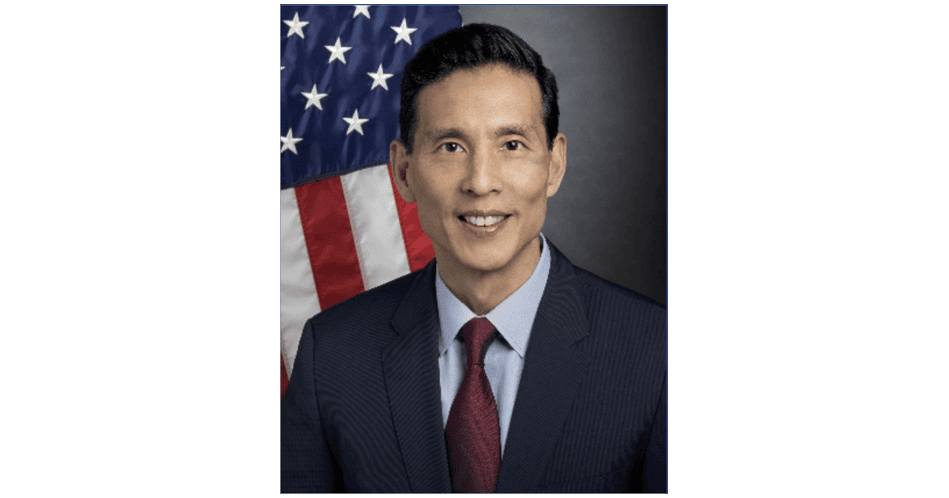
Ho Nieh, Chairman U.S. Nuclear Regulatory Commission
Concepts discussed
Auto-linked from the episode's notes and transcript.
Show notes
Ho Nieh, Chairman of the U.S. Nuclear Regulatory Commission, visited the Atomic Show for a wide ranging discussion about the agency, its role in enabling the safe use of nuclear energy, the importance of its mission to the energy future of the United States, the benefits of having organization led by a five person commission of decision makers and the ways in which the NRC is evolving to better serve the needs of the United States in an era of rapid technological change.
Chairman Nieh’s father worked as a nuclear qualified welder. His experiences during spring and fall outages were part of the inspiration for Nieh’s decision to pursue a career in nuclear engineering. He studied marine engineering at the U. S. Merchant Marine Academy. That major was the closest thing to a nuclear engineering program available at the sometimes overlooked 5th service academy.

_Chairman Nieh at Aalo Atomics Pilot factory – March 2026
(Used with permission from USNRC)_
Aside: (Everyone remembers the Military Academy, the Naval Academy (my personal favorite) and the Air Force Academy. Many know about the Coast Guard Academy. It’s less common to recall that the Merchant Marines play a vital role in the defense establishment and that they have their own service academy. End Aside.
Chairman Nieh told us about how he started his nuclear career as an instructor/operator at the S8G prototype at the Navy’s prototype site in West Milton, NY. He spent more than 4 years as a shift worker at the facility, likely having contact with 16 or more classes of trainees in the Navy’s Nuclear Power Program. After four plus years on rotating shifts, he was open to a suggestion from a former colleague to apply for a job as a resident inspector with the NRC. (Chairman Nieh is the first NRC Commissioner to have served as a resident inspector.)
At his service academy, Nieh was trained to seek roles of increasing responsibility where he could put his leadership training to its most effective use. His career on the NRC staff contains abundant evidence of choices made to deepen and broaden his capabilities as a leader in a complex and vital field.
Chairman Nieh described his appreciation of the skills, work ethic and depth of experience of his four fellow commissioners. It’s almost de rigueur for NRC commissioners to praise the collegiality of their Commission, but it sounded like he was describing an especially useful version of that descriptor is applicable to the current group.
We spoke about the agency’s evolving understanding of its role in enabling the safe use of nuclear energy and its growing understanding that the guiding language on that topic has always been included in Article 1 of the Atomic Energy Act. He acknowledged that there have been past leaders on the Commission and on the staff who felt that enabling was too “promotional” and wasn’t part of the NRC’s mission.
We spoke about the NRC’s very recent release of 10 CFR Part 53, the long-anticipated, new licensing framework whose creation was directed by the Nuclear Energy Innovation and Modernization Act of 2019. Though analysis of the final, 701-page rule is still in progress, the early returns show that it has generally succeeded in becoming a risk-informed, performance-based, technology-inclusive framework for designing and licensing new nuclear reactors.
Though the rule is still under review and the draft has not yet been made public, the Chairman Nieh described how NRC is close to completing another assigned task, this one directed by Executive Order 14300. The Commission is reconsidering the use of the linear, no threshold (LNT) radiation protection model and the associated regulatory requirement to take action to keep radiation doses as low as reasonably achievable (ALARA), even when the doses involved are already many multiples below the regulatory limit.
Chairman Nieh emphasized that the agency is maintaining its historic independence and that there are no external forces that are going to detract it from its role in maintaining safety. He also describes how keeping reactors safe does not mean preventing them from being built and operated. The nation needs abundant, affordable, reliable, clean power. It needs nuclear plants that can be built on time and within budget and a regulator that will not inhibit the accomplishment of the goal for safe and abundant nuclear energy.
I think you will enjoy the show.
Transcript
Read transcript
There's a way, a way such a better way today Today, a nation voice till the world There's a better way, today there's a better way This is Riot Adams and it's time for another Atomic Show I'm really pleased to have this my guest today Chair Ho Nee, the chairman of the US Nuclear Regulatory Commission Welcome, Chair Nee Thank you for having me, Rod I'm, it's good to have you I was really pleased to listen to your speeches during the Rick and I've also listened to you talk for a couple other times I'm excited that you are in the position you are at the time that it is So tell me, why did you choose nuclear energy as your career choice? So you might have heard me say at the regulatory information conference or the Rick that my dad steered my interest toward this field because he was a welder in the 1970s and 80s working outages at nuclear power plants throughout the Northeastern United States and you know, he certainly believed in the energy that's produced from the nuclear power plants, thought it was a real good field for me to explore as I was getting ready to go to college and he actually put me in touch with an engineer who was working at the Indian Point Power Plant just outside of New York City who had went to New York Maritime College which is where I went, it's a merchant marine academy and you know, he talked me up about the energy industry and nuclear in particular and just piqued my interest, so it really started out with my dad You know, knowing that he was, you know, going to work at these power plants during the spring and fall during outages and he put me in touch with somebody and sounded like a great industry to explore He is your dad still able to work, there's a lot of demand for nuclear welder these days No, he's retired, you know, he's getting into his 80s now and I kind of joked at the Reagan-fo conference about that story I told that really illustrates how our work in this industry spans generations I was visiting a power plant in the mid 2010s and when I was getting my dosimetry, the technician was looking at the information on our computer and said, you know, you don't look like you're 65 years old and I was only in my 40s at the time so I just saw that as a big compliment and said, thanks but you know, because my dad and I, we share the same name, that's why I showed up that way So, yes, it is a generational industry, I've known a couple of people that are third generation nukes and I think that he came from a nuclear family Yeah And in different sense of what people often describe as a nuclear family Well, you know, interestingly, when you talk generationally, you know, a commitment to a nuclear power program and you're often considered about a century when you think about it from when you start with the idea until, you know, the plant can, you know, no longer produce power and needs to go through decommissioning So it is quite a long venture for any company or country to embark on Well, at my point of view, it doesn't stop there because the best thing to do with that nuclear plant site when you get ready to decommission the plant that's there is to build another one Yeah, there's certain possibilities to do that and when we look at, you know, our approaches to reforming our regulatory frameworks We're going to look through our regulatory frameworks to make sure that the regulatory pathways to bringing a new nuclear reactor to a pre-existing site, you know, is done through an efficient process So yeah, I agree with your perspective there that, you know, a pre-existing site is often, you know, a site of choice for many companies because a lot of the environmental assessments and things of that nature have been completed and just need to be updated as opposed to going to a brand new greenfield site Yeah, not only the environmental assessments, but there's a reason why plants are built where they are from a point of view of the grid and electricity is not a fad, we're going to always need electricity, so if you've got a power plant site the best thing to do is continue using it as a power plant site That's right, yeah, grid access and access to heat sink Yeah, so when you decided you're going to be in the nuclear industry, you started studying it When you graduated, what made you decide to go into the regulatory side of this industry? Yeah, I was working at the U.S. Naval Nuclear Propulsion Program prototype plant up in Boston, Spon, New York and I was there, you know, four years or so around that time And, you know, there was a co-worker of mine who got a job at one of the NRC regional offices And I know you're a former Navy nuclear officer and, you know, the life at the prototype plant, you know, working shift work And I've been doing that for four almost maybe five years straight or so, and this guy I worked with got a job at NRC's region 2 office And got back in touch with a bunch of us that were there at the prototype and said, hey, you know, NRC's hiring a lot of people right now And the work is great, it doesn't involve shift work, you know, it relies on the nuclear training from the Navy program And it prompted a bunch of us to submit our applications to the NRC and I went from the prototype plant straight to NRC region 1 and got hired on to be a resident inspector Which prototype were you at? I was at SEG, I qualified at D1G, the big ball, yeah, the Horton Sphere Yeah, it was actually built that way initially because it was the home of the seawolf prototype, which was the Navy's only liquid metal cooled reactor I guess they built the big dome because they were concerned a little bit about the metal water reaction Yeah, yeah, so today one of the challenges you and your agency is going to have Is is manning as we get ready to expand this industry expand the number of reactors meet the the national goal of quadrupling nuclear and bringing on all these new advanced reactors You're going to have some trouble manning or getting the people to come to a government job How are you going? What's it? What's your pitch? What are you going to do to make sure that you get the right quality of people at the right numbers? Yeah, I think part of attracting the talent to the agency is really emphasizing the purpose of what the NRC does And when I left the NRC five years ago, I never thought I would return. I was really learning a lot working for Southern nuclear, which is a great company to work for You know, they safely operate eight nuclear reactors operating in Georgia and Alabama and I learned a lot from that experience and was continuing to learn you know Because I was also on on loan to info for a period of time as well to learn even more best practices and how organizations pursue safety and reliability and nuclear power plant operations But what brought me back was really the purpose that the NRC has in this really pivotal moment for nuclear energy in America So my pitch to someone considering a career at the NRC is really to be part of this defining moment for the nuclear regulatory commission You know the actions that we take now in the United States driven by part by the mandates from Congress and present and the president The president to reform our regulatory frameworks will really define the future of nuclear safety regulation in America and what we do here will influence regulatory approaches around the world and it's just such an incredible opportunity for someone to be part of this, you know, when I think about what I stated some some of the younger people considering coming to work at the NRC or just even staying at the NRC, the things that we do today. Like if you think about, you know, either our children or our grandchildren one day, they may flip on that light switch and it could be very well from a new nuclear reactor that was brought online because of the work that was done at the agency today. And that is incredible because right, you know America urgently needs energy right now and you know the debate about whether nuclear has a role in America's energy portfolio, I think that's settled. You know today the question is about execution at scale, you know, can we deliver new nuclear at scale on budget and at lower cost and that's what the NRC is working toward is to eliminate any barriers in the federal licensing process to help enable the safe and secure deployment of nuclear technologies. So I just think it's really yeah it's just you know being part of you know something America needs and being part of the team USA approach to deliver safe and reliable nuclear energy to to America I think it's just a profound honor to just just be a part of and if you know, be great if people always you know felt that same, you know excitement and energy to really do something good for the country. And so you just use the word that I was going to ask you about if I was to draw a word map of the audit the audio that I bought with me back from the Rick the word enable would have been the biggest word on that word map. How does that term differ from maybe what you and your people while you were a 20 year staff member is that a different approach a different philosophy than what you had a few years ago. Yeah, the short answer is yes, you know when I when I joined the NRC in the 90s, you know the mission. Obviously has always been safety right and you know protect public health and safety and the common defense and security and that has not changed and a lot of people. Don't know that in the Atomic Energy Act when you read section one, you know the policy declaration of the United States I'm going to paraphrase but the first section of the Atomic Energy Act talks about using and controlling the use of nuclear technologies to maximize the general welfare of the United States and the free market and world peace and you know, a lot of other lofty things but it was recognized back then that there are benefits to test technology and. Obviously keeping it safe is of utmost importance but realizing and bringing the benefits to the society was also. Part of the Atomic Energy Act and how this technology was brought to the United States so that was not something that anybody ever talked about when I joined the agency in the 90s. It first started coming up in the mid 2000s when the so called nuclear renaissance was emerging back then and you could remember there are a lot of companies that wanted combined licenses and there was these bowel ways of activity that was going to come before the NRC we built a third building and then. You know Fukushima fracking and the financial crisis happened like all them the three F's and that renaissance went away but there's a little bit of discussion about enabling there and it never really. Took hold I will say when I was a director of NRR seven years ago from 2018 to 2021. My team we tried to bring that back you know we created a vision for the reactor program which is we make safe use of nuclear technology. possible. It was safe and possible and the possible was a nod to the enabling aspect of it. And it was hard to convince people of that. You know, there were some folks that were really against that. They thought it was promotional. I never viewed it as promotional. I thought it was doing our job well so that we give America a safe option to address larger issues, robust civilian programs supports our nation's nuclear defense programs and it will help the agency regain international leadership and nuclear energy from countries like Russia and China. Many people resonated with that but a lot of people still had a hard time getting on board. And then fast forward to 2024, Congress puts in the Advanced Act the enabling part into the NRC's mission. So what's different now is that a lot more people have embraced the enabling aspect of, you know, the NRC's core safety mission. And I said this at the Rick, enabling enabling to me is aligning our regulatory approaches with actual risks and operational needs. It's not arbitrarily lowering our standards. Enabling is also anticipating future needs and adjusting our frameworks accordingly. And it is not trying to force fit new technologies into old regulations and enabling is also adding regulatory flexibilities that maintain safety. It's not preserving long-standing constraints that no longer have a safety benefit. So that mindset and those three aspects of what I believe enabling is are far more present in this agency than I've ever seen before. Over the years, one of the things that is kind of frustrated me is I tried to talk to people, to nuclear regulatory commission and try to help them see ahead and prepare as part of this idea that your job was to protect a common defense or support the common defense and security and protect the environment. I asked questions like, okay, your current regulations say that in order to license a reactor, you need to have a site and the license is always linked to a site. And I said, well, what if you wanted a reactor that moved around, like on a ship and doesn't have a site? How do you do that? And are you ready to do that? And the answer I got at that time was, well, nobody's asked us to do that. So when somebody does ask us to do it, we'll start thinking about it. I said, well, if you don't just think about it, so somebody asked it, maybe a little late. So yeah, how does the energy kind of look ahead and say, well, we need to be ready in some way to license say a new type of reactor or a new application, a heat reactor that does just heat, for example, or a reactor that propels the ship. Yeah, this is, you know, another aspect that I believe is important to the NRC, which is really creating this culture of continuous improvement. Again, I talked about it during a regulatory information conference. And I think that's one thing that's a strength of the operating fleet today is that the companies that operate the United States, you know, 95, well, let's say 94 right now, we got one restarting, but 94 operating reactors in the country. These companies have a strong culture of continuous improvement. You know, their businesses, right? They have to sustain what they do for their customers and that involves continually surveying the energy landscape and being able to adapt as changes occur. I think that's an area that NRC can strengthen how it does business and, you know, being closer in tune with what's happening in the energy landscape. So they can anticipate or really see the changes that are coming and evaluate whether or not changes need to occur to the regulatory frameworks, because, you know, it should be obvious to a lot of people that what's in part 50 today was designed for light water reactor technologies that were being, you know, designed and constructed in the, you know, 1960s, you know, that era of technology and they haven't really evolved as technology and the business landscape evolved over the decades after the first generation of nuclear power plants were built in this country. So we're working as a leadership team here at the NRC and along with my, you know, fellow commissioners to provide the right direction to the agency to be able to anticipate future needs and technologies. One thing that I think is different than well, you haven't seen all the rules yet. You probably had a chance to see the new risk and form technology inclusive licensing framework, the so-called Part 53 rulemaking. But we're looking at, you know, putting in regulations that are, you know, less prescriptive and more technology neutral so that they can, you know, maybe they won't be 100% future proof, but they will not create really tight constraints for technologies that evolve into the future. But of course, as they do evolve, there may be things we may have to revisit again in some of the new licensing frameworks that we're producing. But I think being able to be situationally aware of the energy landscape and the changes that are happening in the energy environment, listening to feedback from our stakeholders, from innovators and working across the federal government. Obviously, you know, the Department of Energy is doing a lot of things to develop nuclear energy technologies. The NRC has to be aware to that and able to adapt accordingly and have, they want the NRC to be in a role to adapt on its own rather than being compelled to adapt, you know, through external forces. You mentioned the risk informed new licensing framework. And I like to think that I like to remind everybody who's listening to me, this is not just for us informed this performance based. But how did that framework come about? I know it was directed by the Advanced Act 2024. Or it actually wasn't. It was the NEMA. It was the Nuclear Energy Innovation and Modernization Act of 2019. Yeah, that's a while ago. What kind of process had that happened to get that framework done? I know it's a big change to put in a new licensing framework. Yeah, so I remember vividly that direction. It was issued. It was signed into law by President Trump in his first term in January of 2019. And I was the director of NRR at the time. And what occurred just prior to NEMA going into law was the merger of the Office of Nuclear Regulation and the Office of New Reactor. So NRC combined two offices into one big office at the NRC. And there had been a number of people already developing a technology inclusive framework. So NEMA's direction actually built on a DOE cost share initiative to develop what was called the Licensing Modernization Project, which was a risk-informed technology inclusive approach to selecting what design basis events needed to be included in the licensing basis for any kind of reactor. It's actually a really sound framework in my view that helps an applicant determine, hey, what do they have to actually analyze for and include in their license? It leverages modern risk analysis technologies. It doesn't require an applicant to use a probable risk probabilistic risk assessment, but it encourages the use of risk technologies, including things that are maybe less rigorous than a full-blown PRA. The word in the new rule is called the systematic risk evaluation, which applies engineering judgment, operating experience, and some degree of PRA quantitative assessment. So this type of rule was envisioned before NEMA was put in place and NEMA was really the catalyst to get it into law and it gave the NRC a hard stop with having it put into place. And it was a team effort from the beginning. I remember kind of coming when work was well underway. I know I saw a lot of provisions in the early versions of the rule that made me ask some questions in my mind on whether or not it was something that would be really useful to the industry in pursuing an application. It went through quite honestly a lot of back and forth between the NRC staff and the industry. And I had already left in 2021 and that back and forth was still ongoing. And it actually got to a point where there was quite a bit attention between the NRC and its external stakeholders. And NRC was receiving strong signals that nobody's going to use this rule in its current form. So the staff, I give them a lot of credit. They were very responsive to the feedback, the commission provided additional direction that help fine-tune the rule into something that I believe now will be a usable rule. And I obviously supported publication of the final rule. And I'm really proud of the NRC staff that was able to take in the feedback and make the necessary changes to provide a rule that will give the benefits of more disciplined, streamlined and flexible licensing. Yeah. I've heard quite a few people who have been impressed by changes that have been made since that kind of almost unanimous declaration by the advanced reactor developers said, you know, we, this is great, you guys have done this, but we can't use it in this right. Right. And we don't want to see that happen because you know, the NRC uses public funds, right, that we collect from our bill payers, you know, the users of the agency's resources and licensing activities. So we want to make sure that when we do work, we produce things that are meaningful and that are going to be used. And right now you're well aware there's the President Trump executive order, 14, 300 that requested a review of many of the NRC's regulations. And this commission, I have to really say how proud I am to work with the four members of the Commission, you know, Commissioner Wright, Commissioner Crawl, Commissioner Marzano and Commissioner Weaver, the effectiveness and collegiality and the pace at which we are providing organizational and policy direction to the agency is unlike anything I've seen before. And we are working very well. We have different perspectives and we in times have very different policy orientations. And that's okay, right? The diverse views are what makes the final decision better because we challenge ourselves and we challenge each other to determine what is best for the agency. But the commission is just working extraordinarily well in my view. And it's producing output at a pace I have not seen in the, you know, the 24 years I spent with the agency before going into the private sector. Yeah, I'm glad to hear that. And I it also brings to mind the reason that the Congress and and Senate back in 1946 with a lot of input from a lot of people set up the atomic energy commission as a five member group rather than a single administrator like some other agencies had. That that commission structure is stood the agency very well over the years. And also you know, it's the works best when you got a full commission. It does. And then you know, I was. Somebody was asking about me about this topic recently, about a five member commission. And the context of their question was, what changes in the administration, is a five member commission good or not? And my view is having the five member commission is a benefit in that context because it's kind of a dampening mechanism for political transitions between political parties in the administration. So I think when you have a five member commission, obviously there's provisions in place that no more than three can be from any one political party. But I think having five members of the commission that work well through a collegial process, I think to some degree, offers some dampening of the fluctuation that may occur as political administrations change. And somebody had said to me once, a commission's working well when you read their individual votes and you can't tell whether they're a Republican or a Democrat. Yeah, that's good. One of the things at 1,300 directed the NRC to do is to take a real hard look at one of the fundamental bases for your whole structure, which is what makes radiation so different? What makes it risk? We've always assumed that any radiation down to a single gamma ray is somehow dangerous and we should spend some money, at least to protect people from it. You should take some provisions all reasonable and keep it as low as reasonably capable. But the director said, is this the right approach? What's going on with the agency now? Was that part of the directive? Yeah, so there's a draft rule before the commission and it relates to the NRC's radiation protection framework including Alara and the linear no threshold model that you mentioned here. And I can't share the details of the rule provisions, but on a very general level, Ron, I will say that this undertaking here to reconsider Alara and the linear no threshold, one thing I would love to clarify to your listeners is that the NRC is not lowering the standards for safety in any way whatsoever through these rulemaking activities, particularly with radiation protection standards. And when it comes to Alara, Alara is not a safety standard itself. It's really a policy construct that is guided dose management below the regulatory limits. And I think the challenges that people have had with it is that it lacks a clear, enforceable endpoint. And having something that is really kind of a, let's say an unbounded expectation that can drive exposures below the limits to levels that you can't even tell if there's a significant safety benefit is not something good for predictable and clear regulations. So when I look at the proposed rules, I don't see something that's just erasing Alara and LNT. What I view it as providing a more clear and structured graded approach for managing exposures that are well below the limits, the actual limits that are in the rules themselves for exposures. So you really wanna clarify that for people because I know since the draft rule hasn't really been out in the public because of the new requirements of the administration, people are filling in the blanks on what they think is happening. So I want your listeners to know that the NRC is not arbitrarily lowering standards or doing anything that we would consider, increasing the risk to public health and safety. We're just providing structure and clarity in our radiation protection framework where it does not exist today. Yeah, there's really no structure in having a rule that says gotta do it as low as you possibly can. It's like telling a cleaner, keep cleaning because I think I can find another speck it does somewhere. Yeah, I've used so many different ways to talk about it from an analogy standpoint. It's like when you drive your car, you don't really, you stay below the speed limit. You don't drive as slow as reasonably achievable right in your, you're trying to, you know where the risks are and then the other one that popped into my mind, it's like the current approach with the Laura's is like driving with one foot on the gas and one foot on the brake. You're continuing to push for lower dose simply because lower is more conservative even when you're already, you know, operating safely. So I believe having a more structured and graded approach restores balance and helps our licensees maintain proper control while adjusting appropriately to real conditions and risks that, you know, maybe present, you know, at doses below the regulatory limits. Yeah, I'm not sure that other people are attuned to this as I am, just could just been something I'd care about for a long time. But next year, next year we will hit the 100th anniversary of the scientific tests that form the basis for the what proportionality rule, which was the original name for the LNP. Yeah, 1927. Yeah. And you know, when I think of a Laura and you know, having, you know, a more structured and graded approach to managing low doses below the limits. And again, I want to emphasize it's below the limits, you know, NRC is not proposing to change, you know, it's radiation standard limits here. So when you think of a Laura in the operating fleet, you know, it's my belief that I don't think what NRC is, you know, looking at, you know, creating more structure as opposed to an open ended approach is going to result in any substantive changes to the operating fleet of reactors today, where I think it provides the enabling benefit rod is that, you know, designers have to design their machines for the requirements that are in place today, right? To, and there are pragmatic requirements to have a Laura, right? And we're just defining that better now. What it will do to enable the innovation in nuclear, it will give designers, again, a more structured and clear target for them to design their reactors in terms of how much shielding is needed and for what application that they would deploy these reactors. So it really, I see bringing the clarity to a Laura is providing significant developmental benefit to those innovators that are developing new types of reactors, like the ones like the mobile ones that you were talking about and things of that nature. So again, it will help, you know, make those designs more cost-effective, but at the same time be safe. One of the areas where a Laura is really intrusive, and it does have a numerical limit, essentially, they didn't, they made sure it wasn't just a do it as low as you can. But here's the limit. Somebody who's designing a permanent repository for spent nuclear fuel or other high-level nuclear waste has to achieve 15 milleram per year to the most exposed person over the first 10,000 years of operation. Now 15 milleram per year is one 20th of the average radiation exposure from normal background radiation to an American. That is an area where I think that it's time for another fight between the NRC and the EPA on that particular number. Yeah, there's some, there are some deltas between us and the EPA that it's something that I think, you know, having that conversation between agencies will be important. And that's one of the other things I saw that was very different. In coming back to the agency, having been away for five years, is that the level of interagency coordination is more visible and more substantive than I've seen in the past. And I think, you know, that's, in my view, I think that's a good thing. Like, you know, American agencies working together for a common purpose. That's the way it should be, you know. So I appreciate that. And I know there have been others that have questioned the NRCs and the pendants and what I'll tell you are listeners. I've been back here at the agency for four months now. And I make, I own my own decisions. There are no other departments or agencies that are directing my judgments in what is safe and what decisions are made in the NRC's regulatory process. So, you know, last year was a year where there was a lot of change in the federal government. You know, there was a Department of Government efficiency that went to many agencies to, you know, stimulate changes for efficiency and for the benefit of American society. That happened. Anytime we ask people to do things different than what they've always done, that's 99% of the time. It's very, very challenging. And there were some, you know, challenges last year. But I can assure your listeners that the agency is stabilizing. You know, we've embarked on a reorganization. We've identified permanent leaders that have been enacting roles for the better part of a year. And we're getting ourselves organized. And, you know, I've already directed our executive director for operation to implement a more disciplined management model for how the agency does its business as, along with the corresponding leadership behaviors that we want to see all leaders demonstrate at the NRC so that we're doing business in a very disciplined and consistent way. And this is something that's got to be in place for durability. It has to outlast anyone chairman, commission or EDO or manager at the agency. And that was the one thing that I really admired in the operating industry today is that these high-performing companies, you know, they execute to a very disciplined management model. Leaders lead consistently in their organization. And that's how they drive results. And I want to bring that same level of discipline into the agency and how we do business. And as you mentioned, the important thing about good long-term performance-based companies is that they set up systems and structures. So it doesn't depend on any one person. It's not a, it is something that is sustainable as people move in and out of the organization. That's right, absolutely. Chairman Ne, we are now bumping. Actually, we're gonna look past the time I promised you had to be done. So I'd like to offer you the opportunity for any concluding remarks. Or if you prefer to just stay talking, I'll talk with you as long as you will. Yeah, I'll, I think it's good. Yeah, I've got some commitments later this afternoon. And, you know, from a concluding remark standpoint, I, you know, I would say that the NRC is at a real defining moment here for the future of nuclear safety regulation in the United States as well as the overall future of nuclear energy in the United States. It's kind of a, once in a career opportunity here at the NRC because we are really designing the standards for nuclear safety that will be in America for decades to come. And what we do here certainly will influence regulatory approaches around the world. Safety remains the NRC's top priority that has not changed our independence. Also remains firm that, you know, that has not changed as well. And we here at the NRC, we clearly see that America urgently needs more energy due to the needs of our country from artificial intelligence, data centers to industrial growth. And recognizing that many of our stakeholder see nuclear energy as essential to our energy security, you know, that. The question before America now is whether we can build that scale on schedule and at lower cost. And that's where the NRC now matters most. Right? Regulatory uncertainty is risk to capital and capital will go elsewhere if risk is too high. So as the America's independent safety regulator, you know, our role is clear. We have to have our safety decisions made that are credible, predictable, and timely. And we're making the reforms to put these things in place so that America has the options it needs to fulfill its energy goals. That's a great summary. Now, I will take one more opportunity. During the regulatory information conference, I heard you say that you will know that you have a key success when there are shovels in the ground. I want to challenge that. I'll use the key success when there are electrons hitting the grid. Yes, I will say that that is also a really important measure of success. You know, I think you're right, Rod. And you know, if we if the NRC does its job well, we are no longer perceived as an impediment and we will not be an impediment. You know, and I'm already hearing good feedback and positive feedback from many stakeholders in their experiences with the NRC. I feel confident that the decisions we're making are sound, they're safe, they're secure. We're doing them faster than we have in the past, but just because we're more timely does not imply that they're less safe. As I mentioned before with the previous regulatory frameworks, there's they were built at it. They were designed at a time when we knew way less than we know now about these technologies and there's conservatism that today we know are unnecessary for safety. There's always some degree of conservatism that's appropriate, but we're seeking to remove the unnecessary conservatism that really do not contribute to the safety outcomes that we're seeking. So I'm confident that the talented and dedicated staff of the NRC continue to maintain the safety focus. I know the members of the commission I get to the work alongside with also have that same view that's safety is our top priority. Thank you so much for your time, pure knee. You bet, Rod. Thank you. The nation buys, tell the world there's a better way, today there's a better way.