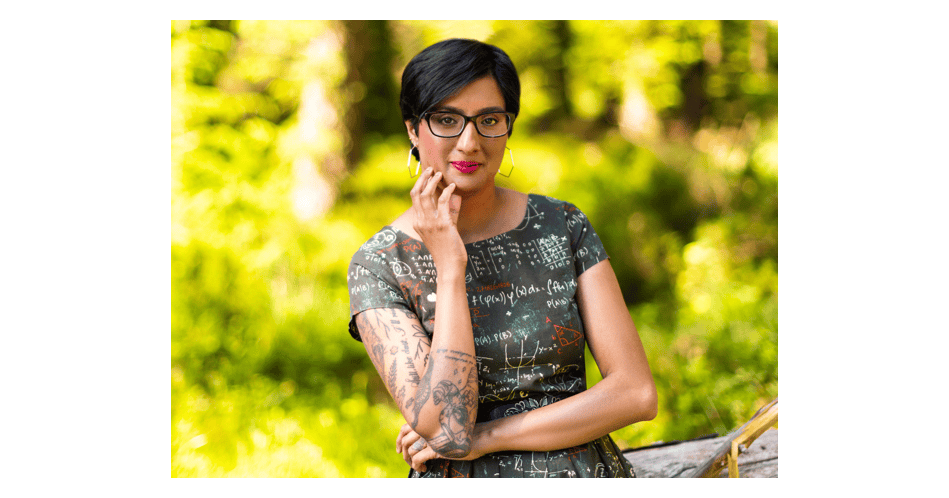
Zion Lights, Author of “Energy is Life”
Concepts discussed
Auto-linked from the episode's notes and transcript.
Show notes
Energy is Life begins with an alternative timeline – Zion Lights describes what her life would be like if her parents had not made the decision to emigrate from their village in India to become factor workers in the burgeoning Manchester manufacturing area before she was born.
It’s a sobering and enlightening depiction of the daily struggle for sustenance and survival in a place that is plagued with dire energy poverty.
During her education and early career, Zion was deeply embedded in the environmental movement and accepted many of its tenants. But as she repeatedly heard her colleagues and associates idealize simple existence and express a desire to return to the land and the traditional ways, she began to ask hard questions. Did they have any idea what it was like for those people who were still living on the land using traditional, primitive technologies?

Her path of asking hard questions and looking for the best scientifically supportable answers to those questions soon led her to become a closeted nuclear energy supporter. She learned how useful the technology was, especially as a way to provide abundant energy while virtually eliminating immediately harmful air pollution and climate changing emissions. But she still traveled in the environmental circles and was sure that she would be ostracized if she openly expressed her conclusions.
She tested that thesis several times and received the response that she expected. One of her colleagues once asked “you aren’t pro-nuclear are you?”
At a key point in her journey of discovery she was employed as a spokesperson for Extinction Rebellion, an aggressive antinuclear NGO taking direct action to capture the public’s attention. Its illogical but unfortunately common position was to be both opposed to emission-free nuclear energy while also focused on fighting climate change. After finding herself in situations where her choice was to speak truthfully or to do her assigned job, she left the antinuclear group to become a pronuclear advocate, speaker and author.
We talked about her life trajectory, her recent book, and her pursuit of an abundant future where all people have access to the energy resources that give them agency and enable them to flourish.
I expect that you will enjoy this episode.
Transcript
Read transcript
There's a way, a way such a better way today, today. A major voice till the world, there's a better way, today, there's a better way. This is Rod Adams and it's time for another Atomic Show. My guest today is Yion Leitz, the author of Energy Is Life, and a former guest on the Atomic Show. Jesus, been about six years ago that we spoke about her initial conversion from an anti-nuclear activist to become one of the world's most aggressive and out there public activists for nuclear energy. Welcome to the show, Zionz. Hi, it's good to be back. And yeah, it does feel like a really long time ago, lots happened since then. Yeah, tell me a little bit. At the time we talked back in, I think it was the summer of 2020, which was a cash right after the world started shutting down from the COVID crisis, or actually had already shut down. We talked about your experience in being a spokesperson for extinction rebellion, which was a very active and aggressive, I guess maybe still our group that was fighting to get the world's attention about climate change. And you had an interesting experience. You could say, why are these guys fighting nuclear energy? Right. So I started out as Antoni Ecla, because I spent a lot of time in these groups, and that was a very common perspective to have. And I did actually change my mind before I was in Accenture, Ranjan. I was questioning quite a lot, but it's quite difficult to have those conversations in groups where there's a consensus, you know, that something's bad. So I was kind of trying to push back a little bit while questioning. Anyway, by the time it came around to Accenture, Berlin, I'd actually stepped away from a lot of the previous groups that I'd been involved in because of their attitude towards nuclear specifically, but also the technologies. But when they invited me to come on board as a spokesperson, they basically said, look, we just want you to talk about the science. And I thought, well, that's a good thing if they're going to allow that, and it's probably better that I'm doing it than, you know, some of their other spokespeople. But then it perhaps inevitably, I basically clashed with one of the other spokespeople because he made a claim that billions of people were going to die from climate change, and that was on television. It was all over the news. And I separately, some months later, was invited to go on another popular TV show. It's called The Andrew Niel Show. And he asked, he expected me to defend that claim, and he asked me about it. And that was really the moment where I thought, you know, maybe these groups haven't evolved as much as I thought, because I couldn't defend it. And then he went on to talking about gas, what are we going to do to replace fossil fuels? I couldn't say nuclear. And of course, when I afterwards, I was told by the Accenture, people where you should have said renewables. And I said, well, I thought we were against all these technologies. You know, there's a lot of picking and choosing going on there, because officially the group doesn't have a view on either, but obviously that, you know, they're off-use there. I knew what they were. I knew I was there as a spokesperson. But yeah, that experience really caught me, you know, that, I think the press described it as a rabbit in the headlights moment, because there's a horrible screen shot of me just looking blank. Like I just realized in that interview live on TV, millions of viewers, I just can't do this anymore. You know, I need to be able to talk about solutions. I need to be able to talk about nuclear. I need to be able to say, no, that other person said something wrong. And I couldn't because it was part of the in-group, but he did say something wrong. You know, and so that was when I really stepped away from all of these groups. And, you know, one of the first things I did when I did that was think, well, what if there are others like me, maybe I should start a group that reflects, you know, pro-science environmental action and see if people come. And that was very successful. Yeah. For a while, we did a lot of actions that I think helped to change the conversation about nuclear, especially in that kind of first year we hit the ground running. What was that group? Emergency reactor. We started out calling ourselves nuclear vernet zero. We did get some press with that as well. But, yeah, we changed it. We branded it. We worked with Robert Stone of Pandora's Promise. Yeah. Yeah. And we had a conversation and we're like, well, maybe it needs, you know, and also net zero has very negative connotations now among some groups. So we kind of threw some other phrases around came up with emergency reactor. Just because it's kind of, you know, gets your attention. And I basically took those many years of activist skills messaging activism, you know, the approach is direct action, the kind of, you know, projections on government building things that we did that were, you know, copied the world over. we are, we kind of just said, let's bring that over into this space because it's never existed here before. And maybe it will, it will do something. I don't run it anymore. I feel like it served its purpose. But for a few years we did a lot, you know, we went around. We did the actions. We did petitions. We did open letters to the government getting them to switch their mind on nuclear here, which they did here. And yeah, we, you know, we did public engagement stores, handing out bananas. We did a protest outside the Greenpeace headquarters. We did a lot of stuff in just a couple of years. And by the end of that, the public opinion had shifted so much. Not just from our experience of speaking to people, but the actual polls showed that in those last two years people's opinions shifted in favor of nuclear. Yeah, I didn't stop doing it after that, which I think is a bit of a shame because I do still get people contact me saying, well, group can I get involved in, but there's any so much I can do. So yeah, I let it go eventually. Yeah, I tell us a little bit about why you are so passionate about science and particularly about making energy decisions based on the best science available. I mean, I think, you know, it's it's the best tool we have. It's the best thing we have to solve some of the world's biggest problems. And I think sometimes we forget that because so many of our problems have already been solved by science and technology. And yeah, we're almost we're almost too comfortable, but I don't really mean that in a negative way. People should needlessly suffer, but there are still millions of people around the world who don't who do who don't and they don't have access to electricity. They don't have even you know some of the really basic stuff like access to vaccines access to clean water. The very basic stuff that we kind of take for granted. We only we only for most of human history we lived in poverty. We only got to this stage because of science and technology developing treatments, developing education, developing, you know, all of the things that surround us that are basically products of of technology. And so, you know, I think it's there's a bit of a paradox there that when we become so comfortable with it and take it granted. We don't realize that it's the foundation of everything. And I think energy, especially is the foundation of civilization. Like everything comes back to energy, whether you can produce these goods come comes back to energy, whether you can breathe well, you know, and live in a healthy planet comes down to where you get your energy from. So, you know that that's the title of my book energy is life and you know the reason for that is just trying to get people to to step back a minute and think well what would life be like without all of these things that I've for some reason have started saying that you know are too much or too damaging or you know they're bad because consumerism or capitalism or all the things that you you hear that I still hear that I still get you know I'm doing a book throughout the moment and I still get questions like this. But see on shouldn't we go back to living how you know we were when we lived on the land simpler times and really that's you know that it's advocating for poverty. There are millions of people would do anything to escape that kind of poverty. And I personally feel we have a moral duty to help lift those people up poverty or at least not get in their way as they're doing it, which they are doing it because there's you know many. countries are in the process of development just like we we did with our industrial revolution. And you know now you have world leaders and NGOs telling them well we don't want you to do that because you're burning a lot of coal we want you to set net zero goals etc. And it's just not really fair. And again I think it's a product of of having you know it's the paradox of plenty like we have so much there's always hard to believe that a others. Absolutely. And there still needs to be a leveling up there and be. We none of us really truly want to live a life you know that is. Is energy poor. Even if we romanticize it and we think oh it'd be so nice in a community on the land that is that is poverty that is scarcity and that scarcity narrative comes from the most privileged people on the planet. So yeah that that's kind of I feel like it's not. People often you know call me this kind of oh she's the nuclear person. It's a new place part of it because it has to be part of it because if you want the solution or right let's be honest what are the solutions if you want clean abundant energy they're very few solutions like you could say hydropower fine but not everybody not everywhere geographically has a lot of access to hydropower what does that leave. that that pretty much leaves nuclear and you can have wind and solar but you can't develop a civilization with wind and solar. You can you can supplement you can add to the grid with it sure but really if you want something as powerful as coal has been historically. Then it has to be nuclear and that's where I kind of landed with that where I thought well actually there's there's a lot of issues in the in the kind of the environment to move essentially where this idea of scarcity came from and this idea that when you close bad because it just props a pack current way of living and I'll come at way of living as bad. Yeah you know I got to ask you when you are talking about we can you make sure people understand who you mean because as you said there are many people in the world that wouldn't agree with what you just said when you talked about we. We have a lot we have the technology we have solved these problems well it is I mean it is everybody is listening isn't it because if you have access to a device that is run on electricity. That enables you to listen into a podcast and you have time to do that because you're not out toiling in the fields and forty degree he trying to grow rice. Then I'm talking to you. Right because the people you read the books you you know the timeline those people don't have access and let me tell you even when you give them access my parents of you know. You look at these villages and India where that the family still resides and has sent them things like money to buy a phone right. So you think well life changing technology now they have access to banking now they have access to you know the internet they can ask questions they can get. And I'm trying to get medical diagnosis which fine you might say that's not perfect but it's better when you have no doctors or healthcare at all. You know fine they have that device but even then if you are four hours from the nearest town where you can plug that in and charge it you only have a finite matter time. You know maybe a hundred people in this village quickly going through and doing that okay I'm checking my banking or okay I'm trying to find out what you know what my daughter might be sick with so I can work out how to treat her. blah, blah, blah, all of that stuff. And then the phone dies. And then at some point weeks later, someone will make that long trip into the town and they will charge it there and bring it back home. They are not in that time listening to podcasts. They are not. There's millions of people. And my question for those who wanna give somebody a device and say, now you do that modern technology is, where does the service come from in those village leaders? Exactly. I travel around with a cell phone and even here in America, there are many places where I get no signal. Yeah, I get to describe to the Elon Musk who's standing at or whatever he calls it. They don't get service. What they do is they use the phone in the town so that everyone will pull their ideas what you need to do. And then one person will go on a motorbike or even a bike or however they can, I think when we were there, we actually traveled by Mule at one point to this town. It was this little kind of carriage that was drawn by a person who was occasionally around and would take you place. It wasn't like a bus service. It was always there. Anyway, and then you get into kind of the closest thing to a developed region, not super developed, but there are wires and plugs. And the wires are just hanging from the skies. It's all just very ad hoc. And then you would quickly, you'd charge your phone and you would be able to do stuff on it. But before that, people could do that anyway because there would be computer cafes, which we used to have originally before mobile findster coffee. It was a thing that you could go to a cafe and use a, it wasn't a cafe, but it was a cafe. Yeah, that's actually more normal. But the phone, obviously, you can save stuff to your device. So once you save it, say you Google everything and you look up like all these different pictures of someone being sick of something, I don't know, skin disease, lots of pictures. You can save them all and you can go back to it and you can look at them. So there's ways around the limitations. But it's still a, it's a huge limitation. But yeah, what I'm trying to say is it gives you some access and that access, just that small amount of access you get back in the battery last for a few hours and you all look at all the stuff that saved on there. Okay, that, that already is a great equalizer that is one step, tiny step up the ladder, but you can't really have more until you have the development with the service, you know, with reliable access, with the ability to recharge your device and multiple devices, right? Like fridges and air conditioning things that they don't have. And you know, obviously, there's different levels of poverty and there are people who are, that they have a little bit more than others, you know? And, and you know, I, my family there doesn't live an extreme poverty, but I saw, I saw extreme poverty when I was there, which just, you know, I mean, we all have a concept of what it's like, I think, but we're so far removed from it. You know, even I have to sometimes bring myself back and just think, okay, appreciate what you've got here, see on, because you've, when I say we, that's, if I have time to sit and watch a TV show or, you know, even read a book, that means I'm literate, that means I had education or, you know, write a book, or goodness sake. Or have this conversation with you using a device across the world, you know, then, then I'm talking about us. We are in the top percent of people in terms of privilege. We have everything. If you, if you can plug in as many devices as you want into your house and run them and you don't have to think twice about it, you know, you buy a new toaster, you buy a new kettle, you don't think twice about the electricity cost. Then you, you are in that top percent. You are the most privileged person in the world. And I'm not saying that's a bad thing. You know, I think we often hear privilege used in a negative way. I'm saying, wow, how lucky we are. But everybody needs this. And pretending that we went wrong someone, we should go back to living another way. That's dangerous actually. We should, that has had repercussions around the world where countries have planned for scarcity when they should have been planning for abundance. So in terms of thinking, well, everyone should have this rather than we went wrong somewhere. We should have less. And one of the, I've been interested in following the abundance discussion and the abundance movement for a while. And I learned, I wrote an article several years ago. I learned that it is a surprising group of people who actually profit from scarcity and fight abundance. Not people that that are nonprofits or people that are ideologically motivated and people who literally profit from abundance. Who can you imagine it might be in that category? Who probably, I'm sorry, profit from fighting abundance. I'm this spoke, profit from fighting abundance. Yeah. Inposing scarcity. I mean, many people, yeah, you know, I would say a lot of NGOs. A lot of the people that actually like to live with abundance promote scarcity. There are plenty of academics. I could name this one that just passed away recently. Made this entire career off this, you know, and popularize this idea, helped to popularize this idea that people are bad, people are wasteful. We should all, everyone else should live with less. But you know, there's people that are making those arguments and never living with us themselves. And I do think a lot of the big organizations, the big in-inquitations, environmental groups, have profited as well. I mean, this is, you know, they promote psychodrug, isn't it? They promote it. And then they get huge donations, enabling them to push forward that same agenda. And we've had that same argument and agenda for so long. It's only very recently that it's been pushed back. I'm arguing for abundance. I'm actually speaking of those who listen to the NGOs and say, wow, that person or that group's message is really quite supportive of what I want to do. So I will give them a few millions so that I can profit by a few billions from what happens when they're in scarcity. I know you're talking about it. Just don't want to get in trouble. I wrote an article about this recently. I did a bit of a deep dive on my sub-stack. It's all very, you know, it's all very fact-checked. And it was looking at what happened in Germany specifically and the main players, the key people who made the decision there to phase that nuclear. And they're very clear, undeniable ties to fossil fuel organizations that is not conspiracy the links are drawn. And those are just the ones we know about where there's some evidence. You know, I think there's always been this kind of idea that, well, there are vested interests here who don't, they don't want a nuclear. Nuclear solves too many problems. And yeah, a lot of these very powerful organizations worked to undermine energy security and climate goals by acting through people who had real agency like world leaders to go after this technology and very successfully. And they were doing it, you know, before I was born, if you really look back at some of the funding links, even, you know, Russia's been found to have funded environmental groups that have fine, you know, they've protested fossil fuels. They've also protested nuclear, basically protesting modern society, but very successfully, you know, those movements led directly to policies that champions get to the university. And now we're starting to see the impacts of that because we also had an energy crisis here and suddenly the electricity is very expensive. People are starting to have to think about these things for the first time. And they're wondering, where did this narrative come from? Actually, it's all very traceable. I mean, I think there's probably a lot more that we can't, you know, prove, but where I've looked at something and thought that person's argument sound just like they came from, you know, something that I read somewhere else, but we can't draw those like, I can't draw those links because we don't have the solid evidence. But we know that it has been a real thing, vested interests, funding bad actors to completely shift the narrative on these life-saving technologies. Very successfully. And using it, very, you know, using it, I think there's a reason it's linked to environmental groups that took donations from these organizations. And also, you know, green, like in Germany, it was the green party, it was green party members. So it was always under this banner of environmentalism. And that's kind of what I was surrounded by for a long time, except I didn't really understand where it was coming from, you know, where the fear and where the narrative and nobody did really, nobody questioned it. We just are, we just are against nuclear. And if there was anyone in there who knew why they went up front about it. Yeah. Lack of being upfront about is common. And one of the things that I've learned over the years is that the people who market products like oil, natural gas, non-NGO developed corn, rice, maize, whatever you want to talk about. Those that compete with the products, it could be enabled through thinking about and pursuing abundance. Those people have some extremely talented communicators who are very good at finding ways to address people's anxieties and take advantage of them. There are people who are well trained in what Edward Bernays used to talk about is propaganda. It's the same thing as marketing. You are marketing. Yeah, there was that, the nature of secretary who said that. It was like 10 years ago with something. What was his name, Razmus and I think it was. And yeah, he basically, that's what he said. He used the word disinformation. He said that there's disinformation coming out of Russia towards European energy security and the entire aim is to just shatter it. And it worked through environmental groups. And the reason, I think there's a couple of reasons. There one is they're always seen as the good guys. So that the groups you'd least suspect. And even now that's true, right? These groups still get a lot of funding and donations from individuals who believe them to be the good guys and from large organizations who, you know, similar reasons. Like if you're giving to a charity, let's give to the environmental group. And the other reason, they do have some fantastic storytellers, but they're also very susceptible to misinformation. So a lot of them probably believed the disinformation. And I actually think that about some of the German green party people is that they believed it. And now they're coming out and saying, well, we're wrong. And I know that there's been a lot of pushback on that people saying, you know, it's too late and it's your fault. But actually, I think some of those people were misled themselves because the the disinfo campaign was so powerful. And like I, you know, I believed a lot of these things myself. Because it was just so ubiquitous. And everyone around me believed it. And society broadly didn't question it as I'm sure, you know, because you've been in the space for a long time, is really only in recent years that we started questioning. What is the actual truth about these technologies? And what could we actually gain if we stopped protesting them? And then later, where did all of that come from? And there's so many links. You know, you've got Clinton saying that there was Russian funding. I mean, there were sciops everywhere. We know that friends of the earth was funded with oil money. We know that Greenpeace was promoting gaming to be against fossil fuels while promoting its own gas company, although I think they called it pro-wind gas. So they were pretending that it was mostly wind, but it actually was mostly gas. Which just tells you, actually, then they're not against that fossil fuel. So what are they actually standing for? Well, it's just making money, really, at the end of the day. I mean, interestingly enough, just from a purely business point of view, it is profitable or an oil company to fund somebody who's fighting oil. As long as that group fighting oil is fighting, say, development somewhere else on somebody else's fuel is good for us to keep this supply. I mean, in the business press, they call it a business teaching and MBA school, they talk about that as being suppressed or capital discipline. In other words, you don't want to produce too much. You don't want to invest too much because you don't produce too much and drive down your prices. Right. Yeah. And that's the thing, right? I mean, I imagine if every country had done what France did in the 80s, every country build lots of nuclear reactors, every country mostly weaned off of fossil fuels as far as they could. I know it sounds like beautifully utopian, but it was a moment where that could have happened, where there were some countries pivoted against and some went for. And France is a good example of what could have been achieved again before I was born, could have been achieved. You think, well, there's no way that everybody just, you know, automatically just decided not to go not to have that future. There's no way. Everybody collectively just suddenly decided like that was a campaign when you really think about it. And I've heard people say, well, no, it's because of three mile island, but no one died at three mile island. No, it's because of Fukushima, no one died because of the meltdown and fine. I'm not saying there were no repercussions from that, but they are far worse disasters from, you know, hydropower, right? Hundreds of thousand people killed because of the Banco Dam collapse in China. How come we didn't have a huge global movement against hydropower and shut all the dams down? How come when challenger exploded and Columbia exploded? We didn't have a huge pushback against the space industry, which by the way, you know, is very polluting. I'm all for the space industry, but it is very polluting if that's what you're saying. You don't like about nuclear technology. How come we didn't have that global pushback? They just carried on. It was, you know, there's a lot more going on there than just, well, it's an innate fear. And I still hear people say that, well, it's natural to be afraid of it. No, I don't think it is unless people keep telling you stories that promote your fear. And again, I do think there are a lot of bad actors that were involved, but we can't link them. We can't say they would directly linked, but I've looked at some of the how powerful their narratives have been. And I've just thought that's not just being afraid that is propaganda. I give you one example. Is that German book? Have you ever heard of it? It's called Divolk. Just translate to the cloud. Have you read it? No, it's required. No, it's required really no, isn't it? It's required reading in German schools. Let me tell you, when I read that book recently and I'm no longer anti-nuclear, it made me afraid because I don't want to read about a little kid, a girl, right? Who she's near this nuclear power plant. And it's very specifically described as a nuclear power plant. It's not weapons. It's a power plant. And it goes into detail about how actually people didn't want it to be built there because they knew that it was going to cause an apocalypse. It then explodes. It causes an apocalypse. This little kid watches everyone around her die from radiation poisoning watches her friends die. It goes into like a makeshift hospital and sees and it's described in detail. It's graphic. I wouldn't let my kids read this book, you know, this age. Germany. And it's so graphic, you know, the eyes are falling out and like it's just horrible. It's horrible. It's dramatizing. And as you said, it can't be useful because we have 70 year-olds of history. Right. But it's, I mean, it's probably that book is propaganda. That book has won many awards. That's why it's on the German curriculum. I have spoken to Germans like recently who have said to me like if you know, the science communicator said, be a wholesome valder, she said it traumatized her as a kid. She went into great detail about how traumatized it. And she's a physicist. She is not against nuclear power, but it affected everybody because it was somehow someone somewhere decided to put it on the curriculum. But in the first place, this author decided to write this book and she was awarded for it, many, many awards. And again, it was this is run the 80s. And there's no way anyone can read that book and tell me it's not propaganda. There's no way. And the entire message is, well, that's what you get for building the power plants. It's written like that. It's like a reflective way where it says, wow, we were warned. We made this decision. You know, it's evil. It's, it's, you know, the fact that that's, that's taught to kids. It's just shock. There's no amount of teaching them science at the same age that will overcome that storytelling. No amount. It's beautiful piece of propaganda when you actually look at it. But who put that in place there? Why was it really written? There's a lot of questions. I have that haven't been answered. Yeah. And here's, here's another way to look at the idea of whether it's innate is I have six grandchildren. And when they were in there, when they were very young, they're not quite as young now, but when they were very young, maybe in the four to seven year age group. I talked to them about, I've been talking about nuclear, all the time. People shouldn't be surprised about that. I talked to them and they had no thought one way or another. There's nothing innate about being afraid of nuclear. It's not like, you know, the oven, which one or two of them have touched and burned their hands and said, oh, yeah, I don't like, I don't like flame. No. It's something that it's not made. Everything is learned about nuclear. And so we can be taught to be afraid. We haven't talked to be afraid. But it didn't come naturally. There's nothing automatically scary about the, the, the, the, burn or even the ideas. And if you think about it, I mean, this is kind of how I approached New Gladys. Because when I came into it, it was, you know, we need to, we need to, we need to tell about stories. We need better messaging. We need to go after press. We need to make sure they're talking about it. We need like all the different kind of avenues. That's exactly what they did. And you know, some, some time around the 80s before that probably. But you know, that book came out in the 80s. At the same time as negative press reporting, okay, fine, they could do that because of things like Chernobyl. So they had lots of reason, you know, lots, lots of reason to, to build on it and to, to make it into an even scarier story. Then you had lots of pop culture. And I know Simpsons always gets mentioned, but you know, again, my only, the only depiction that I can think of a new, even now of a nuclear power plant worker in popular television is the Simpsons. And the owner is the most evil person in the show, right, Mr. Bird. You know, Germany, they had this book, Devoc. There was such an assault when you really look at it. There was such an assault of pop like media, both reporting, fictional books, fictional TV programs. So a number of programs that I watched, all films that I watched that were post nuclear apocalypse, but they never distinguish between a bombs and energy. And that was deliberate because they could easily have said it's because of a bomb. But they never did that because they wanted you to have an association of they're the same thing. And that's exactly what Devoc tells you, right? Like it's the same thing. And you know, if I didn't know now, if I didn't know better, I would read that and think, wow, yeah, we shouldn't build these because they're that dangerous. There's obviously now I understand that it's nothing like a bomb. But it doesn't matter because if you hear the same story again and again and again, someone explaining that to you is not going to override the feelings of an affair that you've developed from such an assault on your, you know, on your, the way that you understand, the way that you relate to this technology. Of course, which is why it helps to be able to overcome that by meeting actual nuclear workers or seeing an actual power problem. But how many people actually do that will have that opportunity? Yeah. The challenge I have always had with people that pointed to symptoms or any other fictional work is I've been a reader a whole life. And I never have trouble separating my responses to fiction versus my responses to a nonfiction book like yours. One is a creative story designed to purposely exhibit or extract emotion and response and excitement and, you know, trembling or whatever it is, you know, horror films, whatever you do. But those are fiction. Why do people, you know, devote or take inspiration or decision making from fiction? That's just my own quote. I mean, I think, yeah, but I think that's always been the case. Like, you know, from, from the beginning of language, we listen to the storytellers. We believe the storytellers, even if they're telling us crazy stories about gods in the sky and how this, you know, this constellation is a story about a God who did something bad and that's why they're sitting, Cassio Pia sitting in a chair, you know, rotating all of those stories. Well, how we learn to relate to each other in the world for a long time, right? I suppose early humans you develop language, that's where the early storyteller is coming. We still use those, you know, days of the week are still named after stories from Greek mythology. They were so influential and the stories changed over time, but the stories are still there. And they might not even be deliberate. You know, Matt groaning may not have even done that deliberately. He just picked up on something in culture. Here's how people see this. Let's run with it. It's funny, but it just reinforces a stereotype and stereotypes are very powerful and very hard to overcome once that feelings there that, you know, you have about another group or another person or technology is very hard to push back on that. Again, data won't do it. You need better stories to do it. You need a better storyteller to be able to do it. The numbers won't change people's minds. They're never happen and they probably never will. Yeah. So here's another question for you. We are, you and I are both very strong advocates of nuclear development and building new plants and producing more power from nuclear. But your book also talks about the real importance of things like clean cooking fuels for those who live in places where nuclear is never going to be a solution or it's not going to be a solution anywhere in the near future. How does building nuclear plants in the developed areas of the world help those who have nothing today? How does it get fuels to them or get to them? Do they have to be access to power or tanks of propane or whatever it might be? Is there? Yeah. So we, I mean, we saw the direct issue with this in the energy crisis very recently because when Germany shut its nuclear power plants, I was then relying on more gas and suddenly everywhere was we were all scrambling. The prices were going up. It was developing countries that were pushed out because they couldn't afford it at all. No one really talks about that or realizes that, but that did happen. The invisible things that happen all the time that we don't realize. And at the same time, you know, we now, you know, if we didn't have climate change and we didn't know about air pollution, then it wouldn't matter and we'd still be wanting these countries to develop and they could burn as much coal as they want, which is the the best option. Right? If you, if you're poor. Burning wood, burning coal, these are your cheapest options. If you get a bit of the laddy, you can go to gas, you can get other sources. But there's a reason why we burned a lot of these fuels in the industrial revolution. It's cheap, it's plentiful, but obviously it's dirty. People don't care if it's dirty. If they try and escape poverty, they don't care. They'll use it anyway and they'll be coughing their lungs up, but they'll use it anyway because it's better than not being able to eat, right? So, yeah, I think it just comes down to realising that we are very connected and our actions influence what happens in the rest of the world and you could also argue our development helped lead to climate change. But we still haven't really fixed that because most of us are still burning a lot of fossil fuels. Now, if you're in one of the more wealthy countries, there's no reason. To have a dirty electricity grid, there's just no reason. Fine, you're going to need some oil, you're going to need some gas. I'm not saying they're completely go away. But we could all have gotten to a decarbonisation level as France. And if we had done that, how it changed wouldn't be as bad as it is. Air pollution wouldn't be as bad. And there'd be a lot less stress and strain on other countries. And it's almost... It's counterintuitive, but the more fossil fuels we'll add them to burn to develop quickly, the less they'll need later, because once you reach a certain level of development, that's when you can pivot and say, I'm going to use cleaner fuels and that is gas initially, later nuclear. And those countries know that, right? The countries that didn't have this disinformation campaigns in the east, they haven't had these issues with nuclear. They don't have overburdens and regulations. They're talking about China, Japan, South Korea, right? They're India, India set up a nuclear programme in the 50s. In the 1950s, India tried to set up a nuclear programme. They, because they were hopeful, if Thorium comes on, if Thorium is around the corner, and someone creates Thorium, we have an abundance of Thorium, and we're going to be set for life. So they actually put money into developing nuclear know-how around that. And they still have some expertise in that area. It's just that they didn't really have the financial means to build 50, and they did not have that capability. But even decades ago, they were thinking ahead, how do we actually get there? We need to have some kind of programme in place, and they do still have that in place. So that if Thorium suddenly comes on the market, if there's suddenly a reactor, I know China's claiming that they've made one, but we don't know what's in the blueprint yet, then they will jump on that. They will jump on that because they've been waiting, and they know that they shouldn't be burning a lot of coal. They know because you can see in the statistics for the respiratory issues, you can see it walking around and seeing people cough, right? Because the air is so polluted. It's so there is not just from fossil fuels, but a lot of it is some of it's also just dirty vehicles. But they know, so they will take the options. The second option there, but that option isn't just solar panels and wind turbines. That's the issue is that we're now selling them. And again, when I say we, that's western governments and western NGOs are selling them. Wind and solar can do this. You can just do it with that because that's what we want because that's what we want. I think they've read something recently, probably a couple of years ago now, where a small town of village in India had been given solar panels by an NGO. Yeah. And the village said, you know, we really don't want these. We want real electricity. There's an interesting response because obviously it's... There's other issues that nobody wants to talk about because they don't want to sound anti-wind and solar. And there's definitely those people out there. Look, you know, fine. But I read a paper recently about a study in Zambia where they found, fine, that they had been given these solar panels. They had generated some electricity for some time. And again, you know, if there's, if there's nothing else that you can possibly have in that region, fine, you know, I'm not saying that's a bad idea. But they have no way to dispose of them. So, and when I was, you know, if I visit my parents' village in India, they, if they have any weight, they don't tend to have waste, right, because they don't really have a little goods that you would burn. But they will just burn anything that's left over. So, if we left rubbish there, they would just burn it. They wouldn't even know, you know, not to burn something in this plastic. Like, they would just burn it because they have no, no way to put it. So, they're putting, they're either burning or putting these, just piling, you know, piling the solar panels up once the life's, once they're not working anymore. In landfill sites. So, it's almost irresponsible to sell or give these panels to these regions if they're, you're not going to go and take them away at the end. At the end of the life cycle. Or have something, you know, something, something in built there, like you do with, with nuclear waste management, that you will put it somewhere and take away and manage it. That should, that's got to be, then obviously that would drive it the cost, wouldn't it? And so, the biggest incentive is the cost. And so, if you remove that. Yeah, you got to do full caution of things. And I'm not opposed to any form of energy, but I think we need to have honest discussions about the buses and minuses and limitations, something. I mean, I'm never going to have a nuclear power car. Although I could have a nuclear power system and charge an electric car that'd be perfect. I mean, nuclear plants do, as people say, like to run full out, they are not designed to be very responsive to changes in power demand. Or they know that they lose, they don't make it much money if they are. But connect up nuclear power plants with a battery. Big battery started to sound pretty good, because batteries are real good at going up and down in power. But there's no perfect solution to anything. Like, all of these technologies about how well you use them and what the trade-offs are. But my entire argument in what brought me to nuclear is not just like, I'm a stand for the technology, which a lot of people seem to be fine. You know, that's what they want to do. For me, it's what it can solve if we use it the right way. Because there's not a lot of theories in a lot that you can, you know, what is that on par with? Probably, you know, the mechanization and development of agriculture. It's probably on par with that being able to feed so many people. We also need to put energy in with that. Like, yeah, you can feed lots of people. Shelter, water, fine. We know those are the essentials. But we don't think about energy in that way. And we should, because it's the foundation of all of that stuff. Everything else. It's life. It's life, isn't it? Yeah, it really is. And I have had to push back on this week because they know, no, no, no, we can live without, we used to live without. No, we don't. No, we can't. Please go and visit a region where people are living without electricity or even where they're living with some, you know, intermittent. Because the difference, it will blow your mind. And I've tried to put that across in the book by showing some of the life in one of these villages and imagining what it would be like to have lived that lifeline. And the lack, you know, I've been say to people, it's not even just about, you know, there's a lot of, there's a lot of discussion about immigration at the moment. Some of it quite nasty. And I've noticed in recent years as a, as a conversation has changed, I've noticed people say to me, oh, we're your parents were economic migrants. So I think that's interesting because I'd never heard that before. It was not the way that it was thought of before. They came to fulfill a need. They need to add a dearth of workers. They needed manual factory workers. My parents came in here and did their entire life till they're retired. But now suddenly they're seen as, oh, they were taking advantage of a system. And I'm thinking. Fine, they weren't fleeing war. Like you can't, that's what you're saying. They didn't have to come here. They weren't fleeing war. But if you live in those circumstances, if you are energy poor and you live in poverty, that is a war on human dignity. That is a type of war that we never have to experience. And just because you might enjoy going off grid camping for a few days does not mean that you understand what that lifestyle is like. It's not even possible. I don't think for us to understand because the lack of autonomy is something that we don't, we just do not have. The lack of agency is just something we do not have because we have not had to deal with a war in dignity. Even with current struggles as we all have them, of course, it's on a different scale. And my whole thing has always been caring about that and a moral obligation to end energy poverty, to try and lift people up because I really think you've got a immense human capital just going to waste there because they can't even put food on the table. And I think that's what makes us a good species. We care about each other. We try to improve some of these things incrementally. And we've been very successful at it. But at some point, this propaganda and this narrative got in the way of that. And so I'm trying to bring us back, back on track. That's the way I approach it. It's not even about just nuclear. If something better came up tomorrow, I would be advocating for that. Right. But there isn't anything better. It is the best solution. All of these countries need a lot of reactors in the long run. And it also secures employment, it secures expertise and other things that will help with the development that many countries are lacking at the moment. And actually, if you help them get there or don't stand in the way when they get there, you won't get people fleeing to your country because they'll be happy where they are. My parents would have loved to have stayed with their own family. But they love more as being able to feed their own kids and not. I think you've been in your book. In your book you talked about the thought initially or maybe the dream that your parents had of someday a retirement back to their home. And then deciding that that just wasn't feasible. My entire childhood, they dreamed, right? They dreamed going back to the village. And as the years went on, they lost people. Uncles and aunts died, right? Some from natural causes, some from things that here would be preventable. Because they don't have the vaccines, they don't have the medication, access to medication, and things like that. Some from snake bites. Even so, they dreamed. And it was only after they retired when I said, well, are you going back? That they admitted. And I think it was a very sad thing for them to admit because they didn't want, they didn't want to admit that they had the choice and their choice was not to go back to the family. Both of them, hundreds of family members, you know, that you just can't go back to living that way, once you have lived with a level of agency. Because, you know, I found it difficult and I was only in this village for three weeks. But I found it difficult to watch, you know, kids running barefoot when there are snakes everywhere. Snakes live in the long grass. They don't have a way to mow the grass. They can't really keep on top of it. It's very wild. Lots of wild animals, lots of things that will bite you. And actually, if you look this up, the statistics are terrible. Like lots of people in these countries die from snake bites. It's unthinkable here, right? We think when we think nature, I mean, what do we think? We think, oh, isn't it lovely? We need more nature. I'm not disagreeing with that. But the people who live in nature don't like it. It means that you'll get bitten. And then you won't get treated because you're four hours from the nearest hospital. And even if you go there, they expect you to pay a friend. They won't just treat you. Literally, their people dying on the steps. I saw that when we were there in Delhi passing a hospital. And I said, why are there so many people just lying on the steps in 40 degree? They look sick. And my dad said, they can't get treated because they can't pay. And they said, well, can't they just treat them? And then, you know, and they said, no, there's no money. They can't do it. And I said, I'm looking at people who are dying. And he was like, yeah. And when we were on the roads, you saw people on the side of the road who'd been hit by cars also very common. They don't have traffic lights. It's a bit crazy on the roads there. And you just see people with limbs missing, kids. You see kids. And again, I'd say, and I'm, because I find it very difficult, I would say, can we help them? And they're just, my parents would just be like, there are millions of people like that. You can't help them. The best we could give them, we'd give them a few rupees and it's pennies to us, it's money to them. But it doesn't solve the problem. The problem is not solved by giving a few solar panels or even giving money or even giving a phone. The problem is solved by development and access to reliable electricity, regular reliable cheap electricity. That's the only thing that will ever change any of that. So that hard break that I felt when I saw those things, I've channeled it into this because this is a solution. Giving them a few rupees might maybe feel better, but it won't solve the problem. Now one of the things it is happening encouraging to me, particularly in India, is that India does have a rather large program of developing more nuclear power plants, some with their own indigenous technology of the heavy water, pressurized heavy water reactor, and some with imported technologies. And there is a very small company in the US that has developed a thorium and uranium fuel specifically designed for heavy water reactors like those in India. Stay tuned, there may be improvements along with it. Yeah, they've been trying to do it for ages. They won't have the hesitation that we've had in the US and the UK across Europe. They wouldn't have that. They're ready to go. They just need a bit more time to get there. I think that things will change so quickly there because I also think people really underestimate human capital. There were people I saw that there was an ingenuity, I saw that I just couldn't even imagine. Like people who'd lost limbs, who'd made makeshift skateboards out of just parts of rubbish they found. And I think they're literally inventing the wheel. These are kids. Why is hanging everywhere? Yeah, in the towns is why is hanging everywhere? And that's because they've worked out away without think about it. No education, not even necessarily able to read and write like high levels of literacy in these regions or my family there in literate. Of course they are. They don't have access to education. They don't have pencils and pens. They don't have anyway. And somehow they've managed to make these things and make makeshift wheelchairs out of rubbish and wire things up so that they can, like it's incredible. The ingenuity is incredible. I think if you give those people access to just a little bit, they're gonna run with it. They're gonna change the world such a spirit of just how do we make life better? How do we do it? Let's run. But then it's a lack of resources at the moment. But if they know that, so they're trying to build nuclear reactors, but if they really kind of get to a point where they, if they get to that point of development where there's just enough, more people can leave the villages, they can leave behind the hard, farming lifestyles, what my family are over their rice farmers, they can leave that behind. And they can actually apply themselves. And you know what? Then they can go on podcast. And they can listen to podcasts. And they can have agency. Can you imagine, I actually think- They can join we. They can join power. They can become part of we. They can be incredible. It could be incredible. They should be. They should be part of we. But I also think, just it will be like we were before we fell for the propaganda, but they will not fall for this propaganda, right? They will not fall for this guest narrative because they've been too close to it. And yeah, imagine that, that earlier the early people who were really, I don't know them, I've read about it when nuclear was first, you know, a thing when it became a thing someone split the atom, and as someone's making a reactor, there was so much excitement. And people were talking about nuclear power cars. They were so excited. That's how they're talking there, but they just don't have it at their fingertips there. Not yet, but you've got engineers who have no training who are just their engineers. They've worked things out. And these those Einstein's on the world because I think it will benefit everyone. It will benefit human capital globally to lift these people out of poverty. You know, I love the use of the word human capital. I used to get some pushback from people in various organizations I was in. They said, you could be talking about people like that. I said, I want you to think about this from the point of view of a capitalist. A capitalist, if they see something as worthwhile, they invest in it, they develop it. It becomes something that they really will spend time and effort on. And that's what education is, and buying pencil for people is investing in human capital people and their wonderful potential to be. And of course, good thing about humans is they get their own brains and they don't need to be programmed. They can learn and develop and innovate. But also, you know, it gives us, it gives us direction, right? Like we all, you know, be let's be honest. And I have asked this, I have asked this to people in my Q&A when they say, they want to go back to living a certain way of life but not go back because obviously they haven't actually lived that way of life. But you know, we will live in a coming on the land. And I've, you know, what would you spend your time doing? Would you rather spend three hours a day collecting firewood so that you can use your little cooker, you know, your little stove to cook food? Toiling in 40 degree in a farm, on the farm. I'm in right to for a second. You guys, Paddies? I went into a few seconds. Because we're talking to an American audience who often is illiterate about centigrade versus Fahrenheit. People need to understand 40 degrees is a hundred and four degrees Fahrenheit. It's pretty freaking out. But yeah. And actually, that's just like an average summer. So when they have a, you know, heat wave, it's so deadly. It's so deadly. And there's no shade, there's no shower, there's no aircon. Again, not without electricity, there's no aircon in the villages. And yeah, and imagine you're doing that. But several hours a day, is that really what you want? And then you got to wash clothes. All right, how you gonna wash them? You're gonna collect water and then you're gonna beat them. Fine, they're gonna dry outside because it's really hot, but it's hours of manual. I think you mentioned. I was roggling in this. Yeah, yeah. It's magic washing machines. Would you rather do that? Would you rather have a washing machine do it? Would you rather have a fridge that keeps a food? And would you rather have a supermarket or a grosser? Well, you could get food. Well, how are you gonna do that? You'd have to have a job. Would you rather have the choice to pursue your dreams, to attempt to do the things that fulfill you and make you happy, which is where the human cubs have come in, right? Because you don't get that from people doing things they hate. Now you don't. You get that from people having curiosity and passion and working hard because they want to, because they have a skill, they have a dream they want to. Which would you choose? No, nobody. Nobody. When I put it that way, nobody, even the people who are saying living on that, they're not really thinking about those things. And that's without looking at the net real negatives, like would you rather, you know, children that survive infancy or children that are at so much risk of a snake bite or a dog bite and dying from rabies or something else gets them, even just they break an arm, they get an infection and you don't have antibiotics. Fine, you know, maybe someone gives you money and you can buy antibiotics. How are you going to store them without a fridge in 40 degree heat? Like, you know, in 100 or 4 Fahrenheit degree heat. It's an, it's an O brain. No one really wants it if like that. And there is a danger to romanticizing it because so many people do. And I think that is because, you know, they're not happy with something in their lives. But that's the thing. We can always change that. We have opportunity that allows us to change that. And I know there's still different degrees of it. And I know people still struggle in the UK, but it's just, it's on a different level. There's a level of opportunity that is unimaginable if you go back to living the way that you think we should be living. And, you know, it's almost, it's almost a war on nature when you think about it. We've really romanticized nature. Nature is what kills people. Technology is the equalizer. Because if you're fighting a virus or anything, if you're fighting pesticides, pests are going to eat all your crops, you have nothing to eat or sell. That's, you're fighting nature. Technology and science are the equalizers. You've mentioned, you've used the word agency an awful lot, which is important. It's, we have opportunities. And we have the agency to choose and take advantage of those opportunities. And it's a heck of a lot better. So at least have that then to be in a place where you don't have any choices. You have to do things on a day-to-day basis just to survive. And that's what I think, you know, I took that out of your book. It's so important. And that's exactly why my parents, they don't want to move back there. They would be rich there. They would be millionaires there, right? Because it's just, it's so cheap. Even, and they could go, they could live in a city and they could visit the village. So they could have a bit of a better quality of life because the cities are, you know, Dali's very developed comparatively. But the risks are still quite immense. The risks are still there. The discomfort's still there. The inconvenience is still there. Here, you know, they're potted around and they're little house. They don't have extremes of weather to deal with. You know, they don't have to rush and electricity when it's cold. They put the heating on, potter around in the garden, love gardening. God needs a fun pastime here. Things aren't gonna bite you and kill you. You're not in the, we don't have anything in this country that's deadly. I know we're very sheltered. But you know, they just don't have the worries. But even if they did, you know, even if we did have those things, they could get treated very easily. There are, there's so much agency. You don't even have to think twice about it. You don't have to think, well, I better not go outside in the long grass because something might bite me and I'll die. Right? You don't have, it's a different, you're, when I say agency, I'm really thinking about a different way of thinking that you can't develop if you grow up in true scarcity. You can't develop it. And I really felt that in the villages when I was trying to encourage people to say, you know, we took books with us, we took pencils with us, we were showing people how to hold pencils because the kids just hold them like sticks. They don't know how to hold a pencil. They've never seen it before. They've never seen a pencil. So they're trying to kind of help them. And they would say, what, why? This isn't gonna help me on the farm. This is gonna help me when I have children in my own. This isn't, you know, and I couldn't really communicate it. I couldn't communicate what education and developing critical thinking has done for me. And the vast world that it opens up to you, which is an incredible world full of opportunity. I just couldn't communicate it. And it made me really sad because I want them to have that because everybody deserves to have that as far as possible. Right? Yes, I agree. Asiana, I'm gonna offer you the opportunities for us. It's close to a concluding remarks there, but I'll let you say, is there anything else you'd like to share about your book about your activities now and what you really see is happening in the near future? So I wrote the book because I felt like we won the arguments in a lot of areas, particularly around nuclear. But it's not just about one technology or this technology. It is about rethinking what it, what it, thinking about what it took for us to get here, thinking about it differently, and telling a different story, not just the negative story of the cost to nature or the cost of the environment or the cost of burning fossil fuels, but the good sides and the good things and the reasons that we... He did that. And I do think that's really important to stay grounded. The reason we did that is because they have improved life on so many levels. And I could have written a super technical book. I thought about it. There's quite a few already out there on nuclear, really technical books. And we need them too. But the people that read them tend to already agree with the data. I didn't want to write just a book of that data. It's narrative nonfiction because I'm trying to tell a different story. And I hope that people can read that and in some way help develop their thinking around what it means to really imagine a world where poverty doesn't exist, with scarcity is not desirable by anyone. And where abundance doesn't come at a cost to the planet because it doesn't have to. Sometimes people can go hand in hand in protecting environment, nature, people. Because I feel like that's where the conversation could really go. But there's no one pushing that propaganda. Right? Like, there aren't multiple elements coming together pushing that propaganda. What I still see is a lot of pushback, a lot of pushback. And I would love for people to take those ideas to push the conversation forward even further because I'm sure there's a lot, even I'm missing there of what we could be aiming for, of how we could improve things. And it's not just about this country should build X number of reactors. Like we have experts in industries who can do that, but already we have world leaders who can make those decisions. It's much wider than that I think about where do we want to go as a species? What do we want? What do we actually want the future to look like? And to me, that is abundance. But maybe I use abundance in a slightly different way to the kind of common way that it's used, that it means taking everyone with us and using human agency for the benefit of people and the planet. That's great. That's a terrific way to conclude. I do want to remind people that the books that we've been talking about is energy is life. And I thought my copy off of Amazon, the end, can you tell us any place else that people should go to look if they want to find your book? Yeah, you can get it in any bookstore. The only thing is the shipping is slow. If you want a physical copy, the shipping is slow in the US. I have had some complaints about this just because it's UK publisher. But the Kindle version, you can get immediately. It's available everywhere you don't have to buy off of Amazon. And the bookstore. All right. I know there's a lot of people pushed back against Amazon. But for me, that's abundance. It shows up on my doorstep usually within a day, sometimes in the same day. But that's just life. All right. I am privileged. I live in a very nice community with lots of access to good delivery services and electricity. Whenever I need to turn on all life. Or turn on the computer or with a washing machine. Or even dare I say it a spy pump. Oh, wow. Amazing. Yeah. Life is good. All right. Thank you very much, Zia. And have a terrific day. Thank you. Thanks for having me on. I'm going to be in there's a better way today. Now, reach you twice. There's a better way. The way is the atoms way.