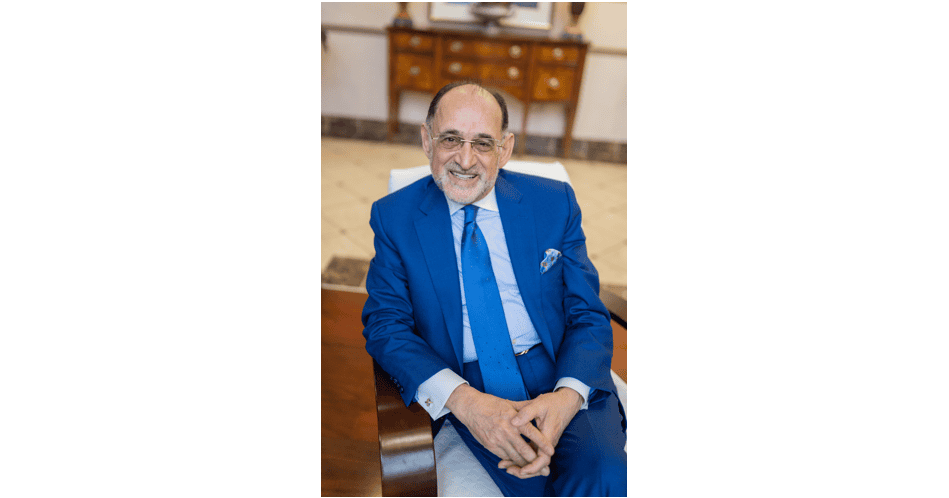
Dr. Hash Hashemian, President American Nuclear Society
Concepts discussed
Auto-linked from the episode's notes and transcript.
Show notes
Dr. Hash Hashemian has been an inspiring leader in the nuclear industry for half a century. He was recently inaugurated as the President of the American Nuclear Society (ANS) after serving for a year as the Vice President/President Elect.
His company, AMS Corporation, provides key services and products to nearly every nuclear power plant in the United States and a growing portion of those located outside of the United States. He founded AMS with a partner in 1977 and became the sole owner in 1986. Even though it is a relatively small company with an average head count of 100 people, AMS maintains a strong research and development organization. AMS employees, including Dr. Hashemian, have published hundreds of papers in academic journals and produced a significant body of original research.
Hash is a nuclear energy industry expert with an enormous breadth and depth of experience.
On this episode of the Atomic Show, we skimmed over a sampling of his knowledge of the industry. We talked about his visions and plans for the next year as the President of ANS, his view of the future of nuclear energy and our slightly differing views of the role that the government should play in getting a nuclear power plant building effort off of the ground.
We discussed Dr. Hashemian’s successful, inspiring effort to obtain not one, not two, but three PhD’s over a 10 year period while running a business and raising a family. Besides his incredible work ethic, he shared another tactic – he devoted the hours of 9:00 pm to 2:00 am to study each day during that decade.
Dr. Hashemian is a proud graduate of the University of Tennessee. His business is headquartered in Knoxville, not far from Oak Ridge. He is an active member of the East Tennessee nuclear industry, which currently includes 156 companies. We talked about Tennessee’s leadership within the industry, the investments that the state is making in maintaining its leadership and the special advantages of having Oak Ridge National Laboratory, Y-12 and legacy defense-related nuclear sites that are being cleaned and leveled. These sites provide large tracts of land that are available to nuclear-focused companies at attractive prices.
Colleges and universities in East Tennessee, including the University of Tennessee, Tennessee Tech and Roane State Community College are academic assets that are training engineers and technicians in fields relevant to the nuclear industry.
Dr. Hashemian reminded us that states like Texas and Virginia are also racing to be nuclear industry leaders.
We took advantage of Dr. Hashemian’s special knowledge of nuclear power plant instrumentation and control systems to discuss the reasons why the U.S. nuclear power plant fleet almost exclusively still uses analog protection and alarm systems.
We talked about some of the changing I & C needs for advanced reactors and the usefulness of a wide variety of sizes and configurations for nuclear energy facilities. Dr. Hashemian is a believer in an “all of the nuclear plant sizes above” catalog.
Dr. Hashemian also shared his nuclear energy origin story. Like several other prominent nuclear industry leaders, he grew up in Iran during the period when it was still ruled by the Shah of Iran. Throughout almost all of the 1970s, the Shah was pursuing a plan to build 20 large nuclear power plants to provide electricity to his rapidly modernizing country.
That plan was openly aimed at reducing Iran’s domestic oil and gas consumption so that more of those valuable products could be exported into the world market.
Aside: As Atomic Insights has said many times, nuclear fission heat can replace other sources of thermal energy including oil, gas and coal. That gives those whose wealth and power is sourced from combustion fuels a powerful incentive to shape public and political attitudes about their most capable competitive technology. End Aside.
The Shah’s government supported thousands of students – including Hash Hashemian – in programs to study nuclear science and engineering and other related fields in some of the best universities in the world. The expectation was that those student would return to Iran and help develop the Shah’s expansive nuclear power program.
After the Shah was overthrown, some of the students returned to Iran, but many – like Dr. Hashemian – chose to remain in the United States and build their lives and careers here.
Those enterprising, hard-working immigrants – first generation Americans – continue to play an important role in nuclear energy development. The second generation is also contributing their skills, work ethic and intellect.
You’ll enjoy this show. We’re sure of it.
Now a word from our sponsor.
As you’ll hear during the show, there is an intensifying interest in building new nuclear power plants in the U.S. and around the world. Customers are clamoring for power sources that are clean, abundant, reliable and affordable. Only nuclear energy has the potential to meet those criteria without regard to prevailing weather or geography.
The challenging, but addressable criteria is “affordable”. Some customers have needs that are so immediate, they are willing to pay a premium and even invest in product development.
Nucleation Capital, the sponsor of this show, is also investing in emerging companies – aka entrepreneurial ventures – that are developing technologies, processes and supporting systems designed to lower cost and reduce schedules. Nucleation Capital Fund I is structured to allow accredited investors – people with either $1 M of investable assets or $200 K in annual income – to become limited partners (LPs) and invest a portion of their portfolio in advanced nuclear energy ventures. The general partners in the fund invest alongside the LPs, giving them a strong vested interest in picking winners from a growing list of exciting customers.
If you’re interested in joining the journey, seizing the opportunity for strong returns and helping nuclear energy to develop, please visit the Nucleation Capital web site or contact us directly.
Transcript
Read transcript
There's a way, a way such a better way today, today. The measure for us till the world, there's a better way, today, and there's a better way. This is Rod Adams and it's time for another atomic show. I'm delighted to have Hasha Shimmy and the President of the American Nuclear Society, and a long time member of the Society. I think Hasha, you've probably been a member for about 50 years now, so it's almost your anniversary. Welcome to the show. Thank you. Thank you, Rod. It's good to see you. It's good to talk to you. Of course, before we start the show for the listeners, we always like to see each other and talk, and Hasha greeted me with a beautiful orange attire that is ready to hear from the University of Tennessee orange jacket, orange sight, quite striking. Thank you. The audience, Hasha is a member of the American Nuclear Society since 1975, and joined when he was a student. And Hasha has had a long career in the industry, and is excited about the prospects for being President at a wonderful, exciting time in the nuclear industry. Hasha, I've got to start with one of the first questions. How the heck did you get three PhDs, almost at the same time? Well, I was in competition with my brother-in-law, Zuhad PhDs, and I thought I was going to catch up to these guys. And so I went back to school and applied to three places, or more than three actually. I got accepted to three, and I started all three, figuring out each one I want to keep. And I just couldn't drop any of them, so I did all three. And between 9pm and 2am, I worked on my PhDs for a period of what, 10 years. So that's what I did, and was able to do it. And that's how it happened. Three PhDs, and I think at this time, we were running a business and raising a family. I think you have a different clock than most of us. Well, 9pm to 2am, that's what, when I cop to life. Well, that's great. You and I have known each other for a long time. I've always enjoyed talking to you with nuclear society meetings and seeing your smiling face and getting to know a few members of your lovely and happy apparently family. How many of your kids have followed you into the nuclear business? That's a very good question. So my son Alex is a mechanical engineer from the University of Tennessee with the master's degree in the county. He works for the company. And my daughter, as you know, you met my daughter Rod. And both my children really know you and like you. And my daughter is a lawyer, lives in Nashville, started as assistant attorney general for state of Tennessee, and then on after two, three years got married when around the world and then start traveling with me to nuclear conferences. That's very humid here. And in Cairo's, I actually knew scale. John Hopkins and some of the senior management of the new scale are my friends. We were to dinner at Vienna Austria during the general conference of the international atomic energy agency. They just met her and then hired her as the government relation person. So she works for new scale and then and then on moved on to Cairo's, which is also a nuclear company. As you all know, new scale has a small modular reactor, what are cool. And then Cairo has a multi-solve reactor building what is called Hermes in Oak Ridge together with another third experimental unit. So my kids are both in nuclear business right now. That's terrific. Tell us a little bit more about AMS. As I understand it, your main focus is instrumentation and control for nuclear power plants. Tell us about the company where it started and how extensive these were operation. Right. I started the company when I was a graduate student at the University of Tennessee during my master's degree. And what I was working on for my master's degree was the new method of measuring the response terms of RTD resistance temperature, temperature sensors. And so we came up together with my professor and some engineers and scientists at Oak Ridge, National Lab, with the way of sending a signal through the cables to the RTD at the end of the cables inside a nuclear plant and getting the reflection and using that to measure the response term of the RTDs. And that became a requirement or was a requirement in the nuclear industry that response times had to be measured. And they have to be faster than five seconds for example in average. So we started the company to provide that service to the nuclear industry. And then over the years we added. I actually my professor was my partner. Then he went on to become the chairman of the department of nuclear engineering at the University of Tennessee. And I bought his share out in 1985 and since then I have been the sole owner of the company. Then we added other things. So basically Rod, if you look at the operating nuclear plant, if something happens in the core that's not desirable, you want to be able to shut the plant down or to the plant to shut itself down as soon as possible. Let's say 10 seconds. So we make sure the sensors that measure the process parameter are fast and accurate. So that's all my company does. We're on speed our response and accuracy of instrumentation and control system. But make sure the sensor is fast. The cables are good. The connectors are good. The INC equipment that changed the signal from whatever it is to a voltage or current to be able to use for the rest of the system. It was a lot working good. And then it goes to the rod control system where the rods are activated to drop to the bottom of the reactor and shut the plant down. All of those are done fast. So we measure everything to make sure that every piece of the instrumentation and control channel that shut the nuclear part down in case of an offset or all fast and accurate. That's all we verify. And we do that in all essentially all the US nuclear power plants and every US made plant in any of the country, whether it's Korea or South Korea or whether it suits a land or United Kingdom or China. That's where we are doing these things recently. We also have gone business in non American made nuclear power plants such as VB or reactors in Czech Republic. And then we also work for the US Navy now, so the equipment and some of the nuclear defense facilities. Sounds like you've got an extensive business and gives you an opportunity to travel a lot. Yes, so yes, I travel some my people travel a lot so on any given time we have bunch of people all the time and doing things in nuclear plant. We also maintain an academic side to our company. So we are always doing some research and development to add to our products. And also sometimes just research and development to advance the state of the art. So we are also academic we have written a lot of papers the company myself and my people have about 400 papers and journal articles and those things have written three books that has been translated to four languages and then it's all in nuclear stuff. So we are also academic as well as the commercial outfit. So we are located in Oak Ridge. What is going on in that town? It seems like there's kind of a hotbed of activity. Very true. So my company is headquartered in a city of Knoxville, which is actually very near Oak Ridge. So Oak Ridge and Knoxville are basically very close to each other. At one time was called Atomic Senior Secret City. It goes back to the to the time where the nuclear weapons were being produced for the for ending of the of the Second World War. And it goes back there. And then it went on to also getting involved in nuclear energy and other related science and also other science areas. So Christian National Lab is one of the centers of nuclear research and development. Then at Oak Ridge we also have the nuclear defense facility, the Y-12 on the National Nuclear Security Administration is Oak. Ridge. There's thousands of people working in the lab and at White World and related. Because of that, a lot of companies as a spawn of Iran, Oak Ridge and Knoxville, we have 156 nuclear companies within less than 100 mile of where I'm sitting. Because over 300 nuclear companies in the state of Tennessee. And because of all these, Tennessee is becoming almost one of the unique centers of nuclear science and engineering. Oak Ridge, Oak Ridge, Chiros is building prototype nuclear power plant and they're going to build commercial ones later. And TVA is looking to build a small modular reactor, maybe a GIS small modular reactor at the clean server side in Oak Ridge. Ex-energy facilities there. Orano just announced a five and a half billion dollar investment for nuclear fuel activities in Oak Ridge. Other companies are there, censuses there, which is producing equipment for uranium enrichment and your name. There's much other companies, mining included security companies, your name it. We have it here around Oak Ridge and Knox. You have, off the top of your head, the number of nuclear companies that are located in and around Oak Ridge. It seems to me that you probably have that number for the whole state of Tennessee as your fingertips as well because you have been an active member of a statewide organization that advocates for nuclear energy and Tennessee. Can you tell me a little bit about that organization and how you get together and what your focus is? Yeah, there is two things that relate to that question that you asked Rod. One is that about two years ago, the Tennessee Governor, his name is Bill Lee, Governor Lee, organized a committee of 20 people, nuclear people to sit around. and helped the state of Tennessee formulate a plan to make us in Tennessee one of the centers, if not the only center of nuclear energy in the United States. And he actually put out, started with a $50 million investment to get that going, that $50 million to go to companies that are brought to Tennessee to do nuclear stuff or already in Tennessee that are doing nuclear things. And also as well as the University of Tennessee, he later on added another $10 million to that and some more later. So the state governor started the process to make sure to put some fuel behind the move of Tennessee toward becoming a major player in the United States in nuclear energy. There is bunch of other organizations that support nuclear, there is bunch of them. But I'll tell you one called East Tennessee Economic Counsel, E-type, we call it. And they are the ones that every Friday morning bring together a 730, a bunch of nuclear people from these 156 companies around the area. There is more than 300 nuclear companies in Tennessee, but 156 of them are around where we are. So E-type brings these certain people from these companies and then a very prominent speaker whether it's a political person such as one of our US senators or governor or some national laboratory director or people in business like myself to speak and tell people what they know about what's going on. So E-type, the governor of Tennessee, the economic development commission or of Tennessee, and bunch of other both government and private organizations are supporting the growth of nuclear in Tennessee. I'm always excited to hear about states that are declaring that they're going to be the leader in nuclear energy. Of course, I've been hearing and seeing that in Tennessee for at least the last 20 plus years, as you mentioned in described, you've got a huge leg up by having the Oak Ridge National Laboratory and all of its supporting organizations located there on Y-12 and some of the other things. I almost think that the other states are in some ways, posers. However, I encourage that. I think it's great to have competition. I'd love for all the states to be buying to be the leader in nuclear energy. It's the great thing for the technology that has been fascinating for so long. Right. I forgot to mention the University of Tennessee nuclear engineering department that was just recognized by US News and World Report as a second in the country, turned in public. Second, I think in public, second, a best nuclear engineering program, probably, and I think turned in the whole thing or one of the other. Either second in one thing and third in another metrics. We have a nuclear engineering department that's on top of the United States in producing the over 100 undergraduate nuclear and they're producing a lot of graduate nuclear and massism, a lot of PhDs. In addition to Oak Ridge National Lab, the Y-12 nuclear weapon or nuclear defense facilities, we also have the University of Tennessee. We also have Tennessee technology. Tennessee tech, we call it, a near-tenant oxwain that is also starting a nuclear engineering program. We have another two-year college called Ron State, starting to produce technicians for nuclear industry. So there's a lot of activity. We also have to tell you a lot is also happening in Texas and other states such as Virginia. So we are hoping to be among the top or at the very top, but Texas is also doing great in moving toward implementation of nuclear energy in their state. I agree that in Texas, it's definitely moving forward, adding a lot of money. They happen to have a be blessed with a surplus in their state budget. I think put about $350 million in the last legislative session towards nuclear, but they don't have the national lab like you do. They don't have that nugget of the word I was really looking for here was nucleus nugget excess extra science and technology. I think they do have a few nuclear weapons facilities like Pantex and a few others. But what you guys have with the science is pretty outstanding. It's believed that another advantage that Oak Ridge has is a facility. I believe was it called K-25? It has been decommissioned and is now being converted gradually into land available for new companies to use and to develop their own facilities. Is that right? Yeah. So a lot of the legacy nuclear defense facilities, K-25 being one of them were actually flat and the land has become available for nuclear companies. For example, Orano is taking a lot of lands of the kind that we just talked about to produce nuclear fuel facilities in here. I actually bought a piece of land from the product of energy. They give it a better price for nuclear companies that promise to have a good presence and activity in Oak Ridge. You get a good price on a land. So I bought small five acres but then the chiros have bought a bunch of the land for their reactors, they are building in Oak Ridge. So you are absolutely right. There is a lot of the defense facilities that are legacy and they are old. And you are building a replacement place called Uranium UPL. Uranium processing facility in Oak Ridge to also produce nuclear material for defense applications. You recently moved from being the vice president slash president-elect to being the president of American nuclear society. Just a one-year job and of course you have one more year as the past president. What do you have in mind for your term? What are you going to accomplish? What do you think is going to happen? So, yeah. Yeah. Well, I'm trying to do as much as I can to be an effective president in light of the fact that it's only one year. So I started working on that. I was inaugurated as the president of the American nuclear society against on June 20th. So I'm, I'm, I'm, I started working. What are the things I'm pushing and working both with the industry and the government. I just have had discussions with, at the top of the government, both in Congress and administration about what, what the, what the government and the Congress can do to, for the nuclear. Not a lot especially the executive orders by the president or a huge shot in the arm of nuclear. Congress have been very good. The law that just passed, the budget that just passed is also good for nuclear. But I still am keeping the, the, my congressman and my administration contacts in, in, in form of what I know that they may not know. That's one thing I'm doing. The other thing is I'm working closely with the executive director of the American nuclear society to improve the, some of the administrative ways that, and it has been doing things that have been good. But, but I want to make him a little bit more modern. So for example, we, we are changing the name of the American nuclear society meetings to conferences because they are major conferences. We have 15 other people there. I'm pushing to, to get the industry to start building. I think, I think the technology for the next generation of reactors is mature. And we have talked about it enough. It's time to really build. Now, Congress is building terra-poise building, ex-energies building. So we are building, but I also want to keep talking about less build. So that would be my message. I actually have lined up the secretary of energy to be a my speaker in the November meeting of the American nuclear society in Washington DC. He's going to be there unless something happens, which is, which is unforeseen. The secretary of energy being chris right will be the keynote speaker at the, at the conference on, on November 10. The Tennessee value authority, the on more will be the general chairman of the conference. And the preliminary person, he's going to run a panel of, of expert nuclear experts to, for Q&A, Chuck Fleischman, Congressman Chuck Fleischman, will be one of my speakers on the first of the conference in November. The director of incoming director appointed by President of the United States for the National Nuclear Security Administration has also been, been tapped to be one of my speakers. So I'm working on, then the second day of the conference will be in the sea, people hoping to have the, the chairman of a big nuclear company such as constellations and so on and do can so on. So those are the things I'm doing today, but then I'm also writing the column in nuclear news every month to promote the idea of building nuclear power, going from design and research and all to let's build, let's build. Let's build a great message in your travels. You have in mind talking to the financial people in, in New York and talking to other decision makers who need to get the message that it's time, nuclear plants can be built. They can be built reasonably close to on time and on budget. The regulatory oversight is getting more efficient. Those kind of messages. Absolutely. So it's been here that, so I was good friend with the, with the LPO director before he, he was moved to something else. So I've talked to the government loan program office for the last two, three years, just pushing that if he really want the rice taste to maintain its leadership in nuclear, which we have established ourselves at the worldwide leader in nuclear energy. If you want to maintain that and not lose it to China and to less extent, Russia, the government is going to have to back us up pretty big big. The government have done a lot in terms of loan guarantees and, and, and, and tax incentives and a lot of new things that does happen both in the previous government and also the new government of Trump has been great for nuclear money. My opinion, Rod, all of that is wonderful. I'm your great full to the government of the United States, but I think for us to really maintain our leadership and not let China eat our lunch, the government is going to have to really port their in a significant financial way, be it there industry to get this off the ground. I'm talking about. something in the order of 100 to 200 billion dollar infusion into nuclear to go along with the private investor. Not the government should not have to do it all, but that's what I'm saying that I would like to see happen. Some kind of a partnership, it doesn't have to be money. It could be in other ways such as power purchase agreements and those kinds of things. One thing that the government could be thinking about doing is think about ways that it can get out of the way rather than subsidizing companies to pay for the costs of overcoming the barriers that have put in a nuclear way. Do you think that some of the activities and the executive orders are making rows along that way just reducing the burden? Right. I think so. I've heard to say that because you are knowing kind of have different views of the role of the government. I've heard to say that that you prefer that industry does it and the thing. And some of that is of course the right things to say. But I differ a little bit with you on the fact that I think the nuclear even though it is like advanced and safe, there is a risk factor there. All of us know that we are doing great and everything is so much safer than before. But one accident, one accident, anywhere in the world can cause all of this momentum to slow down. And I think the financial markets and investors and the private industry know that that risk is somewhat there. And therefore, only government can take the chance to say even though that risk is there for us to maintain or leadership in nuclear power, we're going to have to come in with a major shot in the arm of nuclear to get it off the ground. Once it's off the ground, we don't need the government. And we can probably pay the money back. This happened when the government 20 years ago, the bail dog, I'm not talking about bailing out the other industry and they were able to get back on real-feed and pay the government back. I think something like that is probably very likely for us in the nuclear industry as well. I hope that it happens. Yeah, that's one of the things many people don't remember is when you talk about help from the loan program office, those are loans. Those are finances that come to the nuclear industry, help us get moving. But they get paid back just like a mortgage get paid back. The interest rate might be a little lower than it would be. But in general, the idea is that they support us, we pay them back and then that money can be reused for supporting other things. That's one of the great ways for helping. Exactly, Rod. One of the things I'd like to add to what you articulated just a second ago is that I want the public to know that nuclear is 100 year investment. In other words, it is expensive. It's more expensive than any other way of making electricity. But it lasts a long time. So if you look at it, amortize it over the life of a nuclear plant, even though it's very expensive, but you get your money back easily. And nuclear plants are pretty lucrative in average. Sometimes they are not making as much money as other time. But in average, nuclear plants are pretty lucrative, mostly very profitable. Yeah, they're especially profitable when other competitive sources are expensive. I never forget listening to John Rho talk about the golden age of nuclear as being the period from about 2003, 2008. When each nuclear plant was throwing off about 500 to 700 million dollars a year in profits. Right. I have one of my consultants that worked for my company was running a nuclear plant unit in that period. And he said, I don't know why people are talking about nuclear being expensive. It is, but we are making 500 million dollars a year on the distillation as profit. And that's pretty significant. So it could be a time. There are times when nuclear is not coming. And if you look at it raw, all competitors, most of them are heavily subsidized. We are not as heavily subsidized, not yet as our competitors. So if you take the subsidies out, some of the cost of nuclear is going to normalize to some extent. Having said that, you still need to say that building a thousand megawatt nuclear power plant for something like 15 billion dollars versus building the same thing with natural gas for two billion dollars is a very hard thing to to argue about. But nevertheless, if you add all the other benefits of nuclear, the environmental benefits, the longevity of nuclear power plants and all the other things, the fact that fuel is very cheap for nuclear normally. Then it really can compete very well with anything else that you have out there. There's a lot of discussion going around. And I hear all the time, is to whether nuclear plants should be large or small or very small or medium. What is your idea about? What's the proper size for a nuclear power plant? That's a excellent question. The answer to that is all the above. It depends on application. The micro ones are good for an application like military installation here and there. The mini ones are good for just, say, a refinery or something. And then the average is a more for data centers that are small data and the large reactor for big data centers. I personally think we are to the point that the AP-1000 and other large reactors are going to have to come back to play in the United States. The last big plant we built here was of course, war growth, unit three and four. And those are those took a lot more time and money. Remember China built the same plant by wasting cost in half of the time and for half of the cost. We ought to be able to do that here, know that we have learned the lesson. And I think the large reactor AP-1000 comes to mind are going to have to be part of the game in a short term. Because we are running other power and SMRs and advanced reactors are going to play a major role. But they are getting to the point where we are going to have to mix it with some large reactor. So I would say large reactor AP-1000, reactor probably other type general electric has them and also that would be one. And then combined with the weather cool, the small modular reactors such as, you know, whole take, new scale and others, of course, GE 300, X300 at the forefront of front. Those things are all have to be done. But I don't think this idea that we were floating few years ago that US will not build anymore large plant has to be set aside. I agree with you. What's going on with restarting power plants? What do you think about that? What do you think about the fact that we somehow dug down 12 nuclear power plants in the last decade and a half? Right. Well, that was the economic. Some of the half of it was economics. The other half was other factors. But as you know, Palaseid is coming back. The other ones, you know, TMI. One is coming back. And I'm hearing that there is two or more other existing decommission or a shutdown nuclear power, not decommission. I'm sorry. The shutdown nuclear power plant are slated to come back. Germany shot them all down. They're talking about bringing them back up and going back in there and rebooting some of the nuclear power plants. As you know, Japan shot them all down. 14 of them were back online again. And Japan is thinking about going back and bringing back. They had almost 16 nuclear power plants. And they were done to 14. But at one time when Fukushima happened, everybody was thinking that Japan will never bring any of these plants back. But they did. They're up to 14. And they're looking to bring almost all of them back. So and I think we are going to see more of the shutdown reactors in the United States come back. And then there are plants such as Bellafond that was almost built a two unit by TVA to one of one unit almost to 90 percent. The other one to 60 percent. And there have been talk about bringing that back. That one, in my opinion, is hard to do. But the cooling towers are there can be used. And some of the infrastructure can be used. So there is a lot that can be done with the existing infrastructure and existing plants. And I think it's going to happen. Yeah, I just read an article today about the VC Summer units two and three, which was the project. It was going along the same time as Vogel. And when West announcement bankrupt and a few of the leaders of the VC Summer project were found to be kind of lying to the public. That project was cancelled or halted or suspended actually. Turns out that right now there's 15 companies that responded to a request for interest and stuff kind of narrowed it down to about five. And they're going to make a decision by the end of this year is that who's going to be able to take that plant where all the lot of work has been done foundation and the poor, a lot of equipment is already on site. Of course, they've already got an approved license. It just need to restart it. So that one might become a bad, which you're getting finished. It could be a great thing. That would be awesome to have been hearing all of that, obviously. And they they spent from what I remember about nine billion nine to 10 billion dollars building. And then they suspended it. And you know, the reason for suspensions of that project, some of them raised them or some of them very unreasonable. Why they they couldn't finish that plant. But I'm also very excited about the fact that we see summer, AP 1000 two unit reactors may be built. And it would make sense. You already spent 10 billion dollars. Unfortunately, I think a lot of ports for that plant was was taken out and and used to build more good unit three and four. But but still some of the major ports components are there in place. Some of the major infrastructure or they're in place. So why not? You probably cannot recover all the 10, nine or 10 billion dollars. That was the spend already. But I hope that at least half of that five billion in orbit is already useful. And then you put another 10 or 15 or hopefully 15 billion on top of that. And build two AP 1000 reactor generating something like 2500 megawatt electric power that would be and you can do that in probably five years from today if you start today. I think there'd be one of the best things about the project. As long as it can be figured out how to use what's there as a way to accelerate the program rather than compared to starting from scratch. Time is money. It'd be great to have those online or be involved with that with two or three years of shorter period than it would be to build from scratch. Absolutely. I think with the licensing that was all of that. That should be rebooted. But I think that at least five years in. And another five years, if they really learn the lessons that we've learned from China and also from World- become a nuclear engineer. Right, so I came, I was born in Iran, in Tehran, Iran, and at that time our government was run by a king called the Shahabi-Rah. He had the idea of building nuclear power plants for generation of electricity and selling the oil. Iran is also one of the rich countries and one of the major producers and experts of natural gas and oil for vehicles and those things. So, and I remember distinctly, Rod, that in 1977 I went to an American nuclear society conference in Iran. It was an American nuclear society conference. I have the transaction of that conference. I was a student. And the reason that conference was in Iran was because Iran was looking to deploy 20 nuclear power plants from West St. God's and other countries. In fact, some some stuff was done. And because of that, the Iranian government was supporting students to come to America and learn nuclear and go back and run the nuclear power program of Iran. So that was one reason. The other reason I was interested in engineering. I was going to become a lawyer and my dad was a lawyer and he said, hey, listen, when you grow up it's going to be the error of technology, not these don't go into law. He was a prominent lawyer himself, but he taught me all the going, becoming because I was going to do what my dad did. I went into physics and then engineering and then I came to United States to get a PhD in nuclear engineering or electrical engineer and go back to Iran and work in the nuclear power sector. But then the government that we don't change their nuclear policy, nuclear energy policy of Iran was put somewhat on hold. And then I thought that there's not going to be as good of an opportunity as there in Iran for me than it is in the United States. So I said, I'm going to stay. I started this company and that's how I ended up being here. I'm very fortunate to be here and be really successful and blessed to get to where I have been able to get. I think you've been blessed with you've also been one of the hardest working people that I know. So preparation and luck provide success. Second, only to you. No, I would not put myself in any category. I think hard work pays off here in this country better than anywhere else. I don't think I could have done this in any other place. So it's really fortunate. And I just am very lucky because some of the best people of the United States or my team member are the MS. So I just love them. And I don't know why they have put up with me, but they have. I mean, I've got a bunch of people who have worked for me between 20 and 35 years and they're still young. And I always ask myself, would I do this, but they're good and unfortunate? How many people do you have working for you at AMS? So the default number is 100. It goes up and down a little bit about 70 of them here in Knoxville in my buildings. We got three buildings and some lands that we use for labs and other activities that about 30 people around the country, around the world that work for us. Sometimes regularly, sometimes seasonally. And also that's how big the companies. Have you seen a change in the type of instrumentation and controls that are being proposed for some of the new reactors? It seems like molten salt reactors and high-temperature gas reactors and liquid medical reactors might have some different challenges compared to what you are used to dealing with in light water reactors? Right. Well, there are high temperature and low pressure, which is low pressure is good. So high pressure is a problem. So yes, there are going to be hopefully all will be digital, but maybe very few analog backups system, maybe. But the new instrumentation and control system are all going to be digital and basically everything computerized, assisted by AI for automated operations and automated maintenance. We were talking a week ago with one of my friends in another company called Paragon about how we can use the technologies that exist. There are the thanks to the academic people in universities and national laboratories. There is a lot of technologies that can be integrated with digital instrumentation and control system to essentially go as far as operating a nuclear power plant. I wouldn't promote doing that, but you can imagine sitting here and operating a nuclear power plant remotely by two digital instrumentation and control system. I was talking to a Mercedes-Benz guy the other day, I would say cars are just computers on wheels nowadays and things. So I think that a lot of computer assistant operations and maintenance is going to be built into the next generation of reactor. I think there are mostly digital compared to the existing flat fleet that has been mostly analog, but it's going gradually. Unfortunately, we are a little bit behind in the United States on implementation of digital instrumentation and control on the plant protection system. And RC has been pretty careful about making that a little bit, the oversight being pretty extensive on digital for plant protection system, although European countries and China and Russia is using a lot of digital plant protection system. I think we are not that as far along in that as we could be, but that's coming along. So the existing plants are going to gradually be very digital as well. I think that there's only one plant in the US that is fully digital and it was finished its complete transition of digital sometime around 2016. That's so corny. Is that what you're talking about? Yep. That's it. Oh, corny has what's called that project was a good example of corny digitally was a little bit or it's pretty expensive implementation of digital for the corny. It is digitized by teleperm, which is a stored that is a German product that Zimens and all and then from at all. Yeah, that is that is the that's a digital. There was some digital Arkansas nuclear one unit to have a digital thing called a corporate protection calculator that was kind of get grandfathered into the into the industry early on. So there's a CE plant vessel also called bot C C plant called plant protection, corporate protection calculus CPC. That's in Arkansas unit one. I mean, Arkansas nuclear one unit two. And I think the CPC also exists at Palo early nuclear plant in Arizona. I think those are somewhat early adoption of digital and C in nuclear industry. But after those, especially after Arkansas, I think the digital implementation became a little bit more difficult. Yeah, I think what what I'm referring to or what my feeling is it converting the digital in the US has been expensive enough and painful enough. Nobody else wants to do it. Only for the plant protection system area for other the balance of the plant, a lot of digital have occurred and they have been reasonably cost effective. If you look at it, I'm going to advertise it over a period of time. So digital has done well in the balance of the plant, but the plant protection system digital is coming along a little bit slower. Yeah, long time ago, 1988 to be specific, I was involved in a conversion of a nuclear plant or nuclear propulsion plant from analog to digital. The amazing thing to me was it changed our pre critical check off time from 12 hours with two technicians to less than four hours again, two technicians, but one each time this is second checker. So it made a huge difference. And that was I think we use 386 type processors back then. But anyway, it's neither here nor there. Something that still amazes me how difficult it has been to do it here in the US. Right. It's been done before even in the US. Oh, yeah. That's one of the areas where I think that the nuclear regulatory commission has been so changed averse that perhaps they've actually not improved safety. Right. Yeah. So I agree with you that energy has been a little bit too conservative on this considering the fact that digital has been done in nuclear plants in so many other countries. I'm very successful, including in Raminde there is a company in Ukraine. You know this. You're there this called radi that actually have put FPGA plant protection system I see into 14 Ukrainian nuclear power and some in other countries such as I think Czech Republic I think or Hungary actually, Hungary or Czech Republic or both. And they actually have put one of their products in one of the Canadian reactors I guess or sold it to a Canadian reactors. But we've been a little bit too conservative. But remember digital has formed. It's very nuclear industry in the test equipment and maintenance and Lord of the testing and maintenance activities in the nuclear industry is now done by digital system. So it's not that we haven't brought in digital to our nuclear industry. It's not it's it's just been a slow in the plant protection system area. And we've been chatting now for nearly an hour. Yes, about the time limit that I'd like to keep to. And what I also like to do with with my guests, my friends to give them an opportunity to kind of summarize and or talk about something that we haven't talked about. So hash the floor is yours. Well, I want to use the remaining five minutes or four minutes as left to first thank you Rod for inviting me to do this has been a great privilege to do this. It's been a great honor to have you as a friend of so many years. I sometimes feel like I miss you when you're not in a conference. It's not the same. So that I want to say because you always are there. Stimulating questions by asking good questions yourself and getting other people to ask questions. The other thing that I want to say is that I'm grateful, seriously grateful and thank God every day for for being so fortunate to be doing what I do and being in this country, being successful in having good people and also now being. The question is, is that the nuclear is really coming back. I hope and pray that the momentum continues to remain and that nuclear plants everywhere because about 450 of them operate, continue to operate safely, like we have been. Look at the safety of nuclear power plants. The amazing, we are operating these plants, around 450 of them around the world, almost 100 of them in the United States now for so many years, for over 60 years, so successfully and so safely, that's amazing. I hope that that record of safety improves and I hope that we can continue to build plants cheaper and faster and be able to meet the demands that have appeared over the last three years through the implementation of AI and the expansion of the data centers, blow up in a nice way, by the way. So all right, that's all I wanted to add. Thank you so much. Thank you, Hash. Have a great day. You too, sir. Thank you. I was speaking with Dr. Hash Hashemian, the current president of the American Nuclear Society. If you go to an American Nuclear Society conference, I'm sure you will have a chance to say hello and enjoy his sunny attitude. I hope you enjoyed this episode of The Atomic Show. This is Rod Adams. I've been here host for The Atomic Show for more than 15 years. As the publisher of Atomic Insights, I've been speaking with experts in analyzing nuclear energy for more than three decades. About half a decade ago, it became clear that investing in advanced nuclear developments could provide exceptional returns. Successful investors, based in Silicon Valley, agreed. While I'll continue to produce new content, Atomic Insights is now a part of the nuclear Asian capital, a venture capital fund that specializes in nuclear and nuclear adjacent emerging companies. As a managing partner at Nuclear Asian Capital, I'm expanding my access and digging even deeper into nuclear energy companies. My partners and I are working hard to select ventures with extraordinary promises success. Their building the advanced nuclear sector and helping to expand our clean energy options. We're investing our own money in diversified portfolio of ventures and enabling investors like many of you to take advantage of our diligence and selection processes. We use an established software platform that allows us to offer full featured investment subscriptions starting as low as $5,000 per quarter. A four-quarter subscription will get you exposure to between four and eight ventures. We encourage longer subscriptions with greater diversification by offering a discount on our fees for eight quarters or more. If you are an accredited investor who wants to learn more about how you can participate, please visit our website at nucleatincapital.com. That's nucleatincapital alloneword.com. Our fund and all of the information you need to subscribe is available online. You can also subscribe to our newsletter, nucleation insights and join our pro-nuclear investor network where you'll get information about syndicated investments in selected companies, limited partners in the fund, get discounted access to syndicates, but they are open to other angelless members. If you would like more information, we're happy to help. Please spread the word.