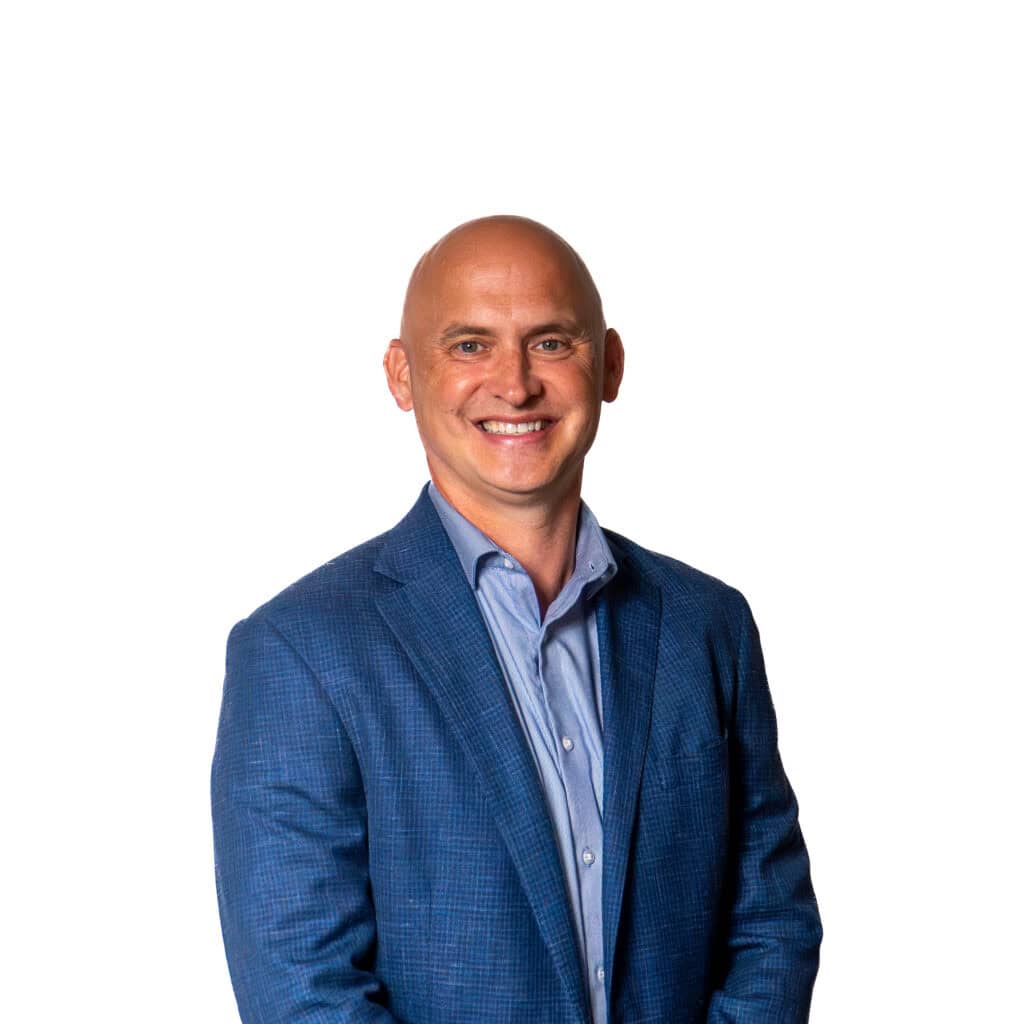
Joe Klecha, CNO The Nuclear Company (TNC)
Concepts discussed
Auto-linked from the episode's notes and transcript.
Show notes
The Nuclear Company (TNC) describes itself as “a fleet-scale American nuclear deployment company.”
TNC is a young, visionary company driven by what business author Jim Collins describes as a BHAG – “Big Hairy Audacious Goal” – in his best-selling book titled *Built To Last*. TNC’s intermediate goal is to deploy 6 large nuclear reactors in the U.S. while developing a complete platform that enables repeated projects using a design once, build many approach.
For a company that was just formed in 2023, that qualifies as an *enormously* audacious goal.
One of the examples Collins used for a BHAG was Boeing’s 1952 decision to build the 707 as one of the world’s first commercial jet aircraft. But at the time, Boeing was an established, profitable company whose head count had reached over 50,000 employees during WWII and that was still producing several different bombers for the Air Force, including the large, jet powered B52.
TNC’s leap seems to be substantially larger than the one that Boeing successfully made. But, with the right people forming the right teams and gathering the resources available, TNC’s goal *might* be possible. The Atomic Show first covered this intriguing company in August of 2024, about a month after the company exited a formative, quiet year, when Juliann Edwards, TNC’s Chief Development Officer, appeared as a guest on Atomic Show #319.

TNC summarizes its strategy as follows:
> The Nuclear Company’s approach can be articulated through our four-pronged strategy:
>
>
>
>
> - Fleet-Scale Deployment: We are building at fleet scale, not project scale, enabling us to capture significant efficiency gains and cost savings, and enabling the reshoring of American industry.
>
>
>
> - Broad Industry Coalition: Fleet scale requires a broad coalition of industry partners for successful project planning and execution. We build that coalition to scale.
>
>
>
> - Comprehensive Program Management: We synergy-capture program management applicable across existing and new deployments.
>
>
>
> - Public-Private Partnerships: We leverage federal, state, and local government engagement and support along with industry to re-establish a US commercial nuclear leadership position.
>
For this episode of the Atomic Show, I spoke with Joe Klecha, TNC’s Chief Nuclear Officer (CNO), to learn more about how the company plans to achieve its initial BHAG while establishing the foundation for future growth.
Joe has a deep well of practical knowledge accumulated during a lengthy career as an on-site, walk-around manager. He told me how the most important job of management is to enable skilled subordinates to perform with as little friction as possible. (I’m paraphrasing here.). For a site-level, project manager that translates into ensuring that crafts people arrive on prepared work front with all of the necessary tools and documentation.
A key focus for The Nuclear Company is to avoid paper processing. Most listeners will be amazed to hear Joe talk about the wagon loads of paper that accompanied much of the work done at Vogtle 3 & 4.
We talked about the value of well crafted contracts that properly share risk among contributing entities while also establishing a system of progress payments and milestones that give all participants a shared goal. Joe told me about the exceptional team TNC is building and the way it is rapidly gathering interested and committed partners.
Joe displayed his broad reach of technical knowledge during our conversation, providing a point of view that is rarely found in audio commentary by people whose expertise is mostly based on academic research, computer aide design or computational model simulations. We talked about concrete, steel, rebar, interfaces, managing multiple work fronts, the importance of addressing worker density, ways to improve workforce productivity, evaluating sites, finding and incentivizing capable suppliers, and building contractor teams.
I’m still in the willing to be, but not yet convinced camp regarding TNC’s chances for success. Given where we are today, the chances are better than they were two years ago when the company founders were developing their BHAG. But they still have a very long road to travel and the competition is already heating up.
Avoiding ending on a down note, my conversation with Joe Klecha left me more enthusiastic than I was before about their progress and their opportunities.
Please listen to this show. It will provide a unique point of view regarding the lessons America has learned so far about building new nuclear plants in the 21st century.
Transcript
Read transcript
There's a way, a way such a better way today, today. It makes your voice tell the world there's a better way, today there's a better way. This is Rod Adams and it's time for another atomic show. With me today I have Joe Clutcha who is from the nuclear company, a developer that believes that they have found a way to make nuclear more affordable and more predictable in terms of schedule. Joe, how are you today? I'm doing great Rod. Thank you so much for having us and thanks for everything you're doing within the industry with your podcast. Thank you. And of course I'll do more things within the industry than just a podcast, but that's for another part of the show. Yes, I may take the time during the show to introduce my other vocation, which is investing in nuclear companies. As a managing partner at Nuclear Aviation Capital, a venture capital fund uniquely focused on advanced nuclear energy. Joe, tell us a little bit about yourself and then we'll talk a little bit about the nuclear company and how you came to be part of that company. Yeah, sounds great. So Joe Clutcha, Chief Nuclear Officer with the nuclear company. I have 30 plus years in the nuclear industry like a lot of us in the industry. I started in the nuclear Navy. So gained my love for nuclear power on nuclear submarines and going through the Navy's nuclear program, transitioned into commercial nuclear in 2001. So I worked for constellation at Calvert Clutch Nuclear Plants where I got started with large-scale light water reactors. came up through the operations department, eventually got into work management asset management. I've worked for Southern Company in similar roles, both in the corporate office with work management background, and then transitioned into 2003 and for several different roles on that project, several different stops along the way. But I've had several roles as discussed both on the project and at operating facilities. Been with the nuclear company now for about nine months and responsible for the deployment of our projects, as well as regulatory affairs, technology and services associated with the projects we're performing. Joe and not everybody knows much about the nuclear company. You guys been a little bit quiet before you got, now, sure, self to the world. But what are you trying to do? What is this the goal and the model that you're trying to follow? Well, the goal is to really help solve the energy crisis we're facing in our nation, and potentially helping others elsewhere solve the same problem. The company was founded with the understanding that we were at this point where there was a true energy crisis at our doorstep. And nuclear was going to be the solution to help solve that problem. We believe in other energy sources, of course, all of the above are needed in our portfolio, but we think as far as the growth we're expecting to see over the next 20 to 25 years. And the large base load nuclear is going to be needed to carry that growth and ensure we can continue to economically develop to ensure we can progress AI in the ways we need to. And it's a bit of a national security issue in that regard. So we do think there's some national pride tied into making sure we continue to be the leader in the world as associated with nuclear power. We believe we're falling a bit behind and we need to take some drastic action quickly to restore our position in regards to nuclear energy. Our concept is it's evolved over the years the company was founded about two years ago in our playbook and our thought process has evolved to the point where we believe that we need to deploy reactors in a fleet scale approach. So we can continue to learn lessons and drive down the end of a kind curve. We've had some recent projects in the US that would be considered first of a kind, but we believe those are investments and we can need to continue to work on those technologies to codify design changes to improve our supply chains and building these up fleet scale meaning not one unit, not one site, but lining up. four six eight units as a fleet design once build many move through the cycle of nuclear construction and as those as those projects progress you're able to move craft resources from one face to the next from one site to the next. And it also creates obviously opportunities for the supply chain to see a large demand signal to continue to enhance our supply chain, whether that's an international supply chain. or localization of our supply chains and localization of our partners to continue to create the right economic model for it to be valuable for all the partners involved in these projects. We also believe that these projects are best led by an owner that sits in the middle of project structure that can help with the technology provider and the constructor to partner in the right ways to make real time decisions to leverage lessons learned. and to drive the proper outcomes to build new nuclear plants on time on budget for the first time in a long time in our country. It sounds like the nuclear companies role is to be that owner in the middle that helps make the whole integrated project delivery team work. But some of the areas where you have been indicating that you might want to build are vertically integrated by not really utility areas where the public utility commission plays a big role in getting projects approved and then the rate base is a big challenge how do you see your company integrating with that business model. Yeah, the highest level our model is effectively a build transfer model where we take care of the front end to use the word developer I like to consider us a deployer. The traditional developer really just works on the front end from a citing perspective pulling partners together and working on financial models re really believe our secret sauce is creating the best team in the industry to go deploy these projects. So the way this will work in our model is a build transfer model where there could be several phases of a project, whether it's early early days pre FID and then your actual construction phase and then your operational phase. Where we would handle those first two phases we partner with the appropriate utility and we would transfer the asset around the fuel load point there would need to be of course in that model interactions with the ultimate owner operator through the construction process. And from a licensee perspective and then transfer over the asset to an operator to continue to operate these facilities long term. I do believe those variations to that model depending on the market you're into your point regulated market or deregulated market that picture can vary as far as owner control through those various phases and what it looks like from phase one to phase two to phase three. So the intention that you had a significant period of time on the Vogel three and four project. What kind of lessons did you learn from that effort that are helping you apply and improve the delivery schedule and cost for the nuclear companies projects. I have various roles on that project really from 2014 through 2019 a ton of lessons learned obviously coming out of that that are that are public lessons learned that I'm willing to talk about. I would say at the highest level we all need to remember it was a first of a kind project. So our understanding of first of a kind project says an industry needs to be better ingrained and we need to under have the proper expectations for those projects with that said the major lessons learned that we're using. And the specific details but the for our playbook at the nuclear company. Are some that come up as maybe a little bit obvious but. I'll hit them at a high level and maybe not try to make them too specific to any one project but do you have the right contract structure and team and place from the beginning of the project. So the beginning is way before you start moving dirt way before you start nuclear construction but do you have the right partners at the table with the right contract structure that incentivizes all parties to really be focused on that North Star project completion. So the contract is not set up in a way where you have somebody you heard me talk about having the owner, you know at the middle of the hub or the top of that pyramid helping resolve issues helping. potential contracts disturbances helping solve problems real time so things don't linger then we've seen these projects not be successful not only in the nuclear industry but elsewhere. So contracts is where it starts and not necessarily from a commercial illegal perspective but do you have the right partners with the right incentives and everybody should get the proper value out of the project you shouldn't try. to squeeze anybody out the more the more all parties can be successful the more they should all be rewarded. The second point I would make is where what is the level of your design maturity at certain phases of the project and are you truly ready to start nuclear construction. From a design maturity perspective which needs to flow into advance work packaging and ensuring that as craft show up to do their job they have a fighting chance to be successful. So typically in these projects the craft are not the issue it's the culture you create and your ability to make the craft your customer to be successful. If the design is not complete that flows into everything from supply chain to work packaging and if the design is not completed in a way that takes into account fabrication and supply chain and construction. Then you're missing an important ingredient you could have a very good design that's not constructable and it doesn't really do anything for you so really understanding where you are from a design perspective. How does that design mature not only for that first project but how is that design continuing to mature as you move down that end of a kind curve from your first project to you get your first project to early mover projects to end of a kind project. Meaning you're pretty well matured from that standpoint you know the game plan and you know the playbook so design is a huge piece of it and it flows into everything you touch supply chain obviously for us in the United States. We have not built a lot of nuclear facilities in recent history so building that supply chain ensuring you have the right suppliers with the right certifications and the right quality standards to not only be able to provide equipment materials commodities on time but to be able to do it with the right quality the right documentation the right nuclear safety culture to ensure the project successful the project. Site extends well beyond the physical location where it sits so every supplier that has a part of that has to be part of the culture of the project. And doing these first of a kind projects and as long as we went without building real nuclear in the US you can imagine that our supply chain mature. was ramping back up for these recent projects that we finished so ensuring that they truly understand the nuclear industry and can provide the products needed is essential. And that was a major lesson learned at recent projects. And one that I feel like we have, we have a step up on now. There has been a delay, obviously, since a lot of those suppliers have provided materials in equipment. But they, it is not as long heavy of a lift as it was the first time going through a first-of-a-kind project. So all that may be to summarize on the supply chain side, we know who the best suppliers are now. We have relationships with those suppliers. There's a certainly a group of suppliers that probably wouldn't be used again and don't even exist anymore in some cases. So we know who to go to. We know who to partner with. We know which groups can bring on. More scope than maybe they had the last time around to make this successful. So that would be my third major lesson learned that I'd share. And then the fourth would be, how do we do this? How do we build nuclear plants in a way that's current in 2025? So we should never build another nuclear plant again in this country on paper, for example, paper work orders and tenants binders being carried or pulled around a construction site in wagons. It's not setting the craft up for success. So how do we digitalize? How do we use technology? Not only from a work package perspective, but you can imagine that goes from design through supply chain into construction, into advanced work packaging meaning we have electronic work packages. We know the work fronts are clear. We know when the craft show up to work and the craft take a lot of pride in what they do and they want to come into work and do a good job. So it's our job as the nuclear company. It's our job as the leaders in the nuclear industry to make those craft workers and those engineers, our customers, our job is to support them. What barriers can we break down? What do we have in our process that's not working efficiently? And technology is going to be a big part of what the nuclear company does to modernize the way we build nuclear plants in this country. And then there's things that are being used in other industries, rod, prefabrication, modularization, many of the plants today use modularization. We think there's several other levels of modularization where you can reduce the density of craft at the work front and the physical plant and do that work either on site and a fabrication facility. And in some cases even do that work off site and fabrication facilities where things, a lot of the bulk work that traditionally is done at the work front where you run into major density issues, concentration issues with craft workers can be done elsewhere and then lifted and set in place and then you're dealing mainly within our faces at that point. And then the last piece is obviously with all great nuclear projects they go about as well as your commissioning testing and startup program go. So we really are working hard to push back from what I would say the end of the project that commissioning and startup phase, everything needs to be pushed back from a sequencing perspective to make sure that that commissioning and startup window is efficient and streamlined as possible. And that means the earlier you can start you can start commissioning, you're taking time off the end of that schedule. The constraint to that is you don't want to get in the way of the constructors ability to complete bulk work and system completions. So that integration between bulk commodity installation, completion of systems and testing is probably the most critical part of these large nuclear plants and it's a part where we're putting a lot of our energy at the nuclear company. We've hired some of the best individuals in the industry that have done this recently that have run these programs and built these plants. And we're going to take all the lessons we have from all of the recent nuclear projects around the world and implement those into our playbook. You mentioned a lot about the country. You talked a lot about the contracting aspects. What is it that can you just give a little bit of an example of not doing contracts right how that affects a project? Yeah, Rod, I'll maybe keep this at a high level and not focus on any specific project. But I would say, you know, the first thing is are you setting up the contracts in a way that the key players around the table and that that's going to obviously flow not only from prime contractors and TNC's role in technology providers role, but you get into with these large projects many subcontractors that do specialty work. So are you bringing the right people to the table that have that same mindset in mind that we need to build many nuclear plants in this country? If we can do this as a team and get better and better and better with each project, we can catch up with China that's building these things in almost four years now. I mean, it took us over 12 years to build the last ones we did. How do we get this down to five years? And there's a there's a clear path to get there, but you need the right partners around the table that are aligned with that. So for me, it always starts with what is the culture of the companies we're working with? What are they in this for? Are they in this for the long term to build many nuclear plants to put many gigawatts on the grid? And we're all going to be taken care of every company is going to be taken care of financially. If we do the right things and we have the right motivations and we're all working as a single team. In many cases, I think not even nuclear specific, but you can look at anatomy of projects and projects that failed. And everybody says those same things at the front end. And as soon as you start to get issues and concerns, it drives a wedge in between the groups. So again, I think that's the nuclear companies role in our model to help keep that moving, to be that lubricant, to free up the friction, to keep all of the parties running together to resolve issues quickly so they don't fester. And you don't start getting into commercial disagreements, add a nuclear construction site where you're really your mindset should be how do we solve this problem together and how do we continue to move forward. So that's a high level cultural piece of one, I'd say with a contract, you need to make sure you have the right team members around the table. And it's something we're putting a lot of our focus on at this stage to make sure we have those right partners with us and that the contracts that we're working on are set up with the appropriate guardrails to make sure that every party can benefit equally if we all go do this together. There's many, many attributes, I'd say, in contracting beyond that, we could do a whole podcast on it. I mean, one of the significant ones to me is specifically around milestone payments and how you to set up proper payment for activities completed and major steps in progress along the way. I think milestone payments are generally a good thing. I think people need to put a lot more energy into a lot more thought and logic into how milestones payments are laid out in the contract. And then how are they rewarded in the appropriate way? And really, really the emphasis on this piece is if not done correctly, milestone payments can lead to bad behaviors and it can lead you to get out of sequence on a large nuclear project. So it's one of the things in the contract that we really are focusing on hard to make sure we do this the right way using lessons learned from the past. So just a couple examples there, Rod, on contracting. Yeah, milestone payments could be a real bugaboo of one of your contractors or one of your partners chooses a way to get their milestones achieved, but stomps on other people's ability to get theirs done as well. So like you said, it seems out of sequence it. It sometimes causes people to establish say make the numbers in favor of themselves. Anyway, that's it's an important aspect. Now, one of the things that I'd like you to maybe give us a little bit of a flavor, the difference between a good design and a complete design. I think it depends, Rod, on the face of design you're in and is this the first of a kind project or a subsequent project. I mean, a good design could be a conceptual design that works very well. And if you're designing a plant or a technology and a cube, it all makes sense. It all past all your engineering calculations and all the required codes. But it's not necessarily a complete design until you go through the proper phases of design reviews and and and Joe's mind. How you go from a good design to a complete design is one heavy on that review cycle. So a conceptual design versus a final complete design needs to make sure for for excellence that it's incorporating feedback from the supply chain. So whether that's a structural module, fabricator, whether that's a digital technology provider, whether that's a pump supplier, we need to ensure that we're getting a appropriate reviews from the experts that are manufacturing and fabricating the pieces to ensure one, it's going to be able to be built that way. And two, is there feedback on how we could design this better to to streamline the process so we could either get it quicker or to reduce cost on the process without sacrificing safety? So I think that's an important step to take you from a good design to a complete design. I think there's, you know, obviously a good design and early design and a conceptual design doesn't always it would say it will take into account code standards requirements, but it doesn't always take it to the finish line. So an example would be maybe I've developed a component or a part of a system, but I haven't gone through the full complete design on full system operation and more importantly integration of that system with systems that it may interact with to understand thermodynamics and what fluid flows are going to do and all the different outcomes that could come out of that design and then really getting into the details from a licensing perspective. So engineering working very tightly with licensing regulatory team, whether it be ITAC requirements, if it's a part 50 to 10 CFR part 52 plant meaning it's got to combine up construction and operating license to really understand is the design going to be suitable now when I get to that tail end of the project and I need to do things like commissioning startup approval of ITAC requirements and really push that through the full project cycle. Now there's a significant advantage in that obviously when you've gone through a first of a cycle because there's things designed into a first of a kind plant where you may not have all of the ads built stress calculations for a certain module or wall or whatever it could be and you get a lot of information by going through that first of a kind process and you get those actual stress calculations. So now you can go enhance that design and make it more of a complete design. In that case I would say it was complete for the first of a kind. It is not complete for the next project because now you have more efficiencies specifically construction efficiencies that you can integrate to reduce the number of Craft hours are reduced the number of material needed without having a sacrifice to safety standards or safety margins. I'll continue my discussion with Joe Clutcha in a couple of minutes, but now we'll take a break to hear from our sponsor, Nucleation Capital. A venture capital fund that specializes in nuclear and nuclear adjacent emerging companies. As a managing partner at Nucleation Capital, I'm expanding my access and digging even deeper into nuclear energy companies. My partners and I are working hard to select ventures with extraordinary promises success. Their building the advanced nuclear sector and helping to expand our clean energy options. We're investing our own money in diversified portfolio of ventures and enabling investors like many of you to take advantage of our diligence and selection processes. We use an established software platform that allows us to offer full featured investment subscriptions starting as low as $5,000 per quarter. A four quarter subscription will get you exposure to between four and eight ventures. We encourage longer subscriptions with greater diversification by offering a discount on our fees for eight quarters or more. If you are an accredited investor who wants to learn more about how you can participate, please visit our website at Nucleation Capital.com. That's Nucleation Capital, all one word.com. Our fund and all of the information you need to subscribe is available online. You can also subscribe to our newsletter, Nucleation Insights and join our pro nuclear investor network where you'll get information about syndicated investments in selected companies, limited partners in the fund, get discounted access to syndicates, but they are open to other angelist members. If you would like more information, we're happy to help. Please spread the word. Now it's time to return to my conversation with Joe Clutcha, Chief Operating Officer of the Nuclear Company. One of the things I've read about the Vogel projects was that the workforce productivity was significantly below what was expected. And I think it's a lot related to this first of a kind and incomplete design. Probably workers showing up on site ready to work and the work package not being ready to give to them so they can't get any none until they get that work package in their hands. Can you talk a little bit about how the nuclear company is going to improve workforce productivity in addition to the digital part that we talked about? Yeah, yeah. I think if you look at all the stuff I just talked about, right? Where does your design state, what is your supply state? Do you have, we use the term advanced work packaging, meaning you have open work fronts that are ready to work supply chain procurement materials there, ready to work the work fronts open, meaning from a logic perspective that work front is now ready to perform the scope of work associated with it. And the engineering's complete, which means you have a work package that's ready to be executed in the field. If you look at all the stuff that I just talked about with lessons learned, design, supply chain, you can imagine a scenario where you do not have those work fronts for the craft to be ready to go out and give you very high efficiency rates and hit schedule requirements and be very productive when they're on site. And what I would tell you is the majority, the vast majority of craft workers in our country and likely around the globe, but in our country, I'll talk about the American craft. They want to do great things. They want to be a part of getting the nuclear industry to where it needs to be and taking this next step. They do not show up to work, not wanting to be effective and not wanting to get things done. So if you can fix that front end, which largely comes out of the lessons learned I've discussed, but it's also how do you establish the right culture on that project site, where those craft workers show up knowing, it's not us against this management team. It's this management team is here to make us successful. And I know that because these guys are out here talking to us, asking for issues, supporting us. When we see an issue and we say something, they're doing something about it. If you can create that proper culture where that team is showing up, knowing they're going to be supported. And now you fix the front end stuff through lessons learned in basic project management and having realistic feasible schedules that are very aggressive, but we know they can be done. And then they have the tools to do their job, whether it's physical tools they're using to perform their craft or whether it's electronic tools that we're using to help them enhance their ability to build things you've now created. And then the environment where people show up and they're going to want to get things done. And it's just like you and I, Rod. We don't, we show up at work and we want to see progress. We want to do great things. They want the same thing. And they see that based on what they're physically building. So you create that environment where they're able to do that. You support them as much as you can. When they're having issues, you're jumping and helping solve those issues. It doesn't become us and them. It's all, everybody on that project site is working towards that project completion. You've now created the right atmosphere for us to build nuclear the way we want to build it. I would say if you get the opposite, if you're not ready for the craft to do their job, but you've gone ahead and sent the signal and now you have craft workers at the site and they can't be effective because they don't have the appropriate work packages or they're so cumbersome that they're having to chase revisions all over the place and it's unclear exactly how they build the thing they're going to build. And now they're sitting around and only getting two hours of useful work and a 10 or 12 hour day, they get demotivated. You don't get that extra effort. They aren't happy with their job because they don't feel like they're accomplishing anything. And if you do that for too long and you do that across an entire project or even in an area of a project, you've now effectively demotivated the very people that are making this happen at the work front level and it doesn't take very long for that culture regardless of how hard you're trying to do the right things. It doesn't take long for that culture to degrade to a point where now people show up to work not expecting to actually get anything done. And they're not happy and we're not happy and the culture just continues to tailspin until you step in and you do some type of recovery effort. So a lot of the stuff I'm talking about, how do we prevent that? It is that early work. How much time do you put into the planning and when do you start to make sure when you start you have a clean start and you have work fronts available enough, far enough out into the future that you're never going to run into any constraints and in our concept of design once build many, plays into that well because that should work decent right out of the gate and that should continue to move towards excellence from one unit to the next unit from one project to the next project where people are showing up, realizing they're having an impact on our nation, realizing they're having an impact on their local community and realizing that they're having a very positive impact on the nuclear industry in general and then that just creates this culture where we're able to move from one site to the next, get better and better, get the construction of these nuclear units down to five years or less and then maybe we shoot four years after that and let's keep charging but there's no reason in the world, Rod. You and I both started our careers in the Navy. Certainly a sense of national pride there. I would say there was also a sense of national pride in our mission and vision to make the United States the best at deploying nuclear assets. I'd certainly agree with that. Earlier we talked a little bit about your vision of modularization and how it can help reduce the density at the actual nuclear site itself. It seems to me that one of the things that helps improve workforce productivity is this idea of reduced density because as a submarine officer, I know exactly how tough it was to get work done in a place where there just wasn't much space and much ability to put more than one or two people at the same space at the same time. What do you think of the, how are we gonna make sure that the work site itself is not the constraint to get work done? Yeah, there's a lot of techniques both in, I'll just say maybe broadly in the construction industry where this isn't a new idea. This isn't a new thing. For you, Rod, I mean, I'm sure very familiar with shipyard work, heavy on modularization. For this very reason, you can get more work done in a shorter period of time if you can expand the number of work fronts that you can use. So depending on the technology, some of the nuclear technologies available today lean into modularization in some regards, I would say that's a good starting point. For us, the question is always, what else can we do? What more can we do? So we're looking at ideas of expanding things like precast concrete, how much more of that can we do? You're looking at ideas of how can you potentially outfit, whether it's a structural module or a mechanical module or a, it could just be a floor module. How can you best outfit all of these different pieces of the nuclear plant outside of the main work fronts? So you have commodity installations occurring in a broader area. And now as you continue to build this plant and as you work yourself from that first nuclear concrete up structurally, you're working a lot of those commodities in parallel with that civil and structural phase. So now when you go into these work fronts that are tight because now you've built a nuclear plant structure, but you have some pretty tight work areas, you already have a significant amount of the commodities, whether it be piping pipe hangers, snubbers, cable tray conduit, a lot of that is already in place. Where now you can just go work on the interfaces between those different modules, which you can do with a much smaller crew than if you're having to actually install commodities. So one example of many broad, but that's the thought process we're using. We're going through a priority process to understand where is the biggest bang for the buck initially and start with those high value areas and then move our way through down that value chain and continue to enhance and improve as we move from one project to the next. I've recently read about the nuclear company establishing a presence in Columbia, South Carolina. Can you tell us a little bit about what that facility is going to do for you, what kind of people are working there, how large is it work for those kinds of things? Yeah, I can't talk specifically about numbers of people Rob and as you can imagine in an environment like ours that changes daily and we're growing rapidly and it's very exciting to look at the talent that we're bringing on the team, both experienced industry, executives, leaders, but also really leaning into, we want to build the next generation of nuclear professionals. So we have a heavy emphasis through our engineering cohort of bringing in college graduates. It's just starting in their first roles and helping shepherd them, develop them, train them in a way that they can take this baton from us at some point and be the next leaders in the industry. The office itself is in, yes, it's in Columbia, South Carolina. It's our main project office focused on engineering, procurement and construction. Our regulatory team will also be based out of that office. And it's really to give us a central location in the southeast where we're a lot of our interest lies based on the market and the southeast, the growing energy demand in the southeast. The general support for nuclear in the southeast and we've been tremendously supported by the governor of South Carolina and the government in general. The community in general has been a great home for us in the short time we've been there. Very excited to work with the University of South Carolina, Midlands Technical College. We're working on workforce development initiatives to make us successful and make them successful. This comes back to that partnership concept. The better they can be, the better we can be. So how do we help one another? Go through things like intern programs, co-ops, direct hiring, but also planning out for the future of what workforce development would look like as we gear up to start construction on our first fleet and making sure we're doing the responsible things from the little part we can do with developing the community, but also developing the workforce and being useful in that area. I guess I'd sum that up to say in Columbia, South Carolina, the governor, government masters on down have been very supportive. It's very apparent that the state is poised to be a leader in the nuclear industry. I think they recognize the value of bringing in nuclear energy. It's one of the top nuclear operators as far as states go as it stands today. So there are poised to be the leader from a state perspective. And I think they recognize what that means for their communities, from an economic development standpoint, bring it in more industry. They have great industry there now, which have also been very supportive, but that can expand significantly as you bring in more and more energy capacity. It sounds like South Carolina has at least mostly recovered from the pain and suffering associated with having a failed nuclear project that cost them $9 billion. Yeah, I think I would say, Rod, I think the world is starting to understand that nuclear power needs to be a part of the solution and whether it's large reactors or small modular reactors or advanced reactors at the nuclear company we believe in all of the above. We'd love to be involved with many technologies. We think this is the path forward. We think all of those technologies have a place in the market. And each one is uniquely positioned to serve different capacities and different industries, if you will. I think the state of South Carolina and the government's health and wisdom recognizes that regardless of what happened in the past, there still needs to be a solution here to allow the state to continue to grow. I think other states, other countries are obviously seeing the same thing. So understanding that that needs to be a part of a solution, how do they rally around that? How do they become supportive of that? How do they do that in a way that creates the best risk profile for the citizens of their state, the consumers of their state and the industry that wants to come into their state is what we're trying to help them solve so that any risk associated with a nuclear project is mitigated and that risk has parked in the right place instead of being on the backs of a customer, of a residential customer that's at home paying for paying a bill for something that they didn't get any value out of. So that I believe is where they're coming from. Certainly they understand the economic development side and that this is needed for their state to become as prosperous as they want it to be. When you spoke about your facility and your entry level engineering program, it sounds to me like, and of course you can't do it without laying back on your own background, sounds to me like a little bit about the way the Navy brings new nuclear folks up to speed. Yeah, I mean this is, I know your passion about this topic, so am I. How we develop that next workforce is so important to us. And it's not just engineers coming out of college. It's not just us bringing in individuals with industry experience, but one of the things that we're really leaning into is how do we create what's called an apprenticeship program where highly motivated, smart young individuals that maybe are just coming out of high school have opportunities also. So there's different paths for different people and some people love to go to college route and get the engineering degree or some other degree and that's very important. We need that not every individual wants that path and not every individual is best geared for that path. So one of the things we're working on is not only the four year degree, but how do we work with the community in places like Midland's Tech, create pipelines for individuals that maybe aren't going to get a full bachelor's degree, but they're good with their hands and they want to focus on a craft or they want to do some other technical position, maybe when the plants operating like radiation protection or chemistry or going to an operator or maintenance pipeline, we want to make all of that available. And then in addition to even that, we are starting a program where we could bring these apprentices in directly out of high school. I talk to a lot of high school students that say, I really, I'd like to be an auto mechanic or I'd like to do something where I can put my hands on and work on pumps and valves or something like that. We need to create that avenue for them. And I think if it's similar to the Navy Nuclear Pipeline Program where you could go in and listed without any college background and be taught and be shepherded and be developed to learn. Yes, there will be a knowledge base here, but there'll also be an opportunity for these individuals to work directly in the field on a construction site, directly out of high school. And then we mix in the proper curriculum to allow them to get credits for the work and experience they're getting, but also provide them with the platform where they can either one day a week we set aside where we allow them to get some more appropriate college courses under their belt or set up online opportunities for them to be able to do that. And we're paying them to not only learn a skill or a craft, but we're also paying them and helping them through college if a degree is something they want. It just might not be suited to go sit in a classroom at a big university for four years. Yeah. And one of the big crises of our country is people who have huge debt loads over their heads from paying for some of those university degrees and not necessarily having a trade or a job that goes along with that degree. And like the way you're talking about, it sounds like not only do you get something valuable that you're learning, but you can get to degree without having the big long to pay for. Yeah. And we're working on programs. I can't talk any real specifics, but we're working on programs where some of these individuals could come work directly for us or for one of our partners. And we could pay them to do that and they could also, we could also be paying or have some arrangement that they don't have to pay for that degree while they're getting it. So we'd be part of that entire apprenticeship package. And you know, the other thing I'd say on this is agree with your comment. You've got people coming out with a lot of debt. The other side of this is for years it feels like we've pushed people away from wanting to get into trades and wanting to get into craft, but it's becoming so valuable. And there's such a need for it. And it's such an important part of our economy, of our culture, of everything if you look back through the history of our country. I mean, it's been built by people like these that really know how to use their hands and their minds to build great things. And part of my passion is getting that back, bringing interest back into that area. And especially with the, you see the advancements in AI and technology in general. I mean, a lot of these positions that are required, require in degrees right now could be some of the first positions displaced by technology. So how do we really focus on getting these people that know how to do things well from a craft perspective, from a technical perspective and start rebuilding that bench strength, not only in the industry, but in our country. So it sounds like the nuclear companies got some valuable things that you're trying to do, not just for the nuclear industry, but for the country as a whole. And it is going to be an exciting place to work. I'm going to offer you a few minutes here at the end if you'd like to kind of just summarize what it is that you believe and what got you to decide that you're going to join the nuclear companies team. Yeah, I'll start with with the last part of that question. So for me, I mean, I've, I've had a career in nuclear. I have a passion for nuclear. I understand there's a national concern, security concern here related to energy. Everything we're doing in our country, whether it's electrification of everything, whether it's bringing in just more industry back within our borders, or whether it's AI, all needs energy. And we're at this point where regardless of which one of those things you're most concerned about, there is a major bottleneck in place that we're starting to see now. And as the man goes up that bottleneck just gets tighter and tighter. So we need to fix this problem. Personally, I felt like my entire career kind of lined up to go do something innovative and exciting like this that could help be a part of changing the industry and changing the direction of our country. So very passionate about our mission and what we're trying to do. Very passionate about collaborating with others on this. I think the nuclear industry was built on collaboration, built on learning from one another. We really need to lean into that. As we start to see more players in the market, one of my concerns is we're getting too competitive and not collaborating enough. There's plenty here to go around. Like we all need to be in together on this, rowing together, solving these problems together. So that's what excited me and that's what got me to the nuclear company and that passion has just grown since I joined last July. And for the individuals we're recruiting, I'd say we really are looking to do this this different. We're really looking to find new ways, innovative ways, exciting ways. Kind of the old way that we built nuclear in this country. Apparently, it's not going to work to solve the problems that are in front of us. So leveraging new ideas, bringing in innovative people from other industries to mix with our strong nuclear safety culture and experience in nuclear is very exciting. But for the individual directly out of college, if you want to make a real difference, if you want to learn something new, if you want to work in a fast-paced environment, where we're leading through an innovative lens, leading aggressively, and we're going to go make history here at this company, if that interests you. If you want to work hard, if you're motivated, if you get excited about this stuff, then the nuclear company is the place for you. All right, thank you very much, Go. Been great talking with you. And for those listening, I hope that you get as excited about nuclear as the nuclear company is. Thank you so much. There's a way, a way such a better way today. Today, the nation flies till the world, there's a better way today, and there's a better way. Ooh, there's a way such a better way today. Today, now, region flies till the world, there's a better way, the way is the outer way.