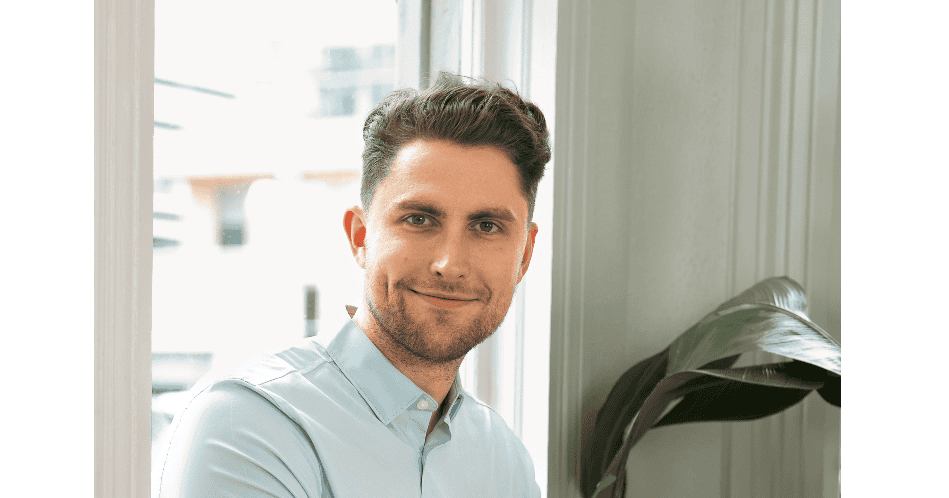
Matt Loszak, CEO Aalo
Concepts discussed
Auto-linked from the episode's notes and transcript.
Show notes
Aalo Atomics is a two year old micro reactor company founded by Matt Loszak, a serial entrepreneur, and Yasir Arafat, a skilled nuclear engineer who previously lead the DOE’s MARVEL advanced micro-reactor demonstration project.
Note: At Nucleation Capital, we were impressed enough with the company and the team to add it to our growing portfolio of advanced nuclear energy companies.
Matt Loszak, Aalo’s CEO, visited the Atomic Show to discuss his company’s current plans, its evolved power plant design, its progress towards becoming a reactor manufacturing company and the process by which it selected its initial target customer base and devised a product aimed directly at serving their needs.
The initial Aalo plan was to scale up and commercialize the MARVEL reactor concept, taking advantage of its rapid progress and projected early operation. A variety of circumstances have combined to delay the MARVEL project by at least 1-2 years. With that delay, the idea of using MARVEL data as part of the licensing basis for Aalo became less viable.
As a result of additional market and supply chain influences, Aalo has made significant changes to the original, MARVEL-based design.
Aalo’s has designed a sodium cooled thermal reactor with both a primary and a secondary sodium loop. The reactor fuel is uranium dioxide with enrichment of 5-10%, putting it into the category of LEU+. The fuel form will be as close to available commercial reactor fuel as possible.
The secondary sodium loop will include a double tube heat steam generator that will produce steam at approximately 500℃. The optimized power plant design for Aalo’s initial customer base of large data centers is called the Aalo Pod. It will include 5 reactor steam generating systems each capable of supplying about 25 MWth. The output of all five steam supply systems will be combined to supply a single 50 MWe steam turbine.

_Activity inside Aalo’s Austin, TX factory (Mar 2025)_
The steam turbine selected for the system will be one that has a reasonably flat operating curve over a range of steam flows so that it can efficiently supply electricity even if one or more of the reactors is shutdown for maintenance/refueling.
The company has focused on designing its system to be readily manufactured and efficiently assembled. Aalo moved into a 40,000 ft² industrial building in Austin, Texas in August of 2024 and it is now outfitting that building to be a pilot line manufacturing facility for its initial units. The company has scheduled a grand opening ceremony for the factory in early April 2025. Moving fast is a core part of its commercialization roadmap.
Aalo has purchased a plot of land in or near Austin and plans to build a non-nuclear heated prototype facility where it can perform a number of sodium and heat transfer tests.
It has obtained permission to follow a DOE authorization path to obtain permission to build and operate its nuclear prototype reactor on a site at the Idaho National Laboratory near the facilities that once were home to the Experimental Breeder Reactor II and are now the DOE’s DOME (Demonstration of Microreactors Experiments) test site.
It is one of four reactor vendors (along with Terrestrial Energy, Natura and Kairos) selected to build a small and micro reactor hub on the Rellis Campus of Texas A&M. Eventually, the site owners envision that the total power generating capacity at the site will be approximately 1 GWe from a significant number of nuclear power plants.
You can learn more details about Aalo Atomics and Matt Loszak by listening to the show. As always, comments are welcome, though the comment window will close in about 2 weeks. (A site that has been on the web as long as Atomic Insights attracts a lot of spam attempts.)
Transcript
Read transcript
There's a way, a way such a better way today, today. The nation's voice tells the world there's a better way, today there's a better way. This is right Adamson. It's time for another atomic show. Today my guest is Matt Lozak, who is the founder, a founder and CEO of a startup company called Aalo. Aalo is a micro-reactor developer focusing on fast or sorry, sodium cooled thermal reactor. It's not that different from a reactor that was developed to demonstrate the technology at the Idaho National Laboratory. That reactor is called the Marvel Reactor, which had some significant program support from DOE over the last several years. Matt and his team have decided that they're going to commercialize that technology. And I will proudly proclaim, right, to start here, that nucleation capital is an investor in Aalo because we like their ideas, their team and their technology. Matt, welcome to the show. Awesome. Thanks so much for having me, Ron. I've known you for a little while. I've learned your backstory. Actually, knew you before you actually decided to form Aalo. Can you tell us, share with the audience a little bit about how you became a CEO and founder of a nuclear company? Yeah, absolutely. And I mean, first of all, it's a great honor to be on the show. Been a long time fan, first time guest. But yeah, your blog was fantastic. You know, in the past four or five years when I was kind of recalibrating back into a nuclear. And so just wanted to say thank you for all that you've done for the space. But yeah, so my background is that I grew up in Ontario. And my introduction to nuclear was kind of through a lived experience where I had asthma, so breathing problems growing up. There used to be 62 smog days per year in Ontario. And that's because we had a lot of cool plants. But throughout my teens, we turned off those cool plants and went all in on nuclear. And the number of smog days per year went from 62 to zero. And my breathing problems went away. So that was kind of my introduction to nuclear. I thought that was pretty cool, but didn't really know what I would be doing with it. Or if I'd kind of be spending my life on it, as it's turned out. But then yeah, so also around that time I actually had another health problem, which was I had a heart surgery for a rare condition and called Wolf Parkinson's white syndrome. That was kind of scary. I was kind of a teenager as well. And you know, that night at the hospital, after the surgery, I was kind of afraid it might never wake up again. And I used to think a lot about mortality around that time. And basically what that kind of left me with was the feeling that life is too short not to take risks and try to pursue your passions and try to do big things. So anyway, that was kind of some of the things that led me towards entrepreneurship. But I studied engineering and physics and university. I went to Queens University. My first foray into business was actually during that year, or during the first year of my engineering physics degree. I decided to torture myself. It was also probably the hardest year of that inch of his degree. But I decided to simultaneously run a painting business, which was pretty intense. So, you know, we would study Monday to Thursday until midnight. And for study breaks, I would do cold calling. And to try to get business for the painting business. And it took me a long time to answer the phone and no longer, you know, respond by saying hello, this is Matt from college pro painters. But we'd go out maybe Friday, but then bust back to Toronto. I'd go on a bus, get there three a.m. do painting estimates at 8 a.m. door to door sales. So that was my foray into business and we did pretty well. So my kind of my business there, we painted like $100,000 for the homes there as a college student and made some good money just by hustling and brute forcing success. So that was my first business and. But then after graduating from that program, you know, I thought I might as well use that degree for something. So worked as an acoustical engineer for a year. So kind of sound vibration control and architecture. From anything from large engineering projects down to concert halls or installing tune mass dampers to counteract people's jumping in at raves or at the top of skyscrapers. So kind of cool work, but I really missed the entrepreneurship side of things. So taught myself to code. And ended up doing 10 years of software startups. The first one you could call a learning experience. Second one was more successful and we achieved a nine figure valuation by the time, you know, I turned 30. But it still didn't feel meaningful. And because I wasn't, you know, that passionate about the subject matter of that business. It was kind of HR payroll and benefits software that I ended up starting this business and Canada called Humie in 2016. I think what tipped me over the edge towards nuclear was I watched this movie called Radioactive around that time and honestly kind of teared up. Because I was just thinking, you know, this is meaningful, you know, pushing humanity forward. In this case, there's nuclear science, you know, just felt so much more meaningful than what I was working on at the time. And it was always kind of my goal to combine the learnings from software and business with, you know, back to my roots and science and engineering. So that's what tipped me over the edge to, you know, go out and on a limb and start to start something in nuclear and then set out to meet everyone I possibly could in nuclear met with hundreds of people, including yourself. And my co-founder around 100 people into that list and that's kind of how I got back into it to nuclear. And I just been loving it. Yeah. So what made you decide to go to this reactor design that is pretty unusual. There's not any, I don't think operating in the world today. And what made you decide that you and your co-founder were had compatible visions. So, you know, at the time, I kind of seemed like there was a bit of a regulatory cash 22 where the NRC seemed to want vendors to have nuclear test data before granting them a license. But the challenge was it's hard to get that test data without a license. And so, you know, with the Marvel program being built and being one of the first new advanced reactors being built in the country and decades. It seemed like this could be an interesting way to help resolve that regulatory cash 22 with the NRC. And to answer the second part of your question, yes, or who was the chief architect of that program. When I met him, you know, it wasn't clear that we'd be able to work together, but I kind of knew instantly after meeting a lot of people in the space that he was pretty special. Really a charismatic engineering leader, really talented technologist. And frankly, we just had very complimentary skill sets. I thought, hey, you know, he could be a great partner at the right time when it makes sense. But he was still, you know, focused on Marvel at the time and we didn't join forces until later. But, you know, as things have played out with him coming on, eventually is CTO and co-founder and scaling out the team to now 40 people. And things have really evolved and the design is pretty different than Marvel at this point because, you know, we've really scaled things up, made it very commercial focused. Our initial target wedge market is data centers. And I think we've got a pretty beautiful product for that target market, which which looks quite different than Marvel. And so I think the biggest thing that the Marvel did, which really benefited a lot of the industry is it showed that, you know, one, you can do DOE authorization for a new design. And there are other vendors that are doing DOE authorization now as well in the dome, for example. But the second thing that it kind of did for the entire nuclear space is that it set the precedence for doing an EA, an environmental assessment for NEPA instead of an EIS for some of these new advanced reactors. And the nice thing about that is that an EA can be done in a matter of months instead of years, which can really help expedite the deployment of this technology. So I think yeah, Marvel has been quite helpful for the industry. And at this point our design has evolved quite a bit and is pretty different than Marvel. But, you know, really, really honored to be partnered up with the astronaut. I think the Marvel team, what they did for the country and the whole nuclear sector is super underrated and very cool. What effect is it had on your development that Marvel has had some hiccups in its timeline. It looked like it was going to be up and running by about now. And there are some things that have caused it to be delayed. Have they affected you in your tummy? This hasn't affected our timing because, you know, our design is quite different. I would say, you know, Marvel is still under construction. The fuel has already been fabricated, which is fantastic because that's not common for in the Marvel case, it's a new fuel. And so it's already been made. And they are still planning to turn this thing on in the next few years. So I think it'll be exciting for the industry when it goes critical. But for us, you know, we've kind of forked from this program quite a long time ago and our progress is now very much independent of the progress of Marvel. Can you give a brief or not so brief necessarily description of the aloe reactor? What is your base configuration? What is some of the specific characteristics that make it work and make it different than others and what seed bandages compared to some of the other designs. And that's a very long question that maybe you could just break it up and we'll come in a couple of times and clarify some of the questions as you go forward. Yeah, happy to. So yeah, so the reactor itself is a sodium cooled uranium and dioxide fueled reactor with low enrichment, LAU plus fuel. And we made those decisions for supply chain reasons that we'd love to get into a little bit later. So this is a thermal spectrum reactor. It's a sodium thermal reactor not fast. As you mentioned, the start. And it's 20 feet tall, 10 feet diameter fits on the back of a truck. But I want to emphasize, you know, this is not our product. Right. This is the reactor, which is just a component in the overall system and that overall system that overall product has to solve a customer need. And you know, that's really our focus is working backwards from the customer need instead of starting with a technology and trying. into force it upon the customer. So the customer need that we are trying to address is powering data centers, largely driven by demand for AI. We asked ourselves, what is the ideal product for these customers? And maybe it's worth specifying first. The reason we chose these customers is because they have a high willingness to pay, because they have a lot of urgency, and they have a huge amount of demand that is coming online very soon. So it's a very good technology, a very good target customer to go from folk to noke alongside. And so we asked ourselves, what is the ideal product to serve these customer needs? And what we came up with, we're calling the ALO pod. And so this is a really interesting configuration of an overall plant and overall system that has five reactors, five of the ALO on reactors, each of which is 10 megawatts electric. So as an overall system, it's a 50 megawatt configuration. And the idea there is when one reactor is down for refueling our maintenance, the others can make up the delta so you can have power essentially all the time. This is a really nice thing because it'll be an option, it's not mandatory, but you could have the option once capacity factor is proven out sufficiently to be in a grid kind of islanded configuration. And this is really nice because this would allow you to bypass interconnection cues, saving a lot of time and bypass a lot of T&D transmission distribution, which is often as you know, half the cost of delivery electricity, which would save a lot of money. And so this is the product that we're coming with the ALO pod. We think it's pretty unique and uniquely well suited for this use case. And if you kind of compare it to other solutions, for example, with renewables where, yes, it's also clean, but you have to do a lot of overbuilding and storage and it uses a lot of land and the cost increases when you do all that firming. This is quite an attractive solution because instead of using many multiples of the land that the data center load uses around 30% of the land that the equivalent load in a data center uses. And then you've got geothermal and hydro, which are still somewhat geography constrained, although there are people working on that. And you've got natural gas acting as this bridge because a lot of data center developers are setting up gas turbines as the bridge for now, but they don't want to do that indefinitely because they don't want to ruin the planet in the process of bringing AI to life. And then lastly, it's worth kind of looking at gigawatt scale nuclear. Obviously there's a lot of old plants getting turned back on, which is fantastic, but there's a few challenges there. So one is with a traditional PWR, if once every two years you have to take it down for refueling for a month, and by definition you're still going to need a great interconnect for these data centers. And so this is kind of, we think, the Holy Grail product, again, first of a kind, we'll not have capacity factor sufficient to do the islanded configuration, but certainly within a few evolutions, we think it can get there as an option, which would be quite nice. And the other kind of cool thing about that is, very likely you might not need to use it in a, or want to use it in a great islanded configuration because you could also then help stabilize the grid with this as well. So it'd be a, you know, entirely a choice. Maybe one more thing that's kind of worth highlighting in terms of, you know, you asked about how we would kind of compare to a lot of other approaches to the market. This is kind of how we think about ourselves as follows. In the nuclear space, we've got micro reactors, which are one to five megawatts. Typically they use halo and triso and the LCOE is something like 20 to 40 cents a kilowatt hour because of the small scale and neutron and efficiency and so on. And that's fine because their target market is remote diesel. But in our view, you know, you're never going to power a gigawatt data center with a thousand one megawatt reactors. We just don't think it makes economic sense. And then you've got, you know, traditionally SMRs, which are kind of like scaled down large reactors. So, you know, yeah, won't name names, but sometimes the, the, the, the, the difficulty with this is that sometimes the, the reactor is modular, but the plant is not. And in some cases you get, you know, more concrete per megawatt than any other reactor design when you kind of just make this scaled down version of a larger plant. So, so what we ask ourselves here is, you know, is there the solution where maybe there's a new category? Maybe it's, you know, it's called an XMR, like an extra modular reactor, but something just to highlight that, you know, not only should the reactor be modular, but the whole plant should be modular. And, and so we think that when you have the right size somewhere between a 10 and 100 megawatts, you can achieve this kind of optimal balance of economy of number, economy of scale, and redundancy to be, have a solution that can operate around the clock for these data centers. So that's kind of how we've, you know, sliced and diced the market. And how we've come up with this product that we think is, is pretty optimal for these data centers needs. Okay, sounds good. You did mention that your product is more than just a reactor. So talk a little bit about how you convert the reactor heat into electricity. What's your secondary system look like? Are there one just one turbine, or is it five turbines for the pod, you know, one for each reactor? The primary loop is sodium. This goes to a secondary loop that is also sodium. And then this gets converted in a double walled heat exchanger along with water to then go off and turn a traditional superheated steam turbine. So we're working with a few different partners. We're going to announce soon on that kind of turbine at the end of it. So with a single pod configuration, you would have five reactors and one turbine. But the nice thing is you can kind of stamp out these pods alongside the data center. And that would give you redundancy both at the reactor and turbine level. And something we're exploring is the idea of also having turned up turbine redundancy with potentially a third turbine shared across two pods. But this kind of thing would essentially allow you to maintain the turbines, maintain the reactors while maintaining power at all times. So that's the kind of solution that we're looking at doing for the power conversion. So the turbine would be operating at somewhat less than its full capacity during the hit time when there's maintenance being done on one or more of your reactors. Is that correct? That's right. Yeah. So we're looking at turbines that have an operational range that allows for one of the reactors to be off. And there are some other parts of the solution that we're exploring. So basically the two options are you can either overclock, so to speak, the four remaining reactors or have a sixth spot to do what's called an N plus one configuration. And we're kind of doing the economic analysis on finalizing which of those two approaches makes the most sense. Now it's going back to the reactor. I am curious about one thing. You have U02 fuel low enriched uranium. You have sodium coolant. What thermalizes the new charge? So we will have a moderator in there. Originally, as you know, we were exploring the use of a, what's called a homogenous configuration in the core. So this would be uranium, criconium hydride. And the attractive thing about this was that it had a very strong negative temperature feedback, stronger than essentially most other systems, which was a very nice feature. But it also came with challenges. So there were challenges because of hydrogen dissociation. As you know, the centerline temperature of the fuel, especially gets hot in a reactor. And there is a fine line with hydrogen dissociation to ensure that you don't lose that moderating capability with user hydride. There was also challenges around the supply chain. So we fundamentally are a speed and economics company that we're not kind of married to anyone technology. And in the past six months, we sat down with the different supply chain folks in the fuel side. And we said, here is our timeline for criticality. We haven't changed this timeline yet in the company's history. How do we maintain this timeline? And we did a work back. And basically, the result is that we will be aiming to place the order for the fuel in the next six months in order to hit our timeline for criticality. And it was difficult to do so in the supply chain with homogenous uranium zachonium hydride fuel. So the net result is essentially separating out the uranium and the zachonium hydride in a configuration that uses the most commonly used fuel around the country today. Uranium dioxide at a slightly higher enrichment to improve the fuel cycle and economics and pairing it with a zachonium hydride moderator. Somewhat as originally planned, but with a different type of, you know, core feedback response given the heterogeneous are for it to say heterogeneity of it. So that is what we've moved towards in order to maintain timelines. And all of our technical economic modeling still shows that this should be quite strong. And so yeah, it shows that it should be quite strong. One thing I'd love to talk about too, Rod at some point is this plans we have for sodium testing, but I don't want to ramble too long on this question. That's okay, we'll give back to sodium testing in a few minutes so that the uranium dioxide is in the form of standard pellets in size of chromium tubes or is it a different form? We are going to use a standard of form as possible. Okay, that's good. As you said, your goal is to move as fast as possible. So inventing something new is slow down. Yeah. Okay, now your pod hour output is 50 megawatts. How many of these pods do you think that your data centers are gonna need? Well, yeah, so in our customer conversations, we tried to hone in on what is the best size to be as a building block to couple with their load? And what we learned in all those conversations is that they tend to think of building out their data centers in these 50 megawatt chunks. So 50, 100, 150, 200, that's kind of this most data centers are in those types of size brackets. And we happen to have visited some of the data centers that are getting built out at gigawatt scale as well. But they're built out in the same way with these, for example, 200 megawatt chunks currently alongside larger gas turbines that are in plants that are built right next door. And then that is kind of stamped out a number of times. So we think this product is really well tailored for these needs from a size perspective, a land use perspective. And ultimately what we have to prove, obviously, is from a cost perspective as well. So let's shift gears a second. Tell us about your plans to manufacture your product, your complete product, your power system that you are going to be calling it, Hallopod. Yeah, so we moved into a 40,000 square foot manufacturing facility here in Austin, Texas. And we moved in around five months ago and just under four weeks, we'll be hosting an event to unveil the finished factory and the finished non-duclier prototype. And so the plan for the next few phases here is we are going to be moving to a, I know I should say, we've purchased a plot of land here in Texas to do the non-duclier testing. And so we're going to be digging a 30-foot hole, installing the reactor, the non-duclier prototype that we've made. And essentially, the ultimate question that we are trying to prove out on the economics initially is as follows. So there were quite a few groups of people in the past who were developing sodium reactors and they viewed it to be this potential holy grail of economics because essentially, with sodium cool and you can make something that's much more compact and to your question, much more mass-manufacturable. But the issue is that although there were some good examples of sodium reactors operating very nicely for several decades, including EBR2, often these sodium reactors had operational challenges, which caused them to have outages that lasted months or years. And so if you think about our first economic challenge before we even mass-manufactured this thing, right? The first challenge is to basically show that we can solve these leaks in a matter of minutes instead of months or years. This is our engineering challenge equivalent of, for example, landing a rocket, right? If we can show that we can solve these leaks quickly, then I think we can show that we can unlock these economics quite nicely. And so that is our plan at this testing facility in Texas that we're about to set up. It's to basically recreate the world's most famous sodium leaks and show that we can resolve them quite quickly using newer approaches that have evolved sometimes from oil and gas and fracking with the use of natural gas and pipes and patching leaks and so on. And using these developments that have come about in the past 20 years or so, that might not have been as available when sodium technology was being explored the first time in the 50s to 80s. So that's number one is we're going to be doing that testing. And then the second big part is trying to identify what fraction of the plant, which is our product, right? Not just the reactor, but what fraction of the plant can be manufactured in the factory? We've been making some big moves on this front to plan for this and to design around it from day one. I think this is something that, you know, not enough nuclear companies have invested enough into because if you start to plan around mass manufacturing, while you're doing the initial version of the design, then it has impacts on the design of the reactor. In terms of the things you choose, the materials you choose, the form factor of each sub-component and I can't be too specific here, but we put a lot of thought towards this. And maybe one last thing I would say is we've just brought on a pretty senior leader of manufacturing who comes from a pretty exciting company and led their manufacturing for a long time early on. And they were impressed by the amount of manufacturing folks we've already got on the team who are informing the design at this early stage. So that's kind of, you know, really core to our thesis. Like I said, there's a few other things. We have to de-risk first to really make sure we can unlock this kind of holy grail of economics. With this technology type, but very shortly thereafter, we'll be really working hard to set ourselves up to scale rapidly once that first reactor gets built. I heard you say that you're going to be pursuing the DOE authorization path. I assume that that is for a single unit, single reactor demonstration unit, but I could be wrong, telling me more about your initial critical nuclear heated reactor and where it's going to be built. Yeah. So we are pursuing DOE authorization for our first reactor. We are calling this the ALO X, the ALO experimental reactor. And this is happening at Idaho National Lab. And so in the past 12 months, we were pretty excited because we always had the intention of doing DOE authorization, but we received legal confirmation from DOE that we are able to pursue this pathway for this first reactor in the past 12 months. And we also received a MOU, which tentatively helped to assign us a plot of land, which is very close to where EPR2 was operating on the Idaho National Lab land 40 minutes west of Idaho Falls. The plot of land is another big deal because you want to have a site for your first reactor and you want to make sure that it is well characterized and you want to make sure that you can do an EA instead of an EIS if all goes to plan there. So we've already been going down this pathway of the EA, we've already been going deep down the pathway of DOE authorization. And so we have this internal goal. It's not a promise for making anyone, but our internal goal is to start construction on this first real reactor next year, which we're really proud of because we only incorporated just over two years ago. So if we're able to achieve this, I think it would be really unprecedented in terms of speed in this space. And we intend to use this reactor to do a lot of testing on the fuel and the operations and the building of not just the reactor, but the civil structure with largely made components from the factory here in Austin. So it'll be an incredible way to test what we're working on and run some experiments and prepare to deploy commercially very shortly thereafter. And something I just want to make clear as well is that we aren't putting the NRC on pause. Our intention here is to run these two processes very much in parallel. So with the NRC side of things, we've already submitted our regulatory engagement plan. We are on the NRC website. We are submitting topical reports this year. The way that we think about this is that all the engineering work that goes into designing at the all-o-max is quite a bit of overlap with the commercial, all the one of which there's five in each pod. And so a lot of the work that goes towards the DOE authorization should also, of course, feed into the NRC. And then we'll see in terms of the timing of how fast the DOE authorization goes versus the NRC, which we're doing at parallel. But our estimation is that the all-o-x will go critical first and help to provide any data that the NRC might need to put a bow on the final application for the NRC side of things. So that is our regulatory strategy and a nutshell, our debro asking strategy. And fundamentally, we really just want to get a reactor built and go critical and show that this can be done very quickly. Because there's a lot of people who think that this can't be done until 2030 or 2035. And we just think it should be possible to do a bit faster. So we're doing our best to move quickly. And we'll see how things go as things unfold here. How did you set yourself up to be able to build a factory in Texas and also to be considering building a your first unit in Idaho? We were very intentional with where we opened up our various offices. So we have our two major centers of mass. Our headquarters is the 40,000 square foot factory space we've got here in Austin. And then we've also got a decent size office, our second major center of mass. I don't know if you can call it that in Idaho. In Idaho Falls. And so both these locations are very critical to our strategy. So Austin is a great place for manufacturing, for recruiting talent from the area, from SpaceX, Tesla, boring company, Nurelink, and then oil and gas as well. I think hiring from oil and gas is kind of oddly underrated. There's a lot of really incredible engineers and talent in that space. And then of course being based in Texas, I mean, Texas is very pro-nuclear. I was able to meet with Governor Abbott actually this past Sunday and just his level of support for nuclear is pretty impressive. And in other states like California, maybe they're not quite as pro-nuclear. So that's a big deal. And then Texas has this grid that really needs what we're doing and can pretty easily adopt it because it's kind of a unique grid outside of the realm of FERC and so on. So that's the Austin office, great place to build this manufacturing hub. And then, but the thing is, like there's a lot of the nuclear talent is in Idaho. Idaho National Lab is, there are a number of national labs, but Idaho National Lab is kind of arguably the most important one where a lot of the original reactors that were built were built there, there were 52 test reactors built in the early decades of nuclear. And that was a race to see what will number 53 be. Yeah, so having the presence, Idaho falls is critical because it's an incredible place for talent and just know how. So for our first reactor, the the all-o-x that we're building at Idaho National Lab, we're tapping into the ecosystem. We're working with consultants in the area where we have a strong presence there ourselves as well with our office there. And there is also good state level support there as well. And then we do have a few folks in DC because obviously you need a presence there both from a regulatory and government affairs perspective. And some folks in San Francisco, but our primary offices are in Texas and Idaho. You mentioned a little bit about Texas's strong, pro-nuclear stance. Can you tell us a little bit more about being a nuclear company in Texas? What's this Texas nuclear? I have to say, are you guys involved in it? Yeah, we are involved in that. So, you know, read Clay set up the Texas nuclear alliance. It's really fantastic. That is part of how we met the governor this past weekend. They host events all the time. They help coordinate with local politicians. They kind of act as this force, which many of the nuclear companies, even ones that are not headquartered here, have joined forces with because they see this state as just making so much sense to do this. And so, you know, beyond the things that I already said around the grid and around the state support and around the recruiting, I mean, maybe one more thing just to point out is like, you know, Texas is this historically, this leader in energy. Right. It's history and oil and gas. The fracking revolution. It's a leader in renewables. It's a leader in oil and gas. It does have two nuclear plants, but it could use do with a lot more. And so, and there's a lot of capital here as well. A lot of wealth from the oil and gas industry. That's kind of, you know, might be looking for what else to invest in. That could be the next generation of energy here in the state. So yeah, Texas nuclear alliance has been fantastic. The state has been fantastic. And, you know, that there even is a bit more happening. So Jimmy Glott felt he spun up another kind of initiative that was interfacing with some of the other utilities, some of the utilities in the area to help give visibility for advanced nuclear to the utilities as well. And so there's quite a few initiatives that have come up and have been quite helpful to us as we build here. Actually, yeah, sorry. One more that's worth mentioning is this was recently announced. So we were one of four developers chosen to collectively build up to a gigawatt at the Texas and I'm a relis campus. And they are very interested in building nuclear there on campus to help power some new data centers that they're building to ensure that they remain at the forefront of AI and nuclear. And so although was selected along with Kyros and Nitura and terrestrial. And so it's exciting because they have begun an early site permit and early engagements with the NRC and they are very serious. I mean, if you go to their campus, you see the scale of the things they pulled off there. They mean business. So, you know, that's been an exciting initiative that's local to us here in Austin in Texas as well. Interlocated in Texas, have you had any discussions with other customers outside of the data center world? Texas has got a lot of energy intensive industries and other people that might be second or fast followers as some people would say. We certainly have. Yes. So we've been speaking to some oil and gas companies here. We've been looking at desalination. Desalination is especially interesting to Texas because the population. The population has been growing very rapidly and water has been becoming a bit of a constraint for the state. So the idea that we will soon have to manufacture water or do desalination to help keep up with demand because there's so many arid regions of Texas that that's pretty critical. And as you know, the technology is amongst the best to power that and unlock that. So there's lots of folks that are interested in that. I will also say one of the advantages of having a reactor technology that is not water cooled that doesn't require an open loop of water exchanging with the environment is that you can more easily cite this reactor technology or this, you know, the pod anywhere that does not have water. So that's another kind of big advantage for Texas especially with water increasingly becoming a constraint. But certainly as you mentioned, also offering industrial process heat. So with our reactor, the outlet temperature is between 500 and 550 Celsius. So at that temperature, you are able to decarbonize roughly half of all industrial process heat applications. So there are some that require much higher temperatures, like, you know, cement or glass and so on. But certainly quite a few processes can be decarbonized with steam in that temperature range. So there's quite a few interesting applications. But, you know, yes, we are initially remaining laser focused on the wedge market that we've talked about earlier, which is data centers and largely driven by AI. Sounds great. The reason I have to just, there are some people and being a stock market investor myself have heard everybody talking about data centers. And then when there's some blip in the market about data center growth, it seems to have an even bigger effect on nuclear companies than it does on the data center companies themselves. So it's good to make sure people know there's a lot more customers out there than just data centers. They're good leaders. They're good early adopters. But the world of energy consumers is enormous, particularly with new onshore and manufacturing with the oil and gas industry wants to get rid of their own emissions even if, you know, emissions are caused by burning their products. But hey, burning their products is what's caused us or what's enabled us to go from from ad jets, subsistence living to producing, producing abundance for these part of the world. Yeah. Yeah. Well, I mean, you know, one thing that's just worth highlighting there, I think is a great call out is data centers, demand there is growing rapidly and there is a high willingness to pay. But it's still only a small slice of the overall electricity consumption in the country. So, you know, right now I think it's around 1%, maybe even if it goes to 2 or 3%, that's still only 2 or 3% out of, you know, all the energy or all the electricity consumed in the country. So definitely a good call out that while it's an exciting initial wedge, it's just the beginning. And I also would like to remind people that the willingness to pay higher than market prices is limited. If the data centers can actually get their power they need at a market price, that's what they'll pay. They're only willing to pay what they have to pay. People need to adjust their plans accordingly. Now, one thing that does play in nuclear's favor right now is that although you can, you can spin up gas turbines that exist already pretty quickly. The supply chain for gas turbines that don't exist is growing long and the order book is requiring delivery times close to when nuclear plants look like they're going to be delivering. So, high efficiency gas turbines are not as readily available today as they were. Say 3 or 4 years ago, which again plays into nuclear's somewhat longer delay times because we're doing stuff that's new. But I'm not sure you guys wanting to move faster. Of course we always have to be somewhat cautious in a nuclear business because we're not allowed to make mistakes like SpaceX has made. You blow up a few nuclear reactors. It's not going to be quite the same as blowing up a Starship. Yeah. Yeah, there's a lot of interesting dynamics of play. There's the gas turbine supply chain like you're saying. There's the transformer, supply chain. There's interesting challenges that some data centers are having with harmonics where they have to huge battery banks to deal with those and deal with supply chain there. And then you've also got, for example, Microsoft after having said publicly they're going to spend 80 billion on CAPEX and infrastructure for largely for energy and for powering a lot of their operations. They've recently kind of slashed some of those estimates, which maybe in the short term means that a bit less gas gets deployed for these data centers and maybe gives nuclear a little bit more time to kind of get ready to stand up and get going. At the same time you've got Google who's apparently I've read going to double down and increase CAPEX expenditure outlook. So lots of different folks in this space, lots of different people want to really push AI forward, lots of people want to get involved in enabling that. And we're just trying to say laser focused on moving as fast as possible towards building the best possible product that we can think of for these particular needs. Man, we've been talking now for almost an hour and I want to be respectful of your time because you're a busy CEO is going to get back to work at that factory up and running, or at least telling people what to do about it. So I want to offer you an opportunity for a few last words and then maybe you and I will get together again for another version of this and say six months or so. Once you've got your factory running and you're producing equipment coming out the door in this aloe zero, maybe even up and getting close to running. So what else is going on and what's your initial plans? You had any interesting social events recently, maybe south by south west? Yeah, so I did do a few different speaking engagements for south by southwest. It's been a great event. We are hiring aggressively. So if you're anything from a fantastic nuclear engineer to someone who's done a lot of work in a factory before with manufacturing, working with Sam Lestiel, then please reach out. And then we are also pursuing our series B. We're going to be raising 100 million as our target for this year. And we're moving very fast. So as I mentioned, we got started two years ago in year one. We did a six million seed. And year two, we did a 30 million series A. And this is now year three, we're aiming for this 100 million series B to help pay for that first real reactor on the aloe X at I&L. So those are the main things I'd say. If you have nuclear talent or manufacturing talent or if you have a capital and you're interested in collaborating and working together on this, then by all means, please reach out. So I guess what you're asking for is talent, experience, and money. I'd say that's exactly right. All right. Hey Matt, thank you very much for your time. I hope everybody enjoyed this, learned a little bit about a reactor company that is not satisfied with plotting along, but never forget. And I'm sure that the aloe folks don't. I remember a long time ago I heard. some famous guy with the initial BG say, if you had innovators rapidly as a software machine had, we'd be able to cross the country on a single gallon of gas to which the automobile manufacturer said, yeah, but we can't afford blue screens of death. And I'm showing my age there. because that was what Windows computers often would just stop and say we're done operating today, and we call it the blue screen of death. So Matt, keep up the good work, be aggressively moving forward, and be careful out there. Awesome. Thanks again for having me on, Rod. Really an honor and a pleasure. We were just speaking with Matt Losek, CEO of Aloe, that's aa-l-o. You can find them at aloe.com-a-l-o-dot-c-o-m. This is Rod Adams, and I've been your host for the Atomic Show for more than 15 years. Along with the time against sites, I've been speaking with experts in analyzing nuclear energy for more than three decades. While I'll continue to produce new content, I am also actively investing in advanced nuclear and related ventures. As a managing partner of Nuclear Action Capital, I'm expanding my access and getting to dig even deeper into nuclear energy companies. We're working hard to select ventures with extraordinary promises success. They're building the advanced nuclear sector and helping expand our clean energy options. We're building a portfolio of ventures on behalf of investors like many of you. We believe regular investors should have access to advanced nuclear for their own portfolios, so we allow people to subscribe on a quarterly basis starting as low as $5,000 per quarter. A four-quarter subscription will get you exposure to between four and six ventures. Eight-quarters will get you eight to 12. If you are an accredited investor and would like to to learn more about how you can participate, please check out our website at nucleationcapital.com. That's nucleationcapital all one word dot com. Our fund and all the information you need to subscribe is available online. You can also subscribe to our newsletter, nucleation insights, and join our pro-nuclear investor network where you'll get information about syndicated investments and select companies. If you'd like more information, we're happy to help. Please spread the word. There's a better way to deal. There's a better way.