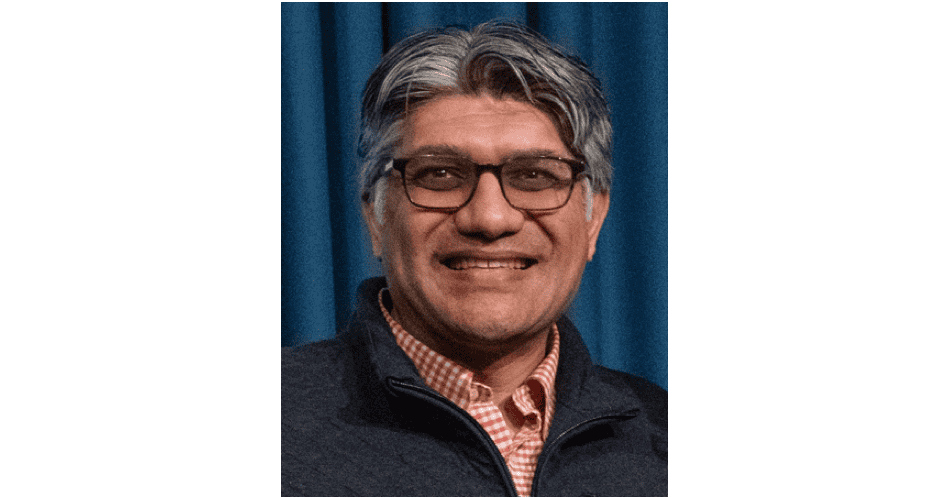
Jigar Shah, former director of DOE Loan Programs Office
Concepts discussed
Auto-linked from the episode's notes and transcript.
Show notes
Jigar Shah has had a lengthy career as an energy industry entrepreneur and strategic thinker. He founded Sun Edison and helped to create a new model for deploying solar power systems. He was part of the Carbon War Room and then founded Generate Capital to provide loans to proven technologies that had not yet achieved commercial scale. He was a member of the Energy Gang during its formative years as a podcast with a formidable listener base.
Following his success in the commercial sector, Jigar was appointed to be the Director of the Department of Energy’s Loan Program Office (LPO). He started at LPO in March of 2021, soon after the start of the Biden Administration, and served until January of 2025. During those years, the loan granting capacity of the LPO grew from $40 B to $400 B, primarily as a result of provisions included in the Inflation Reduction Act.
During our conversation, we focused on the efforts that the LPO made to improve the nuclear industry’s capability to develop and complete large, complex projects involving both public and private financing. We discussed how America seemed to have lost its ability to build big things and what could be done to regain that ability.
We talked about the DOE liftoff reports and other efforts to guide the nuclear industry towards a more sustainable and successful development model. We discussed the various sizes of reactors being developed and the ways that a variety of sizes can open new markets and also provide vital practice in building successful nuclear projects.
You’ll want to listen to the whole show if you are curious about Jigar’s next endeavors. An early reveal is that he has returned to podcasting at Open Circuit, joining Katherine Hamilton and Stephen Lacey, his former colleagues on The Energy Gang.
Transcript
Read transcript
There's a way, a way such a better way today, today. The nation flies till the world, there's a better way, today, there's a better way. This is right, Adam, and it's time for another atomic show. Today, my guest is one you've heard before. His name is Jiggur Shaw, and he less than a month ago was the head of the loan program's office for the Department of Energy. Jiggur, welcome to the show. Well, thanks for having me back. It's surprising that it was less than a month ago, but so much has happened. It seems like forever, doesn't it? Yeah. It's measured by the number of events. There's been almost a couple of years lived in the last three weeks. So Jiggur, first of all, give the audience who haven't. I don't know you a little bit more of your background. Before you were LPO, you had a pretty significant history and experience in the energy business. Let's learn more about that. Yeah. So my experience in the energy business has largely been on the solar side. I started in the solar industry back in 1999 and then started my first company in 2003, a company called Sun Addison, which I was able to sell a few years later. That company really popularized solar as a service. The documents that we created and the structures that we created of now, being used for trillions of dollars of solar transactions. And as a mechanical engineer, that process was one that really educated me on how commercialization happens. How you really gain the trust of the financial markets, how all of the parties interact with each other. And I took that work and brought it to the carbon war room, which did a lot of technologies in the shipping space and then the heavy trucking space and then, and then generate capital, which is today still one of the leading investors in leading edge sustainability solutions. And then finally into the, the harm of energy loan program's office. From the point of view of a capital stack, it seems to me that generate capitalists occupy the position almost the same as the loan program office in terms of being willing to invest in technology that are proven but not really commercialized it. Is that a good understanding of where you stand? Yeah, I mean, but that's been the through line for my entire career, right, when I was at Sun Edison, those solar panels had largely been the same since 1992. And when I was deploying technologies in 2003, the technology was pretty stable. It wasn't cheap, but it was pretty stable. But people still thought it was too risky, right, and I think generate capital recognize that that was continuing to happen in lots of sectors like renewable natural gas or battery storage at the time or even electric vehicles. And so, you know, that, and that really is a through line, even at the loan programs offices in the Department of Energy. You know, we don't really take will it work or won't it work risk. That is for demonstration programs within the Department of Energy. We really, you know, figure out that bridge to bankability for technologies that have already been demonstrated. It always is driving me a little nuts when I read almost it seems like there's almost a form, let people have to put when they're writing about small amounts of reactors and saying that they're unproven. What is your position on whether or not they're proven or not proven technology? Well, I think you know better than most that all technologies in the nuclear space are largely proven. I mean, I would say whether it's molten salt or, you know, Gen 3, you know, light water reactors or others, these are all technologies that have been, you know, put into demonstration reactor since the 1950s and 60s and 70s. There's certainly design changes and improvements and things like that that have been made, but the underlying technologies for almost all of these reactors are not brand new. They're just modifications of previous work. Whatever I hear that, especially from people that advocate well, instead of using this unproven small water reactor technology, maybe we should use these long duration batteries that you can charge once and be ready to use six months later. Yeah, I mean, for me, I find that whatever you compare two things together. People are admitting that they just don't realize how large and diverse and complex our energy system really is right the notion that you'd ever be picking between nuclear and batteries makes no sense. We need both batteries and nuclear and we need as much of both of them as as fast as possible. And you know, it's it's one of those things where the thing that I'm really proud of actually over the last four years though is that I think there was a mistaken notion that we could actually power the whole world with, you know, like solar wind, hydro and batteries and I think today nobody who actually understands anything about the grid believes that. I think they realize that clean firm power generation has to be a substantial part of our electricity mix. I think a lot of that happening and you're right, the clean firm is an important characteristic of something that Jesse Jenkins and his folks at Princeton have shown that it really does help you lower the cost of the system when you have different types of power generation with different specialties and different characteristics. Yeah, I wouldn't want to necessarily run a whole system based on central cycle gas turbines either. No, well, we're going to try that experiment here pretty soon and I think that's going to go badly. But but no, I think that's absolutely right. I think, you know, as you know, simple cycle gas turbines like to run maybe 50% of the time they don't actually like to run that much. And so and they're down for maintenance a lot. So look, I think that I think that we have now established the need for clean firm power generation to reduce the cost of overall systems and even Bank of America. I think came out with a big report this week that confirms that which I think is great. I think, you know, when we talked last, which was I don't even know when was a 2018 or 2019. I think it was 2019. Yeah, I think we had talked about then, you know, what would it take for the nuclear industry to be serious about not just griping about the fact that they're not taken seriously, but actually to do something about it. I think I think we've actually spent a lot of time over the last four years to start to answer that question. But, you know, I'm afraid that that that process has not yet been stood up right. I mean, most of the nonprofits and trade associations and others in the nuclear space are still hoping that someone else will do their work for them. So, in other words, I think that the other way was March of 2020. There you go. Before COVID was declared as global pandemic. There you go. There you go. But I think that that to me, the nuclear space, I mean, that is the, and now that we've demonstrated that nuclear really does provide value and that that you know that the President Biden actually, you know, announced the goal of, you know, tripling our nuclear fleet. A lot of that work has now been done that we've now established that nuclear is part of the future electricity system forever and will be growing. But I think that the notion of how to bring capital and utility risk profiles and, you know, under capitalized technology companies and the nuclear side with hyperscale data center companies, you know, that recipe has still not been figured out. I mean, I think that's the reason why it's starting to be, a lot of things have happened. There's been a lot of progress and I like the fact that it was not just declared as a goal in 2023, but in 2024, there was a plan laid out. Now some people, you know, describe plans. But you got, you have to plan. You can't suddenly accomplish anything if you don't have a plan. There's to be like their steps being taken. And the other piece that is important from my point of view is that it's no longer a one party issue. It is something that people on both sides of the aisle find a lot to be supportive of for many different forms of energy. But in particular, you know, of course my view, this is the atomic show. My view and the most important kind of energy is nuclear, really system work. Most important to me. Everybody's good at this. Well, I've always loved nuclear too. I mean, I've just worked on the big nuclear reaction in the sky called the Sun, but you know, but like, you know, doing nuclear on the Earth is good too. And it's just listening to a very, it's actually a very well done podcast about enhanced geothermal and the several pieces of the discussion where the forgotten furbo, I can't remember the name. Tim, let him know that I think that was probably the revolt podcast. Exactly. Yeah. I talked about how the heat gets regenerated. Of course, what I think you were really talking about was the fact that there is continual decay of radioactive material that's causing the temperature of the Earth to be more elevated than it would otherwise be. So for sure. No nuclear energy as well. Well, I think that's exactly right. And I, you know, I think that, but if you listen to that episode and look at enhanced geothermal, one of the things you realize is when you put all the building blocks in place, there are people who are willing to take project completion risk in the geothermal supply chain. And that continues to evade nuclear. Right. So everybody is sort of saying, we're willing to do our part short of taking on the construction risk and the cost over unrest. And, you know, I think we're going to have to figure out how to solve that problem. Otherwise, I think we're going to continue to have progress without reactors. One of the reasons I've been advocating for smaller and simpler reactors now for somewhere in north of 30 years is that it's not going to be a single step forward. We are going to start demonstrating we can do the job in increments and make it happen step by step. The problem is when you try to suddenly jump into a mega project having not done anything for 30 years. We've demonstrated that that particular path doesn't work very well. And that just didn't work very well in France or Finland either. Yeah, I don't know that that's the lesson I would take, but you know, I'm happy to allow the private sector to lead us in whichever direction it wants to go. I think the lesson from the vocal nuclear plant is you got to build 10. Right. I mean, once you trained, I think it was close to 20,000 workers of which there were 9,000 workers in any one time that worked at the facility. You can't just stop at two like you got to build VC summer and then you got to build focal units five and six and I think had you built, you know, five, six, seven, eight, nine, 10 reactors. And then in a program, then the overall average cost of the entire build out would have been in that $10 a watt range. But when you do one at a time, it's a lot more. The industry or what it's worth people seem to forget that we did have about 18 approved COLs construction operating licenses during that time. It's not to just build. one and wait. But unfortunately, the market changed. And it wasn't a Fukushima event that slowed the building of nuclear plants in a stepwise and steady fashion. It was the fact that the face of electricity dropped too low to make it worth anybody's while. Yeah, sure. Mainly by an oversupply of cheap natural gas. Sure, but there were really smart people in Illinois that kept their reactors going and there were less smart people in other states that let their reactors shut down. Keeping reactors going is one thing. I'm talking about the stopping of construction. You know, as you mentioned, it was nobody's intention to build just one or two or four people in the world. I think there was approvals for 12. If I'm not mistaken on the number. Yeah, I think that's I think that's exactly right. But I think, you know, part of what we did during the last four years was give America their mojo back. This was not a nuclear problem. This was an everything problem, right? America had gotten into the habit for over 40 years, right? So, I think that's a big administration of saying we are going to invent everything in the United States. And then we're going to let the commercialization process happen overseas. And that's also true with the AP 1000. I mean, remember, we gave the AP 1000 technology to China. I mean, it was American technologists who actually went to China and taught them how to build them. And they've done some work to, you know, modify the design. But ultimately that's what they're building every single day. Yeah, that's true. And we did that over and over again. Solar panels, battery storage, lithium mine batteries were invented at UT Austin by John Goodenough who got, you know, Nobel Prize for it. Yeah, for some reason we get to the point where we we didn't want to get our hands dirty anymore. We wanted to leave the manufacturing and construction to other people instead of actually thinking about that as a great enterprise and a great career path for people here in the US. And I think that's changed. I think the last four years has really injected American business and investors with a hope around America's ability to do big things again. You know, as a result, we have 955 new or expanded manufacturing facilities under construction here in the United States. You know, we've got large critical minerals facilities under construction. You know, we've got battery manufacturing under construction. We've got green chemicals facilities. So I think people are starting to dream big around construction and manufacturing and deployment here in the United States. I think there is a level of effort required in a dedicated working group to tackle this last issue. And right now it's being tackled via tweet or tackled via panel discussion in front of a dinner. It's not being seriously tackled by people that have locked themselves in a room and are not leaving until they find a way to solve it. I tend to disagree a little bit because I have been locked into a fairly large number of these rooms by individual companies and individual coalitions, individual partnerships that are figuring out how to get their particular design or their particular product. into the market in a way that is sustainable, where they can manufacture and have a repeated market. So those conversations are happening. They're just not necessarily happening at the governmental level. If they're not happening at the governmental level, they're not happening. I mean, I'm just saying, rather like you tell me which design is actually going to do this without a significant partnership with the U.S. Government. There will be a partnership with the government. There will be cooperation and enabling by the government, but it won't be government led. Well, we've always said that we were going to be private sector led government enabled. I think that was the tagline that we created in the last four years. But my point to you is that like if it's not if it's not written in black and white in the updated lift off report for nuclear, I'm pretty sure that the project finance folks in Wall Street won't fund it. I mean, I'm seeing construction starting on privately funded reactors in Tennessee and in Texas already. This is what? Cairo's for their demonstration reactor in Nittura in Texas? Yes. Great. Tell me how that's going to work out, Rad. Like we've just talked about building 10. Right. And I love Cairo's. I think they're a great company. I've just recently talked to Nittura. But like, are you seriously telling me that we're on track to building 10 of the Cairo's reactors? Yes. I don't. I really don't believe it. I think that unless they've got a loan pending in front of the loan programs office, I don't believe it. To build, I don't want to get into, you know, detailed arguments because I don't have the interior. But I do know that the Cairo's has a partner that is signed an off-take or will be signed an off-take. I mean, and TVA, I mean, I've seen the I've seen the public announcements, but I'm just saying, Rad, like I don't. I'm not trying to demean or diminish the extraordinary work these folks are doing. But I am saying that I have a level of seriousness that I'm not seeing from other people. Right. 500 megawatts does not get me out of bed in the morning. Right. And so, unless that 500 megawatts has a clear path to 5,000 megawatts, what are we doing? From the national perspective, 500 megawatts may not be very much. But it is more than 10 Cairo's power plants. Sure. But I'm just saying, Rad, like, you and I both know that all Google is willing to do is sign a power purchase agreement. Right. TVA is not willing to take cost overrun risk. So then you've got a private company that has to do that. Fine. It's for one reactor. You know, and it's a demonstration reactor at that. So it's a lot easier to handle. When they build their first power reactor, you and I can get back on the podcast and congratulate them. But until that actually happens and they actually get long term debt in place, like color me skeptical. Yeah, it's good to be skeptical. It's good to be one who says, show me. But that conversation was to be happening in the public is my point. I understand people wanting to have private conversations, but unless you believe that the IRA incentives by themselves will solve this problem, which I do not believe it will, then there has to be a conversation with the relevant committees in Congress around what additional tools might be necessary to convince these EBC contractors to provide a price guarantee across 10 reactors. I get the fact that they can't provide a price guarantee for one reactor. But across 10 reactors, how do you get them to put a collar around that price? Right. And then Google can say, great, that'll translate into X dollars per megawatt hour. We're willing to take that collar. Right. And TVA can say great, then we're involved too. Right. Now I feel like people are falling short of getting to the finish line. They're just like, you know, like making progress. It's like that old adage I learned in third grade math class, which was like, if you get halfway to your destination every day, do you ever get there? No, you just have smaller and smaller progress every day. Yeah, but see, that's an interesting one because the way I've been telling that story my whole life was the scientists or the mathematician tells it the way you just did. The engineer says I may not get there, but I'll get close enough. That's only good and nuclear warfare and horses. It is true in nuclear power. Like you actually like one of the reasons why we didn't translate the other 12 COLs into nuclear power plants is that everyone lost their nerve. Right. The electric utility lost their nerve, the PC contractors lost their nerve. Everyone lost their nerve. Right. So, you know, Stella's got to get her group back. Well, I think you know, and it's not look, I don't need all of their secret documents to be open sourced, but I am saying that the business model of how we're actually going to make everyone comfortable with the risks in nuclear. It needs to be open sourced. Right. Not the confidential negotiations per reactor company, but the overall business model has to be open sourced. Otherwise, I don't know where the conversations with NYSERDA goes, right, for putting new reactors at the constellation sites. I don't know where the AP conversations go for putting reactors at their sites. Right. You've got a bunch of folks who've been on the $800 million grant program for the early site permit. We'll see who ends up winning some of that money. Those bids were due, I think, January 17th. And so we'll see where that goes, right. But I just, what I worry about is when I talk to the big Wall Street banks, they are more confused than ever about how to do this. Every one of them just defaults to saying, why won't Microsoft or Google just guarantee the load? And I know those companies, they are never in a million years going to do that. Well, they have no real way to control that risk. If you can't control the risk, you wouldn't necessarily want to do that. Right. They don't have staff that's supposed to manage that risk. I agree. Whenever you're going to do risky things, you need to do things where you understand the risk better than anybody and you know what you can do to control it. Well, the way you get people more and more and more comfortable with financing nuclear projects is you start having successes. And sometimes on a very small scale, then the next bigger scale and the next. Well, that's actually filled and delivered. That flies in the face of the conversation we just had. Like I hear you. So demonstration reactors fine, right. And the tour built a one megawatt demonstration reactor and abling, which is great. But when we're doing a commercial rollout, it's got to be 10. They can't be one at a time. Right. There has to be a commitment to 10. Otherwise, it's a flight chain. Everyone else has a hard time walking before they run. They really got a plan for the job. Well, that's true. But you're not going to get to 10 until you get the one. I think that's a present to know exactly what you want to build. In other words, you have to have the first of a kind and the first of a kind. My belief has to be done by the people who can control the risk. The project team has to accept all the risk themselves, which is why it has to be small because they can't afford to have a multi billion dollar failure. They just aren't big enough. But if they can do something that may cost them a billion. And by the way, somebody's company's have wealth and excess of billion dollars. Hidden away places. That doesn't mean it. I feel good. I don't want people to have money. Oh, close market cap is six billion dollars now. I mean, well, we'll see. Look, I hear you. So, but that doesn't give me a mind fuzzies. The backers behind other of the company. Obviously, it's very obvious that the backers behind. I mean, they've been pretty clear that they're not going to put that money into the company. You know, I just look at. Rod, I talk to you in March of 2020. We laid out exactly what was required to succeed. We executed on that brilliantly over the last four years. I mean, I don't think the nuclear industry could have gotten a friendlier administration in history. And right now, I'm just saying that the work that needs to be completed is that the entire financing ecosystem has to believe exactly what the steps are to getting there. And I agree with you on a demonstration, non-power reactor. That needs to get built. I agree with you. Both Natura has done that and now, Hyro says I'm trying to do it now. But once you finish that step, you've got to build 10. You can't build two. You've got to build 10. Right? That's what we learned about Vogue. Right? You've got to build 10. I just want to make sure everyone understands that. And you've got to figure out what that looks like. How do you get the money for it? How do you find the sites for it? How do you make sure that reactor number three and four isn't subject to something on reactor one and two and they have a right of not moving forward? You're not going to get the pricing you need. You're not going to get all of the investments that you need, unless all 10 are contracted for and are moving forward. I won't disagree with you there. But I think that my understanding of the steps involved and getting to some sort of economic order quantity may be a little bit different than yours. And I certainly believe that one of the biggest challenges we have right now is no investors like uncertainty. And if there's anything that's happened in the last three weeks has been the insertion of massive amounts of uncertainty. Yeah. No, I mean, I certainly heard that loud and clear from all of my investor friends, which it took me four solid years to get them to be open minded about nuclear. I mean, when I called them in 2021, they just hung up the phone. They were like, what are you talking about? And by 2023 and 2024, they were making investments, which I think is amazing. I think it's amazing the progress we made, but I think we got to keep that going. And the same thing's true for geothermal, by the way. Like everyone's like, oh, geothermal is off to the races. No, it's not. We laid it out very clearly in the geothermal liftoff report. We need $30 billion to go into building five gigawatts of new geothermal. More on track to one gigawatt of new geothermal by 2030. It's got to be five. If it's not five, you don't get the critical mass. You don't get all the cost reductions. You don't get all the things that you need. And I just want to make sure that people are actually stretching, that they're recognizing just how much we have to do, just putting in your best effort isn't good enough here. We got to hit absolute targets. Yeah, I agree. And we've got to keep the momentum going over history. We should have learned that starting and stopping is very expensive. Yeah. And like you mentioned, allowing plants to be shut down and then have to be recommissioned. The amount of money that takes to do that round trip for no real gain, actually for negative. Because the period you're shut down, you're not producing clean energy. And it's just it's criminal. Or shortsighted or what do you want to call it? Yeah, it certainly was not advisable. And I think people will learn their lessons now. And we're able to save Diablo Canyon and a couple of other reactors. But I think what I really want to make sure that everyone keeps their eyes in the prize on is this all this bipartisanship doesn't buy me any reactors. What buys me reactors is a commercial deal coming together. And I think the Trump administration did in the first term did an amazing job of starting the process of getting Poland to buy an AP 1000. And the Biden administration did a great job of closing that deal out. And now we need to do the same thing here. The Biden administration did a great service to 10, 15 plus companies who are now racing to get a lot of their projects into a place where they can start construction. And I think that's amazing. But we have got to finish what we started. If we allow this momentum to fade and for that boulder that we've been pushing uphill to roll back on top of us, I don't know how long it's going to take to get somebody to want to push that boulder up here again. Now have you seen anybody trying to do for nuclear, what you did at Sun Edison for solar? I think there's a lot of people who are trying to figure this out. I mean, what I did at Sun Edison for solar, they'll remember depends on the risk being transferred to the EPC contractor. So when you look at the solar industry, the EPC contractors will take all that risk. Today, Bechtel is not willing to do that. So now the question is are there others that will do that? I think now that we've got Kept go entering the US market and Hyundai entering the US market, maybe Kept go in Hyundai, I'll take that risk. And compete with Bechtel to do that. But unless you actually have a proper risk sharing agreement where different parties take different parts of the risk, and that actually is codified in a way that the project finance market understands who's taking what risk, which right now we don't have, then it's hard to replicate that Sun Edison model. What do you think really drives the inability to find EPCs who are willing to take that risk for a nuclear when they are willing to take it for solar or natural gas turbines or wind? What do we need to do to change that? Well, we started this conversation off earlier, saying that America really just hadn't done big things since a Reagan administration. There was a conscientious effort on the part of every president to push things to China and to do things there. And so a lot of our EPC contractors' atrophy, whether it's Bechtel or Kehet or all these other EPC contractors, they started getting less and less sure of themselves around their ability to do complex big things. And as a result, we've had cost overruns on all the complex big things that we've done. And we're from the big day, can Boston to other projects. And that same nervousness has not permeated a lot of the big Asian contractors. And so we have done a few big things reasonably well here in the US. We rebuilt the Woodrow Wilson Bridge in Washington, DC, for about 10% less than the budget. And it took a little bit less time than they expected. That was a good complicated task. I mean, nothing easy about building a 10 lane bridge across a river in the most heavily trafficked city in the country, or one of the most heavily trafficked cities in the country. So you know that. And the other celebrity, everybody. You know, we can't do big things for complicates, saying this is OK. So why do you resist going smaller and less complicated? But to be clear, I'm not saying we can't do big things. I'm saying that we lost our desire to do big things in this country for a long time. And I think the last four years, we've injected people with that confidence again, and that's happening. Investors are infected by other people are affected by it. And look, I think the EPC contractors broadly took their sweet time even in the solar industry to get into the game. More in-sync construction up in Minnesota was one of the big ones who came in early. But a lot of these folks took their time. And so what I'd like for it to be a US EPC contractor that decides to take this up, yes. Do I think that's likely? No. I think it's probably going to be Hyundai and Kepto that do it. But we'll see. We'll see who decides to take that up. But I think that in general, most of the US EPCs want to take a cost plus structure. And most of the companies who are doing the work around the design side are not willing to spend 10% of the entire budget up front before they start construction, which is the number one best practice on managing large complicated projects is you measure 34 times and cut once. Yeah, that's what you do. You need to really invest up front and make sure the design is complete before you start trying to build multiples. And that means the cost is going to be higher. And I mean, I saw some cost estimates coming out of the UK for SMRs, which were crazy. I think they were talking about the G-attot G-B-WX 300 being done for $2 billion. It's like no way. That thing's going to cost $6 billion to do. And that's fine. The first one's going to be $20 a lot. It just will. Do it properly. Do it right. Train the workers. Do it with all the work. And then you're going to get massive cost reductions across the deployment of a 10 pack. I think you probably could do $30 billion across a 10 pack of those reactors, which is great. So what do you think the second 10 pack would then cost? Well, I mean, hopefully 10 times the 10th one. So probably 20 to 25 billion. But I just think it's critically important for us to recognize that $10 a watt for nuclear is a damn good price. And everyone's like, well, but I want to promise $6 a watt or $5 a watt, a noclose case like $3 a watt. Fine. Like do whatever you want. But like, you know, like let's be honest with ourselves about the first 10 that are going to go through and what they're going to cost. And it's still worth it. If you read the make of America port, it makes it very clear that even at 10 bucks a watt, these reactors are the cheapest way of building out the entire system. You won't get any argument for me. Although I am pretty confident that there's a good reason why an o-cloe might want to be an owner operator, as opposed to just selling reactors. Which is great. I don't mind the business model changes. Yeah. Because if you really can control the price and the risks and do the design to optimize the cost for an operational point of view, the usage can turn over to that and become real money printing machines. Yeah. Well, I'm expecting us to. I have no doubt in our mind in the United States that we can out-innovate everybody in the world. I think what you and I are talking about is how do we get from here to there? Like once we get our confidence back on nuclear and our ability to deploy these reactors, then the innovation cycle can go wild. And we could start powering all of our ships with nuclear. Like we've done for the Navy for years, but we need to start doing that in the private sector too. I have to keep pushing back a little bit because my belief is you've won developed confidence through success by doing things and getting better at them and build confidence. I see that when I help my grandson learn how to throw a football, when I teach my granddaughter how to swim, the more they practice and the more they accomplish, the more confident they become. And I think that the US really did lose its interest in doing big things and by doing so lost its skill in doing big things. And you have to develop that skill. It's not gonna happen all at once. Yeah, I don't think we're saying dramatically different things. I'm simply saying that like building one at a time and getting commitments one at a time is not gonna work. We need commitments 10 at a time. That's all I'm saying. Yeah, I agree to like, and that's, I think that's all I'm saying. I think you're right that the confidence will come with each reactor that we bring on board. But I just do not want us to take the lesson that the other 10 reactor orders will come after the first two. It started like that did not work for us on local. And so we need all 10 secured up front before we start the first one. And folks have to show the discipline to understand that that's what it takes to do this. Like it's just it's just what it takes. I think we're almost in agreement. Well, we always have for this for the small reactors. The ones that I'm interested in and investing in at nucleation capital.com. The ones that we're interested in is our reactors where you've got to build the first commercial unit. The thing that you really want to build over and over again, you've got a complete one. In reality, not on paper, not in computers. You've got a complete one. And then so 10 of them based on that first one and being able to show your customers. This here is what you're going to buy. This is how it operates. Can you see how the steam moves and all of that? And that's fine. Just know that it'll be 40 bucks a walk for that first one. Oh, yeah. And that's fine. You'll just deal with equity because it's worth it, right? But but we're not talking about that. The those units are manufactured units. You're building the first one by hand and then you've got to invest in a big manufacturing facility. And then you build it in an automated factory. Like I don't, I'm not disagreeing with that. I think micros and nuclear batteries are an amazing technology, right? But for the small modular reactors, which are more like 300 megawatts in size, like you got to have 10 before you start the first one. Yeah. And those as you know, are going to be evolutions of what we've been building for the last 40 years. 50 years. Yeah, of course you are. You're not. Yeah. Of course we are. We're going to be light water machines. I like the idea of really expanding the catalog of available nuclear options, nuclear products. So the different, a whole universe of different customers can now think of nuclear is potentially solving their problems. As long as there's not more than one or two designs on that page, I'm fine with that. But if we have 40 designs, come out. I'm not doing that again. But I'm not really, I'm really not like I think we need to settle on one or two, you know, large reactor designs, one or two SMR designs and one or two nuclear battery designs. We cannot have 40. Well, true. But I'd give you more categories and just small medium and large. I think there's very serious micros. They're small. There's maybe medium minus and medium plus. I don't know. But in this, there's kind of one catalog. But there's got to be winners. That's all I'm saying. Like if we go through the same process that we went through from 1960 through 1979 and we have like no three reactors that are the same, more than three reactors are the same. Like I'm done with nuclear. I'm telling you, like I will not try to help his industry again. If they do the same old damn mistakes and don't learn a damn thing, then, you know, we're walking away. Yeah. Well, some people credit put a bigger circle around the nuclear industry than I do and they count the federal regulators as being part of the nuclear industry. A lot of those changes were not driven by the industry themselves. They were driven by changes that were imposed. Now I'll grant you that there were people within the nuclear industry who gladly accepted changes in regulations, because it forced changes in contracts and and changed orders and cost overruns. And because that's the kind of business business people they were. Yeah. Well, from the defense contracting side, because that's where an awful lot of them got cut their teeth. And then the utility suppliers were cost plus suppliers. That's and cost plus customers too. The utilities didn't care. The federal regulators told them to do something. They say, sure, how high and oh, by the way, public utility commission, I need 10% return on investment for making this federally required investment. So I think, I mean, all I'm saying is I think, you know, I think we did a lot of great work in the last four years. But we passed the baton to the next administration, I don't think bipartisanship is going to be enough. I think there actually needs to be a dedicated team of people whose job it is to facilitate this conversation. I do not believe that the private sector is going to figure this out in their own. You and I may disagree on that. I wish them well. But you know, at the end of this process, we better have a small list of technologies going on to a different topic completely. What's on the menu for jiggers? Shaw, what are you going to be doing? Take a little bit of a break. Well, I restarted the open circuit podcast. So people should check it out if they enjoyed the old energy game podcast. And so open circuit on latitude media. And then, you know, I'm just talking to a lot of awesome people like you and others and learning what's on your mind and seeing, you know, where the trend lines are and where I might be most impactful, right? And so, you know, we're going to keep doing that. I just joined the world resources Institute as a senior fellow. And so that's been fun. They just announced a big 75 million hour gift from Michael Polsky. And so from from in veggie. And so, you know, that allows me to help, you know, make sure that all these technologies are going into Brazil and Mexico and Columbia and India and Indonesia and lots of other places. So, so that'll keep me, you know, busy and learning this year. And then we'll see what I do on the for-profit side. That's great. Sounds like you're keeping busy. Are you a fielding any phone calls from former colleagues today? Oh, yeah. I mean, you know, I think it's been heartbreaking. The cruelty by which, you know, folks have been let go. I think there's a right way to do things. And then the way that they've been doing it, which I think is maximizing the uncertainty and anxiety of the folks in the long program's office and other places. And so, I've been fielding a lot of calls from people trying to be helpful to folks to make sure that they get settled in the right place. I think we were able to attract really some of the smartest people in the entire world that come to the Department of Energy and for them to be dismissed like that. I think, you know, is a damn shame. But we'll get them situated in the right place so they can continue to do a good work. Yeah. I have some real, real strong feelings. I served for 33 years in the Navy. But nine of those years, I was in offices in Washington. So I was often in places where two thirds of, or two thirds of three quarters of my colleagues were government civilians doing amazingly hard work and with dedication that was hard for anybody to think about from outside the boatway. Yeah. They really do plan to serve or, you know, the service mentality is at least as high there as it was within the service itself. Yeah. No, I think, I mean, the amount of expertise that's there is just vital to, you know, the work that we do when you think about the number of crises that, you know, happen on a weekly and monthly basis that, you know, we protect American people from, you know, having those experts in the right seats with the right training, you know, makes everything go smoothly. And, you know, I think, you know, creating a lot of mischief there, I think, you know, leaves us all a little bit less safe. Yep. Four transitions, four league plan transitions are really a problem because there's no knowledge, management, no transfer, there's no woken mindmelting, it's just, you throw everybody out and you bring everybody in the empty seats and it just doesn't work. Yeah. Might be. I wish them the best though. I want them to succeed because I think that, you know, as a patriot, um, I want the best for, you know, American people, but I don't think that we all, right way. Now that's, there's no doubt there that I'm hoping for success because we really all need it. Yeah. You know, it is, we all live in the same country. All right. A jitter, I really appreciate you taking the time. I know that for the audience, this was a little bit of a conversation among friends that goes just about as structured as, as happens normally. Well, I appreciate your friendship for all these years and, uh, and the partnership. I think we, I think we really got nuclear set up to be successful and I look forward to seeing the industry. You know, take it, take it all the way. Sounds great. Thank you, sir. Thank you, jitter. Yep. I hope you enjoyed this episode of the Atomic Show. This is Rod Adams. I've been your host for the Atomic Show for more than 15 years as a publisher of Atomic Insights. I've been speaking with experts in analyzing nuclear energy for more than three decades. About half a decade ago, it became clear that investing in advanced nuclear developments could provide exceptional returns. Successful investors facing Silicon Valley agreed. Well, I'll continue to produce new content. Atomic Insights is now a part of the nucleation capital, a venture capital fund that specializes in nuclear and nuclear adjacent emerging companies. As a managing partner at nuclear and capital, I'm expanding my access and digging even deeper into nuclear energy companies. My partners and I are working hard to select ventures with extraordinary promises success. They're building the advanced nuclear sector and helping to expand our clean energy options. We're investing our own money in diversified portfolio of ventures and enabling investors like many of you to take advantage of our diligence and selection processes. We use an established software platform that allows us to offer full featured investment subscriptions starting as low as $5,000 per quarter. A four quarter subscription will get you exposure to between four and eight ventures. We encourage longer subscriptions with greater diversification by offering a discount on our fees for eight quarters or more. If you are an accredited investor who wants to learn more about how you to participate, please visit our website at nucleationcapital.com. That's nucleationcapital all one word.com. Our fund and all of the information you need to subscribe is available online. You can also subscribe to our newsletter, nucleation insights and join our pro nuclear investor network where you get information about syndicated investments in selected companies, limited partners in the fund, get discounted access to syndicates, but they are open to other angelist members. If you would like more information, we're happy to help. Please spread the word. Today, I'll reach you twice to the world. There's a better way to date. There's a better way.