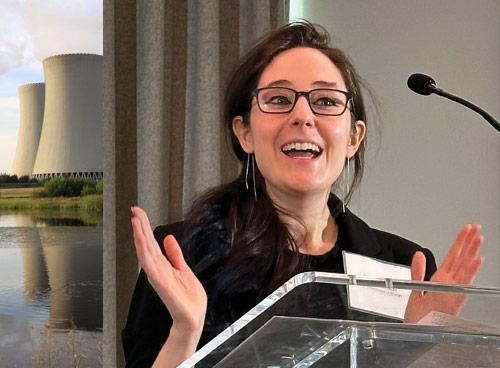
Julie Kozeracki, Director of Strategy, DOE Loan Programs Office
Concepts discussed
Auto-linked from the episode's notes and transcript.
Show notes
Julie Kozeracki was the lead author for a U.S. Department of Energy strategy document titled *Pathways to Commercial Liftoff: Advanced Nuclear* published in September 2024. The document was the result of a multi-agency, multi-lab effort to update a previously issued report.
During our conversation, Kozeracki described how the report was informed by changes in the market, by a study of experiences from other countries and other industries, and by a growing recognition of the importance of design completion in enabling cost and schedule adherence.
We talked about the utility of an expanding catalog of nuclear fission power systems that can meet the needs of a more diverse customer base and also the relatively new trend of increasing electricity demand led most prominently by data center expansion but also by electrification efforts for heating, transportation and industrial uses.
As others have noted, this edition of the advanced nuclear liftoff report makes a clear and compelling case for including large modern light water reactors – including, but not limited to the AP1000 – in the definition of “advanced nuclear”. But clear and compelling does not equal exclusive; the report also makes a good case for the fact that the market has room for a variety of reactor sizes and capabilities to meet the wide range of power demands of a diverse universe of customers.
Note for readers: We are breaking a long tradition at Atomic Insights. Bot activity has convinced us to disable comments.
Transcript
Read transcript
There's a way, a way such a better way today, today. The measure for us till the world, there's a better way, today, and there's a better way. This is Rod Adams and it's time for another Atomic Show. This is an exciting one, an interesting one, a useful one. My guest today is Julie Kozarowski, who is the Director of Strategy for the Department of Energy's Low and Program Office. Welcome Julie. Thanks Rod, I am really excited to be with you today. Great. And for those of you who listened to all kinds of pro-nuclear podcasts, you may have heard some things about the Department of Energy's nuclear liftoff report update. So I'm a little late to the party, but I think that today's show is going to be different. If for no other reason, then I haven't listened to all the other shows. Julie, you were one of the primary authors of the DOE's nuclear liftoff report. Can you tell us a little bit about the report, the series it fits into, and why you did the update? Certainly. And so first of all, I'd be remiss if I didn't underscore what an incredible, frost-dewy national labs effort it was. So we didn't just have support from the lung program's office, but from the Office of Clean Energy Administration's Office of Nuclear Energy, Office of Technology transitions, as well as Idaho and Argonne National Labs. So it really represents the best of DOE. And we are really excited that the update that came out about a month ago is actually the first update to our liftoff reports. And so when the series launched, DOE committed to providing living documents that would evolve with the market. And a lot has changed since we first published the report 18 months ago. And so we have updated content, we've added new content. And actually what I'm most excited about is how we've restructured the report sections themselves. So for example, we break out the distinct value propositions for different types of reactors. We dig into the value of what we call clean firm, and why we still need nuclear. Even after we build massive amounts of solar and wind and batteries. And then we also broke out sort of a clear distillation of the key barriers, like market power prices, not consistently valuing what nuclear brings to the table. All the powerful tools the federal government has put out there for helping handle costs and potential cost overruns. And the need to really create mega project delivery infrastructure in this country again. So there is something for everyone in there. And we are really excited to get the ball rolling on what is hopefully a number of updates to a number of really important technologies. Mentioning to update the report when the market changes. I would assume you've got a new update almost in the bag ready to go based on the changes in the market just over the last couple months. In fact, actually even today. So the New York Times may have buried the lead a little bit, but they actually ran a quote today from Joe Dominguez, the CEO of constellation. And he said, and I quote, 12 months from now constellation will have started on the path towards building new reactors. And so that's an article that features a lot of the really exciting news about the restart of formerly through my island now the Crane Clean Energy Center, along with information about palisades, which is a reactor that is also in the path to restarting up a Michigan with alone from the loan programs office. But I mean, a quote like that for the CEO of constellation, I think was probably unthinkable not even a year ago, but probably six months ago. And so you are exactly right that even since the publication of the report, of course, we saw the announcements from Google and Kyros and from Amazon and ex-energy and right before the report, the announcement from constellation and Microsoft. About Crane Clean Energy. So it is an incredibly exciting time. And I think that we are finally on a path of momentum building towards inevitability. Oh, important is momentum for getting nuclear off the ground. It is essential for getting nuclear off the ground. And I think it is really incredible the change that we've seen not just in the nuclear industry announcements that we've seen, but even in the large scale shift of public opinion. Over the last few years where we're now very fortunate to be in a place where most Americans view nuclear favorably. And I think that one of the stats that's always stood out to me is that nuclear polls most favorably with folks who live right near nuclear plants. And we have some information in the report about how even when you exclude the families of the workers at the nuclear power plant themselves, the people who live right nearby, like within 10 miles of nuclear power plant, have like 90 plus percent favorability views of nuclear and of adding more reactors. And so that tells me that we really have an education challenge rather than a persuasion challenge because it means that the more you know about nuclear, the more you like it and the more positive you feel about it. And so the more that we are able to reach people and explain the true value proposition of nuclear and address head on some of the misconceptions. I think will be really important for moving us forward and shifting us from a place of you know a sense of progress to getting shovels in the ground. And so you know to really address the question about the importance of momentum. I think even more than that because obviously there have been exciting periods in nuclear development before and there's been a lot of talk recently about the so called would be nuclear renaissance. A 15 years or so ago and what I think is important to sustaining momentum are the two fundamental market shifts that we've seen in the last few months and one of those which drove the update for the report is just this incredible unprecedented surge in demand for electricity. And the second of those is a real valuing of decarbonization because people talk a lot about Fukushima having thrown the earlier nuclear renaissance off track. But if you ask me it was really more about people not valuing the costs and benefits of natural gas appropriately. And the fall in the price of gas was likely more lethal to nuclear. The thing is that gas is really only cheap if you're not pricing in the health and environmental costs associated with it. So in the report, you know we talked through how a better comparison set for nuclear is natural gas paired with carbon capture. And the fact that we now have big companies like Microsoft and Amazon and Google who are effectively putting an implicit price on carbon by being willing to pay more for power. And the fact that those are the same folks who need all these new electricity generating assets built is an incredible shift in market fundamental that should help sustain that momentum for many years to come. And we can offer a few of my own quick opinions. One of the differences between the fact that natural gas is available and cheap today. That is seeming to finally get some people's attention is that it is cheap today. The price of natural gas has demonstrated even in recent times that it can be quite volatile. And the first nuclear renaissance or the early stages of the continuing nuclear renaissance is that natural gas steadily got more and more expensive over the course of eight years and hit to a point where natural gas was selling for about six times what it's selling for today in nominal dollars. There are people that still remember that natural gas prices are not always going to be cheap. So that's part of the equation for people finally looking around and saying well renewables are cheap. It's there there. And we need something that is not going to be there at the whim of the weather. Or at least it's going to be at some portion of the power that's coming to us. It's going to be always or available. So that's one of the beliefs that I think that we have is both the recognition that natural gas is not clean in terms of carbon dioxide. And it's not always cheap or not predictably cheap. And there is value. There is value to predictability. Volatility can be quite costly for companies that are dependent upon energy for part of their need energy to do their job. And they need lots of it regularly to do their job well. So the report talks about the value of doing the same thing over and over and getting good at it, developing the economy of multiples of producing over and over again. And there are some people who say look at that and say well, France did that task by picking one design and doing it over and over again without any other designs distracting. What's the response to that argument for why should we just build a series of identical large light water reactors using something that's already been proven, which leads us to the AP 1000 a single product from a single company. Certainly. And let me maybe first just address some of your earlier comments about some of the energy sources. So, you know, one of the new sections in the report really excited about is what we call LCOE limitations and levers, the levelized cost of electricity. And it's about this fact that a lot of the go to tools, rules of thumb metrics that people use for comparing different energy sources like nuclear like natural gas like solar like wind. It's very difficult to capture the full picture and you raise an important point on, you know, the versus the volatility of natural gas. And so, the nuclear has really low and predictable operating costs for decades, so that even if you have projects that are expensive or over budget. Once you get through that capital recovery period when you're, you know, paying back the debt. You've got another, so call that 30 years. If nuclear provides 80 years of operations, you have another 50 years of cheap clean, reliable power. And, you know, discount rates, no present value, make it very difficult to really quantify or make people care about the cash flow impact. You know, those are real assets that will be providing 24, 7 clean power for decades. And there's, you know, upfront investment required to get there. But I think it's helpful for policy makers in particular for public utility commissions. who explicitly take into account repairs and the children of repairs who are gonna be here 50, 60, 70 years from now. And the fact that us making an investment today pays off for decades and across multiple generations. Which I really... Yeah, I really interrupt you real quick and emphasize this point. I can't believe it, but I got into an argument not too long ago, with a couple of people who said, well, who's gonna benefit if we don't even start seeing the real benefits until 20 years from now? I said, really? My children, my grandchildren, your children, your grandchildren, I think that we are benefiting today from the investments that our parents made and that's the way society keeps moving. And I was just a flabbergasted to somebody who made that argument who's gonna benefit 20 years from now. I'll do it. I can't hope I'm gonna benefit a little bit 20 years from now, but maybe not for very long. And it ties in really nicely to your second question there about the approach that France has taken, for example, because France right now is a large western industrialized country who has effectively decarbonized their electricity sector precisely because decades ago, they made this big up front investment in large light water reactors. And so I do have to laugh a little bit when people sort of look around and they're like, well, how can you decarbonize large growing industrialized? It's like France has done it. And people can choose to look away from that, but the sheer scale of their nuclear electric production is really, really important. When you look at other countries who have decarbonized or close to it, it's largely sources of clean firm power. So huge amounts of hydro power, for example, that can help you push towards that 24-7 carbon free generation. And the other thing, I've heard the joke a couple times that France has two kinds of reactors and 100 kinds of cheese in the United States. There are 100 kinds of reactors and two kinds of cheese, which as a vegan, that part of the second part of the joke has lost on me a little bit. But it is an incredibly important point that in the report, my favorite slash least favorite chart shows that in the US just even in our commercial light water fleet, we have constructed over 50 different unique designs. And so almost every reactor that we have is close to a special snowflake. And unfortunately, I think that's been somewhat of a contributing factor to the lack of large scale cost reductions and learning curve benefits that you would expect to see after having many decades of experience. And so on the one hand, the charitable view of that is that part of that is a result of a maturing industry and of the boundless innovation and experimentation of American entrepreneurs. But now that we have reached a place of maturity, it is incredibly critical that the industry down selects on reactor designs as soon as possible and just as you suggested within a design build call it 10 of that design to really come down the learning curve and recognize most of those cost benefits because that is so much more efficient than building 10 first of a kind of project not just because it helps you get down the experience curve faster, but it's also a much more efficient way to consolidate and train the workforce to stand up the supply chain for example. So I think we're in a fortunate spot where we have a number of you know, potentially viable nuclear reactor designs. But if you think about some of the key market niches for nuclear and we have a couple of new sections in the report on this, you can maybe think about you know, three of the key ones is being bulk electricity generation. And for that, you know, large light water reactors are and are going to continue being essential. You have industrial decarbonization and a number of processes where you need really high temperature heat, high quality steam or a particularly compact footprint. And for that, I think there are some non light water designs that are going to have some really important attributes for those needs. And then of course you have your real, you know, remote military applications where your true micro reactors, you're talking, you know, 10 20 megalots are going to be a helpful option for displacing what is really expensive diesel generation. You know, you have people paying upwards of $500, $600 in megawatt hour for diesel in some places. And so of course there is room for multiple reactors at ions to be successful, but we cannot hopefully repeat 50 first of a kind designs. I'm going to somewhat challenge the conventional wisdom that most of much of what you just shared. One of the things that has been very common about the 94 reactors that we currently have operating is that they are in many ways similar and use similar parts and components and similar operational training. Now, of course, there is the pressurized water side, which is about two thirds of it and the boiling water side was another third of it. But reactor operators move from one to another fairly easily. I do have to be retrained. The fuel, which is what you said has been refined to the point where it provides very low ongoing operating costs. There's very little difference between fuels from all of the pressurized water reactors and all of the boiling water reactors. And even within those differences, the little pellets on inside the rods are pretty similar. So we've been able to produce mass production, produce very good core reloads that are very similar. There are some modifications, but they use the same machinery. They use the same workforces. They use the same tubes, all that stuff. So that's there is some common alley. And is why the US has been extremely good at driving efficient operations and cost reductions over its long operating period. And we've gone and we've improved our capacity factors by enough to essentially add the production of say between 18 and 25 new reactors, simply by operating the ones that we have at a 93% capacity factor, instead of a 60% capacity factor, which is what they would do when they were young. So we have done some learning. We've done some proof that you can in fact learn inside of nuclear, which is, you know, there are people who say you can never learn anything. Everything just gets worse in nuclear, which is just untrue. And that's only focused on construction costs. The other thing I want to say is real quickly, there are some known and proven disadvantages of having everything the same design, the French operational difficulties from a couple of summers ago show that if you have a fault, a weakness or design challenge with those designs, it may show up after 30 years of operation. It affects all of your units just equally. So it caused a number of units to have to go offline during the same period of time during the same summer. And the final challenge with having a lot of large reactors built steadily quickly to fill up the power needs of a country is what happens to the workforce as you get close to the end and close to the point where, hey, we're just about full up. There's no more need for anyone that disruption to the supply chain, it caused some real problems in France. Yet a lot of workers who were saying, hey, we've done this work now for 15, 20 years and all of a sudden my job is disappearing. Back to use it, got built up, say, hey, we've been producing the same parts and all of a sudden our markets are drying up. And that happens when you have very large and after just 56 units, they were full. So they're advantages to going broader, having a larger catalog and not necessarily having a lot of offerings within the same category, but having some options and some backups and the US is a country of 330 million people, not a country of 70 million or whatever it is for something that's something close to that was apparent. So the idea of building large projects and developing expertise that is an important part of your lift up report. In fact, I think somebody did a word count and said that your first version essentially said very little about 81,000. This one says, AP 1000 more than 40 times. So tell us a little about these large light water reactors and the development of mega project expertise. Yeah, and you raise a number of really important points there. And so one distinction that's maybe worth drawing is the difference between technology class and designs. And so if we're going to talk about technology class like light water reactors, you raise a really important and I think often under appreciated point about just how much experience we have with light water reactors in terms of designing, building and operating. I think the point you raised about capacity factor is something I think about a lot, which is, you know, shipping port was the first commercial nuclear power station in the US went critical in 1957. And it wasn't until 2002 that the average capacity factor in the US nuclear fleet hit 90%. So that was 45 years of operating and improving outages and figuring out what breaks and how to fix it. And that is an incredible wealth of knowledge that you're exactly right. Basically the whole technology class of large light water reactors benefits from. And so I think it's also interesting to think about how, you know, if that journey took 45 years for light water reactors, I think it could be a lot shorter for other technology classes. But if it takes a third the time, that's 15 years. It takes, you know, a fifth the time that's nine years. Like there's still going to be quite a lot of learning for other non-light water reactors before you're likely able to look at something that, you know, approaches that 90 plus percent capacity factor. So, you know, on the other hand, it's also sort of, I've always found that the gen for branding or naming convention a little confusing because, you know, from my perspective, there aren't many new types of reactors under the sun. And non-light water reactors or, you know, gen for reactors, the sodium or molten salt, hydrogen gas reactors, you know, these are also like light water reactors, 1950s and 1960s technologies. And we actually had some of these commercially operating, you know, Fort St. Brain had a high temperature gas reactor that operated from 1979 to 1989. And, you know, I think it's important for folks to go through your firming one, for example. And I think that there are a couple different types. of lessons to be taken from those because on the one hand, you know, we know that the technologies are going to work. They're going to split atoms. And so there should be a lot of confidence there, but there was, you know, as you suggest, not necessarily as broad of a base on how to operate them economically. And it is, you know, we benefit from a huge amount of experience and investment that both the commercial operating fleet and the Navy have put into operating light water technologies. And so, you know, it is yes and and we need a couple of different designs to be successful, but it's important, I think, to appreciate the decades of experience that that light water reactors benefit from. And they are also, you know, people sort of talk about large light water reactors sometimes, like they're done disorders, but they're extremely powerful, they're extremely reliable, they're extremely safe. And I think it's pretty incredible that, you know, in the United States, there are 54 sites that you and I can rattle off by name and they provide almost 20% of the electricity for the entire United States, which I think is a pretty neat, just given the perception about, you know, how quote unquote small the nuclear industry is. Yeah. And that 20% power comes from just around 7% of our generating capacity. As you notice, it's just, as you noted, it's just a few, you know, a couple dozen sites, but 20% of the power from 7% of the capacity. Yeah. And and then I do want to address the other scene, which talked a bit about technology but then you talk about designs. And I often think that there is a little bit of misunderstanding about what a design really is because from my perspective, one of the most important lessons from Vogel is that a reactor design is not, oh, it's this many megawatts and we use this coolant. A design is the pipe goes here and not three and a half inches over here. And it takes a lot of work, a lot of time, a lot of money to actually get to a complete constructible design. And so, as I say, you know, I think we're in a really fortunate position where we have so many American entrepreneurs and innovators and exciting reactor technologies. But when you talk about the value of having a complete constructed and operating design, it is really hard to overstate the benefits there. And so, as you mentioned, we added some new content on the AP 1000s. And, you know, part of that is, of course, for very, very proud of the fact that with the completion of Vogel Unit 3 and 4 with a $12 billion loan from the OPO, Vogel is now not only the largest clean electricity generator in the US. It is the largest generator of electricity in the US period. You know, 4 and a half gigawatts of capacity is more than 35 million megawatt hours a year and very, very grateful to the perseverance of southern company, Georgia Power, and the right pairs of Georgia Power who have made such a a down payment and such an investment on a, you know, multi-generational, multi-decade asset. But as you say, there also seems to be a bit of skepticism or hesitation or this tendency to say, well, maybe we should only do SMRs. And in the update to the report, we wanted to highlight a couple of things. And so one of those is, of course, a career-shirban study from the summer, looking at the cost of the next AP 1000s. And there are some really important cost breakdowns there that look at, for example, how much of Vogel was true first of a kind cost that was unavoidable and almost any first of a kind design is going to encounter. And how do you think about that separately from some of the things that were project management decisions? And then turning that into LCOE, despite the limitations that we talk about elsewhere, is that I really get the sense that cost overruns and loss aversion cause most people to have such an emotional response that it is actually very difficult to intuit through the power of the benefits and the inflation reduction act for nuclear. And so we run through a scenario where we say, hey, let's not even assume that we get any of the cost reductions, any of the schedule benefits that we assume from Kerou Shisework. And we build another AP 1000 at the same cost as Vogel inflated into today's dollars in our higher interest rate environment, but just loaded up with the IRA. And that's already under $100 a megawatt hour, which I think we are seeing in the press is probably quite doable and attractive for a lot of these large hyperscalers like Google Microsoft and Amazon. And I think it can sometimes be difficult to just feel through the impact of those benefits for a couple of reasons. One is just the sheer scale of these assets that if one AP 1000 is 11, 17 megawatts, that's a lot of megawatts to spread those costs and potential cost overruns across. Another is just it's really hard to overstate the impact of an investment tax credit on nuclear because, as we talked about earlier, so much of the spend for nuclear is upfront as opposed to during operations that if you can take out 30, 40, 50% of that upfront capital cost, it makes an incredible difference on the power of price. And I think the final thing is an under appreciation for the fact that both the investment tax credit and LPO loans provide support for cost overruns in a way that I think addresses this feeling or need for cost overrun insurance that we've heard a lot of stakeholders talk about. And I actually reflected back on the original genesis of cost overrun insurance in the first lift up report. And so this was back at the end of 2022, the IRA had just passed and we were calling up utilities and customers and saying, hey, what would it take for you to commit to new nuclear? And really was not getting any satisfying or interesting answers to that question. There was a lot of, well, we'd like to wait to be fourth or fifth. But finally, one large utility said, maybe something like cost overrun insurance could help. And maybe that could look something like passed a certain budget or contingency amount. The government takes 50% of the cost and we take 50% of the cost. And I think that would really help address a lot of our concerns in you nuclear. And I think that now that we have a lot more information from the IRS and their notice of proposal making and IRA benefits or sinking in and people are taking advantage, that's exactly what the 488 investment tax credit does. 4080 ITC goes up to 50%, and it applies to the total capital cost of the project regardless of the initial budget. So it is effectively the federal government saying, hey, we will share in the cost overruns and take that burden off of ratepayers and that would have been an incredibly powerful tool for vocal, you know, it had been available at the time. So I think some of it is about overcoming the emotional responses that the cost overruns, evoking people and running a couple of numbers, running a couple scenarios and really showing the powerful tools that we have available to us today. One of the concerns that I've expressed and had about the tax credits from the IRA is that at least when I initially read the bills, it looked to me like neither one was going to actually help anyone construct a plan. It was simply going to reward them once they had completed a plan. But a little bird told me that the investment tax credit part of it is something that can provide real dollars during the period of construction. It was that bird correct or can you help me understand that aspect? Because they said, hey, you're spending the money, you're going to the IRS's come up with ways to provide you some credit while you're going on your project. So I will open by saying that I am not a tax expert could not be farther from the tax attorney. But the IRS did in a public document confirm that qualified progress expenditure regulation should be applicable for 4080. So just as you suggest, that means that you should be able to get ITC benefits in year during construction as opposed to waiting for COD when the plant is producing power. And that would be a really powerful benefit to just as we talked about reducing in year a lot of that upfront capital spend. So I think that that was a really powerful piece. And then the other one that pairs along with that I'll also add is the five year depreciation. The fact that with the IRA you can depreciate an entire nuclear power plant in five years. And if you compare that to even you know the 15 years from prior, that makes a meaningful difference on LCOE. And there are a number of these benefits that you can package together. The final one I'll mention because I think there's sometimes some confusion is the fact that LPO can structure at a great term for this. But let's just call it contingent debt where you can become a borrower for alone and we can size it up to be able to support it through multiple cost scenarios. And you only have to draw it down if you need it. You would owe a small closing fee very small, less than 1 percentage point on the amount which seems like a pretty good deal of an insurance policy. And so if you did have cost overruns, you would be able to not only use the investment tax credit to reduce some of that burden, but you could also, you know, had you size it up front also be able to use a good amount of you know sizable contingent LPO debt to help support you through that as well. Yeah, I think in the commercial world that's I often referred to as a line of credit. And most big business, no seriously most big businesses have lines of credit for unexpected or you know unpredictable or they're not they know they're going to have big expenses, but they don't want to have all the interest payments for money just sitting in their bank account. So I mean, those are fairly common. And that sounds great to help you just got that authority. What are the best sites? Where can we best build new nuclear power plants? I think you've covered that in your report. Yes, we were really excited that right before the report came out. The Office of Dupli Energy and some of the national labs had done there are actually two studies that is some preliminary review of our existing nuclear sites. And so that is in addition to a lot of the former or retiring coal sites that have a lot of attributes that make them really well suited for nuclear. And I think that this also reflects the change in the market fundamentals we talked about earlier, where a year or two ago, people were very excited, just a biobly, continue to be about coal to nuclear because it was about replacing existing generation. But we are now in this time where everyone is trying to add as much incremental capacity as they possibly can. And so we are very fortunate that not only many, but most of our nuclear sites can host more reactors. A lot of these sites were originally designed for four or more reactors, but only have one or two. So for example, you often hear that Vogel was the first start to finish nuclear construction in the US in 35 years. The one before that was Sharon Harris, which started construction in 1978. And that plant was designed for four reactors, but only has one right now. So you not only have all that great land available, but in a lot of cases, you also, for other sites like Turkey Point, for example, a lot of folks he couldn't actually went and did the licensing work. There are active COLs that folks hold where they could start construction on AP1,000. And so we have some incredibly valuable assets inter-existing nuclear sites for a couple of different reasons. We talked about earlier, I think probably the most important benefit of those is those existing nuclear sites have communities that know and understand and love nuclear. So you're able to just move past any, you know, nimby or acceptance concerns when you have communities who love and appreciate nuclear. You have the water and interconnection, you have all the citing characterization. But the fact that we actually, in some of these sites have already done a lot of the licensing work, I think is a really helpful way to lower the barrier to entry and get going quickly. And then the final benefit there that I'll just mention is that multi-unit nuclear plants are 30% cheaper to operate than single-unit nuclear sites in the US. And we have 19 single-unit nuclear sites. And that's actually what, you know, a lot of the reactors that were, you know, at sea-stow operations prematurely were single-unit sites. And so for a lot of these locations, there is just an incredibly powerful set of attributes and investments we've already made that it is time for us to start capitalizing on. Yeah, it's important. I just thought of something where you were talking about other things. Just to bounce back to your point about experience and light water reactors, even though the AP1000 built at Vogel is a modern design with modernized systems and much better controls and all those things, it did benefit from the experience of light water reactors during its first year of operation. Vogel won achievous capacity factor in excess of 95% and I think the numbers closer to 99%. So that's just, you know, first off the block, but it was built with the technology that everyone understood pretty well. So that's an important fact. And the other thing that I want my listeners to hear is that part of the reason that there was no interest expressed in building additional large light water reactors for a very long time was that the smart people that run utilities were saying, we need to make sure that we know how to actually complete a light water reactor and start it up, including going through all of the ITACs, the investment test test and acceptance criteria. There was skepticism and reluctance to say, we know how to build these until we actually had completed them. Once the completion was done, the change in the hallway conversations I've had was pretty dramatic. So it's something to put out there. The importance of that complete design includes completing all aspects of getting the reactor up and running. Absolutely. And, you know, just even hearing your description reminds me of something I think about every day, which is the Admiral Rickover, you know, locally the paper reactor memo, where they talk about how an academic reactor, you know, it's simple, it's small, it's cheap, it's flexible, it can be built purpose, it's off the shelf components, and it's like a real reactor. It's being built now, it's expensive, it's heavy, it's big, complicated, they're engineering problems. And I think it can be hard to see out of that when you're in the middle of it, but the incredible amount of effort and dedication and time and investment that goes into completing that and then the fact that that then becomes an 80 year asset is, you know, I think it can even be sometimes hard to see when you're in the middle of that. So, as, you know, really excited as we are for all of the momentum that's building and the announcements that we're hearing, there is more to do and it's going to take hard work to recognize the value of this. And I do hope that in that journey, we are able to go back and avoid, perhaps, relearning some of those lessons from, you know, the 1960s that we learned around, you know, the attributes of different reactors and, you know, maybe just close that by saying that, you know, we go through a couple things in the report around how, you know, economies of scale are real. And we made the reactors bigger on purpose to meet some of our needs. And so we have definite use cases and applications for smaller reactors, but larger reactors get really powerful economies of scale that are going to be tough to beat. And maybe the other piece there is that, you know, the simple way that I think about light water versus and unlike water designs is sort of mechanical complexity versus material science complexity. And, you know, people talk about, you know, large light water reactors, a lot of pumps and valves, the pressurization and in not water designs, you know, you have some less of that, but then, you know, material science is not a joke. And so we are in a really fortunate position where we have actually already done a lot of this work over the past few decades, including a lot of it with our national labs infrastructure and with a lot of what the Navy has put in. So I am very excited for everyone to build on all of that experience and get us to a place where that momentum becomes inevitability. Yeah, I am going to share a little more of my aging wisdom about Amorikova's letter. I want to tell the audience I'll claim that I'm probably one of the few people who talk about nuclear, who actually spoke to Amorikova. He interviewed me when I first became a Navy nuke. And I read every letter that he wrote to commanding officers during the time he was in charge of the Navy nuclear power program. He was let go for, he was not returned to service about a year after I entered the Navy, but the recover letters were still an important part of our library. And I do want to remind people that the academic reactors was a very specific kind of reactor. It was a reactor being developed in academia and maybe as a senior research project or among scientists or whatever, who never actually built things. New reactors, modern reactors, they're being built by teams of industrial, commercial people who have really strong ideas, strong understanding of machinery, strong knowledge of manufacturing are not building academic reactors. So just because the Z100 or XE100 has not been commercially produced doesn't mean that most of its components haven't been built and tested and put together same with the Cairo's machine, same with a number of other, and now there's still some academic reactors out there. But I get to talk to innovators all the time. And there are some who are very skilled and knowledgeable about exactly what it takes. And one final thing in your broad list of crystal potential applications, I want to make sure the loan programs office and other parts of DOE remember that there's a whole bunch of ships out there being propelled by burning diesel fuels. And they represent about 6% of the annual oil consumption of the world. We all know that nuclear can do a great job for telling ships. It's been doing so since January 17th, 1955. All right, Julie, I'm gonna offer you the opportunity for final words here. I think it would be unwise for me to take final words from Apple Rickover. So hopefully this is just a teaser for folks to look more into all the work that Rickover and his team and other folks have done. I know obviously, Rod, you are a wealth of knowledge on the subject and I am really excited for other people to get as knowledgeable and as excited about all of the important history that's led us here. So really enjoyed talking through and learning more about this today with you. Thanks so much. Julie, thank you for your time. And I hope that everyone goes and reviews the DOE nuclear liftoff report. It's a valuable document, provide some incredibly important insights and it will help us move towards a more nuclear future. Thank you all for listening and back to you again sometime whenever I get around to this. Bye. This episode of the Atomic Show is brought to you by a new creation capital. We're a venture capital fund focused on selecting ventures with extraordinary promise. They're building the advanced nuclear sector and helping expand our clean energy options. We're building a portfolio of ventures on behalf of investors like many of you. We don't just take funds from the large institutions that typically allocate to venture capital. We believe that regular investors should have access to the opportunities in modern nuclear for their own portfolios. We allow people to subscribe on a quarterly basis, starting as low as $5,000 per quarter. A four quarter subscription will get you exposure to between four and six ventures. If you are an accredited investor and would like to learn more about how you can participate, please check out our website at nucleationcapital.com. That's nucleationcapital all one word.com. Our fund and all the information you need to subscribe is available online. You can also subscribe to our newsletter, nucleation insights and join our pro nuclear investor network to learn about select syndicated investment opportunities. If you have questions, we're happy to chat. Please spread the word. There's a way, a way such a better way today. Today, a major voice till the world is a better way. Today, there's a better way.