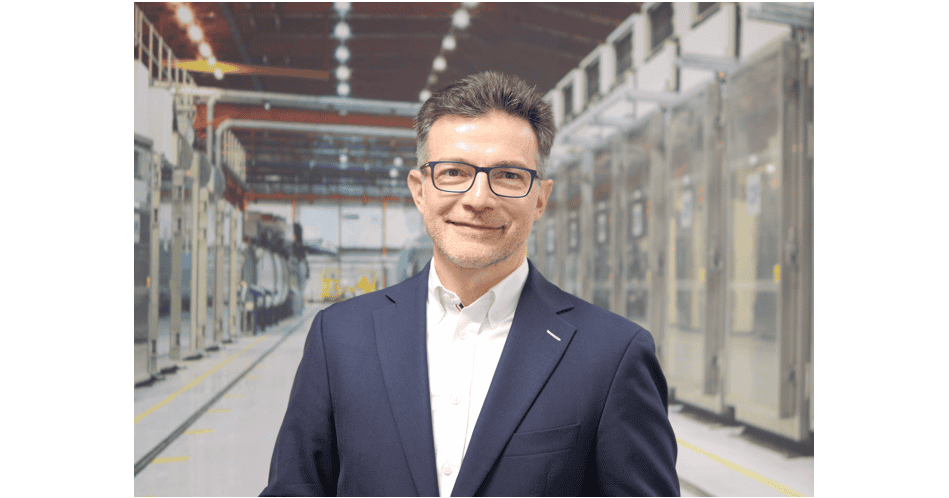
Magnus Mori, Urenco
Concepts discussed
Auto-linked from the episode's notes and transcript.
Show notes
Urenco is one of the few companies in the world that enriches uranium. It’s one of an even smaller group of enrichers that aren’t owned by the Russian, Chinese or Iranian governments. It plays a key role in the western world’s nuclear fuel cycle.
That role became even more important after February, 2022.
With the increasingly firm prospects of a long term increase in demand for its foundational product of low enriched uranium (LEU) and a looming demand for new enrichment products like LEU+ (low enriched uranium that has greater than 5% and less than 10% U-235 content) and HALEU (high assay, low enriched uranium with U-236 concentration of 10-20%) Urenco has embarked on a program to expand its capacity.

Like most other nuclear industry participants, Urenco is a conservative company that carefully considers its investments before adding capacity that might not be needed. The nature of its production technology – incredibly sophisticated centrifuges that can spin continuously for decades if not excessively cycled – encourages even more caution in the direction of ensuring that there is demand before investing many millions into new production capacity.
Magnus Mori, Urenco’s head of marketing and technical sales, visited the Atomic Show to provide greater insights and details about Urenco’s history and unusual ownership structure, the factors that influence its investment decisions and the prospects that the company sees for future demand for its products. He explained the material flows into an out of an enrichment facility, including the actual compound that are handled at various stages of the process.
We spoke about the UK government’s support for new production capacity and its decision to invest in a new enrichment plant to produce HALEU. We even spoke about new businesses that use centrifuges to produce valuable medical, research and industrial materials that are not part of the nuclear energy fuel cycle.
I think you’ll enjoy this show. You might even learn some new details about the nuclear fuel cycle. Please participate in the comments.
Transcript
Read transcript
There's a way, a way such a better way today, today, a major voice till the world, there's a better way, today, and there's a better way. This is Rod Adam, saying it's time for another Atomic Show. With me today is Magnus Morrie, Erenko's head of marketing and technical sales. Welcome. Magnus, how you doing? Good, how are you, Rod? I'm good. For the audience who doesn't know, can you explain what Erenko is and how you're structured? Sure. Erenko is a multinational company that has been in business since 1970, when the governments of the United Kingdom, of Germany, and of the Netherlands, signed a treaty for the promotion of centrifuge enrichment technology. So that's in short who we are and what we do. Our focus is really enriching uranium. We have four operating plans worldwide, one in the United States in New Mexico, one in the United Kingdom, in the northern part of the United Kingdom, one in Germany and one in the Netherlands. And just to give you a rough frame of reference, our current capacity is enough to produce enough for a rich fuel per year, to supply about 130 reactors. Okay, so that means you have somewhere in the neighborhood of one-third of the global enrichment capacity. Is that correct? That is one way of seeing it. I wouldn't quite put it that way. So we supply roughly, as you said, one-third of the global reactors. However, our capacity is not one-third, it's actually pretty low one-third, mostly because if I remember correctly, Russia has about a capacity of 25 million whose, while our capacity is slightly above a 17 million. This is just to give you an idea about some of the sizes of the companies that operate in this field. And currently, Iran, or in France, has a capacity of about 7.5 million. Okay, so there's you, there's the Roseton subsidiary, the emergency uranium. There's Iran out in France, and assuming China's got one or two suppliers. That is correct. The US has one that hasn't done much recently, but they are looking to build more that's centrist. Are there any others that I'm missing? There are small enrichment plants in Brazil, and their plant is actually operating and supplies partially their requirements for one of their reactors. There's small enrichment capacity in Japan. I don't think they use it commercially, but they do have the capacity of doing it. I'm not sure if there is any other country. I guess there is one other that gets a lot of publicity that we don't talk much about. Is it Iran has enrichment capacity as well? How do you correct? Yes, absolutely. That's been in the news a lot over the years. And there's not very much happiness about that, at least in the Western area. So, Are you ready to start with centrifuges? Not, and never did, do something like the gaseous diffusion plants. Is that correct? That is correct. Yes. Yes. It was really much the coming together of different enrichment programs from the UK, Germany, and the Netherlands. They were all independently pursuing different technologies, almost, or different approaches to centrifuge enrichment. And then it was decided that it was better to cooperate, hence the Treaty of Amalain in 1970. And then the incorporation of your ankle a year later. So, that's what we've been using ever since. And what we've been obviously improving and investing on its centrifuges that we use today are not very similar to what we were using in 1970. The principles are the same, obviously, but the technology has evolved, a substarchy. Now, your ankle doesn't manufacture its own centrifuges, or I did. You buy the centrifuges on a common supplier that's correct. That is absolutely correct. A few years ago, we sold a stake, so 50% of our stake in our enrichment technology company, to Bariva at the time, nowadays, around. So, around our new rank, we'll share the same technology. So, we have ETC, an enrichment technology company, that is the supplier for them. If you wield them, the raw technology, that then is assembled in incascades and our plants. Okay. Yeah, one of the reasons I asked a question about the gas diffusion enrichment was, I have often told people that the most amazing energy conservation project I have ever seen was going to George Bessie and seeing how Iran was reducing its energy consumption by 95% when they went from gas diffusion to centrifuges for the same output. It does a number I remember. Yes, they are incredibly efficient. I'm not breathing to the details of the technology, but my colleagues that are more in closer to the technical aspects, tell me that these machines are incredible and incredibly efficient. One question that people often think about is, how does Germany, which has eliminated its nuclear power plants, still participate in the energy consumption of the plant? Okay, and the nuclear fuel cycle as an enrichment supplier. That is a very good question. I have personally worked in Germany many, many years. And it's not. It's lost on Germany and the German government and German politics, how strategic enrichment is and how it gives them a seat at the table. This is my personal perspective. When, for instance, you know, matters of no proliferation are discussed or when it comes to global agreements about security of supply or energy security. So that, this is my point of view that could answer your question. The while it's nuclear power in Germany is seen as challenging to maintain a presence and an interest in the nuclear fuel cycle is seen as strategically important. Is the investment from Germany still from the government or is it from some sort of private enterprise? Oh no, it's absolutely private. Some of the shareholders of your rank good day are holding entity of the UK government, an equivalent entity of the Dutch government and then two German utilities, RWE and proscen lateral slash, a young, who own one third, who together own one third of your rank. So it is very much a private interest. However, the German government together with the Dutch and the British government are actively involved in overseeing what we do through the joint committee. We, who comes main role is to ensure that the technology is not used for for refreshing purposes. You know, I think probably be worthwhile to step back at the beginning and help people understand what exactly enrichment is. How, how does it work and why do we do it? You're particularly here my nuclear engineering background. Well, you're an enrichment supplier, you're not another. Yes, yes, absolutely, absolutely. So long story short, we ran into 35 is easier to be efficient and then you ran into three eight. So if we look at the to be extremely technical. If we look at the fishing cross section for your energy to three five and you compare that to two three eight. We see that especially for for slower nutrients, it's much easier to to fish and even in two three five. And then especially in light water reactors. Then requires enrichment or in other words, we we elevate them. That right to wait of you, then two three five compared to your energy to three eight. Through enrichment technology. So today we we deliver. In which material or in which you have six up to five percent, which is the then the percentage or the weight percentage of your energy three five versus the whole mass of the of the US six that we deliver. And that's typically, you know, approach your eyes water reactor today. So you can use anywhere between four and five percent and which feel. Okay, now you have six your that's a uranium chloride was six of the fluoride right. And that's that at a fairly low temperature, not not room temperature, but if other low temperature that's a gaseous material. So the form of uranium that gets delivered to your facilities, or do you convert some other form of uranium into US six at your plan. So typically our customers, or sometimes we ourselves procure natural uranium in in US six form, but it's to say then in uranium that is not enriched, but it's the has its natural uranium in two three five content, which is 0.7 percent. And that is delivered to our plants already we say technically converted some. Let me take one step back when your random when your enemy is is mind. Its typical chemical form is new three or eight so three three atoms of uranium and eight atoms of oxygen. That is is then. It's called yellow cake right correct yes. So some people calling call it yellow cake. Sometimes it's also referred to as a concentrate or uranium concentrate and our colleagues in chemistry call it triuranium, off the side, but the mouthful. Yes, yeah. But it is yellow. Yes, it's a yellow powder, very, very bright yellow. So that is then shipped to a converter and that's what it's typically called and through fluorination, U308 is then transformed into U6. Now at this stage, the percentage of uranium-235 that is in the material is 0.7%. It is, as you said, solid room temperature. It becomes a gas at roughly 60 degrees Celsius. Then so it's put into large cylinders that are called 48-wise typically, which means it has a 48-inch diameter. And then it's shipped to us. Then we hook up this large cylinders to our plant. We heat up the material and we flow it through the centrifuges. And at the other end, then we feel small cylinders or smaller cylinders with them and rich product. And as I said, so typically today I would say that our most of the material that we deliver is in which we think for in 5%. And the sizing and the material of the cylinders from large when it's natural to smaller when it's enriched is a criticality consideration. Is that correct? That would be my assumption. Yes. I don't know if there's other considerations, but I would say it's mostly. Yes. I can't think of any other explanation. Well, it must be. When you have this enriched material, you also have a material that's left over from the enrichment. It's also a U.S. mix and it's considered a detail. Is that correct? Yes, correct. That is also referred to as the depleted uranium. And that is anything that is really below 0.7%. We currently have. We operate a deconversion plant in the UK. It's called the T.M.F. for the Tels management facility. And that facility, which was entirely by the way, built in finance by by your ankle. The deconverts the U.S. six back to U. U.S. three white is a very, very stable chemical form for uranium. And that is then put into special containers for final disposal. That's the that's the depleted uranium part. Do you deconvert the enriched U.S. six or the U.S. No, no, we just deconvert the defeated material. So our plant and the deconversion plant we operate was was designed. Again, because of criticality. And we have a lot of requirements for just for depleted material. Okay. Yeah, for the deconversion, absolutely. Absolutely. Correct route. Because after it's been enriched and it's enriched in U.S. six before the material can be fabricated. It's typically the converted to again to an oxide. In this case, we U.O. two. So we usually done at the fabricator's plant. So we we shipped the 30 Bs filled with. And which we have six. Let's say, you know, just to name a few to the Westingos from a tom or GNF to global nuclear fuels. And then they have a U.S. six to to U.O. two deconversion plant. That they use to to form the U. two and then that goes into fabrication. So first for from pallets and then into the few rounds and then into the fuel centers. So within the fuel cycle, the only product that your rent go is able to sell to its customers is the enrichment service. Is that correct? I mean, it sounds like you get you at six. You ship you have six and the only is different is the enrichment change through your plant. And that is not quite correct. And then the and now from a physical perspective, I'm sure yes. And however, and these, you know, I personally joined your rank seven years ago after almost 20 years in nuclear operations and back in the days also research and development. And core design. And when I joined your rank, I thought that I understood nuclear technology through and through and instead I was to quickly learn that there's a whole new world that is associated with the with the front end of the viewer of the fuel cycle. And the reason why I'm saying this is because one of the things that I learned is that because you are six is effectively fungible. You know, it's like a currency. There's a system whereby you're six credits and then it's transferred across the world. So if I have, I say, a kilogram of and which is your six, I can, you know, given the right assumptions, I can say, well, this is equivalent to X grams of of uranium, you know, X grams of conversion services and you know X. And then I have a separate work units and which is what I want me typically used to measure enrichment. So I have them three three components, the uranium component, the chemical conversion component and the enrichment component. And what I can do is I can sell these three components separately. Everything is, is there an balance and then if I still owe or or or somebody else in the fuel supply chain owes me either uranium or conversion or enrichment credits, then it's all balanced out and then they will be eventually, you know, physical transfers. But that's that's one of the sort of the sophistication that there was lost on me completely when I joined your ankle and it's very, very effective because if I have 5% and rich material in in the Netherlands, let's say, and I have 5% and rich material at our plant in New Mexico. It looks exactly the same. He has exactly the same properties. I don't necessarily need to transfer material from one one side to the other. I can just deliver the leaverate from one side or the other or do what we call book transfers, which is really like a wire transfer of your money from one bank to another. Okay. I don't know if that was clear. I don't completely explanation. Well, one of the reasons I wanted to chat with you today is to try that. Start the process of helping people understand the rather tangled thing we call a nuclear fuel cycle because it's not completely obvious to people who has to buy what and how does it get delivered and all those things. It may never be completely obvious to people, but I want to get an understanding of the complexities going back to your tails. I know that there are times when enrichment services have been the market's been oversupplied. One of the things that can happen when there's an excess of enrichment capacity is that it might be economically useful to enrich material that is somewhat less than the 0.7% because there's some imbalance in act between how much enrichment service you put into a material and what the actual final assay is. Now, if you went how long do you keep the US six around before deciding to convert it back into U308 because it seems like this enrichment of tails wouldn't be very useful or would be less easy to do if you have to convert the material back to US six before you can do it and with it. So there is no no straightforward answer for all. Let me just give you an example. But I think that's start with the premise. So our centrifuges typically when we start them we keep spinning them. They don't like to be turned off. Once they spin they're in their happy state. They're balanced, they spin. And there's been four decades. That is correct. Yes, if I think if I remember correctly I think that we have some some machines that are citing Germany that has been spinning without maintenance of of any kind for over 30 years. So that that is amazing from a technological perspective. It also requires massive capital investment operation really though. Then we go back to what you were saying if you if you are in a market situation where there's too much capacity. Or you you turn off those machines and you know and which may imply or may result in actually having to throw away the machines because you may not be able to turn them on efficiently or practically. And one thing that we can do is to optimize the plant and it's indeed to to refeed the details. So we take the deep between uranium we put it in these machines that the otherwise will be spinning in a vacuum and we upgrade the tails. This is one way that that helps us also optimize production. As you can imagine if you think for instance about a lot of the reactors in the United States nowadays have a 18 month cycle. If we deliver the reloans obviously you will not deliver in the same the same amount of and which material every year. So in order to compensate for the swings in the requirements and the demand. And what we can do is play if you allow me to expression with the amount of tails that we that we refeed or actually what we can do is we can also play with them. With how much uranium can be saved in the first place. Yeah, because you can do an enrichment where instead of going from 0.7% down to say 0.3% you go from 0.7% down to 0.5% which requires you to put a lot more uranium through your sensitive fuses. Correct. Yeah, but it and it and of course there's a balance depending on what the prices of uranium are. If the prices of uranium goes up really high. It's better to get to a very low fee number or sales number. So it is. It is. It's right. I'm right. Now, do you I, I'm kind of treading on business information so you may not answer this directly. But I presume that you keep some amount of this bankable material. The one that it's fungible, you say from place to place. You may have a little bit more inventory than is absolutely necessary. But if you know there's changes in the demand coming up, is that something you guys do? And we have what we call them. A minimum stock policy, which is determined really by by operational requirements. Mm hmm. And then as I was saying earlier, you know, we do have operational swings, you know, that, may be you can see them quarterly or annually. So that that inventory does change. But right now, we don't. So we don't have a lot of excess inventory, not nowhere of it. Anyway, this is slightly outside of my of my area. If we had any, it will probably be in our annual report if you if you look at the details because, you know, whatever inventory we have, it will be an asset on our books. So it may be lost in the details, but I'm pretty sure that you could find it there. One of the challenges of the uranium or the front end of fuel cycle is that it's a rather atypical commodity market, whether it's very little public trading and even not that much ability for a speculator coming. So you know, I see there's going to be a big market for enrichment down the road. These guys are not using everything they could use. I'm going to buy some and put that in my own account. You, is there been any discussion? Are you aware of any discussions about maybe providing a little bit more or turning uranium into a more typical commodity market? For uranium itself, it is. There is already some significant trading happening. Again, this is not not my core competence, but you know, we have the interest and the activity of significant funds like Sprought. We have other funds like yellow cake and I'm sure there's more that I'm probably forgetting and I apologize to your listeners. So there is, there is, I would say a fairly established trading scene for uranium itself. Now for an enriched product, it's less so. Specifically, it's made for delivery to utilities and to end users. However, there are a few traders that have access to an enriched product and that's actually a fundamental function in the market where again, our utility may be. So you're going to find too much uranium, too much enriched product. Let's say they have one year to have unplanned outages or extended outages or for whatever reason, they change their fuel strategy. So one way like a tidal wave may have hit and not down a 54 reactor. That is, that is very different. But I'm just talking more about in the day to day business, then traders provide this function whereby they can, you know, finance fuel acquisitions or actually buy fuel or borrow or loan fuel. And I do play a really relevant role in the, you know, to balance them, the fuel supply chain and the market. And then indeed, you know, since you mentioned the tsunami in Japan and then the resulting nuclear accident, that indeed created a massive overhang of the inventories. And it took the better part actually more than a decade to go through and some of those inventories still exist, especially inventories that are held by by some of the Japanese utilities because as you were saying, all the reactors where immediately shut down after the tsunami hit in addition to the reactors in Germany. So that's obviously one of the things that really affected the uranium enrichment market over the last more than that gets taken to have already recently the change in the supply from Russia as a. At a dramatic impact after Russia invaded its neighbor. The rest of the world said, you know, we don't like you guys anymore, we're going to stop buying all those, you know, enrichment numbers that we used to get. And so how has that affected your in goes current business and its plans for the future? The short answer is dramatically. And then I think that dramatically is a good way of describing it because of the drama in the Ukraine. What we saw. And what you're in go has worked on for now the better part of actually for for which we years. Until really until February 2022. Our long term strategy was to maintain capacity to continue monitoring the market, but we weren't planning necessarily to downsize but to be a smaller company than we were in 2022 and definitely smaller than we were in 2018 for instance, when we reached our peak capacity. So it was a managed transition to sustainability. After the invasion of Russia, some the invasion of the Ukraine by Russia, as you said, there wasn't a dramatic change in the market. A lot of our customers, even before there was any any kind of government intervention decided that they wanted them. In the last term, if you allow me the expression Western supply of enrichment services. ourselves and and O'Rannell as well in in France. We sell our our audiobook increase with more and more contract signed, which then prompted us to change our strategy from one of that was very conservative to one of I say what we call targeted expansion. So throughout 2023 we made several announcements of expansion projects in the US and then the Netherlands and even a small expansion which is being implemented in Germany. So this is this is adding roughly speaking across across the four sides that we operate about 10% additional capacity. So that that was our our response and you know and as you can imagine you can't just press a button and you expand. There's there's design work there's a feasibility studies and some in 2023 we were when we were very successful in I say speaking to our board in speaking to our customers and and to get our work on long-term commitments to underpin this investment. So that's what what we did in in 2023 and partially you know it's 1,2,3,4. Yeah I know that in the US there's been a significant caution amongst the in-richers to not expand in response to the Russian effects until there's some sort of certainty that the Russians won't be allowed back into the market for a while. Is that was that some of the considerations for you as well? Well we some sequestration the initial consideration was one of caution but it was more about trying to understand what was happening. We were and and also just one of engagement with the with the customers trying to understand what their concerns were. There is them I said them as I said at the beginning the capacity the enrichment capacity that that is available in Russia is so large and is so much larger than the requirements that Russia has not just Russia but also all the Russian reactors that are around the world. That is that is definitely a factor that needs to be to be taken into account. Especially also in the context that I mentioned earlier once we start so once we start one of our centrifuge plants these the machines spin for decades. So we need some level of assurance of long-term long-term presence of the market. So this is just you know to frame that answer Ron. Is that one of the reasons that whole capacity and long-term nature of the spinning centrifuge and the amount of investment required to get it started is that part of the reason why there's been a reluctance among the enrichers to develop capacity for a product like high assay low enriched uranium halib. I think so for halu the considerations are slightly different and halu is actually my main focus so my my team and I are leading the ranchers commercial efforts related to halu globally. So if we look at standard enrichment if you use that expression you know up to 5% or for us up to 10% we expect NRC license amendment for our site in in Unist New Mexico to allow us to enrich up to 10% very very soon. All the capacity that infrastructure that investment is aimed at serving reactors that are operating today that exist. There's a market on which your market indeed has its flaws, but as I mentioned earlier, we have utilities, we have traders. So if there is, say, over capacity prices, obviously, accordingly, but there is a market. So there are mitigations if there's too much capacity. One of them being, you can shut down old capacity, you know, investments that have already been appreciated or, another tool is you stop refurbishment. And then your capacity decreases because of the natural attrition rate of your equipment. For Helium, there is no commercial market today. They existing demand for Helio fuel, if you think about research and test reactors. It's not a state. It's not a state's Canada and Europe and a few others and I'm thinking about, for example, South Africa, Australia. roughly speaking, it's about four times a year, maybe six, so depending on what we're fueling quantities we're looking at, which is very, very tiny as you said. So there is the famous chicken and egg issue or challenge for a Helio investment. There's a promise of growth of a really exciting market. However, there's still a lot of work to be done for those that market to be real, to be present. So at Urenko, with the help of the UK government, we actually made an investment decision earlier this year to build the first commercial Helio enrichment plant in the Western world. And we actually started a preparation work at site to discuss the couple of months and we anticipate having the plant operating in the early 2000s. So hopefully that also sends a signal to this market and this potential market that that is happening. And that uncertainty is a, is a, is a, is addressed. Yeah. As you say, it is a chicken and egg because you don't want to produce a loo if there's nobody buying it, but there's nobody going to buy it unless they know they can get it. It's a design reactor to use a loo if there's no supply. you're absolutely right. Exactly right. You know, and at the same time, we were supporting and recognizing the efforts of the US Department of Energy related to to Helio both enrichment and deconversion. And which is another significant government program to to address this particular like problem. I think I saw the press release from the UK government that acknowledges that after they were making an investment in the enrichment and support for your enrichment, there's also going to be some announcement sometime in the future for deconversion services. Because again, you probably can't use exactly the same equipment and manufacturing capacity to deconvert 20% rich that you use to deconvert 5% rich. Yeah, that is correct. The UK government launched a Hadoley conversion competition. I believe it was published on in July and they set dates escape me. I think the intention is to make an award by the end of this year for the conversion. You're right, go formed as a centrifuge company use centrifuges you're going for proposition and taking a look at any other potential enrichment technologies. Not that I'm aware of that's a question better place for research and development. Okay, colleagues. But we are as a buyer by statute our centrifuge technology is what we do and what we use. Okay, that makes sense. Sometimes it's just important to keep getting better at what you do rather than changing anything. So centrifuges, even though they're much more efficient than the old gas diffusion plants in terms of power consumption, they're still pretty good power consumers and as you mentioned once the centrifuge is spinning, it needs to keep spinning. So it's a pretty high demand for reliable power. Is that a good assumption? That is a really good assumption and I would stress underlying and put it in bold reliable power. So I think so it's it is indeed so 24 seven requirements and we see also with expansion program stuff that we are undertaking our interest in demand is actually increasing. So we're also working on ways to save electricity and save energy in general. We have a commitment to actually be a net zero company budget, 40 so that is also very, very much part of our strategy. So that absolutely reliable and reliable power is and clean electricity are a priority for us. So do you have a reliable clean electricity source that you want to use through your centrifuges? Well, ideally I'd like to use 100% nuclear energy. That would make more sense. We're one of the advantages of your inkbo as a company is that we are a former director described to me as a one-tree pony. So we don't have to be we have the privilege of being 100% backers of nuclear energy. Because studies what what the company is about. So to meet your clean energy commitment you're not going out there and signing a bunch of renewable contracts where you have some sort of scheme to say that you're 100% supplied by renewable even though we know that you're not really being supplied by renewable at all times in an all place. So are you signing any contracts with nuclear energy suppliers? We have a diversified portfolio. I think as we as we are coming to our customers and have a diversified portfolio in nuclear fuel procurement. We we apply the same you know electricity and energy procurement strategy. We actually recently signed two two contracts with nuclear fuel sorry nuclear power plant operators for two of our enrichment plants. But we also recently open at both our site in actually three of our sites as far as I'm aware in Germany, the Netherlands and New Mexico solar panels. So we installed significant capacity of solar power ourselves our sites. Do you have an effort to reach that zero? And since you have a desire for the liable power and your the cost of the power outage at one of your centrifuge plants has got to be a very high number. Do you have batteries or fuel cells as well? There is some we have we have back up back up systems, but it's mostly for safety and more than commercial continuity of operations. There are requirements that that we would have to keep running the plant for for commercial output. It will be very significant. So our our continuity or strategy is more about maintaining the essential systems operating more than the maintaining commercial output. So you can actually keep your centrifuge spinning and safe without having as much power as you need to keep them spinning safe and productive. And they wouldn't they would spin down so they would spin down and then we would have to to restart them if if that were the case. So we have we have ways to. To address that that scenario so that the we don't use to too many machines, but it is a risk. If I remember correctly this was several years ago, well before I joined the company, there wasn't a massive. Snow storm in Germany, that actually got off the power from from the area where our plant is and and and we have to spin down the centrifuge is and then restart them. So it can be done, you know, we don't want to do it. But it can be done if if the conditions are you know, are what they are we don't have a choice. I understand that, but I assume that there's some sort of way to to not only determine how risky it is, but how costly it is to do a shutdown and try to start that up and a certain number of them won't start those those kind of things. And that's what I'm going to do. I'm going to be talking about the properties correct. Yes. We're getting what we've been talking probably as long as you need it as long as you have time to talk so before we close. We've got any topics that you want to discuss that we haven't covered. And you want to let the audience know about what your anchor does. I'm just thinking. Well, there is one one application of our centrifuges that I have not mentioned something not only our centrifuges can be used to enrich uranium, but you also use them to enrich or or deplete. What we call stable isotopes. So we have a subsidiary of your anchor called Mirenko isotopes that is based in the Netherlands and and they use centrifuges for instance to enrich or to isolate. I'll just give you one example it's seen in one one two four. So 124 that is used to detect issues with your thyroid. If I remember correctly we have we have aligned works on germanium that is used for semiconductor. doctors and quantum computing. So that is a part of Uranus, that is extremely cutting edge in terms of technology advancement. And R&D that is not necessarily related to enrichment of Uranium. That is pretty interesting. So like you said, you call it the stable isotopes. If there was somebody who needed to isolate or separate isotopes where they weren't all stable, I assume they could probably at least talk with you about how that wouldn't work out. So we wouldn't really put radioactive isotopes in our centrifuges. But we would work on isotopes that would need to be irradiated to form a radioactive isotope that can be used for research, medical and industrial applications. Alright. Well, Magnus, I have enjoyed speaking with you. I hope that you have a good rest of your day and continue to build up that Uranium enrichment capacity. So we will have all the alien we need and a decade or so. Thank you, R&D. It was a pleasure to talk to you. And wish you and your audience a great day. Thank you. This episode of the Atomic Show is brought to you by Nucleation Capital. We're a venture capital fund focused on selecting ventures with extraordinary promise. They're building the advanced nuclear sector and helping expand our clean energy options. We're building a portfolio of ventures on behalf of investors like many of you. We don't just take funds from the large institutions that typically allocate to venture capital. We believe that regular investors should have access to the opportunities in modern nuclear for their own portfolios. We allow people to subscribe on a quarterly basis starting as low as $5,000 per quarter. A four quarter subscription will get you exposure to between four and six ventures. If you are an accredited investor and would like to learn more about how you can participate, please check out our website at Nucleation Capital.com. That's Nucleation Capital, all one word dot com. Our fund and all the information you need to subscribe is available online. You can also subscribe to our newsletter, Nucleation Insights, and join our pro nuclear investor network to learn about select syndicated investment opportunities. If you have questions, we're happy to chat. Please spread the word. Thank you. Thank you.