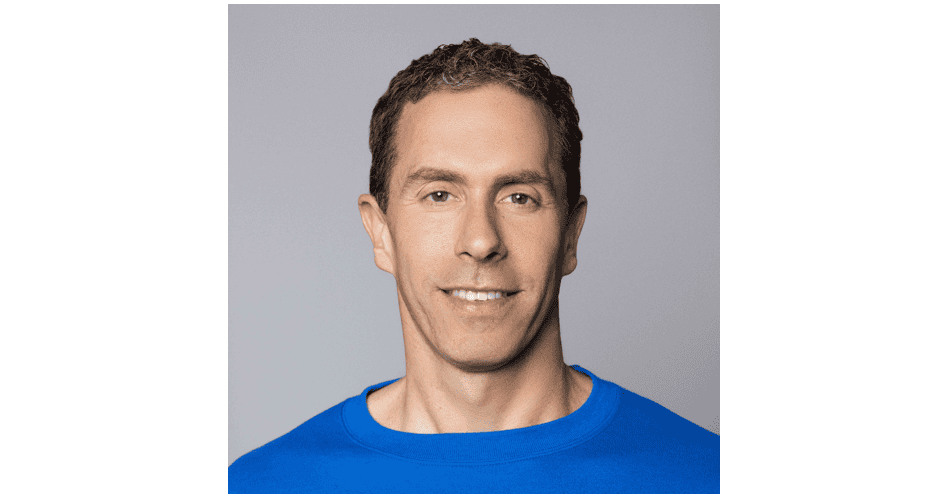
Brian Gitt, Business Development, Oklo
Concepts discussed
Auto-linked from the episode's notes and transcript.
Show notes
Brian Gitt, the Business Development lead at Oklo, visited the Atomic Show to describe his employer’s business model and current prospects.
Oklo is an advanced fission and fuel recycling company with an expansive vision for becoming a competitive clean energy supplier. It plans to provide heat and/or electricity as a service from a fleet of small fission power plants that it owns, operates and maintains.
Oklo recently became a public company through a SPAC merger with AltC, a special purpose acquisition company led by Sam Altman, a venture capital investor and the founder and CEO at OpenAI.
Oklo was founded in 2013 by Jake DeWitt and Caroline Cochran, two MIT nuclear engineering graduates with a vision for building a company that could manufacture and operate smaller, simpler reactors.
Recognizing that nuclear engineering skills are not the only ingredient needed to build a company, Oklo founders made an early decision to participate in an entrepreneurial immersion training program at Y Combinator, a start-up accelerator and seed stage venture capital funder.
Their unique business proposition for clean energy development was compelling enough to attract serious interest from Sam Altman, who was then serving as the president at Y Combinator. He became one of the company’s earliest investors and began serving as the company Chairman.
As Gitt describes, Oklo has spent the past decade preparing for the growth in clean energy demand that is coming from both the energy transition and the growing use of energy for applications like high performance data centers for applications like artificial intelligence (AI). The company also sees huge opportunities in clean energy for materials production, mining and increased manufacturing in places outside of China.
For more details, you’re going to have to listen to the show. Please participate in the comment section discussion. I expect that many listeners will find this to be a valuable use of their time.
Disclosure: I have a long position in Oklo’s publicly traded stock in my personal portfolio.
Transcript
Read transcript
There's a way, a way such a better way today, today. A major voice, tell the world there's a better way, today there's a better way. This is right, Adams, it's time for another atomic show. My guest today is somebody I've been wanting to talk to for quite a while. I think I've talked to him before on the show, but his name is Brian Git. He is the business development head at Oaklow, a micro-reactor company. And fuel recycling company that just went public through a spec. Welcome, Brian. Thanks, Rob. I owe you a thank you not only just to be on the show, but also you originally were the person that introduced me to Oaklow to Jake and Carolyn initially. So I appreciate the initial introduction as well. Well, you're welcome, I'm glad it worked out. I always try to make matches if I can. So I've known Jake and Caroline for more than a decade now. I've always been very interested to see how they're progressing. Obviously, like any other company, they've had their ups and downs. So tell me, what is it like at Oaklow these days after the public? Well, I think the story of Oaklow is really being pushed by what's happening in the macro market. It's just an incredible acceleration of power demand that we're seeing globally. Just to kind of ground this in some numbers, and just so we know what we're talking about here. And all this is obviously public information. You can see this in various analyst reports. You know, there's globally right now, just in data centers, they're looking at projections to increase 100 gigawatts by 2030 from where we are today globally in terms of data center power demand. 100 gigawatts. Now, if you take that down to the US, which is where we're mostly focused in the near term at Oaklow, the current level of data center capacity is about 20 gigawatts. And depending on which analysis you look at or which study whether it's McKinsey or Boston consulting group or whatever, they're all basically narrowing in on around the same thing. It's looking at that 20 gigawatts is going to go to 60 to 70 gigawatts depending on which research you are referencing by 2030. Imagine that. So that's just in the US. And this is just data centers. We're not even talking about manufacturing industrial and all of these other industry verticals that we also serve. And so I think it's really important backdrop just to understand fundamentally what has shifted in the market. Data center companies, you know, even a few years ago, if a large collocation company got a customer that wanted 20 gigawatts or 30 gig, I'm sorry, 20 megawatts or 30 megawatts, that was huge. That was a big deal. And it went from 20 to 30 to 50 to 100. And then that went from 100 to 500 in basically some of these large hyperscalers basically buying out whole buildings or even whole campuses. And now many of the conversations have moved to 1,000 to 4,000 megawatts for the biggest largest huge data center campuses. We're talking about one location, by the way. We're talking about a portfolio of data centers across a region. I'm talking about one site looking at 1,000 to 4,000 megawatts. So that it's just really important to understand the macro conditions and what is happening because utilities in the United States are out of power. Basically. I mean, there's maybe a few exceptions here and there obviously. But in general, all the major data center hubs and key manufacturing hubs in the US are basically out of power and the utilities timeframe to build out new transmission or new generation depending on what the constraint is. You're talking about horizons of five, 10 or more years. And sometimes I'm getting calls from developers saying utilities says they can't get power to me for 10 years. I mean, that's just the reality of what a lot of these developers are facing. And so there's a desperation that's happening that's rippling throughout the country right now. And the reason why I'm harping on the data center story is because this isn't just the data center story, but this is the driver that is as all of these large companies that are soaking up all this additional power. Have started to do a land grab across the country in every single area where there's any available power they've basically grabbed it. That's having spillover facts for industrial capacity factories and these other applications. And it's even now starting to compete with other local businesses and local communities. So anyways, I'll pause there for a moment, but I think that backdrop is incredibly important because that's beyond obviously ochleo or any individual advanced reactor company we're talking about a major phase shift in growth in this sector right now. So the numbers that you're talking about for some of the large campuses in the gigawatt even several gigawatt range sound like they might be potentially better served by large reactors and by small reactors. Is there something about the way the data centers get deployed and built that make them suitable for the smaller reactors at ochleo and other developers are working on? Yes, there is and that oftentimes these campuses are not built all at one time. And so if you over build, if you build a large centralized asset on the property, that likely is going to be uneconomical for a period of time, could be a series of years as they ramp the IT load. So that's one is that they would rather ramp up the power capacity as they add buildings data center halls as what they call them because then you're in lockstep with where the load is growing with the power capacity it's available. So that's one key advantage. Another key advantage is these data centers require just a ridiculously high uptime. I mean they all want five nines or reliability, 99.99% and when you have a very large asset, you have to take that down. What are reactors? You have to take down for obviously refueling, but anytime you take that down, you're going to take a gigawatt of power off. That's very very hard to make up. But if you're talking about taking 50 megawatts off at a given time, well now you can have n plus one or even n plus two configurations depending on the scale of the deployment. So it's much more flexible and much easier to deal with planned outages and add enhanced resilience and reliability to hit these really high reliability requirements. So there's a number of reasons why smaller, more modular approach to power capacity just makes a lot more sense for data centers in terms of how they're built and how they operate. Now that's not saying that in by the way, we're big fans of large nickel plants. I think we should build lots of them. I just don't think that they're well suited necessarily for being co-located at the data center campus for some of those reasons. You mentioned n plus one. Can you explain what that means to some of the people in the audience who might not be familiar with reliability considerations? Sure, let's talk through it. So let me give you an example. So let's say there's a 500 megawatt data center campus. Now that campus is going to consist of a number of buildings of data center halls. Each building might have 50 to 70 megawatts of IT capacity in that building and then they have several buildings to a campus. And the campus is 500 megawatts. Well, if Oklahoma was going to serve that campus in terms of power capacity, we would deploy 10 50 megawatt units, 50 megawatt powerhouses on that site to meet the load. However, we refuel approximately every 10 years. We have very infrequent compared to traditional large light water actors, which as you know are about every 18 months or so. When is there a refueling cycle that well, first of all, that gives us a lot superior operational efficiency, right? Because if you're only taking the reactor down to every 10 years versus 18 months, I mean, think about all the cost, all the logistics of doing that all the downtime. So we can't just get that in a substantial way. But in addition to that, it's much easier to add in plus one just means you're adding an additional powerhouse of an additional 50 megawatt unit in this example. So instead of 10 50 megawatt powerhouses to serve 500 megawatt campus, we would put 11. We could cycle through on planned outages. So every 10 years as we're taking one of those 50 megawatt powerhouses offline for refueling, we have spare capacity ready and waiting to plug right in and serve that load. So there's really zero downtime for planned outages. So you can in essence have spending reserves. And effectively the vision here longer term, depending on the reliability or the resilience requirements is that by having smaller powerhouses and giving you more flexibility to do these kinds of configurations to have spending reserves and ultimately getting rid of a lot of the diesel generators and uninterrupted rock to roll power systems that are required to give the level of reliability at these database. Now we're not going to do that day one. It's going to take time to build the trust. Obviously show through the data and uptime records that we can meet all these requirements. But ultimately that's the vision that we can get rid of a lot of these very capital intensive, very expensive diesel gen sets and other backup systems because you can just have enough redundancy in the powerhouses themselves to always have spending reserves to always have enough capacity to deal with plan. And to get this very high uptime requirement in terms of meeting it. Does your vision include severing the grid connection? It will depend on case by case. So we have customers that are looking at well, let me walk you through a few different scenarios. The ideal scenario is that we are co located right next to the factory or right next to the data center. And this is gives there's several advantages to that. Number one, transmission distribution costs are significant in many parts of the country. They can be 40% of the total cost of energy for a data center or for a factory is just getting the power to them in pain, the utility to access the power lines and all the associated services of getting that power to the site. So if you're co located and effectively behind the meter, then you're not paying the utility for all that 40% of the cost, right? So that's one huge cost advantage. First and foremost, second is if you have basically 10 years of power just sitting there right next to the data center, that gives you a huge advantage in terms of relying a reliability and resilience, right? That you basically have that power right there. So no matter what's going on when the grid with storms and power lines going down or whatever, you just have you mitigated your risk of a potential outage because you basically have effectively 10 years of power just sitting there right next to the data center. So that's another key advantage of co location. In addition though, we don't have to be co located. Depending on the grid that we're operating in, we have engagements for example in PGM, which is a grid in the mid Atlantic region of the United States. It's one of the largest grids, serves about 65 million people. And this is areas like Ohio and Maryland and Pennsylvania, etc. in that region of the country. Well, we can inject. anywhere in that grid and sell in wheel power to a customer. So we have customers that are interested and serving a whole portfolio of real estate properties, for example. Large real estate developers that are interested and basically servicing their properties with 24-7 clean power. And they might buy it from a plant in Ohio, but they might have properties in Pennsylvania and in Maryland and in Ohio and all over the place, right? So we are model enables us to operate in different capacities depending on what the customer needs are and what the local regulatory or region requires. So in the Urcoc grid in Texas or in PJM, that's where you got maximum flexibility because you can basically inject anywhere into the grid and sell it to any customer. And so it just gives you more options that said, in some cases we have customers that let's say they want to buy 200 megawatts from us, but maybe they have extra land available on the site that they're willing to lease us where we can build out another two to 300 megawatts on their land. And then we can sell, we can execute additional off-take agreements with other customers that are either nearby or on that same grid. So all of these scenarios are very much in play, whether it's collocated selling behind-the-meter direct, whether we're basically an independent power producer and injecting onto the grid and having multiple off-takers from that or a hybrid of both. Those are all scenarios that we're engaged on. Now, as I understand it, OCLO has a somewhat different business model. There are others who are developing a similar business model compared to the traditional nuclear vendor model of designing and manufacturing reactors and making all their money, providing services and fuel through the life of the reactor. How does OCLO see their business model? OCLO sells power and heat as a service. And this is akin to Amazon did with Amazon Web Services in selling computers as a service. And this, I think it's a really good example because it really shows how business models can transform industries. Technologies oftentimes transform industries, but business models can as well. When Amazon Web Services started, no one, you couldn't just plug in and access compute through the cloud, right? If you were a Fortune 500 company, you had to go and take a bunch of capital. You had to go buy a bunch of servers, hire people to rack those servers, test those servers, operate those servers, ultimately upgrade and replace those servers over the life. And that's a tremendous amount of time, effort, resource, and money to go through that whole process. So all of a sudden, Amazon Web Services, they came out with this new business model, is compute as a service. And all of a sudden, Fortune 500 companies and startups and all of these other entities could just basically plug right in and immediately access power and compute as a service. Well, I think this analogy is similar for what OCLO is doing in the energy space where traditionally, the only game in town was the utility. And most of the technology vendors were licensed their design to the utility. The utility would own and operate the asset. And therefore, a lot of these customers were completely boxed out of the whole equation. So if you were a data center, your factory, you had to buy from the utility. You're not going to generally go to a reactor vendor because the reactor vendor is not selling power as a service. They're licensing their design, traditionally, or in selling services to support that equipment and operations. So this is a completely different business model. In Jake and Carolyn envisioned this from day one. This was, I think, the biggest innovation that OCLO is bringing. As you know, we're leveraging existing technology. We're commercializing something that has over 400 reactor years of operational history around the world. Over 20 of these have been built. We're building off and commercializing something that ran for 30 years at Idaho National Lab from 1964 to 1994. So what we're doing, of course, we're modernizing this technology. But that's not really the unlock. The unlock is the business model. And the business model unlocks a completely different licensing strategy with the nuclear regulatory commission. Because now, instead of going through the traditional part 50 path, which is a two step process, where the traditionally the reactor vendor would go and get their design certified for a construction permit from NRC. And then the customer, typically utility, would have to go back through the NRC to get an operational license for that site. Well, it's a very long two step process. Because of OCLO's business model, we go through in one step. We're getting a combined license to operate. So we're getting our construction operational license at the same time. And because we standardize the product and we're basically producing, stamping out that same design at the same product over and over and over again. The NRC only looks at what is new and different with that particular deployment. And so 90% of all subsequent license applications will be a copy and paste exercise. The 10% that is different are going to be local environmental factors. These are things like are there wetlands on the site? Are there endangered species impacts, historic preservation? But these are things that every development project, whether you're a data center, a factory or anything, would have to deal with. So those are very normal kind of hurdles that you need to jump over. So the big one, the health and safety case, will be referenced to the original application. So as you can see, this strategy, all the root of it is the business model. That is the innovation. And I think this is going to prove out and already is proving out to be the unlock to really scale up advanced reactors. Because it's not a technology play. It's a business model and licensing strategy that is really at the innovation here. I've always, of course, my background is operating reactors as part of a fleet. Of course, the name fleet comes from the Navy. But where all the reactors are essentially the same, and there's a central design authority that does things like produces alteration packages. If you need to upgrade your units, you produce one package, you figure out how to install it, you deploy it to all of the existing reactors. You produce common operating procedures that get distributed out. And if you have to change the operating procedures, you if you changes that get distributed out and mass and everybody upgrades at the same time. Is that the way that you plan to operate your facilities? That's one of the huge competitive advantages in the way that we think about this market solution is we are designing with fleet mode in mind from day one. So that's how we price. That's how we design our operations protocols. Everything is about operating fleet versus one off. So what a lot of, I think historically part of the challenge has been in the nuclear industry is that kind of you're building one off, customize, bespoke plants each time. And they usually were customized to the biases or the preferences of the utility and they're somewhat different. We are standardizing the design from day one, thinking about the efficiencies and economies of scale of operating a whole fleet of reactors. Or not even Rachors powerhouses. I mean, ultimately we're a power company. We're not really a reactor company, right? I mean, the reactor is a critical component in necessary component, but we build powerhouses. It's a full power conversion system. So it's the steam generation system power conversion system reactors, air cool condensers. The whole package is really ultimately the product, but really the product is heat and power. That's what people want. And we're trying to think of this like you're saying as fleet operations from day one in terms of how we think about deploying these. It seems to me that a vendor or has a different revenue model, a different operational model than what you do. In other words, a vendor is somebody that wants to sell a design. They want to sell equipment, but they really do make their money on servicing that equipment and on selling replacement parts and on selling fuel. It would seem to me that you might have make different design decisions. If you are going to be the owner and operator, rather than seeing the owner and operator as your customer. Absolutely correct. And this is really important. If you don't make a single dollar until you're selling a kilowatt hour of energy, you are taking a lot of risk. Right. And it's important to align the incentives all the way through. So when you're designing a system, if you are going to be operating that system and you're not going to get paid a dollar until you successfully generate electricity out of that system, you are very much financially incentivized to design it. And a way that is going to be very efficient to operate and reduce your cost because your children all of that risk. And it does absolutely impact how you think about it, how you design it. It just changes the entire mindset and the incentives of all the parties. What we've seen I think in the industry is we've seen a few of the other companies in the space trying to pivot a little bit and say, well, we can we can offer this as a complete solution. We'll partner with a third party implementer and that that person will own and operate the plant. So we're not asking you data center company or factory to operate it. We'll work with a partner. Well, again, now you've introduced more complexity and more misaligned incentives because we know anytime anything goes wrong, the fingers start pointing in that that's what happened with vocal. Right. There's all these lawsuits. Everyone, the PCC is pointing at the reactor designer, reactor designer is pointing at the PCC and the project manager and everyone's pointing at the reactor. And fingers at each other saying, hey, it's your fault, your fault. And then it all gets litigated in the courts. Well, we're removing all that complexity. We're just saying we're going to shoulder the risk. We are going to think about this as a can comprehensive system. And we because we are only getting paid once we're generating electricity, we're lining the incentives all the way through. So it's a very different mindset and approach to design and operations. Although you don't get paid until you are actually generating power, you have a lot of financial expenditures before that. Are there any advantages to your business model in terms of raising financing? Well, the business model is just far superior. I mean, just look at the unit economics on it when you're selling equipment and selling some replacement parts. The versus the return on capital on a long term 20 year power purchase agreement. It's like apples and oranges. I mean, you're talking about reoccurring. Think about this. What other industry? What other product could you sell where you're going to be guaranteed annual recurring revenue for 20 years? I mean, it's very hard. I'm hard pressed to think about another product that you could sell that has that kind of guaranteed locked in binding contractual reoccurring revenue. I mean, that's like the best business model in the world. I mean, who wants to sell equipment that you get one time revenue and some minor support revenue and services versus 20 years of reoccurring revenue guaranteed as a part of selling the power itself. So it's a superior business model and because of the compounding impact of those numbers, it's just they're very large numbers. Once you start adding that up over 20, 15, 20, 25 year timeframe of the duration of these power purchase agreements. What I mean is... You aren't making sales, but you can get prior commitments from credible offtakers. That's the term often used in, say, the natural gas industry, which has some similarities when they invest a tremendous amount of money and pipelines and compressors stations or LNG terminals. They need to have customers that have committed to buy their product. If once a product is able to be delivered. This is a proven product already in the market today. I mean, we see this with large renewable energy power purchase agreements. The finance community has already used to this. They've been doing this for many years. They're basically, they're financing against the 20-year revenues of the asset. And they're providing that capital up front, because you have a binding contractual commitment to buy X amount of power at X price over X term. And they're financing against that revenue. And this is already a proven product with renewables in other forms of energy. So we're not recreating anything new there. Now, obviously, there are differences between a renewable energy PPA and a advanced PPA, because advanced nuclear PPA is far superior, right? Because you're providing 24-7 clean power on a very deterministic basis versus intermittent power depending on the season and depending on intermittent just variability of the weather. So there's actually more security in the kind of contractual agreement that you'd have tied to advanced nuclear than renewables. But we're not really, we're just building on that playbook that has already been done. That road has already been paid by these other verticals in the sector. So it's adapting those existing financial products for an advanced nuclear application. The power purchase agreements for that clean, reliable power can provide above market rates, or at least rates that are often above market, but sometimes well below market. And some existing nuclear companies have engaged with some long-term power purchase agreements. Can you tell me why they haven't been more successful at keeping operating plants running over the years? Well, I can't speak to other, I think each plan in each company is unique and different in terms of their operations and the capital. The best of those plans, so there's a lot of nuance that goes into that. But I think that in terms of looking forward, I think this is going to be a very beneficial way to finance these kinds of projects. I mean, just recently, just a few weeks, I was reading an article and I think it was in the utility dive, it was quoting some executives from some of the large hyperscalers, like the Googles and Microsoft's, et cetera. And because they're talking about, well, why don't we just build really large AP 1000s? A thousand megawatt plants and do that. And they don't want to share in the risk, right? That's a bottom line. Those are very hugely capital intensive projects. And there's certain talks about it, but I think there's going to be new financing mechanisms, like these new tariffs they're talking about, these accelerating clean energy tariffs that Duke and Dominion is talking about with the hyperscalers to basically, instead of a tariff that's shared amongst the rate base, it is basically a specialized tariff just for that utility customer. And so I think we're going to see some innovation there, but at the end of the day, a data center doesn't want to take on the risk of a power plant, right? That's not their business and they don't want to take on that kind of capital risk, especially about mega infrastructure project that historically has had a lot of cost of a rungs. So they're just not that interested in that, in that risk. So that's where I think these smaller plants that have more predictability kind of in their cost models, and this all comes really down to civil works, Rod. I mean, at the end of the day, there's two ways you get to efficiency in economies of scale. You go big, like we've done in the past, building a thousand megawatt units, and that definitely works, or you go volume. And unfortunately, in the US at least, in parts of Western Europe, we've in many cases lost our ability to build huge mega infrastructure projects. I'm not talking about just nuclear. I'm talking about just any kind of really large infrastructure projects. There have been very susceptible to cost overruns and delays and just not hitting cost and schedule deadlines and targets. And so I think, although theoretically, there's cost advantages in going big, I think the historical precedent, the recent past, at least in the West, is that there's not the economies of scale from a cost standpoint of doing that way. So I think another strategy is volume. Can you crank out a large volume of powerhouses or power plants in a high productivity environment in minimizing civil works? And I think the conversation often gets confused because we're broad brushing categories, we're grouping SMRs and advanced reactors, all in the same category, which is inappropriate, when we're talking about the level of civil works. We know that when you shrink down a large light water reactor into a small modular reactor, typically the amount of civil works on a in terms of concrete and steel and the amount of materials that are required on a per megawatt hour basis, is actually you have more concrete and steel and some of the smaller modular reactor designs that are using light water, right? Because if just you're producing less energy, but you have a certain threshold of significance in my concrete steel you use. Well, that is not the same. Is some of the other advanced reactor companies that are not using water is a coolant. And Ochos is a good example of this. We have very minimal civil works. We don't have all of that, nearly the amount of concrete and steel that is required for some of the other light water SMRs. So I think it's a category error when people are just grouping all of these technologies in one category of, oh, it's just, they're all small modular reactors when they have completely different requirements for where the civil works. And that's ultimately really where a lot of the cost overruns and scheduled delays have happened is in that part of the construction project. So we're removing a lot of that risk. We're pulling as much of the low productivity construction work out of the field and into the factory and trying to produce a standardized product. I know that Ocho had a very small 1.5 megawatt electric power house. It was destined to be built in Idaho on a site at the Idaho National Laboratory. They did really remember Jake waving his hand with Oliver Stone-Shone. We're gonna build it right there. That application was filed, unfortunately on the day that COVID was declared at global pandemic and the face-to-face interactions with the NRC were impossible to do as planned. And anyway, that application was rejected. Can you tell us what the new plan is? What where's the first unit gonna happen? How long do you take to build it? When's it gonna be licensed? Those kinds of things. Sure, and that project is still happening. It's just different scale, right? We've just, we're still building at the same site, the same location. We're still using the same fuel that's already been allocated. All we're doing is we're just increasing the size of it. So it's no longer 1.5 megawatts. It's gonna be larger. But that project is moving forward. So we are in this iterative process with NRC. Ocho was the first advanced reactor company to engage with the NRC on a combined license approach in 2016. So Ocho has been at this a very long time. Iterating our way through this process, as you know, it's a very long process. It's a very hard process. And we've made tremendous progress in working with NRC. I think at this point, oh, I think 10% of some of them like that, 10% of the employees at Ocho used to work at the NRC. So we have a lot of in-house knowledge on this process. And we've been in the trenches on at least this licensing path we do longer than just about anyone for advanced reactors. And given that experience, we are on track to be deploying that Idaho unit by end of 2027. That's what we're targeting right now. And like I said, we already have the site permit from DOE. We already have the fuel allocated. We're finishing up our pre-application process with the NRC right now and plan to resubmit soon for that plant. So that plant has not gone away. It's just grown in scale and scope, basically. And in size, I should say. I suspect the core for your 1.5 megawatt unit is not different or not significantly different than the core for your 15 megawatt unit. Is that an incorrect guess or? Well, I think part of the rationale for going into larger unit size was based upon feedback we received from customers. So we wanted to start small. But we listened to, as we got out there and talked to customers in terms of what size is really needed and wanted. And a part of that is fuel utilization. It's just, there are obviously differences in the exact dimensions and the way that the core is designed. But it's similar enough in the sense that you're going to optimize your fuel use and be a lot more, generate a lot more productivity by going into a larger size. So by going to the 15 megawatt electric size, not only was it something that the market wanted was telling us that there's just a lot more demand for. But it just utilizes your fuel a lot more efficiently. And so the economics of the fuel are much more favorable. Oh, close, not only a power supplier, though, you're also going to get involved or seeming to spend a lot of time in the fuel recycling area. Can you tell me a little bit about that part of your business? Yeah, that was part of the vision from day one when Jake and Carolyn envisioned the company that fuel recycling. This is not a bolt-on or an add-on idea. This is fundamental to really vertical integration and controlling the fuel supply chain, which we all know is a challenge right now for the industry in general is accessing enough and rich fuel. And fuel recycling is a huge opportunity from several standpoints. Number one, in the United States, there's 90,000 metric tons of spent fuel just sitting there that US taxpayers are paying approximately $1 million a day just to have sit there and do nothing, right? That's enough fuel if it were recycled and turned into new fuel to power the United States for 150 years at our current level of power consumption. So what a waste, why are we wasting that? First of all, and there's huge cost advantages to recycling that fuel as it comes out of our powerhouses. So we're doing two things here. One, we're solving an existing problem. Now, let me define fault, because I don't believe personally that nuclear waste is a big problem. I believe it's all safely contained. It's well managed. It doesn't pose any significant human health risk to the population. However, there is a concern from a public perception standpoint of what's gonna happen with this stuff. Right, and it's as you say an economic waste. Yeah, it's an economic waste. And so although I don't think it's a human health risk at all in its current form, why not leverage it and utilize it? Especially if it can be used economically, right? And the process that we use, which is a pyro-processing or a sub-catterager that's called electro-refining, which is different than the way a fuel is recycled. and Europe. It's a very different process, and a much more simplified process. We're basically taking that spent fuel that we're taking those assemblies that are coming from the existing light water fleet. We're chopping up the fuel, we're putting it into a salt bath, and then we're running electrical current through it, from you have an anode and cathode within that salt bath, and you're separating out the usable from the unusable elements, using electricity. And then you're basically, as you concentrate the usable elements that you've separated out in the salt bath, you're basically scraping those off, and then reconstituting and recasting it into new fuel. It's a not, I mean, I'm not saying it's a simple process, but we're not talking about a very elaborate, very complicated manufacturing process. This is manufacturing goes, this is a relatively straightforward process. Now, there certainly are challenges in terms of licensing and regulatory, and those are things that we're engaging on right now, but it's not a very complicated process or a very costly process. And there's huge financial benefits. We estimate that we would be able to potentially cut our fuel costs by up to 80%, and fuel costs is a huge portion of advanced, smaller advanced reactors. Now, it's the inverse, when people talk about fuel costs in nuclear, usually they're talking about large plants, which is, you know, very well, are relatively minor. I mean, fuel costs of 1,000 megawatt plants, or on the order of let's say 10% of the overall costs. It's not nearly as meaningful, but for these advanced reactors, these smaller reactors, it could be, depending on the size of it, it could be, you know, between 45 and 60% of the cost. So it's very significant. So it's, it's very different unit economics for these reactors versus a large fleet. Now, if you can cut your costs by 80%, or up to 80%, that's very meaningful and very significant. So now, this isn't going to happen tomorrow. Obviously, there's we have many challenges ahead of us. And we are in pre-application and engagement on licensing, such a facility with the nuclear regulatory commission. You can go to our website and see press releases about that announcement and what we're doing. This is something we're already very actively engaged on today in the past. For example, we're part of several different contracts with Idaho National Lab, Argonne National Lab DOE for ways to energy fuel recycling. So Oak was been very engaged in this space for a while now, working on various technical components of that process. We have a physical building right now that we are working with INL on at the Lab where we are going to be recycling fuel for that first core load, that is basically EBR2 fuel that would ran from 1964 to 19. So that we're taking that fuel and basically repurposing recycling it for this initial deployment at Idaho National Lab. So this is something we're very engaged on and have been for a while. But the full-scale recycling facility is very critical, I think, to the long-term cost and sustainability of this industry and vertical integration of the supply chain. Now, one of the advantages of fast reactors is that you can use both fresh fuel or recycled fuel. So you have more optionality. We're not going to obviously be just using recycled fuel in the near future. We rely on fresh fuel because there are gaps. Obviously, this plant is not going to, this recycling plant is not going to be up online tomorrow. It's going to take time to get it online. But in an ion vision that we're going to need a fresh fuel, a combination of fresh fuel and recycled fuel for the near and foreseeable future, given the amount of demand is there. But recycling absolutely will play a very critical role in the mid and long term on really scaling these deployments in vertically integrating the supply chain. When you talk about recycling the existing spent nuclear fuel, which is considered spent because the enrichment level is back down to essentially too low to keep a critical reactor going. I think it's probably in the, oh, I don't know, two to three percent, thizile material range. How does that help you fuel a reactor that runs on Halo? Well, it's again, you're separating out the key usable elements in your reconstituting it. Think about it like a recipe, like an ingredient. You got to get the right proportions of all the various ingredients. So we are basically decomposing that fuel, taking the usable elements and then reconstituting it at a level that is going to be appropriate to fuel our powerhouses. So it's not just taking it by itself and just trying to kind of reuse it in its current form. There is a process, a recycling process that needs to go through and then be reconstituted with other elements. Well, the only element that you can take away from spent nuclear fuel that would help you get to the thizile material concentration you need if it's 20% thizile is plutonium. Because you're not going to be able to get uranium 235 out of used fuel because there's no way to separate it from U238, at least not without a centrifuge. So you're talking about recycling and plutonium, which is great, then, by the way. I think it's wonderful. I've always thought that plutonium economy was a great thing, not a bad thing. Yeah. And this came, this has come up even recently. Maybe you've seen some articles in the press around this. I mean, the, first of all, we're not separating our plutonium, which is really important, um, understand you. So because it's not, if you don't separate it out, it's not in a form, in a form that is going to be very usable for some kind of adversarial actor or something like that. Right. So it's mixed with other trends here. It's mixed. You're not separating it up. So there's, it's proliferation resistant in terms of the process itself, because you're not isolating, you're not separating it. So that's a really key component. And ultimately, all of everything that we're doing here is within the thresholds that the federal government has said. I mean, there's this article you might have seen just even talking about the proliferation risk of using halo fuel, high-ass with the, yeah, quoting a 96 year old weapons designer. Yeah. So I mean, there's a lot of misinformation out there. Obviously, federal government is not going to set a threshold of 20% if they were concerned that that was going to be just significant proliferation risk. But, well, actually, it's not just the federal government. That's an IAEA international atomic energy agency standard. Right. I mean, that's something that's been agreed upon by what 31 nuclear nations. Exactly. So I think there's just a lot of misinformation out there and just ignorance quite frankly. So it's, but I think, you know, what we're doing does not increase any kind of proliferation risk. It's all incredibly, heavily regulated, tightly controlled. And we're working in lockstep with all the federal regulators on this. Now, the pyro processing technology you're talking about, is that something that was also developed at I&L as part of the Integral Fast Reactor program IFR program? Yeah. That was the, part of the vision of that was to really close the fuel cycle. And so there's a lot of data in there from that whole project and process on fuel recycling as well. Yeah, I know that as I recall that IFR was essentially the extended life situation for the EBR2. Yet it was canceled in 1994, partly at the behest of surprisingly enough, one of the most vocal nuclear energy advocates at the US government today. Yeah, it's certainly unfortunate. But you know, the project yielded great benefit. I mean, it wasn't a commercial reactor. So it was meant to basically move forward this technology and test a variety of things. And I think it accomplished a lot of that. And that's we're building on that legacy today. So we're kind of advancing that now. Obviously it's unfortunate when these programs get defunded and shut down, et cetera. I think understanding this through the political lens, what, you know, what was happening at the time, we have to realize that at the time in the United States, we didn't have significant low growth happening. And there wasn't really envisioned on the horizon. In fact, for the next 20 years, we didn't really have low growth in the US. So utilities really weren't looking to invest in new technologies or commercial commercialized new technologies. We certainly didn't have a lot of the climate discussion that we have today during that time period. Maybe it was a topic in scientific circles, but it wasn't a mainstream political topic of the day. So there wasn't nearly the amount of pressure to reduce emissions being pushed from the federal government, local governments and all these key stakeholders. So when you don't have a lot of low growth, you don't have nearly the kind of political pressure to reduce emissions from the power sector. There wasn't a lot of financial incentives for utilities to invest in new technology. You can, if you're looking through that lens, it becomes a little bit more understandable. Why, like, why would we continue to kind of advance these other technology routes? So I think the context of the time is useful to consider as well. And cheap natural gas, by the way, very cheap natural gas. And so when you have cheap fuel, no low growth, in no political pressure for emissions reductions are minimal, there's not a lot of incentive to drive you to embrace a new technology. That's true. Of course, I'm a fine continue to be amazed by the fact that natural gas in nominal dollars has been cheaper in the last few months than it was even back in 1994. It's been selling for sub two dollars a million BTU, which is just incredible to me. I think what it's a testament to is the incredible engineering innovation within the natural gas industry and oil and gas industry in general. I mean, they have unlocked just such significant new breakthroughs in innovation and their techniques, whether it's horizontal drilling and the way they frack and all of their operations. It's just the level of advancement has just been incredible. And that's really unlocked that potential. Didn't I hear or read something about a oil and gas producer investing or making some kind of commitment to purchase power from Oklahoma? Yeah, we had a press release, identifying diamondback energy as they signed an LMI for 50 megawatt, so power in the Permian Basin in Texas. And I think what you're seeing in the Permian Basin, they are going to, depending on the analysts you talked to, three to four X, the amount of electricity that is needed in that region due to the electrification of operations in the oil field. This is they're electrifying the frack fleets and compression. All of the various support services that used to run on either gas or diesel or other fuel types are getting transitioned to run off of electricity. And this is in addition just to the sheer volume of activity that's happening in the Permian terms of production. This is increasing the emissions profile substantially for these companies. And many of these companies are very large or have significant emission reduction goals. And they're looking to... who cut their emissions. And they see nuclear power is specifically advanced nuclear is a really useful and viable way to cut their emissions profile. And still maintain the 24-7 energy that they require. So you're seeing a lot of interest in the Permian Basin from upstream oil and gas companies. In addition to that, we do have investors liberty energy is an investor, which is an oil field services company. And liberty has been on this podcast before, and as I recall, they're one of the big proponents and innovators in electrification of the frack fleets. That's what they do is provide all the equipment that fracks and they believe they have one the cleanest frack fleets in the country. Well, Chris Wright, who is the founder and citizen one, I was trying to remember Chris's name, but I was trying to make sure that I... He is an amazing entrepreneur. Well, before he founded liberty energy, he was actually very instrumental involved in a company that actually was helping to enable and facilitate the whole shell revolution. And they were basically designing various software analytic tools to understand underground reservoirs, et cetera. But he's been a very successful serial entrepreneur within the oil and gas sector constantly looking for how you can squeeze out more efficiency and productivity and value. And they are very much leading the charge on how do you lower emissions from all of these operations and electrifying their fleets. So Chris is definitely a huge champion for all of this and a leader in the industry. And he's just one of many, by the way, I mean, I know historically there's obviously been some tension between the oil and gas sector and the nuclear sector, but today, I'm sure there's outliers of course, there's always exceptions. But today, there's actually a lot of support. And I can speak to this personally because I talked to a lot of them, but even beyond my anecdotal interactions, I think you had a recent guest on... Doug Sandridge. Doug Sandridge that he's signed up over 100 oil and gas executives have signed a petition to support nuclear power. And so I think there's a real recognition that nuclear power is going to play a very critical role in supporting their industry and helping them reduce their emissions. And I mean, let's face it, oil and gas aren't going anywhere. We're gonna, it's embedded in everything that enables modern civilization. I mean, we're gonna see a growth in petrochemicals. We're gonna see a growth in a lot of these uses. And so we need to reduce the emissions profile of these really valuable and critical hydrocarbons. And so this is a way to do that. Yeah, I believe that hydrocarbons are an amazing gift and they have their skin. And unbelievably immense infrastructure of equipment that burns hydrocarbons. I'm just not convinced that we have to continue mining hydrocarbons at the rate that we're doing it today. We may at some point use nuclear heat and power to manufacture hydrocarbons from elemental raw materials like carbon and hydrogen. Sure, I mean, believe me, nothing would make me happier. Just in my financial best interest for nuclear power to in heat industrial heat applications to come in and take market share. I just am a realist and pragmatic about this too. We're gonna, the nuclear industry is gonna have tremendous growth and a lot of success in just taking more and more of the wedge of the energy sector. But hydrocarbons aren't going anywhere for the foreseeable future. And so we should do everything in our power to reduce the emissions associated with our production. I agree. And I also have to take off one hat and put on another hat and say, I really want some of those executives to stop signing papers and start signing checks to invest in nuclear technology developments and nuclear companies and venture capital funds that are investing in nuclear companies like nuclear capital. But in our case, they are. I mean, here's a clear example. I mean, Liberty Energy is investor and Oklahoma. We have Diamondback Energy wanting to sign contractual agreements with Oklahoma. So I think, obviously we need to scale this and we need to have it be more than a few anecdotal references. But I think you're starting to see that happening. Yeah. And I am, in fact, directing my comments to those successful executives who are accredited investors who don't necessarily have to invest through their companies. Or they don't necessarily have to be Chris Wright level entrepreneurs. They could be vice presidents and directors and those kinds of people who have successfully put together a reasonable portfolio of their own for long-term investments. So anyway, that's just again, taking one hat out and putting it on another. Hey, Brian, I really appreciate the time that you've invested here. I think we probably should do another one sometime in the not so distant future after you guys have continued to make progress. Maybe I'll talk to some other more technical folks within Oklahoma, but I think that your business development and your fully knowledge about what's going on has been very helpful and hope that the audience has learned something. I'd like to offer you the opportunity to kind of summarize or touch on any other points that you'd like to have the audience here. Well, first of all, thanks, Rod. I really appreciate not only, like I said, having me on, but introducing me to Oklahoma initially and also for all the work you've been doing over many decades promoting this technology. It's really because of efforts like yours and others that we're even able to be at this point today and very much appreciative of all those efforts. I would say, you know, and this is more of a personal mission kind of comment that in the reason I am working on this, the reason I feel so passionately about this and want to advance this agenda is at the end of the day when we say what is energy, right? What is it? Of course, if you open a physics book, it's going to say it's the capacity to do work. And obviously that's correct. But my personal lens that I look through on this is, I think a little bit clearer and expands on that, which is energy is freedom. Energy is its freedom from darkness, from cold, from hunger. It is the enabling mechanism of modern civilization. It liberates us from drinking dirty water, from having all of the modern healthcare, and just having the quality of life that we benefit from. And unfortunately, seven billion people out of eight billion don't have enough of it. And we need to do everything we can to increase the amount of energy use and increase the amount of energy consumption in the world, dramatically, not a little bit. And so I think we need a message of more energy and better energy solutions are the path forward, not less. And so that's more of my personal soapbox than a company soapbox. But I just, for me, that's the reason I work on this topic and want to advance this technology, because I think it's so critical to just enabling modern civilization and all the benefits for more people. Yep, I'm with you on that. As you probably figure out by having listened to me and read my stuff for a few years, it is the lubrication that makes modern society function. It's the foundation on which all of our lives are built. And people who believe that we can simply use less, I believe are not really in favor of human prosperity. So Brian, thank you very much for your time again. And keep up the good work. Thank you, Rob. There's a way, a way such a better way today. Today, a nation-wise, tell the world there's a better way. Today, there's a better way. Ooh, there's a way such a better way today. Today, now, a region-wise, tell the world there's a better way. The way is the out of this way.