Economies of scale for micro, small, medium, large reactors – with James Krellenstein
Concepts discussed
Auto-linked from the episode's notes and transcript.
Show notes
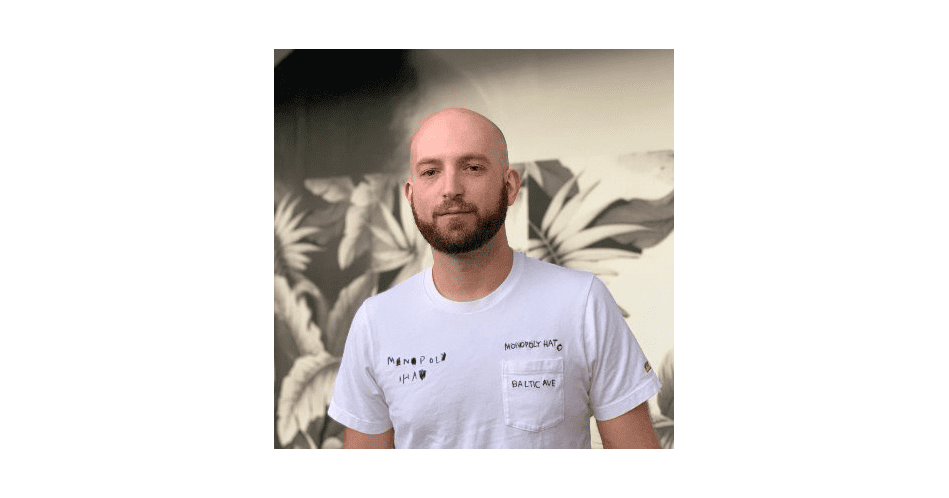
James Krellenstein is a physicist, consultant and nuclear energy historian. He is currently employed as a senior advisor to Global Health Strategies. He started up their decarbonization practice with an emphasis on nuclear energy along with renewables. He was the lead author on GEH’s report on ways to reduce global dependence on Russia for necessary supplies of enriched uranium.
He had the unusual and fortunate experience of growing up with a father who was a nuclear engineer turned nuclear financial specialist and a grandfather who ran a custom manufacturing machinery production facility. Both were the kind of professionals that enjoyed their work enough to “bring it home” for discussions around the dinner table and while engaging in bonding activities like fishing and camping.
(I know what that is like from both sides of the parent/grandparent/child relationship.)
James has become a bit of an “overnight sensation” in the world of pronuclear podcasting most notably with repeat appearances on Dr. Chris Keefer’s Decouple Podcast and Age of Miracles, hosted by Packy McCormick and Julia DeWahl. He has an encyclopedic knowledge of the US nuclear industry and a unique perspective on current and future actions needed to restore its prominence.
I was motivated to invite him for a chat after listening to his thoughts on the relationship between reactor size and the cost of produced electricity.
We talked about the need for a larger catalog of options that can meet the needs of a wider variety of customers, the advantages of larger sizes in producing bulk electricity in grids and markets that can accommodate the output, and the differences between seeing reactors as a product that might be manufactured or seeing them as a “stick-built” factory that produces a bulk commodity.
Though our emphasis and perspectives are different, we hold similar points of view. Our conclusions for prioritization vary considerably.
I think you will learn something from this show and hope that you will take the time to share your thoughts on the topics discussed. Though there are many who dismiss the importance of conversation and discussion compared to concrete action that gets things done, it’s hard to successfully complete the latter without responsible and involved people engaging in the former.
Transcript
Read transcript
There's a way, a way such a better way today, today. Who makes your voice tell the world there's a better way, today there's a better way. This is Rod Adams and it's time for another atomic show. My guest today is James Krellenstein, a nuclear historian, at least amateur nuclear historian, and a physicist who has been interested in nuclear power. I think pretty much this whole life. You might have heard James's voice on various other podcasts, but I decided to do that. We have some things to talk about here on the atomic show. How you doing, James? Good, thanks so much Rod for having me. I'm really excited to be here today. Good. And I gave you a very brief discussion of who you are. Why don't you tell us a little bit more about your background, why you got excited about nuclear credentials? Are they? I don't know, I don't know, it was five or six years old. That's a little bit odd, I suppose. My father was a nuclear engineer by training. He worked in the nuclear industry first as, you know, in internships at the Nuclear Regulatory Commission, in early in this career over to a Basco services where he was on the engineering team for a couple of large nuclear power plants like St. Lucie unit number two and Washington nuclear project, as well as a couple of plants in Texas, older in the construction phase and the engineering phase of those plants. And then left the nuclear industry in the late 80s to go over to the to Wall Street to work at JP Morgan Chase and Lehman brothers, among other firms, primarily in financing power plants. So I was, you know, it was not an abnormal thing at my kitchen table to be discussing new regular 150 or the intricacies of boiling water reactor containment design. So, you know, it really, it really took me from a very, very young age. of your power is absolutely magical. The idea that you can put a couple of rods of metal into a pot of water basically and have that water boil endlessly in power cities for years is truly something out of Harry Potter. And it is a sort of new fire. As you noted, I studied physics, mainly actually in, I was not initially thinking I was going to go into the nuclear field. I actually started, you know, did standard physics, sort of standard physics training primarily with a heavy emphasis on thermodynamics and quantum mechanics. And I was actually interested as, as much as I was in a nuclear physics, I was actually interested in problems and biological physics, at particular, the protein folding problem. And then I worked at Yale School of Medicine, not science school medicine working on those particular problems. And then I actually got involved in doing a lot of policy work with the United States government on biomedical preparation, biomedical countermeasure preparation and HIV and in monkeypox and COVID-19 and looking actually a lot, particularly on during the COVID crisis on manufacturing scalability and you know, I worked a lot with the US government pretty closely on that work. And you know, I just recently sort of came back to sort of home and started working in the nuclear space. I've been doing a lot of work on the nuclear fuel cycle, I did a very big report on the nuclear fuel cycle for a client that was on the front page in New York Times. I'm doing some other work that I can't really talk about primarily in regulatory engineering, as well as some actual vendor, you know, reactor technology selection. But as you noted, I've been very passionate since I was a little kid about the history of nuclear power, particularly the US light water reactor fleet. And I think it's something, you know, it's the old Santa Yana quote, you know, those who don't know their repeat their history are doomed to repeat it. Obviously that's not true necessarily all the time. But I think there is a lot of work in addition to the physics and engineering that we're doing on the cutting edge that we need to be, we need to be focused on right now. But what happened and what didn't happen in some cases in the history of our industry. And it's good to be able to repeat the good things and to avoid the bad thing. And you're talking about history. I mean, there are some serious successes from the early days of the atomic age and some real failures to take advantage of the magic that you talked about. We really do have a power source that is far superior to that of other sources. And the old dig against nuclear that is just a complicated way to boil water, ignore the fact that we spend a tremendous amount of money boiling water. And essentially all the coal in the world is burned to boil water. So it's not it's not such a bad thing to be able to boil water magically like you said with a few metal rods that just keep producing energy for in some cases 18 months and other cases 33 years. Right. And so this is really cool is it's just that we're using a totally different force that really before December 2nd 1942 man had never been able to conquer conquer and that's the strong force right which if you've ever taken the course in quantum field theory, you'll know that there's a whole new field theory that you have to learn. But dynamics just to be able to even understand the interactions of how the strong force works theoretically. And and what's so cool about that is that's the first time man humanity has ever been able to tame the strongest force in the universe and use it for the betterment of society and civilization. The amazing thing is that even as an English major really doesn't understand all of the the complicated physics behind it I can understand how vision works. It oh yes very simple you've got this massive nucleus that is a little bit unstable right and it will accept the the entry of a particle that has no charge and neutron. And when that neutron comes in it makes it more unstable and it breaks apart releasing a lot of energy and losing just a tiny bit of mass and fortuitously or maybe by design. And so the reaction releases a couple more neutrons exactly two point for seven more neutrons to allow the reaction to continue as the neutrons hit more similar nuclei. Right that's just to me that's pretty simple and unlike fusion we were able to conquer vision as soon as almost as soon as we figured out it existed within a year so we figured out how to make it work. sustain itself, create a reaction that could keep going without any external power, and be controllable. All we had to do was figure out which materials would absorb the new trunks. And so with the labor of a very small team, we could pile a bunch of graphite bricks together, machine some holes in, and put in some lump seed rhenium. I totally agree. The idea that we did the first self-sustained chain reaction in an abandoned squash court at the University of Chicago sort of really goes to that sort of elegant simplicity. In some, you know, I don't want to oversimplify it. I mean, you know, reactor physics and core physics is hardly a simple endeavor, but even before the advent of digital electronic computing, we were really able to get something working. And that goes to the exact sort of almost mechanistic understanding that you can have of the efficient process with your own. All we needed was slide rules and T squares. Yeah, and Rico for me even had some even, you know, even more brilliant but cruder even things that he was using at that time to do some of the like the new trend diffusion calculations. It is really amazing. I mean, let's just be honest. I haven't lost. I remember when I was even before my father, when I was six or seven years old, I was fishing on the Connecticut River. My grandfather was World War II vet and then he ran a machine tool company, a division of a new company. And he took me fishing on the Connecticut River. I've started Vermont and Yankee. And I remember just him explaining the very basics of how a nuclear power plant work. I think I was six years old. And I haven't lost that wonder. You and I share at least a similar background. My father was in a electrical engineer with Florida Power might come up. Oh really? And my listeners have heard this story before, but I became fascinated with nuclear. I'd take him into visit a few of the power plants and showed me how they found stuff to burn and would turn that into boiling water and make turbines spin. So I knew all about that and we used to have company techniques at one of local power plants because they had a big green lawn and you could do three-legged races in the shadow of the chimneys. Then he came home from work one day and told me about a new power plant this company was building down in Homestead. They didn't even need smoke stacks, turkey point. That started a fascinating set of conversations over the years. And your father and my father were at least dimly related when your father was working in St. Lucie too. Dad wasn't directly involved in nuclear, but he helped to design the transmission systems that move the power out into the grid. Oh nice. Yeah, a very important job. And it is still amazing that 19% roughly of our power would have perished on Friday and it's going to be much more than that. It is very future istic and climate change and other concerns. It's just absolutely essential. The other piece of that 19% that I like to remind people is it comes from just 7% of our installed capacity. That's one way to look at that high capacity factor that nuclear plants have is that a very small number of plants occupying a very small amount of land is producing 20% of our electricity. Again from just 7% of our installed capacity. That's also magical. So I want to talk to you about one of the reasons I invited you today is you had a good conversation with Chris Kiefer on the decouple podcast. I think you labeled it the misunderstood or a small misunderstood reactors, SMRs. There's I think a lot of confusion about what scale means in terms of making economical systems. So you make some comments that you recognize that there's differences in economies between small and large and very large plants. Let's talk a little bit about that. There are people who say that you have to go big to go economical with nuclear and that there was that was the reason and a justifiable reason for scaling up nuclear very rapidly during the period from the 60 megawatt shipping port reactor to the in 1954 it started to the 1000 megawatt reactors that were being ordered by the end of the 1960s. So in just a little over a decade we went from 60 megawatts to 1000 megawatts. Why did we do that and was it the right thing to do? Well I think it was the right thing to do. I don't think it's like a right or wrong answer necessarily but the economies of scale in nuclear power construction are pretty profound. That doesn't mean that the only factor that dominates. You know, one of the interesting things that you get is that you've got a lot of confounding going on. And if you actually look at the actual data that supports, you know, because the larger power plants, as you said, we went from shipping port in the 50s, you know, and then we had the first gigawatts scale plant in the United States with Zion nuclear power plant. I think even before 1970, that plant may have gotten operational, but don't quote me on that. I think it was just around that time. So it isn't profound. We scale in order magnitude in a decade. There are many forms of economies of scale. The form of economy scale that we're talking about in this question is on the first hand is what we call cost capacity scaling, which is given the size of it's not just a power plant. You know, this has everything from like, you know, sugar cane processing machinery to oil refineries per unit of products or in this case power, you know, per unit of megawatt nameplate. What is the relationship between the size of the plant, you know, whether it's 100 or 1000 megawatt plant and the price per unit megawatt produced of power. And generally, we do find pretty profound cost capacity scaling in a facility like a nuclear power plant. Generally, this is represented by a power law relationship. And there's been a lot of work on figuring out what that exponent is that sort of governs that power law relationship. But we generally do find that the power produced by about a 1000 megawatt plant is going to be probably pretty cheaper, mainly due driven by the capital cost and some of the operation and management and maintenance of the plant than what would be driven by a 100 megawatt plant. And I think that, you know, globally, we've seen in almost every single large fleet wide deployment, we've seen pretty profound cost capacity scaling that has occurred. Now, the other... Don't dump those laws and those equations operate under the assumption that bigger is still the same design. Is it still the number of pumps doesn't increase as you get bigger or the number of systems doesn't change or, you know, it's a scaling of the same design to go from smaller to large. And that seems to be one of the underlying assumptions. It isn't really talking much about in the engineering economics courses that teach these scaling laws. Yeah, so these scaling laws are even dumber than that, I would say. They just literally say take the capacity of, you know, the smaller plant divided by the capacity of the larger plant and it'll raise it to an exponent factor. That will be your relationship. You know, these are like like as George Box used to say, all models are wrong, some are useful. And this one, you know, it's called the 0.6 law. You might know it because that's the 0.8 scaling factor. It's almost certainly not right. It can be a useful first stab, but I would not. I'm certainly when we're talking about nuclear power plants, it's not what I would basically go on. You know, there have been really sophisticated, however, engineering economic analysis is first done by the AEC and then the US DOE, right, with the EEDB project, the energy economics database project that was done by United Engineering Corporation. But there's been a lot of really fantastic work that has happened over the last 10 years that it actually rather than saying, let's look at it's a power law scaling relationship. Let's look at the actual different SMRs and large modular plants and then do economic analysis on it. And, you know, for a nuclear plant, as you know, the nuclear island, the nuclear steam supply system is between 18 to 24% of the overnight cost of a plant. It's not the major dominating factor, although a very important one, right? The balance of plant is, you know, a little bit cheaper than that. You know, the turbine island and the associated circulating water systems. But, you know, we're dominated here by, so that's, you know, about say 50% is the N-Trip-O-S roughly speaking. And the I-N-C, I am sorry, the turbine balance of plant, labor is a huge driver, as you may know, of nuclear plant construction. And when we've looked at the analyses of looking at the SMRs versus the large light water reactors, we generally have seen that because of the scaling that you get, for example, on a turbine, right? A turbine in particular scales very, very nicely in 1,000 megawatt. Turbin is not 10 times as expensive as 100 megawatt steam turbine. But we really do see on the, a lot of this is that the labor costs per unit megawatt and direct labor costs and craft and skill and unskilled are in manual labor. You know, that really is much, much higher on these SMR projects than they are going to be per unit megawatt than they are going to be at a large light water reactor facility, like an AP1000 or even a system 80. So how does it that apply when you move towards more factory manufacturing? That's great factory assembly because factory labor tends to be a lot more productive than site labor, correct? And has much better learning curves? Totally, right? I mean, just look at a shipyard as an example. Having a labor force all at a single plant that they can go to and maybe work for for 20 years is much better than deploying workers out to a job site, maybe for five or 10 years and then having to move to a new job site. Absolutely correct. But the issue that we're having right now in these small modular reactors is that a lot of the work is not done in the factory. If you look at the new scale design as an example or the Bwx300, let's take those two as a example, there is a massive massive amount of civil works and pouring of concrete that is having to be done at seismic category one on both of these plants and actually much larger per unit megawatt than you would at an AP1000. So that gives that the actual you know, what's what's really getting factory fabricated say on a new scale plan is a new scale power module, right? So that sure is going to be your basically your primary system in your secondary system and your primary containment vessel. But that entire critical pool that the plant is sitting in is absolutely massive. There's much, much larger action in the footprint of a of an AP1000. Same thing on the Bwx300, sure the reactor pressure vessels going to be factory fabricated isolation condenser is going to be factory fabricated like by the way it would be in a large plant as well. But you're talking about placing the entire reactor building in that plant design in a 150 foot deep 90 foot diameter vertical shaft that is almost all subsurface and requires a massive amount of civil works to actually basically construct the plant. So when you actually figure this out, the actual labor costs are much larger per unit megawatt, absolutely smaller because the plant is smaller per unit megawatt on a Bwx300 or on a new scale plant than they would be on an AP1000. But don't we have some new technologies for things like from the industry of tunnel boring machinery that makes digging that whole much more efficient than it would be if you're using cranes and shovels, the Bwx300 is looking very closely at steel concrete composite modules rather than a reinforced concrete vessel. Even taking a look at the differences in how those might affect labor necessary. The question on steel bricks, which is the brand name of the steel concrete composite structure Bwx300, my understanding is that Bwx300 has actually made a decision about whether there's going to be steel concrete composites or not steel concrete composites. And they're actually doing as you know with black and veeps right now a demo pilot project out at Plinch River, at the Plinch River site to sort of actually try to figure out this question among many others. You know my understanding is that they are not going with a large tunnel boring machine approach to actually boring down that shaft. I think it's still actually a lot up in the air, there's not really design finality. But you know what we're seeing in the cost estimates is that we are even before we start a construction, we're in the ballpark of what you would expect given these labor calculations. And look it's just even with a TBM, it's not like this, you don't really have a lot of labor. The labor estimates that I've really been rely on most of it is from the MIT Nuclear Engineering Group, particularly at Professor Shervin's group and a PhD student of his Robbie Stewart. They publish a lot of peer reviewed academic material on this that actually looks at direct labor estimation. And it's just not, I just have not seen the argument even from GH that they're going to get really out of this issue of building this pretty large subsurface structure that's going to be very, very complex to build and especially get to the seismic qualifications we need for a nuclear plant in a way that actually deals with this fundamental economic issue. And on the steel cloud process, I'll just argue, they're not a panacea or silver bullet. One of the biggest drivers of the overruns at VOGO 3 and 4 was the use of steel concrete composite structures as part of the shield building of the AP1000. I just because the work teams were not familiar with actually utilizing steel concrete composite structures compared to the classical reinforced concrete structure construction of the historically nuclear projects. And my information about those is a little bit different. The shift from a traditional contain or traditional steel building type construction which was what was thought of before the aircraft impact rule was imposed after the plant was designed and they had their first contract already approved by the PUC by the way. The change from that was expensive because Westinghouse had to essentially prove to the NRC that the steel concrete composite shield building would work. There was a different professional opinion that they had to overcome John Ma. They had to do a lot of testing at Purdue. It was a very expensive thing to do. But according to a friend of mine who's been deeply involved in that project for over a decade, when it actually came time to put the shield building into place, he said it went up like Legos. It was just so amazing how quickly they were able to put that shield building into place. Ran several days ahead of the schedule. Once they got all the modules delivered. And again, they did have to find maybe with some trial and error, the people that could build those modules to the correct specifications. But yeah, once you got them, they worked. The other piece that I want to ask about is both of the things that you mentioned. The huge pool to seismic qualifications for new scale and the deep hole for the BWRX 300 are driven to a large degree by this aircraft impact assessment rule that was imposed as a reaction, a political reaction to the 9-11 attacks. And it was driven by, again, the politicians to force the NRC to take action. And the wording that the NRC used when they impose that rule is it is not necessary for adequate protection. So what could we do to the economics of SMRs if we got rid of that rule? Well, so I mean, I think, you know, thank God, the NRC said, you know, the NRC, you know, as you know, The NRC was multiple times rejected in aircraft impact assessment rule. I was basically told by the US Congress, if you don't make rulemaking, right, we are going to basically force it on you. And the NRC did a very good job, in my opinion, with the aircraft impact assessment rule. They warned everyone in 2007, this is coming, there's going to be an aircraft impact assessment rule in the federal register that's going to impact by 2009. They luckily buy exactly what you just talked about. This is not essential to protect public health and safety. They were able to grandfather and not only the existing operating fleet, but most importantly, they were able to prevent any ratcheting for any of the plants that were under construction at the time, which was only was, was for unit number two in Bellafond, which never got finished, but the construction permits were active there, right? And you know, had they not put that in there, we would be in a very different nuclear industry today. Thank God. It's not productive for a host spend too much time arguing with the guest. So while James Cullinstein and I were talking, I didn't make this point as clear as I wanted to. The imposition of rules not necessary for adequate protection is something that's been driven by people who really don't like nuclear. They have some reason that they would like to slow nuclear and add cost. It's up to the people who advocate for nuclear for those who recognize its importance in fighting climate change and providing energy security to resist that and provide the opposite side for the politicians who also recognize the importance of nuclear energy for many reasons. We need to give them the cover and the strength to resist those who push. the way the American democratic adversarial judicial system is supposed to work. Some people resist some people push and we come to some sort of reasonable finality. When there's only opposition, when there's only people that want to impose those, the only people who show up at the hearings, we get what they and their pet politicians want. That's not the outcome that best serves the interest of the American public and doesn't even provide the best health and safety outcomes because if we don't have nuclear, we get what replaces nuclear, coal, natural gas, oil. That's enough of my post production rant now back to the show. The thing is, on the aircraft impact assessment rule, right, Vogel, which was the lead at this point AP1000 project, it was still three years away from the point that when they started any nuclear construction. They'd already tried to build a schedule and developed a budget because they had to convince the public utility commission to improve the project. Compare though to the regulatory changes that we saw under the Part 50 process where we were a mid nuclear construction bill and you would literally have one third of the regulatory basis change between when the construction permit was approved. The operating license was approved and the massive amount of ratcheting that would happen. What's amazing about the AP1000 experience at Vogel is we didn't change the NRC at least, did not change a single regulatory rule once nuclear construction started. They did freeze that entire regulatory process in place and even to the didn't knock them out, they just smacked them upside the head and maybe not them down or not. I don't know. I think the NRC compared to this being passed by the Congress, it's much better having the NRC right a aircraft impact system and give half a decade of warning to the NCHF expenditures and the architecture and engineering firms, hey, this is coming down the pipe, prepare. The John Ma, non-concurrents, it was a complicated issue. I don't think though that the rule can be that there will never be any regulatory changes. The process that we have with part 52 sub-part C in freezing the regulatory process, once we've actually started nuclear construction, that's pretty great. But to go back to the Vogel issue just in general, we can talk about the aircraft impact assessment rule. But the main thing that was driving the schedule over runs at Vogel wasn't the aircraft impact assessment rule, especially because most of the capital had yet not to be spent, because nuclear construction hadn't started. It's affected. The module supply chain did not exist. And for the AP1000, which is consisting of 340-semaad modules, where when you had close to a third of the structural modules at the AP1000 site at Vogel in summer, being six months late and sort of the medium of 18 months late, it's sort of like the question is it's like Mrs. Lincoln, besides that, how is the play? To put together a modular nuclear power plant, and most of the modules, many of which C A 01, which was a critical path module, if it's delayed and you're putting the steam generator cavity, then you can't build the second containment ring because you're waiting to basically place that in. And that's months late. It's pretty easy to see why we had such project delays at that plant. I think that even worse than that, because even in one say we're delivered. They're off and working right. So I got to tour the building. It was enormous, probably the equivalent of seven or eight stories inside this massive cavern with modules being rebuilt on site to get them to the specifications required. I would agree, but to go back to your earlier question, I'm sorry, I took this on this tangent, we can go back to Vogel in a second, but you're absolutely right. The aircraft impact assessment role is why we have this very expensive pool in the new scale, built, which is really screwing up the economics completely. And it's also why the BwX 300 ostensibly is underground. And so I agree. The problem is I'm not so sure how much political reality. So I think there might even be support inside the NRC to actually get rid of the aircraft impact assessment role. I think what they're scared about, well, I think there's two issues. One is do we have the political will to be able to do this and it not look pretty bad optically that we're basically saying, oh, we actually can't make affordable power plants complying with the aircraft impact assessment role post 911. But maybe that's a conversation if we get the political capital before that. I think this would slightly change this conversation. But for most from many countries, and it's including the entire European Union, you're going to have to be compliant with an aircraft impact assessment role. Now, I think there's a- But they're only, they only have that rule because they followed the US. No, the European Union, it's the utility groups rule. I believe that rule came into affected in 2003. The aircraft impact assessment rule was only actually, it's the European utilities buyers group sort of standards. I believe that rule came in in 2003. But the AIA of course came in in the US 5150 in 2009. And as you know, there's been actually, there's been multiple nuclear power plants in Europe that previous to that had to be compliant with an aircraft impact assessment role. Leibstadt in Switzerland famously had to basically compliant with a Swiss version of the aircraft impact assessment rule in the 70s and 80s, right? And that's a GE BWR6 for the Mark III containment. And then even in the United States, we had actually ironically three mile island unit one and unit two because it's so close to Harrisburg had to be compliant with an aircraft by the AEC with an aircraft. I agree that this conversation would slightly change on the labor side of things in particular if we could get rid of the aircraft impact assessment rule. But we can't, we haven't gotten rid of the aircraft impact assessment rule right now. That's in there. There's a lot of congressional pressure was on the NRC to do that. If we want to, I'm not so sure that's what I would spend my time on getting rid of right now. Also because I think you have collateral sort of consequences to the industry secondary. But if we want to get rid of the AIA, we can have a different discussion. But right now we need to comply with it. Yeah. But and and I'm well aware of the the cost associated with going deep underground. Yeah. Essentially left a job because I had a big controversy with the CEO about whether or not we should have the empower reactor completely buried or just half buried because that's really all you need was half buried. So the core was well underground to be able to comply with the rules. He had been marketing the idea that we could put our 120 foot tall module completely underground. And anyway, I disagreed with him and had talked to civil engineer about the soil pressures that happened when you go that deep and watch after due to for, you know, keeping the soil out of the building. Especially during this reason. There's a reason why you don't find 15 story tall underground parking garages. Correct. Because he gets really hard to go that deep and have a strong civil structure. Okay. So let's go on a little bit to some of the economics associated with with large power plants compared to perhaps powerful power plants built up by having a number of smaller units involved. Sure. You know, one of the attributes of very cost effective combined cycle plants is that some of the earliest ones were say 2000 megawatt power stations but had 10, 12 combustion turbines with associated steam generators involved. And in some cases they had what's called two or three or four on one where you had a number of combustion turbines that all exhausted to a commons heat recovery steam generator to a single steam turbine, a large steam turbine. Because we were pretty good at building big steam turbines. But we hadn't gotten very good at building very large combustion turbines. Right. So that model, could that model be applied in nuclear and allow you to take advantage of the economy of multiples and the economy of manufacturing for nuclear instead of having to try to build extremely large reactor cores and reactor pressure vessels? Right. So here's, you know, I think the combined cycle gas turbine example is a really instructive one because you know, the beginning of the combustion turbine industry in power generation, of course, was initially all on error derivative turbines. Right. I eat from airplanes, right. You know, which use jet engines as we all know. And the idea was we're going to make error derivative turbines where take those jet engines and we're going to, you know, on a simple cycle just coupled to a shaft and we've spin a generator and then we had the hersigs, the heat recovery steam generators, you know, for the combined cycle of the increase efficiency. But what we do see there is that we're, you know, these big 2000 megawatts combined cycles, which may be five or 10. They're not the error derivative combustion turbines. What they've known as a scaled up those combustion turbines, right, to a larger point to take advantage of the exact economies of scale that we're talking about. And there's, there's technical reasons as you may know, physically from an engineering perspective why you can't really get much larger than a 400 megawatt gas turbine. It becomes very, very difficult from an engineering perspective to go that much larger. So even in that space, we've kind of gone for the base load, quote unquote, gas turbine facilities that are, you know, with the hersig that are running at 70% or 80% capacity factors, those are generally about as large as we can get. I think the same economies apply for, you know, and we had these two different among many other two different economies that we're talking about. One is the learning curve effect and the impact of mass production, which is generally an engineering, in our engineering econ class, we learned about it as right slaw, right? You know, you have a right slaw that the end. Unit is going to be much cheaper than the first unit and so on. Because you get mass production effects, you get learning effects, you get a supply chain effect, right? That really starts hitting versus, you know, these costs capacity scaling. And what we always are having to do is balance the two. I guess what my point would be is when we're talking about a place like the United States or a place like the European Union or Southeast Asia or Northeast Asia, for that matter, right? We have thousands and thousands and thousands of megawatts that we're going to have to decarbonize and transition for energy security reasons, even if you don't care about climate change, given where natural gas prices are going, we're going to have, no matter which way we slice it. We're going to have to have dozens of large reactors. If we want to talk about that, where we're going to have that exact right law effect of getting the module costs down pretty low. That I think, so I think what we see in the simulations that have been done is that generally, you're getting the same sort of level of effect as we get to the 10th or 12th. But we're already at the, we'll be at the 7th AP 1000, assuming the Polish project goes forward. We're already actually pretty close there. And as we just said, you know, a huge problem with the AP 1000 bills, let's be honest, is the supply chain just, you know, that that Shaw Lake Charles facility just completely failed, as we all know, we now have a much more robust supply chain that actually got built up in the middle of the vocal bills to actually supply a vocal. And we already saw, you know, Vocal 4 was depending on who you listen to between 30 to 50% cheaper than Vocal 3. That's exactly supply chain really still exist. So that supply chain is, my understanding is not only existed but has slightly expanded, right? Because some components of it, for example, the reactor coolant pumps are being supplied actually for the Chinese builds or the Chinese have mainly taken most of that and indigenized it. But right now we are seeing a good order flow on the AP 1000 for, you know, we are at the feed engineering stage for the Polish builds as well as for the check builds that are coming up necessarily next. So my engineers have worked with do the manufacturers have any orders. So my understanding is not yet, but that they're hot that, you know, we just basically finished Vocal 4 not too long ago and some of those modules were a couple years ago, but there's that learned experience. And what I think what we need to do is get that order flow really running so that we can get the capital investments on the machine shop, you know, level, right? So that we get there just like we're going to need of course for SMR. So no matter which way we slice or dice this, you're going to need to get a robust supply chain. And I think the question given the amount of gigawatts that we need, the question is, is do we do it in a 1000 megawatt byte? So we do it in 300 or 70 megawatt bytes. And my intuition would say, you know, and something like RPV foraging, you definitely have pretty profound cost capacity scaling. 1000 megawatt RPV is not going to be 10 times as expensive as 100 megawatt RPV. And in fact, what is the cost of the delays associated with the fact that there's only a very small capacity worldwide to produce the forgings associated with those large RPV's? Well, we have to build you have to build up the forgings capacity. We have actually a lot of not in the United States unfortunately. But you know, if you think about the large RPV forgings capacity, we have capacity now in South Korea. That is pretty large. We also still have the Japanese, you know, JSW, Japan steelworks and Hokkaido, right? Obviously did all of the both the PWR and BWR foraging that was done for the Japanese build and for a lot of US builds as well. There, and then we have also German and Italian foraging capacity, which is consistent with the foraging capacity that we need for an AP 1000. But I would just like to here's a perfect example of something that smaller doesn't necessarily get you any better. Look at the foraging capacity that we're going to need for a BWRX300. That's a very, very tall reactor pressure vessel. That's actually going to be one of the tallest reactor pressure vessels that we've ever built. There's only a limited number of places that are asked me and qualified and have all of the necessary qualifications to actually do that that can forage just such a large RPV. That's a very different sort of question than you have in a classical, you know, PWR RPV. But it is a unique supply chain difficulty that we also have on the on the large B on the BWRX300. And of course, in the in the new scale case where it's an integral, right, where it's an integral sort of new scale power module. It has the both the primary and secondary system in, you know, two components that have to be fabricated together. That's also a pretty unique fabrication challenge. And it's being done as you know at DoSellum, which is the same place that we forage our RPVs for the AP 1000s and for the steam generator forgings as well. So I agree that there's a supply chain issue, no matter which way we slice and dice it, I'm not so sure that we solve that supply chain issue with the SMRs, have I fully agree that there are good reasons for having very large reactors on the menu for those who need very large reactors. That's it. But there are definitely places where absolutely very large reactors simply can't fit. I've recently, you know, there have been people that have complained about the fact that Illinois just passed their a law that overturned the hard prohibition on nuclear and only allows small and advanced reactors that are less than 300 megawatts. On the other hand, I was really happy to see that the Philippine 123 agreement emphasizes the idea of smaller reactors because the Philippines has made up a whole bunch thousand or so small islands and you know can't fit a thousand megawatt reactor. I would agree with you 100%. I am not arguing that we should not be developing SMRs that we shouldn't be that SMRs don't have a place or even micro reactors don't have a place they absolutely do in this broader menu that needs to be available. If you look at a country even like Estonia, there's no, it's going to be very hard for the Estonians to build a single 1.2 or 1.1 gigawatt plant. And then also of course lower and middle income countries and lower income countries in particular, you know if you take a country like Rwanda which has 300 megawatts in total of installed capacity, you can't plop a one gigawatt plant down. I mean, it just doesn't work. And so there's a- Even a place as big and as populated as Ireland only has a grid size. It's like 4000 megawatts of 1000 megawatt reactors. Too large for a grid size. If you have a scram or a generator trip, that's going to be a very hard thing from a grid planning perspective to be able to deal with, you know, have the adequate spinning reserve ready to be able to deal with such a large contingency. Oh no, you're absolutely right. But if- going back to the Illinois example or California example, as you know, California, there's also a draft bill that hasn't passed about reducing the prohibition. These are places where we have large fossil assets that have all the transmission infrastructure already there of the gigawatt or gigawatt plus scale. And there are dozens of sites in the United States and Europe that have this amount of capacity that does likely need to be transitioned to nuclear. In those places, we really should be talking about large nuclear. Because I do believe that if at the end of the day, going to be more economical to build a large plant and build three or four, you know, BWX300s there to build one AP-1000 or two AP-1000s rather than or, you know, AP-R 1400s or ABWRs rather than building a bunch of little plants there. Where we can- where the grid and the country can actually take the large plant. Now, as you- I also think that if- and you probably would recognize this statement as being true, our experience has shown that it is much more cost effective to build at least two units than to build simply one at a particular site. No matter what size the units are, it got very expensive to build a single unit. And that's why almost all the single unit plants in the US have eventually closed down. Well, we have a lot of single unit plants still operating in the US. And, but, you know, as your exact point, to be honest, a lot of that has been enabled by the production tax credit and the inflation reduction app. And then before that, of course, the zero energy credits, you have the ZACs that- that states implemented. Zero mission, excuse me. That's zero energy. And I think that- that goes to another point, right? You know, we saw small plants and especially the small single unit plants go offline because of the ONM cost. Now, I totally agree that we should be looking at places where we can build two or ideally three or four units on there. But there are plenty of sites in the US that even if we're just going to make coal, where there's a couple of- there's a couple of dozen sites in the US that could take two gigawatt scale plants right now. And we should be prioritizing them because I think that gives you the best of both worlds, right? It really does allow you to shrink down, get that end unit effect, right? That multi-unit effect, which is not just important for construction, but also for amortizing, operating, and maintenance costs, like security. Security costs and all of those. Right? Over multiple units rather than just having a single site and then having another single site to your point when we look at the more successful nuclear builds up, the French initial build out, the Canadian build out, the Chinese build out that's going on right now, the Russian build out, they all are doing four or six unit plants for exactly these reasons. So I totally agree. And maybe there's a niche role for the SMRs where you only have a thousand megawatts, so you got to do a couple of plants, but I'm not convinced yet that we can overcome these labor costs that are associated, that the higher labor costs, the higher balance of plant costs that are going to really per unit megawatt, that it's going to be a calculation, it's going to be a race. You got to see where it ends up. Yeah. And it also is partly dependent on, again, the needs of the particular grid areas where you are, because even if the grid maybe has an eventual need for a couple thousand megawatts, bringing those that power online in a lumpy fashion. In other words, where there's not a real demand every year for a new thousand megawatts or a new 2000 megawatts, bringing on a lumpy fashion means you have times where there's tight grid supply, and then other times when all of a sudden you have far more electricity than you can sell. Exactly. And that's exactly why SMRs have such an important role in places like, you know, I've talked to a Rwandan colleague, you know, they're very interested in nuclear power run to this, you know, very poor, but rapidly growing, very technology-forward country in Africa. They might be, you know, God willing, they're going to be, you know, in a decade or a decade and a half, they might need, they might have a good size of two or three gigawatts. And we hope that would be a great thing for the world and for Rwandans, but to your exact point, Rod, they can't say, well, I'm just going to wait 10 years till that power demand materializes to build me a gigawatt plant because that's not how it works. You can't actually get to that demand, right? So chicken and egg problem, you can't get to that demand until you actually are building, you know, the power supply and electricity supply that the economy needs to prosper. So I totally, I'm not anti SMR. I maybe I sort of, you know, Twitter is a terrible medium or a lot of things. And maybe I come off that way. I believe firmly. that we need a robust SMR market. What I'm more focusing on is here as an American who really believes in the United States has to restore its leadership position in nuclear engineering and in all aspects of the nuclear power industry. I'm saying for a lot of the plants that we need to build, we need to build large plants here in the US while recognizing there is a role for SMRs and micro-reactors even in the United States, but definitely globally. There is no one who can argue, in my opinion, if there's gonna be a role for nuclear in those countries that you're gonna be able to build an AP-1,000 or an ABWR in alluring countries initially. Just for the lumpiness does not allow that. The fact that we need large reactors does not overcome the fact that there's a need for small reactors and there's a need to be building or developing or improving all of them at the same time. I totally agree. We can't simply say, well, we'll build the reactors that we know how to build right now, the large licensed reactors, and then we'll wait to think about building the other ones to sometime later. You can't be ready to build unless you start being ready. So maybe we slightly disagree here. I'd be interested in your perspective, actually. I think the biggest problem that we have right now in the US nuclear space is right now in a vlogo for, obviously it's commissioning. They had to switch out a reactor, cool and pumped, seeing a little longer, but that plant's gonna be online in a couple months. But that's basically the end up and with the cancellation of the U-Amp's new scale project, we've got nothing right now in the queue. That's actually a solid. Obviously there's a lot of tentative plants that are being talked about. There's a lot of MOUs and power purchase agreements, but right now to your other point about we need to get a supply chain running and we need to be able to tell. As I said, my grandpa ran, it's actually interesting. My mom's father ran on the gas turbine. He was a World War II vet and the Navy, came out of World War II, ninth grade education. But apprentice, that's a machine that's a Pratt & Whitney. Learn to actually have to build the first Pratt & Whitney jet engine and then ran a machine tool company, ran the production division by the end of his career of a big machine tool company in the automotive space that was making massive $15 or $20 million machines for GM plants. So what he would always tell me is that if you want me to invest, you could tell me two things that always changed my life. The first thing is when I visited the plant that he worked at, he was retired, you said the beauty, the amazing thing that you're not seeing change when you're looking at this factory floor is that this is a factory floor that is taking the inputs of 30 other factory floors. And you're seeing all of those pieces come together here. But if my supplier, one of those 30 suppliers fails, I can't make that component that I need to put into my machine. And what I'm seeing is the same thing in the nuclear space is if you take that basic lesson, we need to have the order book of some plant that is significant enough and deep enough that that's forming and that the guy who's supervising that factory floor is willing to make the capital investments in both humans and in machines so that we actually have a robust supply chain. What I worry a little bit about is given where we are right now are we spreading ourselves to thin for the initial build-out? Should we try to focus on a single design initially? Not necessarily because that is the only design we need to build, it's likely not going to be the only design we need to build. But because we can incentivize the capital that goes deep into the supplier and the supplier suppliers so that they can maintain a well-oiled, efficient, and economical supply chain for the power plant, for that design. If we spread it over six orders of a six different designs, that sort of thing is going to be much, much harder to do initially. I think we've got to get back and gear a little bit. We've been kind of hibernating for 30 years and we've got to make sure that we're really focused in making sure that the economics that we have are supporting the robust build-out not just the supply chain but in labor force and engineering staff and even in regulatory ability. So I wonder what you think about that. If we tried to do six designs at once, shouldn't we try to crawl before we run a 10K marathon, maybe? Well, I definitely have the opinion that we should be crawling, walking, running, in sequence. But I don't think that focusing on a single technology like large light water reactors is the way to do it. Because the supply chain for large light water reactors versus the supply chain for high-temperature gas pool reactors or liquid medical reactors is not the same. So it simply isn't going to help those other designs to focus, to limit your ability to a single type technology. And as an investor speaking as an investor, we need to have a much broader sense that nuclear is going to move forward fast to attract the capital and the intellectual talent that we need to make it happen. If there's a perception that nuclear is only through this small little pipe and that that's the growth area, we're not going to get the kind of attraction that we need to bring the massive amount of capital that can come in from the private sector. A few billion from the government helps, but we need tens to hundreds of billion to dollars to make an energy transition that actually works. Remember, what we're trying to do is replace fossil fuels, which is a several trillion-dollar per year industry. So let me show you. Well, you got to make it attractive. You got to have lots of opportunities to go. But one thing I will say, the very first thing that I would do if I had presidents pulpit for a few days would be to convince next era and Duke energy that having COLs for AP-1000s already in place, sites already evaluated, environmental impacts to the COL is issued for four AP-1000s. Get those things financed and started right now. Make the final investment decision. Get them rolling. Take advantage. Before, by the way, I don't, as a foreign manufacturer, I'm completely in disagreement that having a three or four-year gap in orders allows you to maintain any kind of supply chain. The factories are going to shut up. They're going to be full of dust. They're going to have to be started up all over again. The workers have already dissipated, because they've got to keep the monthly paycheck coming. Yeah. I mean, so there's a couple of things here. So totally agree, by the way, on the COLs. And we should reactivate all the inactivated COLs that also happen for Levi County and this other one. Right. Ditch number two and three, but number one. Sure. We're going to start on four. We're a total agreement. Let me go back to the manufacturing stuff and building a nuclear qualified supply chain. I think the part of the problem is, yes, it's absolutely true that it doesn't necessarily help here with being able to, having an AP-1000 supply chain doesn't directly help, say, building a little liquid metal fast-breeder reactor. But what we have found historically in the United States is that it was the same shops that were doing the RTV fabrication and steam generator fabrication for the light water reactors. We're really doing the sort of work that was being done for the liquid metal fast-breeder reactor. So the perfect example of this was, as you remember, combustion engineering, which was one of the two major large N-triple S component factories in the US. It was combustion, shadonuga. And of course, Bob Cox and Wilcox and Indiana. The CE plant built a lot of the Westinghouse RPDs and the G-E-R-P-V's ironically enough. They were the ones who basically fabricated almost all of the components for the Fast Flux test reactor, for the FFTF for the Fast Flux test facility in Haniford, Washington, which is, of course, a liquid-study facility, right, and a fast reactor, although not used reading. It's because you're having, you're right, it's not a one-to-one translation, but it's having that nuclear qualified, nuclear culture manufacturing and having the forging and machine tooling ability that is one at a, you know, can comply with NQA1 and 50-plus at B, right? You know, having that industrial ecosystem and having people who are trained in doing that, I think does allow you not one-to-one, but more easily be able to do the fabrication for different plant designs of both size and type. It's the same reason why Dusan, right, in South Korea, is forging the new scale power modules, even though their historical experience, of course, has been in large pressurized water reactors, and I'm not sure if Dusan has stabbed BWR's, but it wouldn't be surprising if they had, right? And that's my basic point. I totally agree with you that we've had an issue with maintaining the supply chain hot enough or warm enough even on the AP-1000 as an example. The good and bad thing about this, I think is that if you look at me, you know, a lot of those suppliers, a lot of those suppliers were not just doing, it was not another word, the facility that was originally built by Shaw in late Charles and Louisiana, with the idea was that this is gonna be an AP-1000 module factory, right? The way the AP-1000 supply chain right now is working is it has dozens of independent suppliers who, yes, some of that institutional knowledge has been lost, definitely some of the actual, even some of the tooling may have been lost or repurposed. But generally, the most of those suppliers are in business, they've been working on other projects and other industrial products. Like nuclear submarines. Like a Newport News' case, right? Sure. And that's exactly the point, is we need to get a supply chain warm and rolling right now and have order, in order book, that's not one reactor or two reactors, but a couple reactors deep, because as you know, as giving your experience in manufacturing, a huge amount of this, if you're gonna get those cost savings down the right law, sort of improvements on both costs and turnaround time and manufacturing time, you need to actually convince the company that owns the manufacturer to invest capital. And actually, they can't say, well, it's gonna be one module and then I'm done, why you can invest capital to make it really an efficient process, unless you see four or five order deep and maybe even a little bit more. So we gotta figure out, and that goes back to my point, is we have to figure out right now, if we don't have the appetite right now to build the COL plants in Florida and in South Carolina, and we don't have any SMR order really that are firm, how do we deal with that startup, that bootstrapping problem? Yeah, and I really believe that there is, first of all, a market demand in both North and South Carolina and in South Florida for more electricity. And there's definitely an interest in making that electricity clean. We don't yet have a economic cost associated with not making it clean. I mean, they can dump as much CO2 in the atmosphere as they want without any charge being applied. But those actions are in place with a little bit of incentive and perhaps a somewhat re-jiggering of the way that the Inflation Reduction Act provides its resources. I mean, they're both of the communities involved could be considered to be eligible for the bonuses associated with energy communities or rural. I mean, I can tell you, having visited there, that the area around the William State's leaf facility in gas in South Carolina is desperately poor and could use... real investment in the community to bring that community into some sort of 21st century prosperity. It's quite the same in Homestead, but... Yeah, I mean, Homestead needs the power, though. Yes. And Miami, I should say, needs the power. And I personally believe the ITC, especially if you're talking about, at least for Homestead is probably pretty clear, you know, there's a lot of eligibility for, you know, working in an energy community or a formal, you know, because they have fossil units that you've been there, of course. And they have fossil units and some decommission, some operating now. That's why it's tricky point. I think it's two and three. Six and seven, I think. Yeah, no, the new plans are six and seven, but I think the existing Westinghouse three loops is it three and four? Yeah, it's three and four. One is three or four. Yeah, one. There's a four and five. There's a four and five, which is the gas turbine. Yeah, if you've been to that site, they're over there now. But yes, I totally agree. And you know, one of the things that we don't talk about, you know, there's some quirks with the, but you know, a lot of sites, you get a 50% investment tax credit or all construction costs in the inflation reduction. That's a, you know, for a nuclear site and those are infinitely divisible and sellable, transferable tax credits that have a liquid market. That's an amazing amount of money that you can get back and reduce your, your build call by close to a factor of two. Yeah. And why don't you complete it? Once you complete it. And yeah, you commission that, that's amazing. But if we talk about William State's Lee as just an example, you know, the, the pink elephant in the room that we're talking about on large reactors, which US and SMR advocate, I can't believe, haven't haven't thrown at me here is what is the William State's Lee site? Well, that's also formally known as the Cherokee nuclear power plant site. That famous plant power plant was for the abyss, right? Where the abyss where James Cameron shot the abyss. Yeah, the containment vessel served as the big pool of water, water seeds, right? For the abyss, yeah, exactly. And he felt you could actually, I believe I never been there, but I believe you could still see some of the remainder of the film, film stuff for there. Here's the thing. The real problem that we have in large light water reactors is that no company, especially after what happened at Volvo, and even more especially at summer, no company wants to take the way that we finance nuclear power plant by basically betting the entire corporate at balance sheet on the, on the debt that is needed to be issued to raise the capital, the bill to plan. No one's willing to do that for a large light water reactor plan. And when I work on project finance people are not necessarily willing to put their money at risk either. The way that they fund a few project finance, which would be, you know, having the debt basically financed by the revenue served by the revenue generated by the plant. No, no, no investor is willing to take that risk because they look at, you know, if I did project financing on Cherokee nuclear power plant, right? What if you were or sure or what or or marble hill, or yeah, or a bell of font or a Zimmer or Shoram, or if you go down the list here, CBRQ number two. I think, or yeah, unfortunately, brain at least came online and yeah, but it only generated an 18% capacity for that to pretend. Yeah, I think it was actually like 15 point. Yeah, exactly. It's below 20%. Yeah, it's, unfortunately, very never worked. No one's going to do project financing in the classical way that we do it. So what I work on my day to day now work is how do we solve that problem for large flight water reactors? And as I noted, you know, that's sort of the world I grew up in, which was how do you finance large capital intensive power plant projects? And I think that is a, that, the sort of central question. Cause if we don't solve that problem, let's be honest, you win. I rod. The future is only SMRs because, at least in the United States, because no company will pull a scanner and bet that they're going to be able to build an 18, 1000 when it goes bad, which you hope it doesn't. There's a, you know, every investor will say the track record here isn't great. The company's gone. And that's in my mind, the major problem that we have right now. Yeah. And interestingly enough, we have this thing called the loan program office, which may be able to help us with that conundrum. I agree. But back in the nuclear renaissance days, right after the energy policy, I did 2005, which established the loan programs office. One of the things they didn't do was provide any sort of help to the LPO to defer or defray the risk premium associated with this bad track record. And logically enough, the bankers who staffed the loan programs office, when they were asked to finance a new plant at Calvert Cliffs unit three for a company called Unistar, they came back and told you to start will finance, but you've got to pay us a fee upfront for the CDC, which is back in something what it cost was. And it turned out that that CDC was over $800 million upfront. Sort of like the points you pay on a mortgage. The term I was searching for during our conversation was CSC credit subsidy costs. I'll put a link in the show notes to an article I wrote back in October 2010 for American nuclear society nuclear cafe. It provides a lot of details, glory details, about the $880 million that the loan programs office wanted to charge constellation for a loan of $7.5 billion for the Calvert Cliffs unit three. And rejected the offer walked away from the project and construction never got started. Now back to my conversation with James Krell and Stein. Sure. And the funny thing about the LPO as you just noted was created the Energy Policy Act 2005, which really did kick off, not the LPO necessarily, but the Energy Policy Act 2005 kicked off the first nuclear renaissance. As we know, Vogel ended up using about $12 billion of LPO authority, but summer, ironically, did not use any LPO authority for the exact reasons that you just noted that the LPO cost, they figured they could actually raise the money between scanner and the other members of that consortium's balance sheet. It would be cheaper to not go through the LPO at all. That I think goes to the exact points about the financial engineering gear. Let's put it is not trivial. It's not a nuclear power plant, nuclear engineering level of an engineering job, but it's not a trivial, easy engineering job to do for the financial engineering if you want to do it. I like jigger to some extent, but I was a little bit disappointed more than a little bit. A lot of his commentary recently around where we are in the nuclear rollout in the United States and the role that LPO is playing. Well, he is correct in pointing out that the LPO by statute is not the decision-maker. It's not the leader. Nobody has got to apply for the loan. They can't go out before somebody to become an applicant to the LPO. They can't make the decision that we need to build large light water reactors. They can and they will accept an application from a Duke or a next era that has done their homework and said, all right, we're ready to build this reactor. Here's our fully fleshed out application and how we plan to pay back the loan. They are, they are a banker. It is a banker that is given authority by Congress to make loans that might not be acceptable for a commercial bank, but they still have to make sure or do whatever they can to improve the probability that they will be paid back. It's exactly like the NRC to some extent on these large COL plans. From the NRC's perspective, they've granted the COL. They can't make utility and then God. They can't make utility build the plan, same thing on the fuel cycle side. The NRC has issued four COLs for new enrichment plans right now. Two of which is still one of which is still active and one of which has an adult to the full capacity. The NRC kits on the AEC, they can't actually make policy. I personally, on this front, I think that sometimes advocates, I would be interested in your perspective, you know, the office of nuclear energy, which is a lot of great things at the DOE. I think we need a little bit more attention there on what the strategy is at the office of nuclear energy because that is, you know, when the AEC was split into the NRC and many other things that sort of promotion of civilian nuclear energy was, of course, going to be in the remit of the office of nuclear energy and the department of energy. I would like to see a little bit more of a coherent strategy. Let's call it that from our way. I think I have heard from my entire career that the U.S. lacks an energy policy, but I've also recognized over my career that government-directed policy is not necessarily the most effective way to run a country. And then we do pretty well in the U.S. by having some guidance and some appetite established by the government and allowing private industry to come in and do what it does best, which is to build products and projects. I just recognize that we've been chatting now for an hour and 20 minutes. And I never really got to one question I wanted to talk about, which was in talking about scale and appropriate scale and the catalog of items. What effect do you think there is between looking at a nuclear power plant as a factory that produces electricity and looking at nuclear power systems as products that get produced in a factory and delivered to customers to do with whatever they need to do. So you're imagining the dichotomy, the split that you're making is you think that we 're constantly using a power plant as factories for electricity essentially? And by the way, your grandfather produced machinery that was used to produce high volume products. Exactly. But your dad's machinery probably wasn't high volume repeatable machinery. No, no, no, exactly. They did months on or really, really complicated machines. The idea that we're all looking for in the SMR world and the micro-act world is let's make these like 737s or you know, A320s or 747s or 787s. And I think the, maybe even citations or even citation. I think the question that we have here, the question I had to back ask you back is let's forget about nuclear for one second on the fossil world. We have a lot of, let's call them micro fossil energy converters. And those are car engines. We make millions and millions of them a year in the United States alone. Backyard generators. And backyard generators. And weed wackers. And lawn mowers. And diesel engines for ships, gasoline engines for yachts. And I have a little dinghy right? You know, it's a little 15 horsepower thing that has a, that has a little micro fossil energy. But knowing most of the world, most of the United States is energy for electricity use at least. We're not taking tens of thousands of little car engines and putting them up in a factory and then running them out a little 300 kilowatt or 200 kilowatt alternate. We see even in fossil plants profound economies of scale. Now if we're talking about something that's not bulk electricity generation and we're talking maybe about, oh, I don't know, ship that we're talking about. For example, or maybe something at a factory that's behind the meter that's providing heat or a specific form of very reliable electricity generation. You know, there's a. Oh, obviously, where you do see, as you just noted, or backup generators, right? You see people have a 200 horsepower gasoline engine that, or diesel engine that's coupled or propane, coupled to a generator. But what we do know is that the economy's a scale are pretty profound. The cost capacity scaling, excuse me, is pretty profound when you go for a large electricity generator, even in the fossil space. Forget about the nuclear, forget about the NRC, forget about all that sort of stuff. Really, there is cost capacity scaling there that has advantages even over the mass production. Now, to your other one. But one, there is one significant, one very significant difference in the economy of having a very large generator at certain locations between fossil and nuclear. And that difference is that there's a major cost decision with delivering the fuel. We build a large generator sometimes in a port facility, because we bring in huge tankers to fill or huge ore carriers to fill it up. Or a train line that come deliver 1,000 train cars worth of fuel every week. And that's part of the economy of ore or gas turbine pipeline, or gas, natural gas pipelines, are going to a plant. That kind of necessary delivery is not quite the same for a nuclear plant. I agree with you there. I think that's one of the advantages of nuclear. But it also goes to your other point of the fossil generation. One of the issues that you have in building a massive fossil plant is you have to build infrastructure, as you just noted, to bring that massive amount of coal or natural gas in the form of pipeline or an LNG carrier and some applications. To be able to fuel it, and you don't need that for a nuclear facility, whereas it would be actually a lot more cost effective in not having to build the infrastructure to be able to build smaller fossil generation sites where the existing pipeline infrastructure could take it. But as you know, there's still a lot of economies of scale. And actually still, even if you have to build that infrastructure to be able to serve such a large generator, right, building a very large gas, 400 megawatt gas turbine, or 2, 400 megawatt gas turbines, rather than going to a lot of 50 megawatt gas turbines all over the place. Now, we actually have a mixture of both. A lot of that's for backup and peaking and contingency planning in the grid. I live in New York City. And probably in a three mile radius, I mean, there's a dozen 50 megawatt gas turbines, right? The threat that are out, ready to spin up. And you'll run diesel, you know, number two fuel oil. If the pipeline pressure isn't high enough, it's kind of both sides. But I still think that if you have sites that have the electrical transmission capability, have the cooling water access, or have the treated sewage water in the case of palaverity, right? Have the ability to get some sort of water for your cooling water of cooling tower of operation and blowdown. It really would make sense from an economics perspective to be able to build those large light water reactors. Now, as we said, there's challenges here, man, because not every site is going to have that cooling water access, not every system that had that electrical power, transmission infrastructure. And we still have the financing problem, which, yeah, so it's not so clear cut in your way. And even in a case where the company was one of the very largest utility companies in the United States, southern company, they had a pretty complicated financial engineering challenge with Volvo, even before all it costs over, it's still need to have three big partners to go along and build or tell they needed that. That a musical utility in Georgia, Fias, as well as many others. So it's exactly indulgencing those sorts of financial consortiums where the credit worthiness of varies from different things. This is exactly right. I do have to go unfortunately in one minute. But, yeah. There's been a fantastic discussion, Rod. And I really enjoyed it. And I hope this won't be the first of many. Good. Me too. And I'll let you go because I'm sure you've got other things to do. I was speaking with James Cronstein, senior advisor at Global Health Strategies. He started Global Health Strategies Climate Practice and also authored a report on reducing global dependence on Russian enrichment capacity. Hope you enjoyed the show. This episode of the Atomic Show is brought to you by Nucleation Capital. We're a venture capital fund focused on selecting ventures with extraordinary promise. They're building the advanced nuclear sector and helping expand our clean energy options. We're building a portfolio of ventures on behalf of investors like many of you. We don't just take funds from the large institutions that typically allocate to venture capital. We believe that regular investors should have access to the opportunities in modern nuclear for their own portfolios. We allow people to subscribe on a quarterly basis, starting as low as $5,000 per quarter. A four quarter subscription will get you exposure to between four and six ventures. If you are an accredited investor and would like to learn more about how you can participate, please check out our website at NucleationCapital.com. That's NucleationCapital alloneword.com. Our fund and all of the information you need to subscribe is available online. You can also subscribe to our newsletter, Nucleation Insights and join our pro nuclear investor network to learn about select syndicated investment opportunities. If you have questions, we're happy to chat. Please spread the word. There's a way, a way such a better way today. Today, a ratio of boys tell the world there's a better way. Today, there's a better way. Ooh, there's a way such a better way today. Today, now ratio of boys tell the world there's a better way. Today, there's a better way.