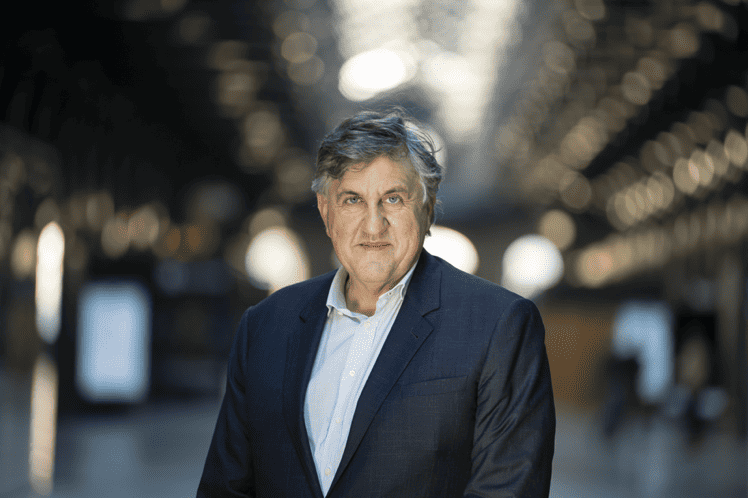
Stefano Buono, Founder and CEO of Newcleo
Concepts discussed
Auto-linked from the episode's notes and transcript.
Show notes
Stefano Buono is a physicist and the successful founder of Advanced Accelerator Applications, a multibillion dollar company that pioneered the use of several therapeutic medical isotopes. After making several people very rich, including himself, he sold the medical isotope business and returned to his early 1990s field of study – nuclear fission reactors using molten lead as a coolant.
About two years ago, Stefano Buono and some of his colleagues and associates founded newcleo, a company with Italian roots based in the UK. Last year, newcleo ran two successful rounds of start-up funding that netted the company a total of €400 M. After passing through several important milestones, it is raising a subsequent round with a target of €1 B for continued development and for a state-of-the-art fuel manufacturing plant.
Dr. Buono visited the Atomic Show to share his insights on the paths to success as an entrepreneur in a deeply technical and undervalued field and on the role that timing – both planned and fortunate – plays in business success. He is convinced that it is a good time to be building a nuclear fission energy company.
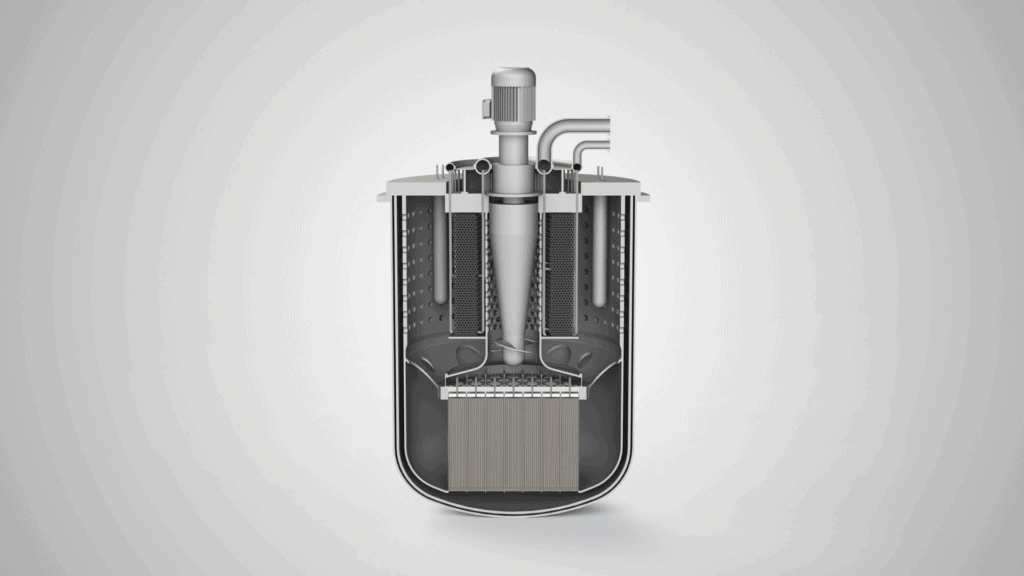
Lead cooling for reactors has a long history with some demonstrated success. In the 1970s and 1980s, the Soviet Union operated a class of submarines called the Alfa class, which were famously the fastest and deepest diving submarines in the world at the time. Seven subs were completed and operated with both impressive performance and technical issues that limited their reliability and service life.
The reactors in those submarines were metal cooled thermal reactors using lead-bismuth eutectic for cooling and beryllium for moderation.
The collapse of the Soviet Union and subsequent economic conditions halted most lead cooled reactor development in Russia, but it resulted in a diaspora of Soviet scientists and engineers that stimulated research and development of the technology in Europe, especially in Italy and Sweden.
For several reasons, the lead cooled reactor community moved from lead-bismuth towards pure lead and away from beryllium moderation.
Compared to water, lead is virtually invisible to neutrons, letting fission neutrons remain in the fast spectrum. Fast neutrons will fission all actinide materials, allowing reactors to advantageously consume the long-lived components of used nuclear fuel and to breed new fuel from fertile materials like Uranium 238.
Lead remains in liquid form at temperatures far above reactor operating temperatures, eliminating the need to pressurize the coolant system. Compared to sodium, the molten metal that has been used more frequently by reactor designers, lead is not subject to explosive or flammable reactions if it comes in contact with water or air. Though sodium-cooled reactor designers have devised ways to ensure safe use of their chosen fuel, the techniques require additional systems and components that add cost.
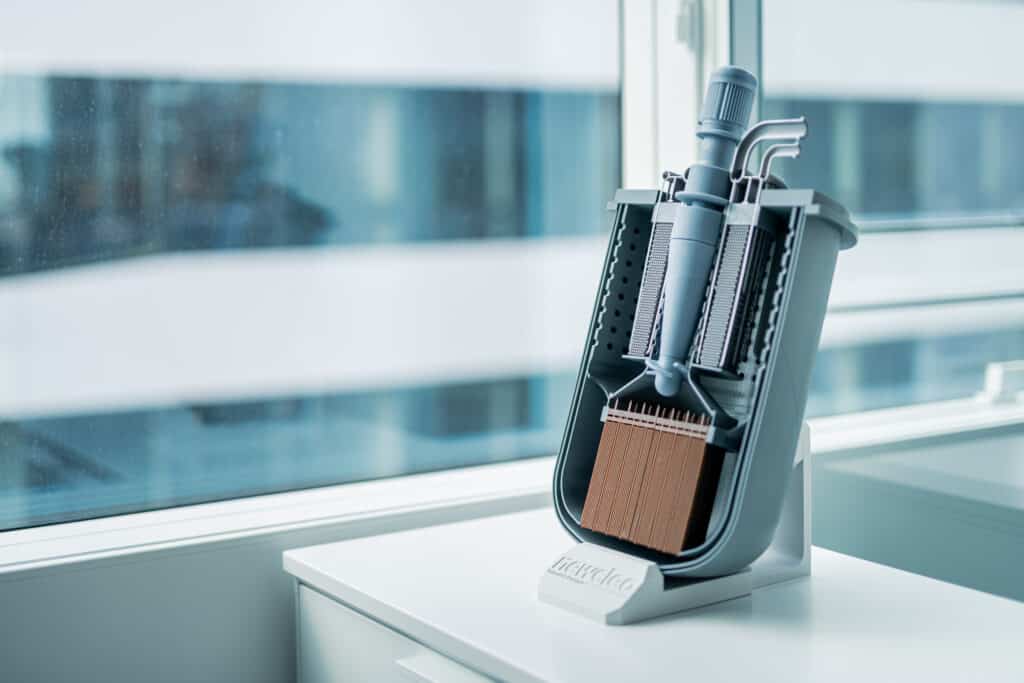
_Newcleo – France, Lyon Portraits d’entreprise_
One disadvantage of lead has limited its attractiveness as a coolant. At the temperatures of interest for a reactor, corrosion rates in contact with stainless steel can cause operational problems. For the Alfa class submarines, corrosion products created some clogging issues – mainly in small diameter piping like that found in steam generators.
newcleo, Stefano’s company, is taking advantage of research and development conducted during the 40+ years since the Alfa’s were designed and operated. That research and testing has proven several different techniques that can be used to limit the effects of corrosion and that also offer the opportunity for future improvements that will enable even higher operating temperatures in subsequent reactor models.
During Atomic Show #313, we talked about advantages and challenges of lead cooling, the use of mixed oxide (MOX) fuel, the company’s phased technology development program, its licensing strategy, its options for initial deployment and the reasons that now is a great time to be developing nuclear fission power systems in Europe.
This show should provide plenty of food for thought. Please participate in the discussion using the comment features here.
Transcript
Read transcript
There's a way, a way such a better way today, today. The nation's voice tells the world there's a better way, today there's a better way. This is Rod Adams and it's time for another Atomic Show. My guest today is Stefano Bruno, the founder and CEO of Nucleo, a lead-cooled fast reactor developer. Welcome, Stefano, how are you? Very well. Thank you. Welcome everyone. This is exciting for me. I've been following Nucleo for a while. Why don't you tell us a little bit about what Nucleo does, which are vision for the future is. And if you need to, include a little bit of a chore background. Yes, I'm a physicist and I started working on this project, essentially many years ago, in a 94 in Europe. Nucleo makes a reactor using lead as a coolant liquid lead. And the idea back in the 90s was to build safer reactors. So, reactors that could have include a passive safety system. And I remember that Europe was very emotional on the reaction from the Chernobyl accident from many years. So, our goal at that time was really to build safer reactors. And then there were two other concerns that, mind very much, the European population. One was the cost, is still the cost. And the waste. And actually, the use of lead allows to use, to build a faster reactor. And, you know, fast reactors can actually burn essentially the radioactive waste that is produced by the industry, plutonium and the oreo deactinites. So, what we do today is to, not only to build a lead reactor, but also to use mox, a mixtures site. Mox is a fuel that has been already starting from Benjamin Francis back in the 60 and 70s, because was the fuel that was intended to be used by the sodium cooled reactors. But the sodium industry in Europe was too expensive in the 90s to be continued. In the 90s, the price of oil was, went down to $12 per balance. So, the cost of nuclear was very much a concern. And the sodium reactors in Europe cost 60% more than PWR. So, the sodium reactor just disappeared because of this higher cost. So, lead reactors are lost today to come back into the idea of using a fast reactor with more safety and less cost. But also, re-open the idea of the closing of the fuel cycle and the motor recycling. So, the possibility of recycle many times, the fuel that is used in our reactor, but also in other reactors. What are some of the economic advantages of using lead over using sodium as a liquid metal coolant? Yes, sodium is a chemical risk because it gets fires in contact with air and even explosion in contact with water. So, to control this risk, you have to essentially spend more money. You have to add systems and systems and is more expensive. Lead is completely passive. Get only oxidized. So, there is an opportunity essentially to reduce many systems that are present in a sodium reactor. Our co-founder and today the chief technical officer is a very senior person that has built superphonics. That is the sodium reactor of finance. And with respect to superphonics in all of these years, it managed to take off 13 systems. That is, that were present superphonics and not present in our reactor. So, it's simplification. Huge simplification. The biggest one is the secondary loop. That is a sodium loop to avoid the interaction of water layer with a primary system. It was a sodium loop. So, there was a secondary and then a tertiary system that was the one producing a electricity. So, for phoenix, there was one kilo meter of tubing only for the secondary. It was really huge. Of course, the reactor was very big. One was 1.6 giga-but but still this had another way. So, compared to sodium essentially we have created a reactor that is as 1 fourth. So, 25% of the steel that was present in superphonics at equal power. So, it was basically a critical reduction of the dimension. Imagine that our 200 megabatoelectric reactor is only a cylinder of 6 meters in diameter and 6 meters in height. So, it's a very compact. So, you can achieve a very compact reactor by increasing the safety. And this allows you to reduce the cost. And somewhat aware of lead cooling or actually it's a lead business, you tectic was used in the Soviet Alpha submarines. And one of the challenges that that program had was that that coolant reacted with the metals in a way that that reduced the strength of the metals. And that was with some corrosion there. Does lead have the same corrosion challenge that some of these for the lead business you tectic did? Yes, the biggest problem of these, the summon is was actually the clogging of the system by oxidation. Because at the beginning the Russian didn't control the oxygen content of the altectics. And of course the corrosion is very strong as well. Well corrosion is present everywhere in every reactor. You have a temperature in which you can operate the reactor and the higher temperature that you cannot. We've water. You also have corrosion. There is no, you know, really material that can control. The corrosion of lead long starts to be well. We have started from the 90s essentially from this experience because the Russian scientist in the 90s with the end of the cold war. And they, Russia was a poor country and in the 90s and the Russian scientists didn't have a lot of money to support the Russian scientists. Europe and US gave a lot of money for the scientists to be in front of the European one. And we've been working many times many years with them. And so we had the kind of technology transfer of their experience using lead power. And then there was a huge European research that started still ongoing for the subsequent 20 years. That really understood very well the mechanism of lead. Okay, roger. So it is important to oxidation helps you to protect as well from corrosion. So it's something that is good to control. Today we prefer to use aluminum, aluminum. So aluminum oxide to protect from the corrosion the steels and this is a very effective way to do so. But even a bare steel that has been used in superphonics for example, for the cladding of the core. Even this steel can operate with lead at very easy at the temperature of 440 degrees or 480 degrees without any sign of corrosion. Speed don't have to be very high. Otherwise you have another phenomenon that is erosion to start. So your lead reactor has to be an reactor in which the speed of the lead is moderate. And this is possible because lead is very transparent to neutron. So you can space very much the pin of the core without any effect on the matrix and the same opportunity to keep the core critically. Even if the lead flows much more lower. So you have a lot of small secret things to see the relation that you have to take to design a lead reactor. But overall it's quite easy. So if you want to and we want to go higher in temperature because with higher temperature, you also increase the efficacy of the thermos cycle. Then you have to think about protecting your steels and the aluminum excited is a good option. You can create coatings but you can also use a luminized steel that so creates a self-healing protection. This is what we have learned and this is what is used. The lead, many lead that design in the world is made to different choices but they think they are already effective in protecting from corrosion. One of the challenges that metal cooled reactors have is moving fuel assemblies and actually doing a refuel because it's unlike water is not transparent. And I think the demand to reactor at a long time shut down because of an issue associated with dropping stuff into the sodium. How do you handle that in your reactors? Yes, indeed that has been the problem of the two sodium reactors of Japan, not only Manju. They both were started because of the fuel. In the sperphonics essentially and also in the reactor, frankly before there has never been a problem or pulley of this kind but it was the most difficult things to handle. So learning from these spins and also trying to solve all the problems that indeed the fuel assembly can float into land. So there is also the other complication. We have decided to essentially prolong the fuel and get to the surface of the free lead and have enough material to counter to become essentially neutral to buoyancy. So to have just a little bit of weight. But what is more important is that we can actually take a machine and move these fuel assembly that comes out of the free service of the lead in air. So we don't need to have a complete. the sensors to move into a liquid that is not transparent. So this is how we solve this problem. We have also patented this solution a few years ago, but it is a solution that is also being adopted by other designs, as well. So it's really the way to go problem. And this is a lot of other interesting possibilities to the system, this connection with the field bundle below. Would you consider your reactor to be a breeder reactor? You talked about the closed fuel cycle. Absolutely, yes. The final goal is to use the very hard spectrum of lead that allows you really to fish in almost everything, or the plutonium pairs and magnesium, coulium, et cetera. So you can think about the outstanding possibility of a closed multi-recycled fuel cycle to achieve a system in which essentially you have the uranium coming into the system, and only the fishing fragments coming out. Having some substantially stable quantities are the toxic quantities of plutonium and diactinites only inside the reactors. And if you do so, every reactor in the world produces a very fixed amount of fish requirements, because one gigabattellate leak for one year produces only $150, or nine other kilograms of fish requirements. In this quantity, it's so small and so sustainable, because of the fact that essentially, fishing fragments after 250 years, they go back at the similar activity that they distracted uranium. This is a truly sustainable. So if you can really avoid the impact of your waste in such an understanding way, you really have sold one of the fears of the people that is the waste. So from this point of view, it's very sustainable. And then, of course, you have lead. We want to use even the lead from the batteries, because there is a huge recycling industry. We need to put it at the lead. So since we want a very, very pure lead, we can even recycle it. The battery industry recycles eight million tons of lead every year is a number that is of standing. So also, from this point of view, you don't even need to extract lead. Of course, the steel can be green by definition. And then, essentially, you have enough uranium and plutonium to date to start an industry that cannot use uranium from the mines for hundreds and hundreds of years, even with large deployment of lead reactors. So we live in a certain situation in which we can build a more sustainable nuclear industry. In itself, nuclear industry is very sustainable. Of course, but it's even more sustainable than our own industry. You mentioned that your reactors don't produce long-lived waste. What do you think of the existing used nuclear fuel? Is that a resource for you? Yes. You know that in France, we still recycle the waste. The recycling, so the destruction of plutonium and the creation of mox has been considered and you and Dan in many countries, like Japan, Russia, China, Belgium, and that's been considered in countries like UK and US, where there has been mox manufacturing that has been built but never used. So this is a... There is a lot of available materials still. In UK, we have 140 tons of plutonium that is free and needs to be disposed. In order to burn this material, we have to start from a high concentration of plutonium in the fuel. I want to really simplify. If you go around 15, 17% of a plutonium contact with respect to uranium in a reactor like ours, you work more or less in an isobridimode. So you create as much plutonium from the uranium as the one that you burn. If you have less, you have a brither. If you have more, you have a burn. So our aim is to build a mox manufacturing facility that can use up to 35% of plutonium because there are possibly countries in Europe that want to burn the plutonium excess and that we want to offer this possibility with our reactors. So we definitely want to solve also the... And the problem of the waste for other kind of reactors and decrease essentially the burden, or the electricity or the waste of existing reactors or pressurized water reactors. How long does your fuel cycle last? I see your isobreaning, you're creating enough fizzometer, but I'm sure there's something in your fuel that limits how long you can leave in the reactor. Essentially it's crazy, but there is no composition of the fuel that is composed of in fact, and I do not create this liquidity because of a very hard spectrum of land, even harder than sodium. So there is no limit. The limit we find it in practice. But if we, for example, if we would apply even, and I'm talking about the very long term, technique that really separate only the... Fissions fragments from all the arctinites, you could really achieve a concept in which you always keep the arctinites mixed with the fuel and you only have as an output the... the Fissions fragments. It's not, you know, conceptually, it's not difficult at all. We have to see if in naturally this is... This is worth the effort to make such a... a radical separation because, for example, the French industry doesn't consider the coulium to be, you know, useful to separate. Coulium is a huge emitter of neotrans, hard times on. And so it's nasty to a hand also. And there is so little in the ways that the French blow says that we shouldn't, you know, spend time in trying to reprocess it. But if we have this coulium into a fuel, it can be burned as well. And you are very little, as in taught content of this coulium into the reactor. So a conceptually is very interesting to do because you would really get rid of the arctinites into waste. We have to see if in practice we can do it. We have to start with coulium because the existing moxel that has been already manufactured is a pure uranium-retronomics. And so we have to stick with the experience of the industry because we are building already a new reactor and we don't want to add that to many novelty in our design and our industrial process. Certainly we will try to understand more and more if you can add other arctinites in the system. One a natural possibility to start testing, for example, a higher analytical content for us is for example, to burn the existing fuel of super-phonics. Super-phonics was closed in the 90s. There is a still load of these fuel that is a mox with more or less 70% content of plutonium and slightly more than 20. And this mox is there since 35 years, 40 years, even probably more because it was the secondary load that was never used. So this moxel of magnesium, possibly a few percent. So that's for example, it's a very nice opportunity for us to prove also that an magnesium content into the plutonium is not it's not an issue for us and we can burn also the old plutonium, not only the new plutonium and there is a lot of old plutonium into the deposit as well in Europe. As I recall, you or nucleo was located in the UK and part of the reason for that was because of this plutonium inventory and the UK is very well expressed interest in smaller advanced reactors. Are you still planning to build first in the UK or are you finding that there might be other venues more acceptable? Yes, we made the oldinger in the UK because the fact that two years ago, more than three years ago when we found that the company, we UK was the candidate was more pushing towards having a monuclear power installed and also is not a political debate in the UK. Every party and the population is in favor of it. So it's a nice country to really to operate. But we also opened two subsidiaries, one in France and one in Italy because in this country there was a lot of no-how that we had to use. So we have in Italy a faceted that we qualified the components and also integrated the demonstrator because Italy since the 90s, so since I was working with Italian groups on this project remained one of the countries that is more advanced into lead research. And then we also needed to be in France because France has a huge experience in fast reactors, of course, but also because in France, more system and factor for EDF. So for PWA and so there is no on the floor. What happened is that about one year ago, President Macron, France started a very bold action to expand the nuclear industry in France. And also opened very much. for funding and for support from the nuclear industry for advanced modern reactors. So we applied for this competition. We won the competition. We got the lab of a now-at-if system in France with funds. And we decided then to do our first reactor and Max Manfath to Infacetyl in France. Also because in UK there has been three changes of governments and four changes into the energy minister. So there has been a period in which no decision has been really taken. The only competition that was open was for pressurized water reactors. So we still don't know if we will be able to operate in which condition advance modern reactors in UK. So this moment of delay that was created in UK, hopefully was balanced by the enthusiasm and huge, huge, huge effort that in France has been put. And when I say I've noticed it was a lot of money to expand the nuclear industry. So hopefully. But of course we are still willing to deploy our reactors in UK. And hopefully the British government allows us always willing to burn the plutonium rather than disposing it underground, that we are very happy to build a Max Manfath infrastructure today and use that Max to feed our reactors. Now the Max is currently being produced for EDF is a lower concentration of plutonium than what you're talking about. But in the process they are starting from a very high concentration in the looting to get to this lower concentration. So there is no concern in the process to produce higher Max content. For example, as I mentioned the plutonium content of Max in superphonics that was the fuel superphank was done in the 70s was more than up to more than 20%. So today we are interacting with the safety authorities and we are asking the permission to use up to 35% plutonium content into Max and up more than 6% amourism content into this well into the fuel. So we are really preparing ourselves to be able to burn very effectively the plutonium. So really to decrease the quantity of plutonium, very rapidly because if you start from a 30% and rich plutonium, you put your enemies burned very rapidly. These creates also unfortunately the necessity to change the fuel more often. And so from the point of view of a pollution number reactor that has to produce electricity, there is no interesting going so up in the plutonium content. You could start from the 13-15% and have a fuel that lasts very, very long but not. But we think that we will be asked by the governments and the population to burn these plutonium. So we are preparing ourselves to do the option of having a hydrogen content into the fuel for the mission to be burn. Of course if we have this mission we will need to get some fees to burn the plutonium that would balance the fact that reactor will be used less efficiently from a fuel point of view than a normal reactor that does not have this mission. So right here about burning or burying such valuable fizzile material that sort of cringe, which seems to me it would be much better to use it very slowly and create new new material as you are doing it so that the fuel acts a lot longer for our future generations. And people sometimes call it a burden and I just think of it as a gift. Yes, of course if this country doesn't want to have a free plutonium because it is too much of an excess that 140 tons on the UK because of the proliferation of risk then we can have a phase in which you reduce this amount. And the idea is that to maintain enough quantity of plutonium to be able to multi-sacking the uranium, the the the the plutonium that is everywhere. And you know that only in France if we would use the the plutonium that is already on the French territory. France would have 100% of the electricity needs been satisfied for 2000 years. So it's incredible how much power there is still into the arrangement that we have extracted from the mines. If we decide to use it in a close fuel cycle is amazing and I think we have to use it in this way. It's incredible to think to have this uranium in the stored and unused plutonium. So on your website one of the early stages of development will be a electrically heated small version of your system so you can test out the loops and the heat transfer and that. What when is that going to happen can you describe that system a little bit. We have an all the reactor side in Italy between Florence and Bologna in the in the mountains. And that has been for the past 25 years the research central outlet of an air which is the Italian public research entity that is taking care of nuclear research. So we thought that this was a deal to expand that is a capability and make a really a no nuclear full scale demonstration of our reactor. So this is not possible because. So we have scale down some power we have time megawatt electric. So we have to scale part of the reactor but many components will be tested as in the original size. For example the decay heat removal system on the roads and many other components. On top of this we have also a lot of we are building a number of lead loops that are already existing six lead loops there but we are building a three additional one. Because we want to test the real you know fuel last and the components in the real size. And this is happening because on top of having already started to use the facility over there. We are building and in the construction the first two loops that belongs to us by the end of the year. So we'll be able to start making test from generally next year on these two new loops. So we are very excited but the real big reactor we've even the steam generator in the turbine because also we would like also to test this this coupling because we are operating with different temperatures and processes. We want to have an integrated the demonstration this will start only in 2026. But so we are working to you know to we have already renovated all of the place where this big demo set will be. We have a broader radio or electrical power so we are on the good way to be on time for 2026 and start operating this integrated the most. I think this is a with the facilitate and accelerate the licensing in France and indeed the regulatory authorities of France that have adopted the fast track. Process for advanced reactors is a part of this fast track process they they will be able to come and and and see the the facility and see the results and suggest test and and things to to check on the big facility to one other important. Of course, understanding that we may extract from this integrated test how to best use the instrumentation and the control that you need under the reactor. For example, so it's a very interesting to have a non nuclear. Faceting which you can really test most of the things that you have in the final nuclear reactor because of course you can change instrumentation and be close to the facility without the risk of any other. That brings me to the question of where do you test your fast reactor fuel. I know that in the US we we don't have any capability for fast flux testing and as far as I know that the facilities for that are located. In Russia do you have any any thoughts on that. Yes, of course we have taken the decision to to take the exactly the fuel pin that was that was used in superphonics so the same steel and the same fuel palettes. So the on the basis of this the authorities can allow the reactor to start because there is a huge no how on the irradiated fuel pins of superphonics and we don't even change the geometry we don't even change the material because the material compatible with the use of lead after 400 80 degrees. So we can if you don't overcome this temperature we are really qualified for that. We would like to use the reactor at the higher temperature 530 so and since we were not able to have such a huge data set to that temperature as well for for a combination with lead. We we would like to to to use to make a radiation. There is an opportunity for our radiation per been 2026 because the joy. The reactor was to the start so we really hope this will be possible and this will be done. That the joy or reactor may may start so we are in the line to make the radiation test also that should be through the restart of course they are planning for the date and and that engage in this but it's you never know in the nuclear field if. not being able to predict schedules is something common and nuclear and just for the audience the joy of facility is one of the two fast reactions. that are located in Japan, the other one is Manju. It's an interesting path. Now, your other part of the development path is once you get to a fusion reactor, the first one is going to be smaller than what you call your commercial scale. Can you describe why you decided to start with a 30 megawatt? And here's a 30 megawatt reactor, or going to be a one of a kind, or with a commercial line of smaller reactors in your 200 megawatt reactor. No, the 30 megawatt is really fully representative of the 200 megawatt anetric. Our concern was that since we want to do a lot of research with this reactor, it would be a bit exagulated to have a full power reactor, because when you don't produce a electricity, you have to get rid of essentially 500 megawatt per megawatt, so the site has to take this thermal power in terms of cooling in the air and water. So it's not the same consideration or so. If you think about the possibility of actually selling the electricity or producing, having a 200 megawatt on and off, because you are looking at an experimental program is maybe difficult, and also in a great. So that is the reason. I would say that we are starting also the 200 megawatt of the 30 process to the regulatory authorities next year. And according to the site, we can still consider the possibility of having our first reactor directly the 200 megawatt anetric. This is still an open question. But at the moment, the idea is to have a reduced power. I think I saw somewhere, maybe not on your website, but some news article that said that you have an interest in putting your lead pool reactors into a maritime environment. 200 megawatt's electric is pretty big for the maritime environment. Yes. In that case, actually, we have also a conceptual design of a machine, which is very compact. It's essentially only 30 megawatt electric. But this is different from the 200 megawatt because we will not be able to change the fuel. So if you want to be really compact, and I think a marine propulsion need, compact reactors, you really avoid the movement of the fuel. And we put directly our steam generator and the pump on the top of the core. And this design is essentially to make a vessel, which is only 3 meters in diameter by 5.5 meters in height. And this is also essentially reduced cost. So you have to build your core in a way that your fuel lasts a long time. I think that the use of lead and is really are having a very long upper map. And if you have a good balance of plutonium in content in all uranium, rich uranium, quantity of fuel, you can really build up on the plutonium breathing as well in a way to last fall. Very, very long time. So the limit will be essentially the pin, integrity and the fuel integrity of other men. But let's consider that you may have just for simply 10 or 15 years as a lifetime of your reactor. This is still justified the possibility of having a reactor completely replaced rather than changing the fuel economically. So even such a design, and even a length of this reactor up to 15 years, justify economically, with respect to burning a normal fuel, with diesel engine on the ship. So it's a very interesting application. Of course, the 30 megawattarectic is justified on your big container ships. So this is the target for us at the beginning. And we have started the study with Finkantele, which is one of the biggest builder in the world, Endorina, which is the 10 in the international authority for the number of registration and standards that to consider our reactor design on a ship like that. And so that's a very interesting research that you are doing. That's what I read. And that's good. I'd like to hear that. I can see the idea that the fuel handling machinery and your large reactor would be too much space, taken up for a ship or an environment, make the reactor vessel too tall, because you got it included that machinery in the reactor. And it's also very expensive. I think it's a very double digit significant percentage of the cost of a reactor, the refueling machine. So it's really hard. And at the end, you have a such a compact reactor, and you can take it out completely. We have a shut down and take it out and replace with a new one is at the end. You gain a lot of time in the operation of the ship. I can see that it's being fairly simplified. And since your fuel and everything else has already been surrounded by lead, which would make it easy to transport. Exactly. Although it's a heavy, but you're already shielded. You don't have to pull out the rods and figure out or steal them in a separate way. Take the whole vessel out. Exactly. And then, of course, the ship can come in a special place in which the maintenance and the reactor is transferred in a place where it can be opened and treated a lot better than having to do this operation in the ports on our ass. And of course, when the ship comes into this special place, you take out the old reactor. You put in a new reactor and send the ship on its way. And then take the air off. OK. And that makes some sense. Now, one of the interesting parts about nuclear that intrigued me was you ran a very successful fundraising around just last year and was able to attract a pretty significant level of funding and values your company well over a billion dollars. Can you describe how that happened and why we used such successful compared to some of the other reactor vendors? I think there are a few reasons. First, I met a nuclear-mating company before I lost my staff into this company. So in between the 90s and the beginning of the 20s where I was working on reactor, I created this company. And this was very successful. It became the most important company in the world. The biggest exit has been spent in the climate in four billion dollars. So there is an entrepreneur part of mine. Mine, wow, that is very strong and my experience. So if you combine the fact that technically I'm very knowledgeable about what I'm developing with nuclear and then that I have this experience, this something that investors like very much. And actually I made a rich lot of people with my first company, including myself. So we are demanding to also to invest. But I had a lot of new investors because, and this is the second reason. The times are very mature for that, for essentially investing into nuclear. Of course now it's a little bit more complicated because you have the technology that can be attractive for an investment. But if the environment is difficult, you have less money. So I think after a couple of years in which we have seen also a few billions been invested in fusion. Things are not exactly the same in this moment or over high tax rate. Intritionally. Interest rate, sorry. So it's different, but still, honestly, we have built enough momentum to be in the process of being successful, even with the challenge of raising one billion now. So it's just been good so far for us and we hope it's going to be the same in the future. I think that building a sustainable business in a market in which the competition is not so big. Because we are in Europe. There is less money and less support from the government. But at least there is less competition. What do the companies has more money by far in Europe to be deployed on a nuclear project? So very happy to. And then we are the only company that has decided to do the months. And so to launch a more sustainable approach. And these, I think, is something that is also well-perceived by the public and by the investors. You mentioned that Italy or Europe in general was very cautious. Actually, worse than cautious about nuclear falling to Chernobyl accident in your own home country exited nuclear. I just read recently that they're considering time to get back in a nuclear. Is that true? Absolutely. This is something we never even dream about three years ago when we founded the company. In despite of these, 90% of our money comes from Italians, France or people. So that's amazing. But now, indeed, the government and also the stakeholders, which is the industry in itself and so many associations are in favor of nuclear. But also the population. I've seen already three different studies that shows a slight majority of people in favor of nuclear in Italy. So the government on the 21st of September has started an activity of rebuilding their laws and institutions that are needed to, of course, to give a transition in control of nuclear industry in Italy again. And this has been done after the parliament and have imported some preliminary law that mandate the government to do so. So it's very efficient, it's happening. The government is aiming at developing the next generation of our... reactors, so the fourth generation. This is also because we had a referendum to block the nuclear and the fact that today we have completed new technologies, that the geopolitical situation is completely changed because of course of the dependence of gas, or Italy from Russian gas to also. Gas coming from southern sources. So since there is this need of energy independence, as well, I think everyone now is aware that in Italy we don't need to go through a referendum, but we just need to rebuild the low system to our nuclear to come back. So the momentum is significant, and I really hope we will be able to deploy nuclear systems started from 2030 or 20th year. I know that nuclear research and even supply of nuclear components to others from Italy never really stopped. How did the educational system do? Do you keep training nuclear engineers? I was standing there, yes, and I'm very happy. And actually the numbers in the university have increased very much in the past years. So this is really encouraging. Ourself, we are ready to transport the education system everywhere from UK, in which we are, for the film, at least 10 PhD. And then we just made an agreement with the London School of Economics to investigate in a more accurate way of the impact on economics or the nuclear electro system in a few industrial cycle. As compared to other systems and so on. And in Italy, we are hiding a lot of very young engineers. Some of them didn't come from the nuclear industry, but you know that we need so many mechanical and the American and any kind of engineers that there would be there also. And but we still have a lot of experienced people that you mentioned was working for other countries. But also retired people. Because there are a lot of people that are nuclear engineers, they're really built and made a new project. And they're still there and they're still willing to exchange the provided experience to the industry in relation. So we're really bridging the gap between these incredible huge experience and that belongs to the past and the features that are the youngest generation. We're very happy to to to allow this in our company. We are now 350 in Italy. So we have already a considerable amount of people being employed. What's your total head count between your various locations? I think it's almost 500. I must say that there has been a little bit of a boost because we acquired three companies. Two companies we were operating in Italy. They were working together. There was an engineering company that worked together with a manufacturing company to build a latest system. And we built and operated and so this lead system in Italy, right now, but also to Romania to China to Western Europe, to many in many situations. So that is very nice. It was 110 people more. And then we both saw a company in the test to Manfati in Ficity for pumps. Essentially secondary pumps for secondary systems, so no primary pumps. And this is almost 70 people as well. Both companies that have no better hand-off it abilities. So it's nice that we are not only a startup consuming money, but we start with our own business. A business that has customers and that can expand because of the capacity of investing of our company. But also can expand because one day we will be also clients of our own company. So this is a bit expanding as our own strategy in Europe. With the expanding activity of searching for suppliers and companies that can help us build in these many reactors in the next decade. Sound like an experienced entrepreneur? Yes. At the end, I'm looking at self and I'm doing the same that I was doing before. In the nuclear medicine, we were developing a therapeutic drugs. And this was very, very limited in for decades in nuclear medicine. The medicine was essentially diagnostic. We aimed at developing this therapeutic drug, but we wanted to make some money. So we started to have an activity on the existing diagnostic drugs. We introduced innovation, the degree of innovation also in this field. But we also gained a lot of experience because at the end of the process that were needed to make a radioactive, you know, fluorodoxic acid, of course, for example, that is made with cyclotols. And as a chef, I've got 10 hours. This no-how was very important for a therapeutic drugs that carry the same complication where you manufacture, but also the logistical complication of having to deliver the product. That is a radioactive and a very short time. So when we registered our first drug, it was the bigger objective. We had already 160 millions of ternova. And the hope that when we were building our first reactor, we'd be having a built significant ternova also from the operation of the company that we had put together in these years. We've been talking for about an hour. That's about the time I usually either get tired myself or know that my audience gets tired. So what I'd like to do is offer you the opportunity to tell me anything that you want to tell the audience that I haven't asked you or we haven't discussed yet. Now, I think we have really discussed many things. My recommendation would be that we consider more widely the multi-cycle option, because I can see from Italy that, from Europe, that the huge interest of the people that don't understand nuclear, really, is strong when it comes to nuclear waste. So the idea of reducing the nuclear waste and using better the resources during the test-business tractor and so on is really attractive. So we have to consider this possibility to have a more friendly nuclear to the eyes of a general population. And I hope that this opportunity will be considered by more countries outside of Europe. I know that US, for example, as considered the process in the past, the Savannah facility was built with an investment of 6 billion and never used and closed. So there has been some consideration to do this rather than putting everything underground. So I think it's good if we are showing that this is feasible or so economically, but it's really I hope that more countries will join this concept. I agree with it wholeheartedly. It is a gift to future generations, not a burden. We have the ability to reuse it, we should do it. So with that, I'd like to thank you very much. And I'm talking on reminding the audience. I'm talking with Stefano Boono, who is the founder and CEO of Nuclear. and Nuclear's website is nuclear.com, N-E-W-C-L-E-O-D-C-O-M. So those of you who want to learn more or keep track of the company, go there and investigate. It's pretty exciting stuff. And I'm happy to hear that there is a well-funded, well-run, advanced nuclear company that is developing such an interesting product. Again, thank you very much Stefano. Thank you very much to you and your O-D-