Dr. Rita Baranwal, Westinghouse AP300
Concepts discussed
Auto-linked from the episode's notes and transcript.
Show notes
Westinghouse, one of the world’s first nuclear power plant vendors, recently announced a new small modular reactor (SMR) design called the AP300. It is described as a simplified version of the AP1000, four of which are currently operating in China and two of which are in the final stages of operational testing in Georgia, United States. Six additional AP1000s are under construction.
In a May 4, 2023 press release, Westinghouse summarized the AP300 as follows:
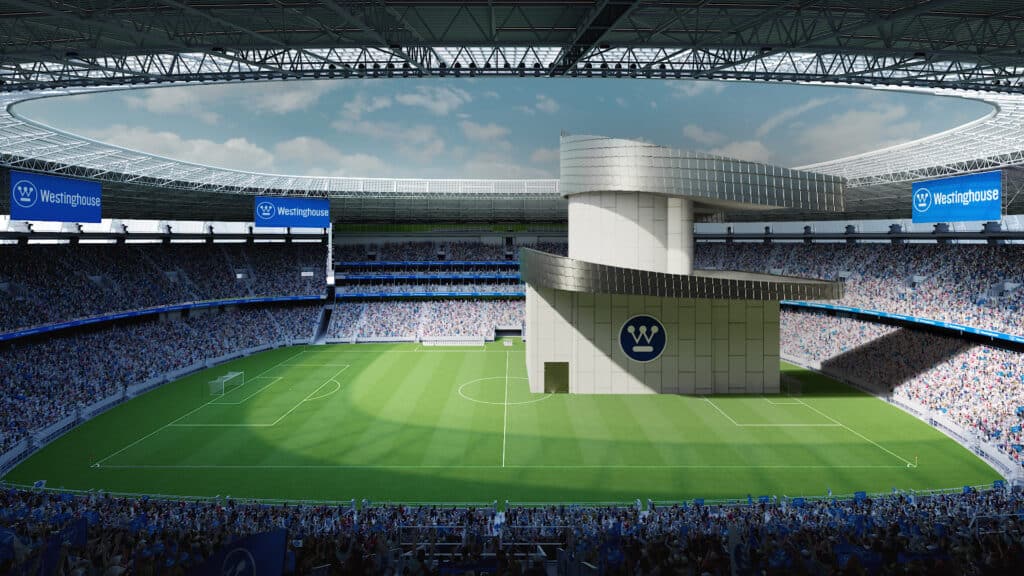
> Westinghouse Electric Company today launched its newest nuclear technology, the AP300!™ small modular reactor (SMR), a 300-MWe single-loop pressurized water reactor. The AP300 SMR design is scaled from the advanced, proven AP1000® reactor and is the only SMR truly based on an Nth-of-a-kind operating plant.
>
>
>
> The AP300 SMR is an ultra-compact, modular-constructed unit that leverages the innovation and operational knowledge of the global AP1000 fleet. It will utilize identical AP1000 technology, to include major equipment, structural components, passive safety, proven fuel, and I&C systems. The AP300 will bring to bear a mature supply chain, constructability lessons learned, fast load-follow capabilities and proven O&M procedures and best practices from 18 reactor years of safe AP1000 operations.
> Westinghouse Unveils Game-Changing AP300
In a Nuclear Engineering International article Westinghouse President & CEO Patrick Fragman expanded on the press release statement.
> It is using the DNA of the AP1000 in terms of technology.” It “has unique advantages in terms of robustness of the safety case, simplicity of the design, with huge implications in terms of costs and time to construct and obviously an ease of deployment because, with the AP1000 being already deployed, the AP300 SMR will leverage the existing supply chain, the existing design, the existing licensing pedigree”. Fragman described it as “no more and no less than an AP1000 with one loop instead of two loops”. This means it is reusing a majority of components, systems, equipment. “The fuel is identical, the constructability lessons are identical,” he said.
> Westinghouse launches AP300 small modular reactor
That description sounded exciting and intriguing. Though the advertised power capacity would be approximately one quarter of the power output of the AP1000, it seemed that the plant would be an easier-to-construct version that could sail through licensing and require a modest detailed engineering effort. It would be a design that was familiar to those who had already completed one or more AP1000 units.
There was a fair amount of discussion among engineers and other nuclear advocates on Twitter about the plant’s equipment choices, its status as an SMR and the announced timeline for design certification and operational deployment.
The Westinghouse press release also informed the world that Dr. Rita Baranwal, a former Assistant Secretary of Energy for Nuclear Energy, would lead the development of the AP300 as the Senior Vice President of Westinghouse’s Energy Systems business unit.
Rita and I have known each other for a long time, having often attended the same advanced reactor conferences and American Nuclear Society meetings. I invited her to the Atomic Show to tell us more about the AP300, Westinghouse’s plan to certify the design and the expected timeline for deployment. We also discussed general customer interest, though the company is not yet ready to name names.
As she explained, the term “identical AP1000 technology” means something different from what I assumed. It does not mean interchangeable parts in the tradition of mass manufacturing of significantly different automobile models with exactly the same engine and chassis. It means equipment with identical design concepts that is redesigned and retooled with the goal of optimized cost and performance at new operating parameters. Changing a design and the tooling used to manufacture that design is not always a smooth process.
This decision helps to explain Westinghouse’s recently announced pre-application regulatory engagement plan, which establishes a design certification goal date of 2027 and a full construction and operating license by the end of the decade. Given the heritage of a design certification for the AP600 and 18 revisions to the certified AP1000, it was surprising to learn that Westinghouse planned to invest a significant period of time in a pre-application engagement with the NRC. Usually those engagements are designed to familiarize the regulator with designs using new fuels, new coolants and new safety cases.
Under current plans, the first AP300 will be up and running by the end of 2033, approximately a decade from now. That timeline is, dependent on Westinghouse landing a sufficient number of customers to justify the costs of establishing production capabilities for the newly designed plant and the unique equipment it will require.
As is often the case, Dan Yurman at Neutron Bytes published a comprehensive article about the AP300 that provides some of the same information I learned from talking with Dr. Barnawal.
Your comments and discussions are a major part of the value this publication brings to the nuclear energy space. Please participate.
PS – During our discussion, I asked Dr. Baranwal to compare the safety-related footprint of the AP300 (0.4 acres) to that of the AP1000 (0.75 acres). (She did not have the numbers at her fingertips, so her team provided them immediately after the call was over.)
Transcript
Read transcript
There's a way, a way such a better way today, today The nation's voice tells the world there's a better way, today there's a better way This is Rod Adams and it's time for another atomic show The thing that I'm going to do today is read a barn wall and old friend who is now currently serving as a vice president at Westinghouse with a portfolio that includes their advanced reactor development. Today's conversation will be focused on Westinghouse's recent announcement of the AP 300. Welcome, Rita. Thank you, Rod. Good to be here. And Rita, why don't you give a brief synopsis of your long career in the nuclear industry and what brings you to where you are today? Okay, sure. Thanks. Well, I started actually in the nuclear industry after earning my doctorate in material science and engineering and really my foray into nuclear was to develop new nuclear fuel for the US Navy's aircraft carriers and submarines using some of the work that I have. developed during my dissertation and I have stayed in the industry ever since. I spent about 10 years at that is atomic power laboratory and really the turning point for me was when I stood inside of where the reactor would go in the USS Ronald Reagan as it was being constructed at Newport News shipyard. And I realized that the magnitude and the energy density of the fuel that I was working on back at my lab in Pittsburgh was going to help power the behemoth, the behemoth of a ship to help defend my country. And it was just very, a very impactful moment for me in my career. So I was very fortunate to have that experience. And towards the end of my time at Betas, we actually embarked on a project with NASA to develop a reactor to go to Jupiter and explore the Jovian, IC moons. And so that to me was also a very exciting application of nuclear powered at this time for space applications. I joined Westinghouse as a manager of materials and fuel rod design and was able to work on again, nuclear fuel this time for commercial applications and so that was my introduction to the the commercial side of things and also introduction to the numerous customers that we have around the world. I spent about 10 years there and then moved on to launch the deal initiative called gain gateway for accelerated innovation in nuclear I was the first director spent three years there working with companies and connecting them to the US national laboratory complex in hopes that those companies could commercialize their technology faster using the resources from the national as the facilities, the technical expertise. The historical data that kind of thing. Through that experience, I was nominated by the president and confirmed by the US Senate to serve as assistant secretary in the US Department of Energy in the last administration. So perform performed that function, it was a true honor to be nominated and confirmed and be able to serve the industry in that capacity. And then after I left after the administration ended, I served as the chief nuclear officer at EPRI which had you know stood for electric power resource institute but now just goes by EPRI. Last year I had the pleasure of rejoining Western House as the chief technology officer spent almost a year and a half in that role and just recently have been named as senior vice president in energy systems to leave the deployment of our recently launched AP 300 small modular reactors and very excited to talk to you today. And it's great to be able to chat with a friend about the excitement not only that's in the industry right now but very specifically at Western House these days. Yeah, and word a lot of people are fascinated by the path that Western House is taking now for a smaller version of the AP 1000 which of course the bigger version of the AP 600. So you're kind of filling out your product line and some of the decisions that you've made are extremely commercially oriented from my point of view having spent a little time in factories and settings. Tell us a little bit about how you are going about building a smaller power version of the AP 1000. So first of all, you know, we I'd like to kind of set the stage as well for for everyone that nuclear is so perfect for addressing the challenges that that our world is seeing today provides a mission for energy provides energy security. energy price stability and grid stability. And so, you know, with respect to SMRs in general which promise to lower costs be easier to license provide more efficient construction and be quicker to deploy. So it's all of those are part of our AP 300 small modular reactor. greenhouse has an advantage is that we have over 70 years of experience developing and implementing new nuclear technologies and three countries have already granted regulatory approval to our AP 1000 reactor. And we have a lot of data that we have to make the best. Great Britain in China. About half of the world's nuclear power is generated using West enhance technology. 12 AP 1000 reactors have either completed construction or undergoing construction. It makes sense. Given the market that's out there at the moment to launch an AP 300 SMR is the only SMR that's based on end of a kind operating plants. We have 18 AP 1000 reactor years of safe operations. And of course that's based on the fully licensed and operating AP 1000 technology. We have more than 30 years of licensing advanced passive technologies with global regulators, as I mentioned those three countries already. And this concept we feel is readily deployable in that less than. 0.4 acres are going to be needed for safe and related building so it's ultra compact. It has a simplified design that reduces construction time frames and maximizes the use of our established supply chain. So the AP 300 though is going to have a lot of similar appearance to the AP 1000 as far as I can tell it's still going to have a dome containment dome with a shield building likely. Constructed in a similar manner to the AP 1000 shield building with the steel concrete composite blocks. You might say almost a Lego light construction and then you're going to use the same reactor coolant pumps and the same steam generator but only have one loop is that. An accurate interpretation of the statements of identical equipment. So there's a there's a single there is a single loop. We are looking at small I would call it smart innovation to address the cost drivers that we recognize and learn about during our AP 1000 instruction. So we're going to focus on minimizing the footprint for AP 300 minimizing the equipment, but we will not be touching the end triple S or the passive safety features of the reactor. Because that you know that could start to introduce licensing risk if we if we if we you know adjusted any of those. It does use identical technology, a 300 does use identical technology as AP 1000 but it is optimized for the size and the power output of the AP 300. There is some one time design effort that's going to be required. That helps us ensure that AP 300 is most cost effective. But maintaining you know firm basis on the proven technology. Of AP 1000 is absolutely vital to ensuring that first of a kind risks aren't introduced. But this several times. So one of the factors in at least the Chinese reactor construction time was the fact that the scaled up reactor coolant pumps, although they were the same technology. As has been proven for many years at sea. The actual manufacturing of that much larger version ended up taking a lot longer than anybody expected because there were manufacturing challenges that were certain harmonics and and matters that were more a matter of art. And so you're not going to be able to use the same reactor coolant pumps and they're not going to come off the same proven assembly line. Is that what I'm hearing you say. I don't know exactly. Yeah, but we anticipate that there are going to be some some small differences. Yes. Now, what what drove the decision to provide the AP 300 with a longer refueling cycle from what I can tell it's four years refueling vice the 18 months it's typical and commercial reactors today. So, given, you know, given the number of customers that that Western House has globally. We used a lot of some of the conversations that we have been having with customers of the past several years about having longer refueling windows, not windows, but we know years between refueling. So we use that information that desire to to be put into the AP 300 design as well. So it allows our customers to use the fuel for longer and doesn't require refueling outages as frequently as is needed in the current commercial fleet. Okay, so those longer refueling cycles hopefully will provide the ability for customers to achieve perhaps even higher capacity factors and today's reactors, although you're getting close to the point where they can't get much higher. Right, we are getting yes, it is we are very close to 100 right, but that is the intent. Yeah, that's the intent. And again, it goes back to to listening to our customers understanding what their needs are and then innovating and implementing those requests into our new products and new reactors in this case. Given the background that you described for us, I assume that you're somewhat attuned to the efforts that Western House has invested over the past maybe 10 years to improve light water reactor fuels some call the access. and tolerant fuels, but most of us or many of us advocates simply like to call the improved light water reactor fuels because we're not only to remind people that there is such a thing as accidents, but this is about how those fuel improvements will affect perhaps the performance of AP 300. Also at Westinghouse, that product line is called encore and our encore fuel has several different features including the NDR aimed at better fuel cycle economics. So at the moment we have just recently had license in the United States are adopt fuel pellets. We're also working on coated cladding and then kind of the more long-term vision for our encore product line includes silicon carbide cladding. And so all of that, you know, each of those different variants can be used in the AP 300 small modular reactor, but that said it can also use traditional fuel. And so it's not the hold-in to, for example, you know, it's not the holding, we don't need high-ass ALU in this console, which is a benefit compared to some of the other SMR concepts that are out there. But as we move to, you know, slightly higher enrichments, for example, you know, between 6 to 8 percent, that type of advancement in fuel can absolutely be used in the AP 300, but it's not required. Another thing that is somewhat surprising or matter of curiosity for me is I believe that Westinghouse just submitted its licensing plan to the NRC. And it includes a fairly significant period of free application interaction with the NRC. I kind of thought that Westinghouse would tell the NRC, well, we've had about 30 years worth of free application discussions with you about this particular concept. So let's go straight to application. You're right. I believe it was docketed on Monday, May 8th. We understand what the NRC's mission is, and that is to ensure the safety of the public, and we do not want to minimize or assume anything in terms of what it will require to license the technology with the NRC. Because we have worked with the NRC for decades, we understand what it takes to license a new technology, and we respect the process. And so that's why you saw, you know, that we plan to issue several white papers. We've got already had, you know, early engagement. We plan to continue that. We're taking a structured approach. You're right that AP 300 is very close to AP 101 could assume, you know, it's almost negligible in terms of what the licensing differences are. But we want to respect the process. And so we're engaging with the NRC. And I don't want to minimize it. You know, there are differences. We are, as I talked about, the smart innovation, there will be some changes. But they're in the direction of goodness and applying the lessons learned that we have from AP 1000 to again to address the cost drivers for construction. Let me pause there and see if you have any other questions. Okay. Kind of going along that same path because there are many impatient people out there and I'm one of them. Oh, me too. I've been, you know, writing about SMRs now for over 20 years. So I'm really anxious to see some of them get deployed. And I'm always excited when it looks like one has a shorter path than others. So one advantage that Westinghouse has is that you have gone through full combined operating license applications with, I believe at least four utilities for four different sites. And currently two of those four AP 1000 are still valid. Do you know if the plant parameter envelope for AP 1000 and AP 300 has any similarities in any way to perhaps substitute one for the other or maybe even have more than one 300 fit were one 1000 used to be. I can't speak to that. I don't know that for sure. The information that we are sharing publicly is that the footprint that is needed for the AP 300, safety related buildings is less than 0.4 acres. And you I'm sure you've seen the rendering that shows the reactor on a soccer pitch or internationally on a football pitch and it's less than half the field. And so it's a relatively small footprint. I don't think we have yet broached with those utilities. If we want to use the existing AP 1000 plant parameter envelope for more than one AP 300, though in my personal opinion that could be entertained. How does it 0.4 acres come more 0.4, 0.4 acres is that what you said? Yes. Wow. I used to I used to have a house at seven more 0.4 acres. And that's that's a pretty small piece of land. So how does that compare to what an AP 1000 safety related buildings occupy? Boy, I don't know if I've had that data at my fingertips. Let me see if I can find that. It's okay if you don't. We don't necessarily prepare for our interviews ahead of time. So I sometimes ask questions that my guess is not ready to answer. But maybe you could you could send me that and I'll put it in a blog post. Okay. I can definitely do that. Yeah, I can definitely do that. I can definitely do that. Yeah. So I assume of course commercial discussions are always rightfully confidential. But have you had a significant interest excitement among your customers? Because as you say, Westinghouse has an awful lot of customers around the world for various products. We have had even up to up to May 4th. We had interest from international utility customers, our existing international utility customers, as well as conversations that we have initiated with new industrial customers. So the AP 300 is ideally suited for industrial applications, oil and gas. You know, in that industry as well as serving data centers, hospitals and universities. So not only for electricity generation, but then looking at process heat, district heating, hydrogen generation and water desalination. And so not only did we have interest from existing and I would say new to the nuclear industry type of customers. But since our launch, we've had a substantial increase and gratefully so in the interest from our existing customers as well as a new, I would call a new customer base. How do you address or how do you answer those who point to light water reactor temperature limits and say those aren't really very suitable for industrial heat uses. I know that in your former position as Chief Technology Officer, you are familiar with your own lead cooled reactor concept and one of the advantages people talk about with lead cooled is its ability to operate it significantly higher temperatures than water cooled. How do you address that? What's, western houses response? You know, there are specific needs that are addressing in the conversations that we're having with the potential customers. And your spot on, right? Every reactor has its benefits and our lead fast reactor does operate at high temperatures and can produce higher temperature quality, high-quality steam. And it's great for those applications that are going to need that higher temperature steam. But that is not going to be deployed until the next decade. AP300 is going to be deployed in this decade. And does serve quite a bit of the needs of the industrial applications that our customers are asking us about. So I'm confident that this product, the AP300, is going to serve the needs. And we do have portfolio of different reactor products that can suit what are the breadth of customers that we have, what they may be looking for from EVinci, which is our five megawatt micro reactor to the AP300 to the AP1000. Several years ago, I think probably up until about 2014, western houses developing an integral small modular reactor. I think it was around 225 megawatt's electric. And that reactor got shelved. Are there any kind of quick points that you might have for why you chose a different path than going back to what you had on the shelf? The AP300, the size is definitely more suitable to what we're hearing. Our customers are looking for as well as this reactor is based on the licensed AP1000 technology. And so it made sense to absolutely leverage those successes and also those lessons learned from from AP1000 and essentially scale it down to a SMR size. You and I both know that the upper limit of what's traditionally accepted definition of SMR is 300. And so that's another reason why we chose that size. That it's going to meet the needs of what our customers are asking for, but still falls into the accepted definition of what an SMR is. Now this may not be a question you can answer, but with my understanding of the history of new clears, it was a time when both Westinghouse and General Electric were underselling what they could do. They purposely sold reactors with say 514 megawatts, electric of advertised capacity. Knowing full well that those plants could very easily go up to 620 megawatts electric. It is Westinghouse underselling this 300 megawatt reactor. I am not familiar with that historical example that you gave. And I'm not sure why either company would do that. And so as far as I know, we are absolutely not underselling this. Yeah, well, most you probably know that many reactors operating today have had some power upgrades and some of them rather significant. The series of reactors, the specific numbers that I just used came from, I can't remember what the model number, but it was a, the Vermont Yankee is one of them. And the reason they did that was because at that time, reactors were still pretty new. And so there was a lot of analysis that had to be done and a lot of testing improvement that needed to be done before the... AEC would accept the safety case. They knew they could get it up there. They just needed to do a little testing before they did. So the idea of having some margin in a new design is not unusual. It's something that one might keep in your back pocket though. So I understand your response. Or I, and you probably don't even know. So that's okay. So what's the goal date for getting the first AP300 up and running? Up and running is 2033. And let me work backwards from there. So we anticipate 36 months for construction. So that puts us at 2030 when the project would be ready for construction. You saw that we just issued our nuclear regulatory engagement plan with the USNRC. And we anticipate while we can't predict what will happen, but we anticipate design certification by the NRC in the 2027 timeframe. And that allows us three years for project preparation, which includes site-specific design and licensing and long lead time procurement. And then getting us back to starting construction in 2030. So essentially 10 years from where you and I sit today, I hope that we can reconvene and talk about, remember a decade ago. And we have that. We were spot on and that we have connectivity to the grid would be lovely. Now one of the lessons that I'm sure that Westinghouse learned from the projects in Georgetown, South Carolina is the vital necessity to have a complete detailed design or virtually complete detailed design before you start building. So is that what the three-year period is going to allow you to do? It'll allow us that even even now, right? If you were to ask me, where are we in the design process? We're validating the design details right now. And yes, we are applying those lessons learned and we'll have a complete design before we move into construction. The one thing that we, well, there's several things. But the one thing I want to emphasize with our lessons learned with AP1000 is that we, understand how to understand when we're done. So we know how done we are, right? We understand that. And so it's important not just to know that you're done, but to know how done you are. That is a valuable lesson learned that we gained from AP1000. Okay. And part of that is up and before AP1000, nobody had really built a plant in the US for a long time. So I'm going from what design the engineer thought was sufficient to the design that the constructor thought was sufficient might have been a bit of a delta. Right. And we're applying those lessons learned to the AP 300. Very good. Very good. Very good. For certain. All right. Rita, I know your time is valuable and I want to give you the opportunity to bring us home with with some concluding remarks about your new design and the excitement that Westinghouse has to reenter the small, modular reactor race. Sure. Thanks. Thanks, Rod. I'd like to end with just, you know, a statement that small modular, small modular reactors will and must have a place in the global economy. Westinghouse is really proud to introduce a versatile SMR or AP went, sorry, a first of all, SMR or AP 300 SMR. And that's going to enable flexible tri generation as we talked about. Electricity, steam and hydrogen and it's going to be able to support a wide range of applications. And that's essential to meet the growing market conditions that are necessary for SMRs and it certainly increases the value proposition overall. We talked about the customer profile. It's going to be broader than just the utility world. So for instance, with industrial customers that are looking for stable an attractive energy supply for their processes, it will also in that same vein provide energy security. And then I think really we talked about some of the hurdles of entry into the marketplace. They need to be addressed, licensing and constructability. And we have done this with the AP 300 SMR. It's benefiting from the licensing experience as well as the heritage of the AP 1000 reactor. It makes licensing a shorter route, we hope. But the regulators won't take shortcuts in licensing SMRs. The amount of nuclear material that's contained in an SMR is substantial. So we understand that all SMRs need to go, need to undergo similar reviews as large reactors do and have done in the past. The best experience constructing nuclear power plants is gained from constructing them. So there's 12 AP 1000 reactors that have either completed construction or undergoing construction. And they all provide us proprietary lessons learned. I think it's fair to say that the cost of electricity for SMRs is probably not going to be impar with the cost of electricity of large reactors in the immediate future. But SMRs absolutely have intrinsic economic and financial advantages, lowering the value at risk in a way that makes their investment compatible with a broader range of balance sheets from utility to industrial customers is essential. All right. Sounds great. Looking forward to continuing to keep up with this development, watching your progress at the NRC. My hope is that you and your team can somewhat challenge the NRC and not just accept their way of their historical way of doing business. But that's up to you guys such a commercial decision. One, thank you for taking your time and we'll be in touch. Are you going to be in Charlotte this year? I will be in Charlotte this year. Yes. Oh good. We'll meet up there. See you then. Thanks a lot. All right. Thank you. This episode of the Atomic Show is brought to you by Nucleation Capital. We're a venture capital fund focused on selecting ventures with extraordinary promise. They're building the advanced nuclear sector and helping expand our clean energy options. We're building a portfolio of ventures on behalf of investors like many of you. We don't just take funds from the large institutions that typically allocate to venture capital. We believe that regular investors should have access to the opportunities in modern nuclear for their own portfolios. We allow people to subscribe on a quarterly basis, starting as low as $5,000 per quarter. A four quarter subscription will get you exposure to between four and six ventures. If you are an accredited investor and would like to learn more about how you can participate, please check out our website at nucleationcapital.com. That's nucleationcapital all one word dot com. Our fund that all of the information you need to subscribe is available online. You can also subscribe to our newsletter, nucleation insights, and join our pro nuclear investor network to learn about select syndicated investment opportunities. If you have questions, we're happy to chat. Please spread the word. There are ways to do that's a way such a better way today. Today, now reach your voice to the world. There's a better way today. There's a better way.