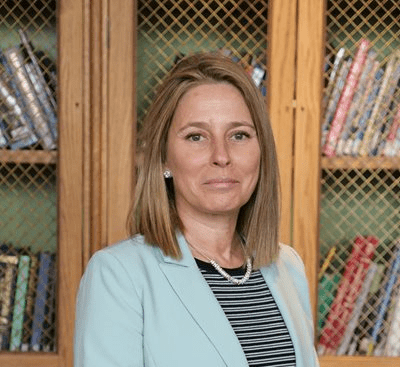
Dr. Sama Bilbao y Leon, Director General, World Nuclear Association
Concepts discussed
Auto-linked from the episode's notes and transcript.
Show notes
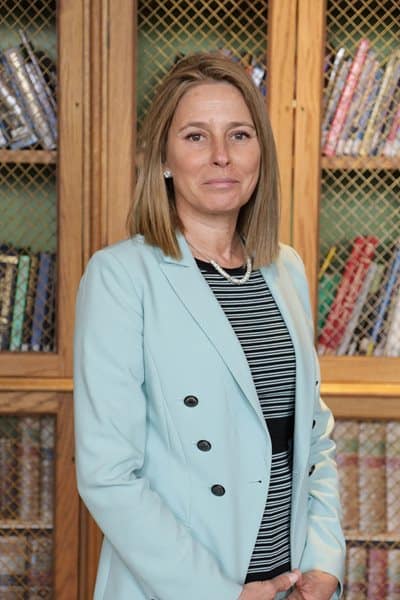
_Dr. Sama Bilbao y Leon, the Director General of the World Nuclear Association_
Dr. Sama Bilbao y Leon, the Director General of the World Nuclear Association, visited the Atomic Show to provide an international perspective on the revival in interest in nuclear energy deployment.
As the head of the organization that represents the global nuclear industry, provides education about all matters related to using nuclear technologies, and lobbies for recognition of the value that nuclear energy provides, she is uniquely able to describe what the world is thinking about building and operating a wide variety of nuclear energy generating systems.
Dr. Bilbao y Leon shared valuable messages from her conversations with world leaders during the recent Conference of the Parties in Egypt (COP27) .
“A very important dimension of decarbonization tends to be forgotten. When we are looking at the global north as in developed countries obviously we are focused on decarbonization, reducing emissions, energy efficiency, being more cost effective and more effective in how we use the energy that we do have.That is the transition that we are looking towards – cleaner energy. But when we are looking to the global south, their energy transition goes from *no energy* to energy.”
“You have a lot of countries saying, ok people. Yes, we want to decarbonize, yes we want to use our resources as effectively as possible, but we also – *and foremost* – want to achieve the standard of living that you guys are already enjoying.”
> “More and more countries, particularly in the global south, are realizing that nuclear is truly – or could be potentially – a game changer when it comes to providing abundant, clean, affordable 24 x 7 *energy* – not electricity, *energy* – for *everybody*.” Dr. Sama Bilbao y Leon, the Director General of the World Nuclear Association
We talked about the utility of small modular reactors (SMR) in bringing nuclear energy benefits to a broader selection of energy consumers – a term that includes all of us.
Aside: Our conversation took a personal side trip to a time when Sama Bilbao y Leon, then a graduate student at the University of Wisconsin, was intrigued by a “crazy” talk describing the benefits of nuclear systems small enough to be called atomic engines. End Aside.
We talked about the process that countries undertake when they choose to develop the capability to own and operate nuclear power plants. We speculated on nuclear energy’s potential to provide the kind of “leapfrog” advance demonstrated by mobile phone technology.
We also talked about ways to respond to inaccurate arguments claiming that there are no small modular reactors operating or that they are untested and unproven technologies.
Dr. Sama Bilbao y Leon brings a diverse resume to her job. She started her professional career as a nuclear safety engineer with Dominion, a major utility with a large nuclear plant operating arm, became an associate professor of nuclear engineering at Virginia Commonwealth University – where she played a leading role in establishing a new nuclear engineering degree program – and served in a variety of leadership positions at international organizations like the IAEA and the NEA.
She holds a PhD and master’s degree in Nuclear Engineering from the University of Wisconsin Madison,, a master’s (Energy Technologies) and bachelor’s (Mechanical Engineering) degrees from the Polytechnic University of Madrid.
I hope you enjoyed the show. Please participate in a conversation about the topics discussed. It would also be helpful and appreciated if you could take the time to provide a review of the Atomic Show on your podcast app of choice.
Transcript
Read transcript
There's a way, a way such a better way today, today. Who makes your voice tell the world there's a better way, today there's a better way. This is Ride Adams and it's time for another Atomic Show. With me today I have a tremendous guest, her name is Sama Bilbao-Elion. She is the director general of the World Nuclear Association, which is the global promotion education lobby and group for the nuclear industry. Welcome, Sama. Thank you, Ride. It's truly a pleasure to join you. I mean, it's taking about 300 episodes for me to be here. So I'm very glad that finally you got to invite me. It's something I've been meaning to do for a long time. I guess I'll share with my guest that I've known Sama since she was a graduate student at the University of Wisconsin. Way back in my Atomic Engine days, I was going around talking to student groups about small modular reactors. I think that was something around 1994. Yeah, I mean, who, who's a sort of that, yeah? Some people are on the bleeding edge. Some people are ahead of the bleeding edge and some people get slashed by the thing that's making it a bleeding edge. And I've also told the story many times that one day Sama was reading my paper newsletter and said, this belongs on the web. And I said, what's the web? Sama helped me convert the paper newsletter format to HTML. And we made it look like a blog. I think about 10 years before they were in a blogging software available. Yeah. No, we made it manually, but it looked pretty fine. I mean, I think it looked quite sharp. So yeah, it was a good partnership. And I was very happy to be able to support because obviously there was a very lots of very interesting ideas in atomic energy inside. Today, I want to invite Sama because there's so many things happening in the nuclear ecosystem around the world. And being at the head of the nuclear world nuclear association, Sama gets to talk to a lot of people, get a lot of reactions, participate in panel discussions. It does a lot of travel, but apparently mostly for work and that's for fun. But today I want to talk about some of the things that are really driving the change in public perception about nuclear energy around the world. Tell us a little bit about what you've been hearing recently. You know, the very last thing that I just did was COP 27, which of course I'm sure you have also discussed in the show. And I'm sure you will have also additional speakers to discuss that. So COP 27, I think is definitely a climate change conference in which I personally have seen definitely as turning the corner. So the conversations that we had at COP 27 were no longer about whether or not nuclear energy should or should be part of the technology is considered in the context of climate change. That discussion is gone. We are no longer having that discussion. So everybody seemed to accept that nuclear needs to be at the table. So the question now is what it's needed for nuclear to truly take our role. How to implement that role, how big of a role that maybe. I mean, so the questions are much more about implementation, not about the legislative legitimacy of nuclear being in the conversations. So to me, that's very important. Also, something that I saw particularly at COP 27 and perhaps is because this COP 2 plays in Africa. It's, you know, this very important dimension of decarbonization that tends to be forgotten. And, and it's the fact that fine when we are looking at the global North as in developed countries, obviously we are focusing on decarbonization, reducing emissions, energy efficiency, being more cost effective and more effective on how we use the energy that we do have. So that is the transition that we are looking towards clean, clean air energy. But when you're looking to, to the global South, their energy transition goes from no energy to energy. And, and that is, as I mentioned, that many people are forgetting when we are looking at the conversation in this, in this climate change conferences. So perhaps because we were in Africa in Egypt, it was important. I mean, suddenly you have a lot of countries saying, okay, people, yes, we want to do the carbonize. Yes, we want to use our resources as effectively as possible, but we also and foremost want to achieve the standard of living that you guys are already enjoying. So, so to me, those two messages or those two, two big ideas were maybe the biggest message that I got out of COP 27. So I think that's good for, good news for us in the nuclear community, because I think that more and more countries, particularly in the global South, are realizing that nuclear is truly, could be potentially a game-changer. When it comes to providing a bond on clean, affordable 24, 7 energy, not electricity energy for everybody. So I think that this is, this is changing a little bit the conversation. A lot of people will point to the fact that developing countries were able to leapfrog and say communications. They didn't have to build out a large scale landline system to be able to move to the cellular world. And they say, what, why can't we do that with renewables? I think that you can do that with nuclear. Exactly. They have to make the nuclear product that fits that mode. It has to be something that is a wide range of sizes, a wide range of capabilities, maybe different focuses, you know, some that are better at producing heat, some that are better at producing electricity, some that do both. And that can allow you to leapfrog. One of the interesting things about nuclear is you don't necessarily need a lot of infrastructure to support it. You don't have to have a lot of connectivity between groups of distributed energy systems. I can testify to this having spent so much time on board a fully nuclear-powered off-grid system. I know. You know, it's very interesting because, you know, this one system that you mentioned many times some people ask as well, but you know, there is no SMRs. We don't know whether SMRs work or not. And in fact, well, as Julia said, there is a lot of SMRs that are moving out and about throughout the five oceans or whatever many oceans there are. And clearly there are companies on institutions out there that know how to build those things on time and on budget. So the question is can we translate their expertise into commercial systems that are in the mainstream. So that's, and I agree with you. I mean, to me what you said, they would leapfrog to me that's essential. We, I mean, the global south is quite happy to the carbonized. They are quite happy to use clean energy systems, but not at the cost of not developing. So I think it is incumbent of more developed countries to actually provide that support to help those countries live from where they are right now where they need to be. And fine, that is going to include probably some renewables in many cases hydropower, but certainly nuclear technology. And well, in some countries, they are going to need enormous amounts of power, which perhaps will bring them towards larger reactors, but in some countries. And in some applications, particularly if you're looking to to mining operations or industrial centers small modular reactors are going to be fabulous. So yeah, I mean, and they're fully aware of that. Okay. These countries, I mean, sometimes we, we, we feel that they don't know, but they do know they are looking at these options. And in many cases, the biggest challenge is that maybe some of the vendors don't consider them as serious potential customers perhaps. And also they, we have the issue of financing. I mean, so these countries in many cases are going to really need to to look at financing. They are going to really need the support of multilateral development banks and they are going to need very innovative financing frameworks to really allow them to pursue these new air technologies. They are, I mean, they are not, uh, uninformed customers. They really know what they want. They are not always getting all the answers that they, they really are asking. You mentioned the multi national development banks. One of the challenges that we have is that many of those banks have a long standing prohibition about lending to nuclear projects. Has there been any change in the conversation about that? Have any of them said, you know, the world bank, I think they made one long to a nuclear project and that was in Italy in 1956. Right. Right. Now, this is a huge issue. So, so I mean, we are making a little bit of progress, but not as much as we would like. I will tell you that from the point of view of war nuclear association, this is probably one of top three priorities right now. And it is, uh, facilitating and supporting the global nuclear industry in this innovative financing frameworks. Obviously, there is different means, right? So, so there is a lot of European countries right now that are looking at new nuclear. So, obviously, they are interested in enough for that whole financing, but perhaps there are, there are some mechanisms. That are suitable for these European countries. But then we are looking at African countries, Southeast Asian countries, some central American countries. And so in those cases, the role of the multilateral development banks is absolutely essential. And not only because these banks are expected to provide the work of the financing, because in many cases, that's not what it is. But they are going to provide the confidence. to ordinary investors. So it is essential for those multilateral development banks to have policies that are number one technology neutral and number two science based. And this is something that we've been trying to address. It's not always easy because there is an issue of perception. So many times these multilateral development banks have the feeling that if they were to change their policies, they would be a revolt, if you wish. So oh my gosh, what are you saying that you are going to fund nuclear projects? Now that's not sustainable. So we really need to work with them. We need to enable them to articulate this change in policy. We need to give them the tools and the information that they need in order to say, you know what? We've done our homework. We've done a life cycle assessment of all these low carbon or zero carbon technologies. And these and that are resolved to be within our criteria of sustainability. And when they do that, nuclear for sure is going to be there. So this is the type of discussion that we are trying to have with these multilateral development banks. So they can change their policies in a way that they can bring their stakeholders with them. So that's the type of discussion that we are trying to broker. And unfortunately, it's not always as easy as I just described. I mean, it takes time and well, that's a conversation that we are working on definitely. Are you able to recycle some of the successful materials you used for the discussion in the EU with the sustainable taxonomy? Disgusting that. Obviously was controversial, contentious. A lot of people won't have you about it. But the final result, I think, was a good one. No, no, I agree. I mean, I think that the fact that nuclear energy is considered as sustainable within the European EU sustainable development. I mean, sustainable finance taxonomy, that's very important. Of course, there is a little bit of a fine print there as far as how this is going to be implemented. But OK, this is a question for the next day. We really need to take these successes. That I mean, there was, as you know, a lot of hard work by many, many organizations in Europe, but also at a global level to bring that. So yes, I mean, I think that some of the work that took place in order to show decision makers in Europe, that nuclear energy is just as sustainable as the other local one technologies that were already included in the taxonomy. So that information is available, where there is the GRC report that I know you and some of your speakers have discussed. And also, there is the UNEC, the United Nations Economic Commission for Europe, Life Cycle Assessment Report, which I think is fabulous. I mean, hopefully, that's something that your audience is familiar with. And if not, we should make sure that they are familiar with it. Because there is a fabulous reference. I mean, if nothing else, because it's a Jew and reference. I mean, it's not war nuclear associations, saying these or that or the other thing is the United Nations Economic Commission for Europe. So yeah, so those references are very useful. And we are definitely, I mean, when people look at them, at the very least, it causes them to stop and scratch their chin as like, OK, we need to reassess this. So the question is, whether we get to that point. I mean, so sometimes, in particular, with the multi-development banks, it's not always get to the right person. So sometimes, it seems like we are going from door to door, and we are not really talking to the right person. But when we do, and we bring that information, it certainly helps. But again, as you know, multilateral development banks, as many of these international government organizations, you have actually representatives from many governments. So ultimately, they tend to work by consensus, and you really need to make sure that it's not really what surely the information bubbles up, and everybody is able to get to read and to understand the information. So it's not a fast process. I mean, as you know, anything at the UN level or multilateral level is really a slow process. How many should say how many? Tell me about the countries that have started the process of becoming nuclear, the so-called newcomer countries. How are they going about it? And are they maybe finding better standards than our US Nuclear Regulatory Commission gold standard? Because I'm not sure I want anybody to follow what we've done. Well, so you talk about regulation. If you mentioned about my top three priorities, the streamlining of the international regulatory processes would be definitely among my top three priorities right now. I mean, not so much mine, but the associations' priorities. So we really see the licensing and regulatory processes of a potential bottleneck in many cases. So we are really trying to support countries so they really, as they are making decisions to move forward with nuclear, that the regulatory frameworks as are very much at the very top of their priorities. So you want to have countries that are independent, that are sovereign, that they make their own decisions. You don't want to be at the mercy of somebody else. But at the same time, they need to be self-confident enough to know when it's not necessary to reduce the work that are not competent authority has already done. So how to take work that is quality work and make sure that it fits their regulation. So that's something that we are trying to work together with countries. But so as I told you before, there is a lot of countries. I won't go into Europe because I know you are familiar with Europe and most countries in Europe, except for Poland already have robust regulatory systems, which is good, but in some cases bad, because obviously this extreme lining may be a little bit more onerous when you really need to overcome existing regulatory frameworks. So in some cases, when you have a newcomer country where very little regulatory bases exist, so if they are able to be pragmatic and look at how to expedite the licensing in our way that, again, doesn't cut corners when it comes to safety and security and safeguards, but that is not unnecessarily onerous. So that's the way to do it. So I will tell you that in Africa, there is a lot of countries that are quite serious about this. So you probably have heard Ghana is very serious, Kenya, very serious, Nigeria, of course, South Africa. Already have a nuclear program, but they are very much looking into moving forward with additional units. And what is the best way to do that? So as you know, the international atomic energy agency, they have this milestone process that has been used to support newcomer countries, so they can develop their infrastructure. They can achieve these national consensus. They can put legal infrastructure, regulatory infrastructure. And I mean, I think that that is a very good process, but perhaps it can still be optimized, particularly when we are talking about the small modular reactors when some of the things that perhaps are needed for large reactors are maybe can be optimized, if you wish, for small modular reactors. And I think that many countries do know that. And many countries throughout this process have become very smart customers. So they really, I mean, while they understand the process and they understand the 19 milestones and I mean, the 19 aspects that need to be dealt with through the milestones, they also understand that perhaps the things can be done a little bit faster. So, you know, and the same is true in Southeast Asia. I mean, you have Philippines. You have countries like Indonesia, Singapore, that they are assessing whether these are options that they can look at. And even I will tell you, even in South America or in Central America, we were talking to Will Salvador last week or two weeks ago in COP. And you have no idea. We have the Minister of Energy of and Salvador asking incredibly targeted, very well poised questions. I mean, clearly they had down their homework. They know what their options are. And they are asking their right questions. So yeah, we just really need to start treating these countries very seriously, because they are doing their homework. Do you think that we have any chance of getting closer to the situation we have in say commercial aircraft, where an aircraft, this licensed in a particular country, can land and operate in any other country? Right. The small monster reactors, particularly on board ships, this might be something we need to do. You know, that is the perfect world. I mean, so that is an in fact war nuclear association has a report looking at the opportunities or taking the commercial aircraft industry for nuclear. So and even we have already good examples in nuclear. If you look at the transport, radiation, I mean, the regulatory framework for nuclear transport. So we have cases where we have a transport container that is licensing one country and with minimum additional work, can be trans licensed in different countries. And that's the point, right? So you are going to transport nuclear material from country eggs to country why, typically through several countries in between, right? So we have already existing examples where small modular reactors and even large reactors could benefit from our own lessons learned. And I think that the problem is that when we develop the existing regulation. We never really envisioned this global market that we really need to have in order for small modular reactors to achieve the economics of serious that we really need to have. So I think that the regulators are very aware of this, I think. I think that they are doing their best to not being a barrier to the development of new nuclear, particularly small modular reactors. But at the same time, they do need a mandate and they do need the resources from their government. The regulators may not want to be the bottleneck, but at the same time, they have a job to do and they need to do it. So once again, this is what I was telling you earlier. The regulators need the mandate, they need the resources and we need to allow them and we need to help them to articulate this new paradigm, if you wish, in which they are not going to cut any corner. The safety standards, they are currently achieving are going to be equal or perhaps even higher. They are just trying to optimize the way they do these reviews, the way they do this, how they collaborate with other regulators, etc. So I don't know that we are going to go to this product licensing that you were mentioning. You get this type of approval on this particular SMR design from regulator A and then regulator B and Z and D and Z could actually just grab it. I mean I think we are not close to achieving that, but perhaps there is an in-between step in which it's not just a type of approval, but perhaps they can work together to optimize the processors. I think one of the things that I've heard, you may see it differently, but many of the customers say once you, whoever is developing these new designs, once you build it in your country and get it approved through your regulators, then we are going to be a lot more interested in having in our country. We really don't feel like we should be the tester, the guinea pigs have worked. Is that something you hear as well? We have heard that, but I think it's becoming less of an issue. I mean I think when you have experienced nuclear regulators such as, I mean look at the examples of the collaboration between the US and RC and the Canadian C and Z. So it may happen that some of these small modular reactors are going to be deployed first not in the country of origin. So it may be for example that the, I don't know, the G, B, W are X300, will deployed first in Canada, down in the US. I mean I think it's going to be close, but so I think that what is needed is for an experience regulator to either license the design first or to work closely with a non-so experienced regulator. So that's what is needed. But I think that some of these new camera countries they just need to be shown that it can be done. So these demonstration projects are very important, not so much because of the country of origin. I mean that may be part of it, but to me the key point is can you do this on time and on budget? Show me that you can do it. And then we would be happy to go afterwards. So I'm always a little bit nervous about focusing on time and on budget for the first time. No matter what I'm doing, whether I'm baking a cake, hanging shades in my house, putting up Christmas lights, whatever. The first time I do it, it takes longer than I expect and it costs more than I expect. Exactly. Exactly. You don't know what you don't know. And it isn't realistic to expect that the coast and the schedule of the first one is going to be the one of the ends of the kind. So I mean I'm not interested in that. I mean we are learning all the time in these nuclear projects. But still, I mean we are saying that we are going to fabricate these reactors on a factory. We are going to be done on serious somewhat. We are going to put them on the bed of a truck or on a train or on a badge and they are going to go somewhere and with minimum civil infrastructure, we are going to be able to deploy them. So that's the demonstration that I think some countries want to see. And obviously we really haven't done it too many times. I mean our colleagues in China have done it once our colleagues in Russia have done it twice or once really in Pébec. So we really need to do this. I mean whether it is new scale, whether it is G, V-W, R, X300 or whether it is the X energy or whatever. Yeah. So we just really need to show these new camera countries and also existing countries that we in fact can put actions with our wars. I mean this would be the more important thing for me. I mean my message whenever I talk to our colleagues in the industry is we got people's attention. Countries are looking at nuclear. Now we need to stop talking and start doing. I mean my next job, I mean when I go places and talk about nuclear, I need to start showing these new camera or existing countries' success stories. And unfortunately in Western countries and in North America, we haven't had many of those with large reactors in recent times. I mean clearly we did do very well in maybe in the 70s or in the 80s but maybe not in recent times. So we need more experiences such as in the UAE. We need more experiences like our colleagues in China are doing or perhaps in Korea. So that's why we need in this more modular reactor landscape. I'm looking and seeing that we agreed that you only had a certain amount of time. So I'm going to get close to the final here. So give me a final shot. Maybe we'll bring you back on for another show. But at this point, would you like to leave the audience with what final thoughts do you have? Well no, I mean I think it is my final thoughts is I really am very optimistic about nuclear energy. I think that more and more policymakers, the finance community, the organizations that are putting in place, all these scenarios. And more and more key people are understanding that we are not going to get where we need to be without nuclear. So that realization is there. So to me now, the ball is in the nuclear community's court to make that happen. So maybe we haven't convinced everybody yet, but we have a lot of people ready to trust us. So now we need to really show them. Here it is. We can do it. We've done it. Let us continue doing it at scale at speed because that is what is needed to achieve this decarbonization goals at the same time that we achieve the the socioeconomic development that everybody needs. I mean, I really want to make sure that we don't forget that component because it's not just decarbonizing. So that's my, I mean my new, my summary would be it is up to us to show the people that are starting to look in a nuclear with new eyes that it can be done that we are doing it and that we are here to contribute. Abunded affordable reliable 24 seven. And clean. Exactly. I mean, this is exactly right. I mean, I've on that affordable clean 24 seven for everybody. I mean, the equity, equity side of that is essential. I agree. And thank you very much, Sam. And now let's get back to the hard work of making this all happen for the rest of the world. Thank you so much. Looking forward to seeing you in person again. Maybe any other time that you want to have me in your show. All right. Thank you. I was speaking with Dr. Sam Bilbao, Ilión, the director general of the World Nuclear Association. I hope you enjoyed the show. This episode of the Atomic Show is brought to you by Nucleation Capital. We're a venture capital fund focused on selecting ventures with extraordinary promise. We're building the advanced nuclear sector and helping expand our clean energy options. We're building a portfolio of ventures on behalf of investors like many of you. We don't just take funds from the large institutions that typically allocate to venture capital. We believe that regular investors should have access to the opportunities in modern nuclear for their own portfolios. We allow people to subscribe on a quarterly basis starting as low as $5,000 per quarter. A four quarter subscription will get you exposure to between four and six ventures. If you are an accredited investor and would like to learn more about how you can participate, please check out our website at nucleationcapital.com. That's nucleationcapital all one word dot com. Our fund that all of the information you need to subscribe is available online. You can also subscribe to our newsletter, Nucleation Insights, and join our pro nuclear investor network to learn about selected syndicated investment opportunities. If you have questions, we're happy to chat. Please spread the word. you