
Liz Muller, Co-founder and CEO of Deep Isolation
Concepts discussed
Auto-linked from the episode's notes and transcript.
Show notes
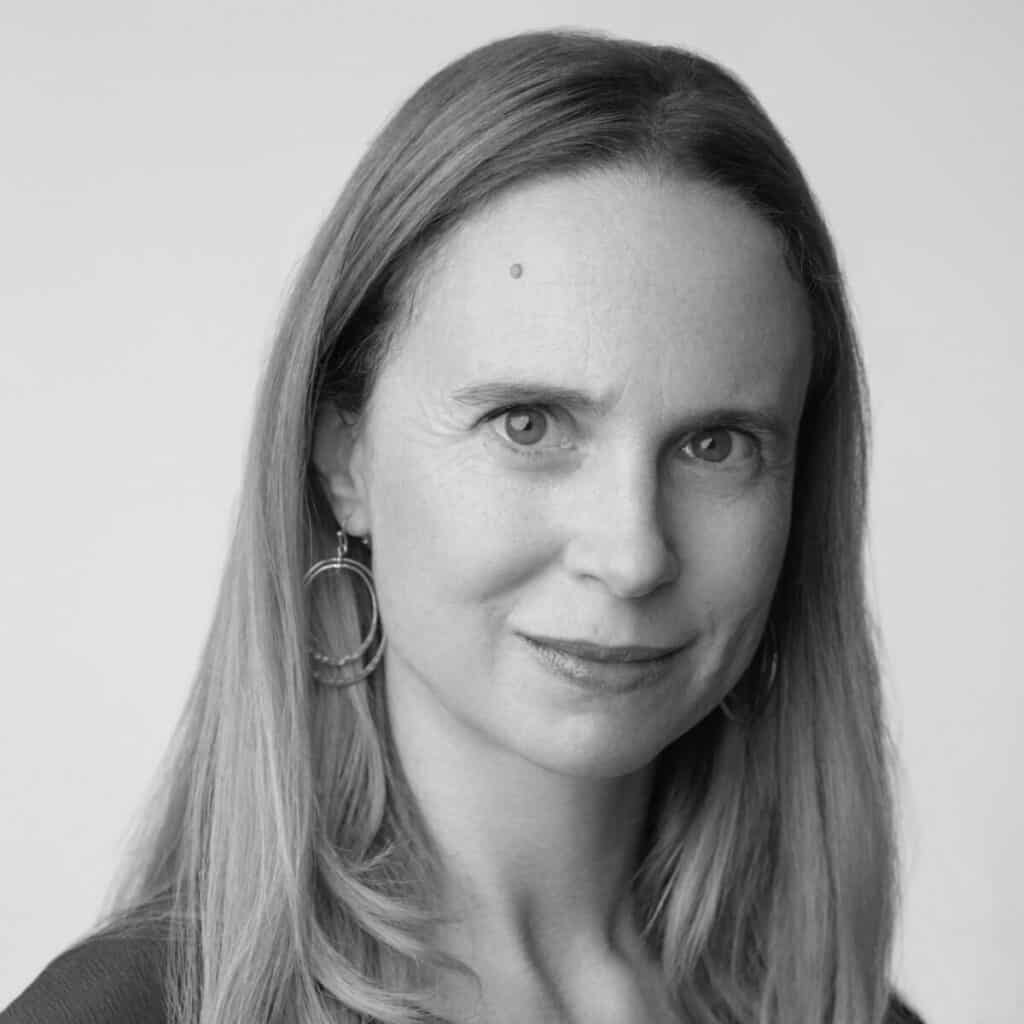
_Liz Muller, CEO Deep Isolation_
Deep Isolation is a young company developing solutions for “the nuclear waste issue.” They have built their solution option based on highly developed technologies used in the oil and gas drilling sector.
Several decades ago, after discussing and evaluating several options, the world’s scientific and political communities came to a general consensus around the notion that certain categories of byproducts from nuclear technologies in power, industry, medicine and defense should be permanently isolated from the human environment in deep geological formations.
Nearly all of the specific solution concepts evolving from that consensus involved large mined repositories. As envisioned in most countries, deep geologic repositories would be large enough to store a large portion of their waste. They planned to develop just one or a very small number of repositories.
For many reasons, most countries have had difficulty implementing their envisioned solution. Only a handful have progressed to the point of choosing a location and only one, Finland, is nearing the point of commissioning their facility and starting to dispose of their nuclear waste.
Addressing nuclear waste using oil and gas drilling technology
About a half a dozen years ago, Richard and Elizabeth Muller looked at the world’s nuclear waste problem through a new lens. Richard knew about the rapid developments in drilling technologies that had enabled the US natural gas industry to become most productive supplier in the world.
He thought about the ability to steer drill bits into selected layers of rock and about the long horizontal laterals being created, some with lengths measured in miles. It seem to Richard and Liz that modern drilling techniques could be applied to reduce the complexity of developing mined repositories for nuclear waste.
Additional research led the pair to form Deep Isolation, a world leader in the concept of using directional drilling to create small modular repositories (SMRs, if you will) that could be a right-sized solution for countries with small waste inventories and for distributed solutions in countries with large inventories.
One of the major advantages of using distributed deep boreholes is that they can be developed in locations that minimize the number of ton-miles needed to move the material from its current safe resting place to a permanent (but retrievable) disposal location.
Transportation is not only costly, but it’s an activity that provides opponents with multiple opportunities to interfere, insert delays, add costs and tie up processes in legal battles.
Developing a complete solution set
Deep Isolation knows that many of the challenges that have slowed the development of nuclear waste repositories will not disappear as a result of their technological development. It’s not a magic wand that will eliminate opposition or convince communities that they should meekly accept the role of storing used nuclear fuel – aka nuclear waste.
They recognize that one or more deep boreholes are only components of a complete solution.
Though steadily developing the physical and technical capacity to license and build modular repositories, Deep Isolation is focusing on engagement activities that will build trust, understanding and perhaps acceptance. In the best case, full understanding and trust could result in open invitations from a welcoming community that sees benefits in hosting their facilities.
Deep Isolation is engaged with communities, NGOs, national and local governments. They’ve completed several studies and have more underway. They are in discussions about the potential of a multinational demonstration that is more comprehensive than the demonstration they completed in 2019.
This is the second Atomic Show featuring Liz Muller. While reviewing some of the basics of her company and their technological solutions, this show focused more on providing an update of activities and progress made since April of 2020.
As always, your comments are welcome.
Transcript
Read transcript
There's a way, a way such a better way today, today. The nation's voice tells the world there's a better way, today there's a better way. This is Rod Adams and it's time for another Atomic Show. With me today I have Liz Muller, the co-founder and CEO of Deep Isolation, a company that is addressing the nuclear waste issue in a creative way to take advantage of technology that's been developed and well proven by the oil and gas industry. Welcome with Liz. Thank you so much, Rod. I'm very happy to be here. So, you've been on the show before, about two years ago, sometime around April of 2020. And that time you were even younger, start up in New York today. But I wanted to get you back on and get an update on what's been going on in the last couple of years and how your technology development and marketing efforts are going, and how, what kind of reception you're getting for people that are responsible for a proven the solution that you offer. So, tell us a little bit about what's been going on in the last couple of years, but it's been busy. Thank you, Rod. I appreciate that. It's funny to think about the life cycle of a startup company, but we're now about six years old. So, it's been a whole third of our life since we last spoke with you. And since then, it's really been about going in with individual countries and inventories and looking at how deep borehole disposal would work for a specific inventory given a particular set of geography, geology, if you will. So, that's been the focus. We've now been working with quite a few governments around the world. Some of them we can talk about publicly. Some of them we can't. But it's been a pretty amazing experience to take it beyond the theoretical, which is where I think in many ways we still were a couple of years ago to really thinking about how this could be implemented in practice for a specific situation. Now, remind our listeners when you at deep isolation, when you say deep borehole, you're not talking about just a vertical drilling, right? So, this has been something that has also shifted over the past couple of years. Deep isolation was invented. Our initial patent was on the use of horizontal boreholes for nuclear waste disposal. Since then, and particularly working with some governments who have smaller inventories, we think that there might be situations in which vertical boreholes make the most sense. Deep isolation is, you know, we believe in the right solution for the right country. We're not going to push horizontal boreholes when it's a vertical solution or a slanted solution, or another solution entirely that makes the most sense in a particular case. We still believe that horizontal boreholes are probably going to be the most sensible solution specifically for larger inventories. But we're certainly happy to implement whatever solution makes the most sense. So, when you say the horizontal is better for large inventories, it's because you can drill one vertical hole and go out in a number of different laterals from that same access point, is that correct? We probably only have one lateral per vertical shaft, but you still get a lot more room for a specific depth. So, you want to go deep, but if you go too deep, you start getting into really high pressures, very hot rock. So, we think you, there's really a sweet spot when you want to go deep enough that it's fully isolated, but not so deep that it increases some of the risks that come from that higher pressure in the hotter rock. Yeah, that's something that the oil and gas industry has trouble with it. They want to go too deep. The materials, the drilling bits and all of the things that go deep in the ground start to be stressed by those pressures and temperatures you're talking about. Drill bits really, they do fine to a certain temperature above that they start breaking down. Yes, that's great. And of course the material that you want to store down there, you want to put it in a place where it's going to be comfortable for the next million years or so. Right, you want to look at someplace where you're sure it's going to be isolated, but you also want to keep, put it in an area where it could potentially be retrievable if you want to be able to retrieve it for up to 20, 40, 60 years, whatever that number is. So there are certain, there are a number of advantages of the horizontal formation, not only not having to go as deep for the certain amount of space that you need, but also retreatability becomes much easier when you don't have to worry about the crushing of the canisters that could be stacked on top of one another. It makes sense. So in a horizontal, the canisters are all lying side by side as you will. That's right. So no no question. Okay, so when you're doing the geological research to evaluate particular sites, what kind of characteristics are you looking for in the layers where you want to put the waste? Yeah, and this is a shift from from what people have typically looked for historically people like to model out specific rock formations and the properties that those rock formations are expected to have. So the problem with that is that rocks change and so what something looks like at a given location, it might actually be quite different, a few hundred meters or kilometer away. And so doing those modeling, there's a degree of uncertainty there, which is hard to get around. You can do good models and we will do those good models. But at the same time, the key thing that we want to do is to be able to test for isolation. So we can take measurements of within the pores of the rock to see whether the water that is inside those pores has been isolated from the surface for a given amount of time, say a million years. And if it has been isolated from the surface for a million years, then we believe that is a good starting point for the isolation principles that are going to be key to a safe repository. You mentioned that you have talked with some governments that you can talk about publicly. I think one of the ones I saw recently was a report of Slovenia, which has some research reactor materials, that correct. So the Slovenia report came out, I believe, earlier this month. There was another one that came out last year with a group of ERDO countries, so that was five countries in Europe, all of whom have looked at deep borehole disposal as a viable solution for their nuclear waste inventories. And so the results of these surveys or reports is that your solution is something they want to continue evaluating. At what point do they think they're going to make some decisions? It depends on the specific situation. Norway is moving forward with a set of contracts that will be coming out probably this year for their waste disposal design, really design and expertise on putting that together. There are things that are in progress that will continue and other countries are moving forward on different timeframes. There's not really a single path forward. Right now, the world's construct is that each country has to take care of its own waste. Is that correct? It depends. There are groups of countries who have looked at multinational repositories. They haven't gone very far. I think it's a really hard thing to do. It's hard enough to get a community to accept the disposal of nuclear waste in their community. Even if it's waste that's already in their community when you start talking about bringing it from other locations around the country that gets harder. And if you start talking about bringing it in from other countries, I think that gets even harder. So even though there have been a number of conversations that have happened around multinational repositories. And there might still be some optimism around that happening in certain locations around the world. I do expect that the first repositories that are likely to be built are likely to be smaller. We might even call them micro repositories where you're simply disposing of waste that is already in a specific location at a specific location. Could we call them small modular repositories so you could have one more group claiming the acronym SMR? I think we can. Yes. I was amused the other day because someone was talking about using SMRs to produce hydrogen. And somebody else said, well, don't you know that SMR is already the largest producer of hydrogen, but it's steam methane reform. Wow. I'm not a big fan of acronyms, but sometimes it's hard to do to live with ask them. So you have to put up with them. So what is your company's strategy for convincing say the Department of Energy that we don't necessarily need to build a single repository for the whole country. And we might instead take another path. I think that over the past year, as we've made progress with governments around the world, there is a message that we are hearing that we want to be responsive to. And what that is is a need for a perhaps multinational demonstration of deep borehole disposal. And we've had these for for mind repositories where there are underground research labs and tests that have been done. But nothing like this has ever been done other than the test that de-visolation did back in 2019, which was really somewhat limited in scope. So I think there's demand out there for a larger demonstration to happen over the next few years. And this is always a hard question for entrepreneurs to address, but do you have any competitors in this space? Is anybody else thinking about using similar technologies? So no one that we know of has really jumped in around a commercial offering of a borehole disposal. So no real direct competitors. And I think that we should add that we think it's important for our solution to be used in a flexible way through local partners. So organizations that are responsible for nuclear waste disposal, even commercial entities that want to be implementing nuclear waste disposal in their countries. And we have a model that can work together with us in collaboration. This is a hard, hard business to be in. And so we think that the more people are working together, the stronger we can be. So there's no direct competition. I do think that there is indirect competition. And to be totally honest, I think the biggest competition we have is the do-nothing sort of status quo. Let's put it in temporary storage and leave the waste disposal problem for future generations. That's really the main competition that we're facing. Of course, some of the people that are in the camp of, let's do nothing right now and that surface disposal is fine. Aren't necessarily saying they're gonna leave a waste problem to future generations. They see themselves as leaving of resources, valuable resources in accessible locations to future generations. Yes, that is true. And one of the things that I think is important to state about disposal is that it is retrievable. So it doesn't have to be either or. It doesn't have to be, you leave it on the surface where it's retrievable. Most expectations are that we're not gonna use most of that waste. Yes, we can use some of it. And there may be real potential for using some of that for fueling advanced reactors, et cetera. But I don't think there are any realistic projections in which we're gonna use all of it. So the majority of it, the vast majority of it will still need to go into disposal. And if you put it into a horizontal borehole, you can still retrieve it if there is a desire to do so if it suddenly becomes more valuable. One of the things I like about the solution that you've been working on is that it seems to me from an outsider's point of view that it could substantially reduce the transportation infrastructure that's gonna be required to move used fuel. It seems like you could be a lot closer to where the fuel is today rather than finding some isolated mountain in Nevada. Yeah, I do think that that's one of the advantages that we offer. We offer more flexibility when it comes to siding. It could be disposed of near where it is now, in most cases. The transportation issue is really interesting one because transportation is very safe. And yet there are quite a few public perception and other hurdles to actually doing transportation. So there are countries in which it's easier than it is in the United States. Certainly in the United States, I would agree that minimizing transportation is probably wise. But there are other places where it's really not an issue and it has been moved, it's continuing to be moved around without significant outcry. Yeah, without significant outcry is a challenge because some of the largest protests of any kind around the world have been people laying on train tracks in Germany protesting the movement of nuclear waste. I think they've had some of those have had attendance in the 100,000 or more people. And the transportation is safe. I have no question about the safety transportation. But as a former businessman, I always thought of transportation as being a particularly significant cost, it just is expensive to move things around. And especially when you're trying to just move around inventory, it's just an extra cost that seems like small amounts on a percent basis, but in pure dollars, it's huge numbers. Yeah, and certainly not needing, not being required to move it in many locations is a real advantage. The other problem with transportation is it's a little bit like a transmission line. You need 100% of the path to be available to you. If there's just a small group of people in a key location along the way, you can make the transportation extremely difficult. Because you've got to get past that small group or that small area or that landowner who doesn't want the transmission line or real line or whatever going through his property. It's remarkable that, I mean, I think the transportation issue is one of the biggest reasons that we haven't succeeded with the disposal of spent nuclear fuel or high level nuclear waste. Sensible or not, there are people who really object to this. I am guessing that, first of all, the transportation issue is not going to go away. There is going to be waste that's going to need to be moved for certain locations. It's not an appropriate place for disposal. Perhaps not for geologic reasons, but for community acceptance reasons. So transportation is going to be a must. But I don't think it's going to be where we're going to start. I expect that the first places that are going to succeed with nuclear waste disposal are going to be for locations where there's waste there. Now the community is already familiar with this. They have an understanding of what that waste means and also an understanding of what will mean to take it off the surface and put it deep underground. So I expect that's where we'll start. And as we start to build trust and as people start to understand that solutions for disposal are very safe, then eventually we'll have to tackle the transportation issue. But I don't think you want to start with a requirement for significant transportation, at least not in some locations. Absolutely. And of course, there is a value in simply shortening the path that you have to go. If you have to move your waste a few hundred miles, it's different than moving it two or 3,000 miles. Absolutely. And there are some parts of the country that are probably geologically satisfactory that are close to the locus of current used fuel storage places. Yes. So in our conversation a couple of years ago, you described your position on nuclear as being somewhat agnostic. Can you tell me if that position has changed or is it still the same? Yeah, it's interesting. I personally have always been very pro-nuclear. And I've been on the record saying that for years. So I don't think that was the issue. I think that our company in the early days of de-piscillation, there were a number of people within the company who were not sure what they felt about the future of nuclear and whether they believed that there should be a future for nuclear. So we took the stance that it didn't really matter. Nuclear waste disposal needs to happen. So whether we believe in the future of nuclear, even though I personally do believe in it, we took the stance that there was no point in our company taking a position on this. That has shifted over the past few years. I think that given, I think, to be just straightforward about it, given global warming, I think there is an increased appreciation that nuclear has to be part of the solution and some urgency around that. We need to be able to grow our zero or low carbon solutions quickly. And nuclear has potential there, except that in many places, it's being held back by the unsolved nuclear waste problem. And we're also seeing that as people want to build new reactors, advanced reactors, they are being asked, well, what are we going to do with the waste? Which is the responsible thing to do, right? You ideally do want to have a solution for waste disposal before you generate any, before you build a reactor. And I think people are appreciating that. And so I think that our company's position has shifted as we've become, as our own internal people have shifted. And I think we do want now a future for nuclear power and we recognize that solving the nuclear waste problem is part of that. Yeah, I see your company's activities as being an enormous enabler for that rapid buildup that I believe is necessary because as you say, the waste issue has been, unfortunately, recent political history has made this particular saying almost invalid, but the waste issue has been a Trump card. People don't play bridge much anymore. So they don't really know what that means. But Trump means, hey, I beat everybody. Cause this is the highest card in the deck because that's what we agreed to say. And the waste, the waste issue has been the Trump card that people threw out when they really wanted to stop the conversation. Say, well, you've got all these great things. You've got reliable, you've got clean. Maybe you get your costs under control, but you can't solve your waste issues though. We just won't accept what you're doing. But the answer is that we really can solve the waste issue. And we actually, in my opinion, have solved it to the point where we can prove through a long history that we know how to isolate the material from the environment. We know how to protect workers who are handling the material. It's very simple application of time, distance and shielding that does that. Your solution permanently does it so that people don't have to monitor it over time. But it's not really a danger to anybody. It's a hazard, but not a danger. Yeah, I think that's right, Rod. I think that we have technical solutions. We've had technical solutions for quite a while. So the deep isolation is a different method for getting to deep geologic isolation. But the end point of deep geologic isolation is really the same. I think what we haven't succeeded in is the softer side, if you will. So finding the communities, showing that we can keep the costs down, cost projections when they're based purely on the technical solution are one thing. But when you have to deal with public objections, the cost is going to be totally different. One other thing I think is important, though, is I think that the urgency has changed. And so while in the history of nuclear waste disposal, there hasn't been a lot of urgency to solving nuclear waste disposal. And organizations have been quite comfortable saying that we'll begin disposal in 20 to 50 years. And it'll take another 100 years to get it fully into disposal. I think because of global warming and because of the public perception, that is shifting. And people are interested now in taking meaningful action, as long as it's still safe, so not rushing anything, but taking meaningful action and significantly shorter time frames than had been previously considered. I agree that there is a sense of urgency and a sense of taking prompt safe steps forward, not, as you say, rushing it. Rushing is probably the worst thing you can do in nuclear. Yes. And interestingly enough, I've been reading some novels that feature US Navy Seals. And I never knew that they had the same. But the seals do some pretty interesting stuff. But they're saying is slow is smooth, smooth is fast. So you take things slow and deliberately. You do it right the first time, which overall saves your time. Yes. When you don't have to stop and regroup and all that other stuff, it's something that's your mood, your. steady movement forward is interesting and kind of impressive. Now, are you getting to the point in the reason in near future we're going to start to generate some revenues, not just income from investors? Yeah, so we've already started generating revenue. It's not enough to support our current team, so we're not yet at that break-even point. And I suspect we probably won't be because as we continue to generate more revenue, we're going to want to invest that in bringing this solution forward. We've also, I mean, I think you know we made an acquisition in late last year. And so we're recognizing that this is a really tricky problem and the more groups and organizations, the more we can build capacity for delivering this, the easier it's going to be to be able to deliver, to show that we have the history and the skills and the expertise to be able to do the safely. We've also been working with partners as you know. So, deep isolation has started generating revenue. The company that we acquired also has existing revenue. So we've passed that milestone, but of course there's still a long way to go from being revenue generating to being profitable and certainly to looking at actual disposal, which is going to be much more significant revenue numbers than where we are today. I believe when we talked before you mentioned back to all those one of your partners, can you tell us who some of your other partners are? So our three main partners are Bechtel, Schlumberger and neck international. So all three of those have been deeply involved. I didn't mean that pun deeply involved. But all three of them have been working with us for a number of years now. And so together we provide everything that's needed from the drilling, which is with Schlumberger, the expertise on what sort of drilling machinery we're going to want to use, the emplacement tools, etc. To the handling, which is done with neck international. So their expertise is in transportation, handling, canisters. They're designing the deep isolation canister. So this is a partnership that works extremely well. And then Bechtel when it comes to construction and project management, etc. So we do have partners that, that, yeah, stronger together than we would be on our own. In your community reach outreach, have you found any communities that are interested enough to start to think about welcoming a disposal site into the community, and we ask actually bringing it in on purpose to generate some local revenues? So let me, let me divide your question into two if I may. I think there's the US, which is a bit of a unique situation and then there's the rest of the world. So we have done probably most of our community engagement has been in the United States. We are a US-based company that's where most of us live. They're not all of us anymore. And it's also a really difficult place to begin community engagement because of Yucka Mountain and the belief, the law, if you will, that waste will go to Yucka Mountain. And the way that this has played out with utilities. And so we think in order to have a site, it's not enough just to have the community, you need to have the utility. And those are linked. We've spoken to you to communities where they said, well, we want to support what the utility wants to do. And so what does the utility think of this de-bislation solution? And so that makes it, it's complex in the United States. Elsewhere in the world, we've had fewer conversations. But at the same time, I think there is an appreciation of the need for flexibility. So there have been communities that have said not necessarily to us, but around other nuclear waste disposal discussions that they are open to nuclear waste disposal. And yet, sometimes they put limitations on that. They're open to the waste that's there now, or they're open even in some cases to waste that's been generated elsewhere. But they don't want to include something. Or they don't want to include future generated waste that we don't even know yet what it's going to look like. And historically, we, because we've been thinking about mind repository approaches, so we sort of the big we in the world has been thinking about mind repositories as the only solution. That hasn't been an option. You can't say yes to some waste, but no to other waste. Because reminder, positaries are so expensive and difficult to build that you can only have one for a country. I think that the modularity that deep isolation can offer so that a community could say yes to disposing of some waste, but not necessarily to disposing of all the waste in the country. I think there's more openness to that based on some early conversations. I think we have certainly have more work to do. But a community could with your solution say we'll accept two wells and we'll we'll store commercial nuclear fuel. We won't store defense waste. For example, so you can put a limit on how much and what kind. Yes, correct. So would your process be eased if you could get the Congress to get rid of the provision in law that requires your combatant to be the solution. Really like is to remove the restriction on other solutions moving forward in parallel. So we don't need to remove any requirement that yuck them out and be eventually built. I don't think we would necessarily touch that, but we do think that there's there's benefit from having multiple options that can be considered in parallel. So that's really what we would hope for is that the deep isolation solution could be considered in addition to other solutions that we think should also be considered. Yeah, you might not have heard it, but when I said the solution I was trying to emphasize and capital letters the meaning of monopoly solution. Yes, with the current law that's really the only optional and that's it's never a good problem solving technique to only look at one solution. Completely agree in my opinion. I think multiple shots. Either an into the bucket or into a goal or whatever you want to however you want to ever cliche you want to use. Yes, yes, right. Right way to approach it. So I believe and looking at say the reaction that I've been reading in small town newspapers to the. Natureium project in Wyoming where the demonstration reactor program is going to a small town with 2,500 residents with a coal plant and a coal mine. The reaction from some cases is hey why don't we get one of those. So I think that there's a possibility of once you start finding some communities and people see what the benefits are to their community and what kind of. Impact they could have minimal impact on the surface, but perhaps significant impact on pocketbooks is a way forward. As I have reminded people there are many small towns in the US where the small town maybe lost their factory or whatever they're major source and point that people still like living there. And they want to live there so badly and but one source of income that they go out and recruit for prisons to be built. And nuclear waste at least doesn't try to escape. Yeah, no, I think that's a good point. I think that you know also true is that the waste is out there today. You know this is not necessarily something that. I mean it's there so so again with the idea of starting with locations where it is today or where it's going to be if a community moves forward with an advanced reactor project. Makes a lot of sense right you're not necessarily in these cases bringing waste into a community you're taking it off the surface where it is now and making it safer for the very long term. And by taking off the surface you make that surface area usable again. In some cases that waste is sitting on some property that might be rather valuable if there wasn't a waste storage repository there maybe on the shores of Lake Michigan for example. Certainly I think our vision is when you take it off the surface that that land should be usable. If you have an operating plan to okay maybe it's not going to be totally usable but certainly for any sites that are no longer active. You want to be able to greenfield it and make that make that a livable beautiful place again. Because I also noticed that you had a rather interesting personnel development coming up one of your earliest employees has left your company for a new job what's going on there. Yes, I assume you're referring to some recent social media posts I will just say that I'm very excited and I think that the Department of Energy has really shown, you know I admire them for this decision. This person is a visionary they've been with deep isolation since our earliest days there were first employee and we're very very excited for the for the future while we're also sad to see them go. Yeah, it's always sad when you have the government poaching some of your workers but on the other hand it's it's a happy for them and happy for the whole industry for people that are working hard in a particular area to you know gain some some different positions. Yes, and the ability to influence more things on a larger scale. Is there anything else that you would like to share that we haven't touched on here. I think we've touched on just about everything I always like to reiterate that we as an organization we really want people's input and and so if any listeners are out there and they have suggestions for us they have thoughts for us. Really, they should feel free to to contact us. We are in regular contact with environmental groups with community organizations international nonprofits etcetera. But this is something that we value and so please do feel free to to reach out to us. The other thing I'd like to mention too is that we as an organization really believe that this solution can be and probably should be implemented in in quite a few locations and countries around the world. We don't expect that to be necessarily us doing the implementing for. for a foreign country where we may not speak the language or have the local expertise. But we do want to make sure that our solution is available to local partners who are interested in implementing it. So if there's any listeners out there who are interested in working with us, we'd also be delighted to have a conversation. So in that model, I will ask one more question. In that model, would you be licensing your technology to somebody else and to have that implemented or working as forming a new partnership, joint venture, or a combination? Yes. I think the specifics of the model could be flexible. We certainly have a lot of intellectual property. Most of our patents have been filed or are being filed internationally as well. So there's that. There's also the methodologies we've developed, the engineering specifications, and really the sort how to take this forward and implement it. There's also a stakeholder engagement work, and citing work. We don't expect to be an expert on that internationally, but we certainly can provide support and guidance to partners on that as well. Perfect. Well, Liz, thank you very much for your time. I'll let you get back to your busy startup schedule. And I hope that you continue to make as much progress in the next couple of years as you did in the past couple of years. But I bet at some point you then have an inflection point and things will get really crazy. I'll be excited to do what happens. Yes, thank you. Thank you so much, Rod. This was a pleasure, and it was really good to talk to you again. And this is Rod Adams, and I hope you enjoyed that show. I was talking to Liz Mueller, co-founder and CEO of Deep Isolation, a company that is investigating the probability of using deep borehole technology. He's a vertically or horizontally to dispose of spent nuclear fuel, AKA, use nuclear fuel, AKA nuclear waste. Bye now. Say you, there's a wave, such a better wave, today, today. Now, reach your voice to the world, there's a better wave, today, there's a better wave.