Robert Bryce – Journalist and Bird Watcher
Concepts discussed
Auto-linked from the episode's notes and transcript.
Show notes
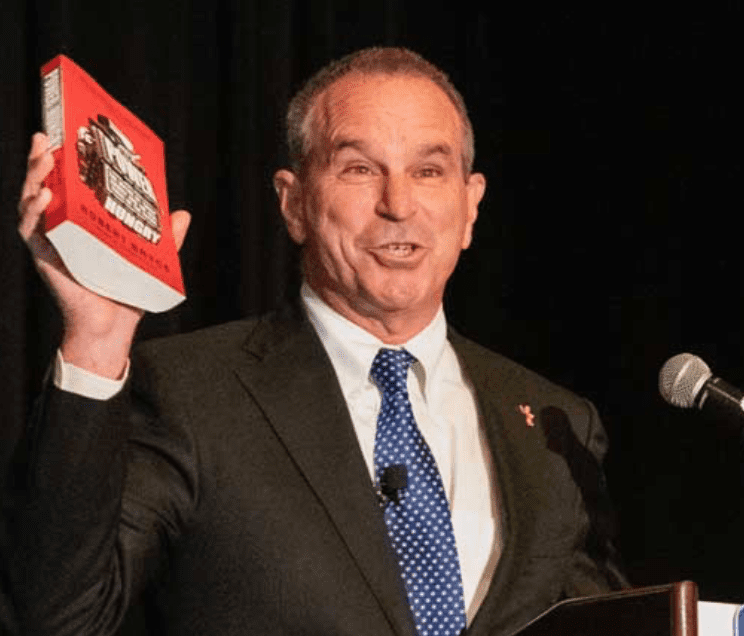
_Robert Bryce talking about Power Hungry_
Robert Bryce is an admired journalist, book author, filmmaker, public speaker, Congressional witness and podcaster who has focused on energy, power and its implications for mankind’s prosperity. In his free time, he loves to watch birds.
He recognizes that electricity is the lifeblood of modernity. He is saddened by knowing that there are billions of humans on Earth who have such limited access to electricity that their consumption each year is less than an average American refrigerator.
Starting with *Pipe Dreams: Greed, Ego and the Death of Enron* in early 2004, Robert has published six books on energy with the latest being *A Question of Power: Electricity and the Wealth of Nations*. He wrote that last book while he was also recording and producing *Juice: How Electricity Explains the World*.
He would like everyone to watch his movie and has made it freely available through several outlets. He also asks that people buy his books – he excuses everyone from reading the books as long as they buy them.
In June of 2020, Robert started the Power Hungry podcast and continues to release new episodes with fascinating guests at a furious pace.
Robert and I talk about his work, his passions, and the difficulty of writing a book and creating a movie at the same time. We talked about his recent testimony at Congressional hearings about the growing fragility of our energy system due to what our mutual friend, Meredith Angwin, has labeled the fatal trifecta of energy policy decisions – oo much reliance on imports, too much reliance on gas and too much reliance on renewables.
I think you will enjoy this discussion. Please leave a comment and engage in discussion about the important points that Robert made.
PS – there is a point in the show when Robert turns the tables and begins to interview me about recent progress at Nucleation Capital. We are bullish about the growing recognition that nuclear energy is a vital tool and that advanced nuclear energy development is an enormous opportunity for solving many sticky problems.
Transcript
Read transcript
There's a way, a way such a better way today, today. The nation flies till the world, there's a better way, today, there's a better way. And just counting down, we're now recorded. This is Rod Adams and it's time for Atomic Show, number 293. And I'm really pleased to bring today's guest, Robert Bryce, who I like to think of as a skilled energy writer who loves to watch birds. Robert, how are you doing today? Fine, thanks Rod, how are you doing? Good. I like that description. Yeah, avid bird watcher and occasional journalist. There you go. Just occasionally you're a skilled journalist. Well, thank you kindly, yes. I'm at a couple of other things. Podcast or author, movie producer, you know, I can't keep a job. Yeah, well, that's, that's, they all kind of relate to each other. I think I have several of your books on my bookshelf. So let's see. Power hungry, which I guess is the, also the name of your podcast, right? That's right. Yep. And, uh, smaller, faster, lighter, cheaper, I think is, or something of that nature. Smaller, faster, lighter, denser, cheaper, how innovation keeps proving the catastrophists wrong. And then the latest one hot off the press is a question of power. Well, obviously, and the wealth of nations. Yes, yes. And that the question of power has a lot to a lot of similarities with your documentary juice, isn't that correct? That's right. We, we made the film at the same time I was writing the book, which I do not recommend. But now that it's done, I can say, hey, we're not great. Well, that's wonderful. You know, it's, it, it may be busy to write both a book and do a documentary at the same time. But at least your thinking was consistent. You had to do the same amount of, thinking about the same subjects for each. Well, that's true. And, you know, when I got the contract for the book from my publisher, Public Affairs, which, I've been very fortunate. I've had the same agent, same editor, same, the publisher for all six of my books. But, uh, I got the contract for the book. And I thought, well, why don't I just make a documentary at the same time? I mean, I'm going to these places and, you know, how hard can it be? Well, it's hard. But, but yes, I mean, the gist of both the film and the movie are the same, which is electricity is the world's most important and fastest growing for our energy. And this, and it also this electricity availability is the defining inequality in the world today. So those are really the issues that I've been focused on for the last several years and continue to focus on very much now, because we still see all over the world, and the entire energy poverty, three billion people are, or so who are living in places where electricity consumption is less than a thousand kilowatt hours per capita per year. That's roughly the amount of electricity that's consumed by an American refrigerator in a year. So this continues to be amidst all the talk about climate and all the talk about, you know, all these other issues around inequality, the electricity still is the key energy commodity in the world or energy form in the world. And it will be for decades to come. Yeah. And I have to admit that I live in a neighborhood where I don't think there's anybody, at least nobody who's house I've entered, who only has one refrigerator. Nearly all of us have two refrigerators, one in the garage for drinks and expansion during parties. Right. And of course, the one in the garage is the old one that doesn't really have the efficiencies of the new ones. A hundred and four degrees in the garage and so you're burning, you know, a whole lot more electricity than you would if you'd put the, you'd reverse them and put the new fridge in the garage and the old fridge back in the house. But nobody's going to do that. That wouldn't be that way. But it goes to the, you know, one of the things that I think is key to keep, you know, in mind is that this idea, oh, we waste energy. Well, who I don't waste any energy. I'm sure you rod you waste energy. You're the old fridge in the garage. It's something that in the United States, we just generally don't even think about. I was eating dinner. My wife and I last week went out to lunch, you know, and it was kind of, you know, it was a Friday. That was it was the Friday after Thanksgiving and we were at this place and it wasn't that cold. It was here and awesome. It was a little cool. Well, they had these propane heaters out on the deck and propane prices have more than doubled in the last few months. But they were just burning all this propane and it was like, no one gave it a second thought because here in the US we have so much energy. And I think that the consumer is kind of, well, yeah, of course we're going to burn this and no one thinks anything about it because of course we're always going to have it. It's always going to be cheap and that's that's the way we've come to live. But that's not the case around the world. Yeah, you mentioned the people who are in energy poverty. I'm pretty sure your number does not include the continent of Europe, which seems to be under a fairly significant challenge this winter. You're a master of understatement rod. I mean, Europe is in such dire dire straits. The gas, net gas prices have soared. They're heavily reliant on on Russia, of course, for their for their natural gas, which is a bad, bad supplier to be dependent upon. And you know, there this the whole continent is facing a crisis. And if there is a very cold winter, then you could. I mean, you could see mass fatalities people could freeze to death because of this miscalculation, which has been as I outlined and I spoke in front of the Senate Energy and Natural Resources Committee a few weeks ago. Overinvestment in renewables under investment in hydrocarbons and premature closure of the coal and nuclear plants. Oh, and increased reliance on on on Russia for your natural gas. I mean, those four factors very clearly explain why Europe is in such a terrible predicament today. And I think I'd add one more thing to that. And that's kind of the global at least the industrialized economies. Tendency over the last 10 to 20 years of engaging in an inventory process called just in time delivery. And dependence on short term market pricing, assuming that the short term pricing is going to somehow incentivize suppliers to build out sufficient capacity to supply more if you ask for it. Yeah, no, that's a really good point, Rod. And it goes to our mutual friend Meredith Angwins. And we have a, a, a, a confection, which I would, as I would call it the fatal trifecta over reliance on renewables over reliance on just in time gas for for electric generation and over reliance on imports. And so you see all of those clearly at play in in in Britain now, particularly the import part because they lost one transmission line connection to France. And I guess, you know, you're right, those four things, but I guess over reliance on imported gas, but it's over reliance on gas in general, because I'm pro natural gas, but as I, I lived through the blackouts here in Texas and the gas delivery issue was a real, was a real challenge. Yet, just in time delivery or just in time models work as long as there's no interruption in the supply chain and the gas delivery network is somewhat vulnerable. And it's also hard to store. It's not easy for a generator to say, well, just in case we've got a problem with our delivery will have a little on hand on site. Because it's just not that easy to do it. You know, maybe there's a few places with, with storage. I think there's a fairly significantly sized natural gas plant in New England that is located at the same place where they import LNG. So they've got a bunch of big tanks of LNG nearby. But that's kind of unusual. That's not, but that's not pipeline gas. I mean, so it's a, it's a fundamentally different form of storage and it's one that's very expensive. And so, and then one other point that I just add their rod was something somebody pointed out to forgot who was the other day, but they just pointed out that overall the gas grid in the United States was built for industrial use and for the delivery was built for home use and for industrial use and not for power generation. And yet, since the in run, the failure of in run now 20 years ago, the amount of gas we use for power burn in the US has more than doubled. So we're becoming more and more dependent upon a just in time fuel delivery, which is great as you point out if the, you know, the weather's good and it's not too cold, not too hot, everything's going to be fine. And so the things fail, then look out and that is where I'm, you know, to the key issue I think is that fuel on site and in the wake of the blackouts are caught the regional transmission operator here in Texas is looked at a very issue and they're talking about what diesel fuel on site, which it works well, but it's, you know, it's much more polluting fuel than than the natural gas. So much more geo politically vulnerable fuel source burning oil for electricity generation is something the US moved away from in the wake of the 1970s oil crisis bright right hand, you know, we really don't want to go back there, although we want to be one of the things merit is has written quite quite a little bit about was New England had a temporary winter reliability program that worked very well to prevent blackouts in a very serious polar vortex back in about 2016 or 2017. That program paid dual paid natural or gas turbine plant operators to become dual fuel capable right and paid them about $73 million to help them buy fuel to store on site in case of emergency right and that winter they burn 25% of electricity produced in the New England region came from burning diesel fuel. Right, so you know what I do and it does work and it's very reliable and that's one of the things that you know it is I look back at the blackout and Lauren and I will you know we live in central Austin where blackout for 45 hours. Well, yeah, you may not like diesel fuel as an electric generation source, but it works and it works very well and. Or fuel oil and that was the situation in 1973 remember in that first oil shock what the US was getting if memory serves about 18 or 20% of all the electricity in the country in the United States was being produced with with oil. And then we had the oil shock that dramatic increase in oil prices and so generators are saying hey what are we going to do and then Carter came into office said well let's burn more coal and that was the the the the plan under the Carter administration. To reduce dependence on foreign oil so let's burn more coal and that's so a lot of coal plants were built in response, but you know I only bring that up as just another example of how. energy policy swings back and forth depending on geopolitical events and pressure groups and now we see. Unfortunately with the Democrats in power and I say this is not a partisan I'd say not a Republican I'm not a Democrat I'm disgusted. But that there this headlong rush for renewables there's just senseless in my view just totally senseless and uncalculated in terms of what is this going to do to the grid to stability to reliability resilience and affordability and it's just. so renewables are good why because oh because they're renewable well I'm with Jesse Osible wind and solar may be renewable but they are not green. Well and neither are the collectors of the wind and solar free energy that the earth gives to us you know the collectors are not renewable they have to be met mind manufactured installed maintained decommission right, etc you know it's it and. And of course it's often amusing to me that some people don't even recognize that if you build a large wind farm. Immediately downstream of that wind farm, the air has less energy in it than it used to have, and things can change. So there's some micro-weather impacts of things like windmills and solar panels because they really do change what's happening locally. Now that's a really good point, Rod, and it is true. And there's been a lot of scientific analysis that shows this very thing. They do change, they have significant impacts on the micro climates around them. And we've even interviewed, we're gonna on a project now, we've interviewed people in Colorado who live near a wind project and they say, there's no, we don't get any rain on this side of the wind turbines like we did before. They were living in this neighborhood where they've been invaded by wind turbines and they're seeing changes in the precipitation in their neighborhoods. So this is not an idle issue. And this, you know, it really has become, it's just sticks in my craw. This repeated, oh, clean energy, you know, clean power. Well, no, your wind and solar panels, your solar panels, your wind turbines may not create CO2, but only that that's your only metric. It doesn't mean that it's clean because you have these other impacts, including in the case of solar. Oh, well, you're creating a whole lot of solar trash that's gonna have to be disposed of. Oh, and how much slave labor in China is okay with you to still call it clean. I mean, you know, is it only 40% or, you know, and I say that is it sounds like a joke, but I'm not joking. I mean, this is the polysilicon supply chain is a key problem for this solar promoters and it's not one they wanna talk about. Yeah, of course, I'll challenge you a little bit. The use of slave labor doesn't change the cleanliness of the product. It does change the cost of the product. And there you go. The claims that the product is so much cheaper than everything else rests on a bed of assumptions that include things like will China keep supplying massive subsidies to their manufacturing plants that produce wind and solar components? And as you said, well, they continue to force people to work there at lower than market rates. Yeah, no, that's, you know, no pushback for my own, my end, I think that's exactly right. And how are those solar panels being made? Well, you don't use solar panels to make solar panels in China, they use a lot of coal. Yeah, that's another word that is worth challenging when people say that wind and solar are sustainable. They can't be used to produce their own input. So how can you call that a sustainable product? Right. Yeah. It's one if there was only wind and solar, you wouldn't have any more wind and solar. Exactly, right. But this is, you know, but this is, and with the same with, you know, the oil that's needed to build the turbine blades or, you know, to manufacture the turbine blades. So I don't know, I guess, you know, with the last few months in particular and even seeing what's happened in Glasgow and also just looking at what's going on in Europe, I don't know. I mean, I'm curious what your read is, Rod, but I get a sense that there is more rationality creeping in to the policy makers heads about what works and what doesn't work. And moreover, what consumers are willing to tolerate in terms of pricing in the rest of it because this crisis in Europe is really causing enormous pain and deindustrialization of Europe that is going to last for months and availability of fertilizer, food prices, all these knock-on effects that no one's talked about very much, these are real and they're gonna last for a long time. Yeah, that demand destruction is a real thing. Many manufacturers cannot continue to manufacture their products with energy prices as high as they are today. So in essence, I'm not necessarily worried about people freezing, but there will be an awful lot of people who aren't gonna be able to do anything other than maybe say a little bit warm. Yeah, well, that's interesting. There were people here in Texas who froze to death. I mean, the final death toll was 700, right? In Texas from the February Blackouts. How many of those were deaths from hypothermia? I don't know. I'm guessing that would be maybe a third of that number. Buzzfeed did a very good analysis, but some of it was the knock-on effects of not having power. People who were needed to get dialysis or go to the doctor or didn't get their medication. So it's not just that, and this is what happened in Puerto Rico after Hurricane Maria. The initial death toll was estimated in a few dozens. Well, actually it ended up being several thousand because of the knock-on effects of not having enough power and then endured and had these knock-on effects throughout the rest of the economy and people's health that were medically fragile, all these other things that we don't think about but go to the heart of the fragility of the grid, which I think is the other key issue that it continues to be overlooked with regard to this addition of all this solar and wind, which are not providing the kind of stable frequency related or not providing synchronous generation to the grid. In fact, they're doing just the opposite. And I heard a man from Epri talking about this just a few weeks ago saying, this addition of this asynchronous generation is it will be a problem. Yeah, I agree with you. Although there is somewhat of a difference between a sudden event like a big chill or a hurricane and big freeze or a hurricane and simply having a insufficient supply of gas or electricity, which causes prices to go really high, high prices will destroy some of the demand and maybe make it possible for the grid to survive but at a much lower productivity and output level than most of us like to have. So that's kind of my only point. But wind and solar tend to not be correlated. I mean, sometimes solar can be correlated with high air conditioning demand. But in general, the time when you really need the most energy during the winter is on a very cold, still night, where you get neither solar nor wind available. Exactly. When you get really cold weather, the wind stops blowing because there's no temperature differences. Everything around you is cold. Now I tried to stop from using some sort of expert of there but it's cold. Yes, darn cold, I think was that the... That was it. That was a small divider. That modifier you were looking for, yeah, darn cold. Well, right, and exactly. And that's the thing that I've said over and over when it comes to the freeze in Texas was, well, immediately after the blackouts from winter storm, you're the talk was, oh, well, don't blame wind and solar. Oh, those crazy Texas Republicans, they're talking about wind and solar. Well, okay, well, that ignores the oldest adage in politics, which is what? Follow the money. There was $66 billion who spent on wind and solar in the years before the blackouts. All of that spending was effectively of no value at 2 a.m. on February 15th when my lights went out because, you know, as I say, the wind and solar went to Cancun with Ted Cruz. They were not here, they were not available. Yeah, they took a vacation. Yeah, well, you know, they need a break. One of the things that you've talked about in your podcast and in your testimony and even in your writing is the fact that many of the places where the coastal folks who like to talk about renewable energy, many of the places where they want to build this renewable energy aren't real happy to have it nearby. I'm not happy. You're so polite. You're so, you're so, you're so, wouldn't diplomatic. Yes, no, they do not. They say that they're, we can use a lot of expertise to describe what they're saying, but yeah, exactly right. I mean, you look at the states New York and California, which are among the most democratic states in America, Vermont. You can't build wind projects in those states because the local opposition is so intense. And yet, there, you know, these studies come out from Stanford, from Princeton, from MIT, from Cal Berkeley, oh, well, of course, we can do this all, there's great stuff with renewables. Well, what about the people who live out there? What about the people in rural America? But you know, these academics, these PhDs, and it makes me just grills my cheese, because I say it the same thing over and over. They don't go to, you know, small towns in rural America. They don't understand those people. They don't care about those people. They're, oh, we're just gonna put them out there. They're gonna learn to like it. Well, no, that's not the case. You can't build new wind projects in California, a state that has a 45, what is it, 100% clean energy, a clean electricity mandate by 2045. Well, where are they gonna get it? Where's all this stuff gonna come from? It's just, there's a, this is the point that I was getting to. There's just an ongoing delusion that is held by millions of people around this country that say, oh, well, we'll just do it because we, you know, because it's green and it's clean and it will just make it happen. No, it doesn't work that way. One of my biggest objections these days is the enthusiasm with people talk about offshore wind. Because they say, well, it's not anybody's backyard. The wind is out there and it must be always blowing over the ocean. And nobody lives out there. So we may as well build our infrastructure in the ocean. Right. As a former offshore sailor, I can testify that the wind doesn't always blow. Matter of fact, it often goes for days at a time when it's so calm, you could water ski on the ocean. Right. And there are these beautiful creatures, some of God's greatest creations that live under the water. And they just happen to use sound as their means of navigation and communication over long distances. And the frequencies that are produced by wind turbines rotating around are right in the same range as those creatures use. Now it's hard to find and often produced in languages that I can't read or write. But there is a fair amount of evidence that dolphins, whales, other, and even large fish don't have any desire to be in the same area as wind offshore wind farms. So they leave. Right. Yeah. And isn't it remarkable, though, Rod, that you hear these environmentalists with their environmentalism? And they're saying, oh, well, yeah. Well, it's the offshore equivalent of the vacant land myth. Oh, it's just a vacant ocean out there. Well, I'm old enough to remember when environmentalists cared about marine mammals and migration of marine mammals. And now, oh no, we're just gonna put thousands of offshore platforms on the Atlantic coast or off the Florida coast or wherever. Well, wait a minute, are there only about 1900 offshore platforms in the Gulf of Mexico? And you're talking about putting thousands of offshore platforms on the eastern seaboard and some of the most heavily navigated, heavily-fished waters in the world. I mean, it just makes no sense to me, Rod. It's just this, the environmental ethic has been turned on its head because of this soul and insane, I will put it that way, insane focus on CO2 as the only issue. Well, it's not the only issue. There are other issues that we have to pay attention to as well. And it's one of the reasons why you, like me, I mean, we're both so pro-nuclear because it has a small footprint. It provides the level of energy reliability and the kinds of things that we want in our electricity systems. And yet, you know, that doesn't get the kind of support that it needs to from the key and the most powerful environmental groups. because it doesn't match their years of opposition. Even if you decide that CO2 is the end all and be all, a recent UN-ECE report demonstrated how nuclear is already the lowest per unit of energy, CO2 method of production in the world, except for hydro, et cetera, hydro. And so it's significantly lower than wind and solar. And if you look at how the numbers are created, it has the potential to go even lower as the grid gets cleaner. Yet as you say, the professional environmentalist, and I usually either put quotes around that word or capitalize the word to recognize the fact that it's a brand name, a self-assigned brand name. Right. And those professionals don't like nuclear because they've been protesting nuclear since they were in their early 20s or maybe even in their teens. Right. For sure, most of those are. And now they're the, all those costs and they can't just say, well, we changed our mind, right? Because then I don't know. But they're campaigners. And I think that that's the other thing that I've thought a lot about lately, Rod and I'm curious what your views on it is. I didn't really think about that term until I heard it from a Sierra Club guy himself, you know, saying, we're a campaigning organization. Well, if you're a campaigner, then you never have to run anything. You know, so you can campaign for all these stupid ideas, but you don't have to implement them or you don't have to make sure the grid is available 24, 7, 3, 65. You can just run a campaign and say, well, we want the grid to be different and we're all this other stuff, but you're not responsible. And therein lies one of the key differences in one of the issues that I think doesn't get enough attention. Well, no, they're campaigners because they're raising money for the campaign. They're on the permanent campaign. Somebody has to, some engineers, other people have to turn the wrenches and make the damn thing work. Yes, I've had similar conversations. Often the, if the person will say, well, that's not our issue. You know, these campaigning organizations have a list of issues that they will run campaigns about, but if it's not on their list, they won't make any effort to do anything about it. So if I was talking to a guy at a, his name was Paul Gunter. So some of the people who've been around the nuclear and anti-nuclear movement for a long time will recognize that man, name. But Paul told me that he doesn't do anything to protest coal plants because that's not one of his issues. He does protest, he processed the nuclear plants because that's his issue. But he won't compare the two. Well, and, you know, and this is the other part that, that to me is interesting is, and, you know, to be clear, as I said before, climate change is a concern. It's not our only concern. And what to me is interesting in terms of the wake of what we see in the European crisis and what we saw in the wake of the blackouts in Texas. Well, what were the plants in Texas that did the best during the crisis? Well, it was the plants that had on-site fuel, the coal and the nuclear plants. And now what is going on in Europe? Well, I, at the Senate hearing, the Energy and Natural Resources Committee hearing on the 16th of November, where I testified, there was the chief economist from the International Energy Agency who testified that, in fact, the countries that did the best in terms of prices in during, in September when the, you know, the electricity prices started to go crazy, were the Northern European countries who said had a lot of renewables. And he was, he was bending the truth there by a big margin because he was, was including Norway and the other hydrodependent Northern European countries. But then he added, oh, and Poland, because they used so much coal. So he was essentially saying, yeah, coal is a lower form, a lower price form of electricity generation. And, and Poland is not gonna give it up, and especially now. So it goes back to the question in my mind of what is really gonna happen in the wake of this European disaster? And is it, will it, as it should? Will it cause a, a real reckoning, politically and in terms of the systems analysis of what really should be happening? And there was a piece in the New York Times where it just recently, I think it was even today, or about, in Europe taking another look at nuclear. Well, what do you think? Yeah, maybe you should. Well, my impression of, of Poland's current energy plan for the future is, what I like to call a make before break method. They're okay with giving up coal, as long as they already have a nuclear plant of equal capacity operating. Uh-huh. So they'll give up coal, once the nuclear plan is up and running, they'll take coal, take coal, plant offline, which, which is, seems to me like a sensible way to go. No sense in getting rid of stuff that's working and running today until you have something better. Yeah, well, I mean, that's prudent engineering, right? You know, you don't, you don't throw away the machine you have until you got another one that's up and running and make sure you're certain that it's going to work. But, you know, and the other obvious point here is that, you know, Captain Obvious, but, you know, from a geopolitical standpoint, Poland is not going to rely on the Russians. They're for gas or anything else. They, they, they, they, they, they, they know the Russians pretty well by now. And then all their history is, they have a lot of history and none of it's good. They might not even rely on the Germans very much. Yeah, that too, right? So, you know, this is real politic, energy real politic. Roger Pilke Jr. formulated the iron law of climate, which is that when it comes down to a choice between economic growth and, and action on climate change, economic growth will prevail every time. So I kind of borrowed his idea and came over the iron law of electricity, which is people, businesses and individual, people, businesses and countries will do whatever they have to do to get the electricity they need. And we've clearly seen this now in Europe. We're even seeing it here in the United States where utilities are burning more coal, rather than natural gas, because it's more economic. We see it clearly in Europe, where the same thing is happening. Utilities are burning more coal because gas is so expensive. And we particularly see it in China and India, where they were facing in the wake of COVID and, and in the early fall, massive coal shortages. So they were relaxing, mind safety rules. I mean, they were doing whatever they could to get the, and of coal to power their, their, to fuel their power plants. Yeah, people do want to do that in general. The, the population wants energy, wants electricity, wants to prosper. Unfortunately, I believe there are some, maybe more than some, in the, activist community who are adamant about the need to fight climate change and, and at the same time shift from, from coal and natural gas and nuclear to renewables, who just might want humans to have less resources. Well, I did, there's no doubt. I mean, you read what some of the, you know, the leading environmentalists of the day are saying, you know, it built me Cuban, with deep, you know, big proponent of deep growth. Naomi Klein, the same. Anti-capitalist. Oh, we need to shrink our systems. We need to go back. You know, I've thought about this quite a lot, Rod. And there's a, this really goes back to even Rousseau and the, the idea of natural man. I mean, you see it in the writings of Rachel Carson, Edward Abbey. There, there, it's all of a piece that, that we humans have lived too well. We're doing too well. We're having too much fun. We need to do less and be less and just don't do as much. And, and this is part of the stock and trade of modern environmentalism. Most of the people who say that though, are not willing to apply that thought process and those sacrifice to their own way of life. Well, heck no, that wouldn't be fun, would it? It's everybody else, everybody else is doing too much, having too much fun. I'm just having the right amount here. That's right. A number of years ago, my wife worked for a fairly large local environmental group called the Chesapeake Bay Foundation. And I'll never forget going to a skating party at the waterfront home of one of the top executives of this organization was very cold winter. So even the, the seven river had frozen. And we were out there just enjoying some hot mold cider. And he talked about how important it was for the Chesapeake Bay Foundation to fight waterfront development so that you could not live any closer than a thousand feet from the bay. This being said by man whose house had a walkway that went straight down to a tributary to the bay may be less than 50 feet from the bay. Oh, screw you, I've got mine. It's one of the oldest adages anywhere. I screw you out, got mine. I don't want to give up any of my stuff for your stuff. That wouldn't be any fun. Yes, so let's pull up to, not a hand up, but let's pull up the ladder behind us. Sure, which is not the way I like to live. Well, so I'm curious. So I'm curious, Rod, I know this is your podcast, but I'm telling me where you see the developments in nuclear now in the US. I mean, there's been some, I guess, happy talk from the Democrats and so on. But I mean, are you bullish now? We've talked some time ago. Where, what's your sentiment now in general about the state of the domestic nuclear sector? Well, that's a wonderful opportunity you've given me, Robert, since you asked. It is your podcast, Adam. You can talk about whatever you want. Yeah, but since you asked, I'll take the opportunity to say that I am extremely bullish on the future of nuclear energy in the US, especially. And then I like big reactors, but unfortunately, I think the big reactor vendors have built themselves into a corner that they may never escape from, having demonstrated that they really didn't have the capability to take on a very large project and complete it in an expeditious fashion, or even in a planned fashion that it was planned to take seven or eight years in the vocal project, is still not operating and they keep shifting the date and by another quarter every quarter it seems. So that being said, there are a number of advanced reactor developers or modern reactor developers or new and improved reactor developers. Some people claim that some of the designs aren't even that advanced because they harken back to designs that were demonstrated and proved 40, 50 years ago. Right. It doesn't matter the thought process and the design process and the business models are aimed at a completely different method of success, one that I think was a very American method of success, which is having a lot of real, innovative people listening carefully to customers and to market signals and watching what customers do and designing systems that can meet those customer needs. So there's reactive developers who are recognized that people in the remote areas of the world like power and they like it so much that they're willing to burn diesel fuel imported on trucks or even flown in by helicopter in some cases. So they have very expensive energy and it not even particularly clean energy. So some are saying, you know, nuclear can do that job without having the fuel. logistics problem. So their OCLO, for example, is designed a 1.5 megawatt electric nuclear plant for remote communities and mines. By the way, OCLO is not going to stop with just one product. Right. There's other companies that are involved in very small micro-reactors. There's companies that have looked at, well, if you've got a problem with light water reactors because they always need power to drive pumps and monitoring systems, maybe we can design a light water reactor that doesn't even use pumps. So the new scale, this is NASA circulating light water reactor. There's a very simplified version of the enhanced simplified boiling water reactor, the ESBWR from general electric so maybe 300 megawatts electric and built to be able to be installed very quickly and with multiple units on a site can achieve real economies of scale through mass production. And I'm so bullish about this that started working with partners from the Silicon Valley area several years ago to build a venture capital fund that will help. They will find some of these really exciting ventures and give them that the one of the tools they really need to survive which is capital. The US has an amazing ecosystem of taking resources or collecting resources from people that have had success and investing them in the newest and greatest big thing. Now some of those big things may fail but overall it works. So companies like SpaceX and Tesla and Apple computer and Amazon, you can think of all kinds of companies that have grown up through venture capital. Sure. So nucleation capital is we're looking to be the the venture supplier and at least attract other venture capitalists into this really amazing moderate opportunity where nuclear has the potential to capture 40-50-60% of what's now being supplied by fossil fuels. So what are the biggest hurdles then just because you know I was given a lot of lectures and I talk about one of the the big hurdles it seems to me is the diffused nature of the electric grid in the United States. There's something like 3,000 different electricity providers. It's a very, as Matt Wald joke he said, you know to call it, Balkanized would be an insult to the Balkans. But it is Balkanized. Is it the lack of a carbon tax? What is the thing that in your mind makes the you know is the biggest hurdle in achieving what you've just talked about? I'm getting that significant market penetration. Well one of the big hurdles has been the rather large layered pile of regulations that have grown up over the last 40-50 years focused on regulating very large light water reactors. I shouldn't say regulations. I should say guidance documents and people who are very familiar with the NRC's way of doing things and recognize that they pile on letters and guidance and suggestions and all kinds of things and everybody takes it as mandatory. Some people in the advanced nuclear community have looked and said, what are the real regulations? What are the law requirements and how can we meet those requirements without necessarily following the suggestions that the NRC has provided? And they are just suggestions. They really aren't real regulations that have been layered up. And so, OCLO, for example, has created a new methodology for proving their reactor safety. And when they filed their combined license application under Part 52, they submitted an application that included both the permission to construct and operate as well as the design of the reactor. And it was 500 pages long, which sounds like a lot unless you compare it to the design certification application in new scale file, which was 12,000 pages long. And that's not even to including anything about the site. Wow. So, OCLO's tagline right now is that their application was 20 times shorter and 100 times cheaper to supply. Now, they've published their methodology and other advanced reactor developers have the opportunity to follow a similar path of changing the paradigm and saying, this is how you need to evaluate my very small or small reactor that has features that provide safety without multiple layers, without multiple paths of electrical cabling, because we don't need electrical cabling, just for example. We can provide safety without any electricity at all in some cases. So, that's one thing you have to do. You have to find people like nucleation capital to help look at these plans real hard, give lots of due diligence and say, these plans have the possibility for success. Not only do they have a new design, but they have a really good way to get to customers. They have a way to get to market markets. Now, you mentioned how many suppliers of electricity they are in the country. One of the challenges with very large reactors was that the market potential market population for those very large reactors was in a couple of dozen. Right. For the big investor-owned utilities that could handle the capital requirements in the risk. Yeah. So, if you design smaller systems and systems, it may even be cheaper on a per kilowatt capacity basis, but may not. Maybe about the same, but if they're much smaller, they can be afforded by a much larger group of customers, a much broader application base. They may be able to be installed near industrial facilities. They may be very likely to be installed near data centers or Bitcoin miners. Right. Certainly, in some cases, they'll be installed maybe on college campuses so that the waste, the natural part of the thermodynamic heat engine cycle can be used to provide heat to buildings. Right. And that's a, you know, many college campuses, in fact, perhaps most college campuses above the mid-Atlantic region in the U.S. have district heating systems to keep their buildings home. Because they're nice compact facilities. There's one group that's responsible for everybody living there. And so they built the district heating systems. I know the Naval Academy had a district, has a district heating system. Used to be powered by coal and now it's been shipped over in natural gas. Right. But that's another market. So there's a much broader opportunity. We look at people that are looking at shipping. Six percent or thereabouts of the world's oil is burned on ocean-yowing ships. Well, as we both know, ocean-going ships have been a proven application for nuclear since the earliest days. The Nautilus went to see in 1955. Yes, the Navy has monopolized that technology in the U.S. but maybe not forever. Right. Yeah. No, look, I'm eager to see that deployment happen. I just, you know, I guess I just consider myself an incurable optimist. But when it comes to overhauling energy and power systems, I'm trying to be very much a realist in terms of thinking about, okay, well, what are the obstacles here? And I see a lot of obstacles. But I also see where you're saying is that there's also a big opportunity. And I'm very hopeful. But I'm also, you know, I think that there's been with this with this energy crunch globally, what I see is a big rush toward hydrocarbons. And that is not what the climate activists want to see, but that's the reality of what's happening lately. Yeah, one of the inconsistencies you have among the climate activists is many of them want to make energy more fuel more expensive. Right. So that we use less of it. The challenge that they don't seem to understand is if fuel has a high price, command is a high market price, that means it's extremely profitable for investors and developers to go find more and build more capacity to get it out of the ground. And at least as long as they can keep the price high, I've got this theory that some of the reason that natural gas prices in the US have been so cheap for so long up until last year is that there were people who really wanted to keep natural gas prices cheap long enough to drive the competition to a permanent exit from the market. And that competition is not just nuclear, but coal too. Natural gas was cheap. People would close down the coal plants. And in some cases, they didn't just put them in mothballs. They destroyed them. Right. Once those plants are destroyed and nuclear plants are easier to destroy because once you shut them down, you pretty much can't start them back up again under current rules. So getting that, that those plants that competition off the market gave more pricing power to the remaining were the clean hydrocarbons. Right. I don't know. I'll challenge you on that one because I just don't see, I'm from Oklahoma. I'm not in the oil and gas business never have been. But watching what happened, it's hard for me to believe a conspiracy was afoot because the industry is so fragmented. And what did they do? They burned through 300 billion dollars in capital. I mean, with just an excessive amount of lending, an excessive amount of drilling and all because it was this go-go days and that there wasn't, they weren't held accountable by their lenders or shareholders to return capital. And so, but I think those days are over now. And I mean, I think they're clearly are. And that's why we're not seeing an uptick, a major uptick in drilling. I mean, it has been some uptick. But that, I mean, I was talking to a guy who was in the hydrocarbon business out of Arkansas and he was saying that's very thing. He said, you know, we're under, we can't, we've got to return capital to our investors. And that's our first priority. It's not keeping the price low. And so, you know, but I guess the punchline to me is looking at the future now, are we facing, as John Hannah Camp, who's a coal analyst told me the other day, that we're going to see higher lows. That is that the low prices that we've had for hydrocarbons for a long time, those may well be gone for an extended period because we're not investing. We, the investors are not investing enough in new hydrocarbon production capability. So if that's the case, it bodes well for nuclear, but in some ways it bodes ill for consumers because the hydrocarbon prices are just going to stay higher and those are going to ripple through the entire economy. Absolutely. And I don't think what you said is necessarily inconsistent. And I'm not talking about a conspiracy. I'm talking about a tendency because first of all, although there are a tremendous number of small producers of hydrocarbons in the US, all kinds of drillers. and well owners and whatnot. I'm pretty sure the number is close to 50% of the oil and gas resources and production, actual production is controlled by some of the major oil companies. There was a tremendous move towards the latter stages of the shale revolution for companies like ExxonMobil Chevron shell to buy up some of the resources. And some people have criticized, for example, ExxonMobil is an easiest one because they bought a company that almost nobody's ever heard of and I'm trying to know it's XOM. I know it's right. No. Yeah. XO, that's right. XO, XTO, XTO. XTO, they paid $40 billion for XTO for a company that most people have never heard of. And they've taken a lot of heat from their shareholders and analysts over the years, but that XTO purchase makes a lot of sense when natural gas prices climb above $5 a million B to U. Right. They simply just didn't produce from XTO resources until that point. Right. Well, I mean, there's no doubt that the gas producers they're really heavily dependent on power gen. I mean, it's been one of their only LNG exports in power generation. Really, they're only big growth markets. And so that's where they've been pushing. But yeah, I mean, I see where you're going. I'm not sure that I agree with, that there was some calculation here other than, let's try and grab those cheap hydrocarbons or we're going to expand into gas and then the prices stayed down for a long time. But I don't know. So what's your read on Europe then? I've given you kind of my take. What did you see a change there in terms of attitude toward nuclear or is this hydrocarbon and energy crisis going to result in a change in government attitudes there? I've heard Macron talked about this saying they were going to support SMRs in France. How do you see it? I see it certainly happening. And Macron came into office under the making statements about adhering to previous decisions to reduce nuclear from 75% of France's electricity down to 50%. And he went along with the closure of the Fessenheim one in two plants, the earliest of France's relatively young nuclear power plants in the right relative to the US. So he went along with that. But he has dramatically changed course and not only said he's going to support the SMRs in France, but he's also supportive of a plan to build initially six EPR two's EPR meaning originally named for the European pressurized reactor and EPR ones are what was built two of them in China, one is still a construction in Finland, one is still under construction in Flaminville in France and two of them are under construction at Incli Point C. But the developers of the EPR, the company now known as Framaton and then EDF, have gone through and learned from those EPR one construction projects and simplified the design and are ready to be building a series of the refined design. I get caught in that because I know our coludo and Flaminville have all have been, you know, subject to massive delays and costs overruns. But so you're saying that they've got a new, they've now that they've been through that they've got another iteration that there's going to be the better, a better option that and they're going to deploy more of them. Right. And it's not a complete redesign. It's a simplification. It's what were the things in these first ones? It really were the pain points and can we change those enough to reduce the pain and reduce the cost and still use most of the supply chain that's been built up and the experience base. Right. And so with the proposal, it's under discussion to build six of those. I think that's three, two units sites. And then probably more of those are successful. So, so, so France is supportive. Hungary, Poland, the Czech Republic, Ukraine, Finland, are all looking at continued build programs. Part of it's going to depend on something that's going to happen within the next few weeks when the European Commission issues the final judgment on what's considered to be under sustainable development taxonomy. Oh, right. Yeah. Looks like that's going to include nuclear. Yeah. Well, and well, it should. An energy crisis like all other crises tends to get people thinking harder than they did before and challenging their previous assumptions. So I, I believe that, and I don't want anybody to suffer, but I think that there's going to be some real interest in alternatives to fossil fuels that don't require sacrificing your reliable electricity. Right. Yeah. There was a time when OPEC and some of the real leaders of OPEC would caution their members say, don't raise prices too much, because there'll be alternative sources of energy developed. Right. I've always believed that they were talking mostly about nuclear when they said that. Ah, because wind and solar are not really alternatives to fossil fuels. They are fuel saving devices of any of them. If the wind is blowing and if this or if the sun is shining, you can dial back on your burning of fuels until that wind stopped flowing and the sun stopped shining. Then you start burning your fossil fuels again. Right. That's, I think that there's, there's a bright hope for nuclear and part of it is we have to keep sharing the message. I don't like to use the word educating because I think that many of the people who are posed and nuclear extremely well educated, people, you know, education is sort of a boring way of saying, I got to tell you my story. I got to help you understand what makes me so excited about this power source. This power source is so magical. It can drive a 9,000 ton submarine for 14 years on a massive fuel that's roughly equivalent to my body weight. Darn it. That's exciting. Yeah. And unfortunately, not enough people in my, with my professional background have shared much. They were taught from daily, earliest days of their nuclear training that nuclear, everything nuclear was classified or confidential, no foreign, no foreign nationals allowed to learn about it. Right. And I'll never forget when I had a, I had a book on heat transfer during nuclear power school and it was stamped confidential, no foreign. And I looked at it and the only thing on the page with that stamp was a discussion of the second law of thermodynamics. And I say, somehow I think it's foreign nationals know about this stuff. Chinese aggression to understand this. This is not, yeah. Right. Yeah. So yeah, there's a long history of why nuclear hasn't done as well as it should technically. But I believe that we have the capabilities to really change that. And as I started to say, I think it's going to be a very American way of success. It's not going to be a state-owned enterprise coming up with a single design and pushing that on everybody. That just doesn't work here. Yeah. And so that's a good point. And I think it's one that's key is that the the countries that have seen large-scale deployment and that are seeing large-scale deployment today are the ones that have the state champions, the French, the Russians, the Chinese. And that's where I'm, you know, again, my skepticism not because I'm, you know, choose it, but just looking at how diffused the system is in the United States, the grid, how diffused it is, but also that it's going to take, it's going to take government support, federal government support. But I think, you know, to your point, it's going to be more on the regulatory end rather than on the capital and the manufacturing side. Is that a fair assessment of what you're saying? Yeah, the government has to, it plays a huge role as a gatekeeper. The regulatory agency has to recognize their full mission. And I, I try to remind, as many regularly as I see this, your job is not just to protect us from radioactive material. Go back and read your mission statement. It's to regulate the use of radioactive active materials to protect the health and safety of the population, to protect the environment and to contribute to the common defense and security of the country. So if you're going to protect the environment, you might want to think about how using radioactive materials can help protect the environment from air pollution and CO2 emissions. Right. How it can protect the environment from overuse and overindustrialization of currently vacant or pristine or natural land. Yeah. Well, and I like that I didn't, I didn't see that charge statement, but the, but the the security as well, because, you know, this, this security, the energy security is the part now that I think is going to come to the foreign Europe. And it's already come to the four right where the gas promise now twice in the last few weeks cut off the flow of gas into Europe. Well, if you're not producing your own gas and you're relying on Uncle Vladimir to provide it, well, it's only at his whim, whether you get it or not. So I think that in it, that security part of it is an interesting part of that as well. I hadn't, I didn't realize that was part of the NRC's marching orders. Yeah. Well, in some cases, the regulators have told me that, well, know that that statement refers to, you know, keeping control over rate of materials and preventing nuclear weapons proliferation. I say, that's not what it says in the words. It says common defense and security. And as some of my colleagues, former colleagues in the US Navy have pointed out a number of times, we don't have a secure nation unless we have a prosperous nation. Because you can't have a strong military without a strong economy. Yeah. You know, at least not in a democratic society, you could have a strong military if you are an autocracy and direct all of the resources to the military like the former Soviet Union used to do. But to certainly can't have in a democracy where people say, well, pay for your tanks and planes, as long as we still have cars and nice houses and can have a big feast on our table that Thanksgiving. Right. Yeah. And you pick up the trash and the library works and, you know, all these other things, right, that that's part of the social, social compact or the social license, I guess. But yeah, that's the, but it goes back to, you know, Pilke's point about, well, you know, the, the, you know, the governments will be voted out if they don't provide what the people want, right. And they're not providing reliable power. Well, they're going to be pushed out if they're providing good services, they're going to be replaced. So, yeah, but I think the, you know, this energy security issue is coming right to the fore. And I think it's one that is going to be critical to the development, I think, in my view as we talked about the deployment of more nuclear, because I think that if this doesn't show policy makers, the dangers of too much renewables and too much reliance on just the time, guess nothing will. Yeah. I still ask people who tell me that they believe that our on society can be powered simply by wind and solar. I asked, are you ever outside? Do you ever wake up on a morning and realize the sun isn't yet up? And the wind's not blowing, which happens almost every morning. It's still happens almost every sunset as well. When the sun is very low in the sky, which means it's not giving very much energy. And the wind isn't blowing. How do you think? How can you possibly imagine that the sun and the wind can power us? It just doesn't meet the dumb, no bullshit test. Anyway. Yeah. I like to observe the world around me. And oh, by the way, one of the reasons that I like your writing so much and write, like what you've done with juice and power, and you know that is I am a lifelong electricity fan. Not only do I like what it does for me, but my dad was an electrical engineer with a power company. So to me, the power company was always the bringer of all kinds of goodness to life. Well, I appreciate that. That's kind. And you mentioned your dad before. And I think that that idea of the, what was it, Linens idea about what is the Soviet Union but it's Soviet power plus electrification, right? But that this is the one thing I've talked with him at Penny about I've talked with Chris Keefer and others about is the idea of the grid and the electric system as the heartbeat or the common network for the society. And it's the grid upon which it's the network upon which all of our other systems depend. And so this idea of liberalization, of deregulation, of we'll let the market decide, nah, not so fast. That this is too important of a business to just leave to the market. And that's one of the points where I think it, because my first book was on Enron that really resonates with me is that here's something that's too important to be left to, oh, we're just gonna let the market decide. Now, that didn't work a lot of the time, maybe even most of the time, but it won't work all the time. Yeah, and one of the things that the markets never have, no matter how you design them, is markets never have an obligation to serve. The electricity system that was built up in the US, most of the companies involved were regulated under an obligation to serve. And that electrical power system was just as reliable for the retired lady living in a one bedroom condo on Miami Beach or the family living in a shotgun house in Jacksonville, as it was for the people at the top of the heat. That's one of the real things that bugs me about some who say, well, okay, if the electrical system's not gonna be reliable, I'm gonna go buy myself a generator. And not everybody can do that. Well, exactly right. And I think you put it just exactly right that this is the grid and the idea of serving everyone goes back to the heart of the new deal, right? With the Public Utility Holding Company, active 1935 and Rural Electrification Act of 1936, that the idea was we're going to democratize energy. And what I see happening now is just the opposite. And I'm not picking on the Democrats, but they make a juicy target because this build back better proposal they're pushing, it's not democratizing energy, it's doing the exact opposite. It's rewarding big business to build more wind and solar and providing big subsidies for it. And it's not going to result in lower cost energy. And it's going to result in even more conflict in rural America over the siding of these massive projects. So it just seems to me, as I've said, when I testified 86 years ago, you have Democrats pushing for lower cost energy, more democratization of the energy systems. And now we're getting just the exact opposite from the leading Democrats. And I say that with no joy, I mean, it's just so unfortunate. Yep, Lyndon Baines Johnson would be turning over in his grave. As would Sam Rayburn and George Norris and Burton Wheeler. I mean, these were the, it was Rayburn and Burton and Wheeler who really were the architects. Remember, Johnson didn't get to Washington till 1937. So, he was a great proponent of rural electrification. And of course, the Petternale Selector Cooperative, which is a serve Johnson city. But he wasn't part of that system. He didn't, he didn't, he didn't, didn't have a hand in passing those bills. But he became a champion for rural electrification throughout his entire career. And, but I just see the, you know, this is part of what I see as this stratification in American society, the divide between the urban Americans and the rural Americans. And this desire to just say, well, we'll just put it out there, you know, out there and fly over country. And those, you know, they vote for Trump anyway. So, you know, screw them. Yeah, I guess, I guess I drive too many places. I mean, I've lived too many places that aren't places with the coastal coastal, I hate the word elites, but the people who look down on everyone else or just don't know everyone else. There's a lot of very beautiful country out there that should not be covered by solar panels and mountain tops it should not host wind turbines. And the local, the local aren't having it. They're just decided, no, this is not what we want. And this is part of the, you know, the work I've been doing in the last five, six, seven years. And I've published a report, long report in April, the center of the American experiment on this very issue. Now we have over 300 communities from Maine to Hawaii who have rejected a restricted wind projects since 2015. That's just the reality. And what's interesting is never had a single comment back from any of the renewable promoters, big wind or big solar challenging any of my numbers. They do not want to talk about this because they know this is their Achilles heel. And their Achilles heel is a simple matter of physics, low power density, one watt per square meter per square meter for wind, 10 watts per square meter for solar. I don't care where you put it. That's it, full stop Elvis, Elvis has left the building. I will, I think it's one kilowatt per square meter, but no, I, I point you to the, you know, I can, I can try to prove I won't. Okay, one kilowatt is the solar radiation at noon on a clear day. So maybe it's a lot less when you start converting it and producing electricity. And I don't know about the one kilowatt of radiation per square meter. I think it would be far less than that, but it would be nevertheless the efficiency, the power density of solar panels, 10 watts per square meter. And that's proven over a whole bunch of different wind projects or a whole bunch of different solar projects. Yeah, I accept that. All right, Robert, I'm going to give you a few minutes. You got anything else you'd like to hit my audience with? Oh gosh. Well, by my books, you don't have to read them. You just have to buy them. The latest one is a question of power, electricity and the wealth of nations. Biomains look at my podcast, Power Hungry podcast. It's available on all the major podcast outlets. And then juice, how electricity explains the world. It's available for free on the Roku channel now. It's also on all the major streaming platforms. So how's that? That's good. And I think if you listen to Robert's podcast, you also are supposed to go to your favorite podcast app and give them 65 stars. That's right. I think you can do that. But you have to apply yourself. But yes, I think we can. That's I think that's a tagline that I hear on the page. Yeah. But I'm a big fan. If you work, keep it up. And we'll keep talking. Because I always enjoy chatting with you about one of the world's most important topics, which is energy and supplying it to the large population of human society, the seven billion people that exist on this planet and who really want to have the power to do what they want. Sure. Well, thanks a million, Rod. I do appreciate it. And I always happy to be on. So we'll be in touch. All right. Thank you, Rod. All right. All right. See you. See you. Bye. See you. Bye. Bye. Bye.