Kalev Kallemets, Fermi Energia
Concepts discussed
Auto-linked from the episode's notes and transcript.
Show notes
Fermi Energia is an Estonian company whose mission is to provide its home country with an independent, clean, safe and affordable electricity production system by 2035. That system will be anchored by base supply from small modular nuclear reactors.
It is a lofty mission for a small company in a country whose land mass and population is roughly the size of the state of Maine and whose current electricity supply system is dependent on oil oil shale burning power plants with a small, rapidly varying portion of energy from wind turbines.
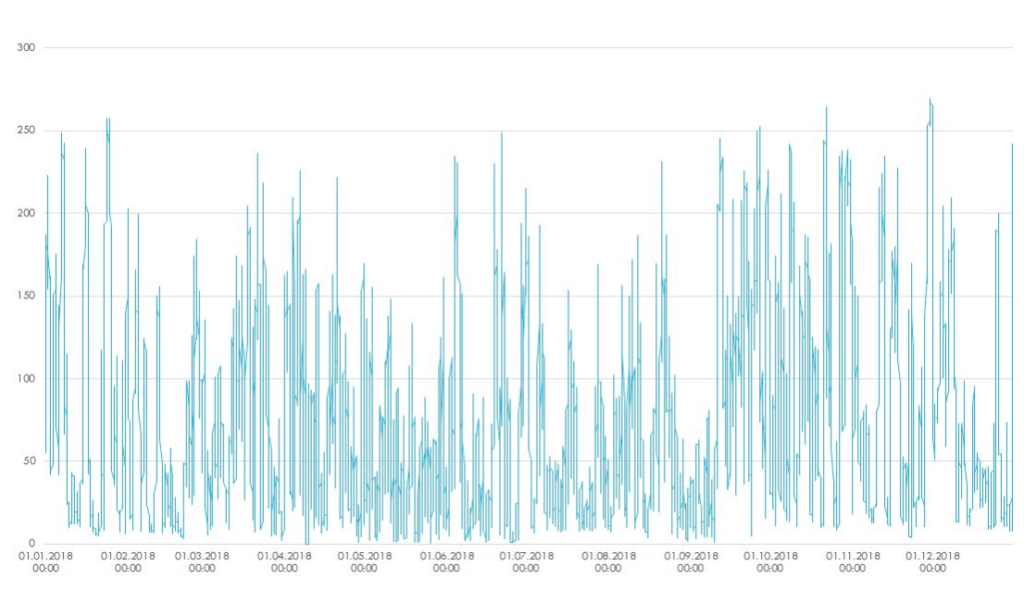
On the web page where Fermi Energia explains why it believes Estonia needs nuclear, there is a graph of its wind power generation as measured each hour during 2018 and an explanation for the mismatch between this pattern and electricity consumption.
Kalev Kallemets, born and raised in the Estonian countryside during its days as a Soviet satellite, has a keen understanding of his country’s history and its people. He has significant experience as a political leader and broad education in engineering and business.
He joined me for lively, informative and entertaining Atomic Show.
Kallemets has gathered a compact group of like-minded people; there are about a dozen members of the team. They working with numerous partners to create an fertile environment for new nuclear plant development, including a regulatory system and strong public interest and acceptance of nuclear energy.
They are leading with the benefits, but also helping people to understand the responsibilities that come with becoming a country whose power comes from atomic fission.
Fermi Energia is led by people who have a keen understanding of the value of nuclear energy and a realization that there are a wide range of technological capabilities under development. The four currently leading the evaluation process are GE-Hitachi’s BWRX-300, NuScale’s NuScale Power Module, Terrestrial Energy’s IMSR, and a high temperature gas reactor being developed by Ultra Safe Nuclear Corporation (USNC).
The company knows that no matter which technological choice is made, the key to success will be the planning and development effort that must be invested to create effective projects with the kind of social license needed to support superior cost and schedule performance.
One measure of Fermi Energia’s early success is its recent social media-enabled fund raising round to provide the seed capital needed for the important planning stage. Kalev describes how the early goal for its Funderbeam campaign was doubled to €1 million after they obtained an early indication of interest in their development effort.
When that campaign was officially opened, it was completely subscribed in less than an hour. That indication of real, committed interest led the company to double its goal again before closing the finance round with what it considers to be an adequately strong balance sheet.
The successful financial raise has not changed the company’s frugal spending habits; the founders have a keen sense of corporate responsibility and personal ownership. They know they still have a long way to go before they are producing revenue from the products of the nuclear power systems they are planning to build.
During Atomic Show 291, Kalev talks about the Estonian energy supply situation, its relationships with its Baltic neighbors, the importance of Lithuanian and Poland, the still fresh memory of Soviet occupation, and the vision of a clean, safe, affordable, secure, and reliable power system anchored by modern atomic power stations.
As always, I encourage you to comment, ask questions, and engage in productive discussion. I think you will enjoy hearing Kalev talk about his company’s exciting efforts to produce a bright future for his country.
Transcript
Read transcript
There's a way, a way such a better way today, today. A major voice till the world, there's a better way, today there's a better way. This is Rod Adams and it's time for another Atomic Show. Today my guest is Caleb Calmetz, who is the founder and leader of Fermi Energy, an Estonian company that is working hard to bring nuclear energy to Estonia. Welcome, Caleb. Yeah, hello. Caleb, can you tell the audience a little bit about yourself, your background, and what led you to decide that Fermi Energy was going to be your permanent or your full-time job, at least for the foreseeable future? My background is that I'm coming from the countryside in Estonia, and my father was a quite a responsible person in our community. And therefore I, you have a strong sense of responsibility, and I'm also born in 1979, so I lived sometime in the period when Estonia was still occupied by the Soviet Union. And I have strong sense of understanding how valuable freedom and national independence, and the strength to stand up to police, how serious it is. And I've also been a little bit involved in national politics in Estonia, in a short-member apartment, but I also remember working in the different ministries in Estonia. So I have understanding how the official life works inside of policymaking. So, and I did my master's thesis about economics of listing of government-owned companies, and then I learned about Estonian Energy, which is a government-owned utility participation in a Lithuanian and Newport Park project. The Lithuanian and Newport Park project failed, but it came very strong lessons, what not to do. But some things were done correctly by the CEO of SD-NERICA. He sent some people, Estonian young people, to study in rural technical university, in Stockholm, Sweden, and they finished with PhDs in nuclear engineering. So with those people, we decided in 2018 when we saw that indeed, SMR designs were in the licensing. We decided to form a Fereminerica to make a very credible professional proposal for SMR deployment in Estonia. But the SMR potential would not only service in a power supply Estonia, which is about the size of a main, the state of main, but the wider area of Baltic states, which in total has some 6 million population and would need security of supply without carbon emissions, given that European Union has hard decided that by 2050, basically all fossil fuels will be faced out in power generation for sure, but also in transportation, carbon neutrality is the rule, the law of the land. And so, yeah, from that background, we knew how complicated it would be for the government-owned utility to pursue what we are doing and how impossible it would be that politicians would themselves would become enlightened and understand the value of nuclear energy. So it seems we made a correct decision to establish a company and pursue the way we are doing it. Okay, so right now your country has a national utility that operates the power grid. How are your program or your plan is going to integrate with that? Are they going to buy power from you or are you going to sell power plants to them after you've gotten them developed in licensed houses going to work? Yeah, good question. Thank you. In practical terms, the national utility operates some wind parks, but the capacity that they have that is dispatchable is based on oil shield, which has even more higher specific carbon emission than lignite or the brown coal. So very, very high and they had the new government in Estonia has decided to shut them down by 2035. So how I believe in real life it would have happened that as we move forward with our company, with the planning, with the business development capabilities and the development of the organizational capabilities, it becomes possible for large energy companies, including the national utility to take a stake in Farimin, to be co-shareful holder in the company and looking at the finish or Swedish example. Absolutely how nuclear power plants have been deployed that there are multiple shareholders in specific nuclear power plants and it totally makes sense of white risk distribution and capital and talent pooling sense. So I think this is how it in practical terms would look like. Yeah, I'm somewhat familiar with the finish model where major industrial customers buy shit or enter into agreements to purchase shares of the generation system itself and then they use their own as far as I can tell, they use their own credit worthiness as part of the financing package for the system. Is that kind of where you're headed? Not exactly. Indeed, the deal is with the environment, the company you're referring to, they're 76% shareholders are exactly those. Not only industrial companies, Upe and Güman and Storra and so which are major good operators, but also municipality owned energy companies are shareholders. Indeed, ownership structure is country white and I think this is really, really important for nuclear industry to learn that you have white social base of ownership and understanding and also benefit sharing in the nuclear energy. So this is definitely something we're emulating. But we don't have similar large domestic capital companies in Estonia. So it would be a little bit different in Estonia, but what we would be emulating is to have a white shareholder ship of the nuclear power plant instead of having like single individual company. Something that based on our last week's example and experience with having 1,641 individual shareholders investing into or deployment project is really valuable and and powerful is having the society. And why people's amounts being able to be shareholders and invest into deployment project that potentially is very significant for the nation, very significant for long period. We can see very clearly how companies that have strong future can be very successfully engaged the public and bring them to be very significant part in capital of creating the future and I'm referring here to Tesla. It's a little bit more about this almost a social. I mean it's not really a go fund me campaign, but it's that you opened up a fairly significant subscription capability for people to invest the early capital in the efforts that your company needs and you said 1600, 1600 people have given invested money into your effort. And you tell us a little bit about how that came about what kind of platforms you used for that fundraising activity. Yeah, indeed. One of our co founders was also a startup company founder and the CEO and already when we started that was one of the possibilities and then well something that we talked of, but we also had two feet on the ground that we would. We would go there only when we would have a credible outlook that our project would be successful and not to be blamed for like pooling people. So we did not want to be where Nicola was or the US company and Mr Trevor Milton as to basically cheating people that we did not definitely want to have. Well, that's a good place to be. You're actually people. Well, I think Mr Milton. He he has some legal issues, but then coming back to us. So we believe that the given that the zoning government has decided to form the committee for formal committee of of looking at the nuclear energy potential and at the same time new government has decided to face out. A whole wide scale by 2035. And knowing that there are no alternative dispatchable supplies coming on stream, we knew that it is very credible options that we are able to bring forward and. And individual investors investing into that opportunity with full disclaimer that. the risks are out there, 95% of the people subscribing of those 1641 were Estonians. So they knew Estonian politics, the new Estonian reality, they knew the difficulties that are with the planning. So I can't blame them to be totally naive. So yeah, and we also said that we will not be money making entity for for coming foreseeable future. So they knew that they they they have to they are taking significant risk. But how it worked was that we worked with this company called Funderbene that has listed many many companies. And we had to go through rigorous process assessing our finances or existing investors, the new investors and we originally planned for capital capital raise of half a million and accepting potentially up to one million. But this one million subscription, this came together within 56 minutes of funding campaign being open. One of the reasons, but maybe well. Yeah. I was let's say last Tuesday, I was very serious at the price. So it wasn't my wife when I showed the numbers. But the these are this is the reality. And though now the the total number that was subscribed was 4.4 and with the founders we have decided to accept 2 million euros and we are accepting additional funds from directing investors who are very well known names within our society and professional investors but who are invested into solar and other energy projects so yeah they understand that if we are looking into carbon neutrality and we don't have the mountain rivers like Norway then what is alternative or the things have done nuclear so we should we you mentioned it early in the conversation a project in Lithuania that failed was that something that was started at the once Lithuania had closed down its Iglina RBM case or reactors that were of similar design to the Chernobyl reactor yeah they were RBM case and they were shut down due to the joining of European Union and the European Union recognized that they didn't have the concrete like dome to have a relevant shielding and they had to be shut down and now Lithuania is still importing 80% of the electricity that they grant you and the connection that they consume actually half of it from Russian Federation and this connection will go down by 2025 so we will have a well not I don't think that we will have as severe situation as Texas had last week but we will have challenges with security of supply if the winters are normal winters like we have in latitude 59 so and the Lithuanian project failed I think mostly for not understanding how nuclear energy should be pursued as a political project because nuclear energy obviously the problem is not technical it is even less maybe maybe even less so economic but the key challenge is the political challenge and you need to have significant element of mature grown up understanding that it takes a decade long multi-decade long commitment that has to be social wide and if you start pickering and short-term political fighting about around security of supply then you end up in situations where yeah some countries and regions have ended up over over this winter and coming reapers so you mentioned that your professional background includes a lot of politics a lot of employment as a politician so you're sounds like you're more suited to this endeavor than many now your company is a development company right not you're not gonna invent your own reactor design no no I think this is a much more challenging business of technology development and having your money return to you when you are in the vendor's business I'm looking at the Westinghouse and Riva and some other companies they really are in a very difficult business but if you're in a comp energy generation business where we intend to end up hopefully of having being 100% nuclear energy owning operating generating company a publicly listed nuclear-managed company which I don't think that there are many in the world then this this is a different kind of a business and we can clearly see that companies operating nuclear energy fleets they are well economically successful to put it mildly so have you made any decisions yet as to what generating technology you think is best suited for your market we're looking at for a credibly for designs that have credible pathway of licensing and first of a kind of appointment maybe where it and this decade I would add and those would be Rolls Royce SMR G hit that ship boiling water reactor X300 then water safe nuclear micro reactor and new scale that is very very well known so but we can only make the judgment as to the economics and investability and the capability of the team moving this design forward and deploying it in real world when we see the first of a kindment deployments moving forward so we don't need to pre-charge right now our enter into the formal bidding process before that is going to take place because one of the reasons obviously is in Estonia we don't have nuclear energy regulation we don't have the planning place so it takes us several years to to for that process and when we are mature with the regulatory process we are yeah this is the right time to make the decision and move into the permit application process so have you started developing this regulatory process or are you taking lessons learned from a country like the UAE that you just started up a new regulatory regime how are you going about this yeah we have established our own regulatory advisor board that includes former commissioner Mr Burns and Ian Grant from Canada that has exactly experienced from United Arab Emirates and we executed a study together with Finnish utility for them on on the licensing item and we believe that it is very valuable to utilize the country of origin reference plant safety assessment review or the safety assessment report because this is the hardcore of the of the permit construction permit and while these individual safety assessment reports they are individual and unique they still if you're using the same design they they definitely are 80% the same so we developed this study developed for us and PETA protocol how to use this country with a greater approach this country of origin safety assessment report and and not nine deployment companies from Europe including fortune what and fall nuclear electric from mermaid Romania chess or friends from Poland cintos from and Irish and touch partners signed to that so-called teleintegration on SMR licensing which is available at our web page www.fermit.edu so I'm going to take this opportunity to remind listeners that I'm talking to Caleb Calimets who is the founder and leader of Verme Enagia jot down his website we'll say it again later in the show fascinating method of development reactors now do you have those that expand outside of Estonia yes I believe that given how much coal has to be shut down in Europe and we have roughly like something like 60 gigawatts of coal that will be shut down over coming 20 years in Europe and eventually to reach carbon neutrality we have to shut down all natural gas without carbon capture and storage in Europe as well and that is additional 120 gigawatts of capacity so we're looking anywhere between in my view of two to 500 SMRs at 300 megawatt unit size that could be potentially deployed within next 30 years in Europe to ensure achieving the carbon neutrality goal giving a mind that the power consumption has to almost double in Europe to achieve transportation electrification heating electrification and significant not dislocate but in coming decades 40s and 50s and 30s significant increase or creation of the hydrogen generation production in Europe for steel glass and plastics fertilizer and other industries so these numbers are real and I cannot see how intermittent capabilities can provide relevant supplies with necessary supply security that is necessary for those industrial and practical real life solutions like communication and so forth so you mentioned that part of your strategy is to develop a broad base of support and you've made a good start by having 1640 or so investors how are you reaching out to the rest of the population of Estonia and your Baltic neighbors? Yeah we have to go step by step and the first step is indeed that in Estonia we have the government committee formed and then is the discussion about whether we need to start the planning procedure with this effectively citing and to establish a site that is with a plan that is suitable and then we go about the law and this then in hopefully in 2026 we arrive in a critical judgment point where the parliament would have to charge whether to approve decision and principle which is based on a finish regulation that there is a political decision before there is a technical permitting taking place by the regulatory authority so this is the process and I'm quite confident that if we move forward from first one steps one and two we are able to access further capital to finance or deployment objectives and it looks very realistic looking at the interest that we have gathered from regional energy companies but also other institutional investors and not talking just about investors but obviously you're also going to need to have buy in support from the general population because one of the high cost efforts in nuclear is overcoming focused opposition and delays that get inserted by people that don't want you for whatever reason yeah you're absolutely right and just today I was in the National Public Forecasting and data had a poll after my interview and that showed that 66% were for consideration of SMR deployment in Estonia and 32% were against and obviously within this 32% there are people that are like you described very determined and very active and vocal and indeed it's a difficult process for society to deal with any determined opposition to buy a minority to a specific decision be it infrastructure, be it some other political process like whether boats in specific county are legal or not. So this is the challenge that democratic nations face. But we have to overcome those difficulties to forge democracies to prosper, to be capable, not to fail, and not to falter, to the challenges that we obviously face in the world. Yeah, in my view, part of the challenge or part of the goal needs to be to help more people understand the benefits and what the what the benefit, what will become when you successfully deploy these clean powerful generators in your own country. There's lots of things that we accept risk to do. We just accept the risk because we think that the benefits outweigh the risk. But I think this ownership sharing and being also very open, very transparent, I mean everything that you do is also something that the nuclear industry in general has not been very successful at. So I think the nuclear industry shares a lot of the blame for its misfortunes. But we addressed this in a new generation in new century, in a different manner than it was in the 70s and 80s, not just denying stuff that opponents are wrong, but doing it just different. And I think that this, so looking at getting smaller designs, more safer designs that are a lot to say, less prone to human mismanagement. And I think those elements are all valid. And also the business model has to be more, how to say open and the beneficiary has to be much clearly there. So all those, bringing all those elements together, I think is critical for nuclear energy to be relevant in the decarbonized world. So how big is the team that you put together so far? Yeah, we were originally seven founders, five of them with PhDs. And now we have employed further four people. And we are implored and what were very importantly, we are very closely partnering within MOUs with our Swedish finish and the Belgian partners, truckable fortum and Wattenfell. And they're working for our studies also very closely. And we're yeah, increasing our partnerships as we speak and then further work. So we don't need like 50 people running back and forth in white overcoats to make a new lineage company happen. So we are very, very happy to be lean, efficient and not overly procritical. And we definitely what we want to avoid is overspending and wasting money. And we are very cognizant that with every $1,000 that we spend we are basically spending our own money. And we want to be 50. And that makes nuclear energy also more competitive. And I think sustainable. Sounds like you had the startup mentality, which is great to be very cautious with your capital. So you mentioned earlier that you're doing some work with Poland, which is relatively close neighbor for you or not sure. Do you have a border with Poland? Estonia doesn't but our southern next neighbor, Lithuania has. And as I mentioned in 2025, we will desynchronize from a north-western Russian grid system. And when then we will synchronize through Poland over 700 megawatt connection. And the way it's relevant is that the Poland is as a large power area is currently the most carbon-intense power area, a generation area. And currently the CO2 price in Europe is 40 euros per tonne, meaning like something like 46 euros US dollars. And it will increase to around 80 euros, meaning $100. Within next year, 10 years, this is pretty predictable. This has to go there for to push out code. And this means that the power prices on the market will in Poland will increase. And this will increase also the marginal price in Estonia market, like the portic power market. And that is very easy thing to predict. So that is kind of the fundamental of us moving into 2030 when we would expect to make the final investment decision. One of the things that appears to me, Lithuania, which used to be when I became a nuclear trained person, I knew that Lithuania was the most nuclear country in the world. It generated more than 100% of the electricity it used using nuclear energy. I guess it had two large RBMK reactors. But now, Lithuania seems to be moving closer in alignment with countries like Germany, Luxembourg and Austria in opposing nuclear development. Can you explain why that has happened? Yeah, actually, those, those nuclear power plants, they were not Lithuania, they were Soviet. They were built by Soviet Union. And most of the staff was, let's say, not Lithuania, but Russian in nationality. So it's a little questionable how much they were Lithuanian. Obviously, they were running for almost more than 10 years in territory of the Republic of Lithuania. But the Lithuanianness is not 100% at least. And now why they're opposing is that nuclear energy deployment in Belarus is that the location chosen by Belarus was, well, just 30 miles from the capital of Lithuania, from, from, from Vilnius. And I've been in, in Vilnius, myself and see the cooling towers on, on the distance in Belarus. And, you know, the relationship between, well, let's say dictatorship run country of Belarus and, and democratic and free country Lithuania is a little bit difficult. And the history is also, let's say, complicated. So that, that are the reasons. But we have spoken to Lithuanian officials and that they've been very, like, interested in potential future nuclear energy supplies from Estonia. That's encouraging because I know that there's been some, some effort to try to make sure that Lithuania does not purchase any of the electricity that would be coming from the new Belarusian reactor. Yeah, that is perfect. That made me wonder because, you know, I'm not, I'm not from that area of the world. I just, I read a little bit about the politics and understand. And I guess I can understand why there are people in Lithuania who don't have a good memory of when they used to have so much nuclear since it wasn't really theirs to begin out of it was, as you said, a silly issue about nuclear energy and, and its transparency and the credibility. And the problem, if you have undemocratic nations running nuclear energy is that you don't have transparency. And you have secrecy and lies, you know, watch the Chernobyl series. And then you understand that there is a serious problem of undemocratic nations running, uh, dangerous things. And, uh, things are hidden. And you can't be sure whether the personnel running the plant are qualified, whether decisions being made are based on safety or, or on some other items, like loyalty. And keeping your mouth shut when needed. So there are significant problems with trust towards, towards, uh, and justified. So towards, uh, Mr. Blocha Shanko. And I totally understand the objections of the training, uh, population towards the visor, sorry, uh, astrovert's nuclear power plant. One of the challenges we have as nuclear people around the world is that the nuclear industry was created out of secrecy, even in democratic countries in, in the US, in the UK, in France. The nuclear enterprise was secret because it was so tied in with the defense establishment. And even today, one of the challenges I think that nuclear advocates have is that we very carefully protect and secure our nuclear facilities to the point where to certain observers, it looks not too different from what you described in a, in a dictatorship or, or country with a central planning authority. So it is a challenge to be transparent because people think you're supposed to keep these facilities very secure. Yeah. And I, I totally object to that view. I, I think that nuclear power plants should be open and transparent and like visitor centers. Because if you're, I've been to nuclear to nuclear power plant, there is nothing dangerous there. I've been under and working nuclear power reactor. As shielded, I was under director in, in, uh, low is a nuclear problem. It was shielded. There was no danger for me whatsoever. I've been in wasted repositories, no danger whatsoever. I think people should visit and see it have, have working. And one of the ideas that we have is we have the intent of having taking over, overcoming months and years, all of our investors to see nuclear power plants in Sweden and Finland. Because if you see it, then you understand that the, the, the hype and, and kind of overventilated fears that some people are spreading is our total misrepresentation and lies. And, and openness is the best tool. And, and, and honestly, it's the best tool when it comes to, to those, those, um, objections to, nuclear energy. And I, I don't see any threat to the safety and security of the nuclear power plants from being open to the public. Yeah, you won't get any argument for me. I mean, have, I've been fortunate in that I've, I can tell people I've actually hugged a reactor before. And numerous times I've crawled up and down and, and knew my power plant like the back of my hand. But absolutely, you see, I mean, people live in a nuclear power plant when they are in, in a submarine. And, I mean, I've just reading the book about Mr. Rick over, Rick over effect. And, it's just wonderful, wonderful to recognize that we have tens of units of nuclear power plants operating operating right now under the sea and on the sea. And they work and it's beautiful. Yes, we do. And we also have, as a result of having all those Navy reactors, we have hundreds of thousands of people who can be credible, uh, information sources about nuclear energy. If the Navy released them and said, you guys can talk about what you learned here. Unfortunately, and I, I still fight against this even. The guy in charge of the Navy reactors is, is a guy. I went to school with a long time ago. I still can't convince neighbor reactors that what they know shouldn't be so secret. It's just an engine. Yes, exactly. There's nothing secret about it. It's so obvious what is working. The process is they are so clear and we should speak more. I think Bill Gates said one thing very, very good to understand Cooper rate lately. How to make like reality more interesting than how to make the reality more accessible compared to the falsehoods that are spread all the time. Bill Gates said you have to make reality interesting. This is the key and nuclear is so, so darn interesting. I can't find anything more interesting than the strong force. It's mind blowing how those peons move and how they bring together the mass and how actually energy is the mass. I mean, it's mind blowing. It's like the Star Wars is reality. It's amazing. Yeah, I can't agree with you. There's nothing I can say. Of course, I've been fascinated. Some might say obsessed with nuclear energy for a very long time. It never ceases to amaze me to think back to my 1962 vintage submarine where a mass of fuel that weighs about as much as I weigh powered that ship for 14 years. That was a 9,000 ton ship with 150 sailors on board. It was so active that it needed two crews to keep the ship employed because people couldn't keep up with what the ship could do. So we would have two crews and rotate them to make some if you keep the ship busy. Just an amazing thing. Yeah. It's like Isaac Moo, Azimos, books. Where you have the galactic empire is run by what people who are able to control atomic power. And that's it. Yeah. I think that Isaac, Azimos and Ray Bradbury and a few others, the old time science fiction guys, their books need to make a comeback. Yeah. It's not science fiction. It's real. It works. It's as a mouth was a scientist. He wasn't just a science fiction writer. Yeah. It's good stuff. Um, let's see. What else I need to ask you? I don't know. Have you got anything that we haven't really talked about that you think that listeners need to hear? One fundamental thing is that we, the problem that we face in energy industry is almost the same problem that we have in the car industry before Elon Musk that you had us significant gap between expertise and management, responsibility and capability. So utility industry, I believe we have a significant agency problem where the, where good people running the companies, they are not owners of the companies. So the, but the owners, they don't have the expertise and they don't have the capability of executing. So the owners of let's say dominion, they can cannot like gather as a group and decide let's do a new or plants. But in the case of Elon, he was able to commit to do new stuff, right? And you need, so you need this raptor companies who are making, taking significant risk to create new, something new. And Henry Ford was one, one example. Steve Jose was also this combining responsibility, ability to make decision and the expertise in a single individual. And if you don't have that, it's very difficult to have, have changed. So what I believe is there should be multiple. I'm really hoping that there will be in United States, in Asia, in Europe, in Korea and Japan, new companies like Ferriman, to start SMR deployment projects. And really with SMR deployments, you have a like billion, 2 billion scale that is privately the financial. If the market demand is there, if the professional is there to, to, to, to deploy new SMRs. Because I see certain level of risk aversion when it comes to existing, very limited number of nuclear energy utilities. And I, I, I, I, I, I find it very difficult to believe that the, the, the, this vision of having hundreds of units deployed is being, could be executed by, by current either American or European nuclear, nuclear, I believe there have to be new companies, new people that pool significant amount of talent, significant amount of innovation, motivation. But I also capital to, new deployment projects. And then combining it with the existing capital supply and, and let's say, project execution professionalism by with, with the existing utilities. So this is, but I think is, is very, very important that we, we need, we have a new century, we have new decades, new, be challenges that are really like go to the moon challenges. And we have to get new people involved like in a business sense practical sense, not just talking, not just like, let's have webinars or let's have like a, let's do some, another thing, thank your stuff. Two business, two megawatts, practical megawatts, not just talking. We have to do action and only action, your own personal commitment, professional, everyday work to make real megawatts is something that changes the work, not just talking. Well, you gave me a wonderful entry to remind listeners that that's exactly what my partner and I have decided we need to do is to help start up companies, get the traction they need to move forward in the US. We have this wonderful tool called venture finance. So Valerie Gardner and I have started nucleation capital as a venture finance looking for the teams, the entrepreneurs, the disruptors who really can see the potential and use it to change the world. And there are some great people that are already doing that in the nuclear field in some of the companies like terrestrial energy or OCLO or X energy, USNC, Thorcon. There's a whole list of companies who are led by people that have the same kind of drive and determination that you talk about who have seen that the world can change. There's lots of examples, some of the two mentioned, and that it takes the dedication and talent, matched up with some capital and then matched up with some of the experience that the existing industry has, but they never really capitalize on it because changes hard, changes scary, changes risky. Yes, what? Necessary. And we need, I would say, a route that we need for each like this technology developer. We need at least 10 to 5 deployment companies seeking to deploy multiple multiple projects. And ideally honestly, every kind of the deployment project has its own like politics, has its own project development, organizational capability development, capital pooling and planning process that you have to go through. And without those projects moving forward and starting bloody now, this year you can't have a market for those vectors down in 10 years. And that's why I'm I'm pressing and talking about it all the time, but people wake up, start companies now, start developing now. Yeah, and developing is the key because that's, like you said, a long time ago in this discussion, we don't really have a technological shortage. We have a shortage of actual deployment with with steady learning and improved project schedule and cost performance that we need to address. And I'm happy that there are a couple people like you that recognize that and are taking a look at what the technology is being developed other places, but you're going to build the deployment teams. And that's a wonderful thing. And I believe in United States also given the fractured power market. It doesn't matter. If you look at the numbers and the end of the day, be it in BGM, you have like 20 gigawatts of coal that has to be shut down to come anywhere close to Paris agreements, commitment by the United States. And eventually those decisions will be made. Then you understand. And if you have a company that has a smart deployment project, you are five years ago before others. If you have a team and capital deployment and a site and a planning process, whatever kind of then your five years ahead of others and that has significant economic value. So I think that I'm encouraging also people in the United States, drop your third sector think tanks, start the deploying projects. And that is convincing to where that is changing the reality, not just talking. Oh, you've all been listening to Caleb Calmetz of Fermi Energia. And this was a great atomic show. Thank you very much for making the time to talk with me today. Thank you. Now reach your voice to the world, there's a better way, the way is the atoms way.