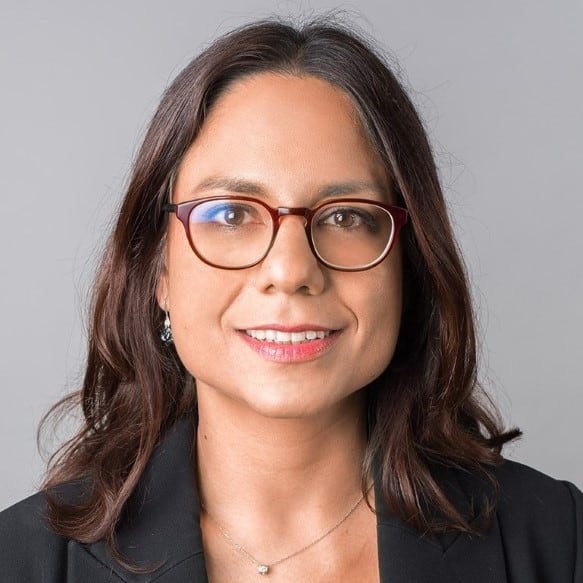
Myrto Tripathi, Voices of Nuclear
Concepts discussed
Auto-linked from the episode's notes and transcript.
Show notes
Nuclear energy professionals are credible sources of information about a powerful technology that can help address climate change and contribute to humanity’s development.
Voices of Nuclear is an international non-profit group that seeks to empower nuclear supporters, both professionals in the industry and allies outside of the industry, with tools, organization and effective messages.
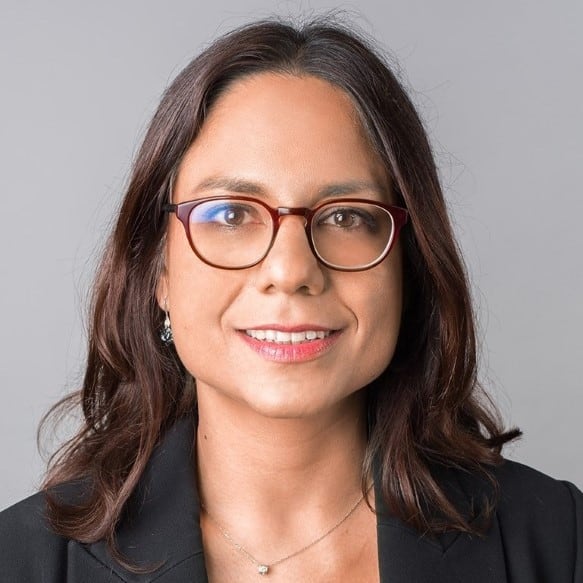
Myrto Tripathi, the founder and chair of Voices of Nuclear, visited the Atomic Show to tell us more about her group and its efforts to tell the nuclear energy story.
She describes the current situation in Europe, where there are a handful of new reactors under construction, there are numerous reactors being closed and there is a solid front of opposition from several prominent EU member states – particularly Austria and Germany.
She explains how the European reaction to the Fukushima event – now almost ten years ago – helped to convince her to leave a successful career in the nuclear industry to play a bigger part in the civil society discussion about its role, especially in light of the growing threat of climate change.
She talks about the role of young people, primarily under the age of 35, in bringing their vibrant, optimistic energy to the Voices and she discusses the challenges that her group faces in obtaining necessary and useful financial support from the established industry.
She also mentioned the importance of retired people in sharing their stories about pride in their life’s work in developing and operating clean nuclear generation facilities.
We spoke at length about the successful, well-funded and carefully planned efforts by nuclear energy opponents to spread misinformation and fake news about nuclear and how those efforts have helped to silence nuclear energy supporters.
We spoke about the disappointing state of public misunderstanding as illustrated by a recent poll taken in France in which 86% of the respondents between 18-34 years old said they believed that nuclear energy contributed to the problem of climate change.
With their diligent efforts over a number of decades, nuclear opponents effectively created a “taboo” around nuclear. They made it politically and economically costly for ambitious leaders in both government and in commercial enterprises outside of nuclear to publicly take a supportive position.
One reason I invited Myrto to be a guest on the Atomic Show was that I sense there are many in the US who believe that the nuclear grass is greener on the other side of the Atlantic. At the moment, the situation in Europe is tenuous and could use a strong public engagement effort.
Voices of Nuclear is working hard to be a positive part of that effort. They have a base of talented volunteers, but they could use all the additional support anyone wants to offer. It would be especially useful, if your time is more constrained than your resources, to support their efforts financially.
Myrto did not ask me to say that and might even be a little mad at me for making the statement, but changing people’s minds isn’t easy or cheap.
Please join in the conversation.
Transcript
Read transcript
There's a way, a way such a better way today, today. The nation flies till the world, there's a better way, today, and there's a better way. This is Rod Adams and it's time for another Atomic Show. My guest today is Merto Tapati, the founder and chair of Voices of Nuclear, or Vod Nuclear. Welcome, Merto. Thank you very much, Rod. I'm very happy to be here. And Merto, can you give us a little bit of introduction of yourself and what your background is, what made you decide to form a international organization aimed at? sharing the nuclear story and telling people more about how nuclear benefits them? Yes, of course. Thank you for that question and for the invitation. I am originally a professional from the nuclear industry, the French nuclear industry, a rebar back in the days, where I worked for the first 10 years of my professional career. My last position in the company was EPR sales director. I was in charge of answering the call for bids for the third generation French nuclear power plant, which is the biggest one today, which is 1,600 megawatt power. I worked for the nuclear industry initially, that choice I made, because I thought energy was the one way for me to pick the world issue that mattered the most for me by picking them all. I was not able to decide if I wanted to save the endangered animals, to protect the water sanitation, to defend children from war and hunger and so on and so on and so on. And so I wasn't able to choose among all those issues I cared about. I decided I was going in the field of energy, because at the end energy was the strategic area that was the base and the foundation of all other ones, and that if you actually provided energy to people, then those people had in them and in their hands, the capacity of addressing all the other issues. So there was my main motivation and in 2011, while I was actually trying to promote the EPR to country, European country that you probably know that's Sweden, which has the best carbon footprint of its power mix of the entire opinion, because it's roughly half nuclear half-hydro. In 2011 there was a report from the United Nations Development Program that said that humanity was on a very nice course of progress and poverty was receding everywhere and development was reaching the foreign corners of the planet and things were getting better and better, except for the ultimate absolute threat. of climate change and climate change was big enough of a threat to reverse that positive course and it was actually the only thing big enough to reverse that positive course on which we had set ourselves. And that came as a huge shock to me, and I realized that maybe I had done my part as first providing energy and I really needed to go and try to preserve that access and make and manage so that access doesn't become a problem instead of a solution that energy access. And that's when I decided to join the teams that were working towards the Paris Agreement for climate in 2015 at the COP 21. And I dropped everything I was doing, I dropped my career and I became just almost an assistant kind of a supporting figure in the all scheme of things of the climate negotiations and discovering all that for the first time because I was nothing else but just a regular engineer or at least that's how I so myself. And being in the climate negotiations for three years for three successive cops, I realized how crazy it all was coming from nuclear I realized that what was said about nuclear and very very little was said about it, what was said was very wrong. So I kind of started question where it was said about everything else all the other technologies that I did find very enthusiastic back in the days and as an engineer realized that actually it wasn't really working it wasn't delivering the service that it was expected from it. And as a project manager I started questioning how we would get there if all the promises of delivering free emissions energy to the world society in the world poor would actually realize. And as a project manager that managed huge projects of my life or my professional life, I didn't see that happened so I started question all of that and realized that civil society was taking an increasing role and that essentially. We needed nuclear much much more than I thought to fight climate change that was itself much much more serious than what I thought so that was the first realization on my point. The second thing I realized was that that will not happen as long as it would be such a huge political cost for governments to take decisions are feral to the deployment of the nuclear industry. And that they could not take those decisions in particular in democratic countries, which was the framework in which I was setting myself in. And the third realization was that, well, we needed to break the taboo to allow that to facilitate that political and industrial decision making and breaking the taboo was that. Realizing that the problem was not in the message but was in the messengers. And so that were the voices of nuclear was about to penetrate the civil society frame that had an increasing role to play increasing responsibility increasing influence on worldwide political and industrial decision making. And have that chronicle or citizen based civil society express and put forward all those positive messages that were inherent to nuclear energy. I'm sorry, that was a very long development. So you spend a lot of time talking to people in civil society who aren't from the nuclear industry who may have been taught all kinds of things about nuclear. How do they respond when you explain what nuclear can do and how it fits in with concerns about climate change and clean water and reducing air pollution and those kinds of things? How do they react to you? That's a very good question. They essentially shut down completely. The what they were hearing was unearable. I don't know if that makes, if that sounds right in English, but it was too outrageous. Those sentences, those messages that were coming out of my mouth were way too far from what was the mainstream public opinion that there was more than a public opinion to them it was facts and I was contradicting facts the same way you would contradict basic physics. When I was trying to tell them what I knew there were facts on nuclear energy and nuclear applications and history of nuclear industry records to them. It's as if I was a blatantly lying in their face and they were just not interested to hear it. So it was really hard to try to at least get them to open up to the fact that maybe what I was saying could be considered with that beyond without. How do you get past that? Have you learned different ways to communicate or ways to build bonds with some of the people who share your same concerns about really wanting a better world and a better outcome for their children? How do you build bridges to those people? Definitely, and I think a lot of people have formalized that much better than what I'm getting ready to do. The idea was to first create a bond with the people that are in front of you having them considered that you part of their team. You share their values, you're part of their group and that essentially they recognize themselves, the lives they lead and the values they have in yourself. And once you've established that common ground, then you can progressively allow yourself to get away a little bit from what they deem is acceptable in that in that sphere of things. The entire way, the voices of nuclear have to change the rules about the conversation about nuclear is that until now, it was rather easy. And I'm taking the example of France, which is where we have explored the concept the most for now. But until now, it was rather easy. Either if you were a citizen fighting for citizens' rights, if you're concerned about the future of your children, you were anti-nuclear. There was no questions asked. If you represented power, if you represented economic exfoliation of the people, if you represented the lobby, then you were pro-nuclear. And there was it, the citizens, and especially the ones that didn't know so much about the topic, which is a complicated topic, then fell naturally on the side of the anti-nuclear people. Because if you were citizens, that's what you were. And there was no questions asked about it. And what the voices did is that they created a second citizen group, recognized our search with very intergenerational members, retirees, young people, a lot of them, people from the industry, but people sympathizers as well from outside the industry. Regular concerned citizens, that really acted as concerned citizens, and they made a group of pro-nuclear citizens. And that came as a shock to the media, but to people themselves and to the politics as well. That how is it possible that we have a group of citizens that's pro-nuclear? And from then on, the rest of the population, well, didn't have a simple choice to make. They could fall in either one of those two categories. And they had to either stay neutral and step back from the debate. Or, well, investigate a little bit who they thought. were closest to themselves, but that required investigation and it was not a notimatic decision to be made anymore. And I think that's the very big lever that we exerted is forcing people to not fall naturally into one category and then study raising questions or at least agitating before adopting a posture. One of the things that always bugs me is when people try to make an issue about two sides, when most issues, particularly those that are as complicated as energy choices, have multiple sides, have many different perspectives, many different angles, many different characteristics that make things either favorable or partly favorable or completely unfavorable. Do you think that sometimes nuclear professionals make the topic of nuclear too complicated? Is it really as complicated as we make it out to be? Well that's an excellent question. You know you're asking me about my own commitment initially and the truth is I'm part of those engineers who use to regard communication issues and public debate as superficial ones, not worthy of the time of serious people looking to save the planet. I was fabricating things, I was putting projects forward, I was building the future. I didn't have to talk about it. And at some point I realized that we essentially are nuclear and are many other as complicated issues, maybe much more complicated issues than nuclear is. And we can only take the example of vaccines today when we talk about the revolutionary way the new vaccines work, for example, are exactly as complicated as nuclear is. And I realized that essentially we had all those technical solutions at hand. I mean they could be better, improved, less side effects and everything else you want. But essentially we could solve the world problems with the results of what science and engineering at wrote forward. The only problem we had is that people didn't want it or not enough or would not make enough effort to deploy it equally on all the people on the planet that actually needed them. So it was a communication issue. So we not in a situation where the world problem need more science and more technology to be resolved. They always do, but it's not the key factor anymore. Now the key factor is how do you make those acceptable and you deploy them at the right level? And that communication has to be understood as being an art, maybe if people want to call it this way. But just really something essential. It should not be dismissed anymore. It should not be regarded as something that's not worth the time of a serious intelligence people and of all people because it is the key today to how we're going to get those things applicable in the world. No need to have something that's risen the shelf and that no one uses it. So I'm taking a little detour to answer your question. But even if it was complicated, it has to be made simple but right. It has to be explained. We have to trust the people that listen to us and they're much much smarter than what we agreed to to consider them. People understand things and people are much more subtle than what we would want them to be. We have to take the time. We have to make the effort. I think it's absolutely key. Many times I get involved in conversations with people who really are specialized about a particular topic and they talk very disrespectfully in my view of the public's interests or understanding and what they do. That seems to be a real way to turn off anybody who who might be on your side if you assume that they're maybe not as smart as you are. They're not as as capable as you are to understand as highly complicated stuff. But in reality is nuclear is not all that complicated. It just it makes heat from a very small amount of material and I think that that's pretty cool. Yeah absolutely. I mean I think there's a lot of very simple ways to explain what could be understood as complicated concepts. But again I think complicated concepts are all around us now in all the fields of life and science and and populations I have decided to take those matters in their own hands. Health matters, technological matters, science matters, environmental matters. They've decided to make the decisions about that and there's no choice for us then to respect it. There's no more expert decisions coming from up down, up to down and that would be imposed on people anymore and they want to understand and they wouldn't make the those decisions themselves. So we have to go along with it and I agree with you there's a lot of sometimes a little bit of of condescendence when when addressing the issue. Coming from engineers or or technical people trying to defend their trade and I'm saying this because I think the expression defend their trade is appropriate. I think a lot to cover a little bit for the nuclear industry people and the people in the know of those issues. Generally that strong reaction do come from the fact that they feel a little bit attacked and they are but it's limited to met from the person in front of them to attack them considering the disinformation they've been fed. So it the objective for the for example nuclear engineer in front of a person that's not from the nuclear industry in the nuclear world is to just take that in swallow it to digest it and just make sure that they do not respond to the level of worry and concern that's in front of them with an aggressive tone and try to stay put and understand where those people come from. I think that's essential and and the other thing I would say is that probably that kind of reaction also comes from the fact that it is sometimes very frustrating to have people contradict facts and it spurs very strong reactions into a nuclear sympathizers that they're trying to confirm the message and whether they have in front of them or people contesting facts and that that is very frustrating but what is very important to remember is that we cannot blame people from not knowing that those are not facts they've been fed that impression they have lived the lives being fed essentially for in many many cases in many countries at least in in France and a lot of the European Union they've been fed lies on the topic and their reaction is only a normal and legitimate and we just have to consider the topic as important enough that we agree to go past that past that frustration to address people. Now you tell me you told me that in your background you were in charge of or you were very active in the selling of a 1600 megawatt EPR European pressurized reactor. Do you think that the choice that the nuclear industry or nuclear designers made to move towards such large machines had was part of the perception problem around nuclear? I wouldn't go that far. Honestly I think that's a bit of a stretched. I mean the considering the needs, the energy needs of the planet considering the agglomeration of people in some urban areas considering the need of some very electronic intensive industries. I mean having a large power plant makes sense as part of a of an offer of several different kind of different plants answering different needs. What I would find detrimental and thankfully the industry is moving away from that is having only one product to offer as a fit for all. That would be not a good approach just because I mean if we if we do have to replace 80% of the energy supply of the planet with dispatchable power because intermittent power is not going to do the job. I mean it's going to do a little bit a small part of the job essentially it's not going to the bulk of it. Then we will have to rely a lot on nuclear energy because the hydro is not going to be able to fulfill the entirety of it either. So there will be so many different needs, so many different contexts, so many different applications not only power. I mean heat, desalination, why not hydrogen production and so on and so on. That we would need different sizes of reactors, different concepts being able to be deployed in very different situations. So I think one very large power plant completely has its role to play. There's there's many many situations where it would it makes actually complete sense. So I think the fear and the distaste of nuclear from populations is much deeper than that. It's much more based on the concept on the fantasies that have been built around it. It's unfortunately not as rational as as where he proposed. But there was a good try though. Well you know I think that in within your response as a nugget of what I was really trying to get at was when the only size being marketed was the extra large size that I think contributed to part of nuclear's problem because even countries as large as say Ireland couldn't fit a 1600 megawatt reactor into their 4000 megawatt total grid capacity because you know one reactor being that large if it goes down you have a real problem. You can't have that big a dependence on a single power plant. And I think that's probably what I was trying to get to was if you're only size as it's your marketing is the extra large variety. It's no surprise that you can't sell very many of them. And that many of your of the people around the world will say well they're not even making a product that suits my needs. Why would I be interested? Well first of all and thank God for that. There was not only a river and there's not only the French as a nuclear provider and a close suppliers even though now France is the and maybe we'll talk about why France and Europe have a maybe specific role to play in all this but France nuclear industry today is the last European nuclear industry. But there's many different providers first of all and for example the Canadians in the Americans are doing a very great leap for leaps of all. forward in SMRs and hopefully generation four plants, the Indians, the Chinese, the Russians, are making very great progress as well. So to remind you, indeed, it was not so very well known. Actually, the portfolio of Vareva back in the days, and it's not so long ago, it's 10 years ago, did include a lot of different plant designs. There was a BWR, which was called Kirayana, and there was a much smaller power plant. There was more the size of the AP 1000 from Westinghouse, which was called Atmae. And it was designed and was meant to be built and marketed jointly with the Japanese. So there was different kinds of designs, and they could have been more, and there should have been more, with the renaissance of nuclear hadn't been stopped in full flight by the Fukushima accident. You know, we're coming up on almost exactly 10 years ago that that event happened. I think we're, for a month away from the 10-year anniversary, it definitely played a huge role. Now, one of the things it's challenging, and it's good to have you and your European perspective on the show, there are people in the US who still think the grass is greener on the other side of the Atlantic that nuclear is better accepted in Europe, particularly because of the French example of having nearly 75, 80% of your electricity coming from your fleet of now, what, 57 nuclear plants or 56? I can't remember since you shut down the phenomenon. Right. What is the real status there in Europe? What can you give a brief overview of what the perception and the future, at least from today's perspective, what's going to happen to the nuclear industry in Europe? Well, that's a great question. The European Union today is a battlefield for nuclear energy. I think there's no other way to put it. Every country struggles with the issue of yes or no to nuclear. Each have a very different answer to it. Essentially, all positions can be found within the European Union, regarding the issue from the most extreme one, which is on one side, which is probably Austria, that as put in its constitution, that it would be against nuclear, and as a very, very active and aggressive foreign policy against nuclear in other countries as well. So those are probably the most extreme. And they're closely followed by Germany and some of the Swiss contents. And on the other side, you have maybe the most, the two most pro-nuclear countries today are Finland, who is considering district heating based on nuclear and probably Chen4, which even though it's materially not there yet, at least it's conceptually very striking and important that it's in the mind of the people. And the UK, the US left the European Union. They're still in Europe, who has a very structured and methodical way of going into more nuclear. So and you have everything, all the shades of colors, in between. So nuclear today in Europe, it's a little less, a little more, let's say, than 40% of all the local foreign electricity in the EU, 108 reactors in operations, out of which half of them are in France, on French territory. And France is indeed has something like 75% of its power mix, that's nuclear generation. And it's actually not the one with the most worldwide Hungarians, I think, a little bit more than 80% of their power generation coming from the club. So there is a big share of nuclear within the European Union. But as I said, there's a whole lot of opposition. If I only take the example of France with its 75% nuclear in its energy mix, you have 86%, that's 86% of the young adults from 18 to 35 years old, that thing that nuclear is responsible for climate change. and is responsible for emitting greenhouse gases. And that same age category, of course, will be the decisions. Or already the decision makers of today, but will be the decision makers of tomorrow. But that same age category puts climate change on top of their priority. So they essentially have no idea where they're rooting for or against. They miss the essential facts. And what is that? It's because anti-nuclear sentiment has been so strong in France for so long. It's been literally instrumentalized in a very step-by-step way by anti-nuclear movements that it's spread deep and far all around the French society. That's also one of the reasons why the voices of nuclear have started in France. I mean, it's as many reasons why France is relevant to maybe give birth to such an organization. It's symbolic, we said, because of its proportion of nuclear. But also because of its climate leadership, or at least itself proclaimed climate leadership, it's structural because it's EDF is one of the biggest customer worldwide. It's a huge provider because it covers the full range of products and services and is closing the fuel cycle loop. It has a huge research body in the CEA, the Kumissai Alina Gietumica. It's regulatory bodies very influential. And as we said, it's the last European NPP provider. So it's structurally very important. And it's also schizophrenic, since, as I said, the population still really doesn't know. And as a very cold-blooded, methodical approach to effectively choke and suffocate its industry at all levels. Regulatory, politically, financially. It really is making a very structured approach to kill its own industry with the help of its in-famous, friend-fogh Germany on the other side of the border, of course. Realize that I'm talking, talking, talking. So it's easy to stop me at any point. But what's probably most striking, it's what's going on right now at the European Union level, where there's a big decision-making that is taking place and that is going to have impacts for decades and decades on the entire European Union. And you have completely irrational decisions that are being taken as because of nuclear, and because of nuclear being such a crazily emotional issue that has nothing rational about it. The European Union is actively favoring natural gas over nuclear in what they'd call the sustainable investment that it's pushing and supporting. It is excluding. Let me, I mean, I'm an internship for a second. Yeah. Do you really think it's irrational to favor natural gas over nuclear if your business is to sell natural gas? Well, that's the thing. That's absolutely not the business, say, the European Union, to sell natural gas. The European Union is completely dependent on its imports of natural gas from Russia and the US, essentially. So it's chasing oneself in the food completely. Russia has had a pretty long-standing effort to persuade people in the European Union to favor its positions. You know, some people use the term fake news, but a more accurate term is propaganda. There has been a long-standing effort from Russia to ingratiate itself, to analogical, to protect itself, and to make sure that it has an outlet for its products. 50% of Russian economy is dependent on selling oil and natural gas to Europe. Well, probably, but honestly, I think we're really making it super easy for them. I mean, the little really need to do anything. I mean, the anti-nuclear environmental NGOs are really doing their best to support the development implementation of the Nord Stream pipeline. To compensate for the American sanctions, for example, German companies, because of the opening to Russian gas. Oil and gas companies in Europe, and some of them, very big ones or French ones, to tell an NGO, are doing, making a lot of effort to promote natural gas as a support to renewable energy. Intermittent wind and solar power. Politicians in the European Union, the parliamentarians, are making a lot of effort to support that dependence of the European Union to Russian gas and actually increase it, all because all in the sake, for the sake of their anti-nuclear sentiment and convictions. So we're really making it super easy for them. There's no question about that. I'm not even sure they have to do much of anything. I mean, just a little bit, of course, I suppose. But their influence, if influence there is, and probably there is, is embraced by a lot of people, internally. So we have only ourselves to blame. Well, activism and spreading the message of fighting nuclear and the organization that's been behind that, you may know by now as a leader of an NGO, that that stuff isn't necessarily cheap. And it's not easy to mass large groups of people and to make sure they're all provided with signs and make sure that there's communications to get them into the right place at the right time. None of that stuff comes freely. So where did the support come from to get these NGOs up and running? And organizations like Greenpeace have annual revenues and that tends to hundreds of millions of dollars. Where's all the money coming from? That's more than that. I suspect that a lot of that money comes from people who want to sell coal, oil, and natural gas. Well, I, I think it's a fair assumption. I mean, honestly, between the, the, the pro nuclear, uh, civil society movement and the anti-nuclear, civil society movement, there's first a huge gap of experience. That's. important of historical structuring and worn out. I mean, well established processes and stuff like that. So that's important because that makes one much more efficient. But it's really David versus Goliath, kind of situation. Nuclear industry is only 10% today of world power and does not want to support its civil society. It's not in its culture, it's not in its habit. And it's very surprised by this new movement. Doesn't know very much what to do with it. And fears to stand it by supporting it financially. So you have the Pranachla movement that's essentially poor. I mean, dirt poor, including in the US, actually, by the way. And versus the anti-nichla movement, to which you mentioned some of the most prominent actor, who are really multi-billionaires to be clear. Take Greenpeace, the environmental defense, found this year a club and wwwF has very strong anti-nichla positions. There's a lot of other organizations that are very European or French-based. That will not be known by the atomic show audience, but are very powerful. And those organizations, first, have been there for a long time. So they've developed their channels of financial funding. They are being funded by the fossil oil and gas industry. Definitely for some of them. We have some open books examples in France, where, in particular, gas is directly subsidizing the renewable industry, which let me remind you that wind and solar benefit from huge subsidies from states, which is guaranteed money, that they should invest into their biggest promoters, which are the environmental NGOs, who also happened, even though it's not always linked, but who also happened to be anti-nichla. So they get a lot of money from those as well. And there are individual philanthropists and they have their own business activities. For example, Greenpeace energy has shares in wind farms north of Germany, for example. So they have their own channels of finding funds. And on the other side, the pro-nuclear NGOs that are very abusively tagged as lobby really do not have much at all. So it's, but you're right, it's so expensive. It's a lot of money, it's a lot of dedication. And I think compensating that, compensating that fragility of not having the means to do things is one of the funding concept of the voices. That's why we need to be global. That's why we need to be a bunch of people. That's why we need to rely on people, being smart, being enthusiastic. And that's why the voices of nuclear has a very different concept than many other pro-nuclear organizations worldwide because it's an organization. And it aims at being an organization because that's the only way to compensate for how poor we are. Yeah, you need to be efficient when you don't have much money. But these days, there are significant pools of capital around the world that are controlled by people that are really excited about technology and about doing things that are really different and disruptive, at least in the US. We have huge technology firms, full of engineers that have a perhaps a better sympathy towards new and different technologies and ways to produce energy, cleanly from very small amounts of material and do it all the time, not dependent on whether the sun is up or whether the wind happens to be blowing or not. So maybe we're getting to a point where a group like voices of nuclear can gain some of the financial support necessary to spread the word more loudly. And I think people do to help your organization. Right, I think you're perfectly right. And I think we will. And I think we're really sensing a shift now in the way nuclear is perceived. As of recently, nuclear is because of all the reasons you outlined, but more conceptually also, nuclear is starting to be in the mind of people part of a positive vision of the future. Up to now, nuclear was part of the world that people wanted to leave behind them. It was representative of power, greed, lobby, politics and things like that, or at least as the imagery that had been built around it. And we're moving away from that. But it's still even those new technological very positively minded organization you're talking about. They're still very shy. I mean, nuclear is a taboo. And that's what is the biggest win of the anti-nuclear movement is to have made such a taboo of nuclear. All the messages that it has have been shut up. I've been quieted. No one knows the reality, the truth about the contribution and the benefits of nuclear power. The point of the voices is to put out citizen demand to benefit from nuclear power. That's the originality. And since we're part of a democratic framework, we wanna talk and explain. And freeing that speech is the biggest challenge. And now it's not free enough that the environment around people wanting to take action and to potentially finance us is still not there yet. We need to find the messengers and we need to free their speech. And at the origin of the voices of nuclear, we actually relied, we wanted to rely on nuclear industry workers to lead the way. And that's very important. It's really hard for them because it's not in their culture. But their legitimate, they know what they're talking about. And they have to claim that legitimacy as being part of them and part of the reason why they should be listened to. It's not that they're part of the lobby, it's because they can be trusted because they know the stuff. The second aspect is nuclear industry workers pay less of a political cost on their career, a social cost, and they actually contribute to adding value to their career instead of degrading it. For a lot of environmentalist politicians, take a public stand on a favorable to nuclear is a killer. I mean, they will have to give so much other compensating tokens of credibility to compensate for that. That it's not worth the effort. And finally, the importance for nuclear industry people to go forward and go out there is that they really opened the doors for others to follow. And they build confidence. If they don't go, why would anyone else go and be confident enough to go? I mean, it's always really struck me when the nuclear industry said, oh, these guy that doesn't have anything to do with nuclear should go out there and talk about it. Well, that's exactly what the anti-nuclear people do, you know? They made us believe that only if you didn't know anything about it, you were legitimate to talk about it. Well, let me say no to that, you know? I mean, that's ridiculous. And if we fall into that trap, if we fall into the trap with debt, that's exactly what's happening. And it's interesting because when you see the sociology of people daring to speak positively about nuclear in the public space, you have in front of at least, but I see that in a lot of other countries as well, especially Europe in the ones, of course, it's the plus 70 years old that are not in power anymore. And they have lived through the very golden ages of nuclear and have built the thing. And they're very proud of what they did and so they should. You have the end of the 30 years old and a 35 and a 30 years old, who really have an acute understanding and concern about climate change. They're very cautious about news and identify fake news much better than the other ones. And they're positively inclined towards nuclear because they haven't been fed by the origins of the anti-nuclear movement. And in the middle, you have that friend of people from let's say 35 to 65 that easily is anti-nuclear or doesn't dare. And for a lot of them, they don't dare because there's a cost to it. And they don't wanna lose the positions. They don't wanna stay in their reputation. They'd rather be on the safe side, except that the problem is that they have their hands on the treasury and they have their hands on the decision making. And if they don't move or if they don't feel comfortable enough to move, then they won't. And you will have the retirees talking and not being heard because they don't have the ways and the tools. And you will have the youngs, which constitute the vast majority of our members and our followers. There will displays tons of energy to try to pass the message across, but with so little means that there's a lot of energy to prediction, but at least some of it goes through. Yeah. And one of the things you mentioned is also part of the strategy of the anti-nuclear movement is they make companies who might benefit from having better promotion and better communications. They make them fear investing in groups like yours because they're afraid to taint you, but hey, sometimes you need to say, come on. I'm willing to be tainted. I need some money so that I can get some organization and spread some flyers and get some groups together. It's we can't have be unilaterally disarmed our opponents feel no compunction about taking money, getting donations, often with very clear lines to groups who are very interested in selling instead of nuclear. They're in the same markets. So we need to have companies who recognize and are willing to support groups like yours, people that are actually getting it. out there and honestly and credibly spreading information about why we're excited about this technology. It really is exciting stuff, isn't it? Yeah, and I mean, you are nailing the point absolutely. I mean, this is where the whole issue is, is that I've been saying this face to face with top executives of the industry, French and worldwide actually, is that fund us because even if you tend to us a bit, at least we live, you know, it's either that or it's over. So we have to make our choices and we have to take that risk because in any case what we realize is that a lot of people, I mean some people will be stopped by the fact that we receive some industry funding, okay, you know, and they will use that argument and they will wave around that argument as being the absolute demonstration that we cannot be trusted, but most of them will not. Most of them at some point will listen to the arguments, will be drawn into the conversation. I mean, think about one very simple thing is when you have advertising on TV, right? I mean, there's nothing more open and blunt than an advertising on TV. You know, it's paid for everyone knows it's there. It's ordered by the company and it's made for you to buy. And even though it's so its intentions are so clear, it worked. It works. The message does go through, you know? So why would we deprive ourselves from the means to do some very simple pedagogical work, citizen-based actions just because we fear something that huge commercial companies assume very simply and actually work with, you know? Yeah. And I think what you said is important. I think that we need to be very clear and forthright and admit, yes, we are selling a technology. We are out there trying to convince you that this is a way to go, but it's because we really believe it. And one of the things that many people misunderstand about the media is that the media is funded by advertising. And so the media often will give you a better coverage if you are a major advertiser than if you're an industry that says, well, we are afraid to tell our own story. Well, yeah. And I wouldn't even go that far. The media does recognize also sincerity when they say it. And you can't really fake sincerity. And you can't fake a bunch of young people going out there in the street just up in polar bears and making clowns and themselves. And going forward on the battlefield on the most difficult and controversial subject and putting themselves physically and exposed on the topic and dismiss that sincerity. So even if you're funded to print a couple of stickers or to take a trip to a climate march or so on, that doesn't remove anything from that sincerity. And I don't know, sincerity, it makes sense, right, in English or I'm just making of the world. Oh, yeah. It's very different. So the idea is to build a model that answers values that are universal, right? All generations actually can recognize themselves. There's going to say the new generation, but all the generations really. It's neither descendingist nor eliminated growth. It's neither expressing blind faith to the industry. We're not selling the industry, no turning or back to on it. We just need it to be healthy. We need the worldwide nuclear industry to be to have a sane body in a sane mind. We can't accept the industry from control. I mean, there are people after all, but that's exactly where they are. There are people not more and not less. So our position is almost like, how would you say, a consumer's association, right? What we're saying sometimes is that, look, where citizens would demand to benefit from a healthy sane nuclear industry. So you guys get yourselves in order, right? The nuclear industry, the regulator, the politicians, the banks, the what not do what is required and what needs to be done so that we as people can benefit from this great technology and great science. That's nuclear. I mean, it's as if you would say, you know, the pharmaceutical industry, you know, the awful people, blah, blah, blah. And so I'm just stop going to give medication to make it. No, of course not. I see this and you will say, get your shit in order, you know, because we need that stuff. I mean, we're just not going to let ourselves die from a minor disease. So now we have a lot of minor diseases and some huge ones that all can be helped and for some of them resolved through the use and applications of nuclear. So why not just do it? And so this is the, the originality of the approach of the voices of a nuclear is to say, we are citizens and we demand to have and to benefit from nuclear industry, which frees the speech not only of the nuclear industry workers as citizens who can explain what it is, but also frees the speech of people not knowing everything by heart and not being so, so super good technically and they can make the stake and still have a sincerity that can be recognized as valuable and can pass the message. So it's also that message of saying people should not self restrain on talking about nuclear because they feel they don't know enough about it because the pro nuclear have been been shut up. They've been quieted. You know, they were already a quiet bunch. The nuclear industry is a quiet bunch. You know, they're state, public services, the engineers, they're B2B industry providers, somewhere coming from the military and were defecting towards the civil part. I mean, those were generally people not used to publicly expose things and to marketing and communication. When you're a public service, you don't advertise a public service. So pick your side, but those people wherever they are, they were quiet and they just grew quieter. And that's been a fantastic strategy from the anti nuclear crowd. That was very clear and still very clear, very methodical. It worked. It gave rise to a technological boogeyman on which you could project all fantasies and fears and it turned into a modern day witch hunt. You know, you let the rumors corner nuclear and then you drive the kill. I mean, it degraded its environment so much to a point where it can be built or it can't operate. I mean, it's a self fulfilling prophecy. Look at the situation of excellent today in the US. I mean, excellent because it was in the news recently, but the American power plants, they don't have the economical means to keep on running their plants just because there's a lot of cheap gas that do not pay for their waste, which is the pollution and the greenhouse gas. They just dump their waste and they don't pay for it, which is bizarre. You have to admit. And the other competition is the wind and solar that are subsidized and don't provide the service they're paid for. So that just makes no sense. Really, I'm looking for a word, but I mean, that's because there's no words to express that. It is, as you say, the nuclear industry has to look inside and say, how did we let this happen? How did it get to the situation where it's obvious misinformation that led to 86% of the French young people thinking that nuclear, which is clean enough to run inside sealed submarines, somehow contributed to climate change. It's a bizarre outcome. And somehow somebody or some large group of people wasn't paying attention to the messages that were being delivered about their own technology and didn't stand up and say, this is just wrong. It's untrue. Somehow the school system was able to insert that message somehow. I don't know how that could have happened. Maybe because it occurred gradually in an era where there wasn't a lot of social media and communication happening. I don't know. It just doesn't make sense to me. Yeah. I mean, I can only agree with that. It's definitely has been a contraction of a lot of different driving forces that have progressively penetrated all aspects of life. The media, the pop culture, the academia, the schoolbooks, for example, in France, the physics of radioactivity, even though we have Marie Curie and so on, are very little taught when they talk about nuclear energy and nuclear power in schoolbooks. It's presented as something bad. It's only presented or mostly presented through the lenses of those religious aspects of it. It's apocalypse, which is the accident or irreversible stain on human life, which is waste. People can only see nuclear from either a responsible of the slow death of humanity or the sudden humanity. That's how it's presented in schoolbooks, which is absolutely ridiculous. It's everywhere and it's never been really contradicted. And as long as it's not contradicted, then what do you want? And I do think very much that, and again, I'm coming on the fact that the voices of nuclear, though it's born in France, though it aims to have a wider influence in Europe and essentially reaches to extend further out. The point is now that we are crazily ambitious or whatnot. No, the point is that we recognize that climate and human development are global issues that nuclear... addresses that industry is global. It requires scientific and technical cooperation between countries. It's a necessity and it requires global control. And there's few actors. And one of the very, there's the motto in the New Glo industry that I actually like very much because I think it says everything in one sentence, is that an accident anywhere is an accident everywhere. As that whatever happens anywhere concerning nuclear on the planet, it actually reflects everywhere. And that has been, I mean, Fukushima is a perfect example of that. And the opposition is global. I mean, it's mostly maybe I'm getting a little ahead of myself here, but it's kind of, to me, it's mostly part of that American cultural imperialism from back of the day in the days that was on a lot of topics, but that one included and especially towards Western Europe. And it became global. And so we have to bring, and you have to see that that, for example, Greenpeace is having a very global attitude. And it's a very, friends of the earth was born in the US was imported from the US in France and in Europe. The affair of the century is something that's going global. I mean, the opposition is global. We have to recognize that. When you have Greenpeace supported local organizations that teach people in Kenya to be antenna-clar as soon as Rosetta was assigned to the moratorium of understanding to start cooperating our own scientific partnership, leading maybe one day in, I don't know how many decades to an aglow program, then, you know, Greenpeace is already on the ground. It's very impressive how that opposition is global and it really requires the response to be global because we need to bring perspective. It's the only way to rationalize things. It's telling people in France that EPR works perfectly in China. It was the best performing plant in 2019 to explain Western populations and European population that the Japanese mourn the loss of lives from the earthquake and the tsunami. And that we should be respectful of that and not instrumentalize politically that natural catastrophe, which is nothing to do with Fukushima. And everyone forgot the name of that earthquake and tsunami. We need to explain the US closure is very economical. We need to, like the example I gave earlier, that Finland tends to declare for district heating. The Germany has a terrible record of its energy transition that Australia, and I mean, there's tons of examples like this, but Australia is the highest, one of the biggest provider of natural uranium and has a very anti-nuclear policy. So it's- Yeah, it's actually illegal to develop nuclear power in Australia right now. Yeah, like it has in Austria and it's in many, many countries. It is, but in much more countries, it's actually reviving itself. So we forget to say that very often. We focus and we concentrate on the bad news and we forget to outline and highlight the good ones and there's a lot of them. Well, the good thing is that we have people like you and your organization out there working to highlight what we need to do is continue to support people who are nuclear professionals can join voices of nuclear and get out there. But I really caution anybody who is listening who happens to be an executive at a nuclear company, please don't leave your employees out there voluntarily without giving them some support as well. They need- they need to be backed and need to have some arm them to go against organizations like Greenpeace in Friends of the Earth, help people like Murto spread the word. Have you got any final words for it? I absolutely Rod, I think you're right on point here. I mean, we have to take the decision and it's not only that, so I mentioned of course because I think they should lead the way the nuclear industry people. But there's a lot of sympathizers in the members of the voices of nuclear. We are more than almost half of the members and the active volunteers are not from the nuclear industry, which is really surprising. And the age average is also really young, which is very encouraging. But yes, if I had to have final words and but I do love your final words though. But if I had to add something to it, I would say that I mean, I don't care about being shy and no one should care about being shy. We shouldn't care about being media, so you're not. We should not care about knowing the answers to all the questions or having a career or reputation to care for. I mean, if you have that rare information that nuclear really can be this chance for the world to fight climate change and to support human dignity and development, you have a responsibility to tell. It is more than being a whistle blower, honestly, it is joining the resistance. It's now or never. We have to go. We're taking today the decisions that are going to engage us and lock us in for decades to come. And we know that those decades to come are the key decades because the inertia of the old physical system of the planet is going to be such afterwards that it's it's going to be too late to back down. So if we have something to do, it's now and you'll get on with your lives afterwards. That's what I tell myself. Let's get this thing done now because it's now that it's happening and then I'll go back to my own little selfish life. But right now we need to get that through. So yes, yes, yes. And we need to do this for ourselves as well as our children and grandchildren. Absolutely. We have a world to protect a way of life to to protect and to share. Leave the shyness behind. Yes. And it's not a chance that's before upon us. It's a responsibility. I mean, it can't, I mean, to be honest and sorry for the language, excuse my friends as well, I would say, but it sucks. You know, to know that it's it sucks to be in that position, you know, I would rather be in happy oblivion and do something else rather than not being paid despite, you know, the career ahead and the, you know, the diplomas and everything. But we have to recognize the fact that there's just not so many people in the know. And that's why I'm talking about whistle blowers and I'm talking about joining the resistance because there's not so many of us and it's not the thought of the other ones to not know. Like we have to not blame other people for not having this information, not having reached that level of understanding of the situation. And we have to help them along. So it has to be a positive thing in our way of communicating. We have to reach out to people, extend our hand. And yes, we're going to get slapped. That's for sure. I mean, I guarantee that and we're going to get very little recognition for what we're doing. But it's a responsibility. Once you've put your finger on it, you have to go through this, there's no way around it. You can turn your back to the issue on the issue. Whatever English gets. And that's perfect. All right. Thank you very much. Murto from the voices of nuclear, the chair of voices of nuclear, the founder and and one of many people who are now stepping up and saying we have a responsibility to share what we know about this enabling empowering technology. Thank you very much for your time, Murto. And thank you very much, Rod and Long leave the atomic show. And thank you so much to everyone who's doing that job, that same job, you and everyone else as as much and as as well as I'm trying to. Thank you. Very good. Thank you. Bye. Bye. The nation flies till the world. There's a better way today. There's a better way. Ooh, there's a way. There's such a better way today. Today. Now, reach you. Foys till the world. There's a better way today. There's a better way.