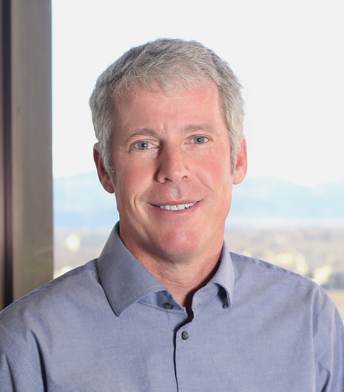
Chris Wright, CEO Liberty Oilfield Services
Concepts discussed
Auto-linked from the episode's notes and transcript.
Show notes
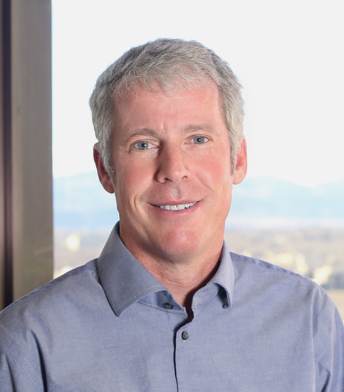
Chris Wright is the CEO of Liberty Oilfield Services, which recently became the second largest US company performing the work of drilling and completing oil and gas wells in shale formations.
He is a leader in the field of hydraulic fracturing and horizontal well drilling, having been involved in the revolutionary technology development since the days when George Mitchell was stubbornly experimenting in the Barnett Shale.
Among those who focus on the energy industry and attempt to understand its current situation in order to gain some insights into the future, the growing natural gas supply in the US gets a lot of attention. Cheap natural gas gets credit for a steady drop in annual US CO2 emissions as it has pushed a growing amount of coal out of the market.
That same product – cheap natural gas – has also been blamed for reducing revenues enough at a number of existing nuclear plants to push their owners into closing the plants for economic reasons. Despite successful efforts to reduce operating costs at those plants, shrinking top-line revenue from selling electricity into low-priced wholesale markets means they do not make enough money to meet corporate goals.
After hearing Chris Wright on Robert Bryce’s excellent Power Hungry podcast, I realized it would be worthwhile to invite him onto the Atomic Show to provide a deeper explanation of the revolution in natural gas production.
Chris gets into some deep technical details about how technology has dramatically improved in his field. He explains how competition and a relentless focus on providing a better product has driven that improvement.
He is justifiably proud of the benefits that his industry has provided to the world, but he also provides some important support and advice to people who are working to improve nuclear fission energy.
It might surprise many, including some of Chris’s colleagues, to learn that Chris describes himself as a huge supporter of nuclear fission energy. He provides some compliments and some tough love for those of us who are working to improve the technology’s chances of competing and serving customer needs.
I think you will thoroughly enjoy listening to Chris’s thoughts about energy and its importance for human development and prosperity.
As always, I’m interested in hearing what you think. I’m pretty sure this show will provoke some deep thinking in what might be completely new directions, so I’d like you to share some of those thoughts.
Transcript
Read transcript
There's a way, a way such a better way today, today. The measure for us till the world, there's a better way, today, and there's a better way. This is right, Adams, and it's time for another atomic show. And this atomic show is a special one. I have invited Chris Wright, who is the CEO and founder of a company called Liberty Oil Field Services. And I believe that Liberty Oil Field Services is right around the number two or number three fracking services provider in the United States. Is that correct, Chris? That is correct. And I invited Chris because I heard him speak to Robert Bryce on his power-hungry podcast and Chris sounds like he's got an awful lot of philosophies and runs his company in a manner that's a little bit unusual. It's not just out to make money, it's out to make the world a better place. And I like talking to people like that. And I want to thank Chris and tell the audience a little more about yourself. Rod, thanks. Glad to be here. I always say my short bio is Science Geek, Turn, Tech Nerd, Turn to Energy Entrepreneur. And the interesting thing about your Science Geek is it includes some nuclear background, is that correct? I grew up when I was in high school in the early 1980s, sort of the many of them that everyone believed, because everyone else believed, was that we were running out. You know, resource depletion was coming. The future of industrial civilization was a great risk. And you know, the belief was we're running out of a lot of things, but the top on my list was energy. My brother and I were mountain climbers. We wanted to go travel the world through a chance encounter with a homeless person when I was quite young. I've had this passion for lifting people out of poverty. Why isn't everyone as lucky as you and I, Rod? And so if we were running out of energy, I viewed that as a huge problem for my personal life and for the world as a whole. I was young, naive high school kid, but I looked at fusion energy, you know, what powers the sun and all the stars as this virtually limitless resource that could be dense and dispatchable. And it just needed some human ingenuity. So I specifically chose to go to MIT to study plasma physics and work on fusion energy. You and I are not too far a part in age. I'm a little bit older than you. My entry into energy was also related to the idea of running out the defining moments of my young life were in 1973 and 1979 when the world almost stopped because we thought we were running out of oil and the price of a gallon of gasoline doubled in the space of a few. days almost. And we were lining up and willing to pay almost anything because we still want to go places. So yeah, there's an awful lot of people in nuclear and later generations who came in via concerns about climate change and those kinds of things. And I was always concerned about air pollution, but to me, the key was having a limitless supply of energy. So yeah, you and I have a common background for reasons to be excited about energy. So how to get into to becoming a fracking supplier that's or a fracking services supplier. That's a big change from nuclear fusion, isn't it? Yeah, and that nothing in my career was too planned out. Things just sort of happened. You know, quickly at MIT I realized, although I love big science and I think it's critical. I didn't have the patience for it. And so pretty, and I had some more job when I was 18 and I pretty quickly decided, okay, instead of working on big science, I want to be an entrepreneur. And when I left MIT, I briefly went to graduate school at UC Berkeley. And there I worked a bit on solar power and after graduate school, I went back to MIT, but after graduate school, I worked for fears and geothermal energy. So it was just interested in energy. But of course it's always a gal, it's always a gal. And I had met this gal when I was 18 and then two years later when I was at graduate school at UC Berkeley, they had missed my first paycheck. And this was crisis and I called her up and I said, I need to get a job. She was an undergrad at Stanford at the time. And I said, she's down my wife and mother of the kids and we're together. But at that time I said, I need to get a job. And she had had a summer job in Silicon Valley working for a company called Hunter Gia Physics. PhD in geophysics from Stanford at the USGS. But it was a, you know, he developed a technology that had some application in a number of areas. But commercially, it's biggest application and it was tiny, but it had a business in the oil and gas industry. So it's just a need for money and a quick job was my in Silicon Valley. And I was a student at UC Berkeley think of all those. That was my intro to the oil and gas industry. Well, of course there's an awful lot of geophysics involved in the oil and gas industry. You probably have some sort of sensing technology involved. Is that correct? Exactly. With this company had I call them souped up carpenters levels. You know, it's just been called a tilt meter. Just a liquid with a gas bubble in it and then some electrodes mounted on the sensor, the bubble element itself and you just sense a change in resistivity depending upon, you know, how much liquid versus gas was between these between these two electrodes. So we just measuring the tilt of that instrument, you know, with respect to the gravity vector. The ability to measure things and control things from a long way away. It seems like it's one of the real advances that enabled hydraulic fracturing and horizontal drilling. Can you explain a little bit about how sensitive some of your instruments are? Yeah, so the first technology I worked on was these tilt meters. First at this little tiny company ultimately it failed and a few years later I started my own company where we developed tilt meters and microcybates and fiber optic and a bunch of different kind of sensor technologies. The original one these tilt meters we could measure the tilt down to about one part in one billion. So a nano radian which man if you took a rigid steel beam from New York City to San Francisco and someone lifted one end up by a quarter of an inch. And measure that Denver that would be one nano radian. And in fact the crust of the earth flexes by about 50 to 100 nano radians every day just from the gravitational effects of the sun and the moon. That's a pretty small deflection that can be measured. Now when you're drilling long long verticals and then go into laterals. How do you know what you're going to hit? Yeah, so that's that's those are borehole technologies inside the borehole. You know there's generally measurement techniques that by certain signatures whether it's gamma ray radiation whether it's background resistivity. Streaming potential there's a number of different technologies the only gas industry that can tell if that's a sandstone or a shale or a limestone and if you have less conductive fluids all the water downhole are very salty there's so they're super conductive. So you're looking for things that are less conductive which could be oil or natural gas in rocks. So from these sensing technologies as you drill down a hole. You can tell which rocks you're across. So the original horizontal drilling began by drilling vertical wells through these shale sections. And the problem of shale is there's a huge amount of oil and gas in there but it's like a granite kitchen countertop. It's just not easy to move. So you need that you need to you need to create a lot of contact area between your well bore and that rock to get anything out of it. So when we first started and with our tilt meter technology we were fracking vertical wells in these shale rocks. And normally if you inject fluid underground you create a fracture like a think a planar feature and generally they grow vertically meaning perpendicular to the surface of the earth sort of up down they could be east west or south or somewhere in between. And you know they may grow a couple hundred feet tall and maybe maybe a thousand feet long. So you could get you know say a couple hundred thousand feet of contact area between the if you put sand in there and held this little crack open for oil and gas to seep out of the shale and then back to the well bore. But with shale you need probably two orders of magnitude more contact area than that. So just one fact no matter how big you make it isn't going to work. So by total luck in the Barnett shale and I probably a little too techy here in the Barnett shale there's natural fractures meeting a bunch of cracks in the rock that were created historically almost all hydraulic fractures in rocks are naturally created by oil and gas cooking over the tens of millions of years. And when it goes from a solid to a liquid and then to a gas there's a volume expansion so that raises the pressure that gases got to go somewhere to create these little cracks in the rock. So the Barnett shale had lots of these natural fractures and then just because the earth had changed the state of stress in North Texas had changed since they were created that when you created a hydraulic fracture today meaning just speeding up that process and just pumping water underground. That fracture didn't grow in the same direction as the existing fractures. So it cut across a lot of existing fractures and if you pumped water at high rate and high enough pressure you could create not one hydraulic fracture but think of like a cross hatch a whole bunch of cross cutting hydraulic fractures. And this allowed us even in vertical wells to get millions of square feet of contact area between the cracks in the rock and that's enough to get enough natural gas to flow into those cracks and up that it sort of started the idea of commercial shale gas production. Now the Barnett Shills very lucky with this weird stress state that would only work there. So the transition to instead of fracking from a horizontal well but drilling down measuring when you're in the shale and then amazingly this is rigid steel pipe but over a large radius of curvature you can bend it 90 degrees so it's over hundreds of feet that pipe bends 90 degrees. And now you can drill a mile or two miles or three miles within that shale rod. So now you can start fracks at many spots along that steel pipe and you can think of them as going perpendicular to that horizontal well bore. And you can sort of engineer tens of millions of square feet of contract area and that makes shale gas and then you know 10 years later shale oil work. The interesting thing is that we've known about the existence of oil and gas in shale for a long period of time. And I actually came across a comment from I think it was Shikumani in like 1974 75 which told Americans well if you guys want to pay the price that you would have to pay to extract your own shale then we'll be very happy with that. Of course you know compared to the cost of extracting oil from the under the sands of Saudi Arabia at that time US shale would have been quadruple maybe seven or eight times the price. But we knew it was there, but now we figured out how to get it, right? You know, Rod, what's funny is that shake your money combat is actually referring to something completely different and it's very often confused. In fact, there was a boom in the 70s in Denver because Western Colorado had a bunch of oil shale, which, and so we're not very bright. So now we call it shale oil because it's totally different. But of course, it's all about the same. Shake your money also had one of my favorite quotes of all time, which was that the stone age didn't end because we ran out of stones, right? It's because something better came along to replace it. And I say the same thing about oil and gas, a million years from now, more than 90% of all the oil and gas that was underground a million years ago, will still be underground that the size of the resource is simply enormous. It's just changing technologies to access small slivers of it and we keep technology keeps improving faster than we consume it. So the reserves that we know how to get out of the ground today are actually bigger today than ever, even after well more than a century of ever growing consumption of oil and gas. So they're not going to run out. If they get displaced, it'll be like the stone age was because something better came along. So that's a long diversion. But oil shale that shake your money was referring to is very shallow shale rocks. So they may be at the surface or a few hundred feet underground. They're very shallow and they have in it what's not yet oil, but with more heat, if geologically, if it was very deeper in another 10 or 20 million years, it would become oil, but it's not oil yet. So that oil shale was to build a bunch of wells and large power plants and inject hot water and steam into these shallow shales and buy that finish up the geological process of cooking, what was small silo, small single cell animals that lived in an ocean, that those animals eventually cook in the carogen, think tar, and that eventually it cooks into oil and eventually into natural gas. So oil shale that shake your money was referring to was to use a huge amount of energy and finish cooking that oil so that it becomes oil and then produce it. What we're doing today, so that resource still exists, it's gigantic. But as you said, rot, it's just expensive to produce and as shake your money implied. But someday, of course, with better technology or limitless nuclear electricity, there's an enormous amount of oil there waiting to be produced. But what we do today is very different. It's not shallow. It's on average about two miles underground, so it's very hot down there and mother nature has finished its work and cooked that single-cell ocean organisms into oil and as oil gets cooked more, it turns into propane and natural gas liquids. And if you leave it on the burner forever, eventually it all turns into methane, natural gas. So we're going down to rocks where the nature has finished cooking it into the final products. And all we're doing is speeding up the plumbing underground so that we can extract the already ready oil and natural gas out. So very different, although confusingly similar sounding names. I think I heard Aubrey McLenden describe it as going into the kitchen to get the oil and gas rather than waiting for it to leak out of the kitchen and accumulate somewhere. Is that kind of the difference between going and getting shale oil and shale gas, then conventional ways of finding a place where it was kind of sealed by a cap and it all accumulated there and it was cooked down in the basement, but made us way closer to the surface. Very well said, Rod, that's exactly what it is. So most of the oil and gas underground is in shale and the reason is because shale is so impermeable, it's trapped there. If it's in other rocks, it's lighter than water, it'll float through the water in those rocks and it'll float upwards. It's shale so impermeable that it's trapped there. And then as it gets cooked, as I said, eventually it creates these little natural fractures as the most well-done parts are turning into natural gas. So traditional oil and gas business has been nature, cooks it, and as it creates all these little cracks converting into natural gas, it's through those micro cracks over millions of years. It keeps out of the shale and now almost all under the rocks think of them as all saturated with water. It gets into rocks where it can move faster and it floats up to where there's another impermeable rock where it gets stuck. So the oil and gas industry until 15 years ago, until the shale revolution, it was always just looking for wrinkles in the subsurface that, hey, if there's shale below there and oil and gas leaked out of there, maybe it got trapped here, maybe it got trapped there. So you think of the Beverly hillbillies you drilled and you crossed your fingers, I hope I get oil not watered. If I get oil, I'm moving to Hollywood. But what we do today is so different that instead of waiting for it to seep out and then trying to find it, as Aubrey said, we're just going into the kitchen where it's being created right now and where it exists today. And we're just speeding up Mother Nature's process of creating, instead of trillions of small hydraulic fractures, we're creating hundreds or thousands of larger fractures through the same process as Mother Nature, instead of a liquid turning to a gas, you know, like, you know, it takes the top off your, when you're boiling a pot of water and rumble it as it goes to gas, we're just pumping water down hole at high pressure and that creates the same kind of fractures in these rocks. So yes, we're going into where all the natural oil and natural gas, the vast majority of it is and we're just speeding up the process of getting it out instead of having it leak up and get stuck somewhere, we're pulling it out in well-bours in a nice controlled process to the surface. Wow. So we really have no worries about running out of oil and gas. And of course, many environmental groups have changed into their, into the philosophy that we have to leave this stuff in the ground because if we bring it up and burn it, we've got real problems at least according to them. What is your feeling on whether or not we should be burning this stuff? Obviously it's your product. Yeah, so let's go back in time to early in my career. So we developed these tilt meters where we would put a bunch on the surface of the earth and then if you know, magmas flowing into a volcano, if that flows underground, it deflects the earth a little bit. So with tilt meters, we would measure the flow of magna in volcanoes. If you were disposing of water, producing geothermal energy from deep underground, we could measure all that stuff. So hydraulic fractures became sort of the specialty of our technologies. And again, in a little bit of this blind squirrel finds nut story, myself and some of my colleagues at my original company played a role with these ideas that started the shale revolution. But those same technologies, you know, I was approached in the late 90s and we had another little business line that was CO2 sequestration, the national labs for climate change reasons by the late 90s were doing demonstration projects. Hey, if CO2 is a big problem, what if we capture it, inject it deep underground, you know, this oil and gas that's under there, it's been there 100 million years. So if you can put CO2 down there, you know, a mile or two miles underground, you can just take it out of the atmosphere and put it underground. So this became a business line for us. So I was pretty excited about this. Hey, here's another application of our monitoring technologies. Maybe this is going to become a big business. I've got to understand this issue. And again, as sort of a nerdy science geeky guy, I dove into the climate change data maybe 20 some years ago, you know, that obviously the chemistry, the physics of what, you know, what is it that's absorbing this, this, these infrared radiation bands? What are the relevant gases? How are they trending? Indeed, they've risen CO2 concentration in the atmosphere is risen by about 50% since pre-industrial times, dominantly from the burning of hydrocarbons. And it's because it absorbs a certain, well, multiple wavelengths of infrared radiation that are in the relevant spectrum that the Earth surface is radiating heat upwards. And so like the concept absolutely right, the planets warmed about one degree C over the the last century. So I just dove into this thing. The, the, the straight, the straight radiation physics if we double CO2 concentration in the atmosphere, which we will, you know, likely towards the end of this century by the sort of straight math, it should warm the planet about 1.4 degrees C. We've already had about 1 degree of warming and we've only gone up 50%, but it's a logarithmic function. So the amount of warming we've had is it's, it's roughly in line with what you would expect. So if there's no positive feedback and a doubling causes 1.4 degrees C of warming, that's sort of uncontroversial, no big deal. And in fact, in most economic models, a small positive for the Earth, because, you know, planting, yeah, the, the planet is greening more trees grow both in wild lands, agriculture, productivity rises because CO2 is plant food and we have 50% of it more in the atmosphere. So the question all comes down to positive feedback. If that little bit of warming evaporates a lot more water vapor and which is a more important greenhouse gas and it stays in the atmosphere, maybe we'll get a lot of warming and that don't cause big problems. That's sort of the, that the real question just resolves around feedback or maybe that increased water vapor condenses in clouds and falls as rainfall and you don't have a meaningful increase in resident water vapor. So any case, you know, the issues real, there's some cool science behind it. The data to date doesn't show a lot of positive feedback. So it looks, I would say, pretty likely that the, that the impacts of climate change will be relatively modest and relatively slow moving over the next few centuries. And surprisingly, when I say this and talks to people like, oh, everyone says that's not true. If you read the IPCC reports, they draw a pretty similar conclusion, you know, the economic extrapolated impacts, you know, towards the end of this century is sort of somewhere between a quarter percent and maybe three or four percent reduction in global GDP at the end of this century. So it's like an extra recession between now and the year 2100. So the sort of sort of, in a hate consensus, it's not really part of science, but the consensus of opinion among the scientists and economists is it's sort of a slow moving modest, but significant impact of the planet. But you know, compared to people dying of malnutrition and malaria, lack of access to clean water, energy, poverty, I think are just in today's world just massively bigger concerns. Not the climate change isn't a concern, but it's sort of a slow moving relatively modest concern. We have, we have six to seven million people die every year right now today, this year, because of particulate matters, small, invisible level particles that are in the air that come from burning wood and dung and grass, almost three million dying just indoors and huts, the other three or four million from outdoor air pollution, which is from forest fires and clearing or coal without scrubbers. Some of it's certainly naturally occurring. as well. But we have giant issues around the energy world. Climate change is one of them, but I think it doesn't rate nearly as urgently as some others. And from a disaster perspective, can't rich people, people who have resources protect themselves a little better against the effects of weather related disasters? Yeah. And that's exactly what's happened. You know, when I speak on climate change and I love to, whether it's at schools or business groups or kids or with scientists, it's very fascinating dialogue. But one of the concerns, you know, since the temperature hasn't risen very fast and sea level rate of rise hasn't really changed in the last 50 years either, it's sort of moved to a fear of extreme weather because how scary is that. Now, you get the compiled date of hurricanes and floods and droughts and all that. Surprisingly to most people, they don't show a trend. They cycle, but none of them have shown us statistically significant increase. In fact, there's a little bit of a down trend in most of them. It's probably just luck. But you hit the more important point. What does it mean to people dying from extreme weather events, floods in hurricanes are the big ones there as far as killing people, floods being the biggest. But a hundred years ago, about a half a million people every year died from extreme weather events, a hundred years ago, half a million a year. Last year, I think we set the record low ever recorded of 8,000. And the average over the last decade is about 25,000. So we've had a 95% decrease in the number of people dying from extreme weather, even with the world population quadrupling. And it's for the reason you just said, wealthier energized societies can build buildings that are stronger, that can withstand winds. They have technology so that we know a flood is coming or hurricane people can see safer ground. Most importantly, it's just stronger structures that can withstand weathers. You build something up a few feet. And so a flood is a totally different deal than just a moderate or wouldn't hunt right on a floodplain. So extreme weathers are real and significant and scary to people in low income countries. But the trend there because of modern energy and because of wealthier societies is actually tremendously positive. One of the reasons I wanted to bring you on was that during your discussion with Robert, you mentioned that you loved nuclear and thought it was a very important energy source for now and for the future. Can you tell us a little bit more about your feelings about fusion? Let's go away from your science geeky foray into fusion because I personally think that's way off in the future. But let's talk about fusion. Yeah, fission is the real deal. It's here today. You know, it's it's been around 20% of total US electricity, even though we haven't built a nuclear power plant for decades. But I'm a huge fan of fission of of nuclear power to that. If I was smarter, I probably should have gone. We didn't really need fusion. But of course, in this sort of depletionist running out of stuff, you know, I I I believed the concerns were larger than they were. So if you look at human society, we've generally trended from that less dense energy sources to denser, denser energy sources in low income countries, a third of humanity still cooks with wood, dung agricultural waste. This is women spent over an hour a day gathering this walking miles to bring it home to burn it in a smoky fire inside a hut or a house. A lot of materials, a lot of impact, whatever. Call was a dramatic improvement burns massively cleaner than wood. It's it's in larger quantities available. You can move it on trains. Call was a massively cleaner, more energy dense resource people say, Chris, but don't you hate call? I'm like, no, I don't hate call. It's massively better than traditional fuels. It's a big step forward. And then oil and natural gas, we've gone to these denser, smaller footprints, both in land use and in emissions or impact environment or air pollution, and then that trend goes on. And the next step after natural gas is nuclear. Very small amount of fuel required. Incredible energy density in these in these nuclear power plants. They look like big old buildings, but oh my God, you'd have to pay the state with windmills to make the same amount of energy from a large from a large nuclear complex. And if you you play the state with windmills, when the wind goes down, you've got an electricity problem where nuclear is very reliable, very high energy energy density in enormous resource of uranium. And of course, we could use thorium as well. So yeah, I am a huge fan of nuclear power. I think it should be a meaningful grower in the US and global electricity stack. And I actually believe it will be. It's got a massive political problem right now, which I think is very unfortunate. And it's selling fear. It's actually sort of the same problem oil and gas has. It's easy to sell fear. But that actual track record of nuclear power for safety, it's just simply by foreign away the safest and least impactful way to produce electricity of anything, including hydro. Just because hydro is a larger footprint, I'm a fan of hydro power as well, but nuclear power for producing electricity simply fantastic. It's been made expensive because of regulatory insurance costs and unrealistic fears. So it's whatever, it has been stopped for politics. I believe in the developing world China, India, I think we will see a nuclear renaissance that may start there first and and success or growth there. I hope we'll feed back into these fears are overblown and believe me, if you want to reduce greenhouse gas emissions, nuclear's awesome. There's two things that can really move global greenhouse gas emissions. One is natural gas displacing coal, which is what's happening, which is why US CO2 emissions on per capita basis last year were lower than any year since you or I were born, Rod. That new natural gas has been the move needle mover in natural gas, I mean in total greenhouse gas emissions in the US and globally. It's by far number one. But what could also be a huge needle mover is nuclear. It hasn't been so much yet because we haven't built or grown it. If you just take how much greenhouse gas is displaced by the existence of the nuclear capacity today, it's gigantic for larger than all the wind and solar in the world combined by a big measure. So sorry for a long rambling thing, but I'm a I love the technology. I believe in its future. And yes, I'm a I'm an unabashed nuclear fan. Have you ever heard of the company called Deep Isolation? Say it again, I'm not sure Deep Isolation. Deep Isolation is maybe another business that Liberty oil field services could can investigate as a as an addition to your current business. It is using horizontal drilling techniques and considering that as a way to permanently dispose of use nuclear fuel. And you talked about the how you get rigid pipe sections to bend over from a vertical to a horizontal. Of course, when you want to store use nuclear fuel, you've got to figure out how to get 15 foot long sections of fuel assemblies to go from vertical to horizontal. Anyway, Deep Isolation is a company that's looking at taking advantage of the drilling technology that is enabled hydraulic fracturing and horizontal drilling to get the cost reductions that they have and applying that to the challenge of proving that we can if we want to permanently dispose of use nuclear fuel. Oh, Rod, yeah, and I will look into that. But without a doubt, that is a viable idea. I point out to people all the time think of our shale gas drilling, right? We're drilling two miles underground. That natural gas was produced a hundred million years ago. You know, how much do gas bubbles want to go up a lot? Like they've had a hundred million years and they've not found a way to make it out up to the surface of the earth. It's because there's just so many layers of impermeable rock. It just means it's very isolated deep underground. I was in a research project in Germany and we drilled six miles underground into the start of the mantle of the earth. So yes, could you permanently dispose of stuff deep, deep underground of wells? And, you know, absolutely, absolutely. But I've always thought that the waste problem many ways to solve it and to me, Rod, you correct me if I'm wrong, the problem there has not been technical. It's been political. And maybe even problem is the wrong word. All the waste, nuclear waste from all the electricity generated in the world is in solidly encased. Most of it's still on location. That's maybe that's not the perfect place to be with it. But we had any troubles with it? Nope. No, it's actually. Yeah, my belief is it is a more than a political problem. It's actually a problem of improper marketing and improper incentives, I guess. You know, the companies that currently have the material long ago decided, actually they were kind of forced to, decided to sign a contract for the government to get rid of it. The government said, you must sign this contract, by the way. And we promise it will get rid of it for you. And of course, when the government didn't come through with its promise, the companies have beat it, beat on the table saying, you've got to solve this problem, you've got to solve this problem in the meantime, it's not really hurting anybody and not costing all that much money. Just the companies want the government to pay for it because they sign the contract. And anyway, it's great. Yeah, and that's which creates a maybe elevated public perception problem from the reality. Yeah, I mean, the companies that have control them too right now don't officially own it in the sense that they can't do anything with it other than turn it back to the government because of the contracts they signed. If they own the material, maybe they could, you know, think of ways to reuse it because it is quite reusable. There's about 95% of the initial potential energy still exists in the fuel for technical reasons that I don't want to get involved in here. So another question I had for you, and I think I may essentially email and your busy guys. So there's a big interest right now in the energy Twitter space for using oil and gas drilling techniques to take advantage of the hot rocks that are down deep. And I want to, you know, use the techniques to create geothermal energy, not the ground source geothermal that some people are familiar with, but geothermal, the tide enough to actually produce steam and run a steam plant. How hot is it two miles underground? So it depends where you drill, you know, for oil and gas drilling, a typical temperature down there is probably a little over 200 degrees. Some places it's over 300 degrees. I'm talking Fahrenheit now. Okay. And so, but in geothermal areas, where you have a higher thermal gradient, you know, you could be three or 400 degrees, just two miles underground. So I worked, Rod, early on in my current fact wrote several papers. The idea of them was called hot dry rock. So, yeah, as you, there's, right, there's geothermal heat pumps, which is just using this sort of relatively constant temperature of the ground. You can just get down 50 or 100 feet. You know, to help warm you in the winter or cool you in the summertime. But deep underground, most geothermal production today is where there's hot rocks and they're full of water. You produce the water out and flash the steam and produce electricity. That's a, that's a non-trivial source of electricity in Japan and the Philippines and in Indonesia and in the United States. But there's only so many places where the rocks are really hot and they're full of water. But the world is enormously full of hot rocks underground. So, like Jeff Tester and MIT professor had a great name for it. He called it heat mining, which is just inject wells two miles underground. Inject water could be through a fracture or just through natural existing fractures, flow it through those rocks to another well as it gets fully heat up and produce super hot water and super heat and steam and produce electricity straight at the surface from that. I think that's, so I was very excited about that in the late 90s, early 2000s. I worked on that. But then it kind of died and I think it partially died because doesn't have the political appeal of wind and solar, which were getting the subsidies and drilling technologies and diagnostics were more expensive than. Now the shell revolution comes along, revolutionizes all that stuff. So it's cheaper, better, more precise to do that now. There's a little bit of us, a start of a renaissance going on there. They don't call it hot dry rock HDR anymore. They call it EGS enhanced geothermal systems. But in fact, I've got a call tomorrow, I think, with a player out in California with a project in Nevada, a research project where they've got a demonstration pilot going on and very interested to work with them. Which great about geothermal, the resources large and dispatchable. You can change your rate of flow rate of water going in and steam going out so you can match electricity production with demand. I would say the other thing, great. The world, we think is small and finite and it is what humans live and grow all our food and do almost everything we do on the surface of the earth. And maybe we use the top 10 feet, the soil to grow and ground and all that. So that's one size. If instead of using the top 10 feet, you use the top few miles, the size, the volume of the planet just got thousands of times bigger. It's another thing I love about geothermal and oil and gas and nuclear. We're using resources that are in this huge earth below us. Great about doing things down there, whether it's producing oil and gas or geothermal or just mining uranium, is no humans live down there. We're impacting a part of the planet that doesn't impact humans. What's precious and what we want to be as careful as possible and as conservation as possible is the surface of the earth where humans live and where we grow our food. I think ultimately that's the limit to wind and solar. They just take a lot of land, a lot of surface impact. They just have low energy densities. It's nearly impossible to permit an onshore wind form in the United Kingdom or even Germany today. So they're having to go offshore where the economics are even worse. If you need a lot of land to do something, that's going to be hard. We face it in oil and gas. We use probably 1,000 or 1,100s as much land for the same amount of energy. But we have land use conflicts because people have a nice peaceful area. They don't necessarily want stuff around them. I get it. I get it. But yeah, I love the idea of enhanced geothermal systems. It technically works. The resource is large. The question now really is just the cost. But that's what technology and enhancements do. And it has fundamentally a larger energy density, which I think gives it promise. Yeah, my real problem with geothermal is as a steam plant engineer. I think of the very modest and the inefficient steam plants that I operate on board of submarine, we still had our hot stuff at roughly 500 degrees Fahrenheit. And that was like a 20% efficient thermal ranking cycle. Typically, when you're using a ranking cycle, you're going to operate much hotter somewhere in the 500 to 600 sea range. Because that's the way you get efficiency. I'm not sure exactly how you run a steam plant with the hot temperature in the 2 to 3 or 400, even 400 degrees range. It's not going to be a very efficient steam plant. Very true. Look, a lot of it. The future may be in using a different working fluid with a lower boiling temperature. These organic ranking cycle using a different refrigerant. And we're, you know, different working fluid. But you know, then it gets more expensive and it gets more complicated. And to do straight steam, of course, it's also very brine water when it comes back underground. It's not that clean freshwater. You had in a decent powered submarine. Yes, look, it's not a, it's not a panacea. The economics are a ways off. You know, it's, it's, it depends if you're, if you're dying to reduce CO2 emissions and you'll pay a price for it. Geothermal is probably more promising way to go than many others. But is it going to have the energy density and reliability of nuclear? No. Yeah. I tend to think of it as people who are dying to do anything other than nuclear. I think that's, I think that's a fair statement. And even people working on it would say that, you know, me just it's not as sexy to politicians as wind and solar, but it's definitely sexier than nuclear fossil fuels. And that's, that's sexy meeting in the public perception, not in the facts or the numbers. I mean, nuclear is very sexy, but it's that, that is not, that's not public opinion today. But yeah, better salesmanship, better understanding of how it works and what it means to human lives. That's, that's what matters. So one of the things that your company focuses a lot on is your impact to surrounding communities. What have you done to make your fleet of drilling equipment better than your competitors? I mean, I'm a number of different things, but I'll hit a few of them. Like, you know, I'm sitting here in my office in Denver, Colorado. And Denver, Colorado, probably a little bit unlucky in that the great oil and gas resources, you know, that are in North Dakota. They're way out in Western, very rural North Dakota or way out rural West Texas. But are like great oil and gas and those rocks were laid down in an inland sea, you know, nearly 100 million years ago. So they're, they're not moving. They turn out to be very near the Denver metro area. And in fact, you know, this oil field was developed when Denver was small, but now, you know, Denver's a pretty place and it's growing. And so there's towns and suburbs spreading out all throughout the Denver, and it's a julesburg oil basin, which actually today produces a half a million barrels of oil more than several OPEC nations right here just outside of Denver, north and east of Denver. So because of that rod and with new technology, we can get so much more out of that field than they could 20, 30, 40 years ago when it was first drilled. So now we're, you know, we're making great economic wells, but there's a lot of neighbors around. to those people. What bothers them about oil and gas production? For the majority of people, it's the noise. A frat fleet has the horsepower of a 747 jet engine. Imagine parking one of those out behind your car. This is a 40,000 horsepower. First problem we attacked was that. That naturally is very loud. We spent two years in millions of dollars to develop all different sound suppression technology that now, even with all that horsepower, 500 feet away, which is the closest you're allowed to drill an oil well in Colorado. And there's a fight to make that much further. But 500 feet away, you can't hear our frat fleet. You can see it. Now, that often we put up sound wall so you can't actually see it, but you can't hear it. So that was just a huge game changing innovation. It was not easy. We spent two years on it. Dust is another thing. We're pumping underground is dominantly water and sand. And then sand with some chemicals that kill organisms that might contaminate the water that could create H2S, soap to make it slide down easier. All these chemicals you can buy at Whole Foods. But so it's mostly water and sand. But moving tens of millions of pounds of sand in the old days created, you know, big dust clouds everywhere there was fracking. I don't want to look outside and see a big dust cloud blowing my way. So we just change instead of carrying sand and like think big open like dump trucks, maybe with a tarp over them. We carry them in sealed steel boxes. It flows out of these steel boxes into a covered conveyor. And we can pump millions of pounds of sand underground with one frack fleet in one location. And you and I can walk around location. You can see any sand. So noise, dust and truck traffic truck traffic. We've made progress on not as much, but we've made it much more efficient much quieter. We can, you know, not run trucks which are basically bringing sand to location. So yeah, and I think the communities we've worked in have appreciated that a lot. We need to learn from them about, hey, what else matters. We're moving our frack fleets to be powered more and more by natural gas and less by diesel. So they're cleaner burning engines as well, less less air pollutants into the air. Tier four diesel engines, but basically got new, new regime of diesel engines are just awesome as far as virtually eliminating almost all air pollutants, meaning socks, particulate matter, knocks, carbon monoxide, you know, things that really impact human health. They've been awesome at that. Of course, they still emit greenhouse gases. They're by moving from, you know, diesel to natural gas. We're shrinking the greenhouse gas footprint of our things as well. But for us, you know, where we work, we're part of that community, you know, we are and you always want to be a good neighbor in life. Absolutely. Now, one other thing that you and Robert talked about was the fact that with all of this wonderful and important economic impact of the hydraulic fracturing revolution, the companies and the investors in the technology haven't made a whole lot of money. That would be an understatement. And I, yeah, look, I've been very lucky just to be around the shell revolution and play some role in it. I'm very passionate about it for a lot of reasons. Let me give a few up front. And then I'll talk about what, wait, the question you just set up. The thing I'm proudest of and my colleagues in the industry probably don't like to hear this is the dramatic reduction in oil and natural gas prices. The shell revolution has driven. It's just, you know, oil and average to $100 over the six or seven years before the shell revolution came to oil, you know, in oil now over the last six or seven years is average $50. So a having of global oil prices. And in the United States, a more than having of natural gas prices and globally almost a having of global natural gas prices. So what this translates to is around a trillion and a half dollars of savings every year for consumers of energy on the planet. And therefore, a trillion to have less dollars. into the pocket of oil and gas producers. So in free markets, innovation dominantly accrues to the benefit of consumers, and businesses have to fight to get some of that benefit as well. But to me, with a passion for poverty, when you lower the price of energy, you make low income people's lives better. You make people they can now afford LPG canisters and Tanzania, India, instead of burning dumb or wood in their houses. It is millions of lives that are saved by this cheaper energy. And you hear more commonly USs for the first time, a net exporter of oil and natural gas, end of total energy for the first time since the 1950s. It's been great for jobs and tax revenues, and North Dakota went from 38th and per capita income to like 6th. So I could go on and on. But you raised the other very big point. So this is this transformative technology that's done these tremendous things. Why have all the people over the last decade that have invested in these exciting growing shale companies mostly lost money? And that reason is when something is so transformative and so exciting, and then I hope next generation of nuclear gets there, and I believe it will. But when that happens, it just draws an enormous amount of investor interest. So money's just flooded in. Dozens hundreds of new companies created to produce oil and natural gas and service those industries. It reminds me of when I started pinnacle technologies, the sensor measurement technology company in South America to San Francisco, basically right where the sort of ground zero for the dot com revolution. Incredible amount of money flooded into, you know, pets.com and wines.com and you know, this thing and that thing, because the internet was transformative, therefore it's a gold rush and money rushed in. The vast majority of those companies were bus an enormous amount of capital was destroyed. The internet was a big deal and remains a big deal and the winners in the internet, I mean, the big guys you can think of Facebook and Google and, you know, they are the most valuable companies in the world today. So the internet was real. It's transformed the world. It was awesome. But the majority of the early invested money did not succeed. That is very parallel to the shale revolution. Huge excitement, just too much capital flooding in to undisciplined of a fashion and there has been enormous destruction of that capital. It's very unfortunate. Liberty, our company in the last 10 years, we've had a, I think a 27% return on invested cash. So we have avoided that fate, but we're one of the few exceptions. I do believe our industry will be better to investors in the next decade. Because we're having that washout like the dot com bust where most of those also ran or, you know, wasn't really space for our companies are getting pushed out. But just like the internet, we're a story of efficiency. We went from 1600 rigs drilling for natural gas 12 years ago and the US was the largest importer of natural gas in the world. Now we have less than 100 from 1600 to less than 100 rigs drilling for natural gas and were the third largest exporter of liquefied natural gas in the world. So that's awesome for the country, awesome for consumers, but you used to have 1600 rigs running, you have 100 rigs running. So people in the oil service business, people that are running those rigs, well, we need a lot less of them today. So that's tough for businesses, it's tough for investors. But I think it's good for society. So that's probably pretty close to a good place to finish. I'd like to give you an opportunity. Is there anything that I should have asked that I didn't? No, Ron, I think it was a great dialogue. We had a very technical dialogue. To me, the cost of energy is a big deal. To me, I want to see electricity prices go down, fuel prices go down or at least not rise. That's my biggest concern with some alternative energy technologies. They've generally live and they've led to higher electricity prices and less reliable electricity. I think that's a huge issue for low income people in the US and around the world. That's why I'm a believer in reliable economic energy sources, which today is fossil fuels, hydro-existing hydro-power and nuclear. And I want to see all of them grow. Sounds good. I want to see all them grow too. And I particularly want to see some advances in nuclear. I want people who listen to this and who are in the nuclear business to think hard about how we improve our technology to the point where it's better for customers to buy it. In other words, we're going to make it cheaper. We're going to be able to deliver on time and take lessons from industries like yours that have really made technological improvements that mattered, that have improved your productivity and improved your ability to meet the needs of your customers. And I do like your quiet fleet too. That's a pretty cool thing. I am with you there, Rod. To everyone who works in the nuclear industry, what can you do matters? It matters enormously. It matters enormously for our future and for the billion people with no access to electricity and another billion with only intermittent access to electricity. Your industry, your technologies can have and can make people's lives massively better in the future. God bless what you do. And yeah, keep pushing forward. You've got a lot to be proud of. Thank you, Chris. Take care and have a wonderful afternoon. Thanks so much, Rod. Take care. There's a way, a way such a better way today, today. Now, reach your voice, tell the world there's a better way. Today, there's a better way. Ooh, there's a way such a better way today. Today, now reach your voice, tell the world there's a better way. The way is the atoms' way.