Meredith Angwin, Author of Shorting the Grid: The Hidden Fragility of Our Electric Grid
Concepts discussed
Auto-linked from the episode's notes and transcript.
Show notes
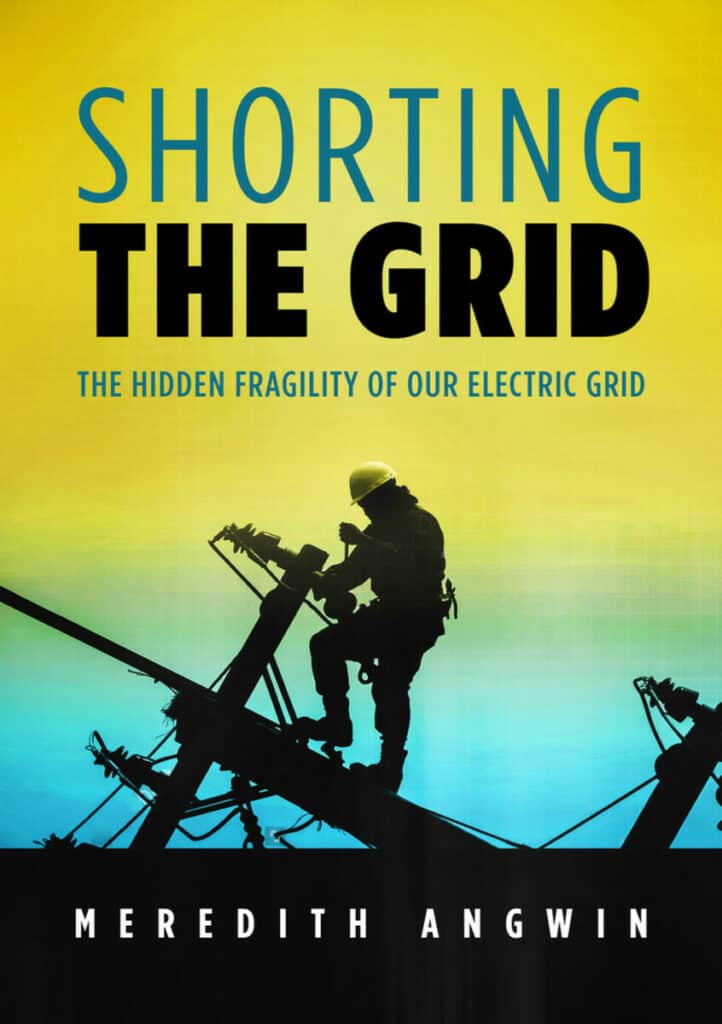
Meredith Angwin has become an authority on the arcane topic of governing electric grids in the United States. She’s concerned and thinks others will may share her concern when they recognize there is a key missing element in grid governance.
There is no organization or individual that is responsible for making sure that electricity is generated, transmitted and delivered to customers.
Various organizations, often with competing or conflicting interests, have shared responsibility for different parts of the system that includes generators, transformers, switchyards, transmission lines, distribution lines and billing systems, but “the market” has been assigned the responsibility of supplying wholesale electricity.
And that market is not the free market, but instead is a hybrid that is governed by an ever changing stack of layered rules where many of the important decisions are made by participant groups that do not include customers or even enabled representatives of customers.
A growing portion of the grid’s electricity is dependent on free, but uncontrolled natural flows. Another portion comes from generators whose fuel is delivered by capacity-limited pipes in a “just in time fashion.” When the natural flows are interrupted or something interferes in the pipelines’s capability to deliver fuel, generators stop producing power.
There are processes that can be called into action, but costs can skyrocket in times of scarcity. Some market players thrive in times of crisis and have few incentives to ensure those crises never arise.
Meredith has produced an accessible, clearly written book that reveals important aspects of a complex topic. It deserves to be on the reading list for people who are interested in electricity.
It belongs in the library of every congressional and senatorial office. At least one person in each staff should be assigned the task of reading it and preparing a report for their member.
Governors and state level legislators might want incorporate lessons revealed in the book and reconsider their decisions to rely more heavily on markets than on well-regulated monopolies with an obligation to serve.
Meredith is a delightful guest who brings the wisdom of a long and productive professional career to her writing and speaking engagements. I’m pretty sure you are going to like this show.
As always, I invite you to participate in the discussion thread.
Transcript
Read transcript
There's a way, a way such a better way today, today. The nation's voice tells the world there's a better way, today there's a better way. This is Rod Adams and it's time for another Atomic Show. Yes, they're coming fast and very serious these days. It's easier to get hold of people when people still aren't traveling very much and they will even take time off their busy Saturday mornings to sit down and talk with me. Today I have the pleasure of having a discussion with an old friend. You all have heard her before many times on the Atomic Show. It's Meredith Penguin, the author of Shorting the Grid, how, and I can't remember the Top Time On the Head. It's a time news, the hidden fragility of our electric grid. The hidden fragility, the hidden hidden is a big word. It's hidden fragility. Yes, well, because from the public point of view, if we just turn on the lights, which things just seem to work all the time, at least that's what we've been used to for the last 45 or 50 years. Maybe even longer than that. But, Meredith and I go back a long ways. We first met on a trip to France sponsored by Ariba back when they were trying to encourage bloggers to learn more about their capabilities and their installations. We had a wonderful journey and got to know each other the way that she really gets to know people's best spending all day, every day, for a week at a time. Meredith, I'm happy to have you on the show again and I'm extremely happy that you have gotten into the very, very final sprint of releasing an important, a better book than you wanted to release. But it's almost here. Yes, it is bigger than I wanted to release the thing is that when you're learning about the grid, you write something and you check it with somebody who's very knowledgeable and they say, well, most of the time, yes, but you understand that in other words, the situation is so layered and so complex and it's almost impossible to write something short about it without just leaving out a lot of stuff. So anyway, the book isn't all that long. I mean, it's 400 pages, but it's not 900 pages. I mean, I have to look at it that way. You are writing about the largest machine ever invented and probably one of the, well, I don't know if I'd say one of those. I'd say it is the most important part of our modern infrastructure without electricity, our modern way of life grinds to a halt rather quickly. If the book lights out by Ted Koppel, he goes through some predictions of what would happen if there was a major power failure in the United States and that it would last for like six months or a year and the predictions are like 80% of the people of the US die. I mean, that's kind of level of predictions. And I don't mean to be terrifying about it, but yes, it is the one. It is the infrastructure that we all depend on. We really all depend on it. Just stay alive. I mean, to have warm houses, to have refrigerated food, to fill our gas tanks with the pump at the gas station, all those things. To get clean water out of the tap. Yes. Yes. Yeah. It's incredible. And you know, many people have noticed that and there's been some recent very good work about the importance of electricity. I had Robert Bryce on a few episodes ago and talked about juice, the movie and the importance of electricity for human development. But let's go a little bit back to the book. I have to admit to everyone that I have read this book probably almost as often as anybody except for merit and and George. But I went back and looked at my records and I believe I received my first copy of a draft still in a word processing version back in February. So it takes a while from completing a book to getting it really ready for release and Meris had a bunch of people review it and read it. And of course, I learned when I was in a Navy, the more people you have reading something, the more work it is to compile everybody's comments and integrate and fix and correct and oh, man. It's a tough job. But Meris, you're almost there. So what will the book be available to people who want to actually have a copy in their hot hands? I am very scared of saying a date, but basically it should be sometime between the 13th and the 20th of this month. Okay. Before we go trick or treating, we should be able to have one. Yes. Yes. I give you a few extra days buffer there. That's good. So I'll give this as a gift to some people I know who needs something this month. It's amazing how many friends I have in my neighborhood, whose birthdays are not October. I don't think I'm going to give her my book. I attribute, I attribute this to the fact that if you back up nine months ago, that's in the dark ages is what we call a Denevel Academy. The time of late February, I mean late January, early February. So that's why there's so many people whose birthdays are October. That's my theory anyway. You're not supposed to be good at areas of the next. All right. So you are what people to know more about the grid. Are you trying to frighten them? Not really. So some people might think I am. I consider the grid to be fragile and I consider that we are making decisions that make it more and more fragile. And to put it, my put it very simply, the decisions that are being made on the grid are leading to what I call a fatal trifecta. The fatal trifecta is we depend on renewables, but the renewables can go on and off. So we back up the renewables with natural gas. But natural gas can't be stored if there's any interruption in supply or in the northern countries. If there's cold winter, the power plants that use natural gas can't get the natural gas because houses for heating have priority on the pipelines. Okay. And then the third part of the fatal trifecta is that many people go like, well, that's okay. Because we can get power from our neighbors. If you're in New England or you hydro Quebec, we'll get it from hydro Quebec. If you're in California, we'll get it from Nevada. Well, the thing is, the neighbors have the same kind of weather that you're having. And we get, we get approximately half the usual amount of energy or electricity from hydro Quebec on a really cold day as we do on a mild day because they needed it home. And so I feel that when you begin this slide to dependence on your neighbors, dependence on renewables backed up by natural gas, which is constrained by the pipelines. And then you can't store it. Then rolling blackouts are likely to be on their way. Well, some will say that you can store natural gas after all. We have these large seasonal storage reservoirs. But where are they located? Well, I'm not sure where they're located. Many of them are located in the south. But the the the issue really isn't, can you store it in the seasonal reservoir? The issue is, can you store it at the power plant? In other words, the power plant is dependent on what's delivered through the pipeline. It's pipeline constrained. We've got tons of shale gas. But you know, in New York isn't going to be able to use much of it because New York has made a law saying that no new pipelines can be built. And, and, and, you know, the other states make these laws. We don't want to lock in fossil infrastructure, no new pipelines here. I mean, it's a noble thought. But if you're going to back up renewables in the existing grid, it's the way to back them up is fast-acting natural gas plants. Yeah, many people forget this fact that the the speed with which you can deliver natural gas from one region to another depends on the pipeline between those two. And once you hit pipeline constraints, you just can't push any more gas through. I mean, you can elevate the pressure a little bit maybe and get a little bit more squeezed through. But the pipes of pipe. Yes. And, and why don't we other than the fact that there's there's opposition from a, you know, various opponents to building pipelines. What else prevents pipeline companies from simply pushing through and building enough pipelines to supply their customers at all hours of the day, all seasons of the year? Oh, man. I that basically to build a pipeline, you have to go through a whole bunch of jurisdictions. It's actually easier to build a power plant, even if nobody likes some power plant near them. Because, you know, you get a certain level of, of permissions and you're done. But if it was a pipeline, you go like through different areas. And, and, and, and only takes one know, one really solid know in one of those areas to stop the pipeline. So I think that's the, the, the, the trouble. The other thing is, this, this sounds a little odd, but it's true. The way the, a lot of the country is in our TO management of the, the grid, which means regional transmission organization. From a point of view of what, what, what, what does that actually mean? It means that there are all kinds of options. In other words, power plants bid in at auction and, and then some of them are chosen and some are not depending on how much they bid in, the cheaper ones are chosen. Then they discovered in most places that just doing this didn't provide them with enough reliable power. So then there's an auction for capacity. That is the auction is you are willing to bid in when we call you and we're going to pay you to be standing ready. Then, then they realize, well, actually standing ready just existing isn't standing ready. So we're going to pay you for really being ready. That's called an ancillary services auction. Then they discovered that that really didn't work very well in, in, in New England. It wasn't working very well. So they said, we're going to have a winter reliability project. We're going to have special payments for power plants in the winter if they do certain things. And, and they end up. It's in every, every situation is another auction. Well, the power plants aren't. Really, you know, they're not managed by stupid people and when you get right down to it if Bricsmanship works. I mean How can I put it if there isn't enough supply? The price will go up and the power plant will make more money the auction will have a higher clearing price and so It's not that the power plants are doing this deliberately But to some extent when they get together in the knee pools and so forth and they set up exactly what auctions are Happening or if rules are happening. They are pushing to be sure that when they set the rules up The rules are going to be really nice for their power kind of power plant and that there will be situations of scarcity and situations of like oh We're almost at rolling blackouts. We've got to pay whatever it takes and so forth. So yeah I don't know it's kind of discouraging Yeah, it is discouraging to me that there have been People who have taught the world That you should never let a good crisis go to waste Rama manual was famous for for that and Far too many people that I've talked to don't recognize the corollary to that is well if a crisis gives me the opportunity to do some things I want to do anyway Why don't I just initiate a crisis? Well, and why don't I put ourselves in the situation where we have to respond in the way I want to respond anyway and You know go from there. Well, that was the classic thing that happened when And Ron everybody's like oh and Ron did all this stuff to make make Make California have ruling blackouts and indeed and Ron was a very important player in why California had rolling blackouts in in around 2001 but They didn't realize that and Ron was actually pursuing a very reasonable business model which is when their scarcity we get paid more and And I can take one of my power plants offline And then guess what I don't have to buy gas for that power plant and the other power plants that I owe get paid more and And that that worked unfortunately it it still works and and for example I so New England has set up something called paper for ferments which basically finds power plants if they don't show up when When they're called on when the grid is stressed well that means among other things that I so New England has to have a Good definition of when the grid is stressed and so forth and so on in order to find the power plants only in those times Not when they're just not available because they're doing some maintenance and it gets to be very very complicated, but the nobody in this is is dumb you'll understand and and They are trying to do the very best for their facility and their bottom line and They aren't bad people. They're just trying to do the best for their bottom line because that's how the auctions are set up you understand that Before the RTO's and before all those auctions it didn't really help a power plant to go offline and It just didn't help it. I mean reliability was actually valued by the system now It isn't valued by the system, but they keep trying to put yet another layer of auctions on it to value it but The layers of auctions aren't working so it's part of the problem that there's really no organization that is responsible for the complete delivery of of You know Electricity to the customer as the generation all the way down to Having it come out of your wall socket. There is no responsible organization for that. Yes, that's true That is true and and and I have been at various meetings with someone said well, you know But there's no one responsible and someone said well, yes, that's true, but you know This is like a free marketing and it's all gonna it's all gonna work out because the market is gonna make it work out And and the thing is that that works if the people Can't gain the market unfortunately they can't well who who gets invited to the Business meanings of the of the groups that set the rules that establish these auctions that that you know make this very confusing and and Rule-based system that's called deregulated Make it work out who gets invited. How does that happen? Well, that is a very complicated Question, but the basic idea is this there's two groups that are allowed to propose Rules to FERC and FERC has to rule that yes, FERC is the federal energy regulatory commission and it has to rule Yes, we'll accept these rules or we won't accept these rules. Okay, so who are the two groups that can that can Propose the rules one is the isonew England itself or the grid operator and the grid operator has a lot of people who do forecasts scenarios it has lawyers and it proposes rules that it thinks will keep the grid going Meanwhile, there's another group called the the Neepool in the pools the I Don't know what they're called besides the pools, but basically in that group They can also propose rules and they have Usually a couple of sectors sectors mean Different organizations that participate in the grid. So for example Renewable energy would be one sector to traditional energy would be another sector Transmission operators would be a sector There's even a sector for users, but there's only one sector for users and so if all the users voted together They would be in in New England. They would be a full one six for the votes The other the other groups all of whom have How can I put it the other groups all have skin in the game right? I mean if you're a renewable energy operator a traditional power operator a public power facility thing like a Rural electric cooperative You you're in a sector and you vote with that sector in general. I well, I don't get to see the votes you see but I would think the sectors Vote pretty closely together in other words if you're in the traditional generation sector you probably vote Along with everyone else in that sector so But you know they split their votes under different circumstances. I'm just I'm just trying to say that these are the people who do the votes and they they put their proposal into FERC and and often they the The grid operator and the pool people from the participants committee All put their proposals in at the same time. They both put their proposals in at the same time And that's called a jump ball filing. I have the sections in my book about jump ball and sometimes I feel And one at the end of the sections about the jump ball filing who who proposed what how FERC decided well I mean all I get this all out of not from from from Participating in these but rather FERC has to put all these filings and its rulings on its website, you know, so you can see it after the fact and You know, I wrote about some of these jump ball filings in at the end. I said I think I need to write another book Just jump ball the novel because I've left a lot of Things out in my descriptions of those filings Yeah, reading that the table of contents for your book I would have to say it could be classified as a bunch of mixed metaphors with jump balls and polyannos and Stress or not stress and it's a fascinating set of uh Different topics that come in and again Going back to the fact that this is a an important book It's not a short book It's got lots of very readable passages and and I have read it several times and enjoyed it thoroughly And you all who are listening to marethkin can hear that she has a very accessible way of communicating But there are 45 separate chapters in this book. It is a pretty incredible Broadscope Endeavor we have here, but but Ron you you haven't chumbled about the thing that I'm most proud of the 10-page glossary Yes, there there's a lengthy glossary there's lots of end notes There's all kinds of citations in this book and it for people who Really want to Get a feel for how the grid works and how its rules are put together you can't do better than doing this now Let's this clear up some things One who reads this book might get the impression that you have a negative perception of renewables Well, didn't you grow up in the renewables business? Yes, I did I I at one point in my life I had my dream job and my dream job was being in the renewable group at Electric Power Research Institute running projects to improve renewables I mean, I thought I thought well, this is it. This is my my dream job. I'm set. I'm I'm within the utility industry But I'm working for right and you know for the right way to make power I'm proud of what I'm doing and The trouble is that I began to realize how how limited the renewables were and how How difficult it would be to run a whole grid on it I mean this was happening with me in like 1981 1982 So you know when when I I see other people like You know Michael Schellenberger or or or or Chris Keefer that let go like well, you know I began realizing we needed more than renewables. I'm like Yeah Yeah, we do And and the trouble is you know, I was living in Palo Alto I was working at the Electric Power Research Institute, which is Mel Elto So I could go into any cocktail party. That's what I went to cocktail parties Any gathering in Palo Alto and say well, I'm in the renewable group at every oh, that's great Let me get you guys away. That's super When I switched to the nuclear group It was a little different because that was you know that was that was the bad people and But I had come to the conclusions that they were the good people, but it was that they were doing you know non-polluting energy that would be Really available all the time that wasn't constrained by geography for example I was in the geothermal group. Well geothermal energies lovely If you happen to be in an area where you have like some magma underground so you can make some steam or hot water I mean, but a lot of the country, you know is kind of a flat and doesn't have magma And if you are in an area that has magma by the way I hate to put it out. You probably going to be around some some very nice very nice Hills or mountains and there's going to be someone saying are you kidding? You're planning to drill in this meadow this beautiful on meadow and you're going to drill in it to make power. And you know they're writing. I mean, you can put a nuclear plant any place you want. But you know the renewables, you have to drill in that beautiful mountain meadow or put the wind turbine up on the hillside or anyway. So yes, I got very, I got very disillusioned and people don't realize that most renewables just aren't available all the time and they need backup. And when you get to backup, what's backup? Well, if you happen to be around some dams, hydro can be a beautiful backup. For backup for renewables, you don't need something that can just load follow. Lots of things can load follow. Load tends to change kind of smoothly. But wind and solar, they tend to change kind of fast. And so you need something that could be fast reactive. And what we have for fast reactive right now is natural gas. People are saying, oh, it's going to be battery someday. Well, not a grip scale, I don't think. And I have a whole section in my book about investigating grip scale batteries. And it's going to be natural gas. Now, before I got my dream job, I had another job, which was I was working for a company that was trying to do something about the tremendous smocks that were in California in the 70s. And these smolks were basically caused mostly by the presence of nitrogen oxides. And nitrogen oxides came from different kinds of combustion processes, high temperature per combustion processes, cars, diesels, gas fire, power plants. And so we were working all the time trying to still keep the gas fire power plant going, but not make the nitrogen oxides. And it's not easy because at a high temperature, the air burns itself. What I mean is the nitrogen in the air unites with the oxygen in the air to make nitrogen oxides. So it's not like getting rid of sulfur oxides, where you can say, well, we'll use a low sulfur fuel. We'll clean up the fuel and we won't have sulfur going into the air. Well, you can't take the nitrogen and oxygen out of the air. If you're running in high temperature, you're going to make nitrogen oxides. So you make all of the- And if you want an efficient machine, that's right. I know Carnot, he says, run at the highest temperature you can, right? Exactly. Lower temperatures mean less efficiency. So if you run it in a lower temperature, you're going to end up using more fuel to make the same amount of electricity. So it's a real bind that you're in. And I didn't see any way out of that bind. And so well, I said, OK, I'm over at the- I've lost that job now, and I've got a job over in the renewable group at Appery, and this is great. And so I'm out of the bind. And then I thought, wait a minute. This group isn't going to replace all those gas turbines I was talking about before. And this isn't going to do it. I mean, it isn't a matter of we're not willing. We don't have the energy. We don't have the willpower. It's a matter of we don't have the resource. And anyway, so that was difficult for me. But then I turned out that some geothermal power plants use very briny liquid to make the power because that's what's underground. So it's some places. So I was doing a fair amount of stuff about corrosion control for briny liquids and geothermal power plants. And it turned out that I was doing a project, which was very similar to a project that was being done in the pressurized water reactor group about corrosion control in crevices and pressurized water reactor. So I began meeting with them and we're comparing results, talking about joint projects and stuff. And then they had an opening. So they offered me a job. And I thought, I think these people really are doing something worthwhile. But oh my gosh, how am I going to explain? I'm moving from the renewable group to the nuclear group. Anyway, so yeah. So I didn't get up in the morning and think, oh, renewables are some kind of funny dream or whatever. I mean, it came painfully. It came painfully. I didn't have a road to Damascus conversion experience. I wasn't famous as a renewable advocate when I changed. It was kind of a little lonely change with me and tried to explain it to my friends. I don't know. It's not an easy change rod. Yeah, I know. Well, of course, I shouldn't say that. I really don't know because I'm one of those people that have been a nuclear guy that essentially my whole life. And as I've mentioned to somebody else, the other day who is, I guess his name is Robbie, which means son in some language. And Robbie said, I guess I've always been a solar guy. And I said, well, my name sounds like Adam. So I've always been an Adam's guy. Yeah. That's one way to look at it. Well, I, one thing I will say that was pro-nuclear in my background. So by the time I was an adult in an apre and everything, it didn't matter very much. Is it on Jewish? And my family just thought, Rick over was such an important figure for Jewish people innovating for Jewish people having a strong role in the military. And so I mean, we were kind of without being particularly one way or another about it in public. I think we were all Rick over fans. So when I did move to PWR, I could at least look back and say, well, if my mother was still alive, she wouldn't make fun of me. Yeah. OK. Well, it's always important to have your mother on your side. Yes. Yes. Yes. Yes. She's my mom put one of my bigger fans over the year. So I always appreciate that. Now, one of the, you know, I remember reading, you writing about the Winter Reliability Program way back with 2015, 2006, something like that. And that Winter Reliability Program worked in the sense that it was put in place just before a very brutal winter. And those that oil stored on site kicked in. And of course, gas turbines that normally burn natural gas, if they're modified and they can burn oil, they can be just as responsive on oil as they are on gas. But of course, oil is kind of a fragile fuel for us, at least it always has been. So didn't the first decide that Winter Reliability Program was somehow wrong, even though it worked? Oh, yeah. They said, you cannot do this anymore. The reason is, and I have this whole little section in the book called, they named the fuel, you know, that old thing called, named that tune. Well, the one thing that an ISO or a FERC has allowed to do is name the fuel. In other words, if they do something which is preferential to one fuel over another, then they're being bad people. So basically, FERC said to ISO New England, very nice that you've run this Winter Reliability Project. So please, that it worked, you have to stop it now. What you have to do is you have to set up some kind of auction in which the people will bid in, whatever fuel they have, and they will bid in, and you will pay them to be available in the winter, to make themselves reliable. It'll be worth their while to make themselves reliable, and they'll enter the auction. And, well, that paper performance, it doesn't work as well as might. So the reason I say that, you say, oh, Meredith, you're just being cynical. But one time in the summer, paper performance was triggered. What happened, the day was hotter and more human than ISO had predicted, and a big power plant, a gas-fired one went offline, and the grid was in some kind of trouble, and all of a sudden, people were introduced, flowing in from the neighbors, and the balancing authority was working hard, and it kept it going. It was great. There wasn't even a flicker of light. But meanwhile, at the end of this experience, paper performance was supposed to settle up payments between the power plants that didn't go online when they were called to on, and the grid was clearly stressed, and the power plants that didn't go online. So the power plants that didn't go online were supposed to pay part of their revenues to the power plants that didn't go online. And that was the whole way that paper performance was going to work. You will have to keep stuff online available to go online when the grid is stressed, because otherwise, you're gonna end up paying money to the people who did keep stuff available. Well, that experience lasted about eight hours that the grid was stressed, and the paper performance formula paid $8 million out to the power plants that went online more than it collected from the power plants that didn't go online. So this does not make you feel comfortable about the future, because in the future, you see, how are you going? Who does that thing that does come from? Oh, well, they assessed all the power plants, the ones that went online, the ones that didn't go online, and even this was kind of funny. They had, they paid a capacity payment to energy efficiency groups saying, well, because you're using efficient making people more efficient, you're sort of available to us, but the energy efficiency groups weren't available for this paper performance fund transfer at that time, but because they got capacity payments, they got deemed to contribute to the $8 million. I mean, it was just, this isn't the kind of thing that makes you comfortable that it's all gonna work. You see, it all worked there, because it was in the summer, and there was plenty of natural gas, okay? But in the winter, when there's not natural gas, and it's just as, I mean, you can't make a ruling that makes natural gas or oil appear. I mean, in depth, you got to pay, anyway. It's not really called, even though we, you know, you and I agree to the winter reliability program worked at the time that needed to work, it got really tight towards the end of that, right? But some of the storage tanks start running dry, and there was ice in the rivers, and they couldn't deliver oil, and... Oh, yeah. And they didn't have them. They didn't even move in Harry. Things were Harry, they had to raise bridges during the middle of the rush hour in order to let oil tankers through. I mean, they really, it was, they had icebreakers involved, the plants had one day more oil available, they had started out with like nine days worth of oil. Oh, yeah, it was getting hairy, but you see the scene. There's another novel for you, the winter reliability program that didn't work. Well, yeah, but all you know. It sounds really exciting. I mean, you could write really good stuff about that. Oh, I could, I could indeed. I mean, it would be a sprawling novel of icebreakers and oilmen and heroic tanker drivers that fought their way through the ice and snow to make it to the plant just as it was about to... to go on this last burp of oil. Well, you know, I have to say though that as someone who lives in the Northeast, I don't joke about those guys who drive the oil trucks. They are heroes. Really, they go on all kinds of weather. They have a load behind them that can cause a huge fire, and they don't cause huge fires, and they get through. They are so trained and so professional. And I think most of us don't appreciate that. I mean, somebody says, you know, I've got a license to drive hazardous, and I drive oil in the winter, you know, I deliver oil in the winter. We don't realize, you know, we should just say thank you. Thank you. Thank you. Well, that's why they need to be made the hero of a novel. Yeah, you know, you're right. But again, one of the things that you're trying to point out is that the grid really shouldn't be fragile, and shouldn't be this really tantalizing source for dramatic fictionalization. We should be able to depend on it, and think of it as something that just is going to be there, but there has to be somebody who's making it always there. So do you suggest that perhaps we went the wrong direction when we broke up the monopolies? Well, I think so. I think the thing is that we have some proof of that. Right now, we can't have financial proof. The idea was that the monopolies were very subject to regulatory capture, and prices would rise, and so forth. And indeed, you know, if you have a regulator in a state, and then you have a couple of big utilities in that state, yeah, the regulators may all be thinking, when I return here, I'm going to have a really nice job of that utility. But it's a matter of fact, the areas that weren't turned into the auctions, and where the buck actually stops with the utility PUC interactions, have lower prices, and you never hear about them. What I'm trying to say is if you hear such and such areas about to run out of electricity, this winter river, oh, there are problems there this summer, it's going to be an RTO area. I mean, you just watch for that, and you'll see. So yeah, I think it should go back to that. And the other thing is, and this was very satisfying to me, I wrote in there that if you begin looking at the layers of auctions and the RTOs, it takes a very thick book to explain it. I have written the book. But anyway, it's very hard to explain what's going on. I mean, for example, Casper is a special auction for subsidized resources in the capacity markets. What does that mean? I mean, Chase, a bunch of the books explain what that means. So people can't follow what's going on. Well, in the regulated areas, they have the PUC, a has to promote an integrated resource plan for the area. What the load is going to be and how it's going to be met. And back when I was involved in that sort of thing, the PUCs wanted very power plants. They wanted not the most expensive power plants, but they wanted very power plants because they felt well, you know, there might be some new rule with the coal plants and then some of them will go offline. And then there might be some new rule with the gas plants there and they won't be able to get gas during some times. So they wanted very so that there was a little minimum level of risk. And it turns out that they have the minimum level of risk and they have lower prices. So I'm like, exactly why do we have these RTO areas? And then anyway, one of the things I said is an intelligent layman can read an integrated resource plan for an area and understand what it says. I mean, it took me years before I could understand mopur, Casper and what the big deal was about in terms of capacity, auctions of various sorts. Well, in just about the time you figure it out, it will change, right? Yes, exactly. Well, an integrated resource plan, they have to have a reason to change it. It can't just be another ruling about something or another vote in the participants committee. It has to be integrated resource plans are clear and they change for reasons. And they change slowly. Usually usually. Usually. You know, I see just some sort of planning cycle that does have some responsiveness to it, but it doesn't it doesn't it's not something you have to keep reading on a daily or weekly or monthly basis. Oh, yeah, you can understand what's going on with the plan in your area. And to understand what's going on with the rules in your area, I subscribe to, I read constantly, I subscribe to RTO Insider, which is a trade magazine, which is as expensive you would expect such a magazine to be. I mean, it's only online. They couldn't possibly do a print version because things are changing so fast all the time. It's just an online version. And yeah, absolutely. It's just kind of planning cycle really. I mean, there's a planning cycle in ISO New England. They they they they try and plan. But you see, the thing is, they they put together their their reliability project and it gets accepted. And then it's like, but you don't understand. You named you named oil. And that's not going to fly around here. I personally had a problem with the winter reliability program when I found out that there was a payment made to these specific dual capability power plants because they were storing fuel on site. Yet there was no payment made to plant-slide Vermont Yankee or even the, the, I can't remember the name of the coal plant. There was several large generators that had exactly the same amount of fuel on board. And that fact more, more available fuel stored on site, but they received no payments at all. Oh, I remember that very well. And I remember that when, you know, I was fighting for the survival of Vermont Yankee. I was a pro, pro nuclear advocacy was what I was doing. And this grid stuff was sort of like whatever. Yeah, I got to learn something about it sometime. But yeah, that was very upsetting because, you know, they paid what I wrote $30 million for or something like for winter reliability oil. And, you know, the people at Vermont Yankee in Pilgrims were like, could you show a little love around here? I mean, we're, we're always here for you guys. Right. And those plants supposedly closed down because they were uneconomical and I'm using my big air quotes here. Yeah. But uneconomical is, is, defied within certain market parameters. Uneconomical is fine. Defined within parameters that are basically set up by rules made by a group where, both end users and nuclear plants are a very small portion of the group's votes. And that's basically the fact. I'm sure it's a little more complicated than this, but I believe I read somewhere and maybe it was in your book, when you've got, say there's, there's 20 gas fired power plants and one nuclear plant, the nuclear plant gets one out of 21 votes in, in the sector that it's in. Yeah, pretty. Gas plants get, get 20 votes, even though they, they may roughly have the same contribution to, to overall electricity. Maybe the gas plants got a lot more capacity, but nuclear plants just go to, go to their power output and stay there. Well, yeah, basically, is there are pages and pages which I can't even begin to follow on how votes are allowed at the participants meeting. But basically, yes, the gas plants are in the same sector with the nuclear plants and the gas plants dominate that sector. Yeah. And, and so they do at the same time. Plus, there's a, a supplier sector and I suspect that although gas companies can't vote, but they are allowed to be in the meetings. You understand, you and I can't go to meetings. But gas companies can go to meetings. Yeah, there's all this stuff, for example, and in some cases, a group can vote, there could be a group of suppliers that add up to one vote. I mean, this stuff is incredibly arcane. It makes the business of the, the local utility duking it out with the local PUC in some open meetings and some close meetings look absolutely simple and transparent. And influenceable by, I mean, although PUCs generally aren't elected positions, although they aren't some jurisdictions, they're still appointed by elected officials. They're appointed by elected officials and if the, if the utility, if the power is unreliable or the power shoots up to double the price or whatever, that elected official is going to get on the radio and explain that this is not what he intended. He is going to make some changes, heads are going to roll. And you know, but, but you know, there's no equivalent of, uh, uh, when in the archie or your assistant and the equivalent to that. Well, Meredith, we've been talking for approaching an hour now. Are there any things about your book that you would like to make sure that the listeners uh, here, besides go by the book, it's available on Amazon or at least it will be by the time you all hear this because I'm going to release it in a few days. Um, so. I don't know. I, I'm going to say one thing about the book, uh, and that is that I have been told by people who've read it that this information is really not easily available other places. If you want to know some of these things about how the RTOs operate, how the grid operates, what the participants committees are, uh, what these auctions are really doing. Uh, it's, it's not easy information to find. And if you do find it, it's going to be in a fairly diffuse form. Okay. You might go to the ISO New England website and decide that you're going to catch up with all their newsletters or, uh, you're going to, you know, subscribe to, um, RTO Insider, great expense and, and try and figure out, you know, uh, let's see, try and follow that, which you really, it's hot. It's a wonderful magazine. But if you don't know the basics, you're not going to follow the articles. And, you know, so I wanted people to know that when someone says, well, nuclear can't compete, it can't compete in auctions where kilowatt hours are not the best way to make money. The best way is to do the capacity payments. And people go like, what, what, what? And I'm saying, no, no, that's right. That's right. That, that they can't compete as the way the auctions are set up. Uh, so I, I just, I just want people to know that even though it's, I'm sorry to say it's a dance book. I'm, A lot of people will probably go like, you know, what were you thinking? But I tried to make the writing readable and clear, and I hope I've succeeded fairly well with that. The problem is the subject matter, but the problem is if you decide, well, I'll get the subject matter some other way, it's going to be hard. Yeah. I think one could probably buy a whole box full of your books for the price of an art to you inside or subscription. That's right. It's over $1000 a year. Yeah. So, you know, this is one way to get a really good deal if you want to get a basic understanding is to read. Of course, you can also read your book much shorter period of time than one could catch up on all the art to you inside or back issues to get to where you have the kind of knowledge that you share. So I like your book. I think people should buy it. It's an important topic that too many people who are interested in energy and electricity. For one reason or another, simply just don't have an understanding of it. They just don't know in some cases how fragile the grid really is and how close we have already come to stressing that grid. And we still have more plants due to be shut down because they are not economical within the rules that the grid participants have created. And as you noted, there's nobody who really has the motive to make any changes because as the grid fragility becomes exposed, that crises will occur, prices will scream up, somebody will collect a lot more money than they expected to because of the scarcity and because of making something that is an important underlying commodity for our economy. They're turning it into something very precious at certain times. And that's a scary thought. So again, Meredith, thank you so much. Thank you for having me on the show. It's always a pleasure to talk to you. Take care. Thank you. Bye.