The Good Energy Collective
Concepts discussed
Auto-linked from the episode's notes and transcript.
Show notes
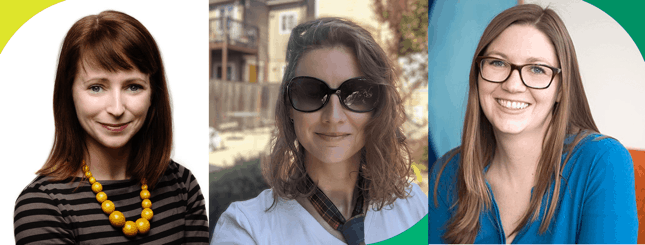
Jessica Lovering, Rachel Slaybaugh, and Suzy Baker founded and lead Good Energy Collective, a policy research organization that is actively “building the progressive case for nuclear energy as an essential part of the broader climate change agenda.”
Inspired by the dynamic leaders and new organizations that are successfully making the case that addressing climate change is an imperative that demands immediate action, they determined that now is the time to build coalitions and join forces with others who share similar concerns.
They recognized that nuclear energy is often left out of discussions, and they believed that needed to change. They have each been studying and working in nuclear energy fields for a decade or two and understand that it is fundamentally capable of supplying the clean, abundant, reliable and affordable energy that should be more equitably available to everyone.
But they also recognized that “nuclear” needed to look very different from the image that it currently creates when the word is spoken or written.
Not only is there a need for additional new technologies and designs that make nuclear energy accessible to broader applications and a greater diversity of customers, but methods used to talk about nuclear energy need to be improved and modified to suit current times. Old ways of doing things need to be altered in recognition of past failures, real and perceived.
Though they believe there is a continuing role for large nuclear power plants that can serve the needs of densely populated cities, they also know that the spectrum of communities and customers is so large that it demands a wide variety of solutions.
They are devising and promoting new ways of engaging with people who might eventually choose to use nuclear technology to address their energy needs. But before that happens, they have to learn, trust and accept. They want to help create situations that have better chances of success because entire communities are supportive and encouraging.
Good Energy Collective was officially launched in August 2020, but it has been busily publishing reports, stimulating discussions and developing coalitions. Its leaders do not believe there is any time to waste. They are highly motivated to make rapid changes that will enable a better story to be told about the future of nuclear energy.
Please listen carefully to these amazing women tell their story and share their plans to modernize nuclear energy products, projects and perceptions.
Transcript
Read transcript
There's a way, a way such a better way today Today, a racial voice, tell the world there's a better way Today, there's a better way Ooh, there's a way, such a better way today Today, now racial voice, tell the world there's a better way Today, there's a better way This is Rod Adams and it's time for Atomic Show Number 283 And with me today, I have three amazing leaders They are the founders of the good energy collective Rachel Slable, Jessica Lovering, and Susie Baker Welcome to you all Thanks, thank you for having us. Great to be here And rather than go and produce a long biography of each of you What I'd like for you to do is to each introduce yourselves and then we'll talk about your new organization Jessica, perhaps you'd go first Sure, so my name is Jessica Lovering I am finishing up a PhD right now at Carnegie Mellon University in engineering public policy, but before I started that, I worked in nuclear policy for several years I was formerly at the Breakthrough Institute, which is an environmental think tank out in Oakland, California And I ran there a nuclear work and I was really focused on nuclear innovation and how to get new nuclear technologies to market And on time scales that are appropriate to meet the demands of reducing carbon emissions dramatically But I wanted to get a little more involved when I finished my PhD And that's how I ended up in this good energy collective Okay, Rachel Okay, I'm Rachel Slable I am currently a nuclear engineering professor at UC Berkeley And my research focuses on computational methods for neutron transport So basically I work on the math and the software that allows people to model nuclear reactors to figure out what's going on with them I'm also wrapping up a term at the Department of Energy's Advanced Research Projects Agency for Energy And that's a small part of DOE that works on early stage, but high, potentially very high-impact technology And while I was there, I started our nuclear vision portfolio and really worked on creating and managing programs to get Sort of the technical and economics piece of advanced nuclear reactors To speed up reaching an economic, economically viable product Before that, I spent a couple of years at what is now called the Naval Nuclear Lab doing Shield design and development And then just sort of over my whole career, I've been very technically focused but also involved in my sort of spare time in energy service organizations Because I've always really cared about I chose nuclear because I care about climate change And so the whole time I've been involved in how do you help bridge the gap between technology and implementation Yeah, and one of the things that you've done a lot of is interact with people who are working on advanced nuclear projects through your efforts with the nuclear boot camp Oh yeah, yeah, just very briefly about five years ago, yeah, I founded with the help of some very other wonderful people A two-week innovation program where we bring students from around the world together to learn kind of all the stuff that you don't get in the classroom About sort of nuclear innovation and commercialization Yeah, that's that's an interesting program and finally but not least at all Susie Baker, how are you Susie? I'm good, Ryan. It's good to be back. Yeah, so I run a small program at the University of Michigan called the fastest path to zero initiative Which basically two years ago, I transitioned out of a national think tank called third way where I had been doing a bunch of sort of federal policy research and implementation on advanced nuclear tech And I moved over to Michigan because I my research was leading me down a path where I was getting really focused on sort of the deployment part of the question Like once we have these great policies in place and once we've actually developed these really important climate technologies, what does the adoption process look like right like how do communities decide That they want them how do communities get them and how is it funded and what do those business models look like? So basically I went down that rabbit hole and we've been building a bunch of really cool tools and new methodologies for thinking about that process But in that work there there was still a need for connectivity to the policymaking ecosystem and other types of decision makers and so part of the inspiration for Good energy collective was just thinking about like how we build really durable organizational infrastructure for the clean energy for the energy transition and so you know, I'm still working at Michigan but now I'm also working with these ladies to make sure that we have The capabilities like the fundamental capabilities to support both on the policy side and on the ground with communities the integration of advanced nuclear into our clean energy systems Well, one of the things that I believe links all of you is that you are very strong progresses and this is not a technology that's typically accepted or even allowed by many people who label themselves as progresses. Can you explain a little bit about how you want to use your organization to make the case that nuclear deserves a place? Yeah, I can jump in when that I think something that really motivated us and inspired us early on was all of this movement and momentum around the Green New Deal and not just the framework of the Green New Deal But seeing these new groups pop up that had much younger leadership and much more dispersed decentralized leadership style but these new progressive groups that were really focused on climate change of course but also tying in issues of social justice racial justice into the environmental movement and specifically into the climate movement and so seeing these new groups and all the energy they had and how much progress they were actually making and sort of getting these ideas out there really resonated with us and we liked what you know what they were saying we were so excited about it but we kind of saw that there wasn't nuclear included in that but we as you know considering ourselves progressives feel that nuclear does fit in with a big climate agenda and so we wanted to sort of build an organization that could be a bridge between those of us who have a lot of knowledge and experience on nuclear but are also concerned with climate change and environmental justice issues so that we could figure out how new benefits in to this broader framework Yeah I would add that we had this sort of realization that the price for entry for nuclear into the climate response is to deal with a lot of its social issues and environmental issues so things that relate back to communities environmental justice nuclear waste management a lot of this stuff that is really sticky and difficult and that you know the nuclear sector being very technical you know has kind of at times mismanaged or ignored or just not really fully dealt with and so you know we're really interested in what it would mean to actually like make a commitment to dealing with some of the messier more difficult parts of our history and our future and I think maybe the last thing I'd add is there really is a timeliness of it I think as people are coming to grips with the challenge at hand of dealing with climate change and you know air pollution and energy access the progressive side is real is open to nuclear in a way that they weren't before and so I think there's something very timely about when we're coming to grips with the size and scale of the problem and what we need to do it really is there was sort of an obvious space to be filled it seems to me that many of the people who are struggling with the what sometimes call the energy trial of both making it clean making it abundant and making it affordable to people have a more open mind to the tool set that may be available and they're not necessarily locked into an anti nuclear mode of people like Senator Mark. Yeah do you experience some of this openness to new tool sets new ideas? Yes so Rod I would say this was the opportunity that we saw which is that there's a real shift from the traditional environmental movement that has been largely anti nuclear to the youth led climate movement which really is like we have to tackle climate change. And we care about social and environmental justice but the tools are just tools right they don't have the same sort of ideological implications for this up and coming generation. So they're going to use every tool that they can get their hands on and they're going to commit to doing it in our way that centers people and communities and social and environmental justice. And so if you understand it through that framework then it's really a no brainer that nuclear should be included because there's no reason we can't meet those other sort of bars for acceptance. We just have to do the work but but there isn't the same sort of baggage anymore. Yeah and I will add on to that that I think something that's made people a little more open is having those in the nuclear space also acknowledge some of nuclear problems and seeing that on both sides. That kind of openness from both sides because. What we're seeing is that these people well. A good example of this I am losing my words, a good example of this openness that we've seen is in the Biden Sanders unity task force recommendations specifically on climate change. So we're really excited that they mentioned advanced nuclear in there but also how they talk about nuclear is that they say we need to invest in innovations in nuclear that address the problems of traditional nuclear so it's not just saying okay we got to support nuclear because of climate change is saying we should support new. clear in a way that alleviates some of these injustices from the past. And so you really like that framing because I think it opens up people who knew that nuclear was important, knew that it needs to be in the tool for tackling carbon emissions, but felt uncomfortable with a lot of the history of nuclear. And I'm wanted to see that I've knowledge and addressed. So it's an ongoing process for sure. But I think that sort of opened the door for people to say, like, oh, you can be in support of nuclear. And but you don't have to be blind support. You can be like, OK, we're going to work on the challenges. But all energy sources have challenges. And so we're going to find solutions that work through this. One of the big obstacles that nuclear has had in the past is the pure size of the projects. How important is it in your view that advanced nuclear developers are looking towards smaller systems, even micro systems that can perhaps more easily address a wider variety of community needs? I'd say it's a very big piece of the puzzle. I don't know that I would say we should only look at small systems or only look at micro systems. But I think it is increasingly important. And I think especially for certain countries, right? It's a quicker path to success in many ways. It enables a lot more people to access nuclear. It can enable quicker innovation timelines. Like there are a lot of benefits to doing something small. I don't think we should pretend that there are not countries and markets that will still need very large reactors. So we shouldn't just totally abandon that idea because they will be appropriate for some places. But the emphasis on small factory manufactured, highly deployable, highly affordable. I think it's quite important. Yeah. And just to echo that point, I think there definitely still will be a market for large reactors, particularly in certain countries that have huge growth in electricity demand and that makes sense for them. I think what the small and micro reactors do is open up new markets. And so it's not we're going to build a bunch of small reactors instead of one large one in this town. It's there's different towns and different regions and industries that could take advantage of small nuclear in a way that they could never have afforded or even needed a large nuclear plant. So that's kind of growing the pie. Yeah. That's what I see it as because obviously a city the size of New York City or Toronto or Kyoto have different needs compared to St. Charles, Louisiana. Just we have different size cities. We have a lot of huge spectrum. And locking ourselves into one size fits all as has never been a recipe for success. One of the challenges, of course, that nuclear has had is that it is a technical challenging field that seems to have pretty strong barriers. If you look around and you look at the demographics of nuclear, it doesn't reflect the demographics of society. How can we change that? Oh, well, we just put out a memo about this yesterday. So we have it. I'm sorry. I'm not up to date. No, no. Your timing is impeccable. Yeah. So we think that we need some structural change here. So we have a series of recommendations under the auspices of building a social science agenda for a fancy nuclear. And basically, we think that the Department of Energy and probably specifically at the Office of Nuclear Energy level, they need to incorporate key epistemiology, like anthropology and history and sociology and psychology and science and technology studies into the way that they are actually shaping their programs and making funding decisions and building the workforce. There's a really great program, the Nuclear Energy University program that funds lots and lots of nuclear engineering students. And it's been incredibly successful as a workforce development initiative. But it doesn't fund anything other than nuclear engineering. And so just even doubling the pot of money and expanding the different educational tracks under that program would mean bringing in lots of interesting new people and thinkers into the space to help both build that pipeline and to ultimately, eventually help diversify the workforce. But I think it's got to start at the very top. It's got to start with the way that decisions are being made and integrating more and different ways, diverse ways, if you will, of thinking about the issues that we're facing. So yeah, I can send you a link to that memo to Brad. Yeah. I've spoken to Todd Allen at Michigan about the incredible challenges that we have convincing funding deciders that nuclear energy is a lot more than nuclear engineering. And if you just go to a nuclear, I mean, I worked at a nuclear reactor development company. And I can count the number of nuclear engineers on two hands and two feet. But we had several hundred people on the job. There weren't that many NEs around because there's a lot more to developing an energy product than the engineering of the reactor core. Yeah. If I could just jump in and we'll put Rachel on the spot a little bit at something that really struck me. And I loved about the nuclear innovation bootcamp the few times that I came in and interacted with them is that they bring in lots of different people from different backgrounds, from different academic backgrounds, to work together on teams. So no, Rachel, if you want to say a little bit about why that was planned that way and if it was accessible. Yeah. So we actually wanted to have interdisciplinary teams because what you need to get a nuclear anything from a conceptual design out to a product in the world requires many more skills that's than nuclear engineering as we've been talking about. So we really wanted people from communications from the law school, from the B-School, from public policy. We wanted those people and we've had mixed success in recruiting over the years of having broader than non-technical. We did better getting multiple engineering disciplines. So something that we found was that for so many people, nuclear was, oh, it's this thing that I wouldn't have anything to do with. And so now five years later, because it's becoming more in the lexicon, it's becoming more popular. It's becoming something people are thinking about as a solution. I think the next time we get to have one in person, we might have better success recruiting diversely. It was easier to get diverse speakers, actually. So we, something that was very important to me was to make sure that the people we had speaking at the boot camp weren't just the same people saying the same things. So we really had less than half of the speaker set were from nuclear. So that helped, even if the students themselves weren't from as many backgrounds, the content was very background diverse. And that was quite easy to accomplish, actually. People were really excited to come from all different parts of the innovation sphere to talk to learn genes. And one of the other pieces that comes to mind is that we talk about innovation. And many people think of that as simply technical innovation. But it sounds to me like your organization is aiming to innovate ways that people think about, interact with, market, communicate, those kinds of things. Can you talk about your focus in new ways of thinking? Yeah, that is critical to our new organization. And you hit the note right on the head. So we've seen all these amazing innovations on the technical side that are really exciting, 60 plus events, nuclear companies in the US. But there's an assumption that while these new technologies are so great, it's going to be easier to deploy them. People are going to love them. It's going to change public perception. And we were not alone in this, but feeling a little hesitation. I'm certain, sort of uncomfortable with that. And that if it's the same business model, if it's the same sort of industry approach that was used for the larger actors of the past, then they might not be successful, because you might still face the same community opposition, the same opposition to citing, same legal intervention. So we need innovations across the board in business models, in community engagement, in particular. And it's not just developing some better PR for these new nuclear, but actually changing how these companies do their projects from the beginning. So how they find communities that they think would be good posts, but posts that really want the plant there, not that are having a force on them. And how do you engage with communities in a way that's really transparent, really genuine. And I think the ultimate test of that is if a community doesn't want a nuclear power plant, then that's also considered a success, because they had a power. They had the power to say no. And so I think having a process that's built out to allow communities to opt in, and really understand the risks and the benefits of hosting a plant. That's one key thing that we want to work on. But yeah, we need innovations all over the sector. And I think some of the supporting pieces for helping communities have the right tools for the job does look at some of the regulatory pieces and some of the business model pieces that to ensure that the communities can actually have the benefits that they want. Yeah, I'll add that a lot of this is in the realm of sociology. And how do we set social norms? And how do we build processes that have justice sort of leading the way that we're thinking about them? And so I think in the nuclear space, and the time that I've sort of been a part of it, there's a defensiveness and a sort of crouch for conflict that sort of underlies a lot of these types of activities. And I think we really want to shake that, because we do have the ability to do that, to say we're not going to engage from a place of presumed conflict. We're going to actually engage in good faith. We're going to really try hard to listen to opposition voices. And we're going to try hard to find the communities that are super jazzed. Because there are so many communities actually that have great conditions for technology adoption. And so it's like we should not be entrenched in conflict with communities that don't want the technology because that makes absolutely no sense. So yeah, I think this is an area where I think we have some growing to do as sort of like a community or sector and really trying to change our own thinking about the idea that nobody wants nuclear or that. that everybody hates us or whatever. I think, you know, it's a mixed bag and that's okay and that means there are many paths for moving forward. Yeah, speaking as one who's a little bit more ancient in the three of you, I can fully understand why some people in the nuclear business have an automatic defensive reaction. They've been taught. That people don't like us that our technology is best when nobody hears anything from us those kinds of things. We haven't really thought much about how we proactively or just how we just normally engage and describe what we do for a living and help people understand why we do what we do and why it's exciting to us. So I'm hopeful that the three of you and the people you're working with can do a job of maybe training some of us old cottchers that maybe we've learned too much or or not learn the right lessons from the opposition that we faced over the last 30 years or so. That's beautiful. I love that sentiment. I will, I will add that I think you're right that there's been a tendency towards conflict escalation. So instead of like taking opposition as a legitimate like okay they're not interested or whatever. You know, it tends there's a tendency of mentality around like okay we got to fight this fight. And I would really like to challenge nuclear advocates and supporters and professionals to do some research and thinking into conflict deescalation. What would it mean to make a commitment to trying to find paths forward and trying not to dig in and trying to find ways to do a little bit of healing at a time. Those sort of deescalation techniques because I think that's really missing from the nuclear advocacy tool belt. And I think it's a real shame because those tools are essential to the ends that we're all working towards. So yeah, it's lovely to hear you affirm that. I agree with Susie so very strongly. And something that might help is to recognize that the landscape has changed. Sort of the what the ecosystem isn't the ecosystem of 30 years ago, a 40 years ago right like things have changed and it really is a time for. constructive conversation for collaboration and for inclusiveness. I sure hope so. Because we really need in many ways to find something that we can all work together on and and. And to join forces rather than be so. complicated, I guess. So just if you have spent a lot of your research working on things like micro reactors and and and those kinds of developments. How do you see the the effort that's going to be needed to explain to people why small reactors. can be located right next to say their local water treatment system or their local factory. Yeah that is a good that's a that's a tough one and so it doesn't really help to argue from authority but that is sort of my gut reaction so I I'm gonna try to avoid that but me for me personally how I you know talk there with myself is that well these designs have made it through the nuclear regulatory commission that means they're they're safe and but I think this is where the community engagement really is key you can't just you know pop into community and say like oh it's really safe we can put it right here by introducing as okay you have a need for local energy you know it looks like it would be a good fit we can we can place it in a lot of places in your town let's find a place that that makes sense both you know from a safety perspective and also from an energy perspective and that people are comfortable with because these are so small you know if a community wants to put it out you know in the middle of a big field or on a gravel pit somewhere like they can do that it doesn't have to be it's easy to move electricity especially within a town so I think that's kind of hopefully we'll avoid places where we need to sort of convince anyone that it's safe to put it in a specific spot but I think working with a community to say okay if you decided that you do want nuclear first of all how many do you think you how much nuclear do you think you need how much electricity do you think you need and then let's work together to find a good place to cite it and it could be you know if a if a community has a large industrial site if they have a big factory then maybe they want to put it there so the power can get used or maybe it's partially financed by one of the customers like a like a large industrial complex and so there's a natural sort of host for it to have it on their site and so that might make it easier but yeah I think the general process is finding people who wanted their rather than trying to convince people to put it somewhere one of the challenges that I see in a community by community approach is simply the the length of time it takes for every interaction and the number of people involved are you going to be doing anything to try to change the general acceptability so that more communities have a lot of their questions answered through general knowledge rather than specific engagements yes right this is so important and you're right it is not a scalable model that we can have you know engagement specialists in every community in the US right so there are a couple of key ideas here so the first is that we want nuclear to be included in the climate response because there are going to be larger policy and funding mechanisms at play that nuclear will benefit from as sort of a one of a suite of climate technologies that communities are trying to assess for themselves as they try to reach their climate goals so you know that inclusion and like a national clean energy standard for instance is really really good for us and then whatever other mechanisms are developed to support that process we would also benefit from for example things like feasibility study grants made to communities through a local chamber of commerce or trusted nonprofit can allow folks on the ground to self-assass like okay what are our needs what are our policy commitments you know what are our constraints and folks can do a lot of the work themselves with regard to figuring out if it's the right fit if we have the right policy infrastructure and resources in place for them that spurs that process so yeah I mean I think we can't expect to have boots on the ground all over the country you know working with local leaders we have we have a lot of that infrastructure and communities that already have nuclear and that's fantastic but you know when we really think about the scale and speed of the climate and energy transition that you know the Biden administration or hopeful Biden administration and others are talking about like a green new deal style overhaul it's going to have to be a systematic approach and not not just individual communities yeah and I definitely agree with all that I think something that we want to focus on which is not a system-wide but to get started we think that this process needs to start now it needs to start early especially for communities that might be some of the hosts for these first demonstration of advanced reactors so these first ones you know will be a lot more hands-on we can have special effects kind of go into all these places but having successful demonstrations in communities that we can then learn from but also point to you know if an off-grid town in Alaska builds a micro-reactor and has it you know it'll get a lot of coverage people can go visit and I think that has sort of been a spread out of this idea just like you've seen with big community solar projects or you know wind turbines powering some islands there's a lot of sort of pride and and coverage of that in the community so I think it kind of spreads it a little more organically but yeah definitely after that need to have better tools for communities to do this work themselves yeah one of the things I keep wishing will happen is that somebody some of these very wealthy individuals who have decided that they're interested in nuclear decide they're gonna build the first one in their own backyard I want to see you know because one of the problems that the nuclear industry has is that people have a legitimate perception that we're always searching for some remote area to be the beginning pit to be the first one you know and that and that automatically it seems to me puts us on the defensive yes so Rod I've talked to you previously but like some of the research that I'm doing at Michigan involves defining what are the criteria for successful early adoption so when we think about demonstration projects when we think about the first few dozen advanced nuclear projects in the commercial space those are going to be special places and we need to make real focused efforts to figure out who wants these technologies and who wants to take that kind of a leap of faith and not push those types of projects into spaces that have historical conflicts or that have reticence around it we really need to find the enthusiastic adopters for these initial projects to avoid any sort of guinea pig stigma that might arise good good if I own the yard you could put it in mine but I noticed well I know you live in a place where nobody can afford a yard or these no real person can afford a yard just for those of you who are racial losing the bay area on the other coast I live in the bay area where people can afford things but it's the Tampa Bay area not the San Francisco Bay area so anyway that's a little not live on the other west coast is what I tell people all right um I'm going to uh I think we're kind of winding down and give you all a little bit time to summarize what do you want my audience, the atomic show audience, to know about the good energy collective and about how they can help you prosper and thrive and succeed. Yeah, I think this is maybe not the main message, but I think for more of a nuclear audience and people who are already on board with nuclear, I did kind of want to, I don't know, mention caveat that when you hear us talking about all of the challenges of nuclear, all of the injustices from the nuclear industry in the past, it's not an anti-nuclear attack. We care about these issues, but we want to see them addressed and make progress on alleviating these past harms because we think there are potential benefits in future nuclear power. And so it can sometimes be uncomfortable to grapple with negative history, but we think it's really important. And so I would just encourage people who are listening that if you, it's okay if you like nuclear, but also want to think about a little more about the bad parts, the uncomfortable parts from the history and from, and from ongoing injustices. So you can, you can do both at the same time and it'll ultimately result in a more equitable and sustainable nuclear sector. And I guess I'd say some of what good energy has to offer is information, conversation, resources around what are some of those things we should be thinking about, what are some of the different frameworks and what are some of the conversations we can participate in that we haven't been in the past. And so I think what we're really bringing is more of a bridge from nuclear to progressive ideals and engagement. So that's sort of where we're coming from. And it's just, it's a frame that nuclear hasn't had in the past. I think you'll nailed it. Yeah, I mean, I think like what the launch of this organization really represents is an expansion of the folks across the political spectrum who care about this issue. You know, Jessica has said this before really beautifully, but you know, we were all kind of working in the nuclear sector and and Jessica and I in policy space, and we didn't have a natural home to do progressive nuclear policy work. And we had to build that home for ourselves. And, and the benefit of that is that now that means more people can join us in this space. And we've been overwhelmed with the number of folks and the climate movement, the number of young people in the nuclear space have reached out and been like this is exactly what's needed. Thank you so much. So, you know, early indicators seem to be that we are able to build this bridge and that's a really great sign for the broader coalition of folks who care about this issue. So yeah, I think hopefully my, you know, I don't know advice or my desire is just like, thank you for the warm welcome and like to Jessica's point like we aren't here to attack nuclear. We're really here to try to make it stronger and more robust and more appealing to more people. And so, so we appreciate the warm welcome from you, Rod and from others. Okay, now your organization has a website at the good energy collective dot o r g is that correct. I think there's no, I think it's just good energy collective dot org. Thank you for that correction and all three of you are active on Twitter. You want to give your hand or do you want to want to. Yeah, I'm Jay underscore love ring. And I'm Susie S. U. Z. Y. Hobbes Baker. And I'm confirming yeah I'm Rachel R. C. G. L. Slabaugh SL A Y B A U G H it's very long. But the good energy Twitter is good energy call C. O. L. Very good. Okay, so, and, and I know you guys have probably other social handles, but. Those are the big ones. Well, those are the big ones and, and if they people want to get in touch with you or, or make comments, they can use those and, and move from there. So. Thank you very much for your time. Thank you for forming this organization for filling what I believe is a gaping void in nuclear organizations. Or at least starting to fill that void. We've got a long ways to go. But we really need to help people understand that that nuclear vision is a tool that can be used in a much wider variety of applications. It has been used in the past. And that it's time to learn as much as you can about this gift that we have. Thank you so much. Thank you all. Yeah, thanks for your great questions. Yeah, thanks. Alright, thanks for having me. Alright, take care. Bye. Today, now reach a voice to the world. There's a better way to date. There's a better way.