Michael Shellenberger talks about Apocalypse Never
Concepts discussed
Auto-linked from the episode's notes and transcript.
Show notes
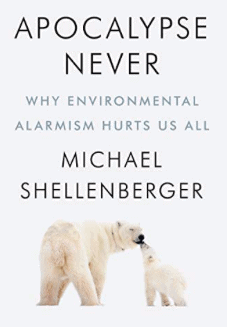
Michael Shellenberger’s new book, Apocalypse Never: Why Environmental Alarmism Hurts Us All has provoked numerous reactions and conversations. It is a carefully researched, 400 page work where 25% of the book is endnotes that document sources for the statements in the book.
Michael is a stranger to the “go along to get along” mode of thinking, writing and speaking. By clearly stating his positions, he generates strong reactions among those who either agree or disagree.
His book documents extensive travels and deep conversations that have led him draw challenging conclusions about many current issues.
He asserts that nuclear weapons are not going to be abandoned. He believes that those who focus their concerns on those horrific devices should be doing everything they can to prevent their use instead of expending effort in a fruitless pursuit of a nuclear weapons-free world.
An important part of reducing risk for nuclear weapons *use* is to continue to promote development and eliminate scarcity wherever possible.
He notes that cities, factories and increasingly productive agriculture are a proven part of lightening human impacts on the natural environment. They concentrate people and allow more space for nature to flourish. They are also the means by which currently wealthy nations have become wealthy; denying those useful development paths to poor nations solidifies poverty.
He asserts that vegetarianism is an ideology or religion that is strongly influenced by a disgust reaction and that its importance for stabilizing climate has been exaggerated.
He acknowledges that competitors have played a role in the war against the atom, but he believes most campaigners are sincere even if they have been misinformed or misled by their peer groups to fear nuclear energy and radiation. (I maintain that money is far more important than ideology, but there is always room for different opinions.)
Michael is a thinker, a researcher and a writer who makes a strong case for environmental humanism.
He acknowledges that human society has many issues that need to be forthrightly addresses by the best available means, but he is firm in his conclusion that it is counter productive to attempt to stimulate action by frightening people with exaggerated scenarios not backed by solid science.
Please join in the discussion. As always, your comments are welcome.
Transcript
Read transcript
There's a way, a way such a better way today, today. The measure boys tell the world there's a better way, today there's a better way. This is Riot Adams and it's time for another Atomic Show. With me today, Michael Schellenberger, the Executive Director of Environmental Progress, an author of a new and attention-getting book called Apocalypse Never. Why we're not really destroying our planet. But, Michael, I actually get the subtitle wrong, but you can correct me. Well, thanks for having me, Rod. What is the real subtitle for your booklet before I confuse everybody? It's a wide environmental alarmism, hers to solve. Very good. And you're going to discuss many of the aspects of that, including why sweatshops are going to save the planet. Looking forward to it, man. Good. All right. Michael has been on the interview circuit. I'm happy to have him have the opportunity to join the Atomic Show. One of the things I'd like to start with, Michael, is really tell me what motivated you to write this book. Well, there was a lot of motivations. I was even trying to write them all down or so many. I would group them into two big categories. The first is that I was upset by the impact that the apocalyptic discourse has had on young people in particular, but certainly the way it's contributed to anxiety and depression. I think it's just unconscionable to be terrifying our children in that way. And then the second reason is that I, you know, everything that we think about the environment is wrong. And I needed to put in a single place all of it, not just nuclear, which is the thing I started out doing. In fact, if I'm true, I started out doing a book about the environment years ago that I kind of put aside because it was kind of boring. And then I did a book on nuclear and, you know, basically publishers didn't really want it. And what they really wanted was the environment. And I realized I had to get back to the environment. So I ended up putting those two things together. So the book is really the first third is a debunking of common environmental myths. The second third is how we actually save the national environment. And then the third section is why if environmental problems are manageable and not apocalyptic. And not apocalyptic, did it become to think the exact opposite? You know, one of the areas where you might not know this about me, but I once ran a sweatshop here in the west coast of Florida. It was a small injection molding factory where we literally sweated because we had no work in this room. Our air conditioning was opening up the big garage doors and turning them big fans. And many of the people that I employed at that factory, I didn't, I wasn't the owner, but I was the general manager. Many people I employed as a factory probably had a lot in common with some of the main characters of your book. I remember Sharon very vividly, a lady who came to work for straight off the street. She was a hard worker, but had never really had a steady income until she started working for the factory. And she did very, very well, very conscientious, very careful about making sure that her output was good. And people like her, I felt kind of proud to be being able to employ those kind of people in a factory setting. So tell us what you have discovered about factory workers around the world. Well, I think that one, the myth I'm trying to debunk is that there are slave laborers in some new sense. I mean, that's been the view of the radical left for, you know, whatever. It's been 150 years that really people working in factories are oppressed, that it's, you know, terrible work. They would rather not be doing it. They'd rather be farmers back on the farm. And I showed that that's not the case. You know, the work can be very hard. I also document that. It can be brutal. You know, in fact, one of the great things about that kind of work is that you can quit and get a different job, as opposed to if you don't like your job on the farm working for your father. There's not a lot of other options for you. So I just sort of tell the story of a young factory, a young woman in our early 20s who's left the farm in Indonesia, and went to go work in the city. And basically, it made a much better life for herself. And that the ways in which that process occurs, she can't grow her own food anymore. So she has to buy her own food that sense into emotional, whole chain of events requiring basically the modernization, the industrialization of farming that allows more food to be grown on less lands. And that eventually allows for the return of nature in rich countries. But I wanted to describe that process and help people, particularly the rich world people who are going to read the book, see that that process of industrialization is overwhelmingly positive for young women and the natural environment, not negative. Interestingly enough, if it wasn't for a movement away from subsistence farming and into a place where he could get an education, my father traced that same story. He grew up on a dirt farm in Southeast Georgia, where until he was able to move to a city and start doing other kinds of work, he was kind of locked in. And the rural electrification agency of the US government, not TVA, but because he wasn't into the valley, but REA was definitely a big impact on allowing him to open books and study and be able to qualify to go to college eventually. So that part of the story really resonated with me. I'm glad to hear that, Rod. Yeah, I mean, my mom grew up on the farm. I tell a story in there where her older sister, who lives through the depression, I asked her one of her happiest members as a child, and she said it was when the clothes ringer came, because she knew her mother wouldn't have to continue to damage her hands or ringing out the clothing. That was such a poignant and powerful reminder of just which selfish jerks we've all become. Now that we're so rich, that like one of your happiest memories would be that your mother got a machine to protect her hands, and just kind of said everything for me. Yeah, that story repeats itself around the people who grew up in the subsistence farming era and devoted a whole day of the week to washing clothes. It's amazing, right? Yeah. Yeah, it was whatever Wednesday was washing day, you know, it took the whole day. Now it's like we do our laundry while we're talking on our cell phones and just takes basically almost no time at all. And we just take it for granted, and I just think since so much of environmentalism is oriented towards suggesting that such things aren't important or aren't necessary or bad or that we should feel guilty about them in some way. I wanted to kind of remind people of how far we've come and that's the kind of stuff that we ought to be. We have more of that, not less of it. Yes, the development has the effect of giving people much, many more choices. As you mentioned, if there's an area of town where there's a number of small factories and that kind of stuff, if somebody's mistreated in one, they can get up and go and go to another one. If you're living on a farm, it's often a very long walk to the next farm. Right. Yeah, there's just not as many choices. There's not really any choices. So really what we call freedom to some extent is just the process of not of, there's only 2% of us that are farmers now. So freedom is that we don't all have to work on the farm anymore. Like we used to not very long ago either. So another area where people often have a knee-jerk reaction to your work is in the area of nuclear weapons and the importance of that development. You mentioned that a little bit in this book. Tell us what's your real feeling towards those horrible devices. Yeah, so this is, I have more to say on it than I said in the book, but what the book gets at is the ways in which the invention of nuclear is a revolutionary, radical moment in human evolution. I mean, thousands of years from now, we're still going to look back on it as a defining moment. I mean, it's a shocking moment. So just, you know, on the weapons, you know, people figure out right away that the implications of nuclear weapons are that they potentially end war. This is actually something that Niels Bohr, the famous Danish physicist, he goes to Manhattan Project in Los Alamos, New Mexico. The Cs Robert Oppenheimer, the father of the bomb, and basically says it's going to be okay. This weapon potentially can end war. Now he they wanted to add a bunch of stuff to it that thought it had to be controlled by the UN. They were never completely clear about it. But, you know, there was a, I point out that there was a study group at Yale right after Hiroshima that I think there was some guys from Harvard as well involved. But they figure out right away that there was no way to be able to get rid of the weapon even if you wanted to. That it would be very hard to regulate it through the UN for not just the technical reasons of it being easy to hide, easy to cheat in case of some sort of ban. But that if two countries go to war and that had weapons and got rid of them, the first thing they would do would reconstruct their weapons. It would be to reconstruct their weapons. I'd be like the first thing they would obviously do. And then the risk of course is that they would use them. You know, they wouldn't necessarily have to use them. They could just do a test bomb. Nonetheless, it kind of raised the issue of why get rid of them at all, why not just keep them and have them do what they've done, which is to basically terrify countries into not fighting with each other. So, you know, you may know that there was a, there was a, there was a little bit of a war between India and China. A few weeks back, you may have missed it because when two nuclear armed countries quote unquote go to war, they are very careful not to go to war. And that's because of the bomb. And everybody says that. Everybody knows this. People that are pro nuclear energy have bought into a myth. And to some extent I appreciate it and I understand it. But the myth has been that there's nothing that nuclear energy and nuclear weapons have nothing to do with each other. That nuclear weapons are bad. That nuclear energy is good. Kind of an equal measure. You know, that nuclear energy is so good because nuclear weapons are so bad. And I just point out in the book that that's just not really honest at all. It's not what anybody really believes. Most people don't want to get rid of them. Most people think we'll never get rid of them. The political scientists are all very kind of open about this. Increasingly some journalists are they tend to be younger. You know, I noticed that this guy that wrote this book on sapiens, which was sort of the hot, you know, the hot book recently. He talks about this. He's a millennial, I think. So I point all this out. You know, and I point out that there's something that of course nuclear weapons are completely terrifying. That's how they work. If they weren't terrifying, then they wouldn't have prevented war for so long. And I think this bothers progressive more than coming. Conservatives, I think conservatives have a more tragic view of the world. They have a more fatalistic view maybe, you know, conservatives also tend to be more pro-military. But liberals, really ever since, you know, Robert Oppenheimer and the bomb was invented, have been wanting to get rid of it. They've been wanting to control it. Haven't been able to do that. And really, I think I see what's going on now is basically cooperating with anti-nuclear people to kind of slowly get rid of nuclear as anything other than a niche technology, rather than actually defending the technology in all of its kind of, you know, bad and good sides, which is that this technology is not going away and we ought to stop lying to ourselves and thinking that it will. Yeah, worked at all. Of course, yeah, worked in all. I was looking for. Thank you. The, as you say, the discovery of fission, the ability to unlock the incredible potential that's stored inside atomic nuclear, something that astrophysicists recognize way before almost anybody else. And they figured out by the early 1900s that stars would have burned out long ago if they depended upon on combustion. They had to be some way that they were releasing a different kind of energy and energy that didn't run out. And when we discovered how to unlock that process, we threatened an awful lot of established interests. I mean, nuclear energy certainly threatens the fossil fuel industries existence, but nuclear bombs. The idea that, you know, one single plane can carry a city destroying device. Really, you know, shook the foundations of the military industrial complex that was, you know, pumping out a few planes a week during World War II. Yeah, for sure. I mean, you know, obviously part of the mythology around nuclear was promoted by the US government. And you still see it. I'm sort of surprised nobody ever calls it out more, but basically the idea is we're all going to get rid of this terrible weapon. I mean, the US government, I don't think most people know this. You know, the US is committed has promised to get rid of its nuclear weapons. It is actively, it is, until Trump, it is actively pretending, as though it will get rid of nuclear weapons, it is participating in that myth. And it does that because it has to just, it has to sort of say that in order to feel like there's some ethical justification to insist that nobody else get nuclear weapons. And I think there's a lot of people that just, they want to be quiet about this. They want to just kind of, they don't like it. When I acknowledge this, it's uncomfortable because it shows that it's basically, you know, hypocritical and, and, you know, we're not getting rid of our new nuclear weapons. Nobody thinks we are. At least nobody that, you know, is not some idiot log. And so that leaves you in a very difficult, at least there's a very difficult position then to argue that nobody else should get it because it's basically arguing that there should be, you know, that other countries should be vulnerable in a way that we're unwilling to be vulnerable. Well, that was essentially the deal that all not just the US, but all the nuclear powers signed up to when they signed the non-proliferation treaty. And all of the non powers, you know, really took those nuclear powers at their word and agreed to forego some very important aspects of nuclear technology as part of this deal that the powers were getting rid of their weapons. Well, you know, the reality is, no, none of the nuclear powers are intending to get rid of their nuclear weapons. And they really do want to maintain the position that they have them and others don't. Right. I mean, the whole, you know, idea that we should figure out ways to hamstring people's understanding and development of the nuclear fuel cycle is in my mind, particularly challenging because there are some nations out there who know very well how important it is to have a full control of fuel and supplying fuel. They've built their entire economies on being fuel suppliers in the hydrocarbon world. And why would they not want to invest in developing a complete nuclear fuel cycle? That's not necessarily about developing weapons. It's about developing full capabilities to remain a fuel supplier. Yeah, and you obviously see some, you see some countries doing that. You also see overlap of countries that are doing it and also so they can have the option of a weapon, South Korea, Japan, Argentina. You know, so it's all, it all mixes together. I mean, there was always this idea that they would be separable in some super clean way. Oppenheimer himself promoted this idea. He called it for denaturing uranium like we denature medical alcohol so that drunk's won't drink it. And how does that work out? Yeah, right. So obviously there was like the physics didn't work out. So you know, but I think you still see that with all these people saying things like, oh, my nuclear reactor will be proliferation resistant or whatever. And it's just like, you know, it's, what puts me off about it is it basically participates in the demonization of nuclear energy. You know, and it participates in the lie. And I think that nuclear has had too much, a lot, there's been too much lying. You know, I just too much secrecy. I mean, give you an example. So you know, you know, I travel a lot to make the case for nuclear in different countries. I was in Argentina. And one of the journalists goes, well, what about all the secrecy that's involved with the nuclear power? And I was like, what secrecy? Well, I don't know all the secret stuff. And I was just like, you know, I don't know exactly what he's talking about. But what I think he's talking about is the fact that Argentina has a nuclear power program because it does provide them with the option if they need to create a bomb they can do so. But nobody wants to say that. So there's this aura of secrecy and darkness that hovers around nuclear and basically operates on people's unconscious. And for me, it's better to just address the issues up front like rock grownups. You know, this thing from the nuclear establishment, the nuclear establishment has always had a problem with being patronizing, perceived as arrogant, perceived as patronizing. And it's understandable why nuclear is the greatest of all the energy technologies. It's one of our greatest technologies by far. Maybe it's our greatest. It's complicated. It's difficult. It's mysterious. It's dangerous. It's exciting. And so, you know, I was, you know, it didn't make it into the book. But it was so interesting when you read the histories, you know, when the first commissioners to the Atomic Energy Commission, the way the media would talk about them, it was like, well, let's, oh, you know, we've got to find the best men. You know, it'll be, you know, how can we find it's got to be the greatest men in America. It was men, by way, it was sexist back then. So, but it was like the idea was nuclear was the most prestigious field, the most prestigious field. And now it's now it's just, you know, a backwater, it's a place of of ham radio enthusiasts. It's, you know, it's looked down upon the renewables people think it's, you know, they are the dominant force. It's, you know, only 40% of Americans want more nuclear, 80% 90% want more wind and solar. So, the nuclear's long fall. You know, I think in some ways inevitable because it was just viewed as this is shock a shocking event, you know, and people adjusting to it. But I also think there was this way in which the nuclear community itself has never really understood the technology it's been operating with has never truly appreciated it and has had this weird kind of good sun, bad sun view of energy versus the weapons. Although I don't really want to, you know, get into it to much of a debate here, because really here to talk about your book and what you found, it's possible my view likely that it was a very purposeful construct to develop the tight linkage between the bomb and energy. I mean, hey, the 1946 act was not called the Nuclear Weapons Act. It was called the Atomic Energy Act. But it was all about weapons. I mean, the first Atomic Energy Commission, one of the first things they did was to eliminate all the investments into any power reactor projects and focus all of their resources for the first eight years on building up an enormous complex of nuclear weapons production and kept the quote atomic secrets as something that supposedly Americans only knew about and sharing that information with any foreigners, including the British who helped us to develop and the Canadians who helped us develop the bomb in the first place, you know, we didn't do that. We didn't share it all. We kept it close-held, and we made it so almost everybody interested in atomic physics in order to pursue their craft had to work on weapons. They didn't have the choice. Yeah, I mean, that early period right after World War II, I mean, they were just overwhelmed, man. I mean, they just couldn't get to the energy part, you know, because the weapons were just such a huge focus. There was frustration on the part of the commissioners, actually in part of the staff at AEC, they all wanted to be doing more stuff on energy. It's sort of a tragedy, right? Because then they kind of finally, as soon as they get this brief period where there's just kind of manic enthusiasm in the 50s for nuclear energy, but then it doesn't last, you know, basically by the 1960s, basically by the mid to late 60s, the backlash against nuclear is already underway and really it's just been, you know, at least in the west, it's been downhill ever since, at least in terms of public attitudes, I should say. Yeah, well, interesting in my view, the atomic, the Manhattan Project funded a development of a power reactor demonstration project under the leadership of a guy named Farrington Daniels from the University of Wisconsin, but he was one of the few Manhattan Project scientists who was old enough and experienced enough to know what industrial uses of heat was all about. And the Daniels pile project, again, was funded by the Manhattan Project and immediately defunded, removed from the list of things that they would fund by the new commissioners. That choice was led by a guy named Louis Straws who later became the chairman of the Atomic Energy Commission, but he was one of the very first commissioners and proudly wore the title of Admiral Straws, even though he was only a reservist who spent most of his career on Wall Street and only, you know, worked in a Navy during World War II, became an Admiral at the end of the war. But Straws was a key player in eliminating the power reactor demonstration project. You know, there was some scientists who said, well, we're not going to really be ready to develop to produce competitive electricity for about 10 years. years and so the commissioners somehow decided well if we're not ready now we ought to not pay for anything until 10 years from now then we'll go back and say well you ready now you can't really do much development with no funding right one of the chapters in your book points to the importance of green as green money and the the efforts by some who was with very close ties to the fossil fuel industry working against nuclear energy tell me about what Edmund Brown and Jerry had to do with being anti-nuclear and why they were opposed to the development of reactors that the Sierra Club seemed to want well I mean it's interesting actually you know Jerry Brown's father like Al Gore's father was pro-nuclear so it was really generational and this is why I think it's mostly not about money I think it's mostly about ideology religion the new laughed the Malthusian turn in the conservation movement you know so but Jerry you know the family had oil and gas wealth the oil wealth was clearly threatened by nuclear so there was a strong conflict of interest certainly for the family whether or not it was more that or ideology I don't think we can ever know but but yeah I mean there's definitely a huge amount of fossil fuel interest in keeping nuclear down you know I wrote three chapter and you know basically because you know those those thirds you know the last three chapters one is on money one is on power and one is on religion and well I think that the money and power are placed an important super important role I also think at the end of the day this is more motivated by religion than it is by anything else I mean I think that environmentalism is a secular religion it's providing psychological needs or I'm sorry it's meeting psychological needs for people in the same ways that Christianity used to and nuclear is sort of occupying the role of the devil you know so you know I think that's a big driver of it you know I think we forgot like Jerry Brown now you know it's also the case that they had a financial motivation to see it that way but trying to untangle those things is difficult you know and obviously we just see so many anti-nuclear people that have no financial interest and for them it's more like the problem with nuclear is that it it means that you don't need to do renewables it means that you don't need to move to a low-energy society it means you just don't need all this all these things that they're saying in a green new deal or the climate program you just don't need to do any of them all you need to do is do nuclear and of course that's that seems like good news to us but if you're somebody that wants to control society wants to control the economy wants to merge human civilization with nature nuclear is a very threatening technology indeed well that's true although you mentioned one of the the philosophies was that we would we would move towards renewables if they could make fossil fuels more expensive and nuclear more expensive that that would drive people towards the renewables because you know if the traditional sources were expensive we'd seek an alternative but one other group of people really prefers energy to be expensive and that's the people that sell energy yep absolutely it's definitely it's definitely a factor I just I'm not I don't think it explains why millions of people took to the streets last year thinking that climate change was the end of the world yeah that's true although in today's world and I grew up in a in a church going household and met a lot of church going people's I guess I'm a little bit skeptical about people actually being motivated by ideology what I saw was an awful lot of people who went to church because that was their social life that was where their friends were that was where the Pollock's Supper's were that was you know they would get together and do good works but also you know socialize after doing the good works and that kind of stuff and I I've heard that kind of thing from a lot of people who were in the anti-nuclear movement is that it became part of their their socializing their life they enjoyed going to protests and gathering and even they enjoyed getting arrested together and spending the night in jail absolutely there's always a social aspect to it but it also provides meaning for people it provides a heroic presence story of how we're how to be heroic and thus to some extent how to be immortal how to how your life is something what you're not just uh you know the the big you know what happens after we stop believing in god is that the university start kind of preaching a message of told despair you know that life has no meaning there's no purpose you know there's no consequence you know we don't really know what's good or bad it's just sort of determined by kind of our emotions and that was very unsatisfying for people and so we've known there's you know a long tradition that has been looking at how it is that as people stop believing in god stop believing in the afterlife stop thinking that that their behavior will somehow be judged after they die and that there's some reason to not do bad things that some punishment will result of from doing bad things even if you get away with it as that goes away people um constructed new moralities and so you know this is the famous prediction by Friedrich Nietzsche that secularization was leading to what he called the death of god sure people might still go to church but um he saw that they weren't behaving as though they would be punished for their sins and he predicted accurately that it would result in because it would result in people inventing new religions and the first two big ones were fascism and communism and after they were both discredited I look at the ways in my book about the post you know world war two post socialists basically made an alliance with multusians who did have an interest in energy scarcity is why they I think they I think you're right there was this contributions from the fossil fuel industry which wanted to maintain energy scarcity but I think to overlook or dismiss or diminish the importance of the religious motivation is to miss something really powerful really motivating I see it's in Greta Tundberg it's an extinction rebellion you know these people that shut down London they glued their hands to the train you know they didn't do that because they were paid to do that by the oil industry or something they did that because they believe in it and they didn't even do it just to be around other people though they certainly benefited socially from it they did it because they believe they're saving the world that's what's motivating them um so I think you can't kind of dismiss that as sort of opiate of the masses I think it's something that people really believe and take very seriously yeah and as you mentioned one of the things that one does if you stop believing in the afterlife is you seek other ways to uh become immortal uh you're right books for example right you might save nuclear power plants as a way to become immortal exactly and and leave a legacy you have a couple of children to tell us you know you mentioned several times in your book that your part of your motivation was knowing how your teenage daughter was being taught to be fearful and anxious about the world and how some of her friends almost can't function right now well my daughter's fine because because I'm because I I'm her dad and I talked to her about what the science says and what it doesn't say but I interviewed her friends and yeah they're very worried they're very um they don't know how this stuff works I don't know what to worry about you know they some they think that maybe plastic straws or somehow connected to climate change they think being vegetarian is important it's not it only reduces your emissions two to four percent so and we now know that one out of five British children tell pollsters that they have nightmares about climate change so it was one of my motivations to write the book was just that our children have been so badly misled by apocalyptic people behaving inappropriately in the grip of an apocalyptic religion so I wanted to write something that I thought would be engaging to them um you know I wrote this book hopefully I think the concepts sometimes the particular the end and on the concepts that we're talking about around religion I think are more difficult but certainly the first third and maybe the the first two thirds of this book I think can be easily read by by by by 10th graders maybe ninth graders maybe even I mean maybe even some really good you know advanced um good reading eighth graders or even seventh graders so how does do people who are very concerned about the effects of plastics on turtles and whales and that kind of stuff justify putting up gigantic threshing machines in the migratory pass of some of the world's greatest bird species right so renewables are part of that I mean I think renewables are part of this religious impulse the idea is that we're harmonizing human society into nature we're restricting human behaviors by restricting and making energy scarce and expensive but renewables are clearly motivated by an an appeal to nature fallacy whereby we think that some things in the world are natural other things are unnatural and that the natural things are good and the unnatural things are bad and you know it's it's what kind of say it's you look at it you kind of go how would you justify such terrible energy for the natural environment and for people um how would you imagine that it's good well you'd have to be in the grip of a of a religion and I think that's when you look at the language you look at the way people talk about renewables you look at how upset they get when you talk about why we don't need them and the ways in which they view opponents of renewables as immoral violated this they're they're violating really you know God's will in a sense what nature wants and needs um I think that that's a completely that's this maybe one of the most renewables are the most perhaps important part of the of the new apocalyptic environmental religion and there is of course a fair amount of green luqra to be involved in nuke and renewables what was it that the American Recovery Act provided to the renewable industry in terms of of just this subsidy but then of course that that encouraged an awful lot of additional money but I think it was sixty billion dollars on that. Yeah so yeah I mean the green stimulus was about 90 billion but during the whole 10 year of Obama he probably spent about 150 billion on renewables yeah so that significant yeah certainly a factor you have to ask though that you know not every industry goes in can just get money like that so why was renewables able to do it and nuclear not right yeah that's a good question moral gonnaize maybe I don't know there's maybe they did a better job of learning that marketing is an important part of every industry well no I mean I think the answer I'm giving the book is that because the in the apocalyptic environmental religion they think nuclear nuclear plays the role of the devil and and renewables are basically a way to get right by God it's a religious determination for some foremost so what about extinction are humans really driving us to a six major extinction No, I mean, I point out that, you know, there is good reason to worry about the decline of wildlife and habitat, but no, all of the talk of the sixth grade extinction, there's no science for it. We're not driving extinction levels at those high amounts. It was basically all based on a mod models that assumes that species would need much more land than they ended up needing in reality. I'm not sure I understand what you mean. You mean that species don't need land, they don't need a stable climate. What's the science really saying? Yeah, so what I describe in Apocalypse Never is basically that most species don't need as much habitat to survive as species. And so the models that were created really in the 60s by Malthusian and Epocalyptic scientists to justify their policies just to overestimate it how much land that species would need in order to stick around. So I mean, it's not suggesting that things are in great shape. I'm just saying that the particular extinction claim is just ridiculous. It's over the top. It's false. There's reasons to be concerned about protecting habitat for species, it's just extinction is not the reason for it. Am I destroying the climate because I happen to enjoy a good steak now or again? No, I mean, I point out that really going vegetarian only reduces your emissions 2 to 4 percent, which is kind of surprising when you realize how much attention is given to it. So is vegetarian is another religion that people subscribe to? Yeah, I think it is certainly a very strong ethical framework, but yeah, I mean, and I think there's something really cycle. I trace this really fascinating psychological research which shows that vegetarians have a very strong disgust reaction to meat. Disgust is a primary emotion. It's not something we don't choose to feel disgusted. We just are disgusted. And then when they talk to vegetarians, many of them would describe basically the idea that the vegetarian is, I'm sorry, that meat eating was a contamination of their bodies with death. So I think there's something going on there that's about the existential anxiety, which I come back to, which I think motivates the desire for environmentalism to serve as this alternative secular religion. But yeah, so I think they're, they're, I kind of refer to vegetarianism and environmentalism as kind of sister religions. They're, they're not quite the same. You know, the, I interviewed one of the psychologists who did this research and she said, it's almost as though they both have a common ancestor or not ancestors on the right word, but a kind of background factor that's the same for both of them, but they manifest in slightly different ways. One of the criticisms of your book that kind of bothers me being a guy with an English degree and being interested in nuclear energy is people who've dismissed you because you're not an expert. You're not a credentialed guy. You don't have any particular background in the topics you write about. But are you asking us to believe you or to believe the people that you are quoting and researching from? Well, first of all, I am qualified. I don't have a PhD. If that's what they mean. If they, if they don't have a PhD, well, I don't and I don't care and, and neither should anybody. I mean, that's stupid. That's not how science works. It's certainly not how journalism works. I've been writing on, on climate and the environment for 20 years in major publications. My articles about my environmental journalism are some of the most widely read articles on the environment in the world. So, you know, usually these are, these are claims made by people that have no expertise. I was invited to testify in front of Congress and did testify in January. I testified in governments around the world. I was invited specifically invited by the Intergovernmental Panel and Climate Change to be an expert reviewer. So if that's like not enough for somebody, then then I just kind of don't think it has anything to do with qualifications. I think it has to do with them. Just don't want to deal with the issues I'm raising. The book itself is 400 pages, 100 of which are end notes, all of which refer to major the key sign. This is, this book has the most up to date science on every major environmental issue full stop. This is these best single place to find a review of all of these major environmental issues. And show how they're related and not related. So, you know, basically what I feel like I've achieved is I've snuck an environmental studies textbook into a commercial nonfiction book with characters and stories. But yeah, I mean really this book, you know, someone said, why should I believe you to me over email? Someone asked me to go to Twitter and I was like, who said you should believe me? You shouldn't believe anybody. Go look at, you know, you can read my sentence, you can read the sentences, look up the citations and decide whether or not I represented it fairly and whether you think the citations are right. I actually did that a couple of times. I bought the Kindle version of your book and every time I had a question about where does this come from, I hit on the footnote, took me to the citation and I even traced back some of the citations. My random sample of about half a dozen, every single one of them, the original material said exactly what you said it said. So that's great. I love, I love, I love with this book. I acknowledge them and they end. I mean, we reviewed a huge quantity of science. Very proud of it. You know, we wanted to write a book that would stand the test of time. So this is, you know, it's definitely contemporary, definitely speaks to events, particularly over the last year or year and a half. But you know, the broad view, the broad direction, the broad argument, I think I've pulled together in a way that I don't think I've seen anybody else do, particularly around this issue of kind of rising energy density, economic progress and the ways in which, you know, at least a particular kind of prosperity is actually very good for the natural environment. Yeah, I think you did a great, and for those who are, are interested in timeliness, I've, you know, worked with people who have worked on books and know a little bit about the process. I was very impressed to see the still were citations in there that were dated to the first quarter of 2020. That's pretty good for a book to came out in June of 2020. Yeah. I'm impressed. It's a, it's a pretty hard, hard lift to be able to get that in there and still go to press and be on time. So, you know, I think that you have done what you set out to do. And that people whose minds are not necessarily convinced, hopefully they have the open mind and will go and read the work rather than reading reports about your work for people who may not even have talked to your read your book. Thanks Ron. I hope that's the case, man. So far so good, you know, we hit number five on Amazon all books last week, which is, was really blew away the publisher. Number three and in new releases. So yeah, we, I feel, I feel good like the book is going to get read. It's gotten strong word of mouth. We're hopeful that, and more folks will read it. So once again, the book is called Apocalypse Never. And again, give us a subtitle again Michael. I don't have it in front of me right now. Why environmental alarmism hurts us all? And you can find it almost anywhere, whether it be Barnes and Noble, Amazon, your book store. I'm going to hold out and get the hardback version at a point where I know I can see you personally to get you to sign it. Oh, that sounds really, I really want that to be into my, in my library. But these days, you know, you live on the West Coast, I live in the East Coast and never the tweens shall meet. Yeah. We're in the House of America. I was, which is what I meant. I have, you know, I do, and you do travel around now and again, but I don't think you've done much traveling in the recent months and I certainly haven't. So I look forward to the time when we can get together and talk over a few more issues, over a beverage of your choice. So that sounds great, brother. All right. Take care, Michael. Congratulations on getting the book completed and out and good job on the sales. I know a lot of people dismiss authors sometimes. He just want to sell a book, but what you want to do to read your book, right? Yeah. First, well, yeah, but I would like to sell books too. I don't know what is possibly wrong with that. Yeah. Well, come on. You might try to sell a book. Well, I am trying to sell a book. Yeah. Why else would you write a book if you don't want to sell it? Yeah. You know, if you make music, you want people to come listen to it. If you write a book, you want people to read it. So congratulations. Take care. I might get all those. See you around the webs. Okay. Take a decent. Bye. The United States would seek more than the mere reduction or elimination of atomic materials for military purposes. It is not enough to take this weapon out of the hands of the soldier. It must be put into the hands of those who will know how to strip this military case and adapt it to the arts of peace. Peaceful power from atomic energy is no dream of the future. That capability already proved is here. Now, today, who can doubt if the entire body of the world saw a book? Scientists and engineers had adequate amounts of fishable material with which to test and develop their ideas. That this capability would rapidly be transformed into universal, efficient, and economic use. A special purpose would be to provide abundant electrical energy in the power starved areas of the world. There's a way, a way such a better way today. Today, the race of boys tell the world there's a better way. Today, there's a better way. Ooh, there's a way such a better way today. Today, our race of boys tell the world there's a better way. The way is the out of this way.