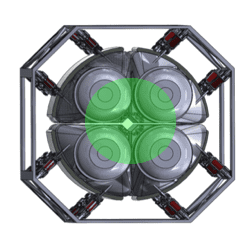
HolosGen Claudio Filippone and Chip Martin
Concepts discussed
Auto-linked from the episode's notes and transcript.
Show notes
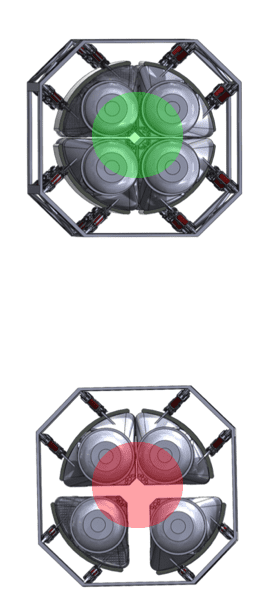
HolosGen has attacked the nuclear power plant cost and schedule challenge from the opposite direction chosen by many nuclear reactor developers. Claiming to be agnostic about the reactor specifics – as long as it produces reliable heat in a small-enough configuration – HolosGen founder Claudio Filippone decided to focus on radical improvements to the “balance of plant.”
Filippone worked for a decade as a consultant specializing in power production systems. He is both a nuclear engineer and an electrical engineer with the skills required to address a wide variety of systems and challenges. His advice was valued and sought after, allowing him to accumulate both ideas and resources.
He began the groundwork for HolosGen in 2008 and incorporated the company in 2017.
During his time as a consultant, he recognized that “the balance of plant” outside of the nuclear portions of a power plant represented 70-80% of the initial capital cost and a similar portion of the ongoing operations and maintenance costs. That was his inspiration for choosing to focus on radically improving that section of the system.
As the submarine sound silencing saying goes, “attack the big noise first.”
The fundamental choice enabling dramatic improvement was to abandon the Rankine (steam) cycle and switch to the Brayton (gas turbine) cycle.
He worked with visionaries inside the US Army’s technical branches to gather requirements for mobile generators that could safely and reliably operate under extreme conditions. The challenging requirements included resistance to focused kinetic attacks.
By choosing to meet performance requirements provided by one of the toughest customers available, Filippone and his HolosGen team have produced a design concept that can be manufactured and delivered to almost any customer in any location.
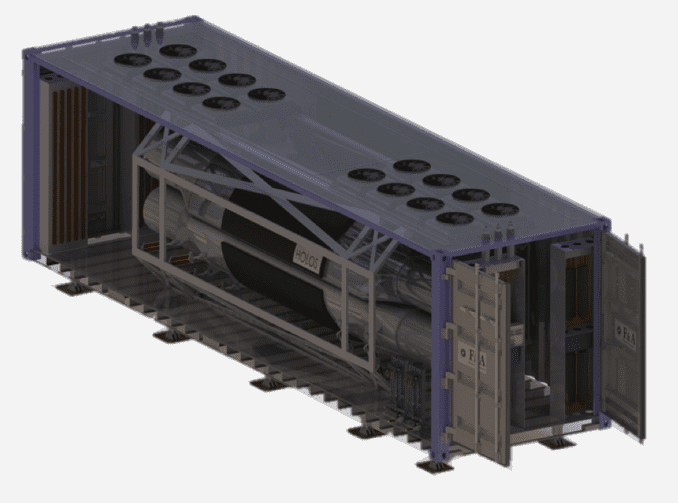
_HolosGen quad in a box.
Copyright HolosGen. Used with permission_
The integrated power production system can fit inside of an ISO standard 40 foot long container. It will come in a number of different sizes depending on customer needs. One version will have a designed power capacity of 10 MWe.
Filippone credits the ARPA-E Meinter program for helping HoloGen to achieve rapid progress in a radically new direction.
He has hired a team of creative, aggressive, dedicated engineers, machinists and technicians – mostly fresh out of school or the military – and carefully trained them with a program that includes a healthy dose of hands-on work with functional components.
He has inspired them with a vision and a mission to fundamentally change the way that nuclear energy can be put to useful work for society.
The machines that he and his team have produced – and they have produced several functional prototypes – are modern, closed Brayton Cycle heat engines that use high-speed compressors and expanders that are coupled electrically, not mechanically.
That configuration enables modern control systems to finely balance the compressor output with the turbine input, maximizing thermal efficiency over a wide range of power outputs.
They will work with a variety of gases, including helium, nitrogen and supercritical CO2.
Filippone has engaged the advisory services of Charles (Chip) Martin, a deeply experienced and well-connected nuclear professional. Immediately prior to joining HoloGen, Chip was the Glenn T. Seaborg Science and Engineering Policy Fellow for the American Nuclear Society.
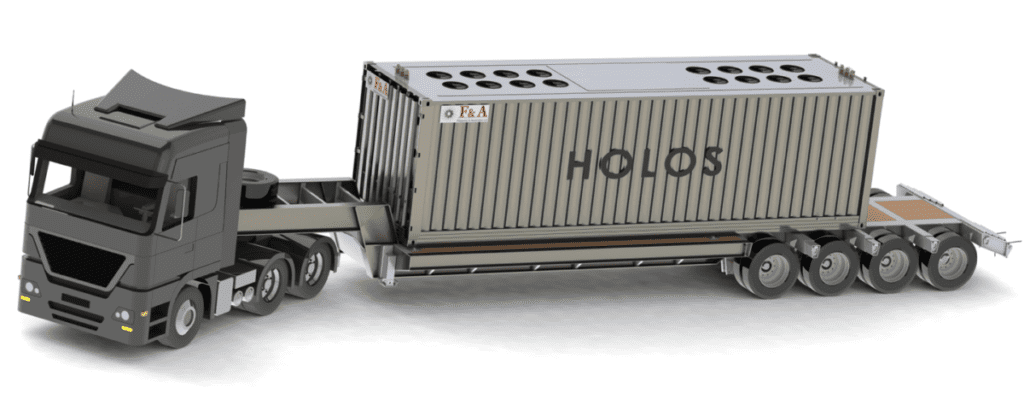
Dr. Filippone and Chip Martin joined me for a fascinating and detailed conversation about their integrated nuclear power system in a box.
The show is a bit longer than normal, but I think you will find listening to it will be a valuable investment of your time.
As always, comments are welcome.
Transcript
Read transcript
There's a way, a way such a better way today, today. The nation's voice tells the world there's a better way, today there's a better way. The United States would seek more than the mere reduction or elimination of atomic materials for military purposes. It is not enough to take this weapon out of the hands of the soldier. It must be put into the hands of those who will know how to strip this military case and adapt it to the arts of peace. Peaceful power from atomic energy is no dream of the future. That capability already proved is here. Now, today, who can doubt if the entire body of the world's scientists and engineers had adequate amounts of fishable material with which to test and develop their ideas. That this capability would rapidly be transformed into universal, efficient, and economic usage. A special purpose would be to provide abundant electrical energy in the power-star barriers of the world. This is Rod Adams and it's time for another Atomic Show. Today, I have with me two representatives of Holost Gen, a fascinating company out of Manassas, Virginia. I met Claudio at an ANS meeting almost a year ago, and Chip Martin is his primary associate. The Holost Gen is probably the most focused micro-reactor developer in the U.S. most focused on post-cycle gas turbines. Those of you who know the history of atom-becomic engines and my involvement in entrepreneurial activity, I have a very soft spot in my heart for post-cycle gas turbines. Welcome to Diplaudio and Chip. Thank you, Rod. We really appreciate this opportunity to discuss Holost Gen. As you said, I'm Chip Martin. I'm working with Dr. Claudio Filoni to help him develop and deploy several versions of the Holost Gen Reactor. Before joining his team, I was the Glen T. C. Borg Science and Engineering Policy Fellow for the American Nuclear Society. Just prior to that, I was the Chief Nuclear Officer for the Nevada National Security Site. My current focus is to help Plaudio develop a business strategy, a posture, Holost Gen for new investment and rapid growth. Holost Gen, their new term plans are focused on building and testing a demonstration compact reactor that is integrated with the power conversion system, all within a single pressure vessel. This design leverages high-fidelity simulation and sub-scale simulator testing data that was obtained for the development of the Holost Quad Design under the ARPA-E MIGHTNER program. The Holost Quad is comprised of four neutron-coupled sub-critical power modules that together form a core rated at 22 megawatts thermal that will operate for almost nine effective full power years in a semi-autonomous mode producing electricity with a load following capacity. The Holost Gen team proposes to initially build and test the monolithic one Holost, we call it the M1 Holost, which is an electric generator relying on the elimination of the balance of plant philosophy similar to the Holost Quad configuration that I mentioned earlier. M1 Holost will be initially operated as a full-scale simulator with a circuit heat source to validate technical and safety performance prior to loading it with nuclear fuel to execute nuclear testing to then fully demonstrate regulatory requirements. The power rating of the M1 Holost configuration is substantially smaller by about a factor of eight compared to the Holost Quad design. The lower power rating reduces the amount of fuel required for initial nuclear testing to less than 200 kilograms and allows meeting the cooling requirements under design basis and beyond design basis accidents scenarios. Enables rapid construction with components that have a high maturity level are already commercially available. The M1 Holost will leverage an integrated power conversion system with state-of-the-art turbo machinery components coupled to high speed motor generators. The design is scalable and takes full advantage of design optimizations supported by high fidelity models developed by the Argonne National Laboratory and can be assembled and tested in less than two years. The proposed development plan to assemble and test M1 Holost will provide a fully operational micro-reactor demonstrator thermal hydraulically tested under design basis accidents scenarios ready to be loaded with nuclear fuel to support nuclear testing and safety performance at a DOE testing site which will enable rapid commercial deployment with power rating scalable to meet a variety of market requirements. Dr. Philopone is the technical genius and the driving force behind this concept and I'm going to let him talk about the history of Holost Gen and go into the details of the technology. Thank you. Thank you, Chip. So much for the picture. The big picture you provided. Well done. Good summary. And thank you, Rod, for organizing this show. I also to give the opportunity to myself and the Holost Gen company by the Holost design to be known by general audiences. So thank you again Rod for doing this. So if you want to come to use my... Let me interrupt you for a second because I do that now and again especially after having a long well prepared introduction. So Claudio is not only the technical genius and the founder of the company. As far as I know Claudio you've also been the primary investor and owner. So this is a little bit of a different animal compared to many of the other startup companies. And I'm not sure who's doing it but there's a lot of background noise. So one of the two of you is moving stuff around and you're not on mute. So you're violating the rules. All right. Go ahead Claudio. Tell us about your vision and what got you excited about small integrated nuclear power system. Perfect. Perfect. So yes Rod. Okay, my name is Claudio Fiddipony and I don't know if I'm a genius and definitely hard worker. I am a nuclear engineer. I'm also a electrical engineer. So my primary technological lab was electrical power electronics and then I became a master and a PhD in nuclear. So what got me into this business? I've been a consultant for decades since the late 90s and my job was to identify... to identify the actor design vulnerabilities and try to associate costing figures with whatever system, novel systems, structure and components that values vendors around the world were proposing. This involved generation three generation three plus generation four SMRs and eventually the micro reactor world which I think I contributed quite significantly to create itself. I mean the micro reactor world itself is probably part of the work I've been doing for several decades. So the background, this background, knowing, you know, analyzing so many reactor designs, the word about 900 plus reactor designs in 2013. These were the design that advertised around the world of any type of fluid and any type of reactor core, any type of fuel. And some of them were very good ideas. Some of them very very better than some of them are not more than cartoon designs. Some of them are very good insights. So this background helped me dramatically to narrow down the good parts of reactor designs and try to eliminate the bad parts of the reactor design, not just for the technical standpoint but also from an economics standpoint. If the actor is super safe but is unaffordable, it's not good. So yeah, to have... the requirement to cannot be just technical to be also a Konami. So that this background allowed me to collect the elements for the reactor design that would merge all the safety aspects that I wanted to have in the reactor. And the result was the oldest design. So that's how all those came about. through all these merging of ideas and the comparisons and technical economic analysis of so many designs proposed around the world. So that's the beginning of the story. So then the objectives, so I formed all those giant in 2017 and your corrector, I'm one of the main investor into the technology. And you're right, it makes it a bit different when you compare that to more conventional approaches. But one of the things that I always insisted was you have to put your own skin in the game to really believe in what you're doing. So it's not just enough to have a passion and to have love for what you do but also you have to invest in it because only if you invest you are going to fight for it. So in essence, all those it's reactor design coming from hard work knowledge acquired through testing of a lot of the components forming it. And the actual design came about many many years before forming all those giant in 2017. So those giant the actual physical company that is housing now the design, but the all those concepts was born much much earlier. So it was given a sense I was working with the army personnel into the since 2008 and the able to develop a reactor that had much tougher safety requirements because it had to be transportable not only when it's fresh but also when it's spent so when it is highly radioactive. So you have to be able to survive and also actually mitigate the impact to safety caused by design basis attacks a typical civilian reactor as features that enable some mitigation of a touristic attacks. So we're working at actual very hardcore type of attacks with the shape charges missiles projectiles. So this design had to be much tougher than conventional designs. This was for me now was not just for the purpose of using it for military purposes, but was if I can make a reactor that is very tough under intentional attacks, then when you use it for civilian is going to be an extremely difficult reactor to to mess with. So no matter what you do to it, it should be nearly safe because it was designed to survive design basis attacks scenarios. So in other words, yet to integrate all the basis for the actions and other conventional for example, driven by natural events and environmental extremes aging or equipment failures, those are the typical scenarios for design basis, but also others and other much more sophisticated. More sophisticated. where you have sophisticated attacks or sabotage, because the water has changed dramatically from the time civilian reactors were licensed, decades ago. So there are more weapons out there, more crazy people. So we want to have a much tougher, much safer design than if you use it for forward operating basis, great. But the idea was to create a design that can survive anything, essentially, a human being can throw at it. And be either able to survive or mitigate to a point that is acceptable, whatever damage human beings can close to it, it will be acceptable from an environmental and public standpoint. So that's kind of the general basis for the drone me to get here. So if this power system is acceptable and can withstand direct attack and have be safe for the soldiers that are depending on it for power, I guess it'd be okay to put in a local commercial office or commercial establishment, a park of small industrial users or something like that, really such a people, right? Exactly, that is that if you can survive evil, then you can definitely use it for conventional applications. But the key is not just the survivability, but also the affordability. So if you make this reactor made of a demand to you, a material doesn't exist yet, then it sure it will work maybe in the future, but it's not practical and probably it's not affordable. Well, wait a minute. Yeah, I'm told by a lot of people that military can spend whatever they want and who cares what things cost and military are you saying that there's somebody in the military who actually is concerned about cost and I'm being free. Well, because not understand. And you're right. In general, that's what I hear as well. The military doesn't care about cost, but it's not so true in the end. At the end of the day, if you put in the market since in a cost 10 and the military is spent 30 and whatever cost 10 is better than 30, they're going to buy the one that cost 10. So it's market driven as well. So cost is always important to everybody, including the military, I'm pretty sure about that. It might not be the driver today, but it becomes a driver in the long term, especially when you have to go to hundreds of these devices. I would also add that last met 20 years in the year for, so I know a little bit about, and I worked at Secretary Air Force office and the military is very concerned about costs. Some things manage to sneak under the radar when people aren't paying a lot of attention to it, but the things that people are watching closely cost is very important. And it does make decisions, the military makes decisions based on cost. Yeah, and I was being facetious of course, because I spent nine years doing Navy budget work at Navy headquarters. And so absolutely, it's an important driver. And as Kottio mentioned, sometimes the military will spend a little extra money, maybe a little too much money on the first of a kind, or when they're only doing ones and twos. But when it gets to something that they wanna put to the force and buy hundreds of them, they really do drive a pretty hard bargain. Totally agree. And to align with these thoughts, rather cost and long term operations, so operational cost is efficiency of the power plant itself is key. So you could develop a micro reactor in a very short time using up the shaft components, but it would be horrible from an efficient standpoint. It will work, but it will not reduce cost effective electricity. So if you cannot be cost effective, then you will always be under a subsidy type or you cannot be competitive in the market. So the design has to be highly efficient because you want it to be competitive in the market. And there are comparisons you can make. So we know that gas power plant has a take certain amount of time to build, it costs a certain amount of sense, per kilowatt, electrical, kilowatt hour produced. So there are a lot of parameters that are very well known. So if you want to have a micro reactor that is effective, that can be affordable, that can go out and have a diffusion in the world, it has to be competitive with these power plants, fossil fuel power plants, especially gas power plants that are the cheapest so far. And it has to be competitive in every category, the time to build it, the operational cost, the transportability of components, the long term, the commissioning cost, all of those things have to be considered upfront. Not as well, we do the plant and that we worry about it. Everything has to be predicted ahead of time. Also because we have amazing engineering tools that allow you to do that. So there is no excuse, not to include every cost and there is no excuse to be so mistaken or so off in the cost analysis because everything can be put into a CAD software, you know, the kilograms, the tonnage or the pounds of every piece of components you put there, you know the material, you know where you can buy it. You know everything about the design before you even start building a piece. For the reason you can be very good at predicting the cost and the contingencies. So the old way of doing things that is, you know, much more with huge contingencies, tremendous project over budgeting or over time, those are not excuses for a micro reactor. So that's basically, I've been extremely tough on myself, extremely tough on all those because those were the downfalls of all the other designs. So those are the common factors that make a lot of companies promising technologies that then they don't materialize, even 10 years later. So that's part of the design requirements. And the, you know, the since I was promoting this without much support, especially years ago, so I had to educate, so I had to have a lot of meetings with as many officials as possible. I educate about the feasibility of these designs. Eventually the breakthrough came with the Maitner program under our pay where we were awarded and we that award was the ability to hire essentially or to work and cooperate with the national laboratories, particularly we worked a lot with Argonne National Lab, universities and the so-called resource team, which is a team of experts and subject matter experts that Maitner under a pretty brings to the table. And so we as a small business can ask for advice, can ask for help, can ask for analysis, feasibility on any kind, any sector. So thanks to that, we could actually demonstrate without any more doubts the feasibility of the design and the role categories, the new electronics, thermal hydraulics, shielding. And so now we have papers coming out from Argonne National Lab, papers coming from University of Michigan, top nuclear departments, University and academia. So for that we are gaining more and more, so it's true. So this reactor actually can be done and can be done in a cost effective way. So I hope I kind of give you the reason why I did it. Also there is a little bit of frustration that I've been seeing a lot of good technology out over the decades, but they don't get traction because there is always the tendency to use what is known. Even though everybody stays, we need innovation, but as soon as you provide innovation, the innovation is not known. It's a well that's not a high TRL or technology readiness level. Which is a discussion where if you want to have a highly disruptive technology, highly innovative, automatically your TRL will be low. If it was not low, it's not disruptive. It was ready to market. So those paradoxes that you can see and the only way to win is to educate as many people as possible, to show them it's normal. You have to go through a process. It is not going to happen overnight. It took me decades. And decades are very hard work. So it's not decades with a lot of vacation in between. It was really hard work for a long time. And then you can actually prove, look, there has been a lot of work done even in the 50s, 60s and 70s, which was phenomenal work done by the activities, more group of engineers and scientists. They successfully provided their prototypes to TRL-8, basically ready to go commercial. Then there were political decisions that dropped those designs. But nevertheless, they were proven workable designs, long time ago. So now we have better engineering, better tools, better materials. So whatever work in the past can definitely work better today. Do you trace the history or the technical lineage of the Holostian machine to any particular machines? So yes. So to tell you through when I design all those, the characteristic of all those, the most remarkable ones are the decoupling of the turbine from the compressor of the bright on cycle. Normally in every, you know, turbojet type of application or you see that the compressor has a shaft mechanically linked, mechanically coupled to the turbine expander, whether it is the right-click coupled or through a gearbox. And there is always an issue because the speed of the compressor normally is now the same speed of the expander. So you have to go through gearboxes to compensate for that. That is a little nightmare from a true machinist, the designer because you have to figure out what's the compromise that you have to get. At the end of the day, it's always a compromise. So to avoid that compromise, we can use the modern electronics with high speed, high switching frequency power modules that are used in a solar, wind and rail industry. So they are well known and the TL9 in the market reliable. That means they can survive vibration in a train for years. And they can survive heating and cooking in a solar power plant or on top of a wind mill. So these are known technologies, not typically used in this application. But if you have this capability, then you can separate the compressor from the spander by using ISP direct drive, induction or permanent minute motors. And use the electronics to combine them. So the coupling is electrical, it's not mechanical. Which means you can go to whatever speed you desire. So the two system, the compressor and the turbine is independent and you can do, you can make them spin at the speed that I like to spin. So that also improves your efficiency. So that's one characteristic and this allows you to eliminate the balance of plant. The balance of plant is the network of pipes, valves, equipment, conduits, electrical sensors. They goes from one piece of equipment to another piece of equipment, normally in different buildings. So you have at the end of the miles and miles of cabling, censoring. redundancies cost cost cost and also ability for failures. The more systems you are, the more you're likely to have a failure. So what we did, we limited all of that by integrating these particular bright on cycle, decoupled, compressor and expander inside the pressure vessel altogether with a fuel. So there's also provide some load following capabilities you don't have elsewhere as well. Exactly. Exactly. Is architecture chip? That's exactly true. So the pressure speed could be varied to change the flow rate. Exactly. Which gives you the ability to maneuver without necessarily sacrificing a lot of efficiency. Exactly. You wouldn't necessarily dump stuff. There are some load following schemes and heavy water reactors where they simply dump the steam into the... Exactly. And that's not very efficient. Exactly. So what I sometimes I'm singled out as a pessimist because when I talk to colleagues in the nuclear industry, I tell them, you guys are not truly doing a lot following. You are dumping energy into the environment. And you're burning fuel. So you're burning fuel without making money because you're regulating by deviating or detouring part of the energy into the condenser if it is a ranking cycle system. And you're basically putting all these thermal energy not to be converted into electricity but to be dumped into the cooling tower of your power plant. So that's not an honest load following. It's bad for the environment, it's bad for the money because you're losing fuel. You're burning fuel for no reason. So what if you have a machine that you burn the fuel you need when you need it when the demand demands it. So automatically. And that's where you need the technology that can go up and down in power relatively quickly. So a tool project of a typical aviation system gives you a very good sense of speed. I always make the example if you are on an airplane on the runway, the time it takes from idle to full blast power take off power is a few seconds. The same thing when you want to go down in power. You just throttle down in a couple seconds even giant jet engines with 60 megawatt power plants or even higher each can go to a few megawatt in no time. There's no other technology out there that allows you to go up and down in megawatt so quickly. So that's the turbo jet type of technology. Whether you use it in a gas turbine stationary for generation of electricity or on an airplane, the technology is very similar. So the ability to separate the compressor and route your own spot. Changing the speed of the compressor, you change the mass rate, you would have an impact on pressure, but there are ways to compensate for that. So you can, that's one of the mechanism to change the power of your micro reactor by changing essentially the flow rate. So that's one of seven or eight mechanisms you have available to change power. So that's in a nutshell the the the novelty of the technology, but the idea is that if you eliminate the balance of plant in any power plant, if you eliminate all that network of tubing, flanges, etc. That could be 70% of your cost. So if you start to take away 70% of the cost more or less and each each design is slightly different, but assume 70 as an average number. You already have a dramatically advantage now that you have a design that could compete with many other electric electricity producing technology out there, including gas produced electricity. So one of the things I like to remind people that the reason that gas produced electricity is cheap is not because gas is cheap necessarily, but it's because natural gas combines very nicely with Brayton cycle machinery that is far simpler than the ranking cycle. And as you say it's much more responsive and it is the number of components in a gas turbine is tiny compared to the number of components in a ranking cycle machine, particularly a ranking cycle machine that is optimized for highest thermal efficiency. Exactly, and when you talk about ranking, which is the steam power cycle, you also talk about inventory of water and this water has to be kept under pressure to avoid flash into steam. If you have an accident, you have a leakage, then you have a containment because all these steam will expand as soon as it gets out of a pressurized condition. So again, now you need to have a large concrete reinforced concrete containment proportion to the inventory of water that can flash to steam. That's cost again, these are giant constructions, it takes forever to to put this construction together. And there's nothing wrong with them per se, but the problem is if you are competing and you have a technology that is using gas doesn't need a containment that can go up and down in power because you can follow the load. Then you have no way to match it, there is no way you can compete with that unless you come up with the technology that does similarly just changes the heat source from a burning of methane to a burning of a nuclear fuel. And if you do that in a certain way with all these features that enable the fuel to be to be melt resistant and especially you know design against the attacks, then maybe you have a machine that can actually provide cheap electricity and the designs affordable. So you don't need to have amazing financial cleverness to figure out how to finance this design and eventually you can go to market and deploy this technology almost anywhere in the world because it's affordable. So does your fuel for your cores start with the trisotype particle? So good question. So the design is actually agnostic to the fuel. It's essentially a compressed hormone side in a power expander on the other and whatever you put in between is the heat source and the heat source could be a core made of nuclear fuel which could be trisot, but it could be any fuel including conventional fuel. Any fuel that heats up will be the heat source for the bright on to work. Essentially the bright on would not care what is generating the heat is that combustion it doesn't matter is that nuclear doesn't matter the thermodynamic differences that the gas goes in at the inlet goes out hot at the outlet and that is what you expanded and convert that into electricity. So the design has been favoring trisot. The whole not designed to be in favor of trisot as an initial design because it was a military requirement. There was a lot of interview with military people that said well we would like to have a fuel that is in here and really more resistant especially if you have a design this is a tax scenario. So we use trisot, but there is nothing stopping us from changing the design from trisot to any other fuel. Of course the Brayton cycle does like as high a temperature as possible and as far as I know the trisot based fuels offer the greatest potential for high temperature especially if you modify it with what USNC calls their fully capulated material I guess. Which is essentially silicon carbide coated system a trapped inside the silicon carbide matrix and the right so temperature goes back to the discussion we added beginning about efficiency efficiency goes back to economics. So if you want to have an economically sound sustainable design you have to go high in temperature. I temperature requires materials that can handle the temperature so trisot is a perfect perfect candidate for that and that's also one of the reason we selected a fuel because it's very mature. I and L has been doing fuel characterization testing for a long time there is a lot of history on this fuel decades of testing essentially around the world from German designs to you know the Chinese are making trisot fuel commercial today. So it's a known fuel that is much tougher and conventional like water reactor fuel in terms of temperature. So you're right so again we can make a whole lot in a short amount of time if we cut corners on efficiency and lower the temperature or we have to wait for the materials that that are already proven. But that to become commercial on a large scale so the supply chain has to be restored so you can use that fuel and you can keep the efficiency high and make the design very competitive. Just because you can use a high efficiency in the thermodynamic cycle. So there's also some markets where cost and efficiency aren't the key drivers and that opens up some possibilities for other fuels and so I think that's why I thought you're saying that you know we're somewhat agnostic in that sense that the design itself is very flexible and can be adapted to many other sets of requirements. And in fact rather I could add to that what just chips said that the design of follows in terms of concept being an agnostic to fuel was designed to to for the purpose of saying whoever comes up with fuel that is passing the safety standards. And it is commercial is affordable the fuel is a candidate for fueling these all those design. The strange thing is that over the years all the doubts about whether or not these design will work or not are actually on the fuel. The fuel is not what we focus on the what we focus is a pressure vessel that can contain all the equipment, the deduction of number of components, elimination of balance supply we mentioned before. Making the system extremely compact and able to be transported when it's fresh which is not much radioactive at all, but especially transport it back when it's highly radioactive. So you have to have some features that allow you to shield the system without violating the transport dimensions of a shipping container which is not an easy task to do. So that's why we came up with multiple modules and dependent system each one with his own bright on cycle and there's morning out that can be built essentially in a garage that's the idea. The fuel is not it was never you know we don't have IP on fuel and to be honest we don't care we are not the people that will work on the fuel that the fuel should be provided by fuel manufacturers and we simply buy the fuel and use that as a resource. As I recall when I visited your your facility and by the way one of the things that people on this call need to understand is that your designs are not simply paper. I you have an incredibly compact but effective manufacturing and testing capability located in a rather. interesting a set of commercial buildings and monases from Virginia. Can you describe a little bit about what you've done to provide yourself a testing capability? Absolutely. And while you're seeing that I'm smiling because I'm thinking when you say it interesting, you know it's some sort of industrial zone of monases called Manasas Park and we're surrounded by mechanics so there are a lot of outdoor repair. So we are still off the radar when it comes to the typical aesthetics of a nuclear company. At the same time this was a location where buildings were typically low cost and we had low amount of money so we want to use the money for equipment and employees rather than for sexy buildings. So that's what why we landed in that area and the facility we have three warehouses. In one warehouse we have a set of DRCNC machines five axes so we can machine our own blades of the turbines and shafts and housing. We make them in titanium. We have done several generation axial and radial turbines. We make our own bearing system. A lot of pain to develop that. I would say for an half years our work just developed bearings that can survive severe stresses in terms of radial and axial loading. We develop our own balancing capability multi-plane balancing capability because you have to balance a very high speed and balancing machines normally get to about 6,000 RPM and that's it but we're working at even all the way to 45,000 RPM. So not easy there are no 1-800 numbers for that and there are very few companies worldwide that specialize in that so it was very difficult. So one warehouse dedicated to manufacturing with plus minus a few microns of tolerance so we are making parts with the same tolerance that NASA would make part for a spacecraft even though you would never say that by seeing the outside of the building. So but our people are trained we had to sacrifice a lot of hours to do testing and calibration and just to give you a sense of how sensitive the equipment is if you have the event of the air conditioning blowing on the CNC machine that changes your measurement. So that gives you an idea of how sensitive we have to be and how quality assurance has to be so sophisticated to make sure this part is really up to standard otherwise you make it seems perfect you test it and then around 40,000 RPM it touches something and disintegrates it just catastrophic. So we went through some very painful testing learn and we know how to handle the system. So that's one the other warehouse is on the electronics so we make our own power converters. I frequency as which for the conversion of the electricity from DC to AC. As I frequency we use proximity sensors for the trajectory of the shaft so we we have done the entire nine yards vertical integration of each component because the only way to keep costs of the design down is to have domain on each component of the design. Otherwise you go back because we try to do things that everybody we outsource at the beginning like everybody does and the result was disastrous. We spend a lot of money we spend a lot of time the results were very bad performance was very low. So a lot of things are lost in translation between engineering even within the same company things can be lost in translation. So we add failures and we have a few number of engineers just because an engineer wanted to talk to engineer too and that we lost a month of testing just because of that. So it comes from scars, real scars. The third warehouse so one warehouse is electrical one warehouse is manufacturing the other warehouse is the testing. The testing warehouse we modified a jet engine, an aviation jet engine from a Learjet. We integrated modified the inlet of the engine, modified the startup procedure so we can get six megawatt on demand inside this warehouse and we can put it exchangers inside and test the heat exchanger at operating conditions. So we have a real one of the six megawatt power is not even the full power we can actually go higher. Six megawatt is the window is safe so we only use six but the power rating of each of the SPM, the SPM stands for Subcritical Power Module of is 5.5 megawatt. So six is because I wanted to keep find the kitawatt of margin for myself just in a typical engineer. I want to have some margin to work with. So we have a full facility that can test the system at operational conditions. So we can run any free, any safety test. So if I regulate or whatever that out, what happens if I lose the coolant here? What happens if I I have a failure of the turbine here? What happens if I have whatever the mode or the design basis is? We can actually generate it in real life and test it. So it's not going to be just the high resolution good looking pictures from a computer. It's also going to be supported by actual physical data. So those are the three facilities and of course we have one facility that was a conference room, the typical corporate type of thing in a very small scale. This is a small startup company. It's probably worth mentioning since we mentioned that our concept is agnostic regarding fuel that the facility that we have now could actually test other small reactor concepts and could be exported to DOE or elsewhere to do exactly that. Exactly. And thank you, Chippa again. Thank you for bringing these things because this is actually very important. I propose that to hide the whole national lab. I propose we can duplicate the six megawatt facility we have and go up to whatever megawatt you want even to 100 megawatt. So that they don't need to use electrical power from the grid to test even a small SMR. So we have experience. We know how to modify these jet engines. Again, we went through some failures before we got to where we have today. So we learned the hard way. But that means that we can help a lot. DOE or INL if you want, if the INL is intended to do a full-scale facility or any other national lab that wants to do that, we can help to do that. Or for macro reactors we have a no full-depressional facility monasas. We can test heat exchanger, turbines, compressor, you name it any component and we can mimic a core by using a heat exchanger powered by the jet engine exhaust gases. So we can go up to 1200 sats. So it gives an idea. So the high temperature issue we have it. So your brighten cycle is it a simple brighten cycle or do you use recuperation reheating? So the since efficiency is key, we are using recuperation and intercooler on the compressor side. So the compressor has a low pressure and high pressure section with an intercooler in between. Then the compressor out, you know, the high pressure stage, outlet side pressure gas into a recuperator primary side where it receives heat from the discharge serving on the secondary side. So it's a full brighten. We also have a concept for using organic grand scheme to capture waste heat and as a topping cycle to give even greater efficiency. Right exactly that actually was the original design and it's also the one we put in the website. It's brighten in tandem with the ranking for the waste heater recovery because that will give you another boost in efficiency. So intercept the heat loss of the brighten and recover some portion of that before you discharge the rejection heat to the environment. Under the mitre program we decided that it's a modest grant we got and we had a limited resource. So we decided to not invest resources on the waste heater recovery right now, but it's part of the design. So we're ideas as soon as we get adequate funding we can attach to the bright and also the waste heater recovery to our ranking as Chip mentioned. You have been practicing a little bit of waste heat recovery power conversion already haven't you? Yes exactly. So that's actually where a lot of technology comes from. It's another project that is on waste heater recovery for stationary or mobile platform. We have a particularly advanced project on a rail application where we put specialized heat exchanger in the exhaust gas pathway after discharge of a large locomotive. These are these are electric locomotive the majority of the locomotive operational in the US and these locomotives most people might not realize dump about six megawatt of thermal energy in the environment. So they they provide propulsion for rail cars and freight freight cars to be to be hold but at the same time they also dump a lot of energy thermal energy into the environment because of the combustion energy in efficiency. About 33% goes to propulsion and then the rest is heat. Part of that heat is very high quality heat is high temperature it's about 600 Celsius. So this and you can get this efficiency out of that temperature. So we had to develop a device that was a waste heater recovery system for a locomotive under the requirement has to be totally non-invasive. So we cannot touch anything of the original manufacturer equipment. So we cannot touch anything on board a locomotive. So we had to be absolutely able to install it and uninstall it without leaving a trace. And this was extremely challenging but we succeeded and the bearing is issued that I've mentioned before. It was coming from an requirement that had to be all rotary components had to survive 6G. Even though the worst you could see in a a locomotive should be 3.5G in more than that. But then we overdid it and we designed the system and we did a almost catastrophic test where we tested the system at 45,000 RPM able to sustain 43G. So it's amazingly resilient to vibration. This technology is learning then was applied to all of us. So rather correct, a lot of... So this was done since 2010 and we reached the RL-8 on that technology. So that is the technology we need to complete to do some safety testing to go into the market. So your system is agnostic with regard to heat source. What gases do you use? That's a very good question. So when we worked at the beginning with Army personnel, their selection, their favor was helium. The helium is a very good gas from a thermodynamics standpoint for heat capacity especially when it's compressed is a very excellent. and working fluid. However, helium is also difficult to end up because it leaks from anything. So we have to develop the whole us with essentially no seals, everything is welded shut. So it's like the refrigerator you have in your home, you don't recharge the refrigeration fluid, it's welded everywhere. And it should last 10, 12, 14 years, depends on the refrigerator, quality. So you could have a visual last even 20 years. So the gas we're using right now is helium. The inter-system is a welded shut so there are no seals that could leak for that reason. And also because we use a sloped core, there is no chance for the gas to be in touch with the moderator or the fuel, or potentially defective fuel, or potentially cracked moderator. So there are no particulate or particles or debris that can go in circulation. Because of that, we don't need to have a balanced supply dedicated to working fluid filtering. And many times in the actors of the past using gas, a lot of the leakages was on the control volume system. So because you have an additional loop where you pipe a portion of your gas like those in circulation in the core, portion of it is detoured into a filtering system. The filtering system apparently was one of the weakest point where gas leakages were occurring. So we don't have a filtering system. It's all welded shut. So helium is the gas was chosen because of a army requirement. However, we did some study on supercritical CO2, nitrogen, a demon air, and each one has pros and cons. All of them are feasible. And all depends on your requirements on volumetric on the footprint of the design. If you want to keep a 22 megawatt thermal system in an ISO container in a 40 foot, chances are you cannot use anything else but helium. Because of that power rating and that compactness that helium allows you to have. If you want to have air, you have to open the system to have a larger container. So we were under the requirement of do not exceed the ISO container, a 40 foot container, dimensional requirements. So to answer your question, we're using helium. However, many other working fluid have been analyzed and they're all feasible. It depends on the final application. For a transportable military application, helium was a good candidate. I mean a good choice. But for civilian, you might not need to have helium. You might actually be very happy with supercritical CO2 or nitrogen or another gas. The system can be adapted essentially to any working fluid. So one of the other interesting features about your system is that you don't spend much time and effort trying to figure out control rods. You have a different way to control the power of the reactor. Please explain that. So this is a very interesting feature of follows. So we split the core into different independent sealed power module. Each power module is subcritical. And a strong of experience done in the 50, 60 and 70s with moving reflectors has a way to control activity. And there was a particular design which was I think it was the Helios, which was a rocket, a nuclear rocket that had two nuclear engines. And the question at that time from the people that were working on the design was if we put two nuclear cores nearby, do they talk? And the answer is yes, they talk. And they talk a lot. So the neutral leakage from one can become the neutron game from the other and by subversive. So their activity is influenced by one another. It's a very complex system. So you can use that to your advantage. Neutron will leak. There is no way you can escape that. Any nuclear reactor will have a neutral leakage. So what we do, we explore that. Instead of just leaving with it, we say, well, I don't, we take it to our advantage. So we, the first high resolution, high definition, supercomputer, neutronic modeling, excluded by our gun, demonstrated that you can move, we made four subcritical power module. If you move these power module one foot from one another, the reactor is shut down just by neutron leakage. You move them closer than the activity goes up proportionally to how much you move them. Now, this was the most rate feasible, but we got a lot of criticism, especially from the nuclear industry people, where I say, you know, you're creating a system. What if you smash the, the, the SPM together, what happens then? This would be not possible by mechanical means, because you would have the SPM would be maneuvered. The way you maneuver the head of a heavy CNC machine plus minus a few microns of error. So we, we make blades with plus minus two microns. So it's feasible. The control system are already out there in the market. So it's not something we have to invent. However, it's so innovative that most people were essentially kind of scared of this, this approach. So what we did to make the masses happy, even though technologically is very feasible, we already proven that we put also control drums inside the system and we use control pins or control rods outside of the SPM. So they are automatic. So you can replace them any way, any time you want. And they are all independent redundant, resilient. And control system, each of them, capable of bringing the reactor shut down. So essentially you can have control by moving the SPM by searching or withdrawing control pins by rotating control so you have essentially three mechanism to control activity. Each of them capable of doing the job of shutting down the system safely shut down, hot shut down under whatever conditions. So right now we're focusing on not moving the SPM just because we receive some level of criticism that that's too advanced. So let's go by, you know, even though we could do it, let's sort of dump down the technology a little bit, leave it a little bit more similar to the way the new mechanism more used to. And eventually in the future itself, by the way, we can actually go much better and avoid moving parts inside the core because we move the entire system, not the core. So all of these has been feasible. There is a think also a publication from A&L. I don't know if he's already published in the Pardonnay was under peer review. So this is information that would be accessible to the public. Following along, if you've got these independent, subcritical cores, does that make it easier to devise a system that will allow you to transport a system after it's been operated? That is exactly the number one reason. So there are a few reasons, but the number one was, how do you transport the monolithic core that occupies most of your ISO container cross-section and at the same time provide shielding? The answer is impossible. You can now provide adequate shielding unless you make the shields outside of the ISO container, but then you can not transport it. So the requirement was and should still be that the ISO container should be able to be loaded on an aircraft for delivery at whatever location in the world. This is for an FOB, for world-building basis application. So in order to make sure you have adequate thickness of shielding, you have to have more room, but you cannot have room inside an ISO container. It's already occupied by the core itself. So we split the core, that's where the SPM comes from. And by splitting them, you extract one SPM at the time into an ISO container, fully shielded. So essentially, you have plenty of room now to provide adequate shielding and we did a shielding analysis and in very conservative approach, 30 centimeters of lead, kill almost anything. So you can basically transport the system very short time after shut down by having that kind of shielding. So, and then once you redeploy it to whatever other location, you just extract it again from these shielded ISO container into the controlled ISO container. And now you have your reassemble your for SPM and you operate again. All of this would be done robotically. So it would be part passive structure, like railing and rollers and a typical way to move heavy objects. And you align them like you would basically align the tracks for a very bold that is transporting rail cars to a stationary rail track. So that's how you align them, you move them and then you basically have a mobile system and then when you are back to a base, you have a stationary system again. So the shielding is critical for that reason. All of this is because you're using a 20% maximum threshold. If you were allowed to go higher, then you might be able to develop a smaller core which you can actually shield within the ISO container dimensions. So, but under the requirement, you cannot exceed for proliferation issues, 19 point time which is basically a state below 20% arrangement. Then the only solution is to break a monolithic into small pieces and transport small pieces very well shielded at a time. Is Holo's agenda participating in the DOD's micro reactor program? So we applied, we made a proposal for that but we were not selected. We were not selected by DOD. And I cannot exactly disclose the reasons but maybe I can't, I don't know, we ought to be careful about, you know, same things. But we were not selected but it was not, this is my personal opinion. Nothing to do with technology. Does your non selection give you the ability to maybe address commercial markets easier? It seems to me the DOD program, one of the real challenges I have with it is the classification that they want to put on everything. And sounds like Holo's agenda is developed and offer a lot of IP already that shouldn't be maintained as ownership by the government. Now I agree. So to your question is I absolutely on target. So not having restrictions for classification. We have more freedom to expand the commercial market for significant applications. We developed after the DOD selection, we developed another configuration of the design. That would be ideal for the Army. And it's ready to go. I'm just figuring out how to propose it because, you know, we don't want to go into these political games of the past. I want you to be a technology based, purely technology based. And we have the technology, we have the validation, we have the evidence, we have national labs and universities, top universities that are saying this will work. And now we have to find a sort of a cleaner environment when it comes to... selection processes. Yeah, one of the things that you might end up having to do is produce a commercial product and let the army come and buy it off your shelf. That's actually one of the one of the idea is to show by brute engineering force, we are right. To show that certain parameters they use for valuation are not proper parameters. And for example, efficiency is a key parameter and that's not the was not an requirement in the DOD selection in my opinion that's a mistake. Efficiency should be there. Also because efficiency gives you an idea of the maturity of the design. If you don't know your efficiency means you haven't done much work on the actual cycle. And if you haven't done much work on the cycle, chances are you don't know what you don't know. And what is the known known in nuclear is the power commercial system. The power commercial system is always underestimated in every nuclear design because nuclear people and I'm a nuclear engineer and I know because of that are focused on the core on the moderator on the overall picture of the thermodynamic cycle but not on the components of the thermodynamic cycle. So the thermodynamic cycles is basically outsourced to other companies that have not clue about nuclear and they develop turbines, develop generators, develop heat exchangers. And so strong of my own experience in my own small settings with my own engineers, if you don't have the domain of every component in terms of knowledge chances are you're going to spend a lot of time and money doing a lot of things multiple times because they will not work as you were designing them meaning they will not perform as expected. So the power commercial system is actually a crucial component of a design especially a macro reactor design. So efficiency should be there. You won't get any argument from me particularly as a not necessarily a nuclear engineer myself. I've played one of the Navy. I've found that most nuclear engineers are neutron counters. They love the transport equations. They love having to do anything inside the core. But if you look at one of those power plant, water sharks, a very tiny portion of a nuclear power plant is the reactor core itself. That's exactly the visual that everybody should have in their mind. If you look at the cross section or the diagram of a ranking or bright on reactor cycle, the nuclear portion is a tiny tiny tiny little box containing the core. Everything else is piping, pumps, blowers and generators and turbines, valves and instrumentation. So the nuclear part is a very small component of the full power plant. But for the full power plants to work, each and every component has to be in harmony with every other component. That's not happening most of the time in most designs. Not because the nuclear engineers are bad or through machine-star-bad is because they are very different disciplines. It's human. Very human that people don't like to be pushed toward disciplines they are not expert about. So it's very difficult to find groups or teams that have worked on all of the components. There is no school that teaches that anyway. Around the world it's very difficult to do that. So you have to force yourself to get out of your sphere of comfort. Be accepted to make mistakes because you will make mistakes. And integrate all the components and get to be knowledgeable enough about each single component to make them in harmony. If they're not in harmony, they're not going to be efficient and they're going to be more expensive. And then also you have this strange way of, you know, it's the business side where a a pump that costs maybe 10 to make is actually sold at 150. And so it becomes unaffordable to do some testing or to learn more. But if you will cost 40, it will be affordable. So there are these are the economic aspects to it. The accessibility equipment in a way that you can even afford to do disruptive tests so that you learn from that. And the actual technology itself. So for me, the equation for solution timely and on budget is to have as much vertical integration as you can possibly afford from a knowledge standpoint and from an economic standpoint. So where do you find engineers who can fit into your scheme of doing things? So they don't exist. You have to make them. So it takes years to train. You have to find people that have a passion for technology. I always say, you know, sometimes I ask a very good question when I interview people that are looking for a job. And I ask them the weirdest question of, oh, which is, how much do you love what you do? And very few people have a good answer because most people don't think about that. But actually you will be there to have a passion for what you do is not eight hours a day job because if you want to do that, go find another job. This is not a job for you. This is a job that will force you to bring the problem home for some time. And you will be stressed. You will be making mistakes. You will look not smart sometimes because you will have done something maybe borderline and dumb. And that's part of learning. You know, already if you go back in time, there is there are presence for this. You know, you look at these technologies down in the 50, 60 and 70s. And you look at the timeline and the budget they had. And you scratch your head because they were making, they made three reactors, three cores in three and a half years. Is unthinkable today. Just unthinkable. No matter how much money you would flow into it. You don't think about what was different where there is smarter at that time. No, they were not smarter. They had more passion. They were more driven. They were accepting more sacrifice because some of these teams where I recruited were moved into a middle of nowhere in the desert. They were bringing their family with them. They had a little school for their kids. That's tremendous sacrifice. And three years later, for you said, they had a fantastic design. That's impossible today. You cannot do that. So there are lifestyle as changed. And with comfort, you don't have so much need to develop very high tech or very safety. You know, you can make a very high tech on an app for the phone because you sit on a computer on a keyboard and you can be anywhere to do that. That's fine. For this type of technology, you need actual physical hands on tremendous focus and not much social life. Unfortunately, it's not, you know, the two things don't work together. So you have to have a lot of personal passion that enables you to sacrifice so much that in the end, you can become very expert of that technology. And you hear noise during a tassel. That's the pump that is not happy or this vibration watch out. That is the flow is too fast. Let's reduce the flow rate or something like that. Those are things that are not learnable by a book. You only learn by end zone practice. And these technologies require a lot of end zones. So these engineers originally are very clever engineers. The one I select, they have a lot of passion and they have the willingness to learn and the ability to accept today might not work on what they feel comfortable. Essentially, everyone of my engineers has to wear multiple hats. How have you been handling the stay at home restrictions? You have a lot of hands on work going on. Exactly. That's a very good question. So we try that at the beginning to do as much work as possible from home. So everything that can be done to the computer modeling, simulations, that's all easy. Nothing is easy, but it can be moved to a home computer so you can do that. So we did that for some time. Now the restriction for COVID are still not that clear. This is not a good understanding of what's happening. So we put the project on pause and we will start probably June 1st or July 1st. Depends on Virginia status when it comes to COVID-19. And also to protect my team. Eventually, since we have multiple warehouses, we can split the team so that instead of having the engineering team in one room, they can be each one having their own desk in a portion of the lab so they are not necessarily in contact with one another. But there are some tests that require multiple people to be present at the same time. So for that, we might have to have a policy with gloves and masks and maybe use ventilation to decrease as much as possible probability if there is one infected without knowing to be infected. The air is including in a way that you keep breathing fresh air from outside. So that's something that we are thinking to implement is still a influx and we're waiting for instructions also from the state to see what the state wants for workers. So at the moment, we put a pause and fortunately we have a lot of CAD design, part of our miterator program. So we had to deliver at the end of the project a full CAD of the system. So that requires a lot of computer work. So a lot of classes working on that part. Well it looks like we're getting actually past my normal time limit. So what I'd like to do is offer both you and chip the opportunity to five minutes or so to summarize or add things that we haven't talked about yet. And if we think about it and there are more things to talk about, maybe we'll just have you on for another show. So how about you Chip? You got anything to add? Yeah. So Holos, let me back up just a second. So the reason I'm so interested in the Holos' Gen concept is I see what Claudio and his team are doing as a way to save the world, literally. But nuclear, while it can address climate change in ways that a lot of other technologies simply can't match, it has the legacy of safety, security, waste and cost issues. The Holos' Gen concept directly adjusts, addresses safety and cost. But I'm also working independently of Holos' Gen with American Nuclear Society and ASME. To address issues related to quality assurance for these newer and safer designs. So I'm working with I am on the main committee for NQA1 and we're trying to develop a 50-69 guidance to help in this regard. And I'm also on the non-reactor nuclear facility consensus committee with A&S. We're trying to... trying to do the same thing from the A&S perspective. To address nuclear security and waste, what we need is reprocessing. And historically, it's not been looked very attractive to do reprocessing, just from purely cost reasons. But when we start thinking about the possibility of global war being in the potential for something like a carbon tax or some other ways of getting more direct benefit from nuclear advantages, then we can actually think about doing reprocessing. I've been working with a group out of Nevada to possibly cite recycling facility at the Nevada National Security Site that could power creature for space, nullo-sare for space and provide secure power to those military facilities. And at the same time, hopefully using the Holosgin concept, do a test bed for our Holosgin concept. So that would be, that would help me address nuclear security waste as well as safety and cost. So that's kind of where I'm coming from. And I'll turn it over to Claudio for maybe the final words. But again, thank you for providing the opportunity to speak about this technology, to discuss the features of the design and the status of the design. As I mentioned before, we apply for a proposal, new proposals to the Department of Energy to develop a demonstrator. I think we have the whole of the elements that require to make a demonstrator a very high implementation speed and a very low cost. Because we can leverage the work done under RPAI, the relationship we develop with the National Labs and the universities and other parties. So that's a very optimistic. I hope we will succeed with that. We're always on the lookout for investors. There is always, in some of these proposals, there is always a cost share component. So we always have to look for a portion of private investment that has to be a full field in order to become eligible to receive the grant or actually is not a grant. This is a proposal type of system. So in general, I'm optimistic. I'm always believed that despite difficulties, if a difficulty arises, we make it better. So what I've done, I basically made a technology better for each criticism it received. I addressed it and I addressed it engineer from an engineering standpoint and found solution to that. So in essence, I welcome criticism as long as they are constructive criticism so that they are meant to improve now to destroy. So in general, I'm very thankful to you for inviting us to talk about technology and I hope your show has success and the spread as much as possible. Because at the end of the day, nuclear, I think, is a great solution, especially in nuclear, is a great solution. And to, as Chip said, global warming and so many other aspects of civilization, if you have electricity, you have the ability to evolve without electricity. If you look at the map of the world at night, you know which countries are not evolving and those are the ones that don't have much electricity. So the trick is key and I'm committed to do my best, the best I can to provide my knowledge and my experience to help as much as I can. So I've got one final question for you, Claudio. Maybe this is a warning for those people who dream of being successful entrepreneurs. Out of the 8,760 hours that are available each year to work, how many hours do you think you spend working on Holosten? So this is a borderline non-human condition, in the sense that I put a probably double that amount. This means you have a little time for private life, but this is a sacrifice I've been committing to do, because I think I have a talent and if I don't use my talent for the good of everybody, then I'm not a good human being. So I don't mind the hard work and I don't mind the double hours, sometimes I've been a night at that to skip to keep up with schedule and deadlines. I don't recommend that, it's not healthy to do. But again, my driver is the passion to see a new nuclear technology developed, deployed and helpful. So I don't mind the price, it is costing me personally. Two new people that want to jump in, probably the best thing would be to first educate as much as possible. Unfortunately, you cannot educate if you don't learn first. So it's kind of catch 22. Now I know, now if I go back in time, knowing what I know, I would educate investors, I would educate politicians, I would educate all the people, all the parties involved. But it's because I know today, so it's kind of an impossible situation, I can not go back in time. So for the new commerce, I think that the success to this type of technology is a strong commitment. So for a three-sum time, maybe put two, three years off in possibly hard work. And if it doesn't work, then, okay, maybe you should do something that makes more money because I feel bad even for my own engineers that put their own life in standby to assist with this project. So I have the responsibility for their lives as well. And I feel that. So my advice is to simply follow your drive. Most of the time, you don't know your drive until you're in the middle of it or you're challenged by it. So you have to be patient. And if I can be of inspiration in any way, I'll be happy to provide advice from, you know, support whatever I can. And that's it. You have to work a little bit more hours than the typical eight hours a day. You just, that doesn't cut it. It will not make, innovation doesn't come with an eight hour schedule. It's the McMaster piece. You can now program or schedule a good painting. You do it when you feel you wanna do it. And if you do it for 24 hours, then that it be it. It takes 24 hours. So you don't go to sleep for those hours. So that's the way it is. At least that's the way I see it. I don't demand anybody to follow these real life style. Well, thanks very much to both of you. I think that the audience will thoroughly enjoy this informative discussion and probably many people have heard many new things during today's talk. So thank you very much for your time. And good luck to you. Hope that you get the good guidance from your state in the near future soon. Get back to work. Absolutely. Thank you so much for everything. Thank you. Thank you, Ron. Good bye. The United States would seek more than the mere reduction or elimination of atomic materials for military. But it is not enough to take this weapon out of the hands of the soldier. It must be put into the hands of those who will know how to strip its military cases and adapt it to the arts of peace. Peaceful power from atomic energy is no dream of the future. That capability already proved is here. Now today, who can doubt if the entire body of the world's scientists and engineers had adequate amounts of fish and military with which to test and develop their ideas. That this capability would rapidly be transformed into universal efficient and economic usage. A special purpose would be to provide abundant electrical energy in the power starved areas of the world. Today, who raise your voice till the world has a better way. Today, there's a better way. Ooh, there's a wave. Such a better way. Today, today, now raise your voice till the world. There's a better way. Today, there's a better way.