Thomas Jam Pedersen, Copenhagen Atomics
Concepts discussed
Auto-linked from the episode's notes and transcript.
Show notes

Copenhagen isn’t the first city name that comes to mind as the place to start a nuclear company. Denmark has decommissioned its last research reactor and has never had a nuclear power plant.
That hasn’t deterred Thomas Jam Pedersen and his colleagues at Copenhagen Atomics. Starting a decade or more ago, they began learning about the untapped potential for using thorium in thermal spectrum reactors, especially with fuel dissolved in molten salts.
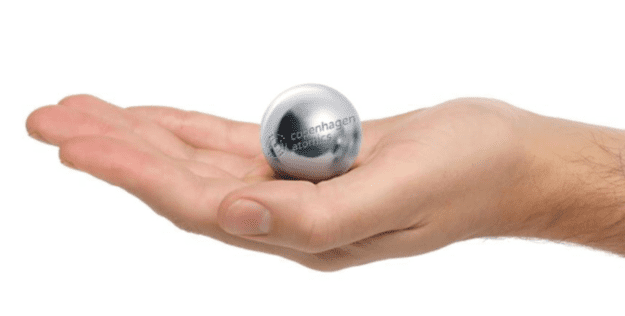
Their most fascinating discovery was that their lifetime energy needs could be met by completely fissioning a ball of thorium that is slightly smaller than a golf ball.
They’ve since learned that there is a lot of hard work needed to unlock that amazing potential, but they have also found that it is work that suits their desire to build successful careers while also making the world a better place.
After conducting enough initial research to recognize the potential and to discover their own aptitude for the task, Thomas and his colleagues formed Copenhagen Atomics.
According to Pedersen, the company’s lack of nuclear industry experience is both an advantage and a disadvantage. They have, at the very least, not been slowed by focusing on all of the reasons they cannot do what they plan to do.
Copenhagen Atomics plans to eventually market a 100 MWth heat source that can fit into the space of a standard sized 40 foot shipping container. That heat source will be a sealed nuclear fission reactor that produces hot, non radioactive molten salt at an outlet temp of 650 C. These thermal sources will be replaced at approximately 5 year intervals.
Lengthening runway by selling components
The company isn’t waiting until it can produce a complete nuclear power plant before it begins selling products. Instead, Thomas and his team have focused on building hardware components that they know they will need. They have recognized that there are many common elements that will be useful for all companies with an interest in using molten salt for nuclear reactors and heat transfer systems.
By developing robust components that their design will use and will serve needs for others in the same technological space, they have determined that they can create revenue by selling components. They plan to take advantage of series production economies and spread the design and testing costs over a larger number of finished products.
Copenhagen Atomics also recognizes that they have a better chance of success if they are part of an industry with multiple players all working to educate customers, politicians and the public about the benefits of their chosen technology. Thomas told that he believes the market is large enough that it makes little sense to get involved in cutthroat competition, especially in formative years.
Phased development plan
Though development has been slowed somewhat due to supply chain issues during the global pandemic, Copenhagen Atomics is actively pushing towards a goal of starting up a 1 MWth molten salt heat system that will use non-radioactive materials for testing.
The next step will be obtaining regulatory permission to introduce uranium and thorium into the salt for a testing phase that will not involve any fissile materials.
The company expects it will be ready sometime in the second half of the 2020s to begin testing with fission heat and fission product chemistry.
By the end of the 2020s, they hope to be producing their 100 MWth heat sources for commercial applications.
I think you will enjoy this interview. As always, your comments add significantly to the value of this effort.
Transcript
Read transcript
There's a way, a way such a better way today, today. The nation's voice tells the world there's a better way, today there's a better way. This is Rod Adams and it's time for another atomic show. Today I have with me, Thomas Jam Peterson, who is a founder, chairman of the board, and trash taker outer of a small team in Copenhagen, called Copenhagen, Thomas. Welcome, Jan. Thank you. Thank you. I personally had never heard of Copenhagen, a Tom X, until a few days ago, but you and your team have a very interesting business model that includes not just doing paperwork. Tell us a little bit more about what Copenhagen atomic she's doing. Yes. So all of us got inspired about Thorium Energy, about, well, it varies a little bit, but usually more than five years ago when we heard about it first time. For myself, it was almost 10 years ago now that I heard about it first time. And we thought, this is amazing that you can get so much energy out of Thorium and it's not used today and why is that? And we, as good engineers, we started to dig into the details and try to understand, you know, what is it about nuclear and what is about Thorium that is different. And then of course we recognize that it's only Thorium combined with molten salt reactors that has all these potentials that people talk about. And in the beginning, we actually didn't have a company. We were just meeting a group of engineers and scientists and discussing, you know, what can this technology be used for and try to help each other understand how it was different and why it was different. And around 2014, 2015, we decided to start a company and we called it Copenhagen, economics. And from that point on the vision was always that we wanted to bring this technology to market and we wanted to do it different than the classic nuclear industry. We wanted to have something where we could mash manufacture these power plants on an assembly line. So that has been the goal right from the beginning and it's still the goal and we know that it's a big goal but it's also really fun work to work towards that. Give me some of your background. You're an engineer, a journalist, some of the people on your team or our engineering and manufacturing folks. What makes you different from some of the other atomic startups. I think the main thing that makes us different from the other startups is that a lot of people who want to build nuclear, they start by making paper design and they take a route where they try to make a paper sign, get funding for that, then they try to get a free approved or approved or some other way and have governments or approval agencies look at it. We started in a different direction. We said, okay, how much can we, how much of the nuclear reactor can we build without any approvals and we realized right away that this is molten salt. So, you know, you can work on that in the lab and actually at our university, the technical thing is university. There's been a rather big group working with molten salt for decades. And one of the founding professors there, he used to work at Oak Ridge National Lab back in the 60s when the MSRE experiment there. So, he had already had some knowledge about that. And one of the people on our team has worked in that group for a number of years. So, that was our starting point to start with the salts and then we needed to build all kinds of setups and experiments and ovens and pipes and tests and stuff. And that's where we started. So, we started building things from the beginning in stainless steel and work with the different salts, both chloride salts and fluoride salts. So, that makes us different because we didn't start by making a full design of a full-scale power plant. And also, what we have agreed on now is that we actually don't want to produce an entire power plant. We want to deliver kind of a 40-foot shipping container with a nuclear reactor inside and the output from that box is the hot salt. So, there's a heat exchanger inside. So, the salt that comes out is non-radiocted salt in a secondary loop. And then that can be used for many different things. It can be used for, of course, generating electricity, but it could also be used for industrial heat or desalination of water and many other applications. And we don't want to be the company that built all those systems outside that uses the energy. So, it's a little bit like being a company that delivers the boiler to a coal-fired power plant, but then some other companies built all the other things in the coal-fired power plants and the engine and so forth. Yeah, so in that way, we are different. And we're really trying to take a new look at how can we get away from this situation that is in classical nuclear with light-water reactors where it just takes too long to build them and the innovation cycles are completely dead. And it's a little bit of a mess from our point of view. And we want to try to see if we can redo that in a better way. Well, one of the classic designs from molten salt reactors requires the use of a drain tank as a ultimate safety mechanism for getting rid of the criticality and heat. If you're delivering your reactor in a 40-foot container, do you still have a drain tank? No, our plan is not to use a drain tank. And if you look at some of the other molten salt reactor companies that are proposing different designs, some of them have drain tanks, others do not. As long as you can get the fuel out of the core, when if there is some scenario where you need to shut down, then it doesn't need to have a drain tank. And the way the Copenhagen Atomic Design is created is that at the bottom there is kind of a tank where you have enough volume to store all the fuel salt. And then in order to start up the system, you actually pump the salt from that bottom tank up through the core and then back down through the heat exchanger. And as soon as the pump stops, then the gravity will make sure that the entire fuel toll volume flows back into the, you can call that the dump tank. It doesn't have the freeze block that that is well known from some of the early talks on YouTube and so forth. And if you actually try to construct a freeze block, you will notice that it's not easy to make something that is always reacting in exactly the same way. And if you want to have something approved for nuclear, it's difficult to get an approval if you cannot have something where you can predict exactly what's going to happen either, exit an event. And I think really the, of course, this idea about the freeze block is easy to explain. But it could be done in many other ways. It doesn't need to be a frozen salt. It could also be other mechanical systems where they open up if the temperature gets too high. or you could even have just a valve that is a hold close by electricity and if you lose the electricity the valve will open. Of course, there are some many mechanicals system there, but my understanding is that you can make that more realign reliable than you can do with the freeze block. So, but that was just to give you an idea if we are a little bit different. We have a, we just as soon as the pump stops rolling then the entire fuel salt will dump back into the tank at the bottom. I also notice in your documents, you consider other molten salt reactor groups as colleagues and potential customers as well as, well you don't think of an injustice competitors. Can you explain that a little bit? If you look at many other industries, there's a lot of mismatch. One example is Samsung for example. Samsung is one of the main manufacturers of screens for mobile phones. They deliver almost 90% of the screens for mobile phones for all the competitors. And they also sell and designs mobile phones themselves. And this is also true in many other industries. The car industry, you see a lot of times that one car company makes the engine and then it's used by another car company or other components in the same way. And I think it's really common in many industries that people collaborate and work and use the same components and I think especially in nuclear where it's so expensive to develop a component or test it or get it approved. It makes a lot of sense to collaborate between different companies. And yes, you know, some of them can be competitors but I also see this as a new technology that needs to take off. There will be enough room in the market for many players say for example, 10 players and even in the beginning, you know, it's not a neck to neck competition over each customer. There's the market is big enough that we are actually better off all of us if we collaborate and help each other grow than if we try to kill each other before the market is even there. Yeah, certainly agree with that. And one of the things that's going to be necessary for this. This is a hard technology. It's not just a software development technology. And you're going to need to have people who can build things like pumps and valves and tanks and salt testing loops and those kinds of things. And look like you have those as part of your product line. Yeah, that's what we're doing today. We're not building reactors yet, but we're building all the components. And the first reactor we want would like to build is a one megawatt demonstration reactor. It's not a commercial reactor. It's just a small reactor to prove that molds or reactors can actually be built and come up and running again after these many years with no one being started. And in order to even just test all the components, we had to build these systems. And we've had a lot of interest from other groups, especially the university's and national labs that they wanted either to test components in our facility or buy some of these loops or components for their own test and their labs. And we also see that as a great opportunity to collaborate. People who are developing molten to our reactors as colleagues in general. And we want to help everybody to move forward. And if we can make some collaboration where one team has one component and we have another component and we can work together and sort of that. We don't have to develop all the components and they don't have to develop all the components. Then I think it's a win-win for everyone. And that's basically the way we think about it. It seems just going to be a lot easier to grow the industry if they can among people that are doing similar work agree on certain standards so that you don't have to have 17 different types of valves all doing the same thing. But all of them require an a long lead time of testing and refinement. I agree. And for some of these products that we have developed already, especially pumps and valves, we've had to spend quite a lot of money on tooling in order to get even manufactured them. And I mean every time you want to change the size of a valve or a pump or something, you would need new tooling. So it makes it only makes sense that as soon as you have spent all the money for all that tooling and you have designed a product and you've tested it to a degree where it's working. So you have fixed all the minor bucks that might be there. Then it makes a lot of sense to to manufacture many of them say 100 or something because you've already taken all that aren't accustomed to a link cost and all that. experience to do you and your team have in other manufacturing enterprises. Several of the people on our team have been working in other industries before where we were either responsible or involved in in manufacturing or R&D or high tech problems. Some of us had educational background where we had training in nuclear. But since there's no nuclear facilities in Denmark anymore, we basically none of us has worked in the nuclear industry before. And I think that's both a plus and a minus at some point. but definitely need to have more people on our team who have experience from the nuclear industry and also have operating experience with PowerPoints. But it also allowed us to take a completely new look at what can be done and what we could learn from other industries where we have had experience. And I think that fresh look is something that is also needed in the nuclear industry. It really pains me to see how if you look at, if you started a history of nuclear, some of the first reactors was built in one year or three years or stuff like that. And that was brand new reactors that has never been built before. And that was before they had all these computer simulations and CAD tools and CNC and all that. And it was amazing that they were able to build those reactors in such a short period. And many of those reactors were actually able to run for decades without any problems. And then it really pains us to see today how everything is really slow in the entire nuclear industry. And it takes 10 years to start a reactor that where all the details are well known already. So there's not a lot of learning to be done, but still it takes forever and there's cost overruns. It's just, that's also when we talk to politicians and just the general public, that's always what we hear. They're afraid of nuclear and it's too expensive and too slow to build and they're afraid of the waste. So there's a lot of education to be done to let the public know that, okay, we can actually do something about the waste problem and nuclear is actually one of the safest energy forms. And it might not be the engineers fault that it is so slow to build them today. It might actually be the lawyers fault or somebody else. But there's some education to do to be done there. Well, obviously Denmark or doesn't have any nuclear plants running itself. Why do you think that is? So we used to have a test reactors and research reactors. But the last one of those were shut down about 10 years ago and it's now being just decommissioned. There was a debate back in the 70s and early 80s to whether we should build nuclear power plants. But unfortunately there was a two large, like more than 50% of the population were against. And also Denmark has a really good place positioning the world for wind energy. And there's always been a lot of people who have opponents of wind energy here. And I think they in the past at least, a lot of people thought that we could solve all the problems with wind energy. But that's the engineers that we talk to start to realize. I don't know, 10 years ago or more that, okay, when can only take us so far? We need something for the rest of the energy. I should say that Denmark is known for green energy, but it's not really true. The truth is that 5% of the countries in Thai energy supply comes from wind power. And on days where it's very windy, we can supply 100% of the electricity from wind, but still it's really expensive and 5% of the countries in supplies. All the other 90s, something percent is mostly fossil fuels. So we're far from being a green country, even though some politicians like to say so. And that's why we realized that. We need something else and we don't like coal. So we think, okay, what can we do? Nuclear is a really good choice. And if we could make something that we could mass manufacturing on a simple line and install more than 100 megawatts every day, that would really make a positive change. As you describe your 40 foot container box heat source, I thought to myself, I wonder if those could be replacements for furnaces in traditional coal fire or natural gas fired power plant. Yes, they could. They could easily do that. And then you could use the old steam generator in the beginning just to make an easy swap, just use the same steam, any generator to generate the electricity. Yeah, that's always intriguing to me because I'm a long time environmentalist who really believes in the three hours of reduce, reuse and recycle. And reusing all of that already built infrastructure sounds to me like a real win for the environment if you can stop the pollutants from coming out of the smoke stacks. Yeah, true. I would say though that coal fire power plants, the big problem with those are that in many low income countries, they don't have enough filters on the stack. Whereas in most European countries, at least that uses coal fire. Now that we have filters on the smoke stack, and that has helped a lot. If you look at how much pollution came from coal power 100 years ago compared to today, we actually produce more any different coal today, but we have much, much, much less pollution from coal. So something can be done with filters. And yeah, that's the first thing we should do in countries that doesn't use filters today. That's true, although filters don't do a thing for you if you want to reduce carbon dioxide emissions because that's an inherent part of burning coal that's oxidizing carbon. Yeah, that's true. If you want to get rid of CO2, that's not going to help. I understand a lot of the history of molten salt and thorium excitement on the internet. I even know who's the guy who probably is the primary preacher of the gospel. What made it so that the thorium and molten salt seems so much more, so much superior to simply fissioning uranium in solid fuel reactor? From an engineering point of view, if you look at light water reactors with 5% enrichment, they can only burn a small percentage of the fuel and you still have to mine in and enrich it. And then you have all this fuel rods afterwards that some of the public perceives as very dangerous nuclear waste. And it's difficult to get economics in splitting those fuel rods into something useful. And those fuel rods have 96% of the uranium which is exactly the same as when it was mined years earlier. And it should be possible to do some repressing and take that uranium out and either sell it on the global uranium market or just put it back into the mine where it came from. But then all the people who are afraid of radioactivity and afraid of proliferation and afraid of reprocessing could have stopped to that. And that makes the whole thing difficult because basically you have to mine almost 100 times more fuel out of the ground to run a light water reactor compared to if you can run an efficient molds or reactor. And then there's the second thing is the light water reactor you can never make it a breeder if you run on enriched uranium. But with the thorium cycle, with the clean uranium, two 33, you could lightly make it into a breeder reactor. And that changes the whole picture of what is possible because in that case you don't need enrichment anymore and then you will be able to scale out and build a lot more of these plants in the future. And of course I know there's also fast reactors and my problem with fast reactors is if I look at all the reactors that have been built to date, most of the reactors that were thermal reactors, they worked and they were able to run for many years and produce energy. And most of the fast reactors that were built didn't work for one reason or the other. And some of them have been shut down and some of them never reached full power. And that just shows you that fast reactors are much more difficult to build. I'm not saying that is impossible, but it's just much more difficult. And the great thing about thorium is that it's the only fuel where you can have a breeder reactor in thermal spectrum. And then finally, in order to start up whether it's a fast reactor or a breeder reactor, the amount of physical inventory you need to start that per megawatt output, it's much bigger for fast reactors. Some of the designs, it's 20 times bigger than what you would need for a thermal reactor. So even though you might have a better breeding ratio for a fast reactor, you actually end up with the same amount of output power in the end for a thorium, or we have this philosophy. We don't wanna start just doing a paper designer for commercial react. It's a little bit like the right brothers when they developed the first airplane. They were not trying to sell seats on the airplane even before they had lifted off the runway. And some of the things we see today is actually people, they don't even know where the runway is and they're still selling seats to something they that is, that may be going to build in 10 years from now. Yeah, I think we should respect that. It's difficult to develop new technology and it with new clearance even more difficult. And then let's take a small steps at a time and get stuff working. And that's also why we're building these loops where we can demonstrate that we can run the pumps and the unique chains as in all these components at the right temperatures and the right pressures. And we can do that with non-radioaction materials at low cost to build confident from investors but also eventually from regulators to see that, okay, at least they have that part of the technology under control. Now we need to talk about the radioactive part. Your test reactor that you're gonna or test loop that you're gonna build one megawatt. Will that be using fission? Will it include radio item materials? How's that gonna work? First we're going to build a non-fission prototype. We want to one scale, one megawatt reactor. So basically because it doesn't use fission, we can, again, you don't need approvals. You can basically run it in any lab where you allow to work with the salts. Once we have that up and running and we have checked that everything is working as expected. Then we will load it with some kind of salt containing uranium or thorium. And of course we need approvals for that because then we have many kilos of uranium, a thorium, but it's not, we will not have enriched uranium and we not have anything that can start a fission reaction. That's the next step. That's when we need to start designing the real one megawatt demo reactor. We need to get the approvals. And that we will do that after we have done all these tests on the non-fission prototype. When do you expect your non-fission prototype to be constructed? The current plan says 2022. Well, now depending a little bit on the, like we've been set down or set back a little bit by this virus situation now. And of course other things like that can happen in the future. But assuming that there is no major set back, then in 2022 we can run the non-fission prototype and then, well, we already started to talk a little bit to some countries about, you know, could we potentially test the fission version of that one megawatt reactor in their country? And that's an ongoing thing. And we haven't selected a country yet. But at some point we will select the country. And then we will also know approximately how much it will cost to build that the fission version and get that online. We hope that we can get that online by 2025. Do you have a moderator inside your reactor design? Yeah. So in order to make a nice breeder, it would be nice to be able to use heavy water. And we've done some simulations of that and shown that that can work well. But again, that is something that we need to discuss further with the regulator, what are the requirements. We are thinking about both using either graphite as the moderator or heavy water. We've also looked at some other materials. But that is something that needs to be decided once the, you know, the regulators today are also thinking about, you know, what will we put as requirements for different reactor designs. And it might be so that if we come to a country that says, yes, we can approve a mobile and mobile is all reactor here in our country. But only if you use a graphite moderator. Okay, then. then it doesn't help us much if we want to use heavy water. So again, it needs to take into account what can be approved and also how much work is needed to get that approval. Because if it's ten times more expensive to get something approved with heavy water, then it might not be a good idea to do that in the first version. Yeah, I think a lot of regulators, at least the previous regulator, the US regulator is looking to companies like you to help them understand exactly what they should be looking for. You have to convince them that your safety case is valid and that your procedures and processes and designs are going to produce a safe system. And you have to tell them exactly how you can approve that. They have to, of course, be independent and assess your submittal. But they really want the, they are open to new designs where the designers propose different ways to prove safety. They know that, for example, you're not going to rely on a very highly leak proof primary system with a containment system around it. That may not be what you do. I have to admit I'm not that big a fan of molten salt. My worst class in college was chemistry. To me, I like having my radio after material all locked up nice and tight and I don't have to worry about it migrating around. And once you start fissioning inside a molten salt reactor, it seems like you have a really complicated chemistry environment. Help me understand a little bit of that. Yeah, I agree that it is complicated. In the beginning, I mean, in a one megawatt reactor, you burn one gram of fissionable material per day. So, of course, you also only produce one gram of fission products. And normally you would have several hundred kilos of material in your salt. So it's a very little fraction in the beginning. But of course, as you run a system for many years, and one of the things with molten salt reactors is that we all expect that we're able to take the molten salt from one reactor and then once it's end of life, then we can pump that salt into the next version of that reactor and just continue to run. So eventually, this salt will get more and more 30, so to speak, with fission products and other contaminants. And at some point, you would need to clean up that salt and take out some of those fission products. And it is true that there's a lot of chemistry questions in that. And what we've done so far is we take some of the salts and then we dope them with different amounts of the stable elements of the fission products. And we see how that behaves. And to be honest, when you have these very low percentages, like PPM levels of different fission products, it's not really a big issue. It behaves almost exactly the same as if you had none of those fission products. But of course, I recognize that things get a lot more complicated when you have a very highly radioactive salt with a lot of fission products in it. And you want to do chemical processing on that to get some of those fission products out. But again, you have several different options. You don't have to only do wet chemistry. You can also do evaporation of some of the thermal spectrum, the thorium-based multi-reactor. You would use fluoride salts. So these chemical, these fission products will bind to all the different fission and make different fission species. And some of those I actually volatile at the temperatures where you run your reactose. So similar to the sea-known encryption that will bubble out of the salt. Some of these other species will also bubble out. Or we have designed a system where you can spray them in very tiny droplets and in a vacuum chamber. And then you can get things out of that volatile at those temperatures. So some of the things you can get out with mechanical separation or other means. And you don't have to do wet chemistry because I agree that doing wet chemistry on a super high radioactive salt is that's difficult. Yeah, sounds. And anything that's difficult sounds expensive that's, I always translate it to these two words. If it's hard, it costs a lot of money. It can be done, but it costs a lot of money. And it's exciting to reactor designers, people who like to count neutrons to think of being able to remove xenon in particular. It really is a neutron absorber, a great neutron absorber, and even in very small quantities has an impact on the reactor fuel efficiency and those kinds of things. So if you get xenon out of your system, where does it go? Well, it goes into some tanks and then xenon will continue to decay. So then it decays to some other elements and then you need to make sure that your chemistry in those tanks where you initially hold the xenon gas. When it decays to something else, you need to make sure that your chemistry in there is the right thing so that it doesn't get super corrosive and you cannot contain it in those tanks. Eventually you would want to take it out of the gas tanks and get it into some sort of filter. And of course this filter will be very radioactive, so that will become your waste product. And this is some of the things that we are looking at is how can you potentially make that filter so that it doesn't be... So if you make a molten salt reactor and make it as a waste burner so that you can burn trans cerics from spending your fuel from light water reactors, that's a great thing. But then if you end up with a filter that is really heavily contaminated, that's a problem. So that is some of the problems that needs to be solved. But I'm confident that at least maybe they cannot be solved 100% but they can be reduced to a size whether it's managed. Yeah, manageable problems are always the best kind of have because nothing's perfect. So another thing that people in the molten salt world have convinced me about is that having access to all of these isotopes makes it so as possible that your reactor could have different revenue streams and just selling electricity because isotopes are inherently rare materials with unique physical properties. That sounds like something that might have some value. I must admit that we have only looked a little bit into that. If you want to make some kind of online system that can extract a particular isotope right after it has been produced in the molten salt reactor, that's a whole chemical or a small at least chemical processing plant that you hook onto your nuclear reactor. And all those elements have to be approved. And it's an open question whether you can make a positive revenue out of that. At least you can only do it for the most expensive isotope. But we have not made enough calculations to determine whether each of these can be made economically viable. Yeah, I get that. And of course, supply and demand being what it is, as soon as you have a new way to produce a very expensive material, it may not keep its high price for very long. You suddenly can provide an oversupply and thus even valuable materials can drop into the negative range as we've seen in the US and the oil market recently. I agree with you. There are some, it's a little bit fasseal, a little bit easy to say, we'll just use these isotopes. But when you think about what you really have to do to isolate them, particularly since they have in some cases reasonably short half lives, they're not very active for very long. It's a challenge. So, and like you said before, you had a hope that you could contain all your fissile material inside the cladding and you know exactly where it is. And of course, this is one of the things that we're going to discuss a lot more in the coming years. It's the proliferation risks of molten zor reactors because you have this big body of circulating molten salt. And suddenly you're starting to split it out into different streams. How do you actually control exactly what is where at any point in time? And our approach to that is at least in the beginning of these reactive designs, we would prefer if the container I talked about that. This higher box is completely sealed and nothing goes in and out of it except for cooling and electricity and the hot salt, that is the secondary salt loop. We would not want to have something where chemicals or people or anything like that goes in and out of the box because then I think it becomes a nightmare to ensure that there's not anything removed or anything like that. So, safeguards are much easier in a sealed environment because you can isolate that box, you can protect the box, you can have monitoring systems, it proves that the box has everything that it was initially designed to have and it's still in there and nothing has gone out, no sealed and broken. I can see that as an advantage. So, that basically becomes, so you talked about the cladding before, so that basically becomes your ceiling is the entire box. Yeah, and as long as you don't have to have anybody going inside the box, your pumps have the ability to run without maintenance for as long as you need. I think it's something in your paperwork about these boxes lasting five years. Tell me a little bit about the lifetime you expect and begu. Yeah, it's difficult to estimate at this point in time. If you have a graphite reactor, many people say that the graphite would be the limiting thing, the graphite moderator. So, and some people have talked about reactor designs with a graphite glass for years, other seven years, some even longer. And I think this is still an open question for many people to actually see what can be done and to do the experiments to validate the reactor lifespan. But of course, there's also the issue. For example, we've spent a lot of time designing a pump and running a pump with something that is corrosive in a very highly reactive fields and at these high temperatures, 700 degrees. That's tough. And we're not at the point yet where we can guarantee that that's a pump could run for five or ten years. A lot more work needs to be done to guarantee that. But we have, when we did the designer originally, we said that we wanted to make the designs that said, eventually we would be able to approve this pump for running ten years without service at all. And there's not a lot of pumps out there in the real world that runs for ten years without service. So that is rather tough. And then in this type of environment, it makes it even more difficult. Basically, yeah, we would like to make reactors that can last for five years in the beginning. And then we hope further down the road as the technology improves, then we can hopefully make them last for ten years. But that's basically just an estimate or a whisk today. We still need to prove that that can be done. And there's a lot of hard work before we have that proved. So your mass-produced factory producing these fresh modules will also have to have a new arm that has some sort of recycling system. Because you're not going to throw away all that stainless steel and everything else. It's already active now every five years, right? So the idea is not to sell the reactor, it's actually to sell. So we basically, the customer buy the hot salt from us. So they basically just buy energy in the form of hot salt. And then what we provide is we come there, we install the reactor, we are responsible for running it. And once it's end of life, we also responsible for taking it back and recycling it and putting in a new one. So in that sense, you buy the energy, you don't buy a nuclear reactor from us. So I guess part of your model would be if a pump. Didn't last as long as you thought it would last. You would simply take that whole module, replace it with a new one, and take it back to your factory to do whatever work needs to be done to fix that bump. Is that right? Yes, that's correct. But you likely you cannot take it back right away. You need to set it aside for a number of years to cool down radially before you could even ship it back to this recycling plant. But it is true that if something fails, don't try to repair it. Just swap it with a new box. The thing will come in close to the end of what I had planned here. Is there anything about your company or your ideas, your components that you want to talk to people about before we say goodbye, Thomas? I would just say in general that we are always interested in working with other people who are positive about the multi-reactors and whether it's a uranium-based, a thorium-based multi-reactors or whether it's fast or thermal. I mean, all the components are more or less the same. We are eager to collaborate with other people and help make this field move forward. And actually right now we are running a small investment round for where we allow the general public to invest in our company so that even people who are not working on multi-sold, they can still get involved and follow the whole field closer and see what's going to happen in the next becoming years. Yeah, I'm not exactly sure what the regulations are. Here in the US, we have this thing called the Securities and Exchange Commission, which has limitations on making offerings to the public, but perhaps things are different in Denmark. Yes, in Europe and in Europe, there are also some rules about what you can offer, but you are allowed to offer investments to the general public. And there are some rules about you have to make sure where the money is coming from and the investors actually who they say they are. That's all a lot of details for the lawyers, but yeah, there are some regulations in Europe, but in general the private people are allowed to invest. And your company does have some revenue from selling some of your components to other people is that correct? Yes, we do have a little bit of revenue. It's still not a big company, like a multimillion dollar company. But we expect during the next two and a half years, we expect to have a revenue of 4 million euros from selling our components and services. So yeah, that is about a third of the money we need to develop our first non-fishing prototype. Yeah, that helps create a longer runway. We'll be able to have products that you're actually selling rather than waiting to the final approval and finally start selling something the way some. That's true. It's nice to... And it's a really good way to collaborate and get feedback because, I mean, of course, we could test all the components internally in our own company, but giving it to customers and allow them to experiment with it and test it in there, whatever system they have, it just gives us a lot more experience and it makes those products more rocket. Yes, that's true. You're sounding a little bit like a software company who's got the... I can't wait. Data testers, that's it. Yes, yes. I mean, I mean, think about it. At some point in the future, we're going to start a nuclear reactor. And I think any regulator would much rather approve a pump that has already run for a million hours in all kinds of other applications for molten salt in the industry than improving some kind of pump where the company have tested it internally in their own lab and they just say it works. I mean, it's much, much better to have a million hours of third-party validation of that product or part. Yeah, you've convinced me. I agree with you. And unlike many in the nuclear bonsai, I ran a small factory for a number of years, well, three years and know a little bit about building new products and testing them and finding how they break and how to fix the tooling and all that neat stuff. It's a fun endeavor, but it's a lot. It's also an endeavor that can frustrate the heck at us at times. Because you say, why isn't this working? But anyway, it's fun to play with hard work too. It's different than developing software, but it suits a lot of people to actually be able to make something and look at the end of the day and say, see that row of pumps over there? We built those today. Well, thank you very much for the time. I'm interested. I'm going to sign up for your mailing list and see what I can hear and I'm always interested in finding people that are thinking differently about nuclear. It's great for me to hear new people coming into business. It's one where they're so much potential and so many bits of misinformation over the years have been issued. So it's great to have people that aren't restrained by what they've been told they can't do for so many years. All right, Thomas. Thank you for that. I look forward to talking to you in the future. But take care. It's true. Bye bye.